
Reviewed · AMALFI COAST DAY TRIPS
Amalfi Coast: Make Fresh Pasta, Mozzarella, & Tiramisù
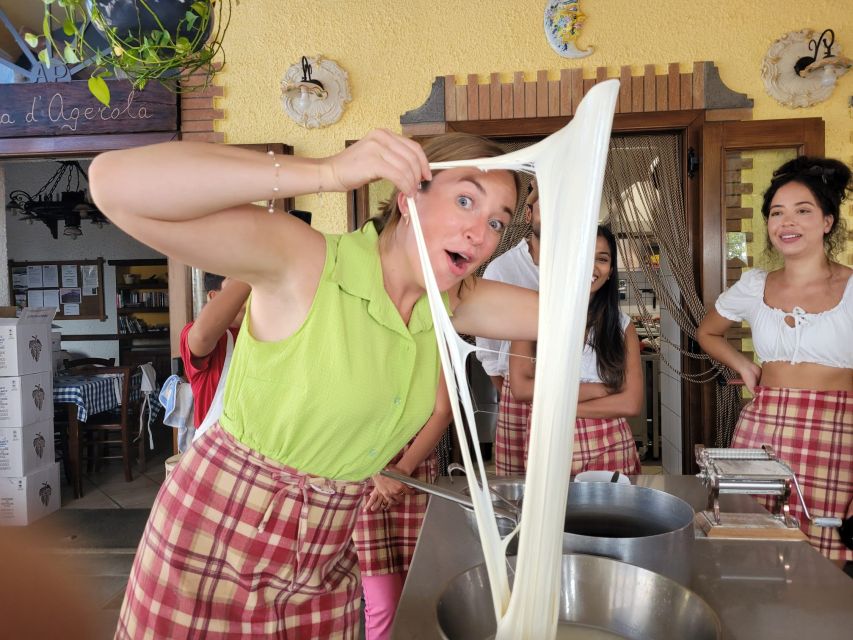
Making mozzarella from fresh cow’s milk is the star of this hands-on Amalfi cooking class. At Luna d’Agerola farm in Pianillo, Valentino Acampora and his team pair family recipes with wide views over the Gulf of Salerno. I like the real farm setting and the fact that you eat the complete meal you prepare.
I also like the warm, relaxed teaching style reported by the hosts, especially Valentino and Giovanni, and the thoughtful response to food restrictions, including gluten-free adjustments. The main consideration is location: this is above the coast in Agerola, not in Amalfi itself, and hotel pickup is not included.
Key points at a glance
- Fresh mozzarella from farm milk: Learn how curds become stretchy cheese, using milk from a cow raised on the property.
- Three Italian staples in three hours: Prepare tiramisu, handmade noodles, and mozzarella, then sit down to eat them.
- Luna d’Agerola’s sweeping view: Look across the upper Amalfi Coast and Gulf of Salerno from an old family farm.
- Family recipes and local hosts: Valentino, Giovanni, and the Acampora family give the class a personal feel.
- Organic wine with the meal: Homemade organic wine is served during the class and alongside the food.
- A good choice for practical food lovers: You do not just watch a chef. You work with the ingredients yourself.
A farm kitchen above the Amalfi Coast
This experience takes place in Pianillo, part of Agerola, in the hills above the better-known coastal towns. You arrive at Luna d’Agerola, an authentic Amalfi farmhouse cared for by the Acampora family for centuries.
The setting is a major part of the appeal. From the farm, you can look over the southern Amalfi Coast and the Gulf of Salerno. The view gives you a reason to spend time in the upper hills, where the pace is quieter than in the packed waterfront towns.
The farm also has a literary connection. Poet Salvatore Di Giacomo rested here and wrote Luna d’Agerola, an early Neapolitan dialect poem. That story adds character to the property, but you do not need to be interested in poetry to enjoy the practical benefit: this is a working family place with a long connection to the area.
You can also see the farm during the visit. The tour is not only a kitchen lesson in a closed room. The property, the family story, and the view help explain why these foods belong to this part of Italy.
A few other Italy mornings to weigh against this
- From Naples: Sorrento, Positano & Amalfi Coast – Small Group Tour
★ 5.0 · 8,643 reviews - From Rome: Pompeii, Amalfi Coast, and Sorrento Day Trip
★ 4.6 · 7,031 reviews - From Rome: Pompeii, Amalfi Coast and Positano Day Trip
★ 4.6 · 6,620 reviews
What happens first: tiramisu from Nonna Maria’s recipe
The class begins with tiramisu. You prepare it from the beginning, following Nonna Maria’s family recipe.
That is a smart first course. Tiramisu needs time to rest, so making it early gives it a chance to set while you work on the savory dishes. You also get an immediate lesson in the difference between assembling a dessert and making one from scratch.
The class is designed for participation. You should expect the chef to demonstrate the method, explain the process, and then have you take part. The focus is on simple Italian techniques rather than fancy restaurant presentation.
Tiramisu is also a useful dish to learn because its flavor depends on small details: how the ingredients are combined, how much coffee is used, and how the layers are handled. The experience gives you a recipe you can try again at home, not just a dessert you photograph before eating.
After this first cooking session, you can relax with a glass of homemade organic wine. That pause helps break up the class and gives the tiramisu time to rest.
The unusual lesson: making mozzarella together
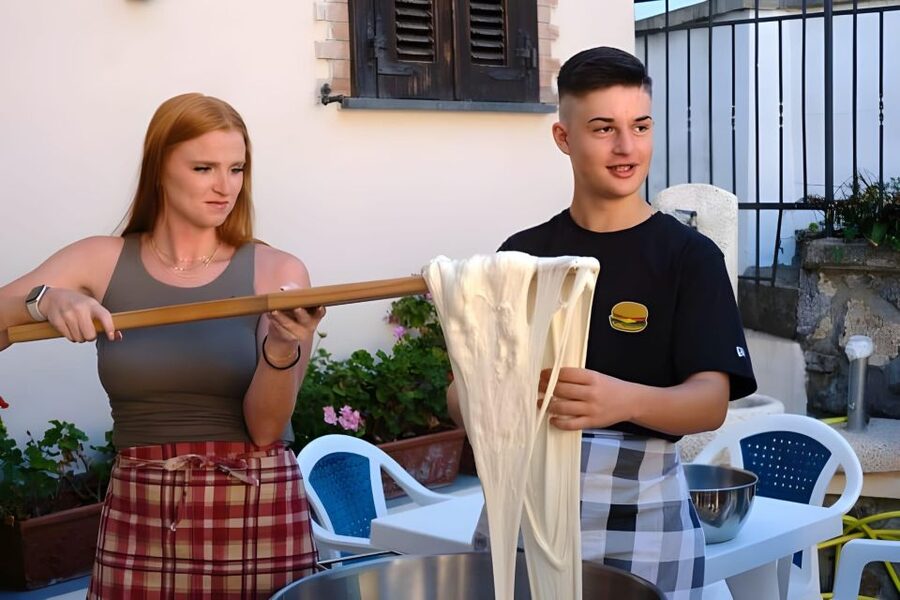
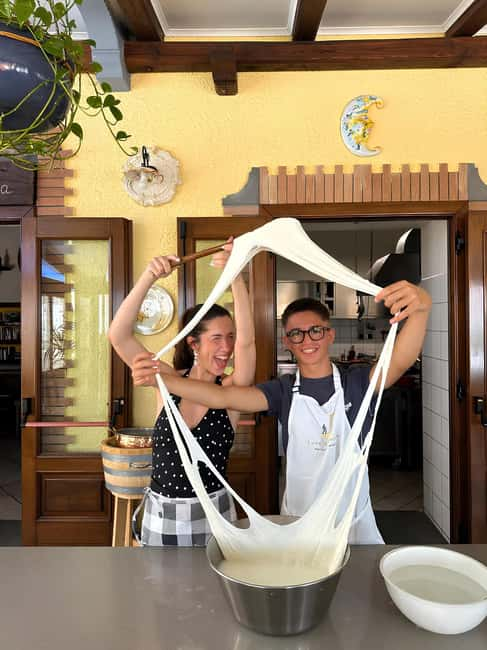
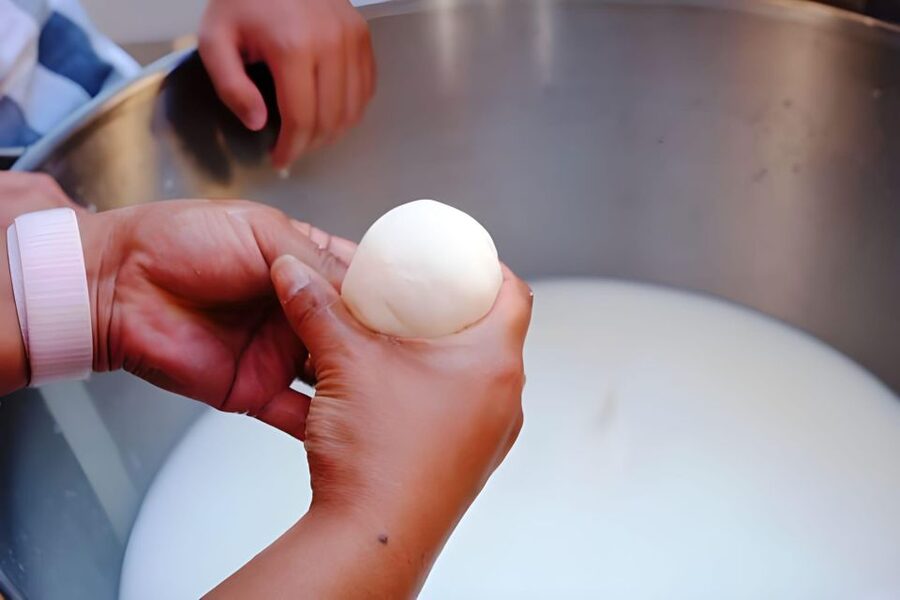
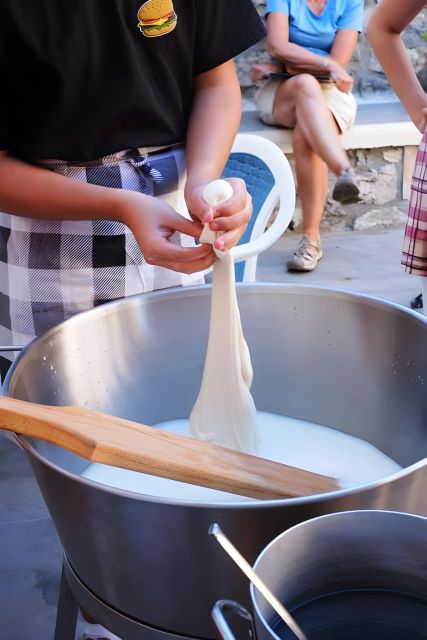
Next comes the most distinctive part of the experience: fresh mozzarella made with milk from a cow raised and cared for on the farm.
Many Italian cooking classes offer pasta. Far fewer let you take part in turning fresh milk into mozzarella. The process shows you how a familiar cheese gets its texture, and it makes the final tasting more meaningful. You are not simply served a ball of mozzarella and told it is fresh. You have helped make it.
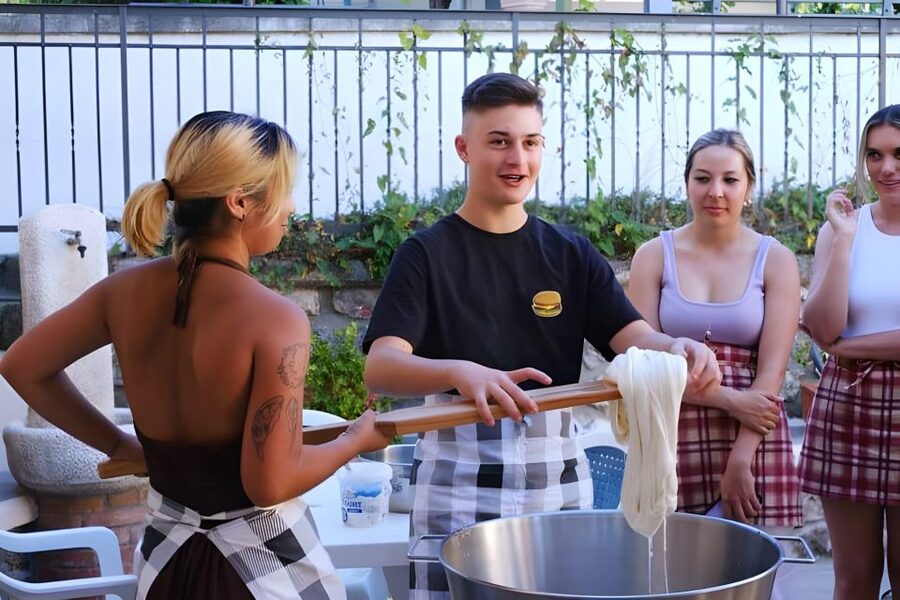
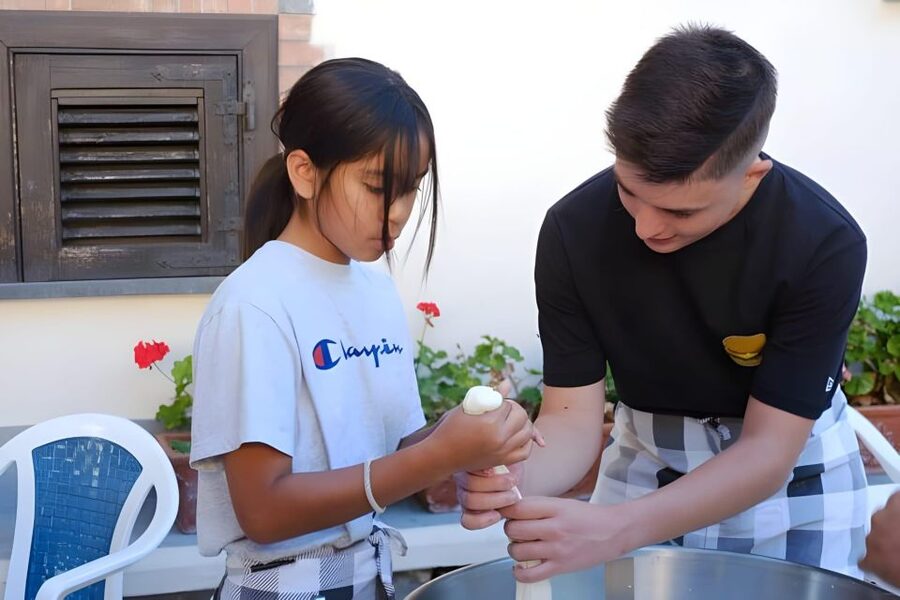
The class keeps this communal. You work together rather than treating the lesson as a private demonstration from across the room. That makes it a strong choice for couples, families, and friends who want an activity with plenty of shared tasks.
The mozzarella lesson may also be the best reason to choose this class over a standard pasta workshop. Pasta is widely taught across Italy. Farm-made mozzarella tied to the property gives this experience a stronger sense of place.
If you have food restrictions, tell the provider when booking. One gluten-free participant received suitable catering, but you should not wait until the class begins to raise the issue. The available information confirms attention to restrictions, not a full list of substitute menus.
Handmade pasta with a family method
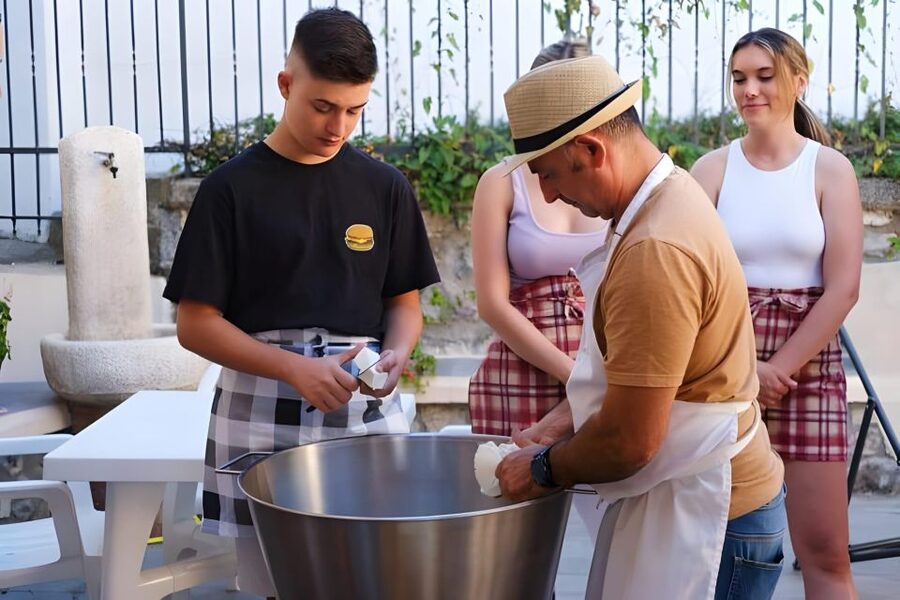
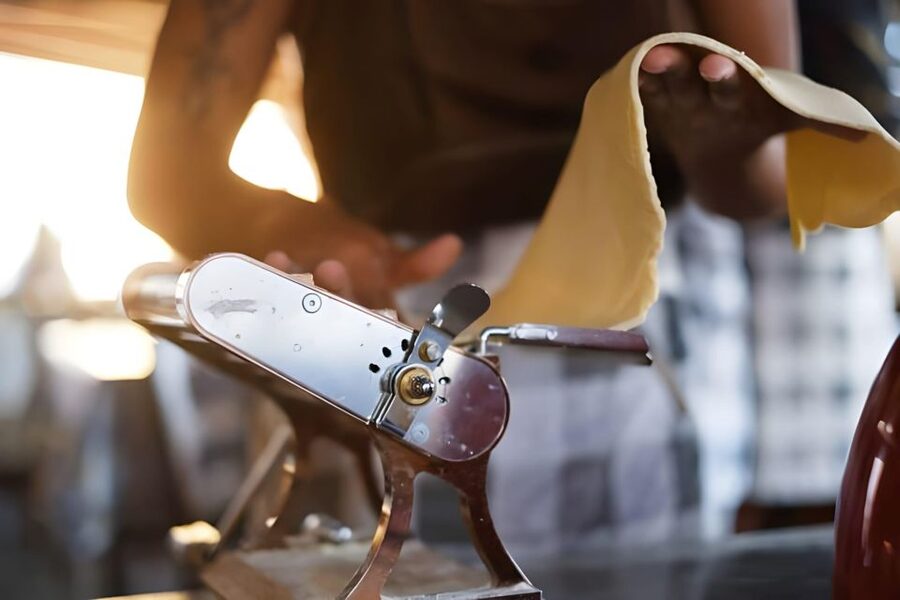
After the cheese, you prepare fresh pasta from scratch. The class uses a grandmother’s recipe and focuses on noodles, described in the experience as linguine-style pasta.
This is the part where you get the most direct kitchen practice. You work with the dough, learn how it is brought together, and help shape the finished noodles. The process is simple enough for beginners, but still gives experienced cooks a chance to improve their technique.
I like the order of the class. You move from a chilled dessert, to a hands-on dairy lesson, to pasta that becomes the main course. Each stage feels different, and the meal builds as you go.
The cooking is meant to be fun rather than formal. The hosts explain the traditional Italian way to prepare each dish, but the atmosphere remains relaxed. That matters on vacation. You can learn something useful without feeling as if you have entered a professional culinary exam.
If you are hoping to master advanced pasta shapes or a long list of sauces, this may feel basic. The value lies elsewhere: you learn three recognizable dishes, practice the core steps, and eat the result soon afterward.
Same city, an entirely different afternoon:
- Vatican: Museums & Sistine Chapel Entrance Ticket
★ 4.5 · 144,003 reviews - Vatican Museums & Sistine Chapel Tour with Optional Basilica
★ 4.3 · 67,413 reviews - Colosseum, Roman Forum & Palatine Guided Tour
★ 4.7 · 63,148 reviews - Milan: Cathedral and Duomo’s Terraces Entrance Ticket
★ 4.6 · 61,054 reviews
Sitting down to eat what you made
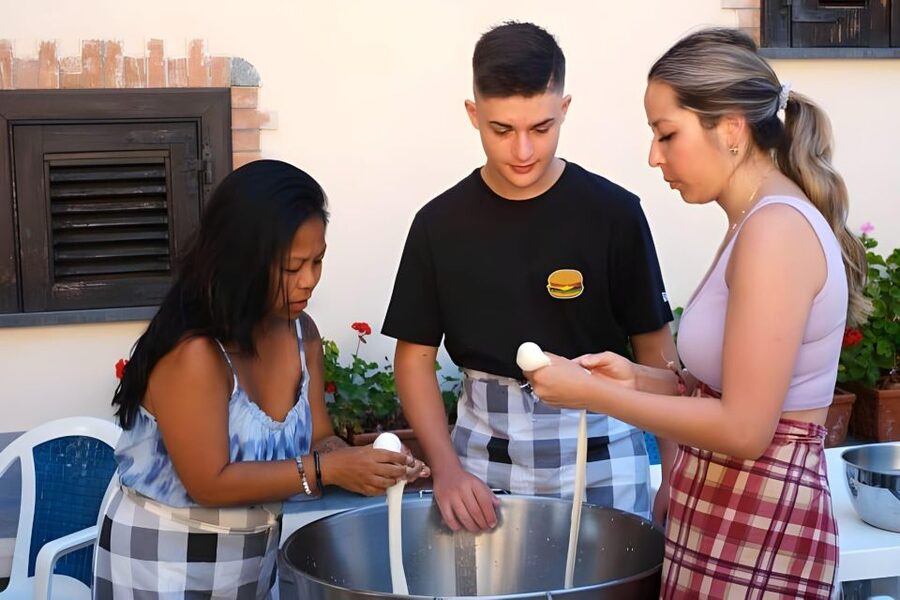
The final meal includes the mozzarella, pasta, and tiramisu you prepared during the session. Organic wine is served as part of the experience.
This finish is more satisfying than a cooking lesson that ends with a quick taste at the counter. You sit down and enjoy the food together, which gives the class a social rhythm. Several comments specifically praise the shared meal, the wine, and the feeling of being welcomed into a family setting.
Come hungry. The menu includes three substantial preparations, and the point is to enjoy the complete result rather than sample a bite of each dish. The homemade wine is another notable feature. If you like it, the property may offer bottles to take home, as one experience description indicates, but confirm availability directly before planning on that.
The meal also lets you judge the difference between fresh and packaged food. Handmade pasta has a different texture from dried supermarket noodles. Fresh mozzarella made during the class has its own appeal. Tiramisu made with a family recipe gives the dessert a personal finish.
Valentino, Giovanni, and the teaching style
Valentino Acampora is the named experience provider, and the class is also led by Giovanni. Both are described as friendly, welcoming, and engaged with the people in the kitchen.
That personal contact is one of the strongest parts of the class. Valentino is described as a charismatic host who offers advice about Italian culture and things to do in the area. Giovanni is praised for explaining the traditional methods and keeping the group involved.
The teaching is available in Italian and English. You should still expect an informal family class rather than a highly scripted demonstration. That can be a plus if you want conversation and local contact, though it may feel less polished than a professional cooking school.
The private-group option is useful if you want the class to center on your own party. Shared sessions can be more social, while a private booking gives your group greater control over the pace and conversation. The supplied information does not specify the maximum group size, so ask before booking if group size is important to you.
The hosts have also shown practical kindness when plans go wrong. One group with a broken rental van received help arranging a taxi, and another group was allowed to switch from an 11 a.m. session to the 5 p.m. time. Those examples do not guarantee changes, but they suggest it is worth contacting the provider promptly if a problem affects your arrival.
Getting to Pianillo and planning your timing
Hotel pickup and drop-off are not included. You need to make your own way to the farm, with parking included if you drive.
Pianillo is above the main coastal road, so check the route carefully before booking. One helpful transport detail is that the farm is about a 10-minute walk from the last bus stop on the route. That makes public transport possible for some visitors, but you still need to account for the uphill location and the return trip.
The class lasts three hours. Starting times vary, and sessions have included both late morning and late afternoon options. A morning class leaves the rest of the day open. An afternoon or early evening class may give you softer light over the coast, but you should confirm the exact start time and make sure your onward transport works.
If you are staying in Amalfi, allow time for the trip to Agerola. One person described the class as worth the journey from Amalfi, but this is not a quick walk from the waterfront. If you are driving, the included parking removes one possible nuisance, though the hill location still deserves attention when planning.
Do not treat this as a spontaneous stop between two beach visits. It works best when you give the cooking class its own half-day block, including transport.
Is the $66.16 price good value?
At $66.16 per person, the price covers a three-hour class, an Amalfitan chef, the farm tour, organic wine tasting, the full meal, and parking.
I consider that a strong package if you plan to eat everything prepared. You are paying for instruction, ingredients, a meal, drinks, a scenic setting, and a farm visit. A cheaper activity that only teaches pasta may not offer the same range.
The value is strongest for people who care about food and participation. You make three dishes, not just one. You also get the unusual mozzarella lesson and the chance to see where the farm’s milk comes from.
The price may feel less attractive if you mainly want a quick tasting or a view. You can find coastal viewpoints without booking a three-hour class, and visitors who dislike kitchen work will not get much from the hands-on format.
For families and groups, the shared preparation adds value because everyone can take a task. For solo visitors, the welcoming atmosphere can make the class a pleasant way to meet people, though the private-group option is available if you want a more controlled setting.
The experience has a 5 out of 5 rating based on 323 ratings, with repeated praise for the food, hosts, view, and hands-on format. Ratings are only part of the decision, but the consistency points to a class that delivers its central promise.
Who should book this cooking class?
You should consider it if you want:
- A practical way to learn several Italian recipes in one session
- A farm setting rather than a city cooking studio
- Fresh mozzarella as part of the lesson
- A complete meal after the cooking
- A scenic break from the crowded coastal towns
- An English-language activity led by local hosts
- A family-friendly or group experience with shared tasks
It is especially well suited to couples, friends, and families who enjoy eating together. Beginners should feel comfortable because the class is designed around demonstrations and guided preparation.
Food-focused visitors will get the most from the farm connection. The milk, the family recipe, the organic wine, and the Acampora history give the food a clear local setting.
You may want to skip it if you have very little time, dislike traveling uphill from the coast, or want advanced culinary training. It is not a technical chef’s course, and transport is your responsibility.
Practical details before you reserve
Food restrictions must be provided at the time of booking. Gluten-free catering has been arranged for at least one participant, but the details of every possible dietary adjustment are not specified.
The class is offered in Italian and English. An Amalfitan chef leads the lesson, and private groups are available.
Parking is included. Hotel pickup and drop-off are not.
You can cancel up to 24 hours before the activity for a full refund. The reserve-now, pay-later option lets you hold a place without paying immediately, which helps when your Amalfi Coast schedule is still shifting.
Bring an appetite and allow extra time for the trip to and from Pianillo. The meal comes at the end, and the three preparations make this more filling than a short demonstration.
FAQ
Where does the cooking class take place?
The class takes place at Luna d’Agerola farm in Pianillo, in the Agerola area above the Amalfi Coast.
How long does the activity last?
The cooking class lasts three hours. Starting times vary, so check availability for the current options.
What food will I prepare?
You will prepare fresh mozzarella, fresh pasta noodles, and tiramisu from scratch.
Is a meal included?
Yes. You eat the food you prepare during the class, and organic wine is included.
Is transportation provided from my hotel?
No. Hotel pickup and drop-off are not included. Parking is included, and the farm is about a 10-minute walk from the last bus stop on the route.
Can I request food adjustments?
Yes. You must advise the provider about food restrictions when booking. Gluten-free catering has been provided for at least one participant.
Should you book it?
I would book this class if you want an experience with real local character, not just another Amalfi Coast photo stop. The fresh mozzarella lesson, family recipes, homemade wine, and Gulf of Salerno view give the three hours plenty of substance.
Before reserving, solve the transport question and share all food restrictions. If you can spare the time to reach Pianillo, the $66.16 price buys far more than a meal: you learn the dishes, make them yourself, tour the farm, and then sit down with the people who taught you.
More Pasta in Italy
- Florence: Pasta Cooking Class with Unlimited Wine
★ 4.9 · 10,285 reviews - Florence Pizza or Pasta Class with Gelato Making at a Tuscan Farm
★ 5.0 · 6,801 reviews - Florence: Pasta & Tiramisu Cooking Class with Unlimited Wine
★ 4.9 · 6,708 reviews - Florence: Pasta Cooking Class with Unlimited Wine
★ 5.0 · 6,413 reviews
Fresh on the Italy list
- Rome: Guided Catacombs Tour & Capuchin Crypt (Audio Guide)★ 4.3 · 191 reviews
- Guided tour of the Colosseum, Roman Forum and Palatine in Spanish★ 4.5 · 191 reviews
- Stories of Pompeii: Small Group tour with archeology expert guide★ 5.0 · 191 reviews
- Bolgheri: Winery Tour with Wine Tasting★ 4.7 · 191 reviews
- Palinuro: Costa del Mito Boat Tour★ 4.9 · 191 reviews
- From Palau/La Maddalena: All inclusive Yacht Tour★ 4.8 · 191 reviews
- Small-Group Cooking Class in Positano: Gnocchi, Tiramisù & Drinks★ 5.0 · 191 reviews
- Semi Private Deep Wine Chianti and San Gimignano from Florence★ 5.0 · 191 reviews
Amalfi Coast Day Trips, compared.
Sorrento, Positano & Amalfi Coast – Small Group Tour
Read our review →
Pompeii, Amalfi Coast and Positano Day Trip from Rome
Read our review →

Amalfi Coast & Positano Day Trip with Coastal Cruise
Read our review →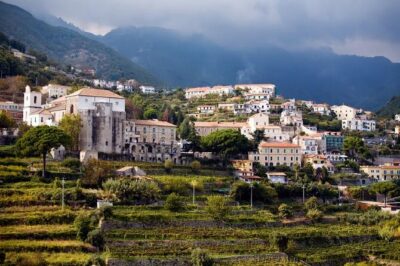
Browse the lists this tour appears in