
Reviewed · WALKING TOURS
Alberobello: History Walking Tour
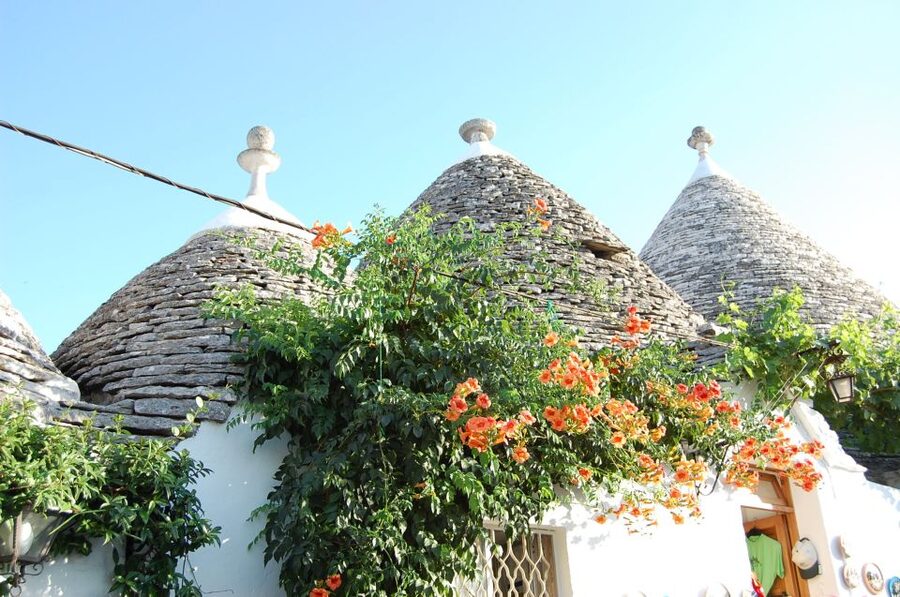
Alberobello’s cone-roofed trulli look almost too neat to be real, but this walking tour helps you see them as homes, not just pretty photo subjects. You begin at the Belvedere terrace, cross the historic districts of Rione Monti and Aia Piccola, and finish inside a local trullo where the unusual construction makes much more sense.
I like the contrast between the two districts, one filled with the town’s famous rows of trulli and the other quieter and more residential. I also like the personal touch of entering a traditional home, something a quick self-guided walk cannot provide. The main consideration is that the tour lasts only 1.5 to 2 hours, so it gives you a strong introduction rather than time to explore every lane.
Key points to know before booking
- See two very different trullo districts: Rione Monti offers the classic postcard views, while Aia Piccola gives you a quieter look at Alberobello.
- Begin with the Belvedere view: The terrace gives you an easy visual introduction to the town and its tightly packed conical roofs.
- Enter a traditional trullo: A local home visit shows how the round rooms, stone walls, and cone-shaped roof work together.
- Walk to a trullo-shaped church: San Antonio adds an unusual religious landmark to the route.
- Ask for local suggestions: Guides have offered lunch tips and, in some cases, local product tastings at the end.
- Plan around the conditions: The minimum is two participants, children under 18 go free, and transfers are not included.
Why Alberobello makes such a good walking tour
Alberobello is easy to recognize in photographs, but the town is more interesting once you understand the practical reason behind its unusual buildings. The trulli are built from local stone and use dry-stone construction, meaning the stones are fitted without cement. The result is a thick-walled home topped by a conical roof.
That design is not just decorative. It gives the buildings their distinctive shape and helps explain why Alberobello feels unlike other towns in Apulia. A guide can point out details you might otherwise pass without noticing, including how several cone-roofed sections can join to form one home.
The opening view from the Belvedere terrace is a smart choice. From above, you immediately see the scale of the old districts and the repeating pattern of white walls and gray stone roofs. I would pay close attention here, since the guide’s first explanation gives you a useful frame for the rest of the walk.
This is also the point where a guide earns the $40 price. You can see Alberobello for free, but it takes more work to understand why the buildings were made this way, how the districts differ, and which details matter. The tour gives you that background before the lanes start to blur together.
More historic sites in Italy:
- Venice: St. Mark Basilica Ticket, Audioguide+History Gallery
★ 3.9 · 4,780 reviews - Venice’s Best: Basilica, Doge’s Palace, Gondola & History Gallery
★ 4.5 · 2,478 reviews - Historic Milan Tour with Skip-the-Line Last Supper Ticket
★ 4.5 · 1,976 reviews
Rione Monti, Alberobello’s picture-book district
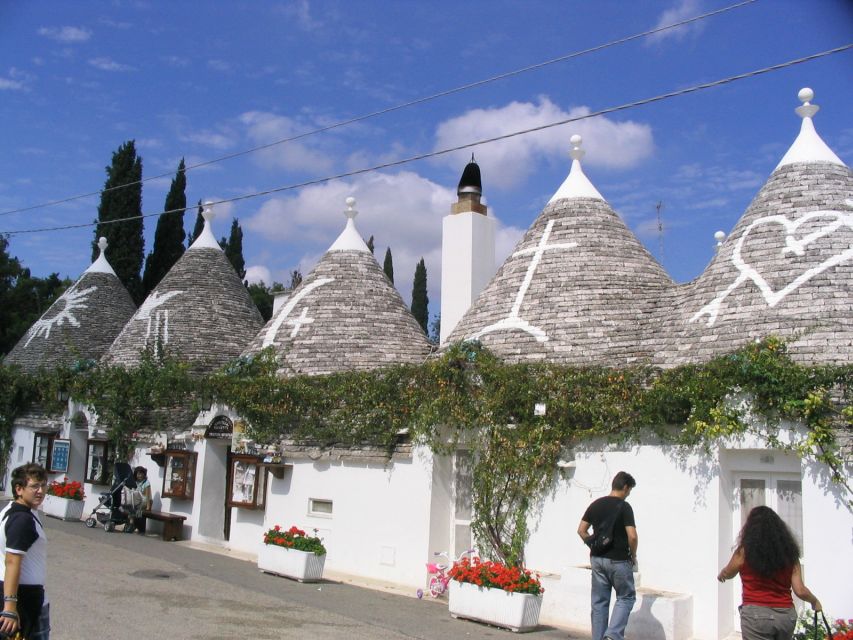
The route continues into Rione Monti, the district most closely associated with Alberobello’s famous image. Its narrow lanes and rows of trulli create the setting many people come to see, with conical roofs appearing one after another as you walk uphill and around the small streets.
Rione Monti is visually strong, but it is also the part of the visit most likely to feel commercial. The concentration of trulli makes for excellent photographs, yet shops and crowds can compete with the older character of the buildings. A guide helps by shifting your attention from simply taking pictures to looking at the construction and layout.
This is where I would ask questions. Which parts are original? How were the roofs assembled? How did families use the rooms? The available guides have different personalities, but the strongest feedback points to clear explanations, good storytelling, and a willingness to answer questions.
Several guides named in the tour feedback include Francesco, Mario, Sylvia, Roberta, Alessandro, Floriana, and Dominicio. You may not receive a particular guide, but the comments about Francesco’s personal approach, Mario’s humor, Sylvia’s warmth, and Dominicio’s storytelling suggest the experience can feel more like a conversation than a formal lecture.
Rione Monti is also a good place to notice how the trulli are grouped. From the outside, many look like individual cottages. Inside, they may connect through adjoining rooms and alcoves, creating a more practical home than the compact exterior first suggests.
Aia Piccola and the quieter side of town
Aia Piccola provides a useful change of pace. It is one of Alberobello’s historic districts, but it feels less like a row of attractions and more like a residential area. The buildings here help you picture trulli as part of everyday life rather than as a backdrop for souvenir shops.
That contrast is one of the tour’s best features. Rione Monti explains why Alberobello is famous. Aia Piccola helps explain why it matters. Walking through both districts gives you a fuller sense of the town’s character than visiting only the busiest lanes.
I would not expect every trullo in Aia Piccola to be open or presented as a museum. That is part of the point. You are seeing a district with homes and historic buildings, not one large exhibit. Stay with the guide and listen for explanations about how local people lived in these stone structures.
The route uses little alleys, so comfortable walking shoes are sensible. The tour is not described as difficult, but this is a walking experience rather than a drive-by sightseeing stop. If you prefer a slow pace for photographs, tell the guide early. The stated duration leaves enough time for a focused visit, not unlimited lingering.
Inside a local trullo home
The home visit is the part that gives the tour its human scale. After seeing rows of trulli from the street, you get to step inside one and see how the structure is arranged. This helps answer the basic question many people have when they first arrive: how can anyone live in a round stone building with a pointed roof?
Inside, the shape becomes easier to understand. The thick walls, compact rooms, and unusual ceiling are no longer abstract architectural features. They become part of a home designed around the materials available in the area.
The visit is especially useful if you are traveling with children. The buildings can look like storybook houses, but the interior visit turns that visual appeal into a practical lesson. Children under 18 are free on this tour, which improves its value for families, provided the group includes at least two participants.
Some versions of the experience may also include contact with local residents or a small tasting of local products. That detail is not guaranteed as a formal inclusion, so I would treat it as a possible extra rather than the reason to book. The guaranteed feature is the chance to see how a trullo is composed.
This stop can also help you decide if you want to visit a trullo museum or explore more on your own afterward. You will already have the basic vocabulary and visual clues needed to get more from those visits.
More walking tours in Italy:
- Milan: Guided Walking Tour & Last Supper Visit with Ticket
★ 4.7 · 5,409 reviews - Naples: Street Food Walking Tour with Local Guide
★ 4.8 · 4,256 reviews - Venice Walking Tour and Gondola Ride
★ 3.5 · 3,630 reviews - Venice: Rialto Bridge & Offbeat Unusual Venice Walking Tour
★ 4.2 · 3,538 reviews
San Antonio, the church shaped like a trullo
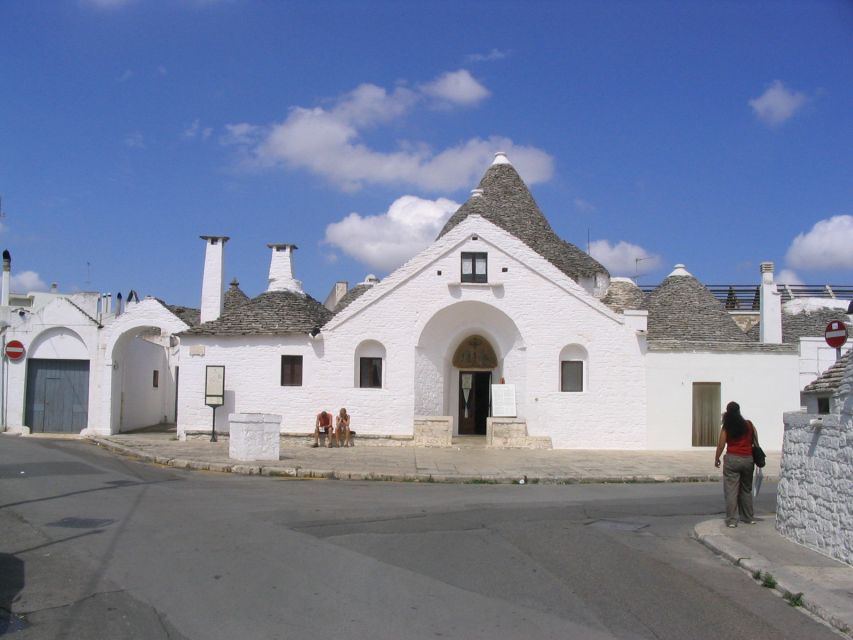
The walk reaches the Church of San Antonio, an unusual building because it follows the trullo style. Its shape makes it a natural part of this tour. Instead of stopping only at ordinary homes, the route shows how the local architectural language also appeared in a religious building.
The church is not presented as a long interior visit, so keep your expectations focused on the exterior form and its place in Alberobello. It is a memorable landmark because the cone-roofed design is immediately recognizable, yet its purpose differs from the homes around it.
This stop also gives the guide another way to explain the difference between a building style and a tourist symbol. The trullo form was not made only for photographs. It was adapted for homes, working spaces, and, in this case, a church.
The guides make the difference
A licensed guide is included, and the tour can be conducted in English, French, Spanish, or Italian. The quality of the experience will still depend on the individual guide and the size and makeup of your group, but the strongest feedback focuses on clear explanations and a friendly, personal approach.
Francesco is praised for entering historic houses and explaining small details. Mario is described as both entertaining and well informed about the trulli. Sylvia is noted for a warm manner and strong historical explanations, while Floriana brings a pleasant style and humor.
Roberta has explained why local builders used stone without cement and has connected the architecture with museum displays. Alessandro has been appreciated for taking time with residents and expanding the visit beyond the usual streets. Dominicio is described as an engaging storyteller.
Those details matter because Alberobello can be enjoyed as a quick photo stop, but the history is easier to remember when it is attached to a person, a room, or a roof detail. The tour is at its best when you ask questions and let the guide adapt the explanation to your interests.
One useful practical point is that a guide may be able to suggest places for lunch. That is not a meal included with the tour, but it can save you from choosing a restaurant based only on the first menu you see.
Is $40 a fair price?
At $40 per person, this is not the cheapest way to walk through Alberobello. The main attractions are visible without paying: the Belvedere, the lanes, the trulli, and the church can all be approached independently.
The price becomes more reasonable when you value interpretation and access. You receive 1.5 to 2 hours with a licensed guide, a planned route through both major districts, a visit inside a traditional trullo, and explanations in one of four languages. You are paying for context and a local connection, not transportation or admission to a large collection of sites.
For one person, the cost may feel high compared with a self-guided stroll. For a couple or family, the value improves, especially since children under 18 are free. A private group is available if you want a more tailored experience, but the exact price and arrangement should be checked when booking.
The minimum of two participants is important. If you are traveling alone, do not assume the tour will run without another participant. Check availability before building your day around it.
Timing, meeting points, and what to bring
The exact starting time and meeting point can vary according to the option booked. Check those details carefully, especially if you are arriving in Alberobello independently or connecting the tour with lunch or another activity.
Transfers are not included. You need to arrange your own way to the meeting point, and the tour ends back there. That makes it simple to continue exploring the town afterward, but it also means you should not expect pickup from accommodation elsewhere in Apulia.
Wear shoes suited to walking on narrow streets and bring water in warm weather. The tour is short enough to fit into a half-day plan, but you should leave some extra time if you want to browse the districts after the guide finishes.
Free cancellation is available up to 24 hours before the start for a full refund. You can also reserve and pay later, which is useful when your Apulia schedule is still shifting.
Who should book this Alberobello tour?
I would recommend it to first-time visitors who want more than a collection of attractive photographs. It is also a good fit for anyone interested in traditional building methods, local life, or UNESCO-listed places explained by someone who knows the town well.
Families should take a close look at it because children under 18 are free. The home visit and unusual church can keep the walk more engaging than a standard architecture lecture.
It suits visitors who have only a short time in Alberobello, too. The route covers the key districts and gives you a clear introduction in under two hours. Afterward, you can return to the lanes you liked best.
I would hesitate only if you prefer complete independence, dislike fixed walking routes, or already know the history of Alberobello well. In that case, the $40 may be better spent on food, a museum, or extra time exploring alone.
Should you book it?
Book this tour if you want Alberobello explained, not merely photographed. The strongest features are the Belvedere introduction, the contrast between Rione Monti and Aia Piccola, and the chance to enter a real trullo home.
The experience offers good value for families and first-time visitors, with free admission for children under 18 and several language choices. Just remember that transfers are excluded, the meeting point can vary, and at least two participants are required.
If you want a concise, personal introduction to the town’s architecture and local story, this is a sensible choice. If you have already spent time with the trulli and prefer wandering at your own pace, you may not need the guide.
FAQ
How long does the Alberobello walking tour last?
The tour lasts between 1.5 and 2 hours. Starting times vary, so check availability for the date you want.
How much does the tour cost?
The listed price is $40 per person.
Which parts of Alberobello does the tour visit?
The route includes the Belvedere terrace, the Rione Monti district, the Aia Piccola district, the Church of San Antonio, and a traditional trullo home.
Can I enter a trullo during the tour?
Yes. The experience includes a visit to a local home so you can see how a traditional trullo is arranged.
Which languages are available?
The tour is available in English, French, Spanish, and Italian.
Are children allowed to join for free?
Yes. Children under 18 are free.
Is transportation included?
No. Transfers are not included. The activity starts and ends at the meeting point.
Can I cancel the booking?
Yes. You can cancel up to 24 hours in advance for a full refund. The reserve-now, pay-later option is also available.
Fresh on the Italy list
- Rome: Guided Catacombs Tour & Capuchin Crypt (Audio Guide)★ 4.3 · 191 reviews
- Guided tour of the Colosseum, Roman Forum and Palatine in Spanish★ 4.5 · 191 reviews
- Bolgheri: Winery Tour with Wine Tasting★ 4.7 · 191 reviews
- Stories of Pompeii: Small Group tour with archeology expert guide★ 5.0 · 191 reviews
- Palinuro: Costa del Mito Boat Tour★ 4.9 · 191 reviews
- From Palau/La Maddalena: All inclusive Yacht Tour★ 4.8 · 191 reviews
- Small-Group Cooking Class in Positano: Gnocchi, Tiramisù & Drinks★ 5.0 · 191 reviews
- Turin: Stupinigi Royal Hunting Lodge Entry Ticket★ 4.5 · 191 reviews
Walking Tours, compared.
Guided Walking Tour & Last Supper Visit with Ticket
Read our review →
Rialto Bridge & Offbeat Unusual Venice Walking Tour
Read our review →
Private 3 hrs Venice Tour: St Mark’s, Walking tour & Boat tour
Read our review →
Skip the line: Uffizi and Accademia Small Group Walking Tour
Read our review →Browse the lists this tour appears in