
Reviewed · MUSEUMS
Florence: Firenze Card Official Museum City Pass
Florence’s best art is packed into a walkable center, and the FirenzeCard lets you turn that concentration into a serious museum plan. One physical card covers about 60 museums, including the Uffizi Gallery, Accademia Gallery, and Brancacci Chapels, while timed reservations help you handle the city’s busiest sights.
I like the 72-hour clock, which begins with your first museum entry, and the fact that children under 18 in your family enter free with a cardholder. I also like the practical savings for an art-heavy visit. The catch is simple: you need to visit several venues to make the $110 price work, and the card does not cover transportation or the Duomo complex.
Key points to know before buying
- Activation begins at first museum entry: Your 72 hours do not start when you collect the card.
- Uffizi and Accademia require reservations: You must arrange free time slots for both major museums, including for eligible children.
- Pick up a physical card near Giotto’s Belfry: Exchange your voucher at the ticket counter under the blue flag.
- About 60 museums are included: The pass is most useful for visitors who plan several museum stops.
- Children under 18 enter free with a cardholder: Their reservations still need to be arranged where required.
- The Duomo complex is excluded: Santa Maria del Fiore and its related monuments are not part of this pass.
How the FirenzeCard works in Florence
The FirenzeCard is an official city museum pass with a 72-hour validity period. You collect a physical card at the meeting point in front of Giotto’s Belfry, near the kiosk and ambulance, under a blue flag. Bring your passport or ID card, and exchange your voucher at the ticket counter.
The clock starts when you first enter a museum, not when you pick up the card. That detail matters. You can collect it early, settle into your hotel, and wait to activate it until you are ready to begin your museum schedule.
The pass covers entrance to Florence museums, including exhibitions that may normally carry an extra charge. It also offers selected discounts at shops, restaurants, a hotel, and a hair and beauty business. Those extras are pleasant, but they should not determine your decision. The museum access is the reason to buy this card.
The pass is wheelchair accessible. Transportation is not included, so you will walk, use your own transport arrangements, or pay separately for buses and other services.
More City Tours in Florence
- City Sightseeing Florence Hop-On Hop-Off Bus Tour
★ 3.5 · 1,894 reviews - Florence: Eco-Friendly Golf Cart City Tour with Audio Guide
★ 4.6 · 1,094 reviews - Florence in a Day: Michelangelo’s David, Uffizi and Guided City Walking Tour
★ 4.5 · 1,048 reviews
What you can see in the first 72 hours
The major reason to buy the FirenzeCard is the chance to group Florence’s top art museums into one three-day stretch. Florence rewards this approach because many important sights sit close together, though the experience can still be tiring, especially during hot weather.
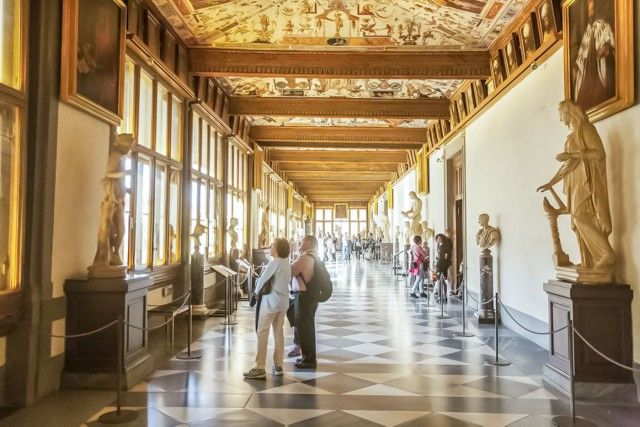
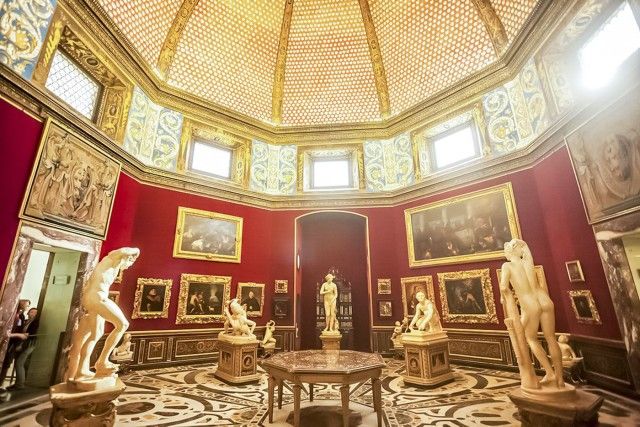
Start with the Uffizi Gallery if it is a priority. This is the city’s heavyweight museum, and you can expect a large collection that deserves more than a rushed glance. Three hours may be enough for some visitors, but the scale and crowded galleries can make a longer visit tiring.
You need a reservation for the Uffizi. The reservation is free with the card, but it is not automatic simply because you hold the pass. Arrange your time slot as soon as your plans are clear, especially if your visit falls during a busy period.
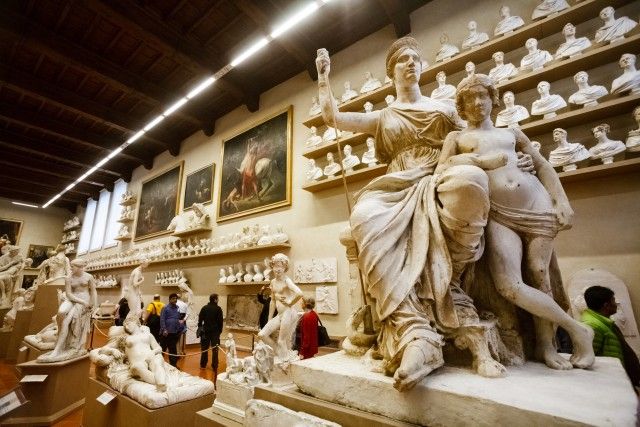
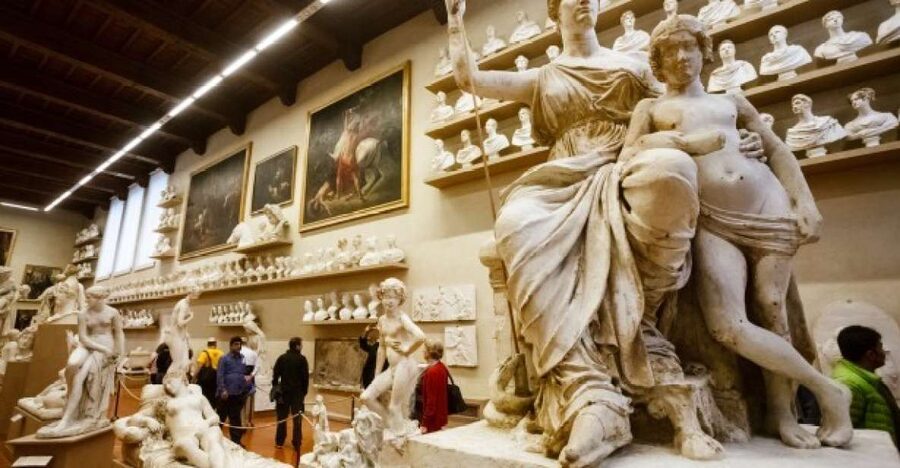
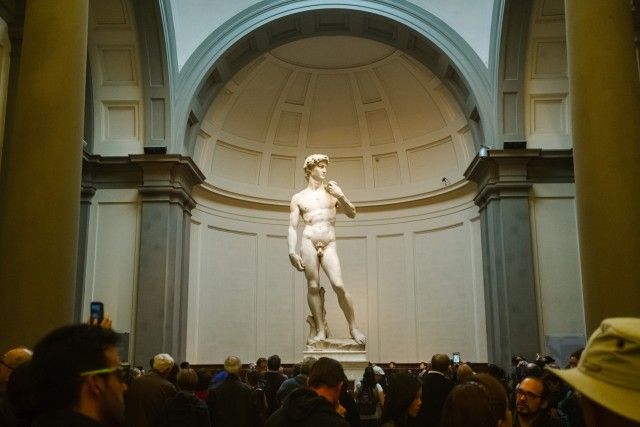
The Accademia Gallery is the other essential booking. Michelangelo’s David is the main draw, but the museum includes more than one famous statue. Even so, many people plan their visit around David, so timed entry is important.
The Accademia can be a shorter stop than the Uffizi, which makes it useful on a day when you are also visiting other sites. Book the time in advance, then build nearby museum visits around it rather than hoping to walk in at the last minute.
The Brancacci Chapels offer a different kind of experience. Instead of spending hours in a large collection, you can focus on the famous chapel frescoes and the way the artwork fills a compact religious space. It is a good reminder that Florence’s art is not confined to its headline museums.
The FirenzeCard also covers many other museums and monuments across the city. The exact mix of sites makes the pass especially useful for people who want more than the Uffizi and Accademia. Check opening hours before setting your daily route, since one closed venue can upset a tightly packed plan.
Planning a realistic museum schedule
The card works best when you plan by neighborhood. Florence is walkable, but a day of four or five museums can become exhausting. One practical use is to place your timed Uffizi or Accademia visit in the middle of the day, then choose smaller venues nearby before or after it.
A fast-paced schedule can produce strong value. One efficient plan used seven venues during the 72-hour period, while another reached four venues between 9 a.m. and 2 p.m. That pace is possible, but it is not right for everyone.
I would aim for two major museums and one or two smaller stops per day. You get the savings without turning every hour into a race. If art history is your main reason for visiting Florence, you may happily visit three sites a day. If you want time for meals, churches, streets, and views, plan fewer.
Build in room for Florence’s heat. A hot afternoon can turn a promising museum day into a slog, and a crowded Uffizi takes energy. An early visit to a smaller museum can be a smart way to use the card before the busiest hours.
Opening times matter as much as distance. Some museums may close on days that look free on your calendar, and a pass cannot help if the doors are shut. Check each venue’s hours before activation, then choose the day when your highest priorities are open.
Uffizi and Accademia reservations are essential
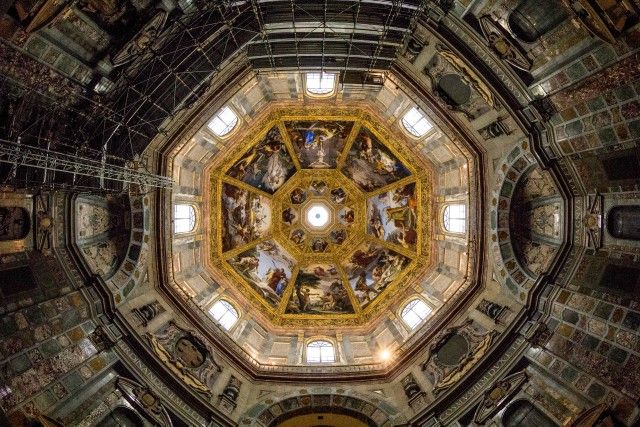
The FirenzeCard reduces the need to buy separate museum tickets, but it does not remove all planning. The Uffizi Galleries and Accademia Gallery require reservations, and the same free reservation rule applies to children under 18 who are entering with the cardholder.
This is one of the most important details in the whole purchase. A child may qualify for free access, but you still need to arrange the reservation for a popular museum. Do not assume that your child can simply follow you through the timed-entry line.
The reservation process can feel separate from card collection. The pickup point is by Giotto’s Belfry, while reservation arrangements may involve another step or location. Clear instructions are available, and the support staff at the pickup office can help with planning, but you should still arrive with your priority museums in mind.
A useful approach is to reserve the Uffizi and Accademia first, then fill the gaps with museums that do not require a fixed appointment. This gives your three days a backbone without making every stop dependent on a tight schedule.
More Museums in Florence
- Florence: Skip-The-Line Uffizi Gallery Timed Entry Ticket
★ 4.5 · 27,832 reviews - Florence: Leonardo Interactive Museum Entry Ticket
★ 4.5 · 11,763 reviews - Florence Accademia Gallery Tour with Entrance Ticket Included
★ 4.5 · 6,148 reviews - Uffizi Gallery Small Group Tour with Guide
★ 4.5 · 4,923 reviews
Where the pass saves money
At $110 per person, the FirenzeCard is not an automatic bargain. Its value depends on how many included venues you visit and how much you value avoiding separate ticket purchases.
For an art-focused visit, the math can work well. A schedule that includes the Uffizi, Accademia, Brancacci Chapels, and several additional museums gives the card a stronger case than a relaxed trip built around only one or two paid sights.
The pass also helps with convenience. You present one card instead of handling a new admission purchase at every museum. You can move between included venues without stopping to calculate another entrance fee each time.
The priority access is useful, but be precise about what that means. The card helps you avoid ticket-buying queues and gives you access through the proper cardholder route. It does not mean every museum is instant, and required reservations still apply.
If you plan to visit about three sites a day, especially with the Uffizi and Accademia included, the price becomes easier to justify. If you prefer a slow pace, visit only one major museum, or spend much of your time outside, buying individual tickets may be cheaper.
The free child benefit needs its own reservation
Families should pay close attention to the under-18 rule. Children under 18 in the cardholder’s family unit receive free admission when accompanied by the cardholder.
That can improve the value for a family, particularly when adults plan several museums. Still, the free child admission does not remove the need for a reservation at the Uffizi and Accademia.
At the time of booking, make sure the child’s free reservation is included in your plan. This is a small administrative step, but missing it can create confusion at the most crowded museums.
The card can also make family decisions easier during the day. You can enter an included museum for a short visit without feeling that you have wasted a separate admission fee. That flexibility is useful when children lose interest or the heat becomes too much.
Discounts beyond the museums
The card includes discounts at several named businesses in central Florence. You receive 10 percent at the Hard Rock Shop on Via dei Brunelleschi, excluding limited-edition and charity items, and 10 percent at the Hard Rock Cafe restaurant on the à la carte menu, excluding alcohol.
Other listed discounts include 15 percent at Andrea Sassi clothing store on Via Panzani, 5 percent at Enrico Verità watch shop on Via dei Calzaiuoli, 10 percent at Residenza dei Pucci hotel, and 10 percent at P&P Style hair and beauty on Via dello Studio.
These offers may be useful if one of those places already fits your plans. I would treat them as a bonus, not as a reason to spend $110. The museum access is where the real value lies.
What the FirenzeCard does not cover
The Duomo complex is not included. That means you should budget separately for Florence Cathedral’s related attractions and plan those tickets outside the FirenzeCard schedule.
Transportation is also excluded. Florence’s central sights are close enough for many visits on foot, but the pass itself does not provide buses, taxis, or other transport.
This separation matters when you build your budget. A visitor who assumes the card covers every major Florence attraction may feel disappointed. A visitor who sees it as a museum pass, then purchases Duomo access separately, will have a clearer plan.
The card also does not remove the need to check individual museum arrangements. Popular venues can require reservations, and opening hours can limit how many places you fit into 72 hours.
Collection, support, and practical details
The physical card is collected in front of Giotto’s Belfry. Look near the kiosk and ambulance for the blue flag, then exchange your voucher at the ticket counter. A toilet is available at the meeting point, a small but useful detail after arrival in the city.
The pickup staff can be helpful when you need to understand where to reserve or enter. Take a moment to ask about the correct route for your first museum, since the cardholder entrance is not always obvious from the street.
Keep the card safe throughout the three days. Since it is physical, you do not need to rely on an app to show your basic pass, though any reservation details may still involve separate instructions.
Bring your passport or ID card. That requirement is easy to overlook when you are carrying a phone, wallet, and day bag, but it is part of the stated collection instructions.
Free cancellation is available up to 24 hours before the activity for a full refund, and you can reserve now and pay later. Those terms help if your Florence dates are not fully settled, but they do not change the 72-hour period after activation.
Who should buy the FirenzeCard?
I would recommend it most strongly to an adult or family that wants an art-heavy Florence visit. You should expect to see the Uffizi, Accademia, and several additional museums during the three days.
It is also a good fit if you dislike repeated ticket lines. The ability to walk into included venues using one pass can save time and reduce small decisions, especially when you are moving around the city with children.
The card is less convincing for a slow-paced visit. If you want to spend a full day at the Uffizi, take long breaks, and visit only a few paid sites, individual tickets may offer better value.
Heat is another consideration. Florence can be hot, and several museums in a day require stamina. Plan shorter visits, use early hours when possible, and do not confuse a full pass with an obligation to use it every hour.
Final verdict on the $110 Florence museum pass
Buy the FirenzeCard if you can name at least three major museum visits and expect to add several smaller venues. The strongest case includes both the Uffizi and Accademia, uses the 72-hour period fully, and takes advantage of the card’s quick access at ticket points.
Skip it if the Duomo is your main priority, since that complex is excluded, or if you prefer a leisurely schedule with only one or two museums. For families, the free admission for children under 18 can change the math in the card’s favor, but remember to make their required reservations.
For the right visitor, this is a practical way to organize Florence’s art without paying at every door. Just collect the card, reserve the two headline museums early, check opening times, and leave enough breathing room to enjoy the city between masterpieces.
FAQ
How long is the FirenzeCard valid?
The card is valid for 72 hours, or three days, beginning with your first entry into a museum.
When is the card activated?
The card activates at the moment you first enter a museum. Picking up the physical card does not begin the validity period.
Where do I collect the physical FirenzeCard?
Collect it in front of Giotto’s Belfry, near the kiosk and ambulance under a blue flag. Exchange your voucher at the ticket counter.
Are the Uffizi and Accademia included?
Yes. The Uffizi Galleries and Accademia Gallery are included, but reservations are required for both.
Do children under 18 enter free?
Children under 18 in the family unit of the FirenzeCard holder receive free admission when accompanied by the cardholder. A free reservation is still required for children at the Uffizi and Accademia.
Does the FirenzeCard include the Duomo complex?
No. The complex of the Duomo is not included in the pass.
Is transportation included?
No. Transportation is not included with the FirenzeCard.
Fresh on the Florence list
- Semi Private Deep Wine Chianti and San Gimignano from Florence★ 5.0 · 191 reviews
- Small Group Florence Cathedral Guided Tour with Priority Access★ 4.0 · 192 reviews
- From Florence: Wine Tasting and Dinner in Chianti Vineyards★ 4.6 · 192 reviews
- Hard Rock Cafe Florence with Set Menu for Lunch or Dinner★ 4.5 · 193 reviews
- Florence Sunset Food Tour with Wine & Dine at a Tuscan farmhouse★ 5.0 · 194 reviews
- Wine Experience In Chianti Hills from Florence★ 4.5 · 195 reviews
- Florence: Duomo Complex Guided Tour★ 4.2 · 195 reviews
- Brunelleschi’s Dome and Cathedral Complex Reserved Ticket★ 4.5 · 195 reviews
Museums, compared.
Vatican: Museums & Sistine Chapel Entrance Ticket
Read our review →
Vatican Museums & Sistine Chapel Tour with Optional Basilica
Read our review →
Vatican Museums, Sistine Chapel & St Peter’s Basilica Guided Tour
Read our review →
Skip-The-Line Uffizi Gallery Timed Entry Ticket
Read our review →
Vatican Museums, Sistine Chapel & Basilica Tour
Read our review →
Vatican Museums & Sistine Chapel Skip-the-Line Entry Ticket
Read our review →Vatican Museums, Sistine Chapel & Basilica Tour
Read our review →
Vatican Museums & Sistine Chapel Guided Tour
Read our review →Browse the lists this tour appears in