
Reviewed · MUSEUMS
Venice: Vivaldi’s Four Seasons Concert & Music Museum Visit
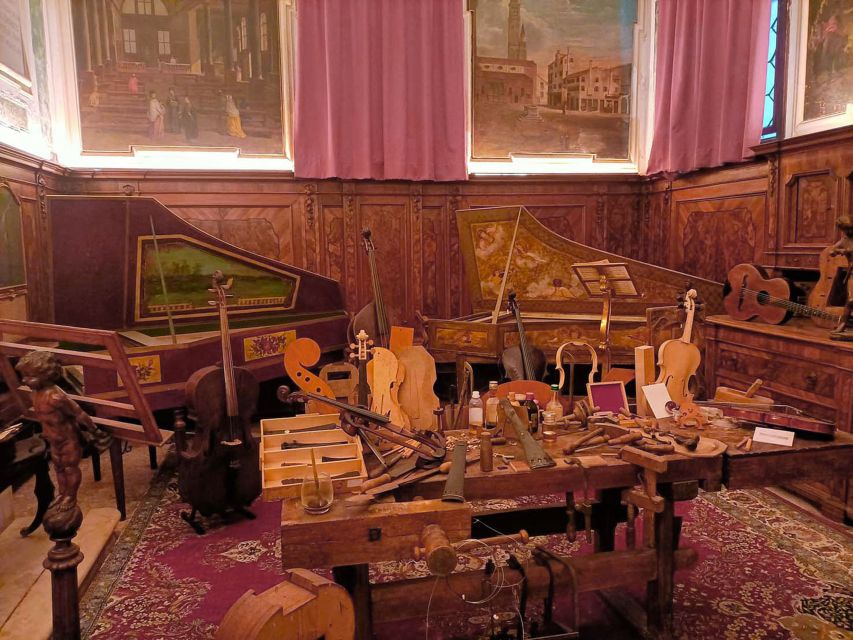
Venice gives Vivaldi the setting he deserves: an old church, lively strings, and the sound of The Four Seasons rising beneath painted ceilings. This experience pairs a concert by Interpreti Veneziani, Venice’s long-running Baroque orchestra, with a visit to the Museo della Musica di Venezia, where you can see about 200 instruments from 1600 to 1900.
I like two things right away. First, the music is played by a Venetian ensemble in a Venetian church, rather than in a modern concert hall. Second, the museum adds useful context, especially its Stradivari School instruments and a violin linked to Matteo Goffriller, Antonio Vivaldi’s violin maker. The main thing to watch is seating: it is first come, first served, and the wooden chairs can be tight, warm, and noisy.
Key points to know before you book
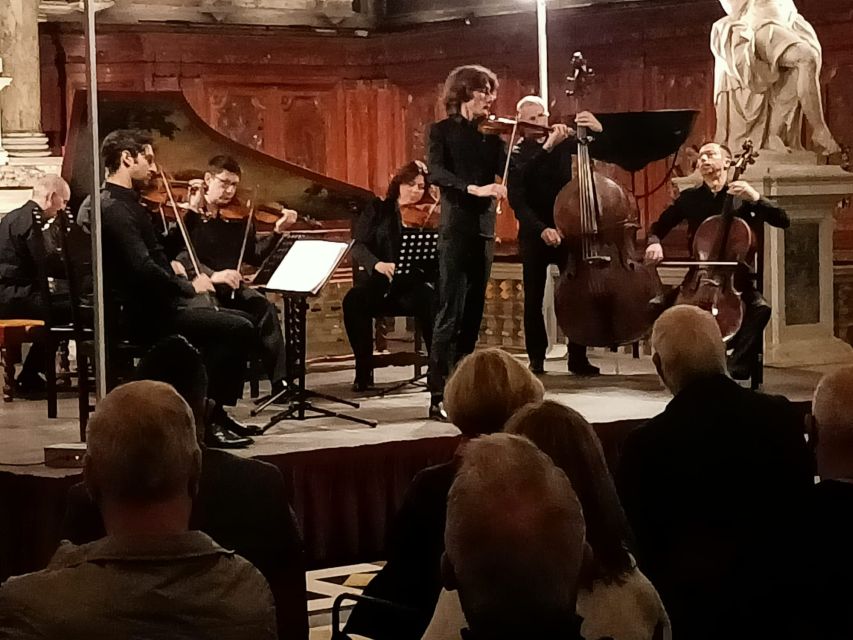
- The concert takes place in San Vidal Church, between the Accademia Galleries and St. Mark’s Square, about 10 minutes from Rialto Bridge.
- Interpreti Veneziani has performed for 35 years, giving the program a distinctly Venetian identity.
- The Music Museum displays 200 original instruments, including violins, double basses, and examples from the Cremona school.
- Arrive 30 to 45 minutes early if sitting near the stage matters to you.
- The $46 price includes museum admission, but one account reports that buying directly at the church can cost less.
- Museum hours need checking, since access times can vary from the hours shown when you book.
Why Vivaldi sounds different in Venice
Antonio Vivaldi was born in Venice, and the city is the right place to hear his music. You are not simply checking off a famous composition. You are hearing one of Venice’s best-known sons in the city where he worked, taught, and wrote much of his music.
The program centers on The Four Seasons, a group of four violin concertos that turn spring storms, summer heat, autumn hunts, and winter winds into sound. You do not need to know classical music to follow it. The birds, thunder, barking dogs, icy winds, and dancing rhythms are easy to recognize once the solo violin begins to tell the story.
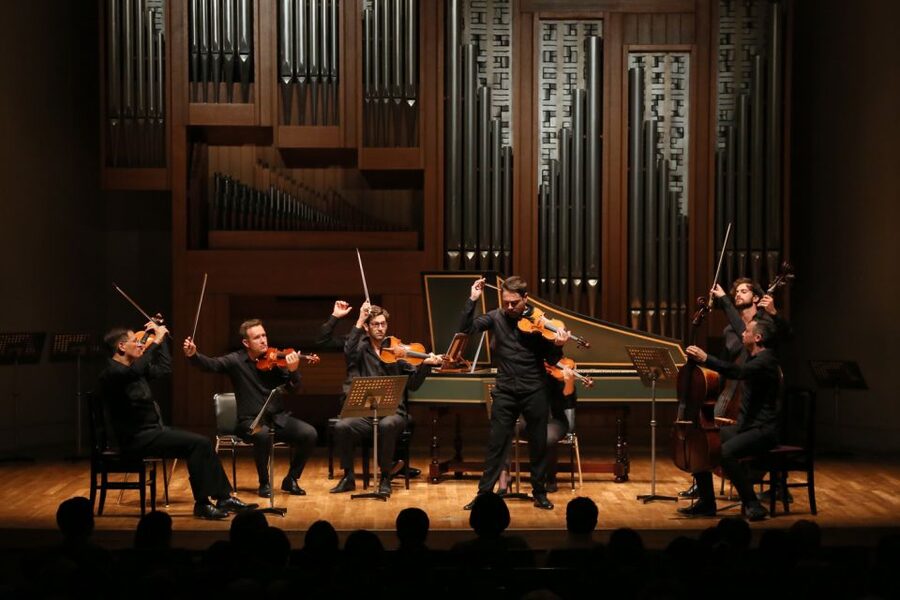
The performance can be spirited rather than stiff. The soloist carries the most dramatic passages, while the string ensemble answers and supports the main line. One performance featured soloist Nicola Granillo, whose interpretation of the first movement of Autumn made a particularly strong impression. The exact musicians can vary, but the central appeal remains the same: Vivaldi’s music is direct, emotional, and full of motion.
I would not expect a museum lecture or a formal historical presentation during the concert. The value is in the setting, the sound, and the chance to hear a Venetian Baroque ensemble play a work closely tied to the city.
More Museums in Venice
- Venice: St. Mark Basilica Ticket, Audioguide+History Gallery
★ 3.9 · 4,780 reviews - Venice: Leonardo Da Vinci Museum Entrance Ticket
★ 4.5 · 3,560 reviews - Venice’s Best: Basilica, Doge’s Palace, Gondola & History Gallery
★ 4.5 · 2,478 reviews
San Vidal Church, a concert hall with centuries of atmosphere
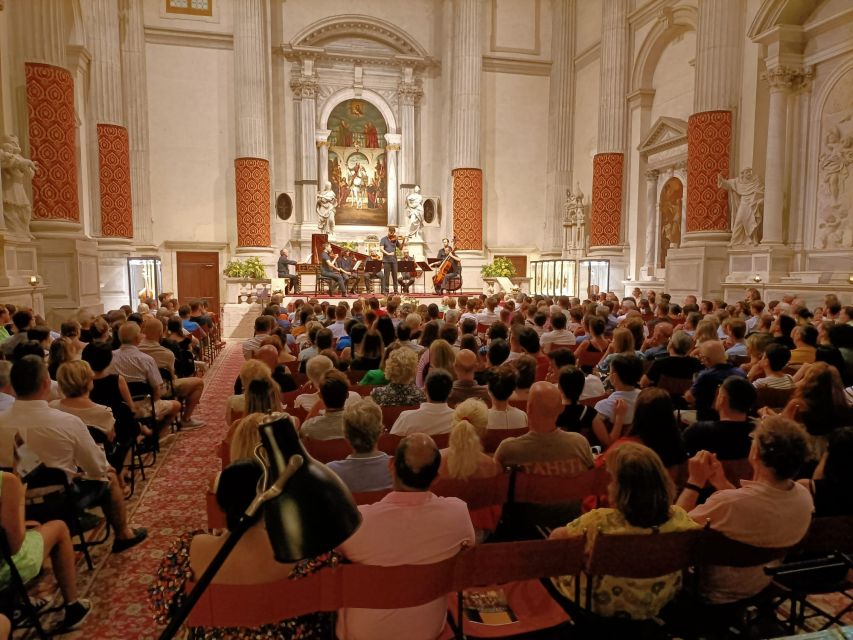
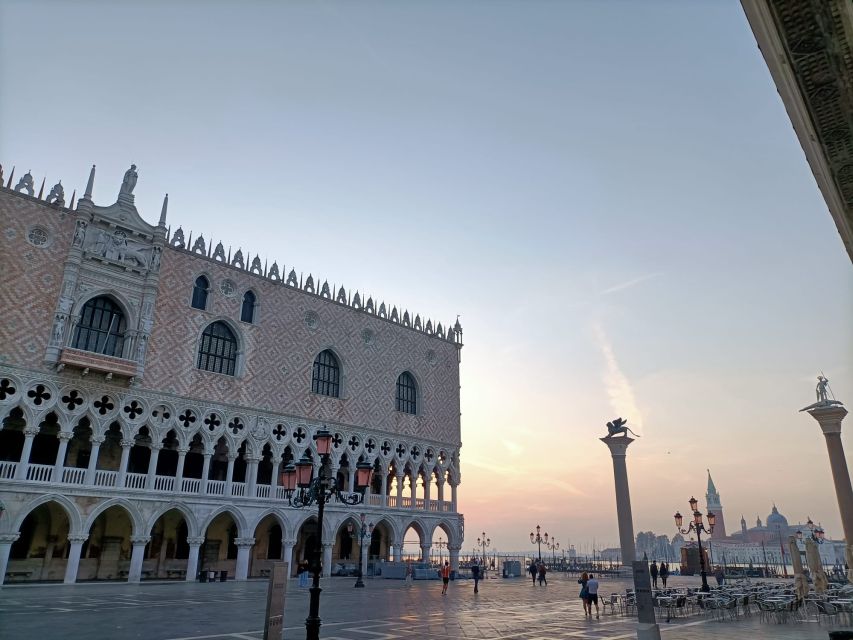
The concert venue is Chiesa di San Vidal, also referred to in the meeting information alongside San Maurizio Church. San Vidal sits in a useful part of Venice, between the Accademia area and St. Mark’s Square. From Rialto Bridge, the walk is about 10 minutes, though Venice’s winding lanes can make a short distance feel less direct.
Arrive with enough time to find the church without rushing. The best practical advice is to reach the entrance 30 to 45 minutes before the start. Some performances fill early, and arriving first gives you a better chance of sitting close to the musicians.
There are no assigned seats. That can work in your favor if you arrive early, but it also means a late arrival may leave you with less choice. The church is large enough that even later arrivals can still find seats, but the strongest sightlines go first. You might also find a bench along a marble wall more comfortable than a wooden chair, depending on the evening.
San Vidal’s acoustics are a major part of the experience. The stone interior lets the strings carry without needing the amplified sound you would expect at a large modern venue. Several aspects of the music become clearer here: the quick exchange between the solo violin and ensemble, the weight of the cello, and the soft changes in volume during the slower movements.
There are tradeoffs. The seats have been described as uncomfortable, and some chairs make noise when people shift. The church can also become warm when the concert is full, with limited bathroom facilities. None of this changes the quality of the performance, but it is worth knowing if you have back problems or dislike close seating.
The church itself is part of the sightseeing. You can admire the interior before the lights go down, then watch the musicians work at close range. Some seating may place you near the stage, which makes bow movement, fingerwork, and the physical energy of the ensemble easy to see.
The Music Museum and its 200 historic instruments
The Museo della Musica di Venezia is at S. Marco, 2603, 30124 Venezia. It is not necessarily at the same building as the concert, so plan time to get between the museum and San Vidal Church.
Your ticket includes free museum entry on the same day, and the museum can be visited before or after the concert date. The stated opening schedule is every day from 10 AM to 1 PM and 2 PM to 7 PM. Still, check the current hours before setting out. A museum closure on Wednesday and an early closing around 5 PM have caused confusion for some ticket holders, so do not rely on the timetable alone if the museum is central to your plans.
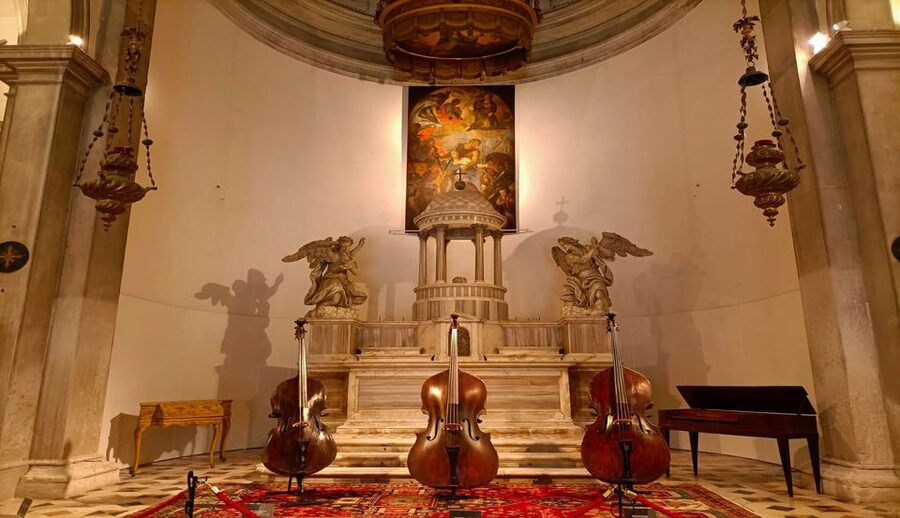
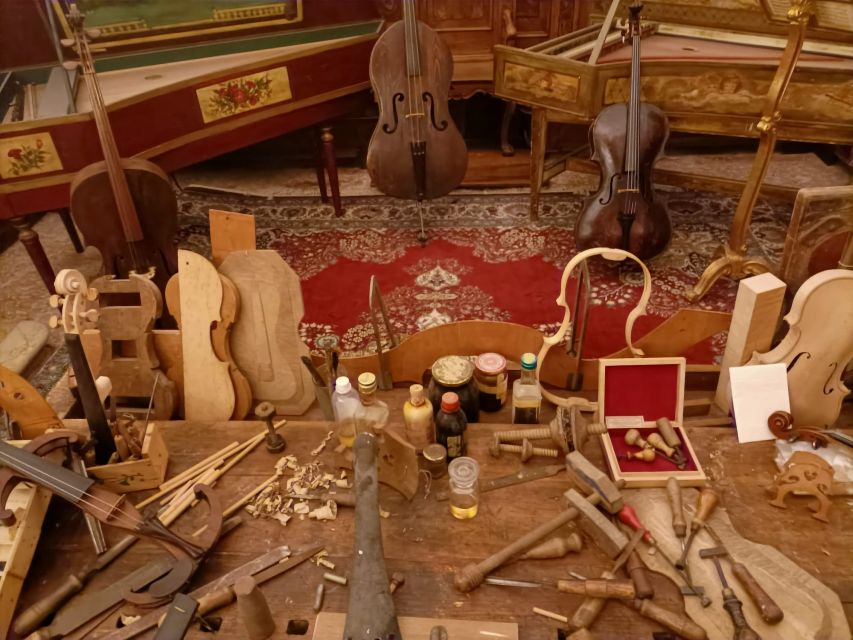
The collection contains around 200 original instruments made between 1600 and 1900. This gives you a look at how music was produced before modern factories, electronic tuning, and standardized parts took over. You see the objects as working tools, not just decorative antiques.
The most useful part is the focus on instrument making. You can learn how a violin is shaped, why its wood and construction matter, and how a well-made instrument can continue to play for centuries. A violin is not just a box with strings. Its curves, varnish, arching, bridge, and internal support all affect the way it responds.
The museum includes instruments connected with the Stradivari School of Cremona. It also has double basses associated with makers such as Bergonzi and Amati, along with Venetian instruments. One especially interesting piece is a violin by Matteo Goffriller, the maker associated with Vivaldi.
That connection gives the concert more meaning. You can look at an instrument made in the same broad musical world as Vivaldi, then hear modern musicians draw sound from related traditions. The museum does not replace the concert, and the concert does not replace the museum. They answer different questions. The museum shows you how instruments were made. The church lets you hear what they can do.
Do not expect to touch the displays. Food, drinks, smoking, bikes, pets other than assistance dogs, and large bags are not allowed. Photography inside, flash photography, audio recording, and loud conversation are also prohibited. These rules are strict, but they protect fragile instruments and keep the concert quiet.
What the concert program feels like from your seat
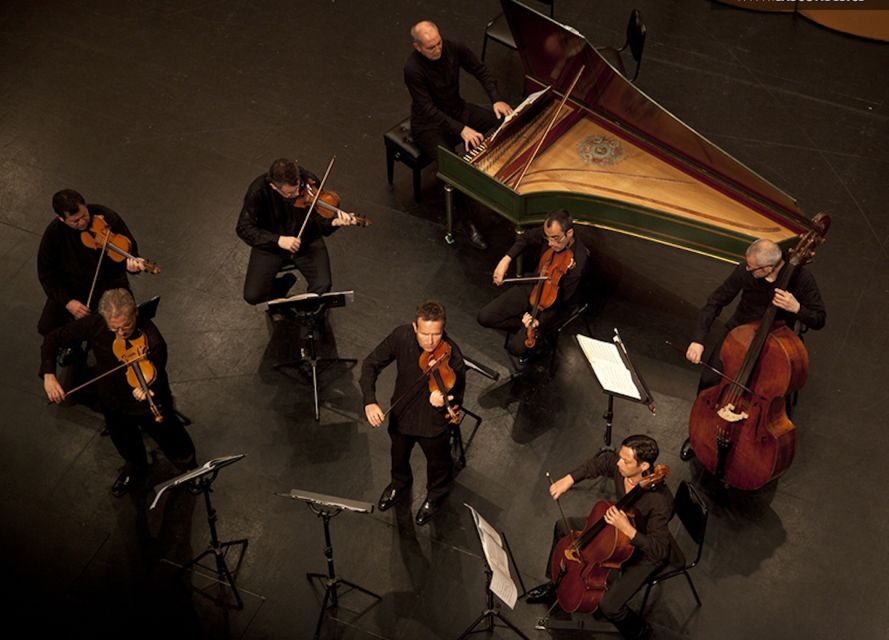
The main event is The Four Seasons, but the program can also include other pieces. The wider selection helps keep the evening from feeling like one long work, especially if you already know the famous concertos well.
Spring usually makes a strong opening impression. Its bright rhythms and birdlike passages are familiar, but hearing the solo violin live gives them more bite than a recording. Summer brings sharper contrasts, moving from heat and calm toward a storm. Autumn has a dance-like character, while Winter shifts between cold, tension, and sudden energy.
The musicians play close enough for you to see the performance, not just hear it. You can watch the lead violinist lean into a phrase, follow the cello’s role in the musical foundation, and notice how the group breathes together before a change.
The sound is not designed to be polished into a studio recording. That is a good thing here. You hear the church’s natural response, the small movements of the ensemble, and the immediacy of live strings. The result can feel more urgent and less predictable than listening through headphones.
The second half may feel less powerful to you if The Four Seasons comes first. One useful program suggestion is to reverse the order, with the most famous work later, but the current arrangement can vary. If you mainly want Vivaldi’s four concertos, check what is scheduled rather than assuming every concert has the exact same running order.
The encore is another small pleasure. It may be light and good-natured after the intensity of the main work, giving the evening a relaxed finish.
Same city, an entirely different afternoon:
- Venice: Doge’s Palace Reserved Entry Ticket
★ 4.6 · 42,716 reviews - Venice: Grand Canal Gondola Ride with App Commentary
★ 4.1 · 18,908 reviews - Boat Trip: Glimpse of Murano, Torcello & Burano Islands
★ 4.3 · 15,699 reviews - Venice: Grand Canal by Gondola with Live Commentary
★ 4.1 · 13,681 reviews
Is $46 a fair price?
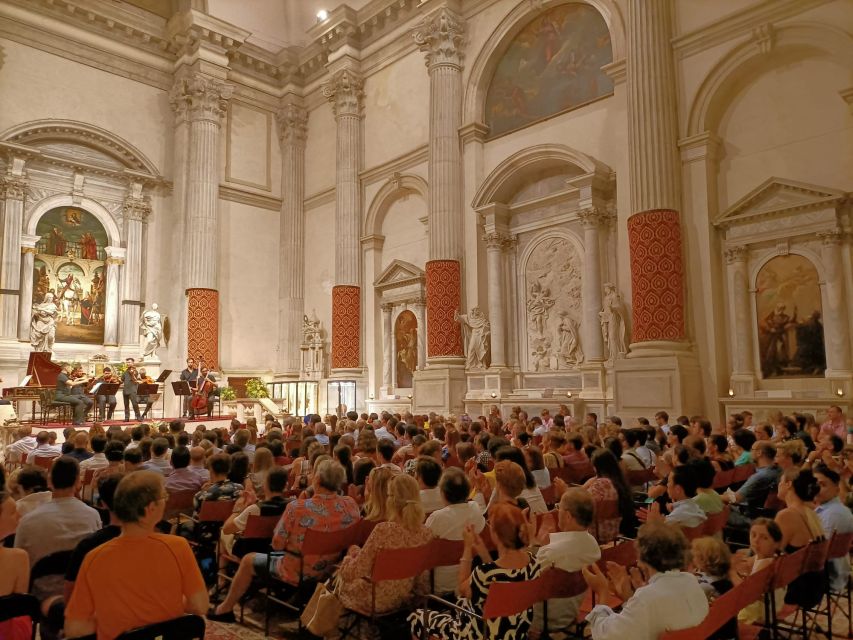
At $46 per person, the experience is not the cheapest classical music option in Venice. It is also not simply a concert ticket. You get admission to a museum with 200 period instruments, plus a live performance in a historic church.
For someone already planning to hear Vivaldi, the museum makes the price easier to justify. A concert alone may be enough for you, but the instrument collection gives the outing a stronger sense of purpose. You spend the afternoon or early evening looking at violins and double basses, then hear the family of instruments in action.
There is also a price comparison worth making. One ticket holder reported paying €39 online while the church charged €31 on site. Another account noted an original price of €32 at the church. Prices, availability, and queues can change, so I would compare the online total with the church’s current price if saving money matters. Booking online gives you a confirmed place and flexible cancellation, while buying in person may be cheaper but less predictable.
The ticket allows cancellation up to 24 hours before the activity for a full refund, and you can reserve now and pay later. The activity is valid for one day, so check the available concert time before booking. English-speaking staff assistance is provided, and the activity is wheelchair accessible.
Planning your museum and concert day
You have two basic ways to arrange the day. Visit the museum in the morning, take a long lunch, and attend the concert later. Or see the museum after the performance if the schedule allows. The museum closes for a midday break from 1 PM to 2 PM, so do not arrive expecting continuous afternoon access.
Keep the two locations in mind when planning. The museum is at S. Marco, 2603, while the concert is at San Vidal Church. Venice is compact on a map, but canals and one-way foot routes can add time. Give yourself more than the bare walking estimate, especially if you are traveling with children or arriving near a concert start.
Do not bring a large suitcase or oversized bag. Food and drinks are not allowed, and the rules also prohibit audio recording, photography, and noise inside. Your phone should be put away once the performance begins. That strict approach is actually helpful: you can watch the music without a forest of raised screens.
The experience works for families, including teenagers. The music has enough rhythm and drama to hold attention, and the church setting gives the evening a clear sense of occasion. It also suits a first classical concert because The Four Seasons is easy to follow without preparation.
If you have mobility concerns, the activity is listed as wheelchair accessible, but the specific seating arrangement remains first come, first served. Contact the provider if you need details about access inside the particular church on your date.
Who will enjoy this most?
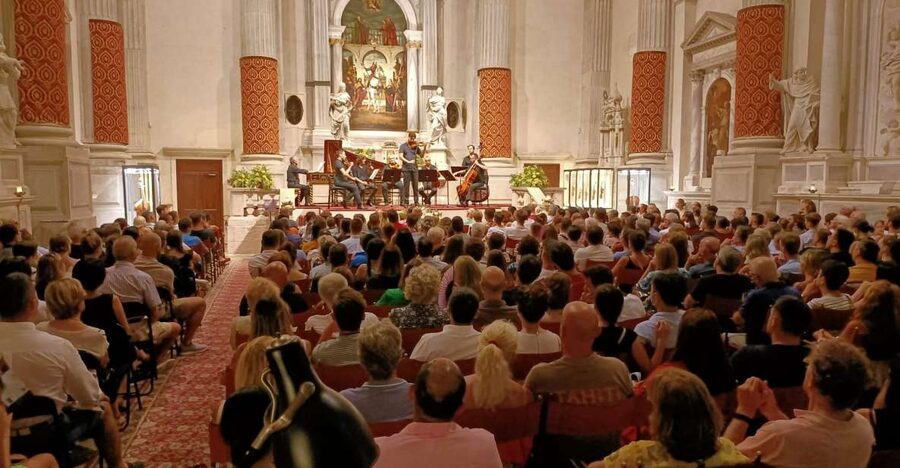
You are a good match for this experience if you want one memorable evening in Venice that combines art, local setting, and music. It is especially useful for a first-time classical concert, a family outing, or a special final night in the city.
It is also a smart choice for anyone who already loves Vivaldi. Hearing a familiar work live can reveal details that recordings flatten, particularly in the slow movements and the dialogue between the soloist and ensemble.
I would hesitate only if you dislike church seating, need a cool and spacious venue, or want a fully guided museum tour. The museum visit is self-guided from the information provided, and the concert is the main attraction. You should also reconsider if you cannot arrive early enough to accept whatever seats remain.
Should you book the Vivaldi concert and museum visit?
I would book it if you want Vivaldi in a setting that feels tied to Venice, not just another concert on a European itinerary. The strongest reasons are the natural acoustics of San Vidal, the passion and skill of Interpreti Veneziani, and the chance to connect the music with real instruments from the 17th through 19th centuries.
Plan the museum carefully, check its hours, and arrive at least 30 minutes early for the concert. At $46, the package offers solid value if you use both parts. If you only want the music, compare the online cost with the church’s on-site price. For most people who have room in their Venice schedule, this is a worthwhile evening and one of the more fitting ways to hear Vivaldi in his home city.
FAQ
Where is the Vivaldi concert held?
The concert is held at San Vidal Church in Venice. The meeting information also refers to San Maurizio Church, so check the venue shown for your selected concert date.
Where is the Music Museum?
The Museo della Musica di Venezia is at S. Marco, 2603, 30124 Venezia VE, Italy.
What does the museum ticket include?
The ticket includes free admission to the Music Museum, which contains about 200 original instruments made between 1600 and 1900.
Can I visit the museum before or after the concert?
Yes. You can visit the museum free before or after the concert date, within the stated validity of the ticket.
What are the museum opening hours?
The stated hours are daily from 10 AM to 1 PM and from 2 PM to 7 PM. Check the hours before going because closures and earlier closing times may occur.
Are seats assigned?
No. Seating is first come, first served. Arriving 30 to 45 minutes early gives you a better chance of sitting near the stage.
How long is the activity?
The booking is valid for one day. The exact concert starting time depends on availability, so check the schedule when choosing your date.
Is the experience wheelchair accessible?
Yes. The activity is listed as wheelchair accessible.
Can I take photos or record the concert?
No. Photography, flash photography, audio recording, food, drinks, large bags, and loud behavior are not allowed inside. Assistance dogs are permitted, but other pets are not.
More Concerts in Venice
- Venice: Interpreti Veneziani Concert at Church of San Vidal
★ 4.8 · 3,256 reviews - Venice: Vivaldi’s Four Seasons Live Classical Music Concert
★ 4.6 · 2,524 reviews - Venice: Vivaldi Four Seasons Concert at Vivaldi Church
★ 4.8 · 1,864 reviews - Venice: The Three Tenors Concert Ticket
★ 4.8 · 1,183 reviews
Fresh on the Venice list
- Murano: Glass Blowing Demonstration and Artistic Glass Gift★ 4.6 · 507 reviews
- From Venice: Dolomites, Lake Misurina, and Cortina Day Trip★ 4.6 · 508 reviews
- Venice Islands: Murano Glass & Burano Colors Guided Visit★ 4.5 · 510 reviews
- The Majestic Teatro La Fenice: Guided Tour in Venice★ 4.3 · 513 reviews
- Real Venetian Kayak – Tour of Venice Canals with a Local Guide★ 4.5 · 518 reviews
- Venetian Carnival Mask Making Class in Venice, Italy★ 4.5 · 525 reviews
- Half Day Murano and Burano Island Tour by Private Boat★ 4.5 · 529 reviews
- Venice Trilogy: Murano, Burano & Torcello by Lagoon Boat★ 4.5 · 532 reviews
Museums, compared.
Vatican: Museums & Sistine Chapel Entrance Ticket
Read our review →
Vatican Museums & Sistine Chapel Tour with Optional Basilica
Read our review →
Vatican Museums, Sistine Chapel & St Peter’s Basilica Guided Tour
Read our review →
Skip-The-Line Uffizi Gallery Timed Entry Ticket
Read our review →
Vatican Museums, Sistine Chapel & Basilica Tour
Read our review →
Vatican Museums & Sistine Chapel Skip-the-Line Entry Ticket
Read our review →Vatican Museums, Sistine Chapel & Basilica Tour
Read our review →
Vatican Museums & Sistine Chapel Guided Tour
Read our review →Browse the lists this tour appears in