
Reviewed · WALKING TOURS
Venice: Jewish Ghetto Walking Tour with Synagogue Visits
Venice’s most moving stories are often found away from St. Mark’s Square. In Cannaregio, this two-hour walk traces the Ghetto Nuovo and Ghetto Vecchio, where Jewish families lived, worked, worshipped, and built a community under strict limits. I like the calm pace and the chance to enter two historic synagogues, spaces easy to miss without a guide. I also like how guides such as Claire, Ilaria, Martina, and Sylvia bring both Venetian and Jewish history into the same story.
The main consideration is that the Jewish Museum is closed during restoration, and synagogue access can vary. The Levantine Synagogue is not visited on Fridays, so check the exact arrangements before booking. The walk also includes uneven city streets and is not suitable for wheelchair users or people with mobility impairments.
Key points to know before you book
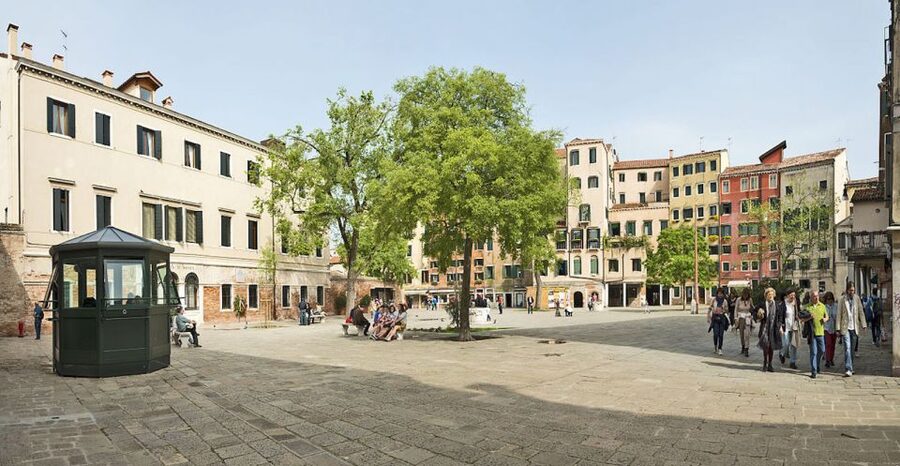
- The meeting point is easy to spot: Find the black drinking fountain in the middle of Campo di Ghetto Nuovo.
- The walk covers two historic areas: You’ll see both Ghetto Nuovo and Ghetto Vecchio, along with parts of Cannaregio.
- The synagogue visits are the heart of the tour: Entry to the Spanish and Levantine Synagogues is arranged through the Jewish Museum.
- You get history with local context: Guides explain Jewish life in Venice alongside the city’s wider political, social, and economic story.
- The group can be private: A small-group or private option is available, which may suit families and anyone who wants more time for questions.
- Dress matters inside the synagogues: Your shoulders, knees, and belly must be covered, and weapons or sharp objects are not allowed.
Why Venice’s Jewish Ghetto matters
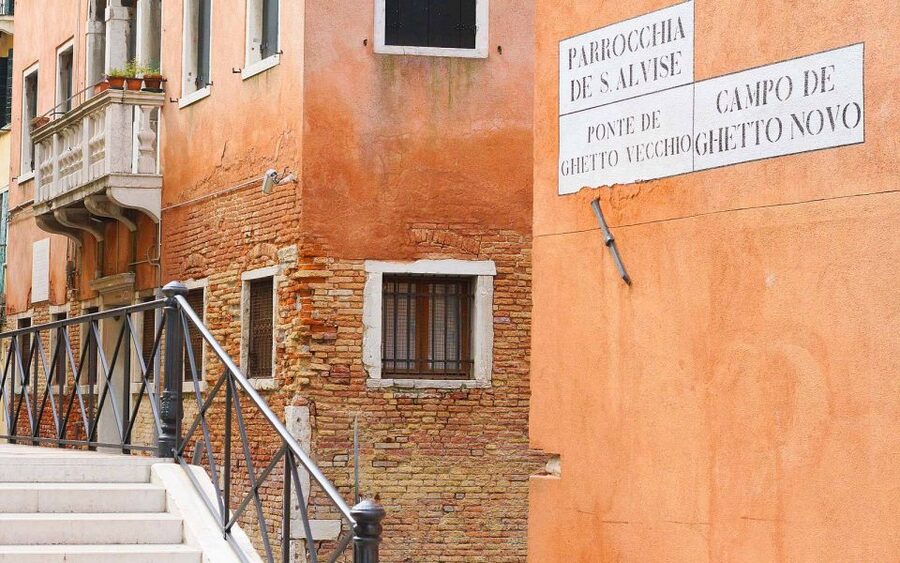
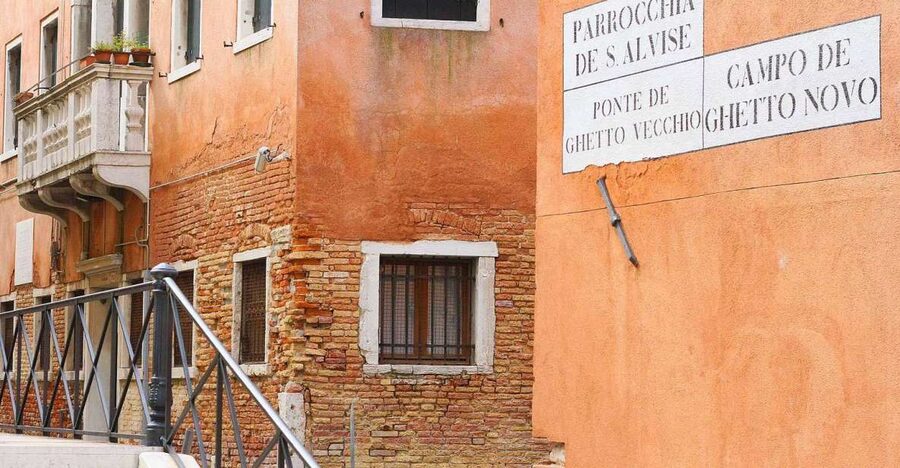
The word ghetto entered common use through Venice. In 1516, the Venetian government confined the city’s Jewish residents to a designated area in Cannaregio, creating what is widely regarded as the oldest Jewish quarter in the world.
That fact is important, but it is only the starting point. This tour helps you see the Ghetto as a lived-in neighborhood rather than a history-book label. You’ll hear about rules, work, worship, family life, and the ways the Jewish community shaped Venice over the centuries.
The setting itself tells part of the story. The buildings around the Ghetto are unusually tall for Venice. Limited space forced the neighborhood to grow upward, producing cramped but distinctive architecture around intimate squares. Once your guide points this out, the area feels different from the grand palaces and open waterfront views found elsewhere in the city.
I value the way this tour places Jewish life within the wider story of Venice. Guides have been praised for explaining not only the Ghetto but also the city’s trade, politics, social structure, and modern life. That broader frame helps you understand why the Jewish community was important to Venice and how Venice shaped the community in return.
This is a serious subject, but the walk is not presented as a religious lesson. One guide made a point of describing it as a historical rather than religious tour. That makes the experience approachable for visitors of any background, while still treating the subject with the care it deserves.
More Walking Tours in Venice
- Venice Walking Tour and Gondola Ride
★ 3.5 · 3,630 reviews - Venice: Rialto Bridge & Offbeat Unusual Venice Walking Tour
★ 4.2 · 3,538 reviews - Private 3 hrs Venice Tour: St Mark’s, Walking tour & Boat tour
★ 4.0 · 3,372 reviews
Starting at Campo di Ghetto Nuovo
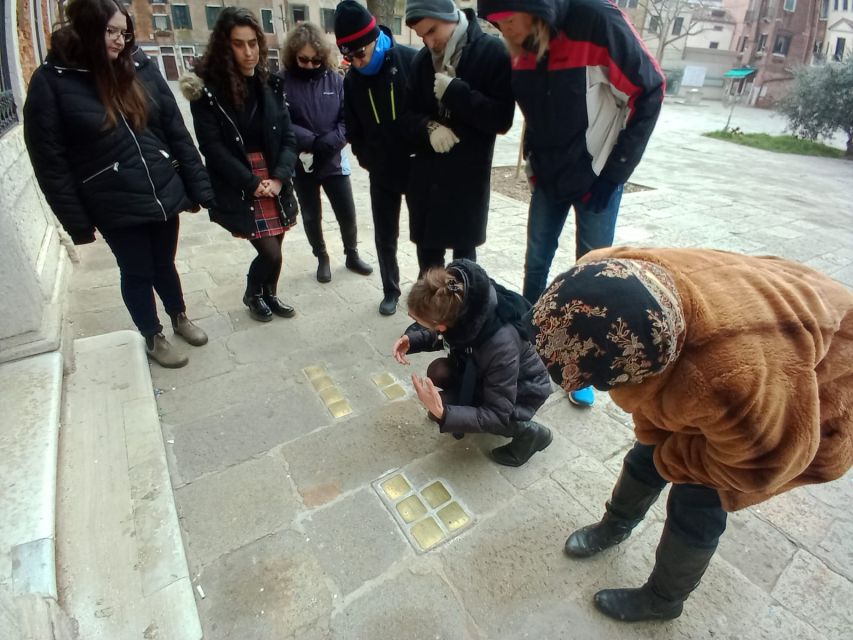
You meet your guide in Campo di Ghetto Nuovo, a large square in the heart of the neighborhood. Look for the black drinking fountain at its center. Arrive five to ten minutes early, since it is not possible to join once the tour has begun.
This is a useful place to start because the square gives you room to get oriented before entering the narrower streets. Your guide will introduce the history of the Ghetto and explain how the area was divided and used.
The first walking section lasts about 30 minutes. Expect a steady but relaxed route through the Ghetto. Your guide may use visual aids and point out details that would be easy to miss if you simply wandered through on your own.
I would pay close attention to the shape of the buildings and the relationship between the square and the surrounding streets. The neighborhood is not filled with showy monuments. Its meaning comes from the way ordinary spaces carry traces of a long and difficult past.
Walking through Ghetto Nuovo and Ghetto Vecchio
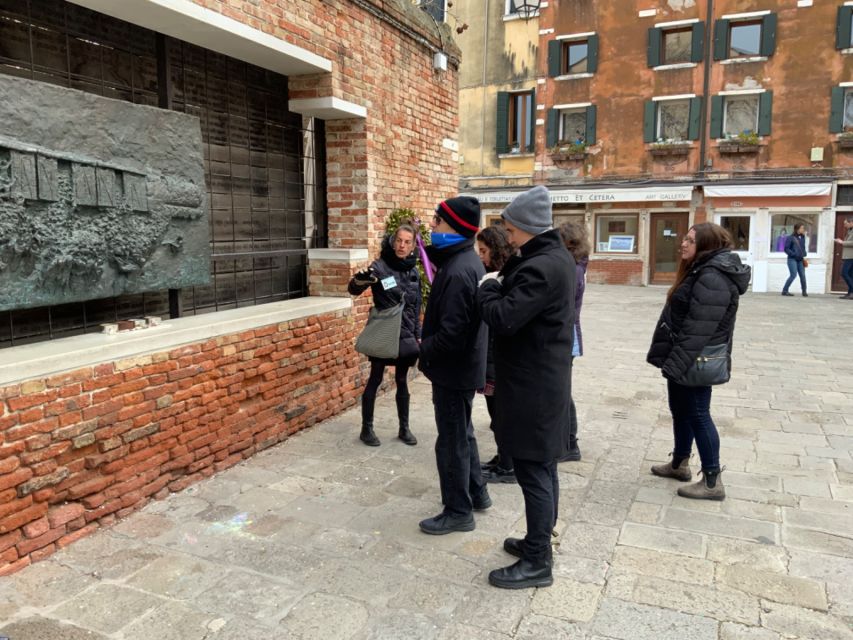
The route continues through the Old Ghetto, including Ghetto Vecchio and Calle Ghetto Vecchio. These names can be confusing because Ghetto Nuovo is historically associated with the earlier settlement, while later expansions created other parts of the quarter. Your guide will explain the local layout and the historical changes as you walk.
The walk through Cannaregio adds useful contrast. This district is quieter than the areas around the Rialto Bridge and St. Mark’s Basilica, so you can focus on the guide without constant crowds pressing around you. It is still Venice, with bridges, narrow lanes, and water nearby, but the mood is more residential and reflective.
The 15-minute Cannaregio section and the 15-minute walk along Calle Ghetto Vecchio are short, but they help connect the enclosed Ghetto with the wider city. Jewish life did not exist in total isolation. Residents worked, traded, and interacted with the larger Venetian world, even while government rules restricted where they could live.
This is where a good guide makes a real difference. The strongest guides have been described as warm, energetic, careful with slower walkers, and happy to answer questions. I would expect a story-led walk rather than a rapid list of dates. Guides such as Carolina, Chiara, Christina, and Elisabetta have been singled out for making the subject clear and engaging.
Entering the Spanish Synagogue
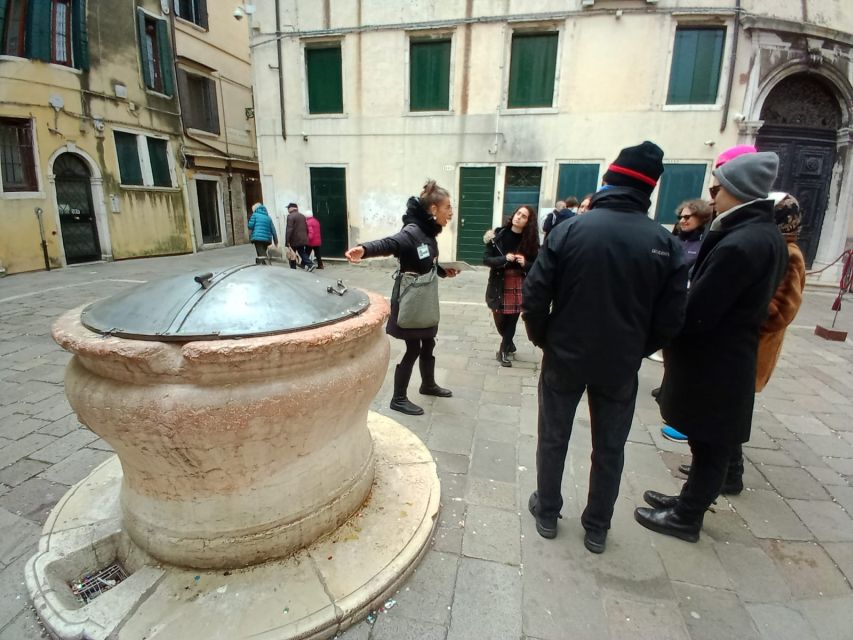
The Spanish Synagogue is scheduled for a 30-minute guided visit. From the outside, you might not expect the interior behind its modest exterior. Inside, the guide explains the design, religious use, symbolism, and the influence of the Sephardic Jewish community.
This is one of the tour’s strongest features. You are not simply looking at another Venetian church or palace. The synagogue gives you a direct sense of how Jewish communities created places of worship within a neighborhood where public life was tightly controlled.
The interior visit also helps clarify the diversity within Venetian Jewish life. The tour explains Sephardic and Ashkenazi influences, rather than treating the community as one uniform group. That distinction adds useful depth without requiring prior knowledge.
The synagogue visit is arranged in cooperation with the Jewish Museum of Venice. However, the museum itself is closed for restoration, and the interior museum visit is not included. That means the synagogue access is valuable, but you should not expect a full museum tour as part of the experience.
Dress carefully. Both men and women must wear clothing that covers the belly, shoulders, and knees. It is best to arrive already dressed appropriately rather than depend on a covering supplied at the entrance.
Same city, an entirely different afternoon:
- Venice: Doge’s Palace Reserved Entry Ticket
★ 4.6 · 42,716 reviews - Venice: Grand Canal Gondola Ride with App Commentary
★ 4.1 · 18,908 reviews - Boat Trip: Glimpse of Murano, Torcello & Burano Islands
★ 4.3 · 15,699 reviews - Venice: Grand Canal by Gondola with Live Commentary
★ 4.1 · 13,681 reviews
Seeing the Levantine Synagogue
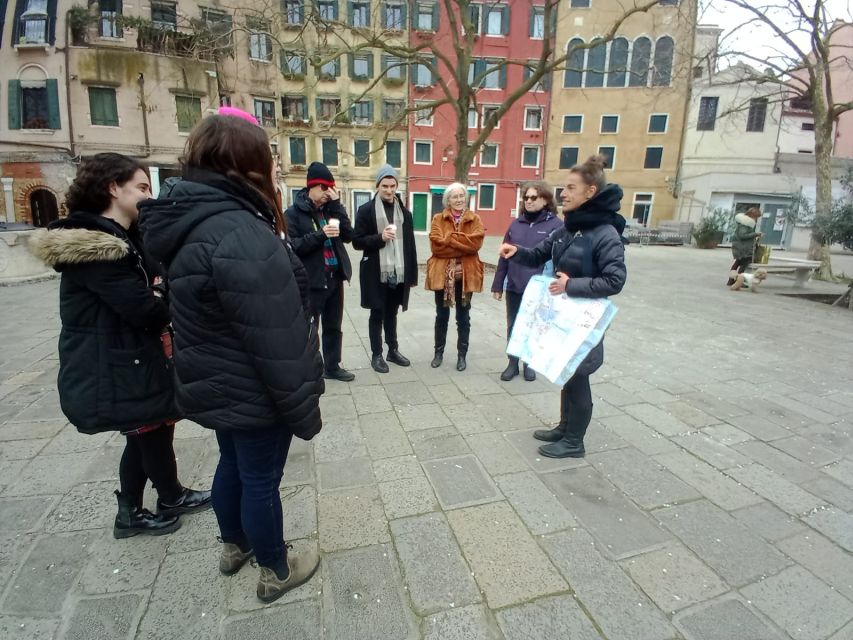
The second 30-minute synagogue visit is to the Levantine Synagogue. Here, your guide explains the religious and architectural details and the role of the Levantine Jewish tradition in Venice.
Having two synagogue visits makes the tour more useful than a quick stop at one interior. You can compare the spaces and see that the Ghetto’s religious life was not represented by a single style or community. The guides who lead these visits may be different from the person who leads the street walk. One participant specifically praised Sylvia’s work inside the synagogues after enjoying the main walk with Clara.
The Levantine Synagogue is not visited on Fridays. This is the most important scheduling limitation. If you are booking for a Friday, confirm exactly what will be open and what the tour will include before paying.
There have also been occasions when only one synagogue was open. That makes advance checking wise, especially if the interiors are your main reason for booking. The historic walk remains worthwhile, but the price feels strongest when both planned synagogue visits take place.
Returning to Campo di Ghetto Nuovo
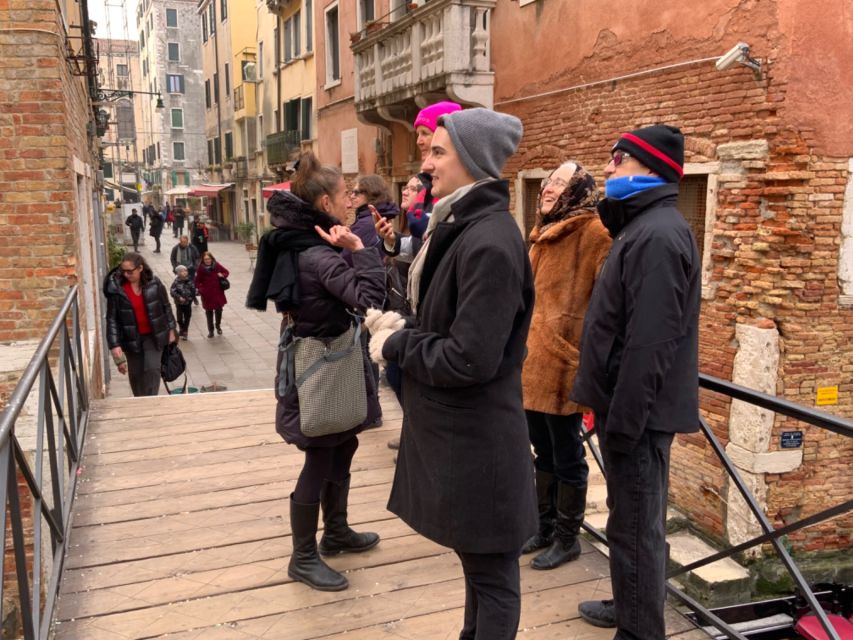
The tour finishes back at Campo di Ghetto Nuovo after a final guided walk of about 15 minutes. Ending where you began is convenient. You will not need to find your way to a distant part of Venice while trying to remember the route.
The square is also a good place to continue exploring on your own. The supplied information points to local Jewish and Venetian cultural life in the surrounding area, including shops, a kosher bakery, and kosher restaurants. I would ask your guide for current recommendations, since guides such as Sylvia and Carolina have been especially helpful with local suggestions.
Some guides may point out old objects or relics connected with the neighborhood’s past. Treat these stops as extras rather than guaranteed parts of the program. The core experience is the walk and the synagogue access.
How the two hours are used
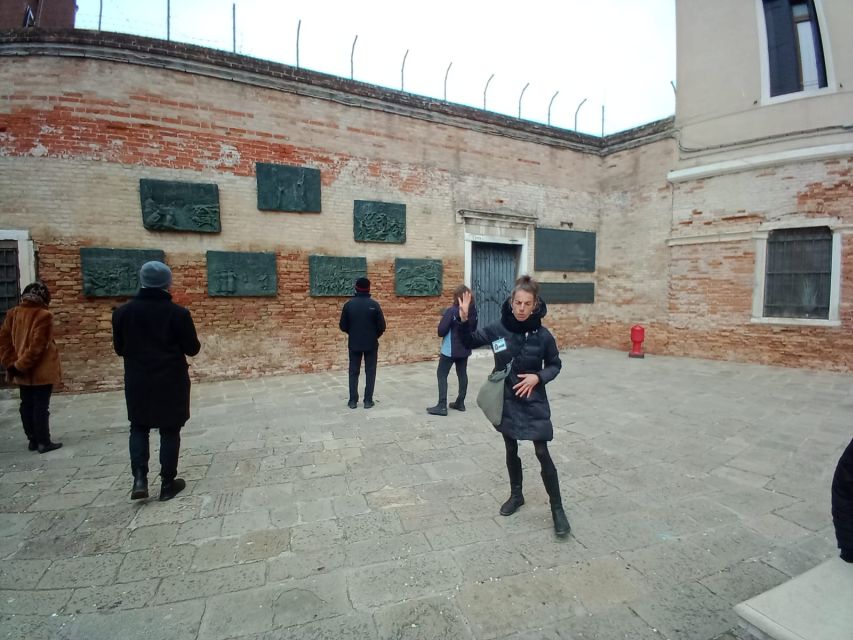
The advertised duration is two hours, with the route divided between walking, explanation, and synagogue visits. The listed stop times add up to more than two hours when counted separately, so you should treat them as approximate allocations rather than a strict minute-by-minute schedule.
A typical flow is:
- About 30 minutes exploring the Ghetto
- About 15 minutes through Cannaregio
- About 15 minutes along Calle Ghetto Vecchio
- About 30 minutes in the Spanish Synagogue
- About 30 minutes in the Levantine Synagogue
- About 15 minutes returning to Campo di Ghetto Nuovo
The value of the compact format is focus. You can fit this tour into a morning or afternoon without giving up most of your day. The drawback is that two hours leaves limited room for long stops, extended personal reflection, or a full treatment of every period in Venetian Jewish history.
You might also find that the exact pace depends on the group. A small group allows more questions and easier movement through narrow streets. A private option gives you the best chance to slow down, ask about family interests, or spend more time on specific subjects, though the base price of $105 per person is already a significant spend for a short tour.
Is $105 a fair price?
At $105 per person, this is not a budget walking tour. The price makes the most sense if synagogue entry and expert interpretation are important to you. You are paying for a professional local guide, a focused two-hour route, and access arranged through the Jewish Museum rather than simply walking around the neighborhood alone.
The price is harder to justify if you mainly want a casual stroll through Cannaregio. You can explore the streets without booking, and the Jewish Museum itself is currently closed for restoration. The special value lies in the stories and the possibility of entering the synagogues.
I would compare the cost with your wider Venice plans. If you have already booked several expensive attractions, this tour may feel like a luxury. If you want one serious cultural experience beyond the usual canals and palaces, it offers a clear purpose and a manageable time commitment.
The free cancellation window, up to 24 hours before the start, helps reduce the risk of changing plans. You can also reserve now and pay later. Tips are not required, but they are appreciated for the guide.
The guides make the difference
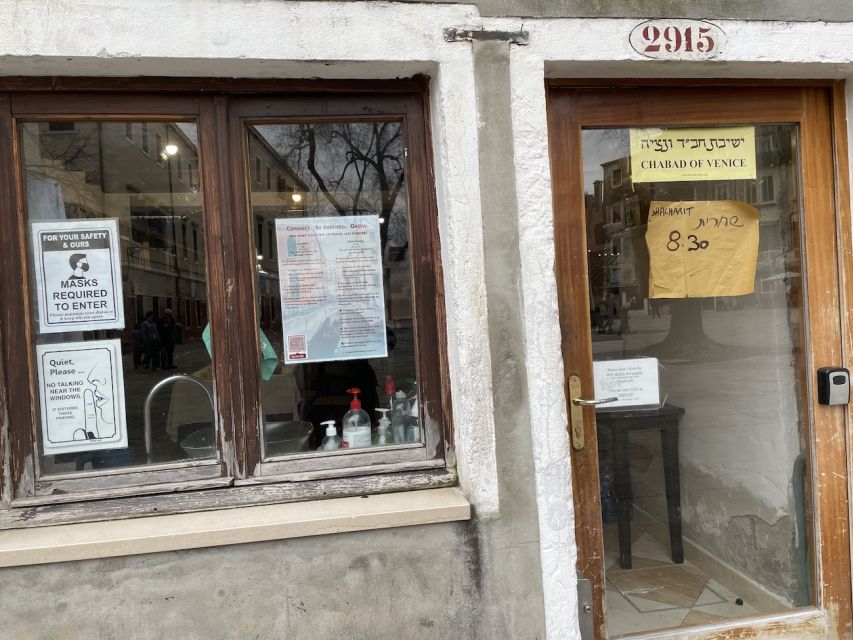
The most consistent strength of this experience is the quality of the guiding. Names attached to especially strong tours include Claire, Ilaria, Martina, Clara, Carolina, Christina, Sandra, Sylvia, and Elisabetta. Guides change, so you cannot assume a particular person will lead your booking, but these examples show the sort of approach to expect.
The best guides combine facts with human stories. They explain restrictions without reducing the community to suffering. They talk about tradition, work, family, and modern life, helping you see Jewish Venetians as active participants in the city’s story.
Several guides have also been praised for practical care. One helped a family during rain, another adjusted the pace for slower walkers, and others took time to answer questions or offer food suggestions. Those touches matter on a short tour because there is little time to recover from a rushed or impersonal guide.
The synagogue portion may be handled by a separate specialist. That can be an advantage, since the person leading the interior visit may focus closely on architecture, ritual use, and the history of each building.
Who should book this Venice Jewish Ghetto tour?
I recommend it most strongly for:
- History lovers who want more than the standard Venice sights
- Visitors interested in Jewish heritage, Sephardic traditions, or Ashkenazi traditions
- Families who appreciate a clear story and a walk of limited length
- First-time visitors who want a wider view of Venice’s social history
- People who prefer a quieter neighborhood to the busiest central routes
- Anyone who values a local guide and access to historic interiors
It may not suit you if you need step-free access or have serious mobility limits. The route uses Venice’s streets and bridges, and the activity is specifically listed as unsuitable for wheelchair users and people with mobility impairments.
It is also not the right choice if you want a museum-focused experience. The Jewish Museum is closed for restoration, and its interior is not part of the tour. This is a neighborhood walk with synagogue visits, not a complete museum program.
For families, the two-hour length is helpful, but the subject is serious. Children who enjoy stories about history, buildings, and daily life may find it rewarding. Very young children may have trouble with the quiet synagogue visits and the need to follow dress and security rules.
Practical tips for a respectful visit
Wear clothing that covers your shoulders, knees, and belly before you arrive. This applies to everyone entering the synagogues.
Do not bring weapons or sharp objects, including a knife. The restriction is explicit, so check bags and pockets before leaving your hotel.
Arrive at the fountain in Campo di Ghetto Nuovo five to ten minutes early. Since late arrivals cannot join after the start, allow extra time to cross Venice’s bridges and find the square.
Choose comfortable shoes. The tour is only two hours, but it is a walking experience through historic streets rather than a series of indoor rooms.
If you are visiting on a Friday, ask specifically about the Levantine Synagogue. It is not included on Fridays, and synagogue availability can affect the balance of the tour.
I would also leave a little time afterward for the neighborhood. Ask about current kosher food options, bakeries, shops, and other places connected with local Jewish life. These additions can turn a short guided visit into a fuller afternoon in Cannaregio.
Should you book it?
Book this tour if you want to understand Venice through the experience of a community that lived within strict limits yet helped shape the city’s culture and economy. The synagogue access gives the walk a strong center, while the quieter streets of Cannaregio provide a welcome change from Venice’s busiest sights.
Think twice if your main goal is a museum visit, a fully accessible route, or a low-cost walk. Confirm the synagogue schedule before booking, especially on Fridays, and remember that the museum is closed during restoration.
For the right visitor, $105 buys more than a stroll. It buys context, careful storytelling, and a respectful look at a living part of Venice that many first-time sightseeing plans miss.
FAQ
Where does the Jewish Ghetto walking tour meet?
The tour meets in Campo di Ghetto Nuovo. Look for the black drinking fountain in the center of the large square, where your guide will be waiting.
How long does the tour last?
The tour lasts two hours. It combines guided walking through the Ghetto and Cannaregio with visits to the Spanish and Levantine Synagogues.
Which synagogues are included?
Entry to the Spanish Synagogue and Levantine Synagogue is included, with access arranged through the Jewish Museum of Venice.
Is the Jewish Museum included?
No. The Jewish Museum is under restoration and closed for visits. The tour includes synagogue access, but not an interior visit to the museum.
Is the Levantine Synagogue open on Fridays?
No. The Levantine Synagogue is not included on Fridays. Check the available schedule before booking.
What should I wear inside the synagogues?
Both men and women must wear clothing that covers the belly, shoulders, and knees.
Is the tour suitable for wheelchair users?
No. The activity is not suitable for wheelchair users or people with mobility impairments.
Fresh on the Venice list
- Venice Doge’s Palace & St. Mark’s Semi-Private Tour, Max 6 People★ 5.0 · 192 reviews
- Venice: Crimes, Legends, and Mysteries Sunset Tour★ 4.9 · 195 reviews
- Venice Small Group Walking Tour of Most-Famous Sites &Attractions★ 4.5 · 195 reviews
- Murano and Burano Islands Semi-Independent Tour★ 4.0 · 195 reviews
- From Venice: Dolomites Day Trip★ 4.8 · 197 reviews
- 4 hours Private Boat Tour to Murano, Burano with local real guide★ 4.5 · 203 reviews
- St Mark’s Basilica & Doge’s Palace with Secret Passages Access★ 4.5 · 204 reviews
- Murano and Burano half-day trip from Punta Sabbioni Jesolo★ 3.9 · 204 reviews
Walking Tours, compared.
Guided Walking Tour & Last Supper Visit with Ticket
Read our review →
Rialto Bridge & Offbeat Unusual Venice Walking Tour
Read our review →
Private 3 hrs Venice Tour: St Mark’s, Walking tour & Boat tour
Read our review →
Skip the line: Uffizi and Accademia Small Group Walking Tour
Read our review →Browse the lists this tour appears in