
Reviewed · MUSEUMS
Turin: Guided Egyptian Museum Tour
Turin’s Egyptian Museum is not a small side collection. It is a major institution devoted entirely to ancient Egypt, with enough sarcophagi, papyri, mummies, statues, and jewelry to overwhelm you before you have found your bearings. A good guide turns that mass of objects into a story you can follow, from early Egypt through the great dynasties and beyond.
I like this tour for two clear reasons: it takes you straight to the museum’s key pieces, and it explains details you will not get from display labels alone. Guides such as Nasser, Nasr, Alessandro, Helena, and Olivier are praised for their strong subject knowledge and easy explanations. The main drawback is time. Two hours is enough for an intelligent first visit, not a complete look at a very large museum, and a slow, detail-heavy guide may leave you wishing for more time.
Key points to know before you book
- A chronological route: The tour can connect early Egyptian culture with the later kingdoms, helping you understand how art, beliefs, and royal power changed.
- Expert-led interpretation: Several guides, including Nasser and Nasr, have Egyptology backgrounds or long experience explaining ancient Egypt.
- A focused first visit: You see major mummies, papyri, sarcophagi, pharaohs’ jewelry, and other important objects without wandering at random.
- Skip-the-ticket-line entry: Your entrance ticket is included, and the meeting point is directly outside the museum.
- A strict start time: Arrive 15 minutes early at Via Accademia delle Scienze 6. Latecomers are not accepted.
- Best for curious first-timers: You can return to the museum after the tour and explore at your own pace if you still have energy.
Why Turin has an Egyptian Museum at all
Turin may seem an unlikely place to see one of the world’s leading collections of Egyptian material. Yet the Museo Egizio is the oldest museum devoted entirely to Egyptian civilization, and it is widely regarded as the second most important Egyptology museum in the world after Cairo.
That claim matters less as a ranking than as a warning about scale. You are not visiting a single gallery with a few handsome statues. You are entering a large museum with material spanning centuries of Egyptian civilization. There are royal objects, religious pieces, written documents, burial goods, mummies, and everyday evidence of a culture that lasted through many periods of change.
I find a guided visit especially useful here because Egyptian objects can look similar at first glance. A painted coffin, a carved figure, or a sheet of papyrus becomes far more interesting once you understand its purpose, date, symbols, and place in Egyptian society.
The museum’s presentation also helps. One guide described following the collection from the Predynastic period through later centuries in chronological order. That kind of route gives the visit a beginning, middle, and end instead of a blur of names and dates.
More Museums in Turin
- Turin: Egyptian Museum Small Group Skip-the-Line Guided Tour
★ 4.8 · 1,332 reviews - Turin: Egyptian Museum Priority Access Guided Tour
★ 4.8 · 1,247 reviews - Turin: Juventus Museum entry ticket & Stadium Tour
★ 4.4 · 561 reviews
Meeting your guide outside Via Accademia delle Scienze 6
The meeting point is directly in front of the Museo Egizio entrance at Via Accademia delle Scienze 6, 10123 Torino. You should arrive 15 minutes before the scheduled start, not just a few minutes before it.
This is important because late arrivals are not accepted. The tour provider, Hidden Experiences, is separate from the museum itself, so do not assume museum staff can solve a missed meeting or guide assignment. Keep your booking details handy and look for the tour meeting arrangements outside the entrance.
The ticket to the museum is included, and the activity offers skip-the-ticket-line entry. That saves useful time, especially when Turin is busy. It does not mean you should arrive at the last moment. The guide needs to gather the group, handle entry, and begin on schedule.
For groups of 10 or more, headphones are included. That detail matters in a large museum, where a guide speaking softly can be hard to follow near popular displays. Smaller groups may not need them, but you should still stay close enough to hear the explanation.
The opening galleries and the first Egyptian periods
The first part of a well-organized tour can place Egyptian civilization in sequence, beginning with the Predynastic period and moving into the formation of the great kingdoms. This is one of the strongest reasons to take the tour rather than simply walk in and follow whichever object catches your eye.
The early material gives you a base for understanding what comes later. You begin to see how symbols, artistic conventions, burial customs, and royal imagery developed over time. Instead of treating every pharaoh as an isolated name, you get a sense of succession and change.
Your guide may pause over objects that look modest beside a monumental statue. That is useful. Papyri, small figures, inscriptions, and burial items can reveal how people wrote, worshipped, prepared for death, and organized daily life. The best explanations connect these pieces to the larger culture rather than treating them as decoration.
The exact balance depends on the guide. Alessandro has been praised for setting out an orderly path through the periods, while Nasr and Nasser are known for explaining Egyptian subjects with unusual depth and enthusiasm. Guides differ in pace, so you should ask questions early if there is a particular period you care about.
Sarcophagi, mummies, and the meaning behind burial objects
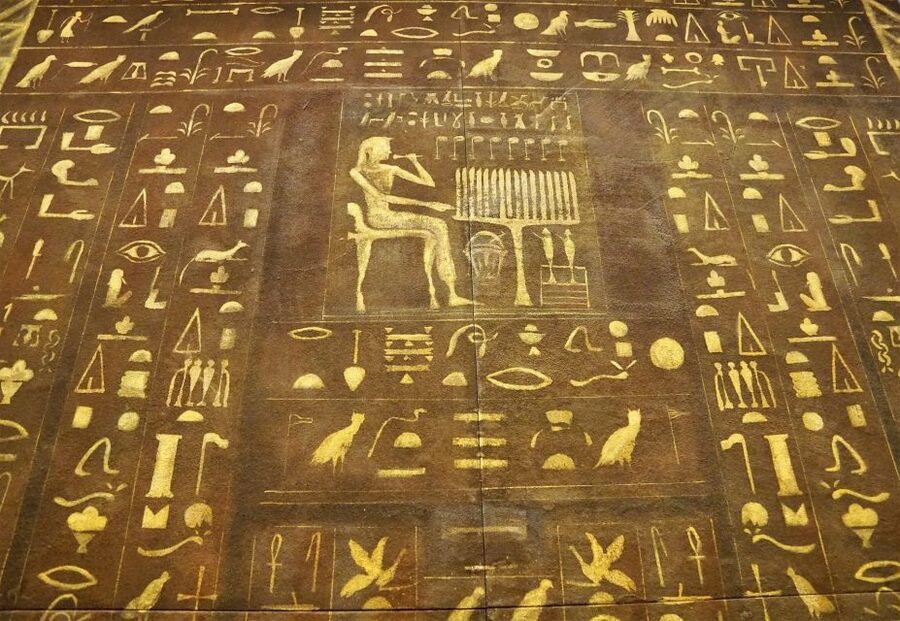
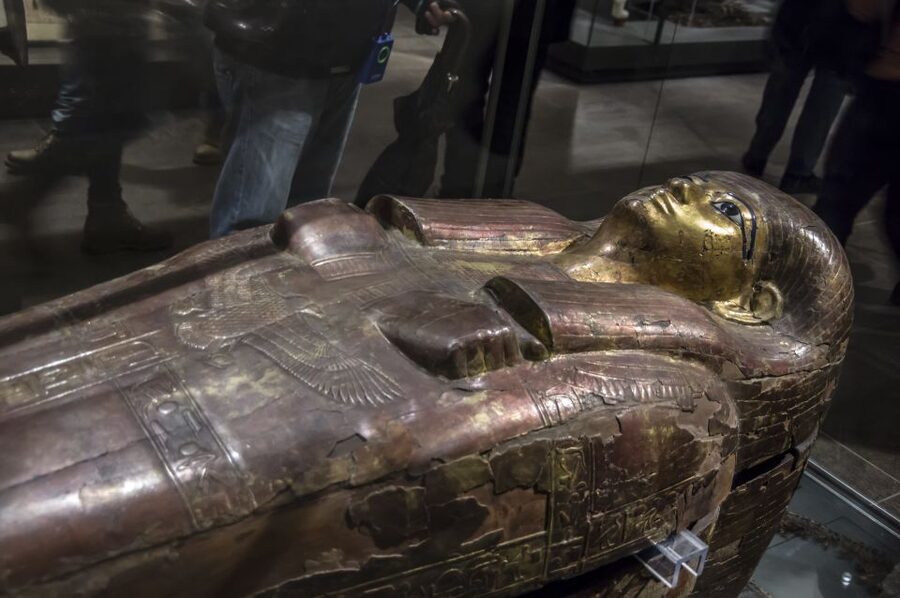
The sarcophagi are among the displays likely to command your attention. Their painted surfaces and inscriptions are not just decoration. They carry names, prayers, symbols, and clues about Egyptian ideas concerning death and the afterlife.
A guide can show you where to look and explain why certain images appear again and again. That turns the visit from a parade of painted boxes into a lesson in belief, status, and the careful preparation of the dead.
The mummies provide a more direct connection to the people who lived in ancient Egypt. They can also be the most intense part of the visit for younger children or anyone sensitive to human remains. The tour presents them as archaeological evidence, but you should expect these displays to feel more serious than the jewelry and statues.
The two-hour schedule creates a choice here. A guide who stops for every inscription may give you greater detail but cover fewer rooms. A guide who keeps moving can show you more of the museum but offer shorter explanations. One practical approach is to ask your guide which displays you can revisit after the tour. The museum is large, and an initial guided route does not need to be your last word on the collection.
Same city, an entirely different afternoon:
- Turin: Torino+Piemonte 2-Day City Card
★ 4.6 · 1,837 reviews - Turin: Magic Guided Tour
★ 4.6 · 1,447 reviews - Turin: Turin & Piedmont 3-Day City Card
★ 4.7 · 1,434 reviews - Turin: Hop-on Hop-off Bus Tour with 24 or 48-Hour Ticket
★ 4.2 · 941 reviews
Pharaohs, jewelry, and royal power
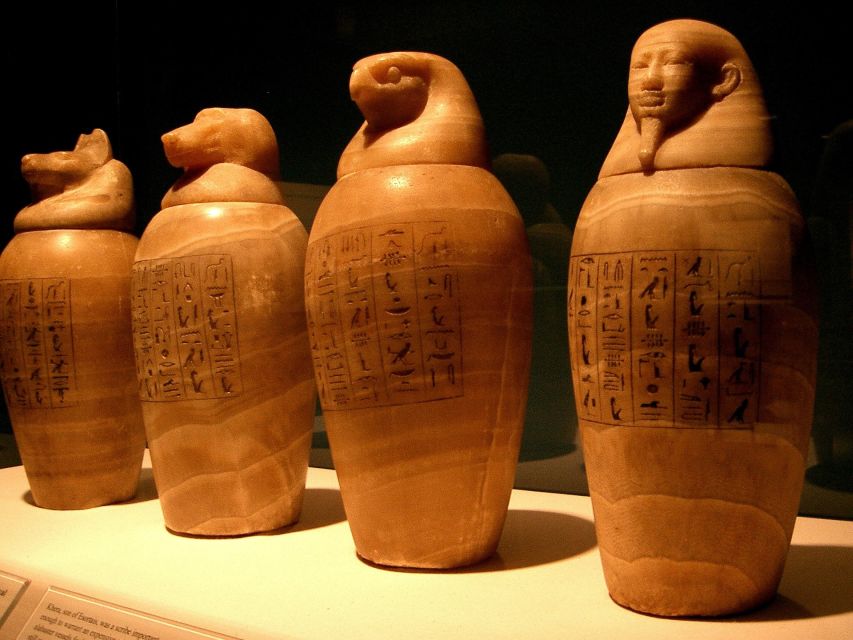
The tour also highlights important pharaohs and the magnificent jewelry associated with royal life. These pieces offer a welcome change of pace after dense displays of writing and burial material.
Jewelry is easy to admire at a glance, but it also tells you about rank, ceremony, craftsmanship, and the way rulers presented themselves. Your guide can help you read the difference between simple beauty and political meaning. A royal object was often designed to express power as much as personal taste.
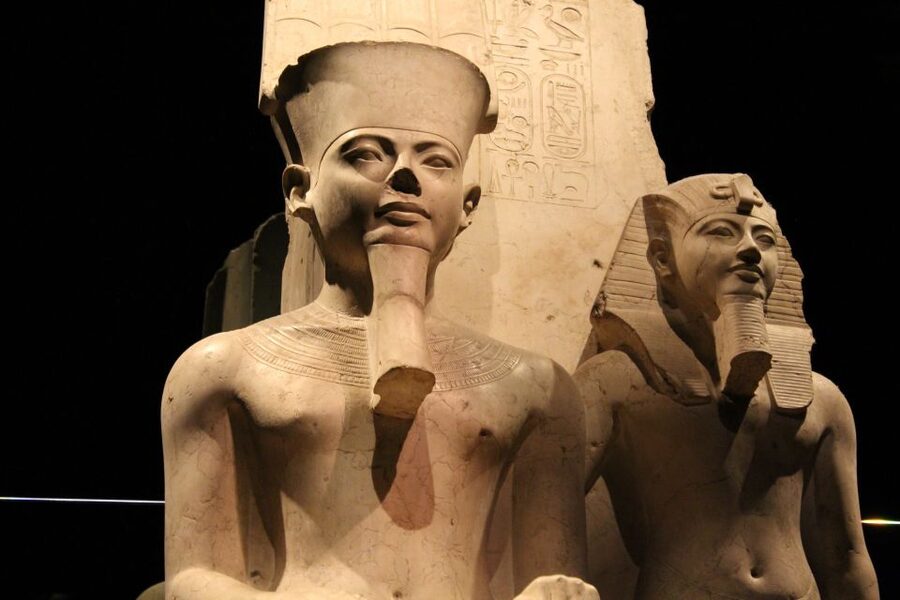
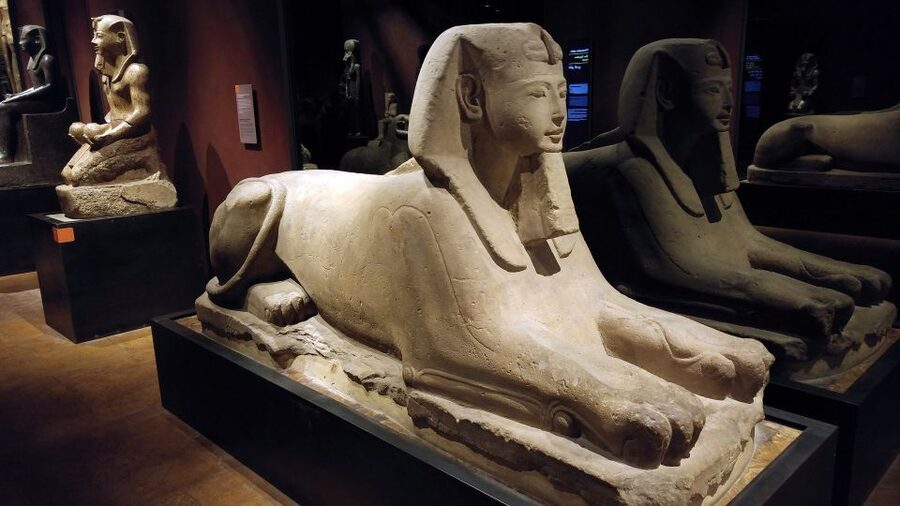
The pharaohs themselves are presented through statues, inscriptions, and objects connected to their reigns. Ancient Egyptian rulers were not shown as ordinary people. Their images followed formal rules that made them appear eternal, strong, and linked to the gods.
I like this part of the route because it gives the museum visual variety. You move from fragile papyrus to stone, from human remains to glittering ornaments, and from private burial objects to public symbols of kingship. The collection begins to feel less like a storehouse and more like a record of how an entire society understood authority and mortality.
Papyri, writing, and the stories labels cannot tell
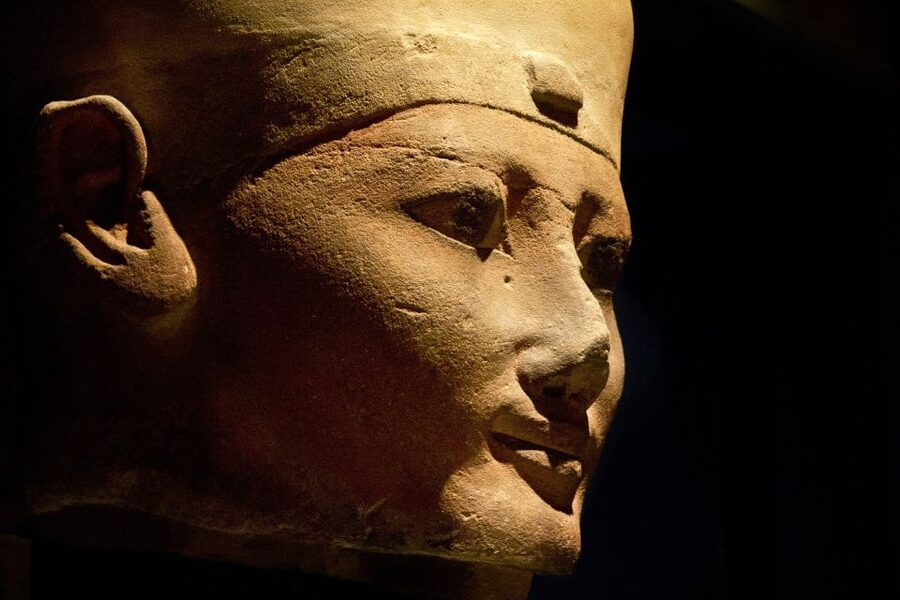
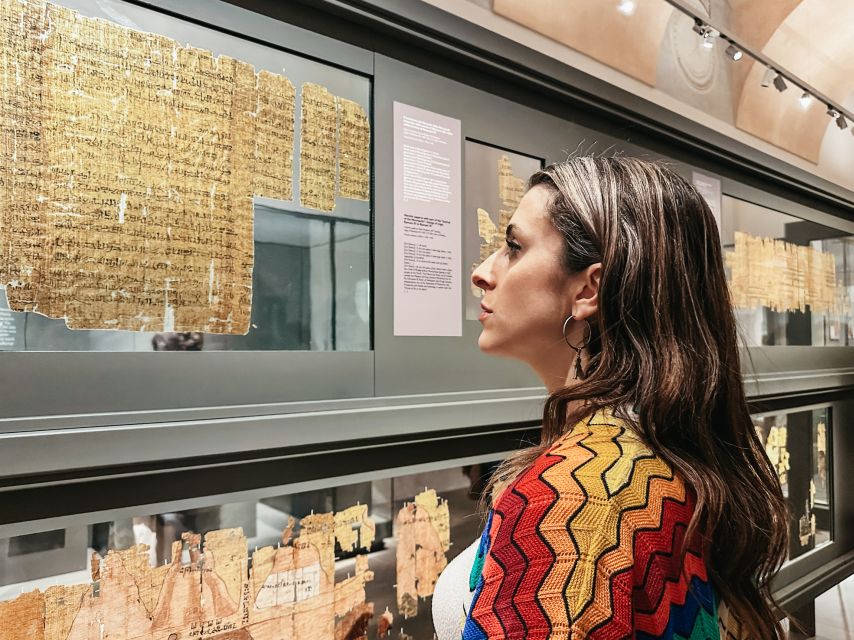
Papyri are among the most rewarding displays when you have someone to explain them. Their fragility alone makes them remarkable, but the real interest lies in the writing, images, and practical or religious purpose recorded on them.
One guide has even been praised for showing visitors how ancient Egyptian letters could be read. You should not expect a full language lesson in a two-hour tour, but a short explanation of signs can change how you view every inscription afterward.
This is also where a live guide adds the most value. Museum labels must be brief and cannot answer every obvious question. A guide can explain an unusual symbol, connect a written text to a nearby object, or add an anecdote about Egyptian customs and royal life.
The quality of the experience depends heavily on communication. Sophie has been praised for speaking clearly in English, and several guides have been described as friendly, patient, and able to answer questions. Ask for clarification if a name or period becomes confusing. Egyptian chronology can be hard to track when you are hearing several rulers in quick succession.
What two hours really gives you
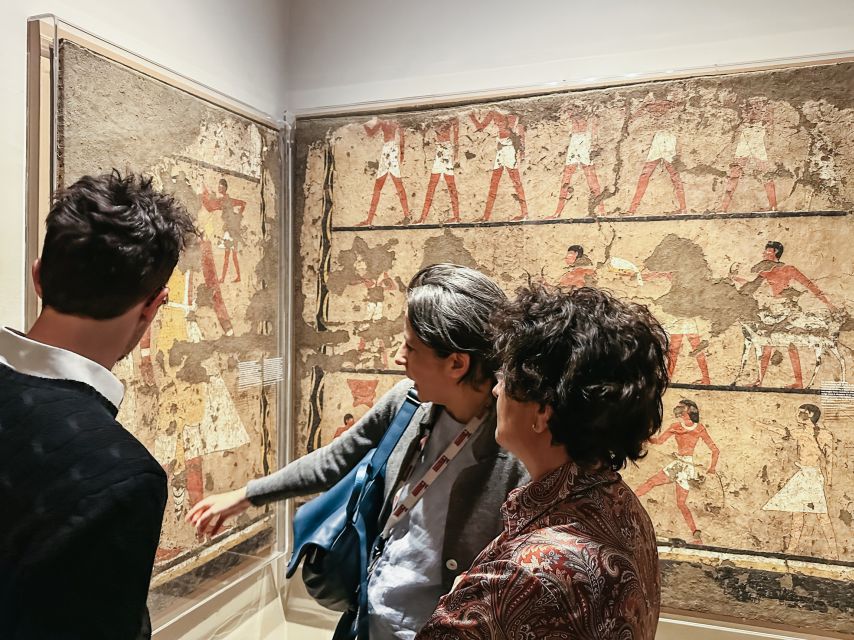
Two hours sounds generous until you see the museum. It is enough to reach the major displays and gain a clear framework, but it is not enough to study everything carefully.
I would treat this as a guided introduction. You will see the essential sections, learn how the collection is organized, and leave with a list of objects or periods worth a second look. One especially useful feature is that you can return to the museum after the tour if you want to continue exploring.
Pacing can vary. Some guides spend a long time on a single artifact because it opens the door to an important idea. That can be rewarding if you enjoy detail. It can also frustrate you if your main goal is to cover more rooms, especially if you have already visited Egypt or know the basic story.
If you have been to Egypt, the tour may work as a refresher with new details rather than a complete introduction. If ancient Egypt is new to you, the guide’s selection of key pieces will help you avoid spending half your visit on objects that are less useful for understanding the collection as a whole.
Families can make good use of the focused format. A teenager may lose interest in a long museum visit, but stories about pharaohs, mummies, writing, and hidden meanings give the displays a human angle. The guide’s ability to answer questions makes the experience more flexible than reading labels alone.
Guide quality is the main reason to book
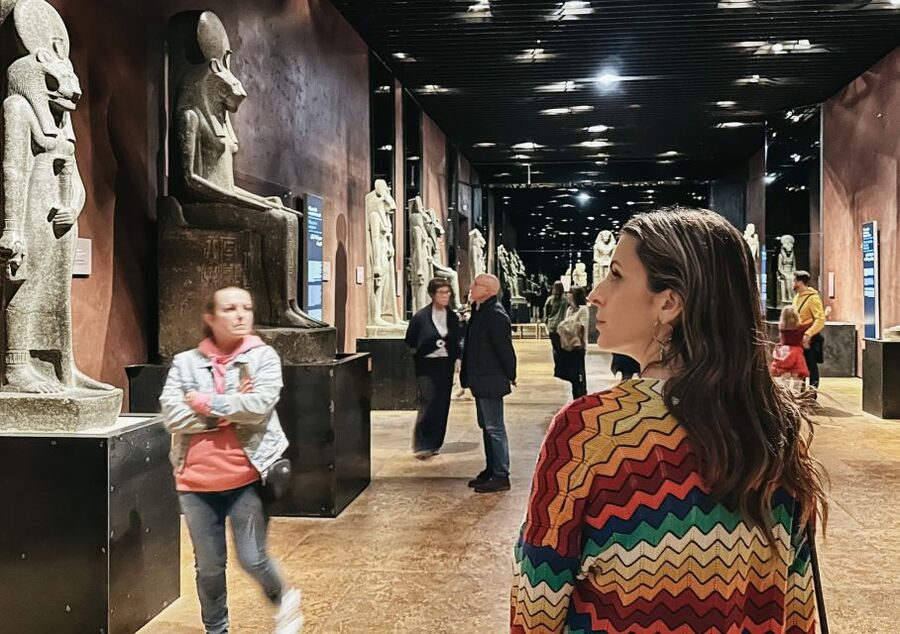
The museum itself is the star, but the guide determines how much you get from it. The most praised guides are not simply people who know dates. They explain clearly, answer questions, and show genuine enthusiasm for Egyptology.
Nasser and Nasr receive especially strong praise for their Egyptology background and personal connection to Egypt. Alessandro is noted for his archaeological training and for building a logical route. Helena, Olivier, Sophie, and Carol are also described as warm, clear, and well prepared.
Names are not guaranteed when you book, so I would not choose the tour solely on the hope of getting one particular guide. The languages offered are Italian, English, French, German, and Spanish. If language clarity is important to you, select your preferred language carefully and stay near the guide during the tour.
Private groups are available. That option may suit families, couples, or small groups that want to ask many questions or set a preferred pace. A private tour does not make the museum smaller, but it can make the two-hour route feel more personal.
Is $70 a fair price?
At $70 per person, this is not the cheapest way to enter a museum. The price includes the Egyptian Museum entrance ticket, a live guided tour, and skip-the-ticket-line access. For a first visit, I consider that a reasonable price if you value context and want to use your time well.
The value comes from the route and the explanations. Without a guide, you can certainly see the collection, but you may not know which rooms contain the most important material or how the objects fit together. In a museum this large, avoiding random wandering has real value.
The price is harder to justify for repeat visitors, Egyptology students, or anyone who prefers reading every label alone. You may want more than two hours, and a self-guided visit gives you total control over the pace.
Free cancellation up to 24 hours before the activity and reserve-now, pay-later booking make the commitment easier. The museum is wheelchair accessible, though you should still confirm any personal access needs when booking.
Practical tips for getting more from the tour
Arrive early. This is the single most important instruction because latecomers are not accepted.
Wear comfortable shoes and keep your attention on the guide rather than trying to photograph every object. You can return after the tour, and a camera can distract you from the explanations that make the objects meaningful.
Bring questions. The guides are praised for answering them, and a question about a symbol, ruler, mummy, or papyrus can lead to one of the most memorable parts of the visit.
If you want a fast overview, tell your guide at the start. One person may prefer to move briskly through the galleries, while another may want a long explanation of a single coffin or inscription. You may not get every preference in a shared group, but speaking up helps.
Food and drinks are not included, and hotel pickup and drop-off are not provided. Plan your route to the museum separately and allow time before the start, since the meeting point is at the entrance itself.
Who should book this Egyptian Museum tour?
I would book it for a first-time visitor to Turin, anyone with a strong interest in ancient Egypt, and families who want a clear route through a large museum. It also suits people who enjoy stories and interpretation more than silent label reading.
It is particularly helpful if you want to understand chronology. The museum contains objects from different periods, and a guide can explain how the pieces relate to the Predynastic era, the major kingdoms, and the later development of Egyptian culture.
I would hesitate if you already know the museum well or want to inspect every room at your own speed. Two hours can feel short, especially with a guide who spends a lot of time on individual objects. In that case, you might prefer an independent visit, or use this tour as an introduction and stay afterward.
Should you book it?
Book this tour if you want the Egyptian Museum’s major stories without having to plan your own route. The entrance ticket and skip-the-line access help, but the real value is the guide’s ability to explain mummies, papyri, jewelry, sarcophagi, and royal objects as parts of one long civilization.
Go in knowing that two hours is a beginning, not the whole museum. Arrive 15 minutes early, choose your language, ask questions, and plan to return to any rooms that catch your attention. For most first-time visitors, the guided structure is worth the $70 because it makes a vast collection easier to understand.
FAQ
How long does the guided Egyptian Museum tour last?
The tour lasts two hours. The museum is very large, so two hours is best treated as a focused introduction rather than enough time to see every display.
What is included in the price?
The $70 price includes the Egyptian Museum entrance ticket, a live tour guide, and the guided tour. Headphones are included for groups of 10 or more.
Where does the tour meet?
The meeting point is in front of the Museo Egizio entrance at Via Accademia delle Scienze 6, 10123 Torino TO.
How early should I arrive?
You should arrive 15 minutes before the activity begins. Latecomers are not accepted.
What languages are available?
The tour is offered in Italian, English, French, German, and Spanish.
Is the museum wheelchair accessible?
Yes, the activity information states that the Egyptian Museum is wheelchair accessible.
Can I cancel or pay later?
You can cancel up to 24 hours in advance for a full refund. Reserve-now, pay-later booking is also available.
Fresh on the Turin list
- Turin: Egyptian Museum Skip-the-Line Group Tour★ 4.7 · 500 reviews
- Turin: Underground Tunnels Guided Tour★ 4.6 · 541 reviews
- Turin: Royal Palace Entry Ticket and Guided Tour★ 4.8 · 562 reviews
- Turin: Savoy Royal Palace Small Group Guided Tour★ 4.9 · 750 reviews
- Turin: Small-Group Walking Tour of Top City Highlights★ 4.8 · 839 reviews
- Turin: Hop-on Hop-off Bus Tour with 24 or 48-Hour Ticket★ 4.2 · 941 reviews
- Turin: Egyptian Museum Priority Access Guided Tour★ 4.8 · 1,247 reviews
- Turin: Juventus Museum entry ticket & Stadium Tour★ 4.4 · 561 reviews
Museums, compared.

Vatican: Museums & Sistine Chapel Entrance Ticket
Read our review →
Vatican Museums & Sistine Chapel Tour with Optional Basilica
Read our review →
Vatican Museums, Sistine Chapel & St Peter’s Basilica Guided Tour
Read our review →
Skip-The-Line Uffizi Gallery Timed Entry Ticket
Read our review →
Vatican Museums, Sistine Chapel & Basilica Tour
Read our review →
Vatican Museums & Sistine Chapel Skip-the-Line Entry Ticket
Read our review →Vatican Museums, Sistine Chapel & Basilica Tour
Read our review →
Vatican Museums & Sistine Chapel Guided Tour
Read our review →Browse the lists this tour appears in