Reviewed · ROME TOURS
Welcome To Rome Experience
Rome is easier to understand after you have seen how its ancient buildings may once have looked. Welcome to Rome uses projections, models, audio, and film to compress the city’s long story into about an hour, from volcanic origins through the classical, medieval, Renaissance, and Baroque periods.
I like two things right away: the 3D reconstructions help you picture ruined sites as complete buildings, and the central location makes this an easy first stop. The short format also works well when you are tired or traveling with children. The tradeoff is that much of the exhibit is experienced standing, and the presentation may feel too detailed or too lightly explained for some visitors.
Key points to know before booking
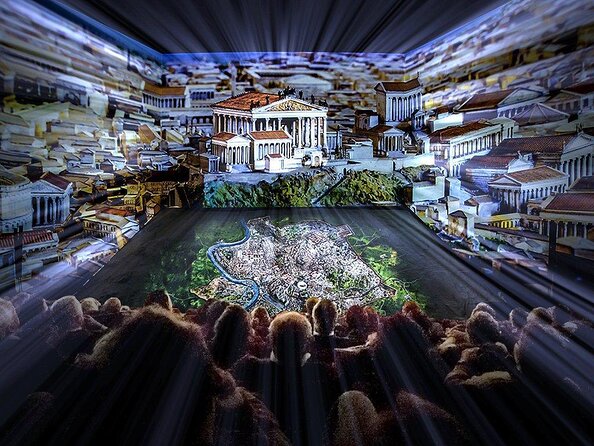
- See ancient Rome rebuilt in 3D: Reconstructions show how major buildings and sites may have appeared before becoming ruins.
- Expect four small exhibit rooms: You move between audio and visual stations before reaching the seated film in the auditorium.
- Use it early in your trip: The overview can make the Colosseum, Roman Forum, Palatine Hill, and Circus Maximus easier to read.
- Plan for about one hour: Multiple daily showings let you fit the experience around sightseeing, meals, or a short rest.
- Best for a first look at Rome: Families and first-time visitors gain broad context, while specialists may want more depth.
- Check the timing carefully: Last entry is one hour before closing, and cancellation is free up to 24 hours before the start time.
Why this one-hour introduction can improve your Rome sightseeing
Rome often feels like several cities placed on top of one another. A temple may sit beside a church, a Renaissance palace, or a Baroque fountain, and the remains of an ancient wall can be easy to miss beneath modern streets.
This experience gives you a quick framework before you begin exploring. It does not replace a visit to the Forum or a guided walk through the Colosseum. Instead, it gives you a basic sense of how the city changed over time and why its ruins look the way they do today.
The strongest reason to schedule it early is visual context. Once you have seen a model of an ancient structure in its complete form, you can look at surviving columns and broken walls with a better idea of what they once supported. That is especially useful at the Roman Forum, Palatine Hill, and Circus Maximus, where the remains can otherwise feel scattered.
You also get a short introduction to several major eras. The experience moves beyond ancient Rome to include medieval, Renaissance, and Baroque periods. That wider sweep matters because Rome is not only an archaeological site. Its churches, palaces, streets, and public squares reflect centuries of rebuilding and reuse.
A few other Rome mornings to weigh against this
- Vatican Museums & Sistine Chapel Tour with Optional Basilica
★ 4.3 · 67,413 reviews - Colosseum, Roman Forum & Palatine Guided Tour
★ 4.7 · 63,148 reviews - Vatican Museums, Sistine Chapel & St Peter’s Basilica Guided Tour
★ 4.5 · 39,149 reviews
The four exhibit rooms: models, projections, and audio
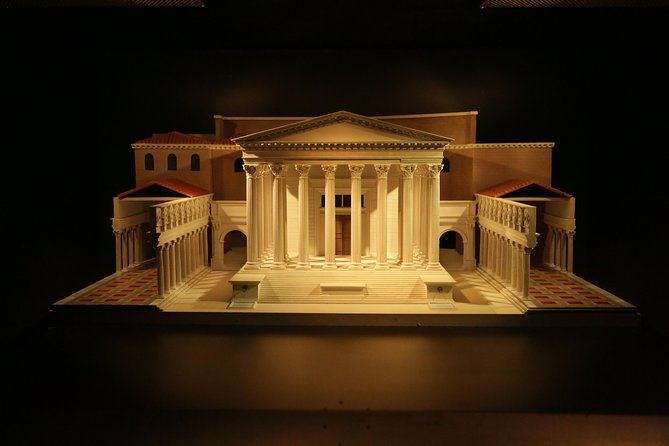
The first part takes place in four smaller rooms. You move from station to station while projections, models, and audio explain the city’s development.
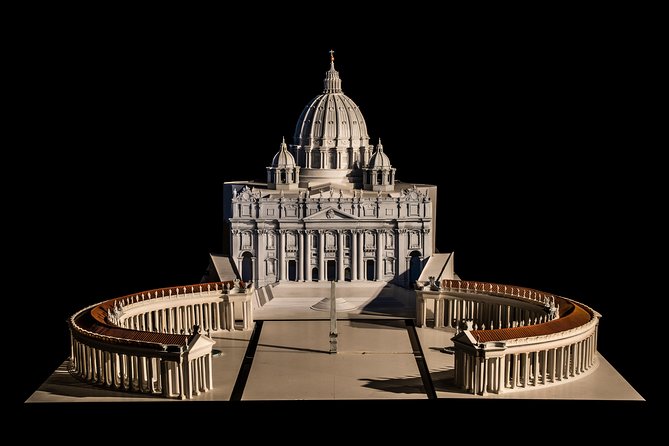
The most useful feature is the contrast between present-day ruins and their former appearance. A structure that now looks like a fragment can be shown as a functioning building, complete with a clearer sense of scale and purpose. This is the kind of information that can be hard to absorb from a plaque or a quick photograph.
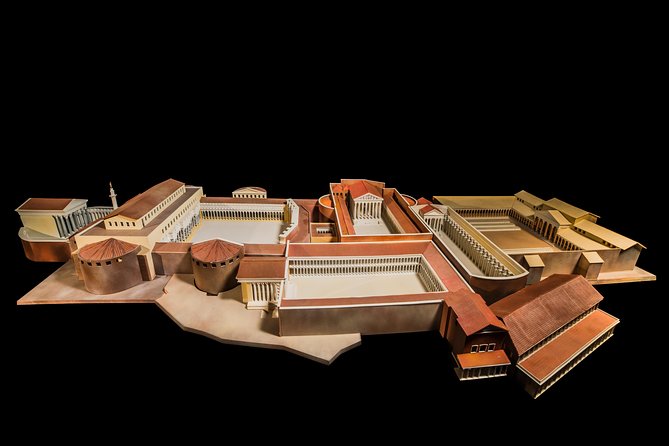
The models and graphics also help with Rome’s layout. You may gain a better idea of how major sites relate to one another, which can make a later walk through the ancient center less confusing. Several parts of Rome are spread out or viewed from ground level, so a model can show connections that are not obvious when you are standing among the ruins.
The audio adds narration while you watch the displays. The presentation is offered in English, and the audio equipment is part of the experience. Bring a little patience at the start, since one malfunctioning unit can interrupt the flow. Staff can replace faulty equipment, but it is worth checking that your device works before moving on.
There is a practical limitation here: the exhibit rooms are designed for standing. If you have already spent a full day walking, the lack of seating may matter. One useful improvement would be a bench or chair near the displays, especially for visitors with tired legs.
The film in the auditorium
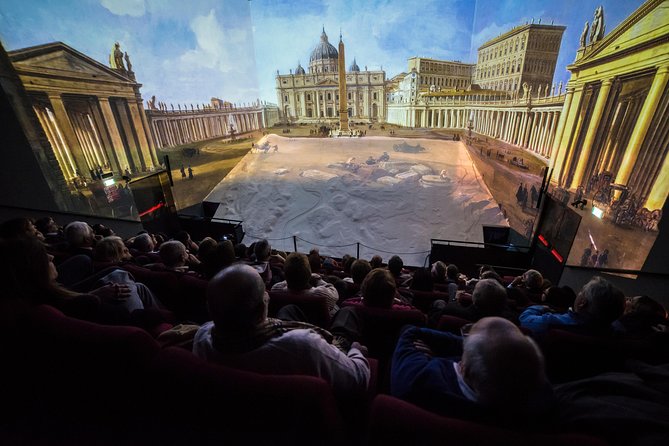
After the smaller exhibit areas, you reach an auditorium for the film portion. This is the only part where you can sit, and it lasts roughly 30 minutes according to the experience details provided by visitors.
The film gives the city’s story a more continuous shape. The earlier rooms focus on individual reconstructions and periods, while the theater presentation lets you take in Rome as a whole. It is a good chance to rest while still learning, particularly if you have arrived after a flight or a long walk through the center.
The visual material is the main attraction. Buildings are shown in ways that help you picture earlier stages of Rome, including monuments that are now partly ruined. The film also gives you a concise account of the city’s development, beginning with the early terrain and moving through later architectural periods.
Do not expect a full lecture on every emperor, battle, church, or artist. An hour cannot cover Rome in that depth. The value is the broad picture: you leave with reference points that can help you notice details during the rest of your stay.
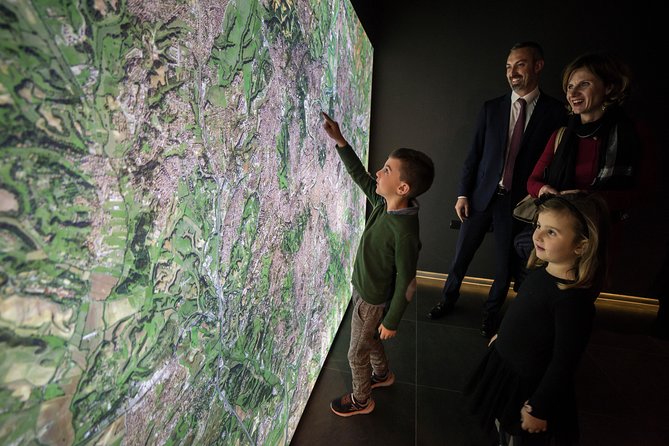
Some children will enjoy the changes in scale, the models, and the moving images. Younger children, particularly those under eight, may lose interest during the more explanatory sections. Teens who prefer fast-paced entertainment may also find the historical detail slow at times.
From volcanoes to Baroque Rome
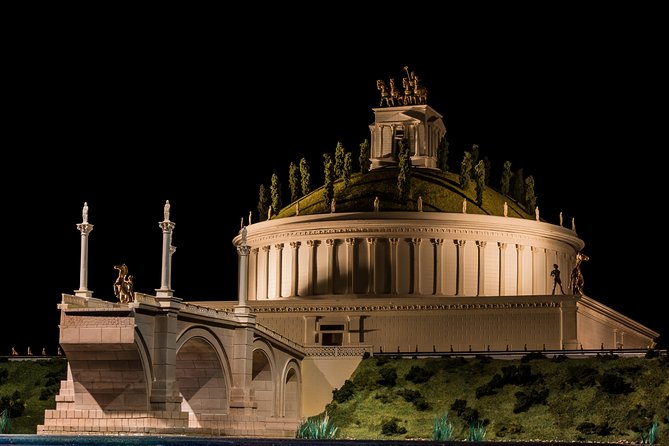
One memorable feature is the opening attention to Rome’s geological beginnings. The story starts before the famous monuments, with the physical setting that helped shape the city.
That is a smart choice. Rome’s hills, river, and early settlement patterns are part of the reason the city developed as it did. Even a brief geological explanation can help you see the ancient center as more than a collection of famous ruins.
From there, the presentation moves through major building periods. The classical era receives plenty of attention, but the experience also places medieval, Renaissance, and Baroque Rome in the same timeline. This helps explain why the city can shift so quickly from ancient stone to ornate churches and grand palaces.
I find this broad approach more useful than a presentation focused only on the Colosseum. If you visit Rome for several days, you will encounter different periods almost everywhere. The experience gives you a basic vocabulary for those changes.
The downside is that the overview can feel uneven if you want a detailed account of ancient Rome. Some visitors will leave wishing for more information about the ancient city, its daily life, or its political events. This is a survey course, not a specialist museum.
Same city, an entirely different afternoon:
- Rome: Colosseum, Palatine Hill and Roman Forum Guided Tour
★ 4.8 · 32,814 reviews - Rome: Guided Tour of Colosseum, Roman Forum & Palatine Hill
★ 4.7 · 27,897 reviews - Rome: Colosseum & Forum with Audio Guide App -Optional Arena
★ 4.2 · 24,770 reviews - Rome: Colosseum, Roman Forum and Palatine Hill Guided Tour
★ 4.5 · 23,903 reviews
How the reconstructions help at the Roman Forum
The Roman Forum is one of the clearest places to use what you learn here. In person, you see foundations, columns, arches, and partial walls spread across a large open area. Without preparation, it can be difficult to tell which pieces belonged together.
The 3D displays give you a mental before-and-after picture. You can then look at the Forum and ask what a surviving wall once connected to, or how a group of columns fitted into a larger building.
The same applies to Palatine Hill. The hill has important remains, but its scale and scattered ruins require imagination. A visual reconstruction gives you a starting point before you arrive.
At the Colosseum, the value is slightly different. The amphitheater is easier to recognize, but models and images can still clarify its original structure and the way the seating, levels, and exterior worked together.
This is why I would schedule the experience on your first day or near the beginning of your trip. You do not need to remember every date. You only need enough structure to make the later sites feel connected.
Location, schedule, and practical timing
The attraction is at Corso Vittorio Emanuele II, 203, in central Rome. It is near public transportation, which makes it fairly easy to add to a day of sightseeing.
The central address also makes the one-hour length useful. You can place it between major visits rather than giving up an entire morning or afternoon. Multiple showings each day provide some flexibility, though you should still allow time to arrive and find the entrance.
The last entry is one hour before closing. That detail is easy to overlook, especially if you are planning around dinner or an evening walk. Check the day’s operating hours when arranging your schedule, and do not treat the final admission time as the closing time itself.
Your pre-purchased ticket is sent with booking confirmation. A mobile ticket keeps the process simple, and service animals are allowed. Most people can participate, but the standing sections are worth considering if you need regular seating.
Is $21.77 a fair price?
At $21.77 per person, this is not a bargain in the same way as a free viewpoint or a simple museum room. You are paying for a produced presentation, the audio equipment, the visual displays, and a compact historical lesson.
The value depends on how you use it. If you plan to visit the Colosseum, Forum, and Palatine Hill, the reconstructions can make those tickets and walking time more rewarding. The experience may also save you from trying to assemble the same basic timeline from several guidebooks or scattered signs.
For a family, the price can make sense if the children need visual material to stay interested. The 3D projections and recreated monuments give younger visitors something to watch while the adults absorb the explanation.
For a serious Roman history enthusiast, the value is less certain. You may find the content too concise, and the four-room format may seem modest for the price. If you already know Rome’s major eras and sites, you might prefer to spend the money on a more specialized museum or a guided archaeological visit.
The presentation also matters. Poorly maintained seats, dirty bathrooms, or a cold, empty-feeling interior can affect how worthwhile the ticket feels. Those concerns do not erase the useful content, but they are fair reasons to keep expectations in check.
Who will enjoy Welcome to Rome most?
I would recommend this experience to first-time visitors who want a quick foundation before tackling Rome’s major sights. It is particularly useful if you like history but do not want to start your trip with a long walking tour.
Families are another good match. Children can follow the visual changes more easily than a spoken lecture, though very young children may tire during the audio sections. The one-hour length is manageable, and the auditorium provides a place to sit during the film.
It also suits visitors arriving jet-lagged or short on time. You can gain a broad understanding without committing to a half-day activity. The central location makes it possible to continue into another part of the city afterward.
You may want to skip it if you dislike standing exhibits, prefer outdoor sightseeing, or expect a detailed treatment of ancient Roman politics and daily life. The experience is designed to orient you, not satisfy every question.
Tips for getting more from the presentation
Book it near the start of your stay rather than saving it for the final day. The information becomes more useful when you can apply it immediately at the Forum, Colosseum, Palatine Hill, churches, museums, and palaces.
Listen for the changes between architectural periods. Try to connect the presentation’s broad timeline with what you see outside: classical remains, medieval additions, Renaissance design, and Baroque decoration.
Check the audio device before you leave the first station. If it is not working properly, ask a staff member for a replacement at once rather than trying to follow without narration.
Wear comfortable shoes, but remember that the indoor exhibit includes standing. If you are traveling with someone who needs to rest often, the theater portion will be easier than the model rooms.
The ticket offers free cancellation if you cancel at least 24 hours before the scheduled start. Changes or cancellations inside that window are not accepted for a refund, and all cut-off times use Rome’s local time.
Should you book this Rome history experience?
Book it if you are visiting Rome for the first time and want a clear visual starting point. The best payoff comes when you visit the ancient sites afterward, since the reconstructions help you make sense of ruins that can otherwise seem abstract.
I would especially consider it for families, short stays, and anyone who wants a one-hour orientation rather than a long guided tour. The 4.7 rating from 679 reviews and 95 percent recommendation rate fit its main strength: it gives you a useful, engaging overview in a compact format.
I would hesitate if you want extensive ancient history, polished museum facilities, or a seated activity from beginning to end. At $21.77, the price is reasonable when the context improves several later sightseeing stops, but less attractive if you see it as a stand-alone show.
FAQ
How long does Welcome to Rome last?
The experience lasts approximately one hour.
Where is Welcome to Rome located?
It is located at Corso Vittorio Emanuele II, 203, 00186 Roma, Italy.
Is the experience offered in English?
Yes. The experience is offered in English.
What does the experience include?
It includes admission to the multimedia Welcome to Rome show, with projections, audio, interactive exhibits, 3D displays, models, and a film.
Is the ticket mobile?
Yes. A mobile ticket is available.
How many times is the show offered each day?
There are multiple showings daily. Exact times are not provided in the available information.
What is the latest time I can enter?
The last entry is one hour before closing.
Can I bring a service animal?
Yes. Service animals are allowed.
Is the experience near public transportation?
Yes. The location is near public transportation.
What is the cancellation policy?
You can cancel for a full refund up to 24 hours before the experience begins. Cancellations or changes made less than 24 hours before the start time are not accepted for a refund.
Fresh on the Rome list
- Exclusive Golf Tour Private VIP with Local & Gelato o Wine★ 5.0 · 500 reviews
- Colosseum, Palatine Hill and Roman Forum with Guided Tour★ 5.0 · 500 reviews
- Rome Trastevere Pasta Making Class with Eating Europe★ 5.0 · 505 reviews
- Rome by Night Walking Tour★ 4.5 · 506 reviews
- Rome: Colosseum Express Tour with Forum & Palatine Access★ 4.5 · 511 reviews
- Rome Food Experience Max 6 People Group Tour | w/Private Option★ 5.0 · 516 reviews
- Rome: Navona Square Underground Ticket with Audio Guide★ 4.0 · 518 reviews
- Rome: Escorted Papal Audience Experience with Entry Ticket★ 4.4 · 518 reviews
Rome Tours, compared.
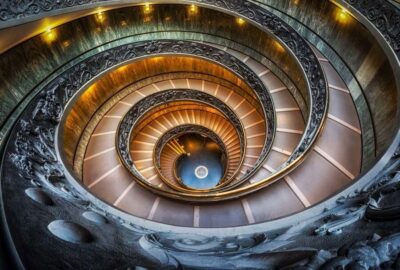
Vatican Museums & Sistine Chapel Tour with Optional Basilica
Read our review →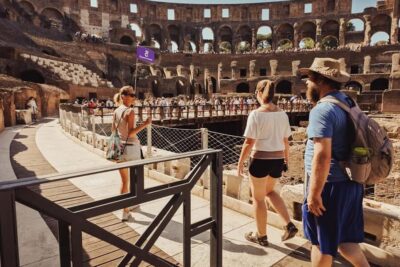
Colosseum, Roman Forum & Palatine Guided Tour
Read our review →
Vatican Museums, Sistine Chapel & St Peter’s Basilica Guided Tour
Read our review →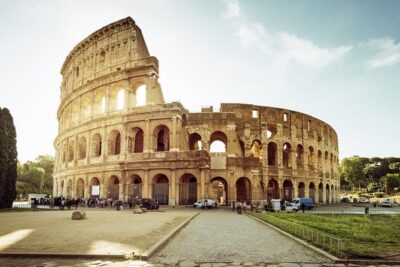
Colosseum, Palatine Hill and Roman Forum Guided Tour
Read our review →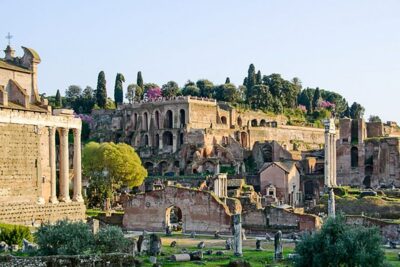
Guided Tour of Colosseum, Roman Forum & Palatine Hill
Read our review →
Colosseum & Forum with Audio Guide App -Optional Arena
Read our review →
Colosseum, Roman Forum and Palatine Hill Guided Tour
Read our review →