
Reviewed · COLOSSEUM & ROMAN FORUM TOURS
Timed-Entry: Colosseum, Forum and Palatine + Optional Arena Floor
The most useful thing about this experience is that it joins timed Colosseum entry with the Roman Forum and Palatine Hill, so you can cover Rome’s ancient center without spending your morning piecing together separate tickets. The route begins beneath the Arch of Constantine and finishes above the Circus Maximus, with an English-speaking guide or an audio app to give the stones some meaning.
I like two things here. First, the three-hour format gives you a solid introduction while leaving time for the Vatican, a museum, or an evening stroll. Second, the headset system lets you hear the guide while moving through crowds. Guides including Laura, Patrizia, Alberto, Silvia, and Donatella have been praised for clear stories, good pacing, and care in hot weather.
The catch is that this is a walking-and-standing tour on uneven ground and stairs. Also, check your booking option carefully: a live guided tour and an audioguide visit are very different experiences. The audio option gives you freedom, but the local representative mainly provides tickets and directions.
Key points to know before booking
- Three ancient sites in one visit: See the Colosseum, Roman Forum, and Palatine Hill on a route lasting about three hours.
- Optional arena floor access: Add the arena option at booking if you want to enter the area associated with gladiatorial contests.
- English only: The experience is offered in English, with headsets for live guided tours.
- Maximum group of 25: You can choose among available group formats, but the largest permitted group is not private.
- Start by the Arch of Constantine: Meet at Piazza del Colosseo, then finish near Palatine Hill.
- Early times are useful: A 9 AM entry can still be busy, but the site generally becomes more crowded as the morning continues.
What the $59.28 price really gets you
At $59.28 per person, this is not simply a Colosseum admission ticket. The official timed entry to the Colosseum, Forum, and Palatine is valued at €18 per person, or €24 with arena access. A €2 reservation fee is included as well. The rest pays for the booking service, meeting staff, and, if selected, the live guide or audio product.
That makes the value depend on how you like to visit ancient sites. If you want a guide to explain politics, religion, architecture, and daily life as you walk, the price can be sensible. A bare ticket gets you inside, but it does not tell you why the Rostra mattered, how the Via Sacra functioned, or why the Palatine became the address of emperors.
The audio option is a different calculation. You receive the timed entry and an app with recorded information, but you use your own smartphone and earphones. It costs less in personal attention, though it can suit you well if you prefer to stop, take photographs, and set your own pace.
The app should be downloaded before you arrive. A link or code is sent about 24 hours before the visit, and the app can work offline after downloading. Do not wait until you are standing at the meeting point. One visitor found the download took more than an hour, which left the audio guide of little use during the visit.
A few other Rome mornings to weigh against this
- Colosseum, Roman Forum & Palatine Guided Tour
★ 4.7 · 63,148 reviews - Rome: Colosseum, Palatine Hill and Roman Forum Guided Tour
★ 4.8 · 32,814 reviews - Rome: Guided Tour of Colosseum, Roman Forum & Palatine Hill
★ 4.7 · 27,897 reviews
Starting at the Arch of Constantine
Your meeting point is the Arch of Constantine, at Piazza del Colosseo. The arch sits between the Colosseum and Palatine Hill, so it is easy to identify, although the square can be crowded and noisy. Look for the EcoArt meeting staff and allow enough time to locate the correct flag or representative.
The arch itself deserves more than a glance. Built to celebrate Constantine’s victory at the Battle of Milvian Bridge, it is the largest Roman triumphal arch. Your guide uses it to place the Colosseum in a larger story of emperors, military power, public spectacle, and political messaging.
This short opening stop also helps you get oriented. You are not being led straight into an isolated monument. You are beginning in the ceremonial zone where imperial Rome announced its power in stone.
Entering the Colosseum with a timed ticket
The Colosseum is the main event, and the timed ticket is the practical backbone of the morning. It does not mean the entrance area will be empty. Security, ticket checks, and the number of people arriving at the same time can still create a queue. One 9 AM visit had long lines that moved fairly quickly, while the interior became more crowded later.
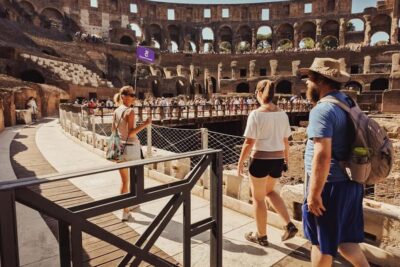
Inside, expect a short but concentrated visit of roughly 30 minutes according to the planned schedule. That is enough for the guide to explain the building’s design, the organization of the seating, and the role of gladiatorial contests, but it is not enough for every corner and every inscription.
The headset is a real help. The Colosseum is full of echoes, passing groups, and competing voices. With an earpiece, you can look at the structure while still catching the guide’s explanation. Guides such as Laura and Viola have been praised for holding attention across the full three-hour route, while Alberto has been singled out for mixing facts with humor.
If you choose the arena floor option, you get a closer view of the central stage where public spectacles took place. The arena supplement raises the official admission value from €18 to €24. Check that the option is printed on your confirmation, since arena access is available only when selected during booking.
Walking the Roman Forum and Via Sacra
From the Colosseum, the route moves through the Roman Forum, the former center of public life. The Forum is not one tidy ruin. It is a spread of columns, foundations, temples, arches, and broken walls, and without context it can feel like a difficult puzzle.
A live guide gives you a way to read it. The Rostra, for example, was a platform for speeches by politicians, magistrates, advocates, and other public speakers. This is where you can picture Roman public life as something loud, direct, and highly political, rather than just a collection of old stones.
The Via Sacra was the Forum’s main street. It ran from Capitoline Hill through the Forum toward the Colosseum and served as the route for Roman triumphs. As you walk along it, the guide can connect religious ceremony, military victory, government, and public display.
The Temple of Antoninus and Faustina offers another useful lesson in Rome’s changing identity. It began as a temple dedicated to Faustina, the wife of Emperor Antoninus Pius, and later honored both of them. In time, it became the church of San Lorenzo in Miranda. Ancient Rome was not preserved in a single frozen period. Buildings were reused, renamed, and absorbed into later life.
The Forum portion is scheduled for about 20 minutes, with several nearby stops of about 10 minutes each. That keeps the visit moving, but you should not expect long quiet periods at every ruin. If you want to study every surviving column or inscription, plan to return independently or choose the audio format and spend longer at the site.
Same city, an entirely different afternoon:
- Vatican Museums & Sistine Chapel Tour with Optional Basilica
★ 4.3 · 67,413 reviews - Vatican Museums, Sistine Chapel & St Peter’s Basilica Guided Tour
★ 4.5 · 39,149 reviews - Rome: Colosseum & Forum with Audio Guide App -Optional Arena
★ 4.2 · 24,770 reviews - Rome: Colosseum, Roman Forum and Palatine Hill Guided Tour
★ 4.5 · 23,903 reviews
Piazza del Colosseo and the imperial forums
The itinerary includes Piazza del Colosseo and Via dei Fori Imperiali, broad public spaces that help you see how ancient Rome and modern Rome overlap. The square includes the area around the Colosseum, along with reminders of lost monuments such as the Meta Sudans and the Colossal statue associated with Nero.
Via dei Fori Imperiali connects Piazza Venezia with the Colosseum. From the route, you can view the monumental remains of the forums of Caesar, Augustus, Nerva, and Trajan. These forums expanded the political and commercial heart of Rome as emperors built new spaces for law, administration, religion, and public display.
Some of these stops are viewing points rather than separate entries into every forum. That matters if you are expecting a long archaeological walk along the boulevard. The value here is the connection between the monuments: you see how the imperial center grew outward from the older Republican Forum.
The Arch of Titus and the Temple of Venus and Roma
The Arch of Titus rises on the northern slopes of Palatine Hill. Its single archway commemorates the victories of Emperor Titus, including the siege of Jerusalem. The reliefs make the monument especially important for understanding how Roman triumphs turned military success into permanent public imagery.
Nearby, the Temple of Venus and Roma occupied the Velian Hill close to the Colosseum. It was dedicated to Venus Felix and Roma Aeterna and is considered one of the largest temples of ancient Rome. Even in ruin, its scale helps explain how architecture was used to express the size and confidence of the empire.
These stops are especially rewarding with a guide who can explain what remains and what has disappeared. On your own, you may notice the arches and foundations but miss the political message behind them. Catalina, for example, was praised for using images while explaining the past, a useful approach when the original buildings are only partly visible.
Palatine Hill and the view over Circus Maximus
The final major section is Palatine Hill, traditionally linked with the foundation of Rome. It later became the preferred address of emperors, whose palatial homes occupied the hilltop.
The climb and uneven surfaces are part of the price. Several staircases and extended periods of walking can make the route tiring, even in moderate weather. In summer, shade and water become important. Guides including Alberto, Donatella, and Alessandra have been praised for adding breaks and using shaded areas when temperatures reached roughly 38°C or higher.
At the top, you look down toward Circus Maximus. Only a short viewing stop is scheduled, and admission to the Circus Maximus itself is not included. Still, the view is one of the best visual payoffs of the route. From above, you can picture chariots racing across the long open track and crowds filling the grandstands.
The tour ends around Palatine Hill rather than returning you to the Arch of Constantine. That is convenient if you plan to continue toward Circus Maximus or the nearby streets, but less convenient if you need to retrieve something at the starting point. There is no hotel pickup or drop-off.
Live guide or audio app?
Choose the live guided version if you want interpretation, a clear route, and the chance to ask questions. The strongest feedback centers on the guides. Laura was praised for answering questions and bringing real passion to the subject. Patrizia, Viola, Riccardo, Aiko, Silvia, and Alessandra were also praised for making the history understandable and keeping the experience friendly.
Guides have different styles. One negative experience involved a guide spending about 30 minutes in one shaded area near the Colosseum entrance while explaining background information. That may be frustrating if you want constant movement and photographs, though pausing can be sensible in extreme heat and while waiting for the full group.
The audio app suits you if independence matters more than conversation. You can linger at the Palatine, move quickly through a section, or take a break without holding up a group. The weak point is navigation. The map can be hard to follow in sequence, so download it early, bring earphones, and be ready to ask the meeting staff for basic directions before entering.
Read the booking title closely. An audioguide option does not come with a live historian walking beside you. The local representative provides the ticket and helps with the app, then you explore independently.
Fitness, heat, crowds, and what to bring
This is an outdoor archaeological visit with uneven ground, stairs, and plenty of standing. Most people in reasonable health can take part, but you should be comfortable walking for several hours. The route can feel demanding even when the temperature is only around 72°F, and much harder during Rome’s hottest days.
Wear practical shoes. Bring water, sun protection, and your own earphones if you book the audio app. Large bags and luggage are not permitted inside the venues, so arrange storage before you arrive.
An early time is a smart choice. It will not guarantee solitude, but an early entry can help you get through the Colosseum before the heaviest crowds build. One useful routing tip is to begin with Palatine Hill when possible rather than entering through the Roman Forum first. That can put you on a quieter section before many people arrive from the Colosseum.
The Colosseum may close in bad weather. If that happens, EcoArt offers another date or a full refund. Restoration connected with the Jubilee may also change access to some monuments, so check messages sent before your visit.
Who should book this Rome experience?
I would choose this tour if you have about three hours, want the three major ancient sites in one visit, and prefer some structure. It is particularly useful for a first visit to Rome, when the Forum’s ruins can otherwise be hard to interpret.
The live version is best for curious visitors who want questions answered and stories tied to the buildings. The audio version is better for independent visitors who dislike fixed pacing and are comfortable using a smartphone.
I would think twice if you have limited mobility, dislike heat, or want a slow archaeological study. You may find the schedule brisk, especially on the Palatine. A negative experience is possible if your idea of a tour means continuous movement and frequent photo stops, since the guide may pause to explain the site or protect the group from the sun.
The cancellation terms are strict: cancel at least three full days before the local start time for a full refund. Changes or cancellations inside that window are not refunded. Tickets are issued in the full names entered at booking, are non-transferable, and require matching identity documents.
Should you book the Colosseum, Forum, and Palatine tour?
Book it if you want efficient access plus real explanation, especially in the live guided format. The 4.9 rating from 289 reviews and 97 percent recommendation rate reflect strong satisfaction, particularly with guides who make the past clear and take care with heat and group comfort.
Choose the audio option only after understanding that you will be on your own. Download the app a day early. Add arena access if that closer view matters to you. For a first-time Rome visit with limited time, this is a practical way to meet the ancient city in one well-packed morning.
FAQ
How long does the experience last?
The experience lasts approximately three hours.
What sites are included?
Timed entry includes the Colosseum, Roman Forum, and Palatine Hill. The route also covers nearby landmarks and viewing points including the Arch of Constantine, Via Sacra, the Rostra, the Arch of Titus, and Circus Maximus from Palatine Hill.
Is arena floor access included?
Arena floor access is included only if you select that option when booking. The official admission value is €24 with arena access, compared with €18 without it.
Is the tour offered in English?
Yes. The experience is offered in English.
Does every option include a live guide?
No. Some booking options provide a live guided tour, while others provide an audioguide app. Check the option title carefully before paying.
Do I need a smartphone for the audioguide?
Yes. The audioguide requires your own Android or iOS smartphone and your own earphones. Download the app through the link or code sent about 24 hours before the visit.
Where does the tour begin and end?
The tour begins at the Arch of Constantine in Piazza del Colosseo. It ends around Palatine Hill on Via di San Gregorio and does not include hotel transportation.
Can I bring luggage or a large bag?
No. Luggage and large bags are not permitted inside the venues.
How strenuous is the walking?
The route involves extended walking and standing on uneven ground, along with several staircases. It is recommended for people comfortable with that level of activity.
What happens if bad weather closes the Colosseum?
If the experience is canceled because of poor weather, you are offered a different date or a full refund.
Fresh on the Rome list
- Rome: Guided Catacombs Tour & Capuchin Crypt (Audio Guide)★ 4.3 · 191 reviews
- Guided tour of the Colosseum, Roman Forum and Palatine in Spanish★ 4.5 · 191 reviews
- Rome: Borghese Gallery Guided Tour with Skip-the-Line Ticket★ 4.5 · 192 reviews
- Rome: Arena Colosseum Tour with Arena Access★ 4.6 · 193 reviews
- Rome: Colosseum & Roman Forum Guided Tour★ 5.0 · 194 reviews
- Colosseum, Forum, Palatine Hill with audio guide and Arena or Bus option★ 4.0 · 193 reviews
- Rome: Domus Aurea Guided Tour and Virtual Reality Experience★ 4.7 · 194 reviews
- Rome Vintage Fiat 500 car Tour With Photographer★ 5.0 · 194 reviews
Colosseum & Roman Forum Tours, compared.
Colosseum, Roman Forum & Palatine Guided Tour
Read our review →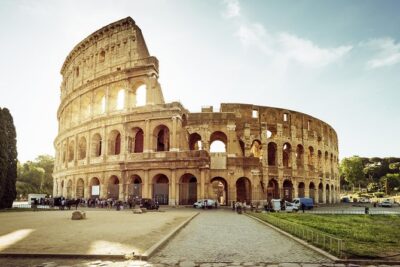
Colosseum, Palatine Hill and Roman Forum Guided Tour
Read our review →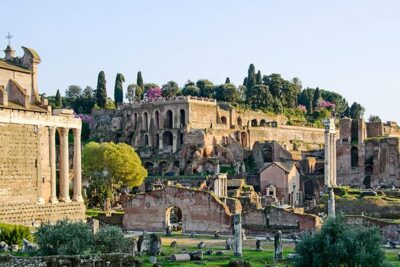
Guided Tour of Colosseum, Roman Forum & Palatine Hill
Read our review →
Colosseum & Forum with Audio Guide App -Optional Arena
Read our review →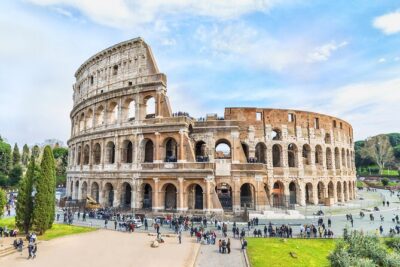
Colosseum, Roman Forum and Palatine Hill Guided Tour
Read our review →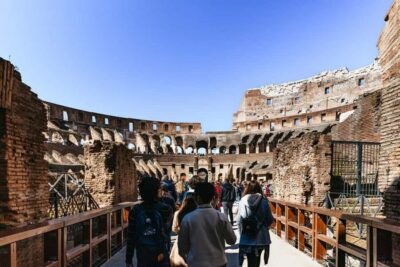
Colosseum, Forum & Palatine Hill Tour & Optional Arena
Read our review →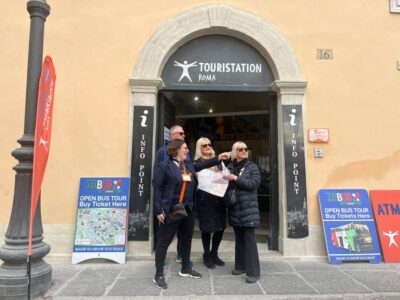
Colosseum, Roman Forum, Palatine with Multimedia Video
Read our review →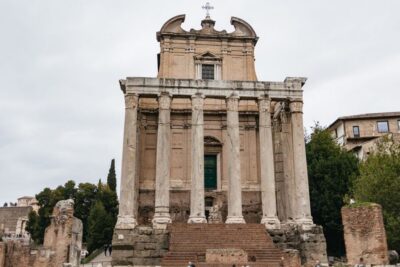
Colosseum, Palatine Hill & Roman Forum Guided Tour
Read our review →Browse the lists this tour appears in