Reviewed · ROME TOURS
Rome Underground: Catacombs Tour, Aqueducts and Appian Way
Rome’s best-known ancient sights sit inside the city center, but this tour takes you beyond the Colosseum and Forum to Rome’s old southern frontier. You’ll walk the Appian Way, stand beneath huge aqueducts, and descend into early Christian burial tunnels.
I like the smart combination of three out-of-town sights and the small group, which makes it easier to hear your guide and ask questions. I also like the late-day catacombs visit, when San Sebastiano is visited as the final group of the day. The main drawback is time: each outdoor stop is fairly short, and a two- or three-day visit may require you to skip more famous sights.
Key things to know before booking
- The Appian Way is the star outdoor stop: Walk on ancient paving stones used by Roman soldiers, merchants, and ordinary travelers.
- Aqueduct Park gives you scale: You’ll see the engineering of Roman water systems in an open park, not behind museum glass.
- The catacomb visit changes by day: Your underground stop is San Sebastiano or Domitilla, so you cannot count on one specific site.
- Transport saves time: A private, air-conditioned minibus links the scattered locations.
- The group is limited to 18: That is small enough for clear explanations and questions.
- Wear proper shoes and bring water: The Appian Way is uneven, and the aqueduct park involves walking in the open air.
Rome beyond the Colosseum
This is a good tour for seeing the less polished side of ancient Rome. The city center gives you grand monuments, marble temples, and busy piazzas. Along the Appian Way, you get something different: worn stones, open countryside, tombs, and long stretches of road that still suggest how Rome once spread across the ancient world.
The experience lasts about three hours and 15 minutes. That includes the minibus rides, short walks, outdoor explanations, and a substantial underground visit. You are not simply driven past the sights. At each stop, you leave the minibus and spend time on foot with your English-speaking guide.
The guides have included Sylvia, Andre, Antonella, Francesca, Annamaria, Flavia, Chiara, and others. The strongest guides bring energy and plenty of detail, particularly when explaining Roman engineering and the purpose of the road. At the catacombs, a separate site guide may lead the underground portion, adding focused information about burial customs and early Christianity.
A few other Rome mornings to weigh against this
- Vatican Museums & Sistine Chapel Tour with Optional Basilica
★ 4.3 · 67,413 reviews - Colosseum, Roman Forum & Palatine Guided Tour
★ 4.7 · 63,148 reviews - Vatican Museums, Sistine Chapel & St Peter’s Basilica Guided Tour
★ 4.5 · 39,149 reviews
Starting at Piramide Metro station
The meeting point is at Piramide Metro station, near the ancient pyramid in the Ostiense area. Pay close attention to this detail. The meeting point is associated with the metro station, not simply the pyramid itself, and the wording can cause confusion if you arrive by taxi or rideshare.
One practical tip: confirm that you are going to the Piramide Metro station entrance and look for the tour guide with a small sign. The nearby streets also serve city buses, so do not assume every waiting bus is connected with the tour.
Once everyone is assembled, you board a clean, air-conditioned minibus. The ride matters because the three main sites are spread well beyond the central sightseeing zone. Traveling between them by public transport would take more effort and would leave less time for the actual sites.
The tour is offered in English and is capped at 18 people. Headsets have been used on some departures, helping you follow the guide while walking or standing near a busy road. The ride back ends at the same meeting point.
Walking the ancient Appian Way
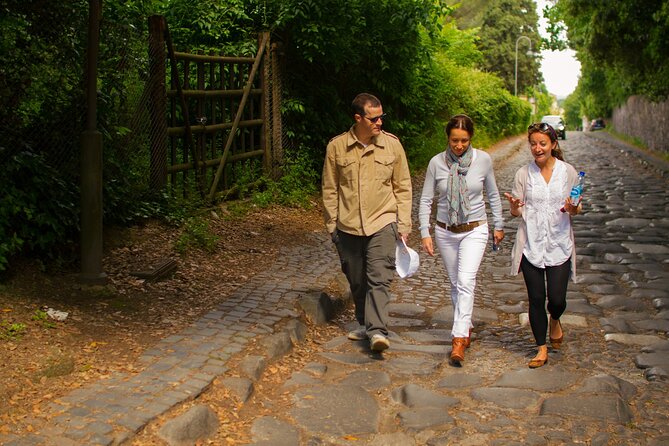
The first stop is the Via Appia Antica, one of Rome’s oldest roads. You walk for about 25 minutes along a surviving section of the ancient route, with old paving stones underfoot and ruins and tombs nearby.
This is not a long hike, but the surface is uneven. Sandals are a poor choice, especially if you want to walk comfortably over the stones. Supportive walking shoes are a better idea, and you should bring water in warm weather.
The Appian Way helps you picture Roman power in practical terms. This was not just a road for sightseeing. It carried armies, officials, goods, and messages outward from Rome. Your guide explains how the road worked and points out the tombs and remains along its route.
The short time here is both a strength and a limitation. You get a useful introduction without spending the entire afternoon walking outside the center. But if you hope to cover a long stretch of the road or explore every ruin, this tour will feel too brief.
I find this stop most rewarding when the guide connects the paving stones to Rome’s expansion. Without that context, you are mainly looking at an old road. With good narration, the worn surface becomes evidence of a working Roman network.
Cecilia Metella’s imposing tomb
The next stop lasts about 25 minutes at the Mausoleum of Cecilia Metella. This large circular tomb dates from the first century BCE and remains one of the most recognizable monuments along the Appian Way.
The building’s size tells you something about the family behind it. This was not a modest grave marker. It was a public statement of status, wealth, and family power, placed beside one of Rome’s most important roads.
Your guide explains Cecilia Metella and the family that commissioned the monument, as well as the way the tomb has survived through the centuries. The visit is primarily an outdoor stop, and admission is included as part of the tour.
Do not expect a long interior visit or a detailed archaeological study. The scheduled time is short, so the value comes from the guide’s explanation and the chance to see the monument in its original setting. The tomb also gives the Appian Way a clear focal point after your initial road walk.
For me, this is a good example of why a guide helps. You can recognize a large ancient tomb on your own, but the social meaning of the monument is easier to grasp when someone explains who built it and why it was placed there.
Same city, an entirely different afternoon:
- Rome: Colosseum, Palatine Hill and Roman Forum Guided Tour
★ 4.8 · 32,814 reviews - Rome: Guided Tour of Colosseum, Roman Forum & Palatine Hill
★ 4.7 · 27,897 reviews - Rome: Colosseum & Forum with Audio Guide App -Optional Arena
★ 4.2 · 24,770 reviews - Rome: Colosseum, Roman Forum and Palatine Hill Guided Tour
★ 4.5 · 23,903 reviews
Aqueduct Park and Roman engineering
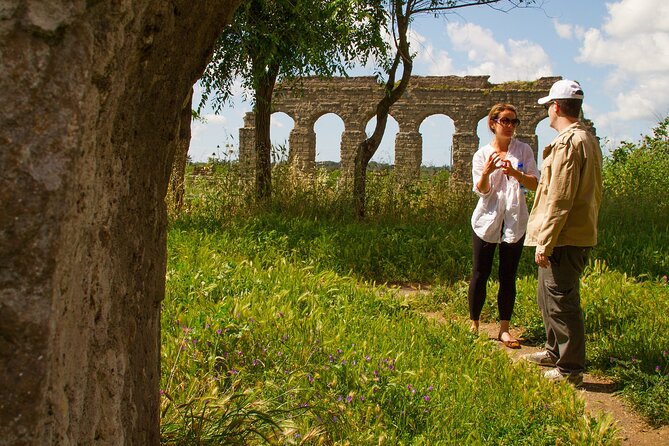
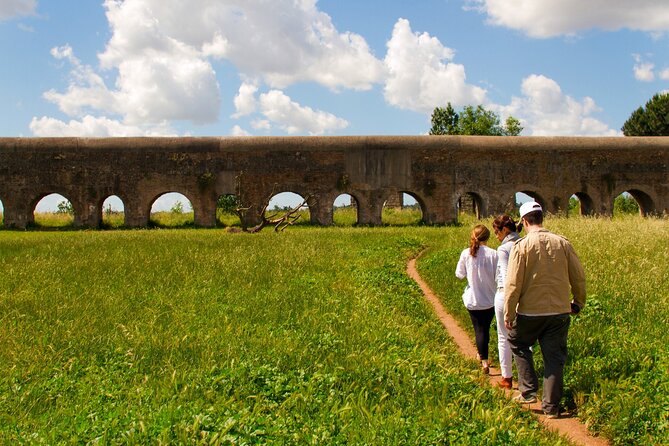
The tour then moves to Parco degli Acquedotti, part of the Appian Way archaeological area. You spend about 45 minutes beneath the remains of the Roman aqueducts.
This is the most open and spacious part of the experience. Instead of squeezing through a museum or standing in a packed archaeological site, you walk in a broad park with the aqueduct arches rising above you. The structures show how Rome brought water from distant sources into the city.
The aqueducts are impressive because they combine practical purpose with huge scale. Roman engineers had to maintain a steady gradient over long distances, carry water across uneven ground, and build structures that could survive for centuries. Your guide explains the system and the skills needed to construct it.
You will walk a fair amount here, though the pace is generally manageable. The open setting can be hot in summer, so water, a hat, and sensible shoes are useful. The aqueduct stop is not physically extreme, but you should be able to walk at a moderate pace without trouble.
This portion also helps balance the catacombs. The underground visit focuses on religion, burial, and secrecy. The aqueducts show the practical side of Roman life: sanitation, public fountains, baths, and the engineering that supported a large city.
The tour summary also highlights the Mithraic religion, a secretive Roman faith that remains difficult to fully understand. Your guide may use this subject to explain the religious world of ancient Rome, alongside early Christianity and burial customs. The precise discussion can depend on the guide and the day’s catacomb site.
Descending into San Sebastiano or Domitilla
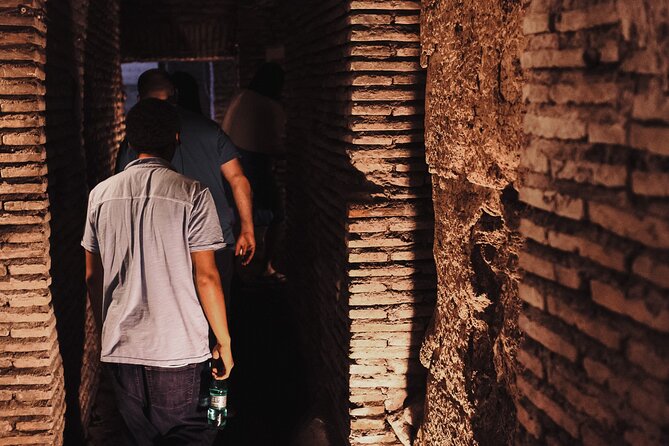
The final major stop lasts about one hour and 20 minutes, making it the longest part of the tour. Depending on the day, you visit the Catacombs of San Sebastiano or the Catacombs of Domitilla.
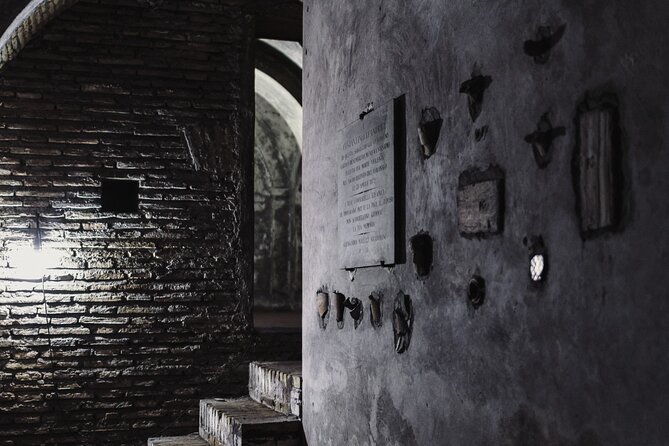
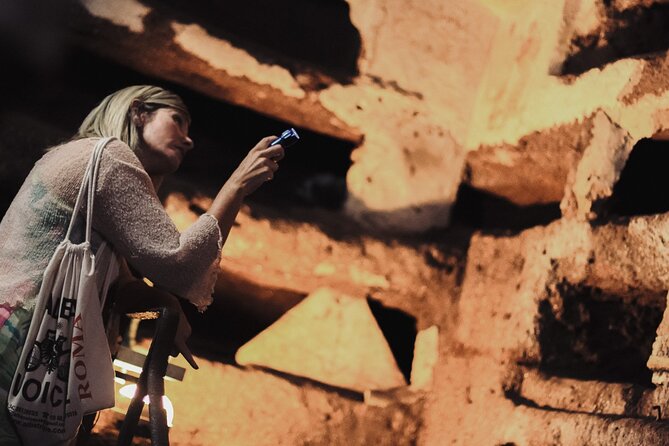
At San Sebastiano, you enter underground passageways connected with early Christian burial. The tunnels contain ancient burial spaces and traces of frescoes. The setting is cool, enclosed, and quiet, a sharp change from the bright open park above.
The tour is scheduled near closing time, so the group visits San Sebastiano as the last visitors of the day. That timing can make the descent feel more private and atmospheric. It also gives you a calmer setting for the explanations, rather than trying to hear a guide over several groups.
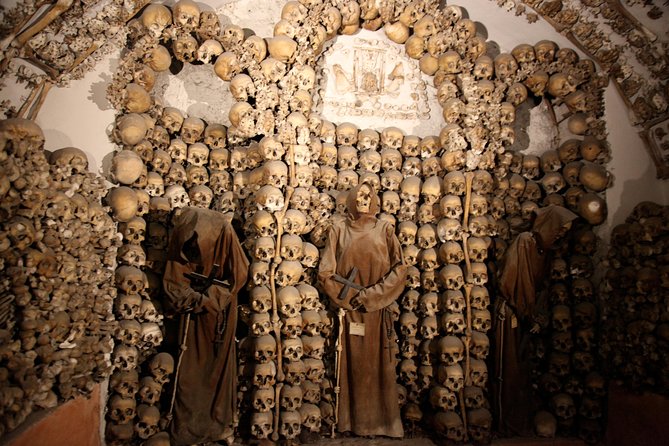
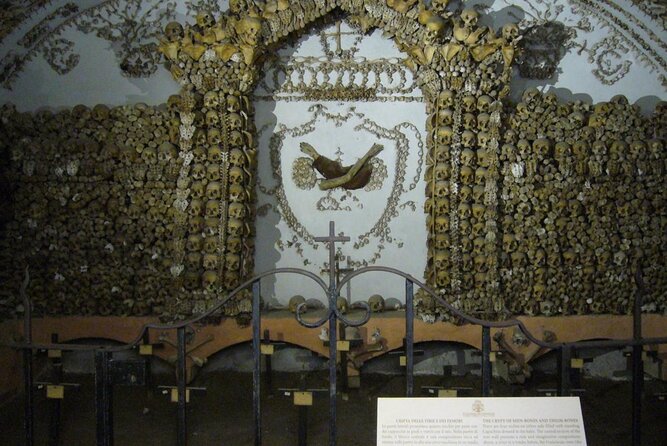
The catacombs are not filled with exposed bones. Much of the physical evidence consists of tunnels, burial niches, inscriptions, and painted decoration. If you expect a horror attraction, you may find the visit more solemn than frightening. Several people who worry about confined spaces have found the experience manageable, but the passageways are genuinely tight in places.
If claustrophobia is a serious concern, choose another activity. The tour information specifically warns about the confined conditions, and that warning should be taken seriously. You also need to be comfortable walking underground at a moderate pace.
The Domitilla option means the exact experience can vary. You should book this tour for the catacombs as a type of site, not because you are guaranteed San Sebastiano on a particular date. Both options offer an underground look at Roman burial and early Christian history, but the guide and site staff shape much of the experience.
The catacomb visit is also where the guide’s tone matters most. A good explanation can make the tunnels feel thoughtful and human rather than merely spooky. Guides such as Antonella, Francesca, Flavia, and Sylvia have been praised for keeping the three-hour outing lively and clear, while the site guide adds specialist detail underground.
What the minibus adds to the experience
The air-conditioned minibus is more than a comfort feature. The Appian Way, aqueduct park, and catacombs are not a neat cluster beside the Colosseum. The vehicle turns several separate outings into one practical half-day plan.
That arrangement is especially useful during Rome’s hotter months. You get time outside at the road and aqueducts, then a cool underground stop, with air-conditioned transport between the locations. It is also easier than trying to work out several bus connections and walking routes.
The tradeoff is that you have less freedom at each site. The schedule allows about 25 minutes at the Appian Way, 25 minutes at Cecilia Metella, and 45 minutes at the aqueducts. If you like to linger, take many photographs, or read every sign, the pace may feel controlled.
There is also little room for delays. One late arrival at the beginning can reduce time at the first stop, so arrive early at Piramide. The tour is designed to keep moving, and waiting at the start affects everyone.
Is $65.30 a fair price?
At $65.30 per person, the tour offers a reasonable package if you value convenience and explanation. Your price includes the English-speaking guide, walking tours, catacomb admission, transport in an air-conditioned minibus, and a group of no more than 18.
The main value is not simply entry to the sites. You are paying to connect three locations that are awkward to combine independently. The guide also gives meaning to places that can seem scattered or unfinished when seen without context.
The price is harder to justify if you have only two full days in Rome. In that case, the Colosseum and Forum, Vatican City, and central Rome’s major churches and piazzas may deserve priority. The Appian Way and catacombs are rewarding additions, but they are not substitutes for Rome’s essential first-visit sights.
If you have four or five days, or if Roman civilization is your main interest, the calculation changes. You can cover the famous center first and then use this outing to see roads, tombs, aqueducts, and burial sites beyond the usual circuit.
The tour also includes free cancellation up to 24 hours before the start time. Changes made within 24 hours are not accepted for a refund, and poor weather can lead to a different date or a full refund.
Who will enjoy this outing most?
I would choose this tour if you want ancient Rome beyond the headline monuments. It suits people who enjoy archaeology, engineering, religious history, and guided storytelling more than shopping or food stops.
It is also a good choice for a first day in Rome if you are tired from a flight but still want a structured afternoon. The minibus reduces navigation, and the site visits are broken into manageable sections. Just do not mistake the air-conditioned rides for a completely easy day. You still walk on uneven paving and through the aqueduct park.
Families can enjoy the variety, especially with a guide who explains the Roman world in plain language. The catacombs may be less appealing to young children or anyone who dislikes enclosed spaces.
The tour works well for repeat visitors, too. If you have already seen the Colosseum, Forum, and Vatican, these sites show a quieter and less familiar side of Rome. The road and aqueducts also provide a welcome change from crowded indoor monuments.
You should be able to walk at a moderate pace without difficulty. Most people can take part, but the tour is not designed around wheelchairs or those who need frequent rest stops. The underground passages are the main physical and emotional consideration.
Should you book it?
Book this tour if you have at least three days in Rome and want to give one half-day to the city’s ancient outskirts. You will see three distinct settings in one outing, receive useful historical context, and avoid the hassle of arranging transport between them.
I would skip it on a very short first visit unless the Appian Way, aqueducts, and catacombs are high on your list. The center of Rome has more essential sights for a newcomer, and this tour’s outdoor stops are intentionally brief.
For the best experience, arrive early at the Piramide Metro meeting point, wear firm walking shoes, carry water, and prepare for the catacomb site to change between San Sebastiano and Domitilla. If those details suit your plans, this is a smart way to spend an afternoon outside the city center, with the Roman road and aqueducts providing the strongest visual moments and the catacombs supplying the most unusual one.
FAQ
How long does the Rome Underground tour last?
The tour lasts approximately three hours and 15 minutes, including transportation back to the Piramide meeting point.
Where does the tour start and finish?
It starts at Piramide Metro station in Rome and ends back at the same meeting point.
Which catacombs does the tour visit?
You visit the Catacombs of San Sebastiano or the Catacombs of Domitilla, depending on the day.
Is transportation included?
Yes. Transportation between the sites is provided in an air-conditioned minibus.
How large is the tour group?
The group has a maximum of 18 people.
Is the tour suitable for people with claustrophobia?
The catacombs have tight underground passageways, so anyone with claustrophobia may want to choose another tour. You should also be able to walk at a moderate pace.
Fresh on the Rome list
- Exclusive Golf Tour Private VIP with Local & Gelato o Wine★ 5.0 · 500 reviews
- Colosseum, Palatine Hill and Roman Forum with Guided Tour★ 5.0 · 500 reviews
- Rome Trastevere Pasta Making Class with Eating Europe★ 5.0 · 505 reviews
- Rome by Night Walking Tour★ 4.5 · 506 reviews
- Rome: Colosseum Express Tour with Forum & Palatine Access★ 4.5 · 511 reviews
- Rome Food Experience Max 6 People Group Tour | w/Private Option★ 5.0 · 516 reviews
- Rome: Navona Square Underground Ticket with Audio Guide★ 4.0 · 518 reviews
- Rome: Escorted Papal Audience Experience with Entry Ticket★ 4.4 · 518 reviews
Rome Tours, compared.

Vatican Museums & Sistine Chapel Tour with Optional Basilica
Read our review →
Colosseum, Roman Forum & Palatine Guided Tour
Read our review →
Vatican Museums, Sistine Chapel & St Peter’s Basilica Guided Tour
Read our review →
Colosseum, Palatine Hill and Roman Forum Guided Tour
Read our review →
Guided Tour of Colosseum, Roman Forum & Palatine Hill
Read our review →
Colosseum & Forum with Audio Guide App -Optional Arena
Read our review →
Colosseum, Roman Forum and Palatine Hill Guided Tour
Read our review →