
Reviewed · FOOD TOURS
Trastevere Like a Local Food Tour with 7+ Food Tastings & Wines
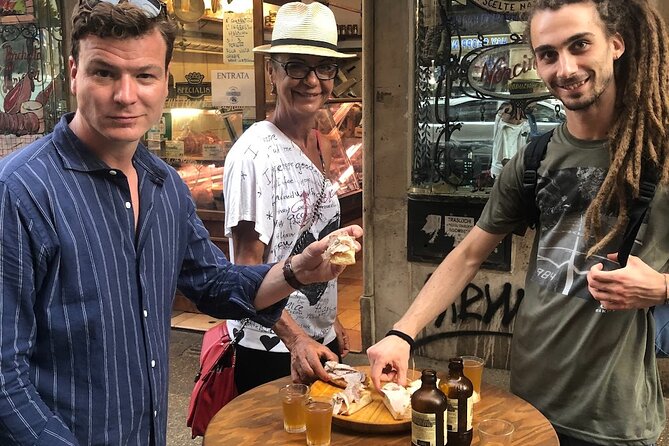
Trastevere is at its best when you eat your way through it, and this tour gives you a tidy introduction to the neighborhood’s old lanes, lively squares, bakeries, trattorias, and Roman comfort food. Over about three and a half hours, you’ll sample stuffed zucchini flowers, artichoke, porchetta, supplì, two pastas, gelato, and a secret dish, with prosecco and local wine along the way.
I like the small group limit of 12, which keeps the walk from feeling like a parade, and I like the route itself: it connects ancient bridges, medieval corners, neighborhood streets, and Trastevere’s main piazza. Guides such as Rocio, Rosie, Claudia G, and Roberto have been praised for being warm, funny, and helpful.
The main consideration is the wine. This is a food walk with wine pairings, not a formal wine-tasting class. Portions can also vary, and one person found the tastings too small to replace dinner, while others left very full.
Key things to know before you book
- Seven or more Roman tastings: Expect fried zucchini flower, Roman artichoke, porchetta, supplì, two pastas, gelato, and a secret dish.
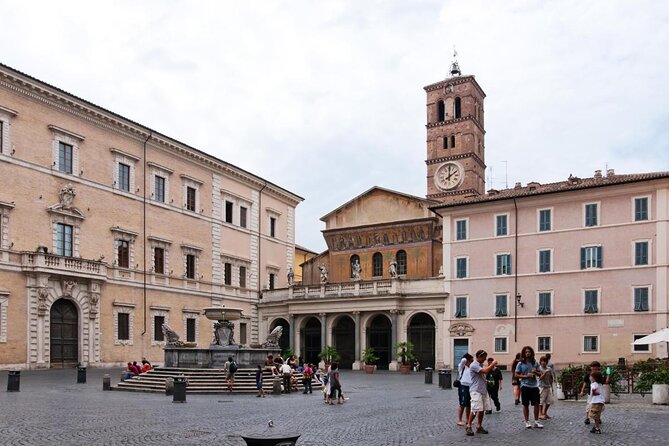
- A route through real Trastevere: The walk links Ponte Fabricio, Piazza in Piscinula, Vicolo del Moro, and Piazza di Santa Maria in Trastevere.
- Small-group feel: The tour is capped at 12 participants, though the booking information also describes it as a private activity for your own group.
- Guides set the tone: Rocio, Rosie, Claudia G, and Roberto are among the guides associated with especially warm, sociable tours.
- Adults only: Everyone must be over 18, and pets are not allowed.
- Come ready to walk: Wear comfortable shoes and allow time to find the meeting point at Via di Monte Savello 26.
Why Trastevere works so well for a food walk
Trastevere means across the Tiber, and its appeal is easy to understand on foot. The neighborhood has ancient foundations, medieval streets, grand churches, modest food shops, and a busy evening scene packed into a relatively compact area.
This tour uses food as the thread. You are not simply stopping for random snacks. You move through places tied to Rome’s past and present, tasting dishes that help explain how Romans eat: fried bites at the start, rustic meats, pasta, wine, and something sweet to finish.
I like this approach for a first evening in Rome. You get your bearings while eating, and the guide can point out places you may want to revisit later. The route ends at Piazza Giuseppe Gioachino Belli, so you are left in a useful part of Trastevere rather than returned to the starting point.
The experience lasts about three and a half hours. That is long enough for several stops without turning into an exhausting full-day outing. You should still expect a fair amount of walking on uneven city streets, so comfortable shoes matter more than stylish ones.
More Food Tours in Rome
- Winner 2025 Rome Twilight Trastevere Food Tour by Eating Europe
★ 5.0 · 5,157 reviews - Rome: Trastevere or Jewish Quarter Street Food Tour
★ 4.8 · 3,839 reviews - Rome Food Tour: Unlimited Tastings with Fine Wine & Barolo
★ 5.0 · 3,365 reviews
Ponte Fabricio and the first Roman stories
The meeting point is at Via di Monte Savello 26, near Ponte Fabricio and the Tiber. Take a few minutes to arrive early. Two separate ratings point to the starting location as a weak spot, with directions described as too general and difficult to identify.
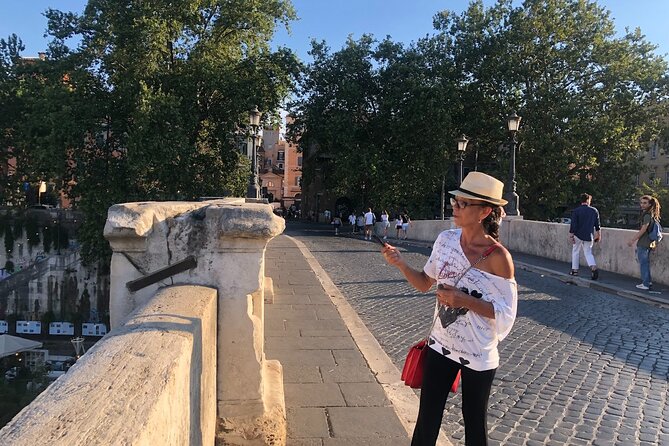
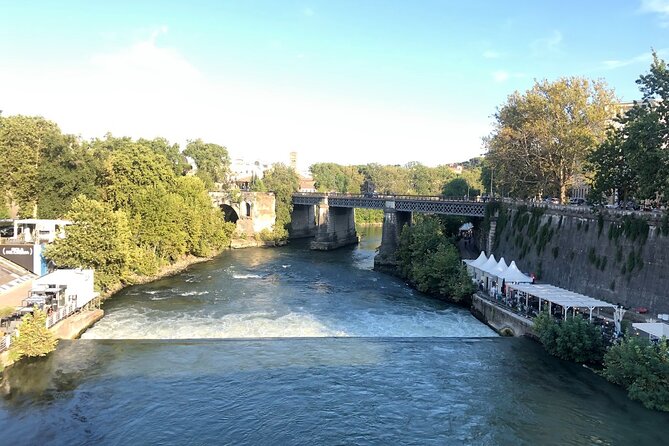
Ponte Fabricio is also called the Bridge of the Four Heads. Built in 62 BC, it is the oldest bridge in Rome that still keeps its original structure. That gives the tour a strong opening: before the first bite, you are already looking at a piece of Rome that has survived for more than two thousand years.
The bridge leads toward Tiber Island, where the ancient Temple of Aesculapius once stood. Roman legend connects the temple to a plague in 293 BC and to the Senate’s decision to honor Aesculapius, the Roman name for the Greek healing god Asclepius.
You may spend around 40 minutes in this opening area, including the first food activity. The exact order can shift with restaurant availability, weather, and other practical matters. The bridge stop is free, and you do not need a separate admission ticket.
Piazza in Piscinula and the neighborhood’s medieval face
From the opening area, the tour moves toward da Etta in Piazza in Piscinula. The square’s name comes from ancient Roman bathhouses and their small pools. The word piscinula refers to a little pool, and this is the only square in Rome where that name remains in place.
This is the sort of detail that makes a food walk more useful than a string of restaurant visits. You taste something, then hear why the surrounding street or square has its name. The setting helps turn a plate of food into part of a larger picture.
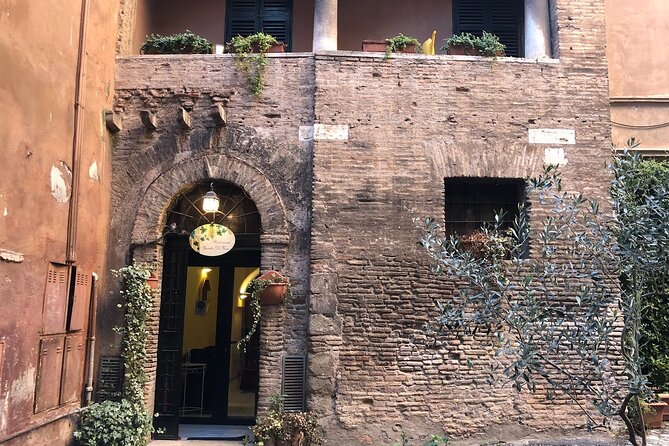
Piazza in Piscinula is framed by the Mattei Houses, a group of 15th-century buildings formed by combining older 14th-century structures owned by the Mattei family. The square has a medieval look that feels far removed from Rome’s grand avenues.
The food here may include early tastings from the Roman menu, but the precise dishes and serving order can change. The published menu promises a substantial range, though not every stop will necessarily offer a full plate. Think of a progressive tasting rather than separate restaurant meals.
What the Roman food menu actually includes
The food is the main reason to book, so it helps to know what these dishes mean.
Fiori di zucca are zucchini flowers, usually stuffed and fried. They are delicate, crisp, and easy to like. One of the stronger themes in the tour is the contrast between light vegetable ingredients and Roman frying, which tends to make everything more festive.
The Roman-style artichoke is another key taste. Artichokes are central to Roman cooking, especially in the city’s Jewish-Roman culinary tradition. The sample may be fried, as one account describes a fried artichoke, but the exact preparation can change according to the stop.
Supplì is Rome’s iconic fried street food. It is a rice croquette, often associated with tomato and mozzarella, though the filling may vary. Eat it carefully: the hot center is famous for stretching into a string of melted cheese, which explains the nickname supplì al telefono, or telephone-style supplì.
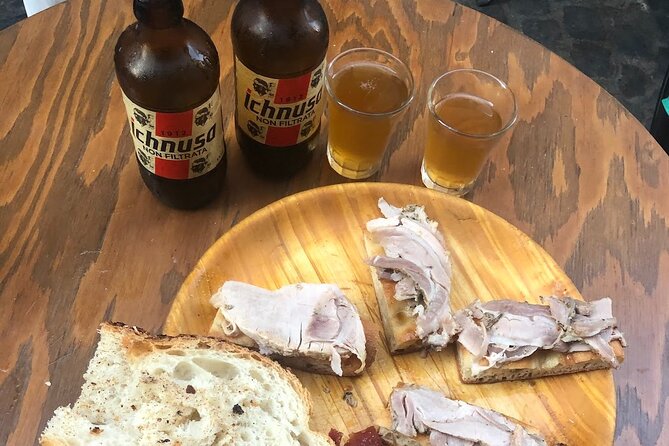
Porchetta brings a more rustic note. This roast pork is seasoned, sliced, and often served with bread. The portion may be a sandwich-sized serving or a smaller taste, so do not assume it will function as a full meal by itself.
The two Roman pastas are likely to be among the most filling tastings. The tour promises two pasta dishes, though the exact recipes are subject to change. The important point is variety: you get a chance to compare pasta preparations rather than stopping after one bowl.
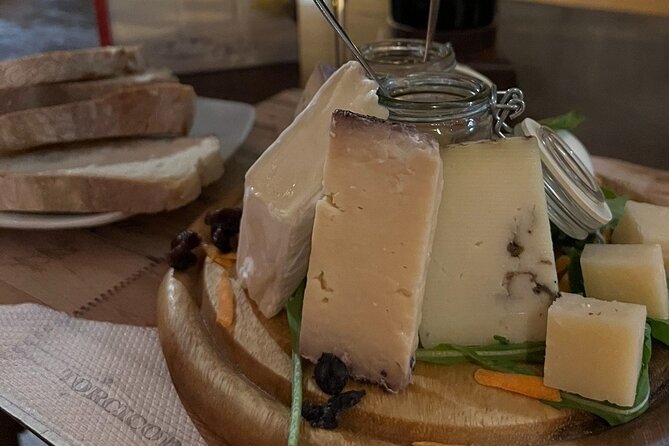
There may also be bread, cheese, crostini, spreads, or another small savory bite along the way. The menu includes a secret dish, so you will not know every item ahead of time. This is fun if you enjoy a little surprise, but less helpful if you need to plan every ingredient.
Same city, an entirely different afternoon:
- Vatican Museums & Sistine Chapel Tour with Optional Basilica
★ 4.3 · 67,413 reviews - Colosseum, Roman Forum & Palatine Guided Tour
★ 4.7 · 63,148 reviews - Vatican Museums, Sistine Chapel & St Peter’s Basilica Guided Tour
★ 4.5 · 39,149 reviews - Rome: Colosseum, Palatine Hill and Roman Forum Guided Tour
★ 4.8 · 32,814 reviews
Vicolo del Moro and the bakery aroma
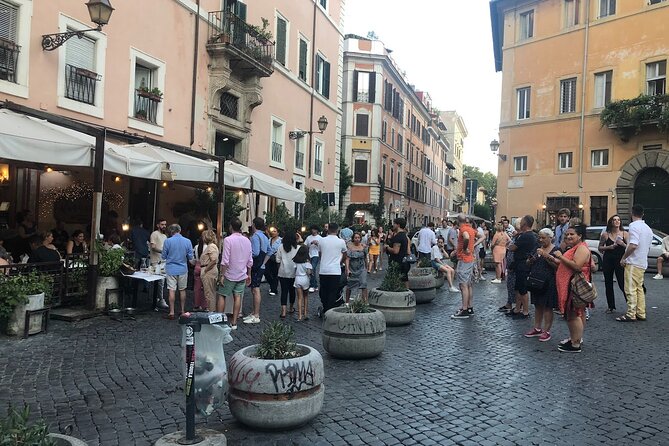
The route continues through Vicolo del Moro, a street that changes character as the day moves toward night. Local shops and artisans line the area, while evening brings more nightlife.
One named stop along this stretch is La Renella Bakery, described as one of Rome’s oldest. The smell of fresh bread is part of the experience here, and it gives the walk a practical connection to daily neighborhood life. Rome’s food culture is not only about famous restaurant dishes. It also lives in bread shops, fried snacks, counters, and quick bites.
The street is a good reminder that Trastevere is not a museum district. It is an active neighborhood with residents, small businesses, and evening crowds. That can be part of its charm, though it also means the lanes may feel busy and noisy at night.
This portion of the route can be especially pleasant for people who want to see the area before choosing where to eat later. Make a note of streets that catch your eye, but remember that the tour ends elsewhere. You may want to use a map on your phone if you plan to return to a particular restaurant.
Santa Maria in Trastevere and the final course
The final major area is Piazza di Santa Maria in Trastevere, the old center of the neighborhood. The Basilica of Santa Maria in Trastevere dominates the square, and its 13th-century façade mosaics are worth a close look.
The church’s foundation is linked to Pope Callixtus in 217 AD. The piazza also has a fountain regarded as the oldest in Rome, built on the site of an earlier fountain from the time of Emperor Augustus.
The square is surrounded by historic buildings, including the House of the Canons of Santa Maria, Palazzo San Callisto, Palazzo Cavalieri, and Palazzo Pizzirani. This is a strong place to finish because the architecture gives the food walk a clear visual ending.
Gelato is the promised sweet finish. Several accounts describe it as a highlight, though one person found the serving very small. You should think of it as a final tasting rather than a large dessert course.
The tour ends at Piazza Giuseppe Gioachino Belli. You are not dropped back at the beginning, so note the end point before booking dinner, a taxi, or evening plans.
Wine, prosecco, and realistic expectations
The menu includes DOP prosecco and local Roman wine. Some experiences have also included beer or limoncello, but the exact drinks can vary.
The important distinction is quantity. One disappointed participant expected a stronger food-and-wine focus and received only one small glass of white wine and one small glass of red. The operator explains that the tour follows an aperitivo-style format, where wine supports the food rather than taking center stage.
That explanation is useful, but you should still book with the right expectation. If you want a guided comparison of several Italian wines, generous pours, grape information, and a formal tasting structure, this is probably not the right choice.
If you want to sample Roman dishes with a little prosecco and local wine, the balance may suit you well. The drink service is meant to accompany the food stops. Do not arrive expecting an evening built around alcohol.
Non-drinkers can participate, and one guide made a point of accommodating a son who did not drink alcohol. Contact the operator ahead of time with any dietary requirement so the team can judge what is possible.
How much food do you really get?
The answer is not perfectly consistent, and that is worth taking seriously. Several people describe leaving full, with one person saying there was more food than could be eaten. Others describe tiny portions and said they would still need dinner afterward.
A food walk like this spreads the meal over multiple stops. You may receive one slice of porchetta, a small cup of gelato, a taste of artichoke, and a modest serving of each pasta rather than full restaurant portions.
I would treat the tour as a hearty introduction, not a guaranteed replacement for dinner. The combined tastings may be enough for many appetites, especially when pasta and fried foods are included. If you typically need large meals, keep a light dinner plan available, but avoid booking a major restaurant reservation immediately afterward.
The menu itself is broad. You get fried vegetables, street food, pork, pasta, dessert, and drinks. That range is valuable because it shows more than one side of Roman cooking, even if no single serving is large.
Guide style and group size
The guide can make or break a walking food tour. The strongest feedback centers on hosts such as Rocio, Rosie, Claudia G, and Roberto, who are described as funny, welcoming, sociable, and attentive.
Rocio, in particular, is praised for keeping the mood light while sharing small facts about Rome. Claudia G was also singled out for helping people work out how to get home after the tour. Those details matter because a good host does more than name dishes. The guide manages the pace, helps the group talk to one another, and keeps the evening comfortable.
The group limit is 12. That is small enough for easier conversation and faster movement between stops. Some departures may be smaller, but you should not count on having only a handful of people.
The booking details also call this a private activity for only your group, while the main tour description says groups are capped at 12. Because those descriptions do not fully match, confirm the arrangement when you book if a private tour is important to you.
Price and what the $130.66 buys you
At about $130.66 per person, this is not a cheap snack crawl. You are paying for a three-and-a-half-hour hosted route, several food stops, drinks, local context, and the convenience of having the evening organized for you.
The value is strongest if you are new to Rome, want a social night out, or would rather sample many Roman specialties than choose one restaurant. You also get an orientation to Trastevere, which can save you time later when you return on your own.
The value is weaker if you judge a food tour only by the amount of food on the table. Portion sizes are tasting portions, and wine pours may be modest. You are paying partly for the guide, route, and access to a planned series of stops.
Group discounts may be available. Gratuity is not included, and hotel pickup and drop-off are not included. The tour is offered in English and uses a mobile ticket.
Who should book this Trastevere food tour?
I would choose this tour for a first or second evening in Rome, especially if you want a gentle introduction to Trastevere without spending hours researching restaurants.
It suits adults who enjoy walking, trying unfamiliar foods, and sharing a table with other people. The guide-led format also works well for solo visitors, since the host helps create conversation and can offer practical help at the end.
You should think twice if you need gluten-free food. The operator cannot accommodate gluten-free allergies or intolerances. Other dietary needs must be discussed in advance, and changes cannot be assumed at the last minute.
This is also not a good fit for children, since the experience is strictly for adults over 18. Pets are not accepted. Anyone with limited tolerance for walking should plan carefully, since the route covers several streets and squares over a sustained evening.
Practical details for a smooth evening
Arrive early at Via di Monte Savello 26. The starting point has caused confusion, so use the full address and look for the exact meeting instructions rather than relying only on a nearby intersection.
Wear shoes you can walk in comfortably. Rome’s older streets are not always smooth, and you will be moving between food stops rather than sitting in one place for the entire tour.
The menu and route can change because of weather, availability, and other conditions. That is normal for a neighborhood food experience, but it means you should not treat every listed dish as an absolute guarantee.
You receive confirmation within 48 hours of booking, subject to availability. Free cancellation is offered up to 24 hours before the start time. A cancellation or change made within 24 hours is not accepted for a refund, and the cut-off uses Rome’s local time.
Should you book it?
Book this tour if you want a broad taste of Roman food plus a guided walk through Trastevere. The route has real variety, the historic stops give the evening shape, and guides such as Rocio, Rosie, Claudia G, and Roberto can make the experience warm and easygoing.
Do not book it as a formal wine course or as a guaranteed full dinner. Wine may come in small pours, and food portions can vary from filling to merely introductory.
For the best match, eat lightly beforehand, arrive early, wear good shoes, and contact the operator about dietary needs. With those expectations, this is a useful, social way to get oriented to Trastevere and find out which Roman flavors deserve a second helping.
FAQ
How long does the Trastevere food tour last?
The tour lasts approximately three hours and 30 minutes.
Where does the tour start and end?
It starts at Via di Monte Savello 26 in Rome. It ends at Piazza Giuseppe Gioachino Belli in Trastevere.
What food is included?
The menu includes fiori di zucca, Roman-style artichoke, porchetta, supplì, two Roman pastas, gelato, and a secret dish. The exact menu may change.
Are drinks included?
Yes. The included drinks are DOP prosecco and local Roman wine. Beer or limoncello may also be offered, but drinks can vary.
Can children join the tour?
No. This experience is strictly for adults over 18 years old.
Can the tour accommodate gluten-free dietary needs?
No. Gluten-free allergies or intolerances cannot be accommodated. You should contact the operator in advance about other dietary requirements.
Fresh on the Rome list
- Rome: Guided Catacombs Tour & Capuchin Crypt (Audio Guide)★ 4.3 · 191 reviews
- Guided tour of the Colosseum, Roman Forum and Palatine in Spanish★ 4.5 · 191 reviews
- Rome: Borghese Gallery Guided Tour with Skip-the-Line Ticket★ 4.5 · 192 reviews
- Rome: Arena Colosseum Tour with Arena Access★ 4.6 · 193 reviews
- Rome: Colosseum & Roman Forum Guided Tour★ 5.0 · 194 reviews
- Colosseum, Forum, Palatine Hill with audio guide and Arena or Bus option★ 4.0 · 193 reviews
- Rome: Domus Aurea Guided Tour and Virtual Reality Experience★ 4.7 · 194 reviews
- Rome Vintage Fiat 500 car Tour With Photographer★ 5.0 · 194 reviews
Food Tours, compared.
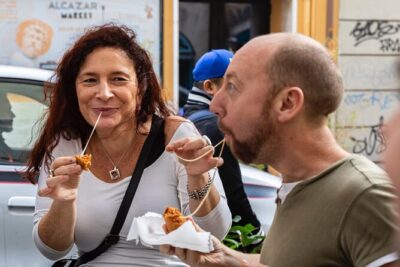
Winner 2025 Rome Twilight Trastevere Food Tour by Eating Europe
Read our review →
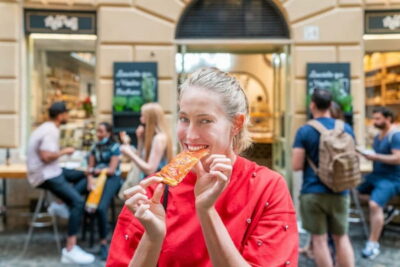
Trastevere or Jewish Quarter Street Food Tour
Read our review →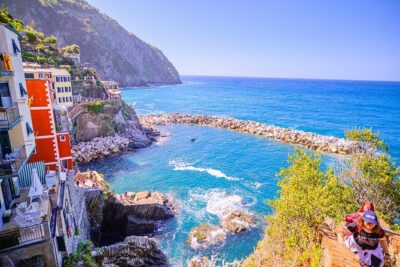
Cinque Terre Park Day Trip with Optional Street Food
Read our review →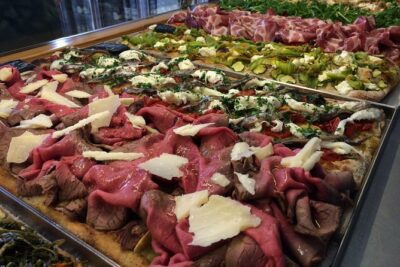
Rome Food Tour: Unlimited Tastings with Fine Wine & Barolo
Read our review →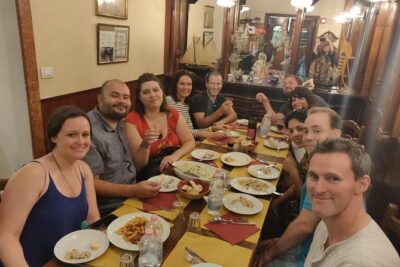
Eat Like a Local: Venice 3-Hour Small-Group Food Tasting Tour
Read our review →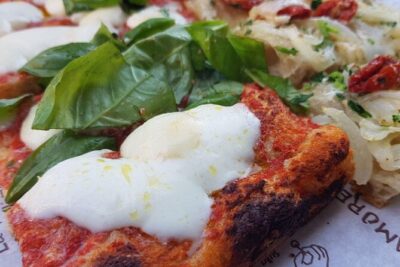
Trastevere Food tour with Free-Flowing Fine Wine
Read our review →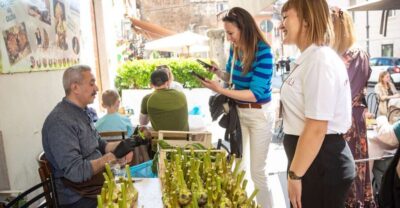
Trastevere & Campo de Fiori Street Food Walking Tour
Read our review →Browse the lists this tour appears in