
Reviewed · VATICAN & SISTINE CHAPEL TOURS
Small Group Vatican Museums Tour & Sistine Chapel – Max 10 people
The best part of this Vatican tour is not simply getting inside. It is having a guide steer you through a huge collection where it is easy to lose time, miss major works, or get swallowed by the crowds. In three hours, you move from ancient sculpture to Renaissance painting, Michelangelo’s Sistine Chapel ceiling, and the vast interior of St. Peter’s Basilica.
I like the maximum group size of 10, which gives your guide a much better chance to keep everyone together and answer questions. I also like the early start option, since the Vatican becomes harder to enjoy as the day fills up. The main caution is that skip-the-line entry does not mean a crowd-free visit, and an early booking should not be treated as guaranteed entry before the museum’s normal opening time.
Key points to know before booking
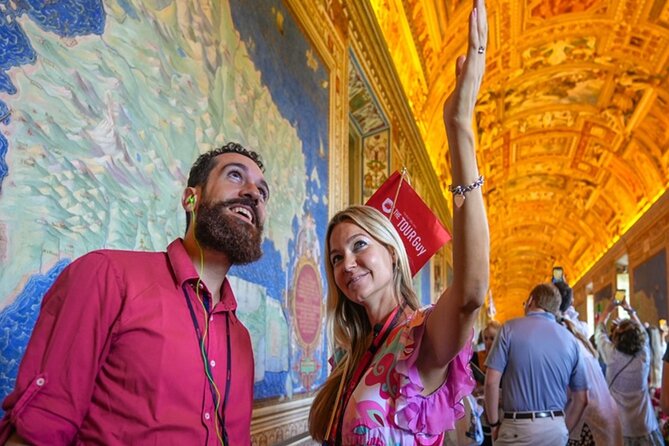
- Small groups of no more than 10: Easier to hear the guide, stay together, and ask questions than on a large coach tour.
- The major Vatican highlights: The route includes the Candelabra, Tapestries, and Maps galleries, the Raphael Rooms, and the Sistine Chapel.
- St. Peter’s Basilica is usually included: This portion is not available on Wednesdays and can close unexpectedly.
- Early timing matters: The first available departure is widely preferred for shorter lines and less crowded galleries, but early access policies can change.
- Expect plenty of walking: The tour lasts about three hours and includes stairs, long corridors, and extended periods on your feet.
- Strict clothing rules apply: Your knees and shoulders must be covered, and you need a copy or phone image of your passport identification page.
Why a guide helps inside the Vatican Museums
The Vatican Museums are not one tidy gallery you can casually wander through. They are a long sequence of collections, corridors, courtyards, chapels, and rooms filled with works from different periods. Without a plan, you can spend too much time on minor displays and reach the Sistine Chapel tired and rushed.
This tour gives you a route through the principal galleries. Your guide points out ancient Roman and Greek statues, Flemish tapestries, the enormous painted maps, and Renaissance frescoes. That structure matters because the museum’s sheer size can make it hard to decide when to pause and when to keep moving.
The strongest guide comments in the supplied feedback name Sara, Sarah, Isabella, Eleonora, Kate, Serena, Silvania, Raffa, and Dennis. That does not mean you can request a particular person or will receive one of them, but it does show the kind of guide experience the tour aims for: art history, stories, historical context, and practical crowd management.
The personal scale is important here. A group of six to eight people can move through a doorway or gallery without the stop-and-start feel of a 40-person tour. One person did report difficulty following the guide through an earpiece and felt there was little time for questions, so the small group does not guarantee a private-tour level of conversation.
More Museums in Rome
- Vatican Museums & Sistine Chapel Tour with Optional Basilica
★ 4.3 · 67,413 reviews - Vatican Museums, Sistine Chapel & St Peter’s Basilica Guided Tour
★ 4.5 · 39,149 reviews - Rome: Vatican Museums, Sistine Chapel & Basilica Tour
★ 4.3 · 13,872 reviews
Meeting in Vatican City and entering the Pinecone Courtyard
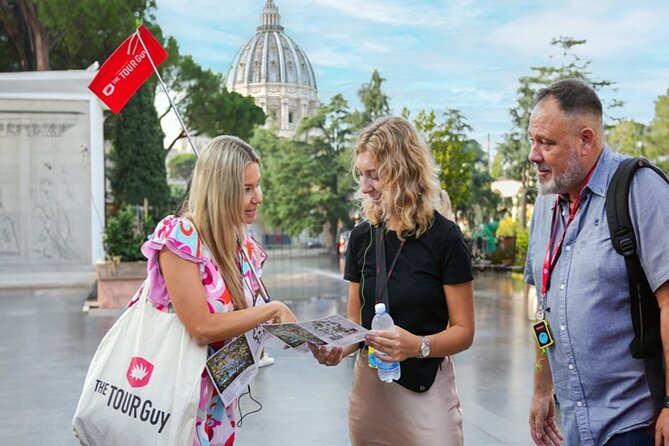
You meet the guide at Viale Vaticano 100, in Vatican City, at the exact location shown on your voucher. Allow time to find the meeting point. The tour begins with a brief gathering, followed by entry procedures and the first courtyard stop.
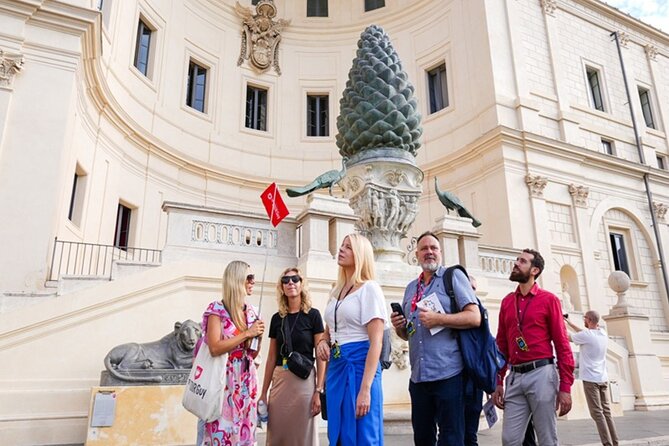
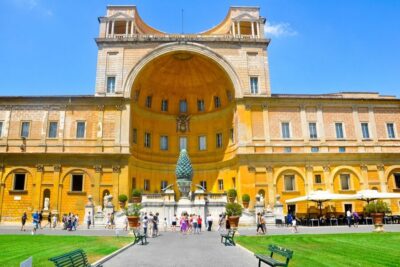
The Pinecone Courtyard gives you an open-air introduction before the long museum route begins. Here you see Arnaldo Pomodoro’s Sphere within a Sphere, a large modern sculpture with a cracked outer shell and inner form. It is a useful reminder that the Vatican collections are not limited to old religious paintings.
The courtyard stop lasts about 15 minutes. Your guide can set the scene for the museum and explain the sculpture before you move indoors. It is short, but it breaks up the initial entry process and gives you a chance to orient yourself.
The Candelabra, Tapestries, and Maps galleries
The central museum visit lasts roughly one hour and 40 minutes. You pass through the Gallery of the Candelabra, the Gallery of Tapestries, and the Gallery of Maps, each offering a different way to read the Vatican’s collections.
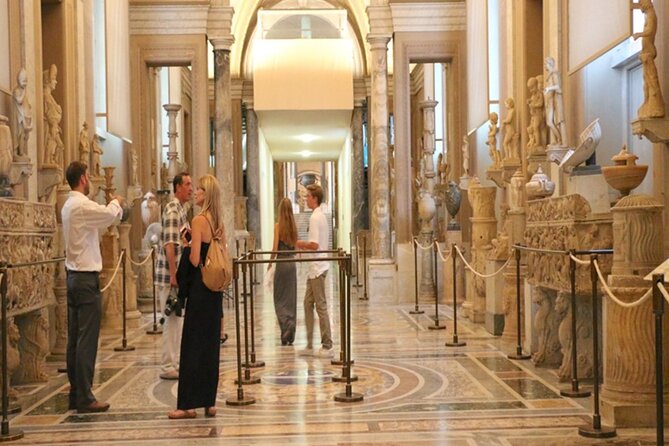
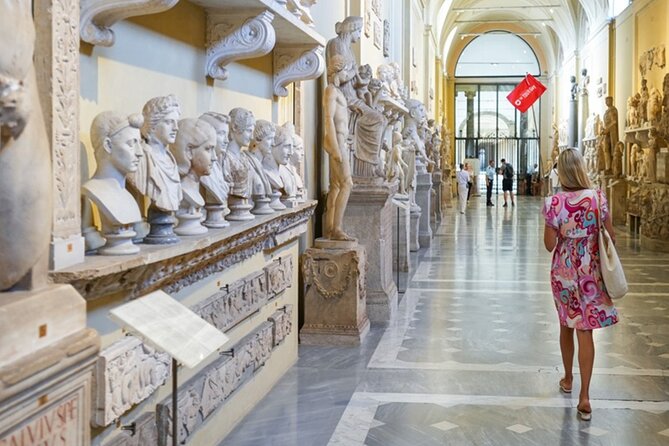
The Candelabra gallery includes ancient Roman and Greek sculpture. You will see figures, decorative pieces, and objects that show how later artists and collectors looked back to classical Greece and Rome. A guide is especially useful here because it is easy to treat every statue as a single beautiful object without understanding its age, purpose, or influence.
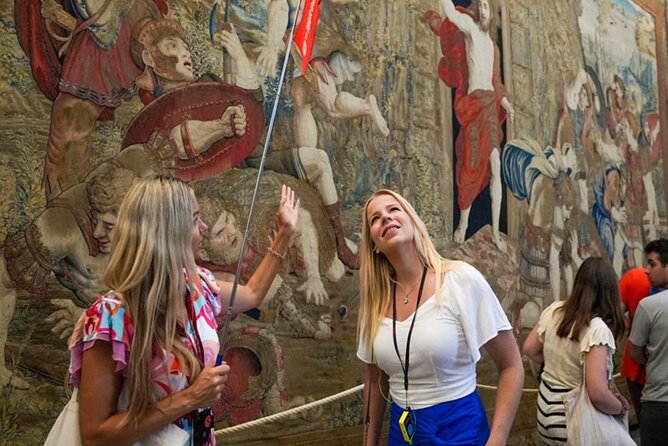
The Tapestries gallery shifts your attention from stone to woven pictures. Flemish tapestries can look like wall decoration at first glance, but the detail, scale, and labor involved reward a slower look. Your guide points out scenes and details that might otherwise blur together as you walk.
The Maps Gallery is one of the most visually memorable parts of the route. Its topographical maps were commissioned by Pope Gregory XIII and line a long corridor. They show how geography was represented before modern satellite views and digital maps. Still, this is the section where pacing matters most. One negative experience found too much time spent reading information boards and walking through the map gallery, with too little attention given to the art. Your experience will depend heavily on the guide’s choices and presentation.
Raphael’s School of Athens and the Raphael Rooms
The Raphael Rooms bring you into the heart of Renaissance painting. These rooms were decorated with frescoes by Raphael and his workshop, and they reward a guide who can explain both the images and the setting.
The most famous work here is The School of Athens. Raphael places major thinkers in an idealized classical building, with Plato and Aristotle at the center. The painting works on two levels: you can enjoy its balance and color, while also looking for the philosophers, artists, and references that give the scene its meaning.
This is one of the places where a small group can make a real difference. Your guide can position the group, point out details, and give you a few moments to look without having to fight for the guide’s attention. Several guides were praised for explaining the paintings and sculptures rather than simply leading the group from room to room.
You should not expect to study every fresco in detail. The Vatican is too large for that within a three-hour visit. Think of this as a guided selection of major rooms, with enough background to help you continue on your own if you have time afterward.
A few other Rome mornings to weigh against this
- Vatican Museums & Sistine Chapel Skip-the-Line Entry Ticket
★ 4.4 · 13,838 reviews - Rome: Vatican Museums, Sistine Chapel & Basilica Tour
★ 4.7 · 13,217 reviews - Skip-the-Line Group Tour of the Vatican, Sistine Chapel & St. Peter’s Basilica
★ 4.5 · 12,779 reviews - Rome: Vatican Museums & Sistine Chapel Guided Tour
★ 4.3 · 12,117 reviews
Michelangelo’s Sistine Chapel
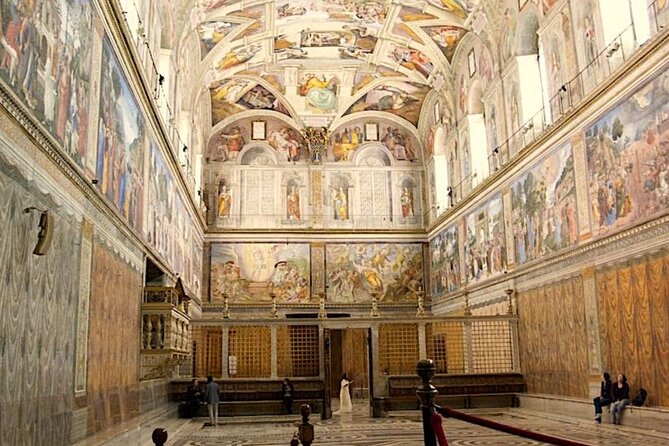
The Sistine Chapel is the emotional center of the tour, but it is also where expectations need a little adjustment. You receive an explanation before entering because guides cannot provide their full commentary inside the chapel. Silence is required, and the space remains a working religious site as well as a famous art destination.
Your guide prepares you for Michelangelo’s ceiling and The Last Judgment, painted on the altar wall. The ceiling contains more than 600 figures, including the celebrated scenes from Genesis. Looking up for several minutes can strain your neck, so take your time and shift your attention across the ceiling rather than staring at one central panel.
The scheduled chapel stop is about 15 minutes, although individual experiences have included around 15 to 20 minutes of viewing time. That is enough to admire the major scenes, but not enough to contemplate every panel in peace. Even with timed admission, you might find the chapel crowded, particularly later in the day.
Do not expect to sit and pray as you might in a quieter church. The Sistine Chapel is sacred, but it is also a controlled museum visit with silence, movement, and a large number of people. Photography rules and other instructions can apply inside, so follow the guide and staff.
Dress correctly from the start. Knees and shoulders must be covered for both men and women. In Rome’s hot months, carry a light shawl or sweater rather than relying on a last-minute purchase near the entrance. If your clothing does not meet the rule, you can be refused entry to this part of the visit.
St. Peter’s Basilica and the Scala Regia passage
Except on Wednesdays, the tour includes St. Peter’s Basilica through a dedicated group passage by way of the Scala Regia, or Holy Staircase. This can save you from the long public entry line and links the museum visit with one of Rome’s most important churches.
Inside, the guide points out Michelangelo’s Pietà, Bernini’s immense Baldacchino, and the church’s connection with the traditional tomb of St. Peter. The basilica is vast, so a short guided visit cannot cover every chapel, monument, or architectural detail. It does give you a useful first look and helps you understand the building’s scale.
The basilica portion lasts about 20 minutes. That is brief, especially if you want to pray, admire the side chapels, or take in the dome and floor. If St. Peter’s is a main priority for you, plan to return separately if your schedule allows.
The route changes on Wednesdays because of the Papal Audience. The basilica can also close unexpectedly on other days. If that happens, the guide is expected to adjust the visit elsewhere within the Vatican, but you should not book this tour solely to guarantee access to St. Peter’s.
Is $114 a fair price?
At $114 per person, this is not a cheap museum ticket. You are paying for timed admission, an English-speaking guide, the small group, the Sistine Chapel, and usually the guided basilica visit. The price makes more sense if you value saving time and want help choosing what matters inside a collection too large for a short independent visit.
The value is strongest during busy periods, when public lines can stretch for hours and the museum corridors fill quickly. A guide who knows how to move the group around larger parties can protect your limited time in Rome. One person described the early booking as worth the cost because the lines outside were already extremely long.
The price is less attractive if you prefer to study art quietly, stop whenever you want, or spend most of your day in one gallery. You can feel hurried in the major rooms, and one critical experience found the commentary too close to reading display boards. A private tour would provide more control, but it would cost more.
I would treat this as a time-saving orientation tour, not a complete Vatican study visit. It gives you the framework, the main masterpieces, and a route through the biggest sights. You can then decide if you want to return to the museums or basilica on your own.
Timing, crowds, and the early start question
The early departure is the clearest practical choice. Several people were glad they booked around 8 a.m., and January was praised for cooler temperatures and smaller crowds. October was also considered a good period, though the museum was still busy.
Do not assume the early option means you enter before the official opening. The operator acknowledged that the Vatican had stopped giving early access to all tour companies, and some booking information had not been updated. In plain terms, an early tour can help you join the first available entry flow, but it may not put you inside before opening hours.
Afternoon departures can still work if mornings are impossible. You should expect more people inside as the day continues, though the skip-the-line arrangement remains useful. The Sistine Chapel is likely to feel especially crowded later, since it is a fixed highlight for nearly every Vatican route.
Walking, clothing, and passport rules
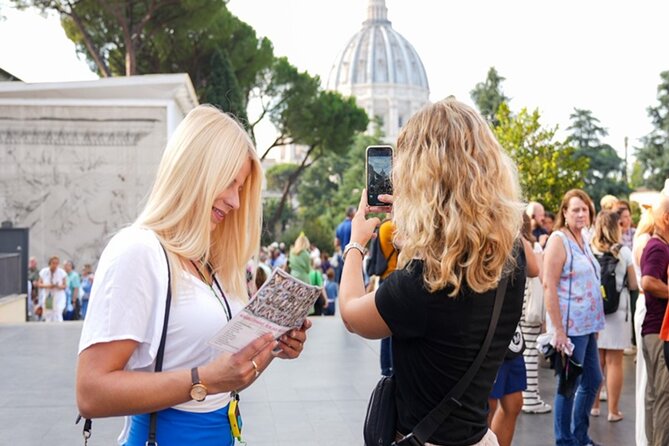
This is a physically active visit. You walk through long museum corridors, stand for explanations, climb some stairs, and move with the group through crowded spaces. A moderate fitness level is required, and one person described the tour as taxing but manageable.
Wear comfortable shoes and bring water for the approach and time before entry. The supplied information does not promise seating during the museum route, so plan on being on your feet for much of the three hours.
Keep your ticket information safe once you receive it. One person’s companion misplaced a ticket and had to buy another admission to enter. Also carry a copy of the identification page of your passport. A clear photo of the first page saved on your phone is accepted for this requirement.
The tour does not include hotel pickup or drop-off. You make your own way to the Vatican meeting point using public transportation or another option. The voucher provides the exact meeting instructions, and the start point is near public transportation.
Arrive early. This is especially important because entry tickets are tied to a specific time window. A late arrival can mean missing the group and losing the ticket, even if you are only 15 minutes behind. The operator may not be able to hold the tour or release the tickets for independent entry.
Who will like this Vatican tour most?
This tour suits a first-time Rome visitor who wants the Vatican’s major sights without planning the route alone. It is also a good fit if you have only half a day, dislike waiting in ticket lines, or want an English-speaking guide to explain what you are seeing.
Families and couples may appreciate the small group because it is easier to stay together. It also helps if you are coming from a cruise or a large group excursion and want a more personal pace. The guide can keep the party moving while still pointing out details and answering some questions.
Art lovers should book it with realistic expectations. You will see major works, including The School of Athens, the Raphael Rooms, ancient sculpture, maps, tapestries, and Michelangelo’s Sistine Chapel. You will not have time to examine the entire Vatican collection or linger in every room.
This is not the right choice if your main goal is quiet prayer in the Sistine Chapel, a slow museum day, or a private conversation with the guide at every stop. For that, a private tour or independent visit may fit better.
Should you book the Small Group Vatican Tour?
I would book this tour if you want the major Vatican sights in about three hours and are willing to accept crowds, walking, and a firm route. The small group and skip-the-line admission are the strongest reasons to choose it, especially when Rome is busy.
Choose the earliest available time, dress for the chapel rules, save a passport image on your phone, and arrive well before the meeting time. Do not count on pre-opening access, and do not assume St. Peter’s Basilica will be available on Wednesday or during an unexpected closure.
At $114, the tour earns its price when your Rome schedule is tight and you want guidance through a vast, confusing museum. If you prefer to wander slowly or already know the Vatican well, spend your money elsewhere. For most first visits, this is a practical way to see the essential works without wasting a morning in the public admission line.
FAQ
How long does the Vatican Museums tour last?
The tour lasts approximately three hours. The main Vatican Museums and Raphael Rooms visit takes about one hour and 40 minutes, followed by about 15 minutes in the Sistine Chapel and about 20 minutes in St. Peter’s Basilica when that portion is available.
What is the maximum group size?
The group is limited to a maximum of 10 participants, including the guide’s organized small-group format.
Is skip-the-line admission included?
Yes. Admission includes skip-the-line access to the Vatican Museums and a group passage through the Scala Regia to St. Peter’s Basilica when that basilica visit is operating. Timed access does not guarantee a crowd-free experience.
Is St. Peter’s Basilica included every day?
St. Peter’s Basilica is not accessible through this tour on Wednesdays because of the Papal Audience. It may also close unexpectedly on other days, in which case the guide adjusts the route elsewhere within the Vatican.
What should I wear?
Your knees and shoulders must be covered for the Sistine Chapel and other religious spaces. Shorts and sleeveless tops are not allowed, and a shawl or sweater can help with covering up during hot weather.
Do I need to bring identification?
Yes. Everyone must carry a copy of the identification page of their passport on the tour. A photo of the first page saved on your smartphone is accepted.
Fresh on the Rome list
- Exclusive Golf Tour Private VIP with Local & Gelato o Wine★ 5.0 · 500 reviews
- Colosseum, Palatine Hill and Roman Forum with Guided Tour★ 5.0 · 500 reviews
- Rome by Night Walking Tour★ 4.5 · 506 reviews
- Rome Trastevere Pasta Making Class with Eating Europe★ 5.0 · 505 reviews
- Rome: Colosseum Express Tour with Forum & Palatine Access★ 4.5 · 511 reviews
- Rome Food Experience Max 6 People Group Tour | w/Private Option★ 5.0 · 516 reviews
- Rome: Navona Square Underground Ticket with Audio Guide★ 4.0 · 518 reviews
- Rome: Escorted Papal Audience Experience with Entry Ticket★ 4.4 · 518 reviews
Vatican & Sistine Chapel Tours, compared.
Vatican: Museums & Sistine Chapel Entrance Ticket
Read our review →
Vatican Museums & Sistine Chapel Tour with Optional Basilica
Read our review →
Vatican Museums, Sistine Chapel & St Peter’s Basilica Guided Tour
Read our review →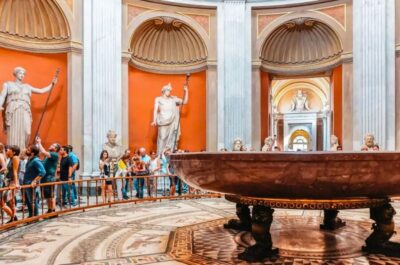
Vatican Museums, Sistine Chapel & Basilica Tour
Read our review →
Vatican Museums & Sistine Chapel Skip-the-Line Entry Ticket
Read our review →Vatican Museums, Sistine Chapel & Basilica Tour
Read our review →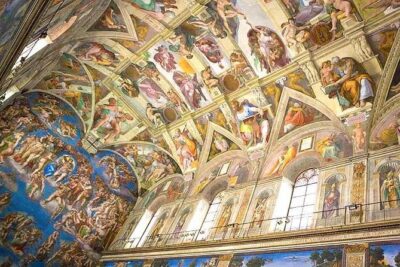
Skip-the-Line Group Tour of the Vatican, Sistine Chapel & St. Peter’s Basilica
Read our review →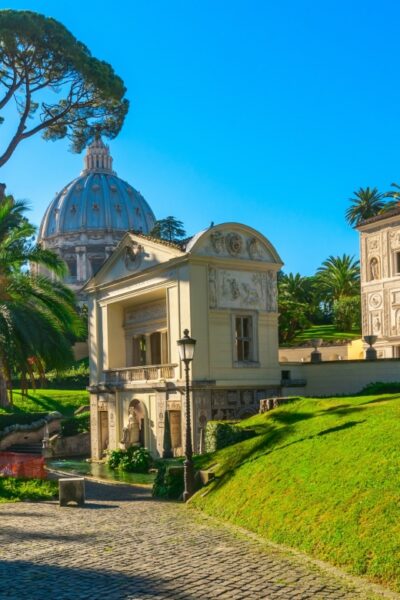
Vatican Museums & Sistine Chapel Guided Tour
Read our review →Browse the lists this tour appears in