
Reviewed · COLOSSEUM & ROMAN FORUM TOURS
Colosseum & Ancient Rome Guided Walking Tour
The best part of this Colosseum and Ancient Rome walking tour is the sweep of it. In less than three hours, you move from the arena where gladiators fought, to the hill of Rome’s emperors, then into the political heart of the ancient city. I like that admission tickets, reservation fees, and headsets are included, so you can focus on the ruins instead of ticket counters.
I also like the guides’ strong record for storytelling. David Battaglino is often praised for his humor, clear explanations, shade-conscious pacing, and clever photo stops. Radu has a way of keeping teenagers interested, while guides such as Lumi, Giuseppe, Alessandra, Adnan, and Sam are described as warm and engaging.
The main caution is simple: this is a long walk over cobbles, stairs, and inclines, often in a crowded archaeological zone. A few hours is enough for a useful overview, but not enough to examine every temple and palace at leisure. One poor experience also involved a guide who was hard to understand, so the quality of the day can depend on who leads your group.
Key points to know before booking
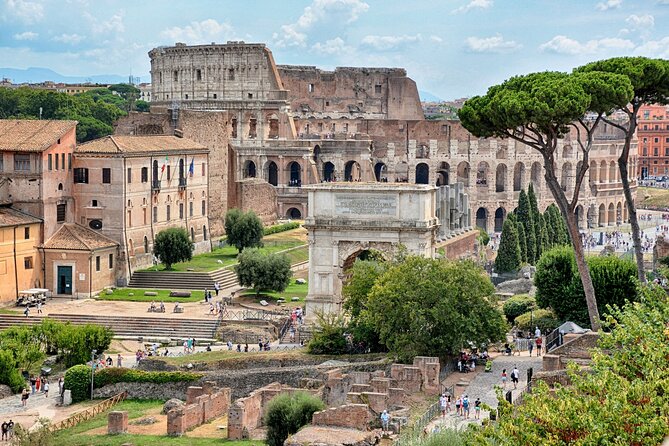
- Three major ancient sites in one visit: The Colosseum, Palatine Hill, and Roman Forum form the essential Ancient Rome circuit.
- Guides can make or break the tour: David Battaglino, Radu, Giuseppe, Lumi, and Alessandra received especially strong praise for clear, lively explanations.
- Tickets and headsets are included: The package covers entry to all three sites, the Colosseum ticket, and the reservation fee.
- Expect real physical effort: Cobblestones, steps, and slopes call for comfortable shoes and a bottle of water.
- The group may reach 25 people: A small-group option is available, but the stated maximum is not the same as a tiny private tour.
- Bring matching identification: Every person must present a passport or ID matching the full name supplied at booking.
Three ancient landmarks in one 2-hour-45-minute route
This tour gives you the basic shape of Ancient Rome without asking you to spend half a day planning separate entries. The stated duration is about 2 hours and 45 minutes, with roughly an hour at the Colosseum, 45 minutes on Palatine Hill, and 45 minutes in the Roman Forum.
That timing is useful for a first visit. You get enough explanation to understand how the sites connect, rather than seeing three piles of stone with no clear story. Still, you should not expect a slow archaeological study. The grounds are large, and crowds can eat into the time.
The route begins at Largo Gaetana Agnesi, 5, near the Colosseum. The end point is listed at the Roman Forum. Since one account describes a route that began at the Forum and Palatine Hill before reaching the Colosseum, the order may vary by departure or site conditions. Pay close attention to the meeting instructions on your confirmation.
The tour is offered in English. It is designed for most people, but you should be ready for an outdoor walk with uneven surfaces. There is no food or drink included, so carry water before you arrive.
More Walking Tours in Rome
- Rome: Trastevere & Campo de Fiori Street Food Walking Tour
★ 4.9 · 2,768 reviews - Rome: Paranormal Night Walking Tour & Secret Backstreets
★ 4.9 · 1,921 reviews - Rome by Night Walking Tour – Legends & Criminal Stories
★ 4.5 · 1,003 reviews
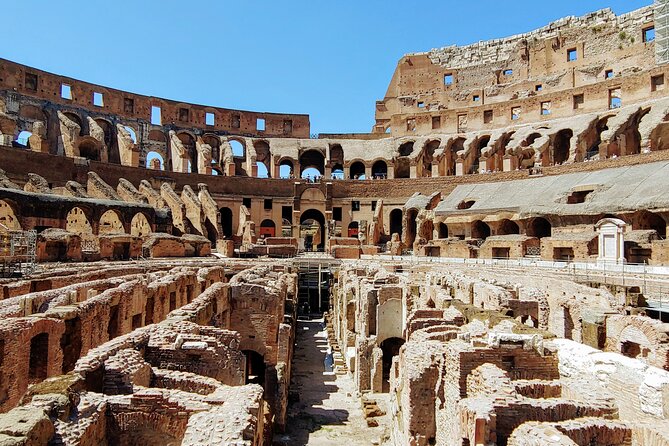
Entering the Colosseum and picturing the Roman games
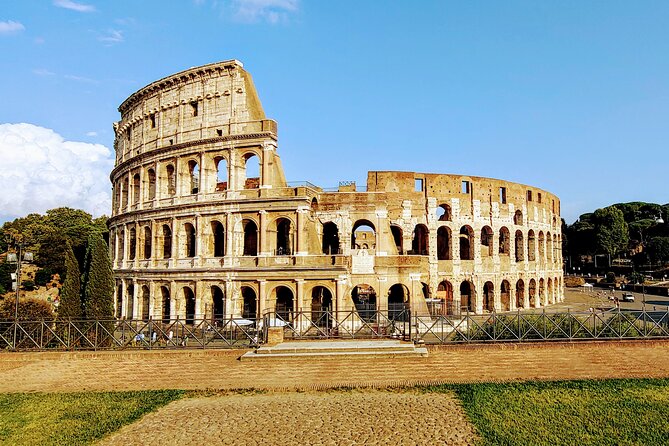
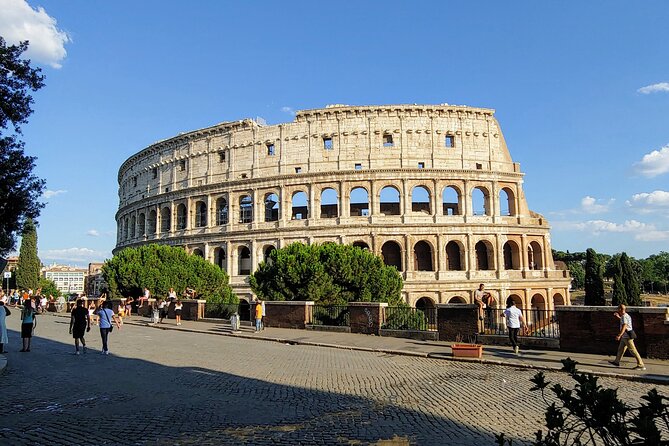
The Colosseum is the emotional centerpiece of the day. Even before the guide explains anything, its massive arches and worn stone make the scale clear. This was the Flavian Amphitheatre, built under Emperor Vespasian between AD 72 and 80 and opened by his son Titus with games that lasted 100 days.
Inside, the guide helps turn the arena from a famous photograph into a working building. The structure used travertine, marble, cement, and more than one million tons of material. About 200 similar entertainment venues existed across the Roman Empire, but this was the largest amphitheatre ever built.
The games were free to the public and paid for by the emperor. That detail matters because the Colosseum was not only a place for sport or violence. It was also a political stage. By funding huge public spectacles, an emperor could display power, generosity, and control over the empire.
You will hear about gladiators, animals, and condemned people brought from across the known world. Hundreds of thousands died in the arena over nearly five centuries. A good guide handles this subject with context rather than treating it as a string of grisly facts.
The one-hour allocation can feel short. One strong account praised the guide for getting the group through crowded areas and toward a good viewing rail, but felt the Colosseum portion became brief after reaching a balcony. You may have time to continue looking around after the guided commentary ends, but do not count on a long, unhurried session inside.
Crowds are part of the deal. The Colosseum is one of Rome’s most visited monuments, and even an organized entry cannot make the arena quiet. Headsets are included, which helps when the group is spread out or the surrounding noise rises.
A few guides have made especially good use of visual aids. Lumi, a former teacher, used a picture book to explain how the spaces once looked. That sort of simple comparison can help you understand missing floors, seating levels, and the movement of people through the building.
Palatine Hill, where Rome’s origin story begins
Palatine Hill offers a different experience from the Colosseum. Here, the focus shifts from public spectacle to Rome’s beginnings and the private world of its rulers.
Roman tradition says Romulus founded the city on this hill in 753 BC. Archaeologists have found Bronze Age settlement traces, giving the old foundation story some physical support. The hill’s height also made practical sense. Early settlements often favored high ground near rivers, which offered protection from attacks and floods.
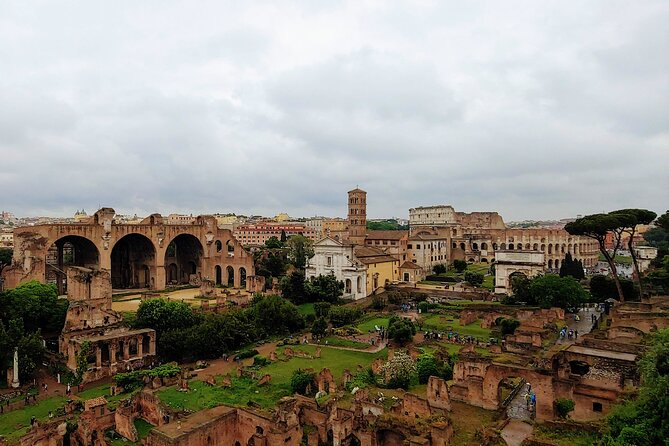
The Palatine became the address of kings, emperors, and wealthy Romans. Today, you walk among the remains of imperial palaces and look across the surrounding ruins. The view helps you understand how the city was arranged, even when individual walls are difficult to identify.
This is where a guide’s ability to connect myth, archaeology, and politics matters. The story is not just Romulus and Remus. It is also about why this hill attracted power for centuries and how Rome grew outward from a strategic settlement.
The allotted 45 minutes is enough for the main ideas and several viewpoints. It is not enough to inspect every palace fragment. You will also encounter steps, slopes, and uneven paths. One guide was praised for stopping for photographs and short rests, and that is exactly the kind of pacing that helps on a warm day.
The hill can be especially rewarding for families and mixed-age groups because it gives everyone a chance to pause and look outward. David Battaglino received praise for keeping a group ranging from a one-year-old child to an 84-year-old adult comfortable, including finding shade during hot weather. That does not remove the physical demands, but it suggests that a thoughtful guide can make the route easier.
The Roman Forum and the machinery of public life
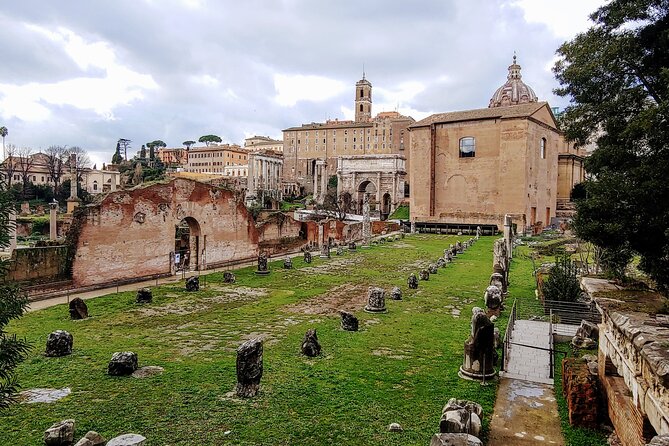
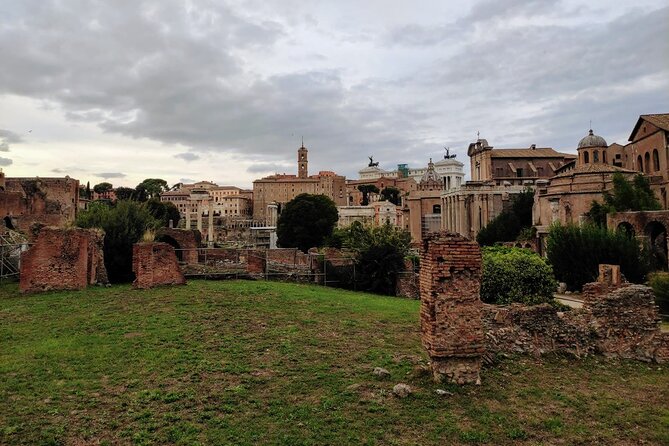
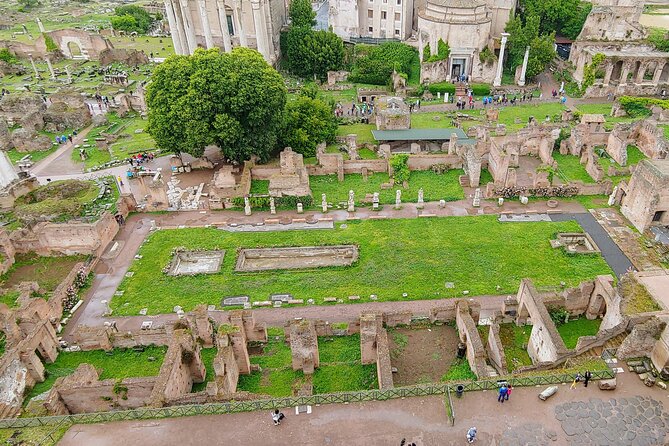
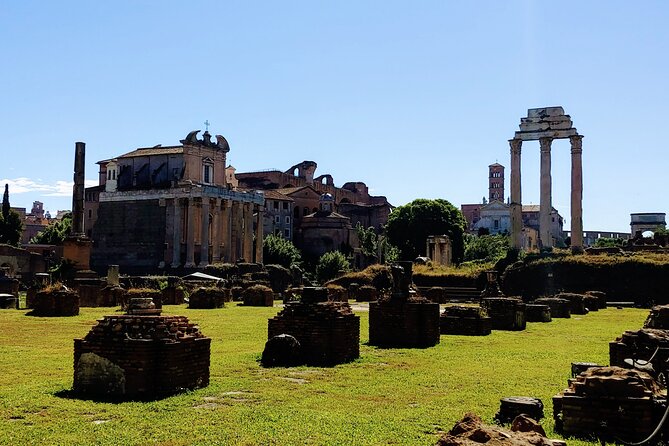
The Roman Forum was the center of political, legal, religious, and commercial life. It was an open public area filled with temples, basilicas, government buildings, and monuments.
Here, your guide explains where the Senate met, where justice was administered, and how public decisions and business shaped daily life. The Forum can be hard to read without help. A column base or broken wall rarely explains itself, and the original buildings are now mostly fragments.
The value of the stop is the connection between physical remains and civic life. Rome was not only emperors and arenas. It was also laws, elections, contracts, religious rites, speeches, and arguments in public spaces. Many ideas that still shape modern government and urban life were worked out in places like this.
The Forum receives about 45 minutes in the planned schedule. That is a useful introduction, but you may wish you had longer. The route covers the key areas rather than every visible ruin. If you are passionate about Roman architecture or archaeology, plan to return independently with more time.
The Forum may come before the Colosseum on some departures. That order can work well because the political center gives context for the arena and the imperial palaces. If your tour follows the Colosseum first, the Forum later broadens the picture from entertainment to government.
A few other Rome mornings to weigh against this
- Colosseum, Roman Forum & Palatine Guided Tour
★ 4.7 · 63,148 reviews - Rome: Colosseum, Palatine Hill and Roman Forum Guided Tour
★ 4.8 · 32,814 reviews - Rome: Guided Tour of Colosseum, Roman Forum & Palatine Hill
★ 4.7 · 27,897 reviews - Rome: Colosseum & Forum with Audio Guide App -Optional Arena
★ 4.2 · 24,770 reviews
The guides are the biggest variable
The strongest part of this experience is the human element. The best guides do more than recite dates. They tell stories, point out useful details, manage the group, and know when to pause.
David Battaglino is singled out for clear speech, humor, historical storytelling, and an ability to keep different ages involved. He also received praise for finding shade in summer heat and helping the group reach good photo positions. Radu is praised for explaining the past in a way that held the attention of two teenagers.
Giuseppe is described as clear and considerate, with helpful breaks for rest and pictures. Lumi’s use of images made the Colosseum easier to understand. Alessandra is praised for her energy and friendliness, while Adnan, Juliya, Sam, Max, and others are described as engaging and well prepared.
That said, no tour company can guarantee a specific guide unless your booking says so. One poor experience involved a guide whose accent was difficult for several people to follow. Another person felt the guide talked continuously instead of stopping at the most important places. These are fair concerns, especially when you are paying for interpretation rather than simple entry.
The headsets help, but they cannot fix unclear delivery. If you have trouble hearing or understanding, move close to the guide when possible and use the scheduled stops to ask questions.
Is $65.33 a fair price?
At $65.33 per person, this is not the cheapest way to enter the Colosseum area. The value comes from combining three major sites, a live English-speaking guide, headsets, and reserved admission in one booking.
The included Colosseum ticket is listed at €18 per person, with a €2 reservation fee. The remaining price pays for the other admission costs and the tour service. You are also paying to avoid piecing together separate tickets and to have someone explain what you are seeing.
For a first visit, I think the price is reasonable if you want historical context and crowd management. A guide who knows the paths, keeps the group together, and points out good viewing places can save you time and reduce the stress of navigating a busy site.
The value is weaker if you prefer silence, move slowly, or already know Roman history well. You may get more from an independent visit if you want to linger at individual ruins or read every sign. The tour is best understood as a guided overview, not a private archaeological session.
How to prepare for the walk
Wear comfortable shoes. The route includes cobbled pavements, steps, and inclines, and several people found the amount of walking worth noting. Bring water, especially in hot weather, since food and drinks are not included.
Give yourself enough time to reach the meeting point. Colosseum entry times are strict, and a late arrival can mean losing the guided portion or having trouble receiving the pre-booked tickets. One case involved a late arrival after a stated 1:15 PM start, when the group had already moved on.
At booking, provide the full names of everyone in your party. Each person must bring a valid passport or ID that matches the submitted name. If the voucher does not list all names, entry can be denied.
The maximum group size is 25 people. That is manageable with headsets, but it is not the same as a private tour. If personal attention matters to you, choose the small-group option when available.
You can cancel for a full refund up to seven full days before the start time. Changes or cancellations inside that seven-day window are not accepted for a refund.
Who should book this Ancient Rome tour?
I would choose this tour for a first-time Rome visitor who wants the three essential ancient sites explained in one outing. It also suits families, mixed-age groups, and anyone who would rather follow a guide than sort out the archaeological zone alone.
It is a good fit if you enjoy history delivered through stories. The strongest guides use humor, visual material, practical crowd tactics, and short stops for pictures. That approach can make the ruins easier to follow, especially for children and teenagers.
I would think twice if you need a slow pace, dislike uneven ground, or want extensive time inside the Colosseum. The route is active, the sites can be crowded, and the experience depends partly on the individual guide assigned to your group.
Should you book it?
Book it if you want an efficient introduction to Ancient Rome and value a live guide over exploring alone. The included tickets, headset, three-site route, and generally strong guide performances make $65.33 a sensible choice for many first visits.
Skip it if your priority is a quiet, self-guided day or long stretches at each ruin. Either way, bring water, wear sturdy shoes, arrive early, and carry the exact ID used for booking. Those small steps will do as much for your day as the ticket itself.
FAQ
How long does the Colosseum and Ancient Rome tour last?
The tour lasts approximately 2 hours and 45 minutes.
Which sites are included?
Admission is included for the Colosseum, Palatine Hill, and Roman Forum.
Is a guide included?
Yes. The experience includes a live English-speaking tour guide.
Are headsets provided?
Yes. Headsets are included so you can hear the guide during the walk.
Does the price include Colosseum admission?
Yes. The package includes the Colosseum entrance ticket, listed at €18 per person, plus the €2 reservation fee.
What language is the tour offered in?
The tour is offered in English.
How large can the group be?
The activity has a maximum of 25 participants. A small-group option is available for more personal attention.
What identification do I need?
Each person must bring a valid passport or ID document matching the full name provided at booking.
Can I cancel for a full refund?
Yes, if you cancel at least seven full days before the experience start time. Cancellations or changes made less than seven full days in advance are not refunded or accepted.
Fresh on the Rome list
- Rome: Guided Catacombs Tour & Capuchin Crypt (Audio Guide)★ 4.3 · 191 reviews
- Guided tour of the Colosseum, Roman Forum and Palatine in Spanish★ 4.5 · 191 reviews
- Rome: Borghese Gallery Guided Tour with Skip-the-Line Ticket★ 4.5 · 192 reviews
- Rome: Arena Colosseum Tour with Arena Access★ 4.6 · 193 reviews
- Colosseum, Forum, Palatine Hill with audio guide and Arena or Bus option★ 4.0 · 193 reviews
- Rome: Colosseum & Roman Forum Guided Tour★ 5.0 · 194 reviews
- Rome: Domus Aurea Guided Tour and Virtual Reality Experience★ 4.7 · 194 reviews
- Rome Vintage Fiat 500 car Tour With Photographer★ 5.0 · 194 reviews
Colosseum & Roman Forum Tours, compared.
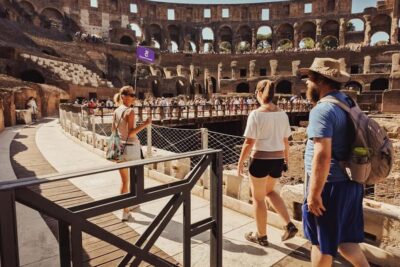
Colosseum, Roman Forum & Palatine Guided Tour
Read our review →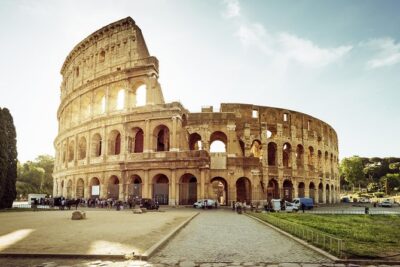
Colosseum, Palatine Hill and Roman Forum Guided Tour
Read our review →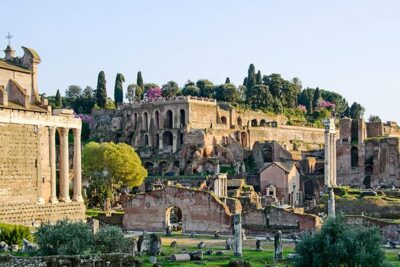
Guided Tour of Colosseum, Roman Forum & Palatine Hill
Read our review →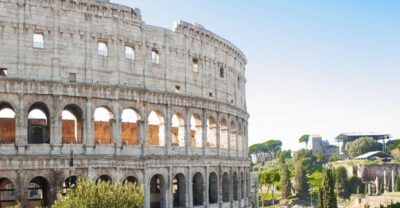
Colosseum & Forum with Audio Guide App -Optional Arena
Read our review →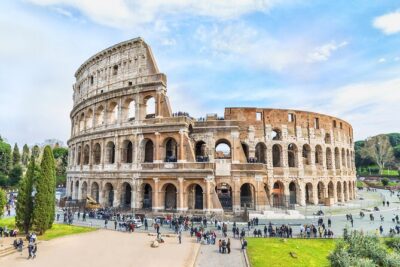
Colosseum, Roman Forum and Palatine Hill Guided Tour
Read our review →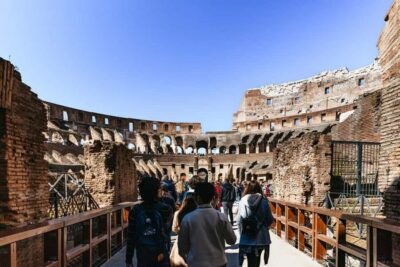
Colosseum, Forum & Palatine Hill Tour & Optional Arena
Read our review →
Colosseum, Roman Forum, Palatine with Multimedia Video
Read our review →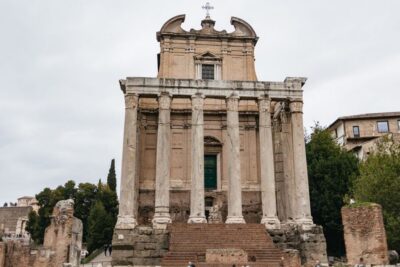
Colosseum, Palatine Hill & Roman Forum Guided Tour
Read our review →Browse the lists this tour appears in