Reviewed · ROME TOURS
The Treasures of Rome
Rome’s greatest city walk is packed into three hours here: Trevi Fountain, the Pantheon, Piazza Navona, and St. Peter’s Square. You meet a local guide near Termini, walk through the Centro Storico, then ride across town in an air-conditioned vehicle.
I like the efficient route and the Pantheon stop, where you can see Raphael’s tomb beneath one of ancient Rome’s most remarkable domes. I also like ending at St. Peter’s Square, so you can continue at your own pace. The main caution is simple: this is more walking than riding, often over uneven cobblestones in the heat.
Key points at a glance
- See four major Rome sights in one morning: Trevi Fountain, the Pantheon, Piazza Navona, and St. Peter’s Square.
- Walk the Centro Storico: Expect narrow lanes, old churches, fountains, cafés, and Renaissance palaces between the headline sights.
- Visit the Pantheon: Allow time for the huge dome, ancient structure, and tomb of Raphael.
- Finish at the Vatican: The tour ends in St. Peter’s Square, with entry to St. Peter’s Basilica included when religious events do not prevent it.
- Plan for a brisk pace: Past participants describe roughly two hours of walking and only a short stretch by bus.
- Expect a multilingual group: The tour is offered in English but may include several languages, with a maximum of 20 people.
A fast introduction to Rome’s historic center
This tour works best as a first look at Rome. It gives you the city’s grandest fountain, best-preserved ancient building, most famous Baroque square, and the great entrance to the Vatican in a single morning.
You meet at 9:00 am on Via Giovanni Amendola, near Rome’s Termini station. There is no hotel pickup, so you need to reach the meeting point yourself. That location is useful if you are staying near the station or arriving by public transport, but it is not convenient to treat the tour as a door-to-door outing.
The route begins around Piazza Barberini. In the center of this busy square, Bernini’s Triton Fountain shows the sea god rising above four dolphins. Look also for the smaller Fountain of the Bees near Via Veneto, a playful reminder of the Barberini family’s influence in papal Rome.
From there, you head into the Centro Storico. This is where the tour earns its keep. Rome’s center is not just a parade of isolated monuments. Ancient walls, churches, palaces, fountains, cafés, and crooked lanes appear one after another, often with little warning. A guide helps connect those fragments.
A few other Rome mornings to weigh against this
- Vatican Museums & Sistine Chapel Tour with Optional Basilica
★ 4.3 · 67,413 reviews - Colosseum, Roman Forum & Palatine Guided Tour
★ 4.7 · 63,148 reviews - Vatican Museums, Sistine Chapel & St Peter’s Basilica Guided Tour
★ 4.5 · 39,149 reviews
Trevi Fountain and the coin-toss tradition
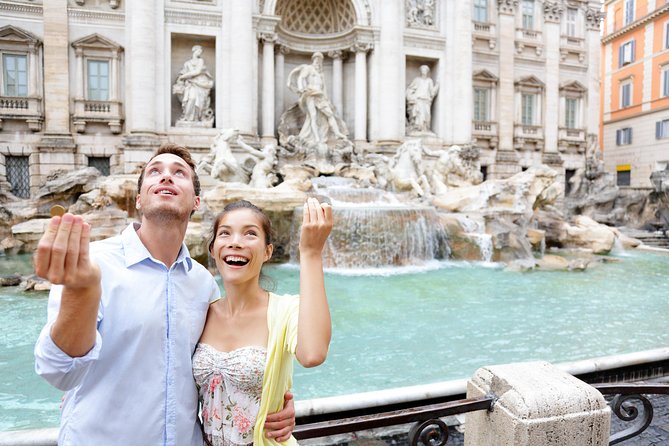
The first major stop is Trevi Fountain, with about 20 minutes to look around. The fountain is tucked into a relatively tight space in the historic center, so the first glimpse can feel almost theatrical. Water pours around enormous stone figures, making the fountain seem larger than the surrounding streets can contain.
Nicola Salvi designed the fountain, and Giuseppe Pannini completed it after Salvi’s death. Its theatrical design turns a city water source into a grand Baroque scene. You do not need a long visit to appreciate it, but you do need to stay aware of the group because the area can be crowded and the meeting point may not be obvious.
You will have time for photographs and, if you wish, the familiar coin toss. The old tradition says that throwing a coin into the fountain helps ensure your return to Rome. Keep this stop focused. The tour is not designed for a leisurely café break or extended shopping nearby.
The Pantheon is the morning’s strongest stop
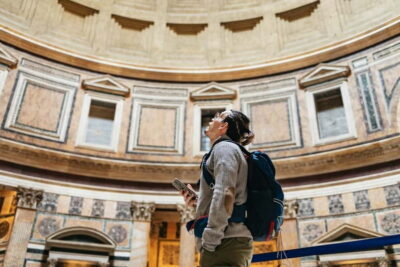
The Pantheon receives about 30 minutes, and this is the part I would value most. The building began as a temple commissioned during the reign of Augustus and was completed under Emperor Hadrian. Since the seventh century, it has served as a church dedicated to St. Mary and the Martyrs.
The exterior can look almost plain beside Rome’s more decorated churches. Inside, the effect changes. The vast concrete dome remains the building’s defining feature, and the opening at its center brings the sky into the room. Rain can fall through the oculus, so the floor and drainage system are part of the design, not an afterthought.
The Pantheon also contains the tomb of Renaissance painter Raphael, along with the tomb of King Umberto I and others. That combination of ancient Roman engineering, Christian use, and Renaissance memory makes the visit unusually rewarding.
The time limit is the catch. Thirty minutes is enough to see the main interior and hear the key points, but not enough for a slow inspection of every chapel, memorial, and architectural detail. If the Pantheon matters greatly to you, plan to return independently after the tour.
The information says admission is included at no extra charge. Still, religious services, local operating rules, or changes at the site can affect access. Wear suitable clothing from the start, since the tour includes places of worship.
Piazza Navona and Bernini’s fountains
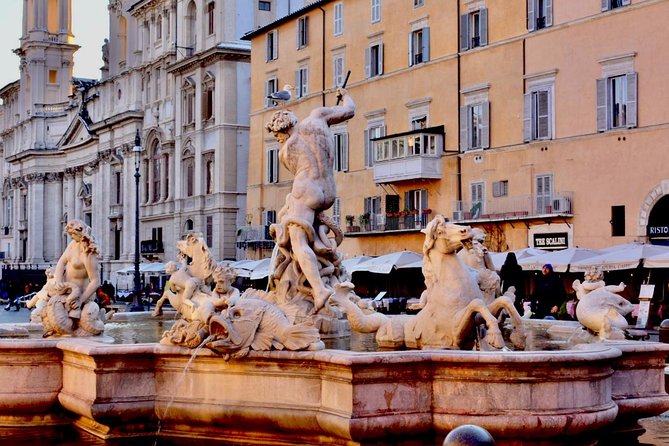
A short walk brings you to Piazza Navona for about 20 minutes. The square follows the shape of the ancient Stadium of Domitian, where Romans once gathered for games. Its long, open form is one of the clearest examples of modern Rome being built directly over ancient Rome.
The great visual prize is Bernini’s Fountain of the Four Rivers at the center. It represents four major rivers of the world known to Europeans in the 17th century. An Egyptian obelisk rises above the stone figures, while the surrounding churches and palaces frame the scene.
Piazza Navona is a good place to listen rather than rush. A guide can explain how the stadium’s outline became a public square and how papal Rome used fountains and architecture to display power. You will have time to admire the fountains and take photographs, but not much time to sit, eat, or explore every side street.
The walking between stops is part of the experience. You pass cobbled lanes, outdoor cafés, old churches, and Renaissance-era buildings. This is not a coach tour where you remain seated while Rome slides past the windows. If you want to see the Centro Storico properly, that is a benefit. If you have limited mobility or dislike hard pavement, it is a serious consideration.
Same city, an entirely different afternoon:
- Rome: Colosseum, Palatine Hill and Roman Forum Guided Tour
★ 4.8 · 32,814 reviews - Rome: Guided Tour of Colosseum, Roman Forum & Palatine Hill
★ 4.7 · 27,897 reviews - Rome: Colosseum & Forum with Audio Guide App -Optional Arena
★ 4.2 · 24,770 reviews - Rome: Colosseum, Roman Forum and Palatine Hill Guided Tour
★ 4.5 · 23,903 reviews
The short ride to St. Peter’s Square
After the central Rome walking section, you board an air-conditioned vehicle for the ride toward Vatican City. This is the only substantial break from walking, and it matters on a hot morning. The vehicle is comfortable, but do not book this expecting a sightseeing bus experience.
One detailed account described only about 15 minutes on the bus and roughly two hours on foot. That is a fair way to picture the outing. The transport mainly links the two parts of the route. It does not replace the walking in the Centro Storico.
The final stop is St. Peter’s Square, where the tour ends. Bernini designed the sweeping Doric colonnades between 1656 and 1667. Their curved arms frame the square and guide your attention toward St. Peter’s Basilica. An ancient Egyptian obelisk sits at the center, brought to Rome in antiquity and raised here in 1586.
The square itself is a powerful finish. You can take in the scale of the basilica, study the colonnades, and then decide how much more Vatican time you want. The official information says the inside visit to St. Peter’s Basilica is included, but it cannot take place on Sundays, religious festivals, or during religious ceremonies. In those cases, the route changes.
There has been some confusion about how much Vatican access is included. Some bookings have ended with time in the square, while others have included the basilica. Treat the basilica entry as subject to the day’s conditions, not as a guarantee that you will have an extended interior tour. The Vatican Museums and Sistine Chapel are not part of this three-hour route.
How good are the guides?
The guide can make this tour either a useful introduction or a hurried walk between famous names. The strongest guide reports describe clear explanations, humor, patience, and a real affection for Rome. Giorgio has been praised for being friendly and well informed, while Max has been described as pleasant, funny, and especially strong on Roman history.
Other experiences have been less satisfying. Guide quality can vary, and a multilingual format may mean that the commentary is divided among languages. That can reduce the amount of English explanation you receive and make the pace feel less personal.
The group limit is 20 people, which is smaller than a large coach excursion but not the same as a private tour. Keep close to the guide at fountains and busy crossings. Some tour groups use audio equipment, and bringing your own earbuds is a sensible precaution if you already have a pair that fits comfortably.
The most useful guides do more than announce dates. They explain why a fountain is in a particular square, how an ancient building survived, and how the city’s layers fit together. If your guide offers strong context, familiar sights become much more interesting. If the commentary is thin, you could cover much of the route independently with a map and guidebook.
Walking, weather, and clothing
The physical demand deserves plain language. You walk on cobblestones and uneven surfaces through the city center. The tour operator says you may remain on the vehicle, but doing so means missing many of the main sights. In practice, the walking is not an optional extra if you want the full experience.
Comfortable shoes matter more than stylish shoes. Rome’s historic center can be tiring under the midday sun, even though this begins in the morning. Carry water because drinks are not included. A hat and sunscreen are also practical choices, though they are not supplied as part of the tour.
Dress carefully for the Pantheon and St. Peter’s Basilica. Men and women must cover their knees and shoulders, with no shorts or sleeveless tops allowed for entry into places of worship and selected museums. The rule is strictly enforced. A light layer or longer trousers can save you from being refused at the door.
The air-conditioned vehicle gives you a brief cool-down, but it does not turn the outing into a low-effort excursion. I would not choose this tour for someone who struggles with prolonged walking unless that person is comfortable skipping the walking stops.
What the $49.26 price buys you
At $49.26 per person, the tour sits in the affordable range for a guided introduction to central Rome. You are paying for a local guide, the short air-conditioned transfer, and the convenience of moving between widely separated areas without planning the route yourself.
The value is strongest if this is your first morning in Rome, your time is limited, or you want historical context while seeing the main sights. The tour can help you get your bearings quickly. Several people have used a morning overview like this to decide where to return later for a longer visit.
The price is less attractive if you are already comfortable navigating Rome and mainly want photographs. Trevi Fountain, the Pantheon, and Piazza Navona are all reachable on foot or by public transport, and the included sightseeing time at each place is brief. You are buying organization and explanation, not exclusive access.
Lunch is included only if you select that option. Drinks are not included, and neither pickup nor drop-off is provided. Since the tour ends at St. Peter’s Square, you should plan your next move in advance. You can continue exploring Vatican City independently, but your transport back to central Rome is your responsibility.
Who should book this Rome morning tour?
I would choose this for a first visit, especially if you want a guided orientation before exploring alone. It covers the places most people hope to see in central Rome without taking a full day.
It also suits you if you prefer a guide to explain the monuments rather than simply photograph them. The Pantheon and Piazza Navona benefit from context, and the walk through the old center gives you a feel for how Rome’s streets fit together.
Families and mixed-age groups should think about the pace. The route is manageable for many people, but cobbles, heat, and two hours of walking can be hard on anyone with knee, balance, or stamina concerns. The small maximum group helps with organization, but this is not a private, slow-paced outing.
I would not book it if your main goal is the Vatican Museums, the Sistine Chapel, or a long interior visit at St. Peter’s Basilica. Those require a different plan. I would also avoid it if you need guaranteed access to every advertised stop on a Sunday or religious holiday.
Booking details worth knowing
The tour begins at 9:00 am at Via Giovanni Amendola 32, 00185 Rome. It ends at Piazza San Pietro in Vatican City, not back at the starting point. Check the route carefully before booking, especially if you have an appointment or train shortly afterward.
Confirmation is provided at booking, and the activity is near public transportation. It is offered in English but is described as multilingual. The maximum group size is 20 people.
Free cancellation is available up to 24 hours before the start time for a full refund. Changes or cancellations inside that 24-hour window are not accepted for a refund. The experience also requires a minimum number of participants, so a cancellation by the operator can lead to another date, another experience, or a full refund.
Because of Jubilee-related restoration work, some monuments may be partly covered or affected by changes. Check messages from the operator before departure. Rome often keeps its best sights open during repairs, but the view may not be exactly the one you imagined.
Should you book The Treasures of Rome?
Book it if you want a compact, guided first look at Rome and you are ready to walk. The route is well chosen, the Pantheon is a real highlight, and ending at St. Peter’s Square gives you a useful launch point for the rest of your day.
Skip it if you want a slow visit, guaranteed Vatican interior access, or a tour built around riding rather than walking. The best way to use it is as an orientation: see the major sights, listen for the stories that interest you, then return independently to the Pantheon, Piazza Navona, or Vatican area for more time.
FAQ
How long does The Treasures of Rome last?
The tour lasts approximately three hours.
What time does the tour start?
It starts at 9:00 am.
Where does the tour begin?
The meeting point is Via Giovanni Amendola 32, 00185 Rome, Italy.
Where does the tour end?
The tour ends in St. Peter’s Square, Piazza San Pietro, Vatican City.
Which sights are included?
The route includes Piazza Barberini, Trevi Fountain, the Pantheon, Piazza Navona, and St. Peter’s Square. The inside visit to St. Peter’s Basilica is included when it is possible.
Is St. Peter’s Basilica always open during the tour?
No. The inside visit is not possible on Sundays, religious festivals, or during religious ceremonies. The itinerary changes in those cases.
Is transportation included?
An air-conditioned vehicle is included for the ride to Vatican City. Hotel pickup and drop-off are not included.
Is lunch included?
Lunch is included only when you select the lunch option. Drinks are not included.
How much walking is involved?
There can be considerable walking on uneven, cobbled surfaces. The route’s main sights are visited on foot, and remaining on the vehicle means missing many of them.
What should I wear?
Knees and shoulders must be covered for entry into places of worship and selected museums. Shorts and sleeveless tops are not allowed, and the dress code is strictly enforced.
Is the tour offered only in English?
English is offered, but the experience is described as multilingual.
How many people can join the tour?
The maximum group size is 20 people.
Can I cancel for a full refund?
Yes. You can cancel at least 24 hours before the start time for a full refund. Cancellations or changes made less than 24 hours before the start time are not refunded.
Fresh on the Rome list
- Guided tour of the Colosseum, Roman Forum and Palatine in Spanish★ 4.5 · 191 reviews
- Rome: Guided Catacombs Tour & Capuchin Crypt (Audio Guide)★ 4.3 · 191 reviews
- Rome: Borghese Gallery Guided Tour with Skip-the-Line Ticket★ 4.5 · 192 reviews
- Rome: Arena Colosseum Tour with Arena Access★ 4.6 · 193 reviews
- Rome: Colosseum & Roman Forum Guided Tour★ 5.0 · 194 reviews
- Colosseum, Forum, Palatine Hill with audio guide and Arena or Bus option★ 4.0 · 193 reviews
- Rome: Domus Aurea Guided Tour and Virtual Reality Experience★ 4.7 · 194 reviews
- Rome Vintage Fiat 500 car Tour With Photographer★ 5.0 · 194 reviews
Rome Tours, compared.
Vatican Museums & Sistine Chapel Tour with Optional Basilica
Read our review →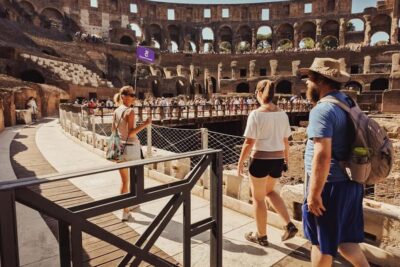
Colosseum, Roman Forum & Palatine Guided Tour
Read our review →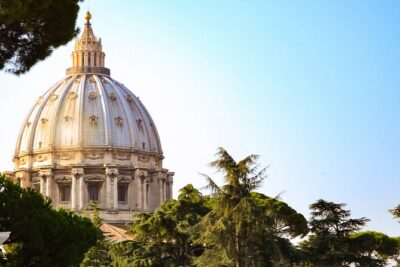
Vatican Museums, Sistine Chapel & St Peter’s Basilica Guided Tour
Read our review →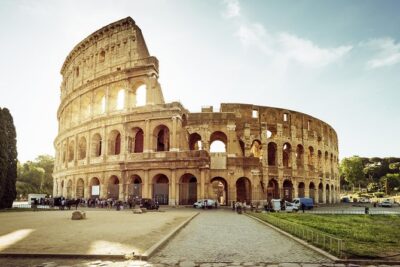
Colosseum, Palatine Hill and Roman Forum Guided Tour
Read our review →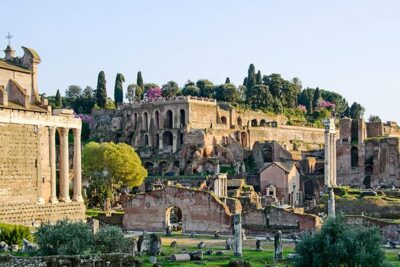
Guided Tour of Colosseum, Roman Forum & Palatine Hill
Read our review →
Colosseum & Forum with Audio Guide App -Optional Arena
Read our review →
Colosseum, Roman Forum and Palatine Hill Guided Tour
Read our review →