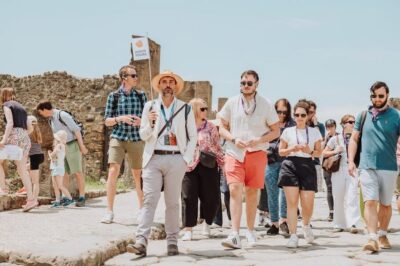
Reviewed · TOURS
Tour Parmigiano Reggiano dairy and Parma ham
Parmigiano Reggiano is not simply cheese here, and Prosciutto di Parma is not simply sliced ham. This half-day trip takes you into working food operations where milk is lifted from copper vats, cheese wheels age in long rows, and hams cure slowly in the hills above Parma. The tastings come after you see the labor behind each bite.
I like the close-up access to both producers and the way the tour connects food with place. I also like the comfortable minivan, local wine pairings, and guides such as Sergio, Loris, and Daniela, who bring practical insight and humor to the ride.
The main drawback is the strict meeting time. A train delay or late arrival can count as a no-show, with no refund or rescheduling, so you need to plan your arrival in Parma with care.
Key points at a glance
- See cheese at the source: Watch Parmigiano Reggiano move from fresh milk to brined and aging wheels.
- Compare three cheese ages: Taste 12, 24, and 36-month Parmigiano with balsamic vinegar and local Fortana wine.
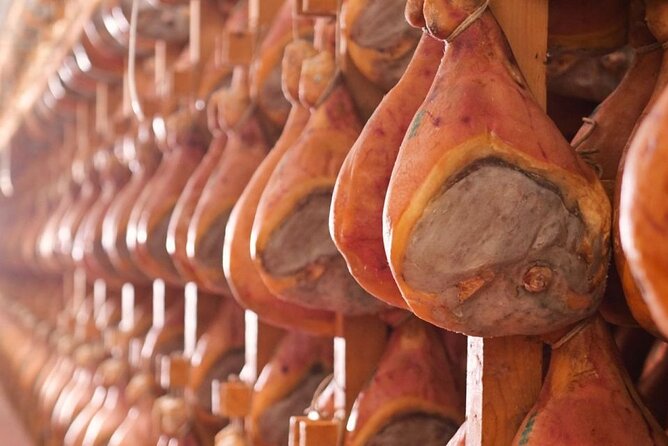
- Visit the Langhirano ham country: Learn how Prosciutto di Parma is salted, naturally matured, and selected.
- Meet small-scale producers: The ham stop can feel personal, with the owner sometimes slicing the tasting by hand.
- Ride between rural food makers: A comfortable minivan handles the countryside links and returns you to Parma.
- Plan the meeting precisely: Meet at Viale Giovanni Falcone 48a, and arrive early because late arrival can void the booking.
Why Parma’s food deserves a half-day
Parma is one of Italy’s best places to connect a famous food with its actual production. In the city, you can order Parmesan and prosciutto almost anywhere. Outside the center, you can see why these products take time, skill, and strict local methods.
This tour focuses on two protected regional specialties: Parmigiano Reggiano and Prosciutto di Parma. That distinction matters. The names refer to food made within defined areas and according to established rules, not just any hard cheese or cured pork.
You spend about four to five hours on the complete outing. That is long enough to visit both producers without turning the day into a marathon. The drive also gives you a look at the province around Parma, including the countryside and the Langhirano hills where the ham production takes place.
I see this as a food education with generous samples, rather than a formal cooking class. You do not make cheese or cure a ham yourself. Instead, you watch the work, ask questions, and taste the results while the details are still fresh.
A few other Italy mornings to weigh against this
- Private Half Day Parma Food Walking Tour
★ 5.0 · 561 reviews - Parma: Parmigiano Production and Parma Ham Tour & Tasting
★ 4.9 · 554 reviews - Guided group tour TastyBus: Parmesan Cheese and Parma Ham
★ 5.0 · 241 reviews
Meeting in Parma and heading into the countryside
The tour begins at Viale Giovanni Falcone 48a in Parma. The activity ends at the same meeting point, which makes it practical if you are staying in the city or arriving by train and arranging the rest of your day nearby.
The provided schedule allows about 30 minutes for the first drive and another 30 minutes for the return. In between, the minivan links the dairy in the province of Parma with the Prosciutto di Parma producer in the hills near Langhirano.
The vehicle is a useful part of the experience. Public transport may get you around Parma, but reaching rural food producers is much less simple. Here, you can sit back and enjoy the countryside without arranging separate taxis or trying to match regional bus schedules.
The tour can hold up to 30 people. That is larger than a private food walk, even if the minivan portion may feel more intimate. If the group reaches its maximum, you should expect a shared outing rather than constant one-on-one attention.
English is offered. Guides named in the feedback include Sergio, Loris, and Daniela, and their strengths appear to be clear explanations, humor, and an ability to involve the whole group. Sergio is also a prosciutto maker on his own small farm, which gives him a useful connection to the craft.
Arrive early. This is not the kind of activity where you should assume the vehicle will wait outside the station. The stated policy treats late arrival caused by a train or other transport delay as a no-show, so build in a generous cushion.
At the dairy, watch milk become Parmigiano Reggiano
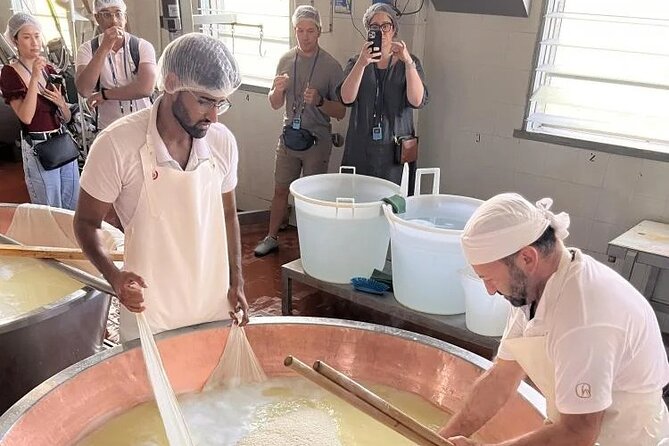
The first major stop is a traditional Parmigiano Reggiano dairy. The visit lasts about 90 minutes, and it is the more process-heavy half of the tour.
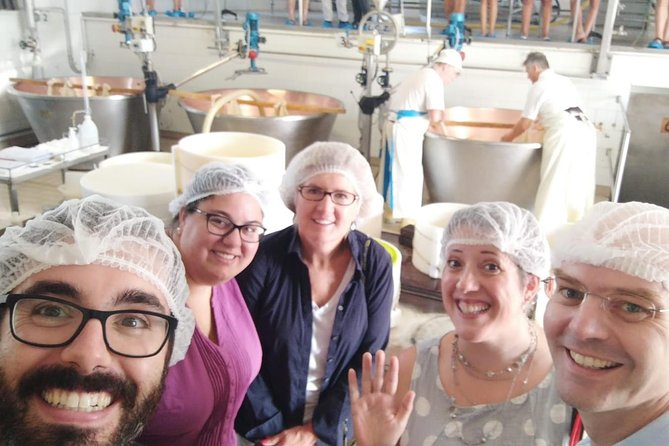
You begin with the basic raw material, fresh milk, then follow the steps that turn it into the firm, granular cheese sold around the world. The most memorable sight is the cheese being drawn from the milk vats. This is working production, not a staged display, so the timing and activity may vary from one visit to another.
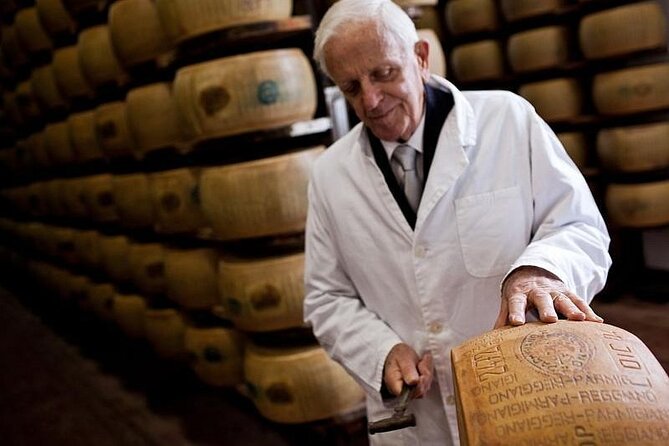
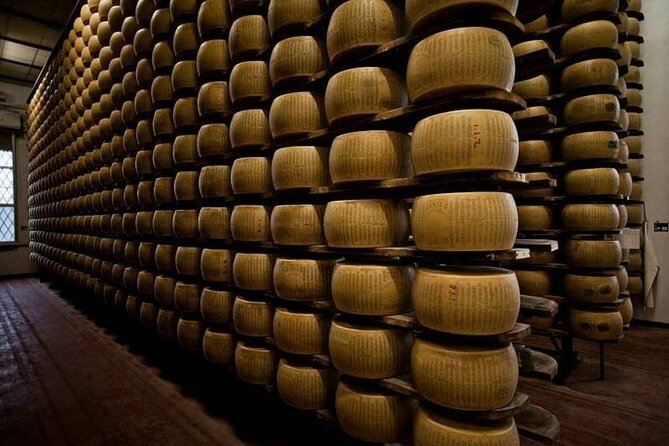
The dairy visit explains the parts that are easy to miss when you only see a wedge in a shop. The curds must be handled, shaped, and prepared for long aging. The finished wheels are then seasoned and stored, sometimes in rooms lined with row after row of cheese.
The storage room is a highlight for many people. It changes your sense of scale. A single wheel already represents months of waiting and careful handling. Seeing many wheels together makes clear why this cheese costs more than an ordinary supermarket Parmesan.
The guide helps you read the product. You learn why age changes texture and flavor, and why the name Parmigiano Reggiano carries more weight than a generic Parmesan label. The best part is that the explanation leads directly to tasting instead of stopping at a technical lecture.
Three ages of cheese, balsamic, and Fortana
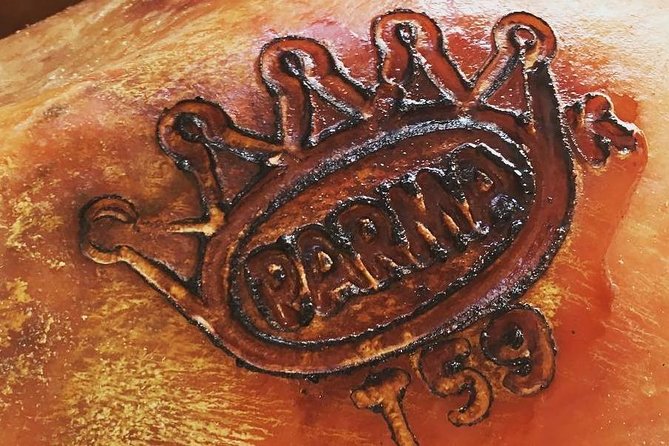
The dairy tasting includes Parmigiano Reggiano aged 12, 24, and 36 months. This side-by-side comparison is one of the strongest reasons to choose this tour over a standard food stop.
The younger cheese should help you notice a softer, more approachable character. The older wheels give you a firmer bite and more pronounced flavor. You do not need specialist vocabulary to enjoy the comparison. Simply taste from younger to older and pay attention to the changing texture.
Balsamic vinegar is served with the cheese, adding sweetness and acidity. The pairing shows how a small amount of a contrasting ingredient can change the whole mouthful.
You also receive local Fortana red wine. It is a regional touch rather than a generic beverage, and it helps connect the tasting to Emilia-Romagna. The amount of wine is described as complimentary, but you should still pace yourself because another tasting follows.
The samples are reported as generous, not token bites. That matters at a price of $151.16 per person. You are paying for transport, access, guiding, and tastings, but the food itself is a substantial part of the value.
Same city, an entirely different afternoon:
- Vatican: Museums & Sistine Chapel Entrance Ticket
★ 4.5 · 144,003 reviews - Vatican Museums & Sistine Chapel Tour with Optional Basilica
★ 4.3 · 67,413 reviews - Colosseum, Roman Forum & Palatine Guided Tour
★ 4.7 · 63,148 reviews - Milan: Cathedral and Duomo’s Terraces Entrance Ticket
★ 4.6 · 61,054 reviews
Into the Langhirano hills for Prosciutto di Parma
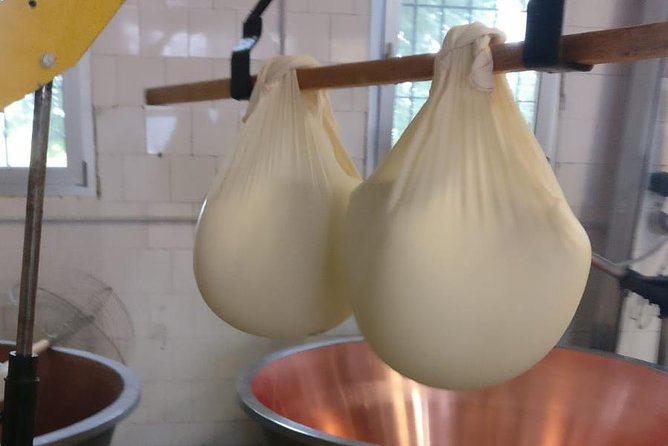
After the dairy, the minivan makes a short countryside drive to a Prosciutto di Parma producer near Langhirano. The change of setting helps explain the food. This is not simply a second factory visit. You move into the area closely associated with the curing of Parma ham.
Inside, you learn about salting, seasoning, and natural maturation. The curing rooms carry the smell of the product, and the long aging process becomes easier to understand when you see the hams hanging and being handled.
The tour also covers selection. Not every leg becomes the same finished product, and the best hams must meet the standards for Prosciutto di Parma. That detail gives you a better reason to care about the label when you encounter it later in a market or restaurant.
The producer can be especially personal. The visit has included one of the smallest approved Prosciutto di Parma facilities, where the owner personally sliced the tasting. Meeting the person connected to the work makes the stop feel less industrial and more like a family-run food business.
The precise producer may vary, and the format can depend on the day. Still, you should expect to see the curing rooms, hear about the traditional method, and taste the finished ham.
The ham tasting with bread and sparkling Malvasia
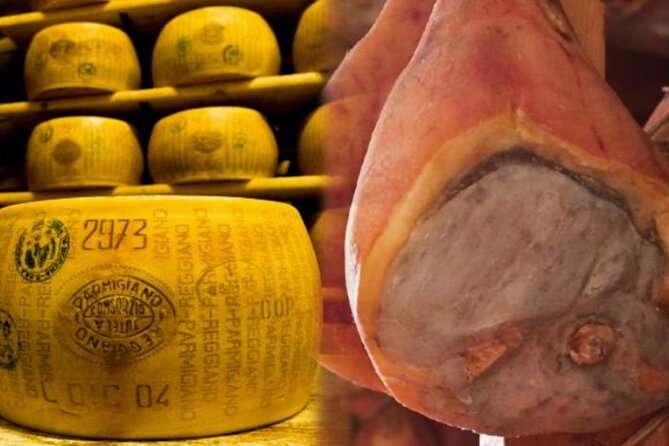
The Prosciutto di Parma tasting features ham aged for 24 months, served with local bread and Lambrusco. The sample is also paired with sparkling white Malvasia in the tour description, so the wine selection may include local sparkling styles alongside the stated pairing.
The ham should be tasted on its own first. Notice the delicate sweetness and soft, buttery texture. Then try it with bread, which gives it a more familiar snack-like form, and with the wine, which refreshes the palate.
This is a useful lesson in restraint. Good prosciutto does not need a pile of toppings. The curing, slicing, and aging carry the flavor. A skilled host slicing directly in front of you can also show why thickness matters.
The food portions make the afternoon feel more like a light meal than a quick sample. If you plan to eat a large lunch immediately before the tour, you may find the tastings harder to appreciate. I would keep lunch moderate and save room for both stops.
What the guides add to the experience
A food tour can easily become a list of production facts. The strongest guides here add a sense of place and explain why the work matters.
Sergio is described as both an excellent guide and a small-farm prosciutto maker. That background can make explanations about curing more grounded. Loris is praised for humor and for looking after the group, while Daniela is noted for clear speaking and an engaging way of explaining the region.
You may not have the same guide on every departure, but the recurring strengths are useful to know. Expect the guide to explain the process in English, keep the group moving, and help you compare what you see with what you taste.
The guides also appear willing to answer questions. In quieter periods, especially outside the busiest season, you may have more time to ask about aging, production, or buying products to take home. The experience can feel more relaxed when the group is not full.
One practical note: the operator may not contact you the day before or the morning of the tour. Do not wait for a reminder. Save the meeting address, check your route, and arrive on time.
Is $151.16 a fair price?
At $151.16 per person, this is not a bargain-priced tasting. You could spend less on cheese and ham in Parma, especially if your only goal is to eat them.
The value comes from combining several services in one half-day:
- Transport from Parma to rural producers and back
- English-language guiding
- Access to the production areas
- A cheese tasting across three ages
- Balsamic vinegar and Fortana wine
- Prosciutto aged for 24 months
- Bread and local wine pairings
- A visit to two separate food makers
For me, the price makes sense if you want to understand the products rather than simply order them. It is also good value if you do not have a car. Reaching a dairy and a ham producer independently would require more planning, and separate transport could quickly reduce the savings.
The value is weaker if you dislike group tours, do not drink wine, or already know the production methods well. The group limit of 30 also means the experience is not guaranteed to feel private.
Still, the generous tastings and the access to working facilities push this beyond a basic sampling session. You pay for context, transport, and the chance to see the food at its source.
Who will enjoy this Parma food tour most?
I would recommend it first to cheese and cured-meat lovers. The three cheese ages alone give you a useful comparison, and the ham visit adds a second specialty without requiring another day.
It also suits curious eaters who do not know much about Italian food production. The tour explains why these foods are expensive, why their names matter, and how much time goes into making them.
The outing works well for couples, families with participating adults, and small groups of friends. Most people can take part, but animals are not admitted.
You should think twice if you want a very small private experience or a flexible start time. The group can reach 30 people, and the meeting policy is firm. You also need to be comfortable with wine tastings, although the focus remains on the food.
Because the tour lasts four to five hours and returns to Parma, it fits neatly into a day of sightseeing. You can schedule it as a central part of your Parma visit without giving up an entire day.
Practical tips before you book
Book at least 24 hours ahead if you need the option to cancel. Free cancellation is available until that point, while cancellations or changes made less than 24 hours before the start time are not refunded or accepted.
Use the exact meeting point: Viale Giovanni Falcone 48a, 43122 Parma. The activity ends there as well.
Allow extra time for trains and local transport. The no-show rule is especially important because a delay outside your control may still leave you without a refund.
Wear something comfortable for a half-day outing, and keep your camera ready for the cheese storage rooms and curing areas. The tour provides a mobile ticket, and confirmation is sent at booking.
If you enjoy the tastings, ask about locally sourced products you can take home. Several samples are substantial enough to make you want more, and Parma is an excellent place to buy cheese and ham for later meals.
Should you book it?
Book this tour if you want the full food story behind Parma’s two signature products. The combination of a working Parmigiano Reggiano dairy, a Prosciutto di Parma producer, countryside transport, local wines, and generous tastings gives you much more than a plate of samples.
I especially like the three-age cheese comparison and the personal feel of the ham stop. The guides can add real value, particularly when they bring farming or production experience to the conversation.
Skip it if you need a private tour, cannot arrive early, or prefer to spend $151.16 on restaurant meals alone. For most food-focused visitors to Parma, though, this is a well-organized and satisfying half-day that explains what you are eating and why it matters.
FAQ
Where does the tour begin?
The tour begins at Viale Giovanni Falcone 48a, 43122 Parma PR, Italy.
Where does the tour end?
The activity ends back at the meeting point in Parma.
How long does the experience last?
The tour lasts approximately four to five hours.
Is the tour offered in English?
Yes. English is one of the offered languages.
How many people can join the tour?
The tour can have a maximum of 30 participants.
Is transportation included?
Yes. A comfortable minivan transports you between Parma, the Parmigiano Reggiano dairy, and the Prosciutto di Parma producer, then returns you to the meeting point.
What cheese will I taste?
The tasting includes Parmigiano Reggiano aged for 12, 24, and 36 months, served with balsamic vinegar and local Fortana red wine.
What is included with the Parma ham tasting?
You will taste 24-month Prosciutto di Parma with local bread and local wine, including Lambrusco in the listed sample menu.
Are animals allowed on the tour?
No. Animals are not admitted.
Can I cancel for a full refund?
Yes, if you cancel at least 24 hours before the experience start time. Cancellations or changes made less than 24 hours before the start time are not accepted or refunded.
Fresh on the Italy list
- Florence: Uffizi Guided Tour with Skip-the-Line Entry Ticket★ 4.8 · 499 reviews
- Milan: Last Supper and Sforza Castle Guided Tour★ 4.6 · 498 reviews
- Boat trip La Maddalena Archipelago – Departure from Palau★ 4.5 · 499 reviews
- Exclusive Golf Tour Private VIP with Local & Gelato o Wine★ 5.0 · 500 reviews
- Turin: Egyptian Museum Skip-the-Line Group Tour★ 4.7 · 500 reviews
- Itria Valley: Polignano, Ostuni, and Locorotondo, from Bari★ 4.6 · 502 reviews
- Colosseum, Palatine Hill and Roman Forum with Guided Tour★ 5.0 · 500 reviews
- Catania: Etna Nature Tour with Hiking, Cave Visit, & Tasting★ 4.7 · 502 reviews
Tours, compared.
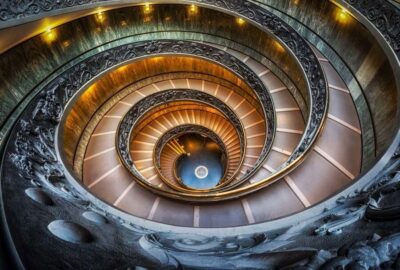
Vatican Museums & Sistine Chapel Tour with Optional Basilica
Read our review →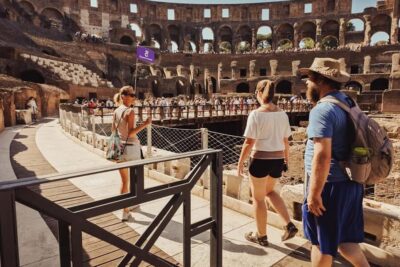
Colosseum, Roman Forum & Palatine Guided Tour
Read our review →
Vatican Museums, Sistine Chapel & St Peter’s Basilica Guided Tour
Read our review →
Colosseum, Palatine Hill and Roman Forum Guided Tour
Read our review →
Guided Tour of Colosseum, Roman Forum & Palatine Hill
Read our review →
Colosseum, Roman Forum and Palatine Hill Guided Tour
Read our review →
Naples Underground Entry Ticket and Guided Tour
Read our review →