Reviewed · ROME TOURS
Rome: Small Group Rome’s Dark Side – Ghosts & Legends Tour
Rome’s prettiest squares have some of its ugliest stories. This two-hour walk takes you from Giordano Bruno’s statue in Campo de’ Fiori through haunted lanes, old execution sites, scandalous churches, and Ponte Sant’Angelo, where Rome’s polished postcard image gives way to murder, betrayal, poison, and punishment.
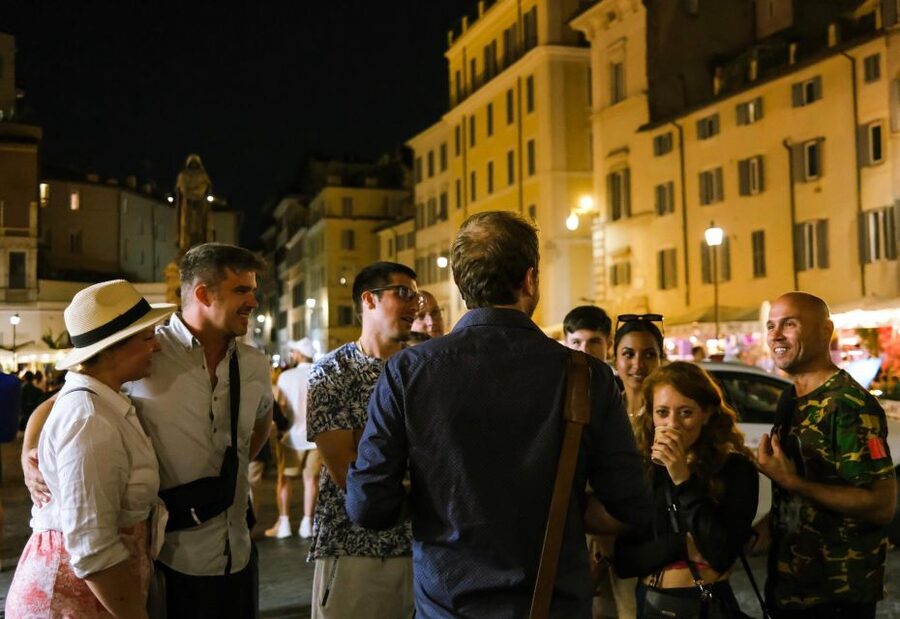
I like the small group of no more than 15, which makes it easier to hear the guide and ask questions. I also like the stop at a local bar, where you can pause for a drink and a bathroom break instead of trudging nonstop over cobblestones. Guides such as Ben, Arielle, Ivanna, and Ariel are praised for turning grim facts into lively stories.
The main consideration is tone. This is history with dark humor, not a serious religious tour or a theatrical haunted-house show. The stories can involve executions, treachery, and unsettling behavior, and the route stays above ground, so you will not visit crypts or underground chambers.
Key points at a glance
- Giordano Bruno begins the story: Meet beneath the hooded statue in Campo de’ Fiori, one of Rome’s most memorable execution sites.
- True history beats jump scares: Expect stories about poisoners, church conflict, criminals, nobles, and alleged ghosts, with no costumes or fake ghost-hunting equipment.
- A walk through central Rome: The route links Campo de’ Fiori, Farnese Palace, Ponte Sisto, Via Giulia, and Castel Sant’Angelo.
- Guides carry the experience: Ben, Arielle, Ivanna, Ariel, and other guides are praised for humor, clear explanations, and strong storytelling.
- A practical midway pause: The local bar stop gives you time for refreshments and a bathroom break.
- Good value at $23: For two hours of guided history in a group capped at 15, the price is modest, especially if you want something beyond Rome’s usual monuments.
Rome after dark, without the usual postcard script
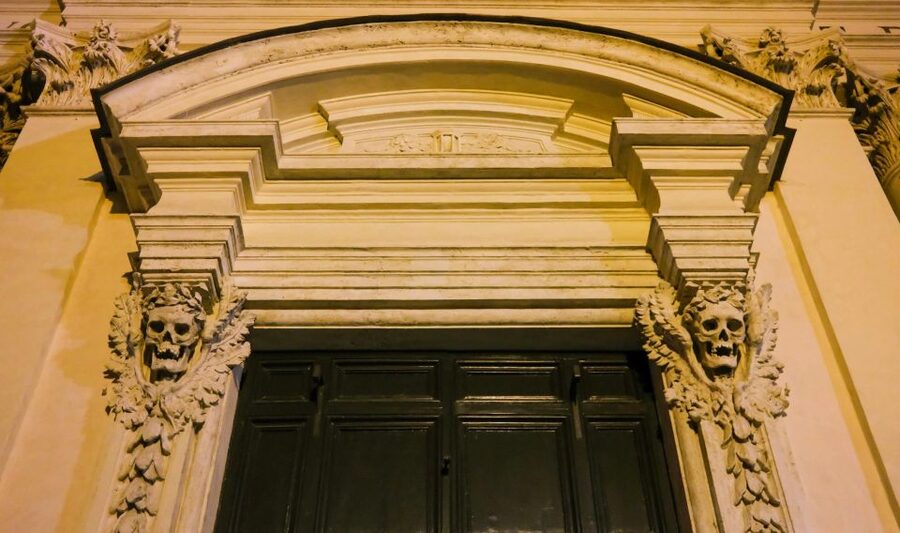
Most Rome tours steer you toward emperors, painters, popes, and grand architecture. This one takes a different route through the same beautiful city. You still see historic buildings and famous streets, but the guide points your attention toward the people who were punished, betrayed, poisoned, condemned, or simply behaved badly.
That shift is the real appeal. You are not being asked to admire another marble facade and memorize a date. You are hearing the sort of story that makes you look twice at a quiet alley or wonder what happened behind the walls of a handsome palace.
The mood is spooky, but not relentlessly frightening. The guides are storytellers rather than actors in capes, and the evening relies on atmosphere, facts, and a well-timed joke. Several guides are singled out for keeping the mood light without losing the darker subject matter.
That balance matters. If you want theatrical scares, props, and sudden noises, this is probably the wrong choice. If you like unusual history, odd characters, and the macabre side of old cities, it is a much better fit.
A few other Rome mornings to weigh against this
- Vatican Museums & Sistine Chapel Tour with Optional Basilica
★ 4.3 · 67,413 reviews - Colosseum, Roman Forum & Palatine Guided Tour
★ 4.7 · 63,148 reviews - Vatican Museums, Sistine Chapel & St Peter’s Basilica Guided Tour
★ 4.5 · 39,149 reviews
Meeting Giordano Bruno in Campo de’ Fiori
The meeting point is the statue of Giordano Bruno in the center of Campo de’ Fiori. You will see a tall, hooded figure, and the tour sign reads Rome’s Dark Side: Ghosts & Legends. Arrive about 10 minutes early, since the group may not be able to wait for late arrivals.
Campo de’ Fiori is an ideal starting point because its daytime market atmosphere changes sharply after sunset. The statue commemorates Giordano Bruno, the philosopher and former Dominican friar who was executed here in 1600 after conflict with the Roman Inquisition. His story sets the tone for the evening: Rome’s grand religious and political past is also filled with fear, control, punishment, and people who refused to stay quiet.
Your guide uses the square as more than a backdrop. You get the setting, the historical stakes, and the first reminder that executions once took place in spaces now filled with restaurants and evening foot traffic.
This opening stop can be busy, so keep an eye out for the guide’s sign and make sure you have a clear view of the statue. The square is also paved and crowded at times, making comfortable shoes useful from the very start.
Campo de’ Fiori and Farnese Palace: beautiful places, bad behavior
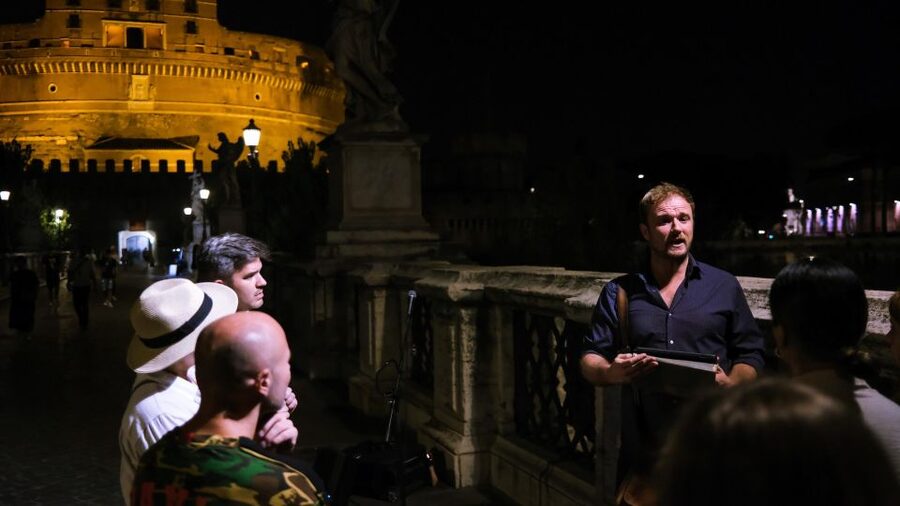
From the statue, the tour continues around Campo de’ Fiori and toward Farnese Palace. This is where the contrast between elegant Rome and grim Rome becomes especially clear. Fine architecture does not mean the people connected with it were fine company.
The storytelling focuses on scandal, power, and the darker personalities who moved through Rome’s political and religious world. You may hear about noblewomen who survived shifting alliances, outsmarted powerful men, or gained reputations that have lasted far longer than their enemies did.
The tour also brings in stories of poisoners and alleged clients. This is not presented as a lesson in crime technique. The interest lies in how rumors, fear, and reputation worked in a city where a suspicious death could become legend almost overnight.
Farnese Palace gives the guide another chance to show how Rome’s grand buildings conceal complicated human stories. You will not enter the palace as part of this walk, so treat the stop as an exterior storytelling point rather than an architectural visit.
I like this section for the way it adds context to places you might otherwise pass quickly. The drawback is that the stories move at a brisk pace. If you want a detailed study of every building, artist, and political figure, a dedicated architecture tour would serve you better.
Ponte Sisto and the bar break
The route reaches Ponte Sisto, a historic bridge across the Tiber. Bridges work well on a night walk because they offer a change of pace and a chance to look back at the city from an open stretch rather than another narrow street.
Here, the stories turn toward haunted crossings, old legends, and the way Rome’s riverside setting fed tales of danger and the supernatural. The point is not to prove that every ghost story is true. Instead, the guide shows how places collect stories, especially when they are linked to death, crime, travel, or public punishment.
After Ponte Sisto, you stop at a local bar. Food and drinks are not included, but you can buy something if you wish. This short break also provides a bathroom opportunity, which is welcome on a two-hour walk.
The pause helps the tour feel manageable. Rome’s cobblestones can wear down even strong legs, especially if you have spent the day at the Colosseum, the Vatican, or the Roman Forum. You should still wear comfortable shoes, but the stop gives you a chance to reset before the second half.
Do not expect a long meal or a sit-down dinner. It is a practical refreshment stop within the walk, not a food tour.
Same city, an entirely different afternoon:
- Rome: Colosseum, Palatine Hill and Roman Forum Guided Tour
★ 4.8 · 32,814 reviews - Rome: Guided Tour of Colosseum, Roman Forum & Palatine Hill
★ 4.7 · 27,897 reviews - Rome: Colosseum & Forum with Audio Guide App -Optional Arena
★ 4.2 · 24,770 reviews - Rome: Colosseum, Roman Forum and Palatine Hill Guided Tour
★ 4.5 · 23,903 reviews
Via Giulia and the darker lanes of central Rome
After the break, the route continues along Via Giulia. This street is one of the more atmospheric parts of the walk, especially after dark, when the crowds thin and the old walls feel less like scenery and more like witnesses.
The guide uses the street and nearby alleys to connect individual stories with Rome’s wider pattern of power and punishment. You might hear about a magician who charmed his way through Europe until his luck changed, or about characters whose public image was far cleaner than their private behavior.
This is where the guide’s delivery matters most. The information is not simply a list of crimes. The stronger guides build a story, explain who had power, show how a reputation formed, and then let the strange detail land. Ben is repeatedly praised for accurate historical material and a lively style. Arielle and Ivanna are also noted for making people from the past feel vivid and human.
The walk includes a lesser-known stop for about 20 minutes. The exact point is not specified in the tour information, so you should expect a selected location rather than a named monument that you can plan around independently. That mystery fits the theme, but it also means the route is best enjoyed as a guided sequence rather than a checklist of attractions.
Castel Sant’Angelo and Ponte Sant’Angelo
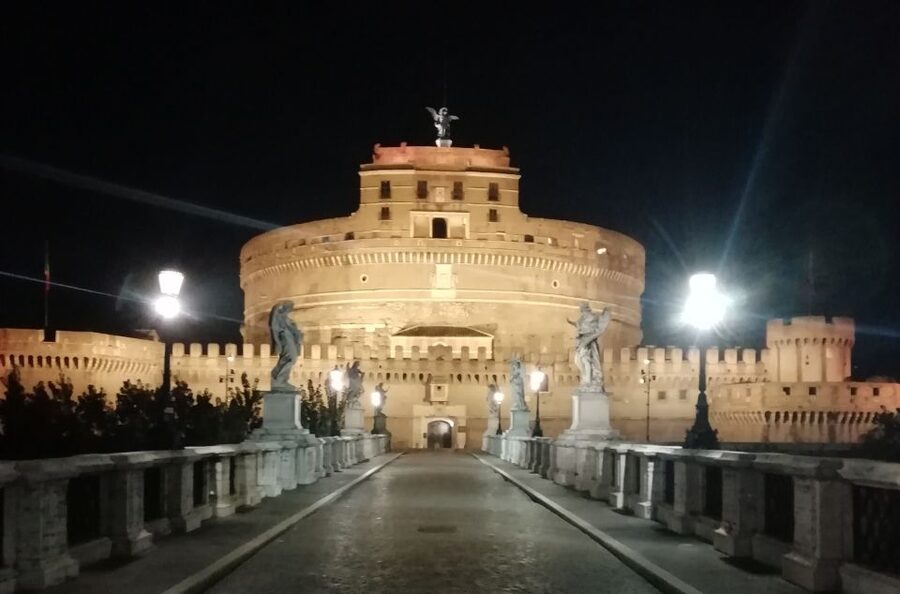
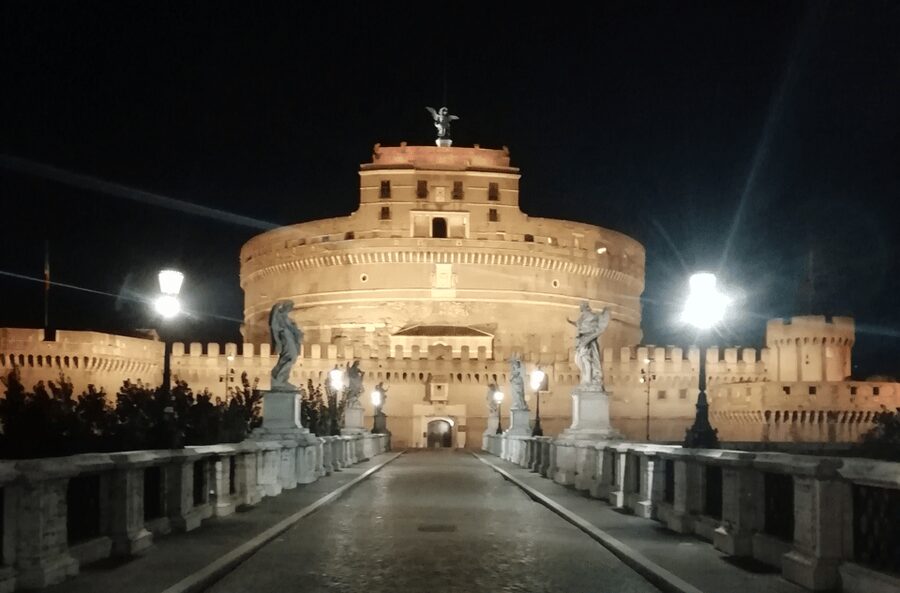
The final major stop is Castel Sant’Angelo. Originally built as a mausoleum for the emperor Hadrian, the massive cylindrical fortress later served as a papal stronghold and prison. The tour does not include entry inside, but the exterior gives the closing stories a suitably severe setting.
Castel Sant’Angelo is tied to executions, imprisonment, political danger, and dramatic escapes. Its position beside the river and near the bridge makes it a natural place to end a walk about Rome’s uneasy relationship with death and power.
The tour finishes at two nearby drop-off points: St. Angelo Bridge or Castel Sant’Angelo. That is useful if you want to continue your evening in the historic center, though transport away from the final stop is not included.
Ponte Sant’Angelo adds a striking final view. Its statues and river setting are beautiful, but the walk has trained you to notice the harsher side of the scene. The bridge no longer feels like decoration alone. It becomes part of a story about how Rome displayed authority, faith, and punishment in public spaces.
Why the guides matter more than the route
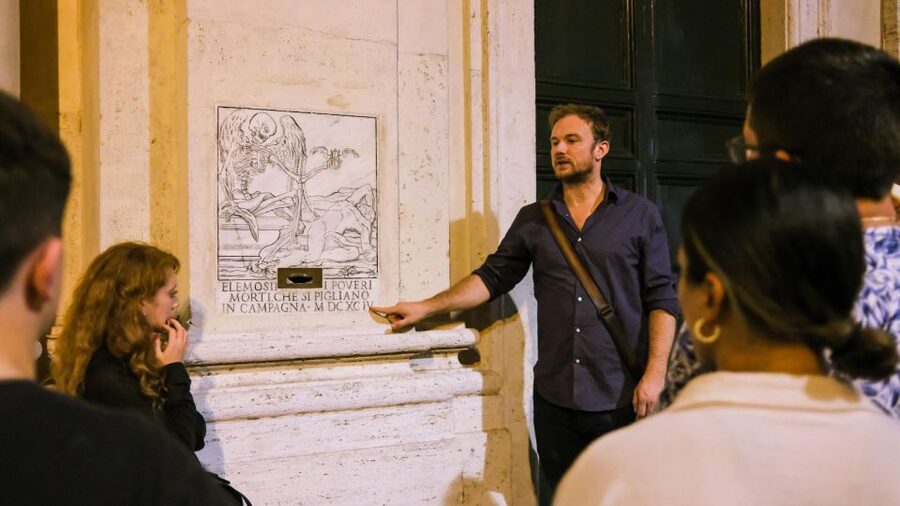
The route is strong, but the guide makes or breaks this type of experience. Dark history can become flat if it is delivered as a string of dates. Here, the best guides use humor, questions, character details, and a sense of timing to keep the group involved.
Ben receives frequent praise for being funny, accurate, and easy to follow. Arielle is described as warm, energetic, and especially good at making people feel included. Ivanna is praised for animated storytelling and for answering questions clearly. Ariel is noted for keeping the walk moving while explaining places you might otherwise overlook.
Names and backgrounds vary by departure, so you should not book on the assumption that one particular guide will lead your tour. Still, the repeated pattern is useful: the company’s approach depends on guides who can explain history in plain language and handle a mixed group.
That makes the tour suitable for adults, older children, and teenagers who enjoy spooky subjects. One family group with adults and teens had a good time, and the material is more like grim, strange history than a series of horror shocks. Some stories involve violence, death, and scandal, so parents should decide if that tone suits younger children.
The English is also described as clear enough for people who do not speak it perfectly. Italian-language tours are available as well.
What the $23 price really gets you
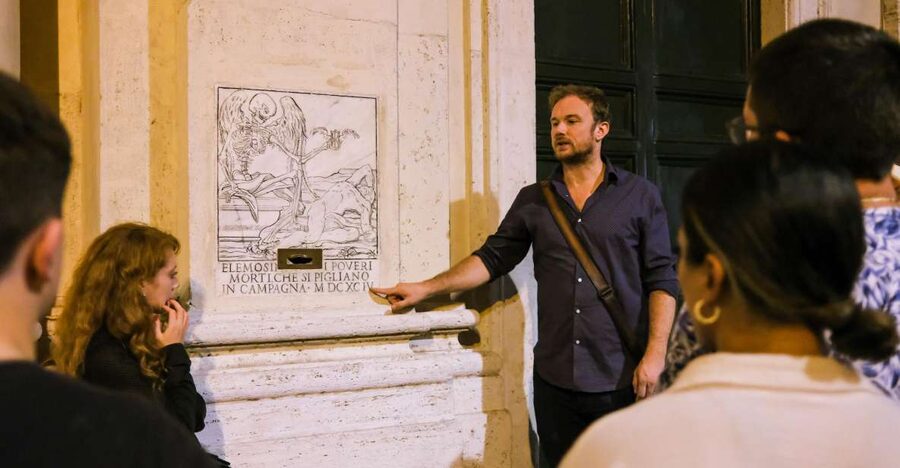
At $23 per person, this is inexpensive by Rome tour standards. You are paying for two hours with a live guide, a small group capped at 15, and a route that combines central landmarks with stories you would be unlikely to find on a standard sightseeing walk.
The value is strongest if you have already seen the major monuments or want to understand Rome through people rather than paintings and emperors. You also get an evening activity that does not require an entrance ticket, a long transfer, or a full night commitment.
The price does not cover drinks, food, transport to Campo de’ Fiori, or transport after the final stop. Those costs are easy to manage, but they belong in your budget. Private groups are available if you want a more personal format, though the standard small group should already feel reasonably intimate.
The tour has earned a 4.9 rating from 343 reviews, with especially strong praise for the guides, humor, historical detail, and value. The most common small criticism is that some people would like the walk to last longer and include even more stories. I see that as a sign that the two-hour format works, though committed ghost-tour fans may want to book another Dark Side City Tours experience.
Practical advice for a smoother night
Wear shoes with good grip and support. You will walk for two hours on cobblestones, and Rome’s uneven surfaces are less forgiving after a full day of sightseeing.
Bring a light rain layer. The tour operates in rain or shine, and a rainy evening may add atmosphere, but it can also make stone streets slick and standing outdoors less pleasant.
Arrive early at the Giordano Bruno statue. The guide will be holding the tour sign, but Campo de’ Fiori can be active and confusing at night. If you are delayed, message or call as soon as possible. The guide may be able to help, but waiting is not guaranteed.
The tour is wheelchair accessible, though you should consider the cobbled streets and the practical demands of moving with a group through central Rome. You remain above ground throughout, so do not expect catacombs, crypts, tunnels, or underground burial sites.
You can cancel up to 24 hours before the tour for a full refund, and reserve now while paying later. Starting times vary, so check availability for your date.
Who should book this Rome ghost tour?
I would choose this tour if you like history with a wicked edge, enjoy walking after dark, and want stories beyond the standard Roman highlights. It is especially good for a first evening in Rome because the route helps you get oriented around Campo de’ Fiori, Via Giulia, the Tiber, and Castel Sant’Angelo while giving you plenty of conversation material for the rest of your trip.
It also works well for repeat visitors. If you have already toured the Vatican Museums, Colosseum, and Forum, the darker stories offer a fresh reason to walk through familiar neighborhoods.
I would skip it if you want a formal academic lecture, a ghost-hunting investigation, or a theatrical scare show. I would also think twice if you are already exhausted from a full day on foot, although the bar break and relaxed pacing make the walk easier than many nonstop city tours.
Should you book Rome’s Dark Side?
Book it if you want strong storytelling at a low price, not a staged horror performance. The small group, central route, short break, and talented guides make this a smart evening choice for curious visitors who want Rome’s scandals and oddities alongside its beauty.
You will leave with a different view of familiar streets. The city’s churches, bridges, palaces, and squares will still look lovely, but you may also start wondering what happened there after the sun went down.
FAQ
Where does the Rome Dark Side tour begin?
The tour begins at the statue of Giordano Bruno in the center of Campo de’ Fiori. Look for the guide holding a sign that says Rome’s Dark Side: Ghosts & Legends.
How long does the tour last?
The walking tour lasts two hours.
How large is the group?
The standard group is limited to a maximum of 15 people. A private group option is also available.
Which languages are offered?
The tour is offered in English and Italian.
Does the tour enter crypts or underground sites?
No. The tour stays above ground and does not include crypts or underground locations.
Is food or drink included?
No. Food and drinks are not included, but the route includes a stop at a local bar where you can buy refreshments and use the bathroom.
What happens if it rains?
The tour operates in rain or shine. Wear suitable clothing and comfortable shoes for walking over cobblestones.
Is the tour wheelchair accessible?
Yes, the activity is listed as wheelchair accessible.
Fresh on the Rome list
- Guided tour of the Colosseum, Roman Forum and Palatine in Spanish★ 4.5 · 191 reviews
- Rome: Guided Catacombs Tour & Capuchin Crypt (Audio Guide)★ 4.3 · 191 reviews
- Rome: Borghese Gallery Guided Tour with Skip-the-Line Ticket★ 4.5 · 192 reviews
- Rome: Arena Colosseum Tour with Arena Access★ 4.6 · 193 reviews
- Rome: Colosseum & Roman Forum Guided Tour★ 5.0 · 194 reviews
- Colosseum, Forum, Palatine Hill with audio guide and Arena or Bus option★ 4.0 · 193 reviews
- Rome: Domus Aurea Guided Tour and Virtual Reality Experience★ 4.7 · 194 reviews
- Rome Vintage Fiat 500 car Tour With Photographer★ 5.0 · 194 reviews
Rome Tours, compared.
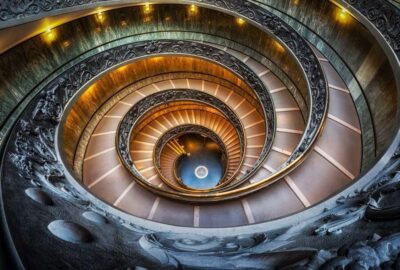
Vatican Museums & Sistine Chapel Tour with Optional Basilica
Read our review →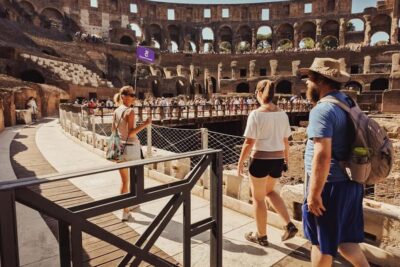
Colosseum, Roman Forum & Palatine Guided Tour
Read our review →
Vatican Museums, Sistine Chapel & St Peter’s Basilica Guided Tour
Read our review →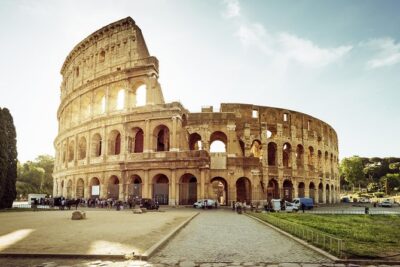
Colosseum, Palatine Hill and Roman Forum Guided Tour
Read our review →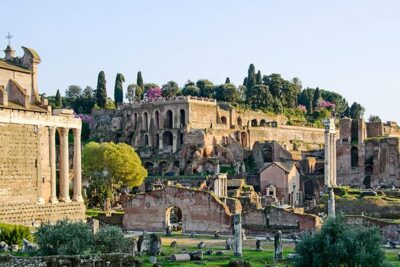
Guided Tour of Colosseum, Roman Forum & Palatine Hill
Read our review →
Colosseum & Forum with Audio Guide App -Optional Arena
Read our review →
Colosseum, Roman Forum and Palatine Hill Guided Tour
Read our review →