Reviewed · GUIDED
Rome: Small Group Guided Tour of Castel Sant’Angelo
Castel Sant’Angelo is one of Rome’s best history lessons because the building keeps changing character as you walk through it. It began as Emperor Hadrian’s tomb, then became a fortress, prison, papal residence, museum, and archaeological site. In two hours, you follow that story up a spiral ramp and across five floors.
I like the small-group format, which gives you a real chance to ask questions. I also like the strong guiding style. Alec is especially good at adding humor to difficult material, while Barbara, Silvia, and Lorenzo have each been praised for careful explanations and a relaxed pace. The main drawback is physical: the castle involves ramps, stairs, and uneven historic passages, so it is not suitable for people with mobility impairments.
Key points to know before booking
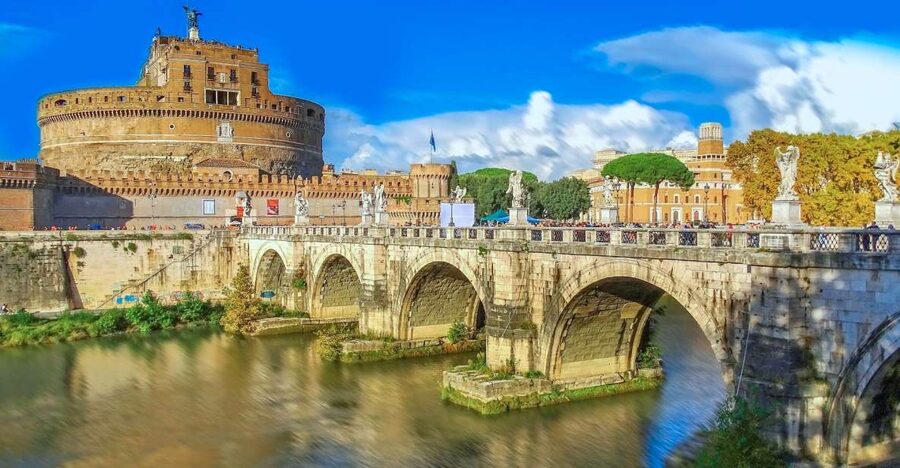
- Hadrian’s tomb becomes a fortress: You see the original burial structure before following its later military use.
- Five floors tell five different stories: Prison cells, the chamber of ashes, papal rooms, frescoes, and weapons all form part of the route.
- The rooftop view is a major reward: The upper terrace gives you memorable views across Rome.
- Small groups improve the tour: You can hear the guide clearly and ask questions without fighting a crowd.
- Guides bring different strengths: Alec is praised for humor and clear storytelling, while Barbara, Silvia, Lorenzo, and Oleg are known for careful, engaging explanations.
- Bring the right ID: Tickets are issued in each participant’s name, and museum staff check identification at the entrance.
Why Castel Sant’Angelo is worth two hours
Rome has no shortage of famous monuments, yet Castel Sant’Angelo often gets less attention than the Colosseum or Vatican Museums. That is part of its appeal. The building is not one clean historical chapter. It is a stack of different Romas, built and altered over many centuries.
You begin with Emperor Hadrian’s mausoleum. The emperor ordered the tomb for himself and his family, and the structure was later absorbed into the city’s defenses. As you move through the castle, you can see how a grand imperial monument was adapted for military and religious power.
The tour helps you connect the parts. Without a guide, you might notice a dark corridor, a painted room, or a thick wall without understanding why it is there. With the story in place, each space has a job. The fortress becomes a record of Rome’s changing rulers.
I find the building especially rewarding for visitors who like places that feel less tidy than a traditional museum. You are not simply looking at objects in cases. You are walking through corridors where the use of the building changed repeatedly, often for serious and troubling reasons.
A few other Rome mornings to weigh against this
- Colosseum, Roman Forum & Palatine Guided Tour
★ 4.7 · 63,148 reviews - Vatican Museums, Sistine Chapel & St Peter’s Basilica Guided Tour
★ 4.5 · 39,149 reviews - Rome: Colosseum, Palatine Hill and Roman Forum Guided Tour
★ 4.8 · 32,814 reviews
Meeting at the entrance with City Walkers
Your guide waits in front of the entrance with a City Walkers sign. This is a simple meeting point, but give yourself enough time to find it. The tour does not include hotel pickup or drop-off, so you make your own way to Castel Sant’Angelo.
The guide leads you inside with swift access, and the ticket cost is included. Adult admission is listed as €16, while admission for children under 18 is free. The total tour price is $75 per person, so the main value comes from the two-hour guided explanation, the small group, and the time saved at entry rather than from admission alone.
Bring a passport or other valid ID. Tickets are nominal, meaning they carry the name of each participant. Museum staff check the names and identification at the entrance, so you need to provide the correct names and birth dates when booking. This is not the place to enter casual nicknames or leave your identification in the hotel safe.
The tour runs rain or shine. Castel Sant’Angelo has both indoor and outdoor sections, and the upper terrace may be less pleasant in bad weather. Still, the route does not depend on a sunny day to be worthwhile.
From Hadrian’s mausoleum to a fortified castle
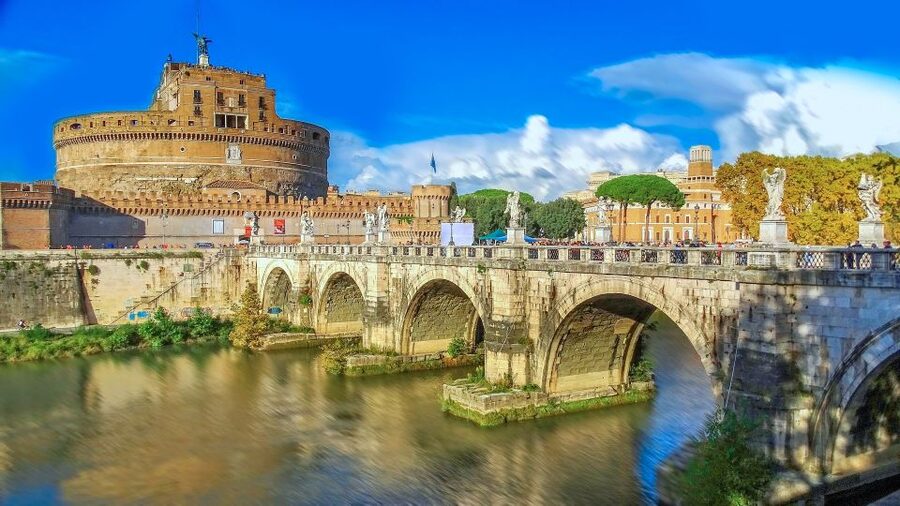
The first part of the visit sets up the building’s original purpose. You enter what began as Hadrian’s tomb, then move into the fortified corridors that helped transform the monument into a defensive stronghold.
The architecture can feel massive and enclosed. Thick walls and curved passages make the castle’s military role easy to picture. The spiral ramp is one of the defining features of the visit, carrying you gradually through the structure and linking one period to another.
This is where a good guide matters most. A bare walk through the passageways could become a blur of stone. Guides such as Alec and Oleg have been praised for putting events in chronological order and adding small details that make the building easier to follow. Alec, in particular, is known for using humor without turning the subject into a comedy act.
The pace is another strength. The tour lasts two hours, but the guiding is not meant to feel like a forced march. One small group described a comfortable speed and detailed explanations, while another appreciated having time to ask questions. That balance suits the castle, since rushing would make it hard to grasp how its parts fit together.
The chamber of ashes and the castle’s prison cells
As you continue upward, you reach the chamber of ashes and the cells where historical figures were imprisoned. These sections give the castle its darker edge.
The chamber of ashes connects the present building to its original funerary purpose. It is a useful reminder that the fortress was first designed as a tomb, not a palace or prison. The later cells show how far the building’s role shifted.
The prison areas are not presented as a separate museum of crime. Instead, they form part of the castle’s larger story of control and power. People were held here because the building was secure, central, and connected to Rome’s ruling institutions.
You should expect the corridors and cells to feel stark rather than polished. That is part of their value. The rooms help you picture the practical side of the monument, far away from the formal papal apartments and painted ceilings higher up.
A guide can also answer questions that arise naturally in these spaces. The strongest guides do not avoid uncomfortable subjects connected to the Church or the people who passed through the castle. Oleg, for example, was praised for providing background material and explaining events in a clear sequence. That kind of structure helps when the story includes emperors, popes, prisoners, and political conflict.
Same city, an entirely different afternoon:
- Vatican Museums & Sistine Chapel Tour with Optional Basilica
★ 4.3 · 67,413 reviews - Rome: Guided Tour of Colosseum, Roman Forum & Palatine Hill
★ 4.7 · 27,897 reviews - Rome: Colosseum & Forum with Audio Guide App -Optional Arena
★ 4.2 · 24,770 reviews - Rome: Colosseum, Roman Forum and Palatine Hill Guided Tour
★ 4.5 · 23,903 reviews
Papal rooms and Renaissance frescoes
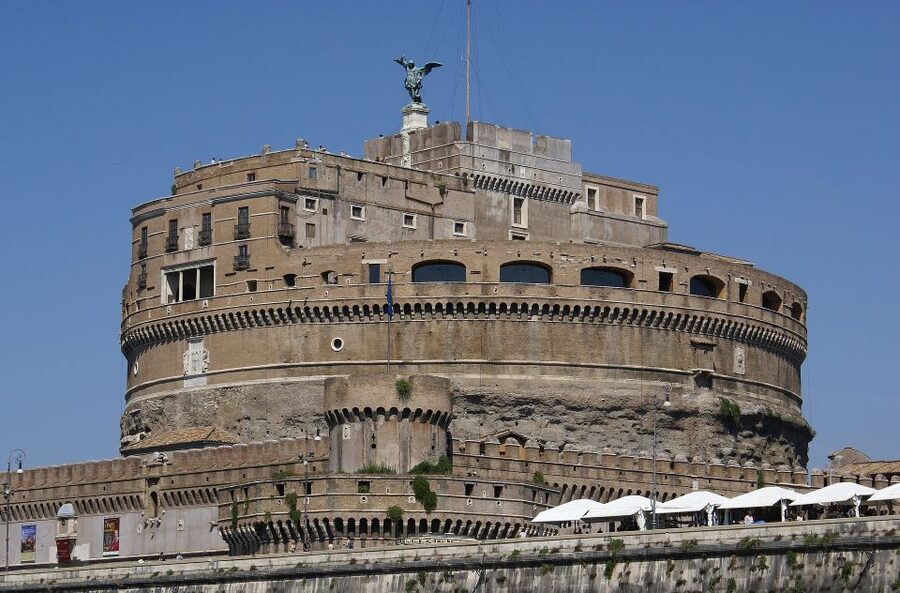
The upper sections bring a sharp change in mood. Here, the fortress opens into rooms that served as a papal residence. You move from defensive passages and cells into more formal interiors decorated with Renaissance frescoes.
The paintings are among the castle’s most beautiful features. Their preservation gives you a chance to see the building not only as a military monument but also as a place where powerful residents expected comfort and visual splendor.
I like this contrast. The castle does not ask you to choose between ancient Rome, medieval Rome, and Renaissance Rome. It puts them one above the other. The spiral route makes that physical: you keep climbing, and the building’s purpose keeps changing.
The guide’s explanation is useful here because the rooms can otherwise appear as isolated decorative stops. You learn that they belong to the period when the castle served as a papal residence. The paintings then become part of a larger story about status, religion, and security.
The small group works well in these rooms. You are more likely to hear the details about the frescoes, and you can pause for a question without losing the guide in a mass of people. Headsets are available if needed, which is useful when the room is crowded or the group is spread along the route.
Weapons and the practical side of power
The extensive weaponry collection adds another layer to the visit. It shows that Castel Sant’Angelo was not merely a symbolic fortress. Its defensive function required real arms and equipment.
This stop will appeal to you if you enjoy military history, but it also helps explain the building’s design. The walls, corridors, and restricted access make more sense when you see them alongside the weapons used to defend the site.
The collection is one reason the tour feels broader than a simple monument visit. You get architecture, painting, archaeology, religion, imprisonment, and military history in one compact route. A guide keeps these subjects connected instead of leaving you to assemble the puzzle alone.
That variety also makes the tour a good choice for mixed groups. One person can focus on the Roman origins, another on the papal apartments, and another on the castle’s defenses. The guide can usually shift emphasis through questions, especially in a small group.
The terrace delivers the big Rome view
The top terrace is the natural finish. After the enclosed corridors, the city opens around you, and you get a clear reason to make the climb.
The view across Rome is repeatedly described as magnificent, and it is easy to see why it leaves such a strong final impression. You can take photos of the skyline from one of the city’s most unusual vantage points, with the castle’s long story beneath your feet.
The terrace is not just a photo stop. It changes your sense of scale. Inside, the castle feels like a maze of walls and rooms. From above, you can understand its place in Rome and appreciate how its position made it useful as both a defensive site and a powerful residence.
Plan to have your camera ready, but do not let the final view replace the rest of the tour. The terrace is the highlight for many people, yet the strongest part of the visit is the change from tomb to fortress to prison to papal residence. The view works because you have just walked through that history.
The guides make the difference
The tour is sold in English, French, Italian, and Spanish, and the guide is live rather than prerecorded. That matters in a building with so many shifts in purpose.
Alec receives especially strong praise for clear English, humor, and an ability to keep the group involved. Several people describe his explanations as easy to follow, and one small group found his storytelling so engaging that passersby tried to listen in. That is a good sign for anyone worried that a history tour might become dry.
Barbara is praised for being warm, patient, and thorough. She even waited briefly for a delayed group affected by street closures. Silvia Rossetti is remembered for her passion and command of the subject, while Lorenzo is noted for striking a good balance between detail and restraint.
Oleg takes a more prepared approach, providing short background material before the tour so the castle’s long sequence of events is easier to understand. These guides do not all teach in exactly the same way, but the common strength is clear explanation with room for questions.
You cannot necessarily request a particular guide, so book this tour for the format and subject rather than expecting one specific person. Still, the repeated praise for the guiding is important. At $75, you are paying mainly for interpretation, and this is where the experience earns its price.
Is $75 good value?
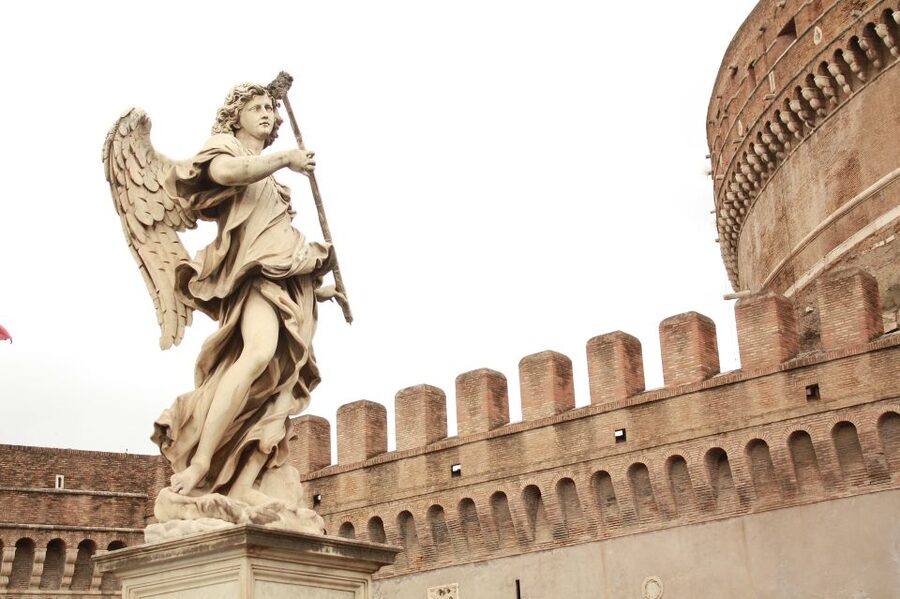
The adult museum ticket is €16, included in the tour price. That leaves a substantial portion of the $75 cost paying for the guide, group organization, and swift entry.
I would call it fair value if you want to understand the castle rather than simply walk through it. A self-guided visit costs less, but you would need to supply your own context, route, and explanations. Castel Sant’Angelo is large enough and historically layered enough that many people will get more from a guided visit.
The value is strongest for first-time visitors to Rome, history fans, and anyone who prefers a clear two-hour plan. It is less compelling if you already know the monument well or prefer to move at your own speed.
Children under 18 receive free admission to the site, but the tour price is still listed per person. Check the final booking details carefully if you are traveling with children, since the included ticket and the tour charge are not necessarily the same thing.
Who should book this castle tour?
I would choose this experience if you enjoy stories that connect architecture with politics and daily use. It also suits you if you want a major Roman sight without committing to a half-day museum visit.
The tour is a particularly good fit for:
- First-time Rome visitors who want the castle explained clearly
- Couples and families who prefer a small group
- People interested in Roman, papal, military, or prison history
- Photographers who want a rooftop view of Rome
- Visitors who value a steady pace and time for questions
- Anyone who finds large museums easier with a guide
I would think twice if you have difficulty walking on ramps or stairs. The experience is explicitly not suitable for people with mobility impairments, and the five-floor route makes that limitation important.
Large bags and luggage are not allowed, and weapons or sharp objects are prohibited. Alcohol and drugs are also not permitted. Pack lightly and bring your ID.
Should you book Castel Sant’Angelo with a guide?
Book it if you want the building’s many identities explained in one organized visit. The strongest reasons are the small group, the patient pace, the five-floor route, and guides who make complicated events easier to follow without burying you in dates.
The rooftop view alone is memorable, but it is not the whole case for going. You also see Hadrian’s tomb, fortified corridors, prison cells, papal rooms, Renaissance frescoes, and weapons in a single monument.
Skip the guided version if you mainly want a quick photo from the terrace or prefer complete independence. For most visitors, though, the guide adds enough context to justify the higher price. With free cancellation up to 24 hours ahead and a reserve-now, pay-later option, the booking terms also leave some room to adjust your plans.
FAQ
How long does the Castel Sant’Angelo tour last?
The tour lasts two hours.
What is included in the price?
The price includes swift access to Castel Sant’Angelo, the site ticket, a two-hour guided walking tour, and a guide. Headsets are available if needed.
How much does the tour cost?
The listed price is $75 per person.
Is the adult entrance ticket included?
Yes. The tour price includes the adult Castel Sant’Angelo ticket, listed as €16. Admission for children under 18 is listed as free.
What languages are available?
Live guides are available in English, French, Italian, and Spanish.
Where do I meet the guide?
Your guide waits in front of the Castel Sant’Angelo entrance with a City Walkers sign.
Do I need to bring identification?
Yes. Bring a valid passport or ID card. Tickets are issued in each participant’s name, and museum staff check the names and birth dates at the entrance.
Is the tour suitable for people with mobility impairments?
No. The tour is not suitable for people with mobility impairments and includes a route through five floors of the castle.
Can I cancel the booking?
Yes. You can cancel up to 24 hours in advance for a full refund. A reserve-now, pay-later option is also available.
Fresh on the Rome list
- Rome: Guided Catacombs Tour & Capuchin Crypt (Audio Guide)★ 4.3 · 191 reviews
- Guided tour of the Colosseum, Roman Forum and Palatine in Spanish★ 4.5 · 191 reviews
- Rome: Borghese Gallery Guided Tour with Skip-the-Line Ticket★ 4.5 · 192 reviews
- Rome: Arena Colosseum Tour with Arena Access★ 4.6 · 193 reviews
- Rome: Colosseum & Roman Forum Guided Tour★ 5.0 · 194 reviews
- Colosseum, Forum, Palatine Hill with audio guide and Arena or Bus option★ 4.0 · 193 reviews
- Rome: Domus Aurea Guided Tour and Virtual Reality Experience★ 4.7 · 194 reviews
- Rome Vintage Fiat 500 car Tour With Photographer★ 5.0 · 194 reviews
Guided, compared.
Colosseum, Roman Forum & Palatine Guided Tour
Read our review →
Vatican Museums, Sistine Chapel & St Peter’s Basilica Guided Tour
Read our review →
Colosseum, Palatine Hill and Roman Forum Guided Tour
Read our review →
Guided Tour of Colosseum, Roman Forum & Palatine Hill
Read our review →
Colosseum & Forum with Audio Guide App -Optional Arena
Read our review →
Colosseum, Roman Forum and Palatine Hill Guided Tour
Read our review →
Naples Underground Entry Ticket and Guided Tour
Read our review →