
Reviewed · WINE TASTINGS
Rome: Food & Wine Tour of Campo de Fiori, Ghetto, Trastevere
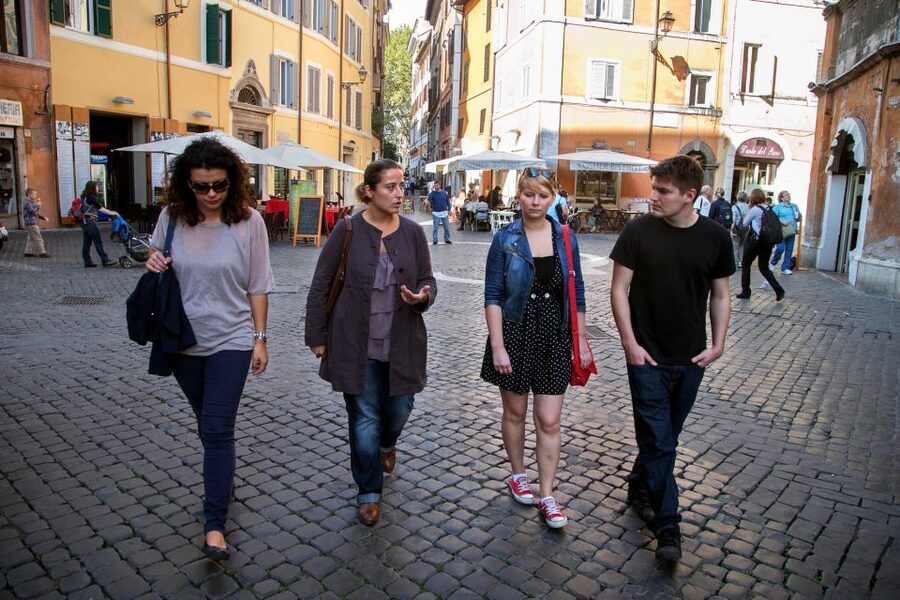
Rome makes more sense when you eat it one neighborhood at a time. This tour links Campo de’ Fiori, the Jewish Ghetto, and Trastevere, using food to explain how Romans shop, cook, snack, and gather. You are not simply ticking off tastings. You are walking between markets, bakeries, shops, and restaurants while learning what belongs on a Roman table.
I like the generous range of food, from pizza bianca stuffed with mortadella to crisp supplì, fried artichoke, pasta, wine, and gelato. I also like the small-group limit of 15 people, which makes it easier to hear the guide and ask questions. The main drawback is that the afternoon option skips Campo de’ Fiori Market because of its opening hours, and the tour is not suitable for vegans, people with food allergies, or wheelchair users.
Key points at a glance
- Three distinct Roman neighborhoods: See Campo de’ Fiori, the Jewish Ghetto, and Trastevere through their food traditions and local shops.
- A serious amount of food: Tastings include pizza bianca, mortadella, mozzarella, Roman salami, supplì, fried artichoke, codfish, pasta, wine, and gelato.
- Market timing matters: The morning tour includes Campo de’ Fiori Market, while the afternoon tour substitutes a grocery shop and aperitif.
- A useful first-day activity: You finish with practical ideas about where to eat and how to order Roman specialties.
- Guides shape the experience: Guides including Natasha, Lisa, Mariel, Gloria, Valeria, and Federica are praised for mixing food lessons with neighborhood stories.
- Budget about three and a half hours: At $81 per person, the value depends on how much you would otherwise spend on several small meals and a guided walk.
Why food is the best way to meet this part of Rome
Rome’s famous sights can dominate a short visit. This walk gives you a different set of landmarks: a bakery counter, a cheese display, a frying pan, a pasta shop, and a gelateria. That change of focus is useful because Roman food is tied closely to place, custom, and daily routine.
The tour lasts between two and three and a half hours, depending on the option booked. The longer format gives the group time to walk, stop, taste, and hear the explanation without turning every stop into a rushed sample.
The experience works particularly well early in your stay. You learn what pizza bianca should taste like, how Roman fried snacks differ from ordinary fast food, and which kinds of pasta deserve your attention. You can then use those lessons for the rest of your visit.
The group size is capped at 15 people. That is large enough to create some easy conversation, but small enough for a guide to keep the group together and explain what is in front of you. Solo visitors can also find this format pleasant, since food gives everyone an easy reason to talk.
More Wine Tastings in Rome
- Rome: Tuscany & Montepulciano Day Trip with Lunch & Wine Tasting
★ 4.5 · 5,232 reviews - Rome Food Tour: Unlimited Tastings with Fine Wine & Barolo
★ 5.0 · 3,365 reviews - Rome: Food Tour with Unlimited Food and Barolo Wine
★ 4.8 · 1,883 reviews
Campo de’ Fiori: start with Rome’s market culture
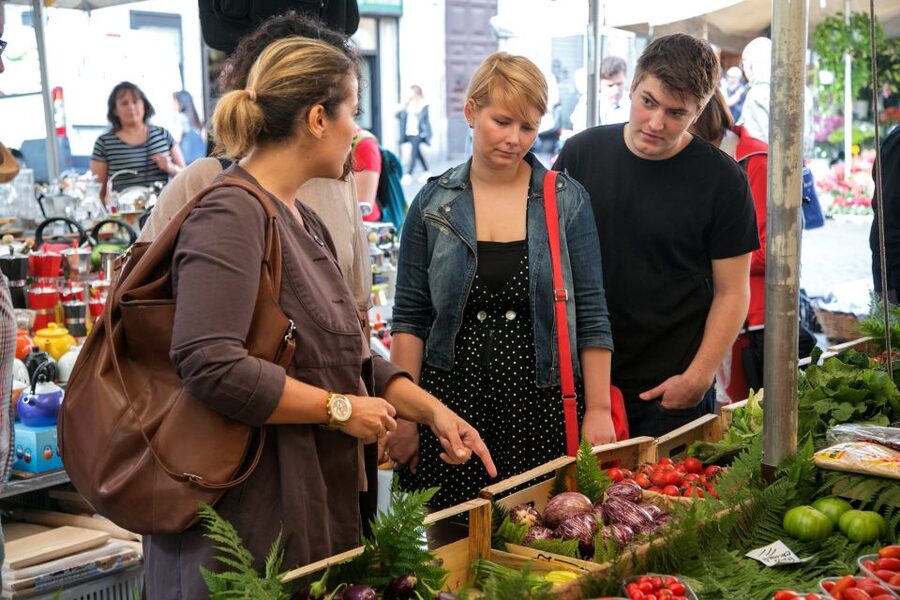
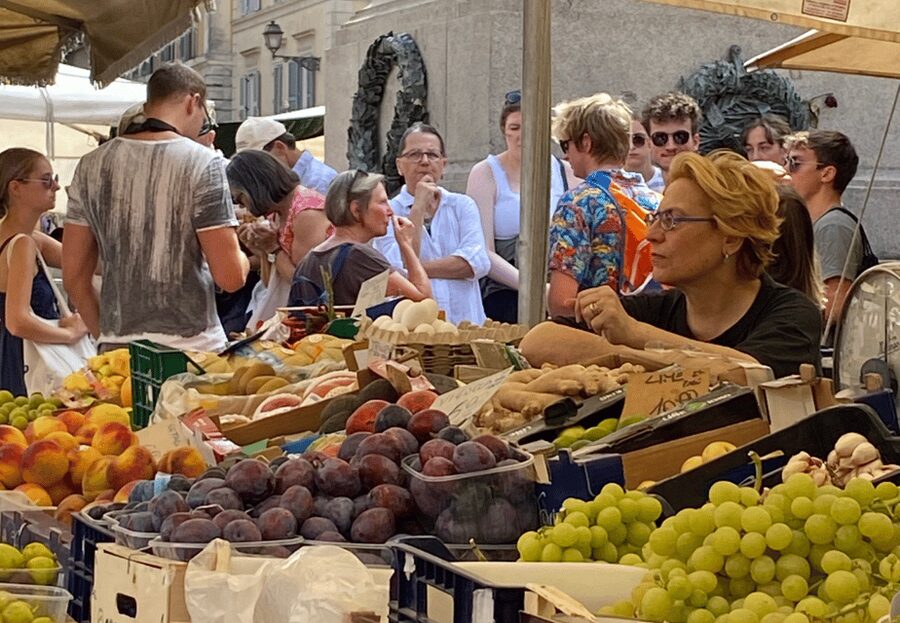
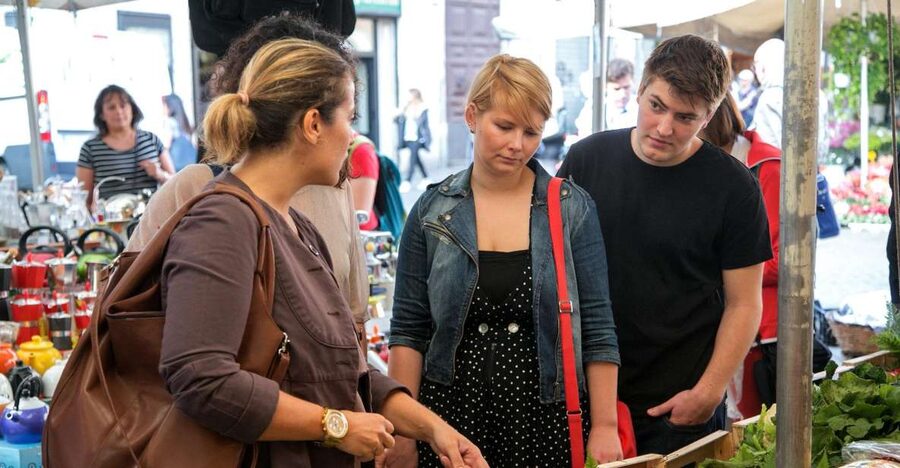
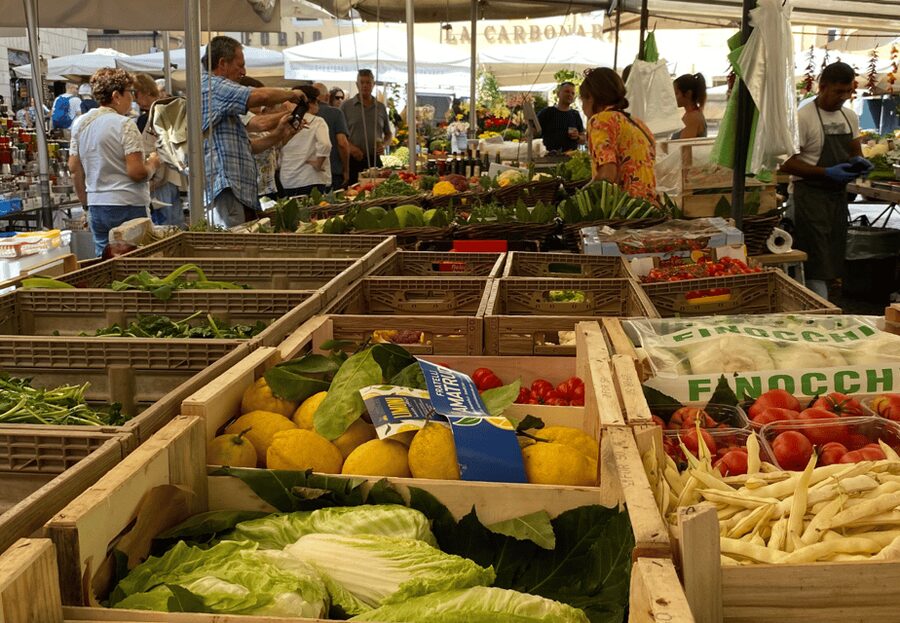
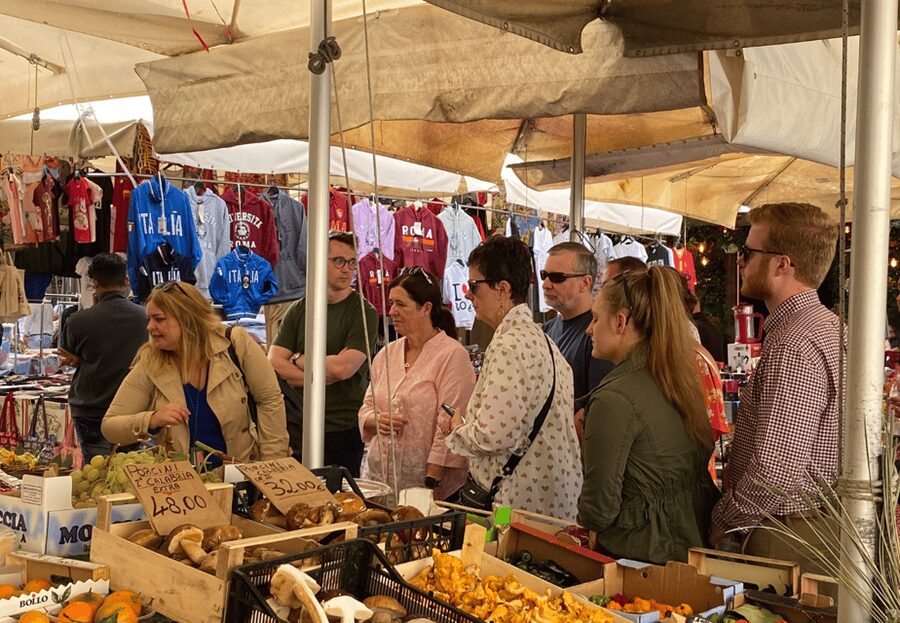
The morning option begins with Campo de’ Fiori Market, one of the most colorful parts of the route. The emphasis here is on ingredients and shopping rather than a single sit-down meal. You see displays of fruits and vegetables, specialty goods, and the sort of food culture that helps explain how Roman cooking starts before anything reaches a restaurant kitchen.
The market stop is valuable because it puts ingredients first. You can look at the produce, notice the spices, and ask the guide how Romans use particular foods. The guide also shares information about special food events taking place during your visit, when available.
This is a good place to pay attention to the difference between a market made for daily shopping and one made partly for sightseeing. Your guide helps sort out what matters, pointing you toward the products and customs that have a real place in Roman food life.
The market is not included on the afternoon tour. Instead, that option visits a typical grocery store and includes an aperitif. This is not necessarily a poor substitute, but it changes the flavor of the opening stop. If Campo de’ Fiori Market is important to you, choose the morning departure and check the available start time before booking.
Pizza bianca and mortadella, Rome’s simple mid-morning classic
One of the most memorable tastings is pizza bianca with thin slices of mortadella. This is not the familiar round pizza covered with sauce and toppings. It is a light, flat Roman bread with a soft interior and a browned surface, served as a quick snack or informal meal.
The mortadella adds salt, spice, and a smooth, savory texture. The pairing looks simple, but that is the point. Roman food often depends on good bread, a few strong ingredients, and the right balance rather than a long list of additions.
You also taste mozzarella with Roman salami. This stop gives you a chance to compare fresh dairy with cured meat, and it shows how much of Italian food culture is built around quality ingredients served without unnecessary fuss.
If you take the morning tour, do not eat a full breakfast first. The tastings arrive steadily, and several people who have taken the tour found the food plentiful enough to feel like a full meal. Arrive hungry, but bring water, especially in the warmer months.
The Jewish Ghetto: food shaped by a distinct Roman story
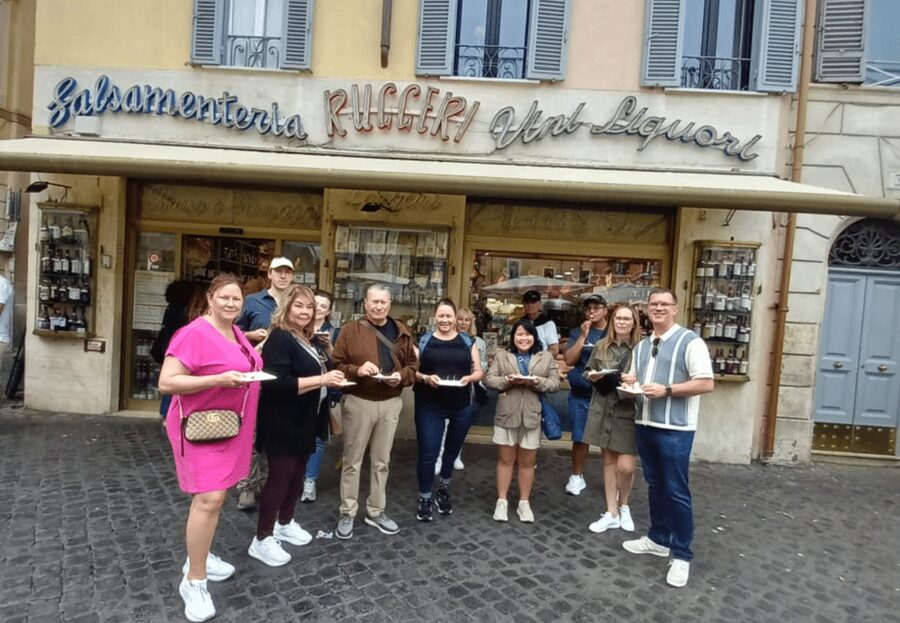
The Jewish Ghetto is one of the strongest parts of the route. Here, food and local history are closely linked, and the walk gives you more than a quick look at the neighborhood’s restaurants and shops.
The tastings may include fried artichoke, supplì, and fried codfish. The fried artichoke is a classic Roman Jewish preparation, while the codfish reflects the area’s long connection to traditional Jewish-Roman cooking. The tour may also stop at grocery shops where the guide explains ingredients and local food habits.
Supplì is one of the great Roman street foods. It is a fried rice ball with tomato flavor and a center of melted mozzarella. When it is properly browned outside, the crisp coating gives way to soft rice and stretchy cheese. It is filling, so pace yourself if several tastings are still ahead.
The Jewish Ghetto is also a place where seasonal timing matters. Artichokes are especially interesting when they are in season, and the guide can explain how the preparation fits into the Roman calendar. You should not expect every seasonal ingredient to appear at every departure, but the neighborhood remains an important part of the food lesson.
This stop may be the highlight for you if you enjoy food with a strong connection to community and tradition. It is also one reason the tour feels more substantial than a simple restaurant crawl. You are learning why a dish belongs in a certain neighborhood, not just deciding if you like the flavor.
Same city, an entirely different afternoon:
- Vatican Museums & Sistine Chapel Tour with Optional Basilica
★ 4.3 · 67,413 reviews - Colosseum, Roman Forum & Palatine Guided Tour
★ 4.7 · 63,148 reviews - Vatican Museums, Sistine Chapel & St Peter’s Basilica Guided Tour
★ 4.5 · 39,149 reviews - Rome: Colosseum, Palatine Hill and Roman Forum Guided Tour
★ 4.8 · 32,814 reviews
Trastevere: pasta, local shops, and a final gelato
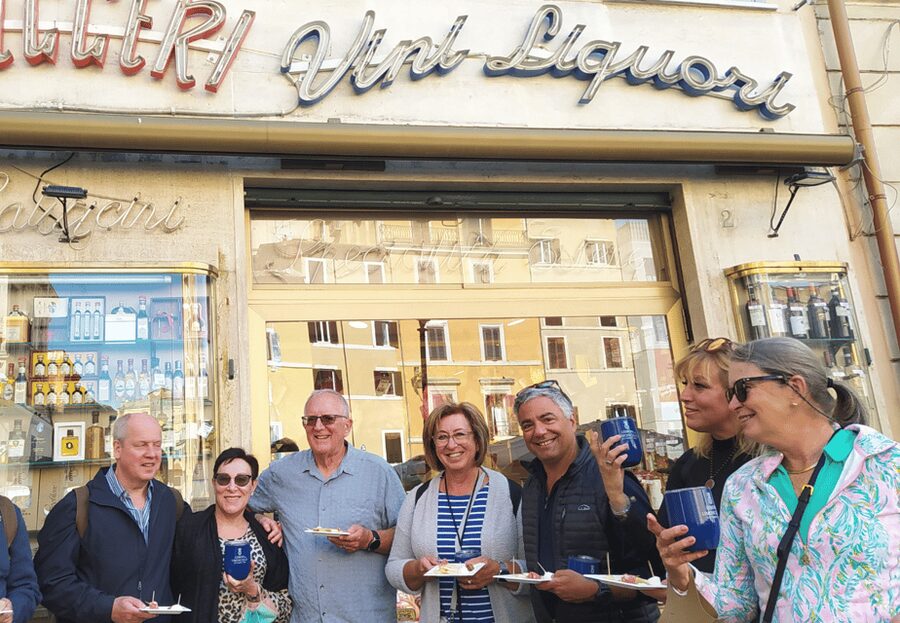
The route continues into Trastevere, where the food stops include pasta and gelato. The neighborhood’s narrow streets and flower-strewn lanes make the walk feel different from Campo de’ Fiori’s market setting and the Jewish Ghetto’s more concentrated historical character.
The pasta tasting focuses on what separates good pasta from the rest. You learn about texture, preparation, and the standards that matter when choosing a plate in Rome. The details are practical. After the tour, you should have a better sense of why some pasta dishes feel carefully made while others are merely convenient.
The guide also introduces food shops and restaurants in Trastevere. These are useful addresses to mark on your map if you want to return later. Several people who took the tour saved stops for another meal, which is one of the clearest signs that the route offers more than one bite at each location.
The final gelato tasting is a smart finish. After salty snacks, fried food, cheese, cured meat, and pasta, a cold scoop provides a clean ending. The focus is on gourmet gelato, and the guide explains what to look for when choosing a good gelateria.
You may hear tips about color, display, and flavor while standing in front of the gelato counter. Those lessons can help you avoid choosing by appearance alone. As with the pasta stop, the practical value continues after the tour ends.
What the guides add to the food
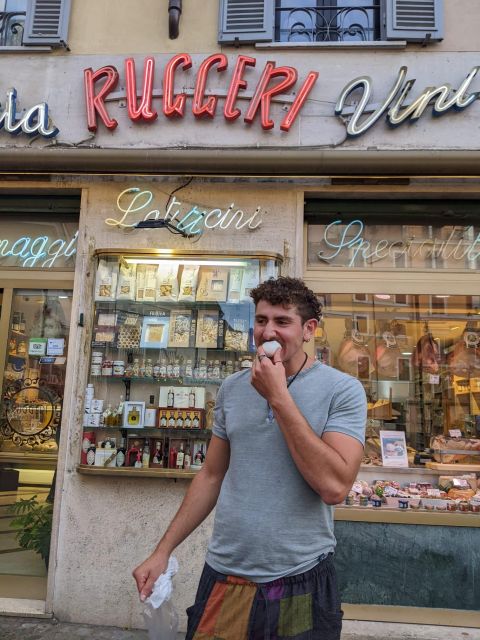
The guide is the key variable in any walking tour. This experience uses English-speaking food guides, and the named guides include Natasha, Lisa, Mariel, Gloria, Valeria, Federica, Anastasia, Chiara, and others.
The strongest guiding style here combines food knowledge with neighborhood context. Natasha, for example, is praised for explaining recipes, Roman customs, and the city’s past while keeping the pace comfortable. Lisa is described as warm and attentive, with a strong grasp of both food and local history. Mariel is praised for knowing the restaurants and shops well and for making sure the group stayed involved.
Those details matter because food tours can easily become a string of unconnected samples. A good guide explains why you are eating a particular dish in a particular place. The best moments come when the guide links the snack to Roman habits, neighborhood identity, or the way locals shop.
The tour also leaves room for questions. You can ask how to order, what to look for in a pasta dish, or where to return for another meal. That personal advice is one reason I would schedule this early in a Roman holiday rather than on the last afternoon.
How much food do you get for $81?
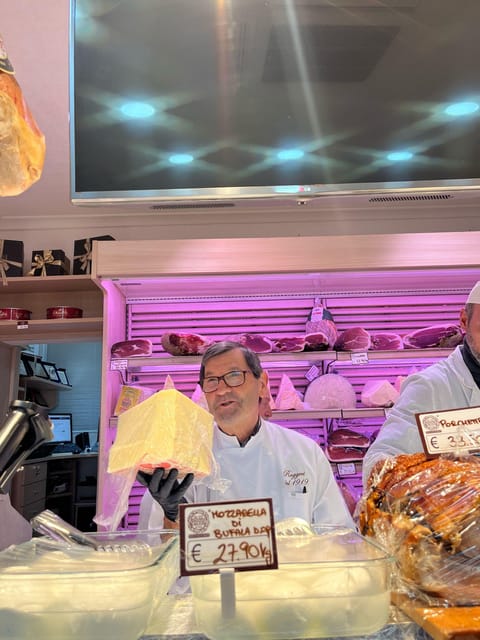
At $81 per person, this is not the cheapest way to grab lunch in Rome. You are paying for a guided walk, several tastings, neighborhood interpretation, and the convenience of having the food stops arranged for you.
The included tastings are broad:
- Pizza bianca with mortadella
- Mozzarella and Roman salami
- Supplì
- Fried artichoke
- Fried codfish
- Pasta
- Wine
- Gelato
- Market or grocery-shop food experiences, depending on the time
That is enough variety to make the tour feel like a meal, not a sample of one specialty. Many people finish full, and one practical tip comes up again and again in the tour advice: do not plan a large breakfast beforehand.
The value is strongest if you want orientation as well as food. A self-guided visit could cost less, but you would need to find the shops, choose what to order, understand the dishes, and connect the neighborhoods yourself. At $81, the tour makes sense for first-time visitors, solo visitors, and anyone who prefers a planned introduction to Roman eating.
Additional food is not included. You may want to return to one of the stops later, but budget separately for anything beyond the listed tastings.
Walking conditions, timing, and what to bring
The route is a walking tour through central Rome. Comfortable shoes are essential. You should also carry sunglasses, a sun hat, sunscreen, and an umbrella, since the tour operates in all weather.
Large bags and luggage are not allowed. That is worth taking seriously if you are arriving directly from a train station or preparing to leave Rome. Arrange to travel light for the walk.
Summer heat can make any food tour harder, especially when fried tastings and a full sequence of stops are involved. The tour has operated successfully in hot weather, but you will be more comfortable with sun protection and water.
The route is not suitable for wheelchair users. It is also not suitable for vegans or people with food allergies, and the provider cannot guarantee arrangements for special food restrictions. Vegetarians may be accommodated in some cases, but you should ask before booking rather than assume every tasting can be changed.
The meeting point varies with the option selected. Check the exact meeting point and departure time after choosing morning or afternoon, since the market schedule affects the route.
Who will enjoy this Roman food walk most?
I would choose this tour if you want to sample many Roman specialties without spending several meals guessing what to order. It is also a good match if you enjoy walking, asking questions, and learning how food fits into the life of a city.
Solo visitors can benefit from the small group and easy social setting. Couples and families can use the tour to find restaurants for later meals. It also suits people who have already seen the Colosseum and major monuments and want a closer look at ordinary Roman pleasures.
The tour is less suitable if you want a long, relaxed meal at one restaurant. The food comes in stages as you move through the neighborhoods, so the experience feels active rather than formal.
It is also not the right choice for strict dietary needs. The fried and meat-based tastings are central to the program, and the provider gives no guarantee for allergies. Vegans should choose a different activity.
Is this tour worth booking?
I would book this tour for the first or second day of a Rome visit, preferably in the morning if you want Campo de’ Fiori Market. It gives you a working introduction to Roman food, three appealing neighborhoods, and a list of places to revisit.
Book it if you like a generous tasting menu, local stories, and a guide who can answer practical questions. Skip it if you need wheelchair access, require guaranteed allergy accommodations, follow a vegan diet, or would rather spend $81 on one long restaurant meal.
For most food-focused visitors, the combination of supplì, pizza bianca, pasta, fried artichoke, wine, and gelato makes the price reasonable. The best value is not just the food you eat during the walk. It is knowing what to order for the rest of your time in Rome.
FAQ
How long does the Rome food and wine tour last?
The tour lasts between two and three and a half hours, depending on the option booked. Check the available starting times when selecting your date.
How much does the tour cost?
The listed price is $81 per person.
Which neighborhoods does the tour visit?
The route visits Campo de’ Fiori, the Jewish Ghetto, and Trastevere.
Does the tour include Campo de’ Fiori Market?
The morning option includes a visit to Campo de’ Fiori Market. The afternoon option does not include the market because of its opening hours, and substitutes a typical grocery store visit and aperitif.
What food is included?
Included tastings are pizza bianca with mortadella, mozzarella with Roman salami, fried artichoke, supplì, codfish, pasta, wine, and gourmet gelato. Additional food is not included.
Is the tour conducted in English?
Yes. The tour has a live English-speaking guide.
Is the tour suitable for vegetarians?
The provider cannot guarantee accommodations for special food restrictions. Some vegetarian visitors have been accommodated, but you should confirm your needs before booking.
Can vegans join the tour?
No. The activity is listed as unsuitable for vegans.
Can people with food allergies or wheelchair users take the tour?
The activity is not suitable for people with food allergies or wheelchair users. The provider cannot guarantee accommodations for special food restrictions.
Fresh on the Rome list
- Rome: Guided Catacombs Tour & Capuchin Crypt (Audio Guide)★ 4.3 · 191 reviews
- Guided tour of the Colosseum, Roman Forum and Palatine in Spanish★ 4.5 · 191 reviews
- Rome: Borghese Gallery Guided Tour with Skip-the-Line Ticket★ 4.5 · 192 reviews
- Rome: Arena Colosseum Tour with Arena Access★ 4.6 · 193 reviews
- Colosseum, Forum, Palatine Hill with audio guide and Arena or Bus option★ 4.0 · 193 reviews
- Rome: Colosseum & Roman Forum Guided Tour★ 5.0 · 194 reviews
- Rome: Domus Aurea Guided Tour and Virtual Reality Experience★ 4.7 · 194 reviews
- Rome Vintage Fiat 500 car Tour With Photographer★ 5.0 · 194 reviews
Wine Tastings, compared.
Tuscany Day Trip from Florence: Siena, San Gimignano, Pisa and Lunch at a Winery
Read our review →
Pisa, Siena, San Gimignano, and Chianti Experience
Read our review →
Small-Group Wine Tasting Experience in the Tuscan Countryside
Read our review →
Tuscany & Montepulciano Day Trip with Lunch & Wine Tasting
Read our review →
SMALL-GROUP Wine Safaris: Tuscan Wine Tasting Tours from Florence
Read our review →
Winner 2025 Florence Sunset Food & Wine Tour by Eating Europe
Read our review →
Siena, San Gimignano, Pisa & Lunch at Winery
Read our review →Browse the lists this tour appears in