
Reviewed · MUSEUMS
Rome: Borghese Gallery Guided Tour with Skip-the-Line Entry
The Borghese Gallery packs an astonishing amount of art into a short visit. In about two hours, you can stand inches from Bernini’s Apollo and Daphne, study Caravaggio’s dramatic faces, and see how one powerful Roman family used art to build status. Bernini and Caravaggio are the stars, but the setting makes the whole visit feel special.
I like the small-group format, which makes it easier to hear the guide and ask questions. I also like the skip-the-ticket-line entry, especially since the gallery can sell out. The main catch is that $83 is a serious price for a 1.5 to 2-hour museum visit, and some rooms may be closed during restoration work.
Key points to know before you book
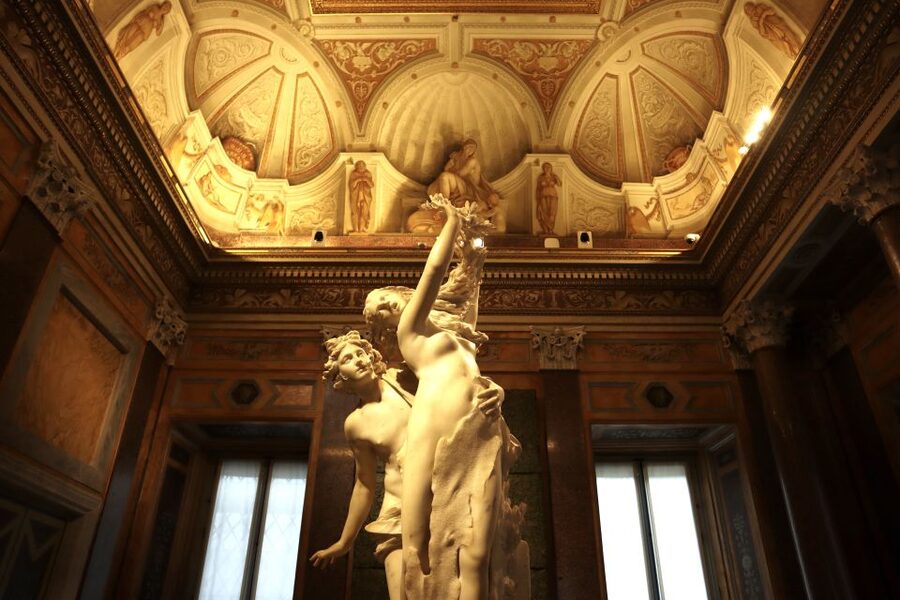
- Bernini’s Apollo and Daphne is the emotional high point, with a guide explaining the myth and the remarkable details visible from different angles.
- Caravaggio’s Young Sick Bacchus and Boy with a Basket of Fruit show the painter’s unusual use of light, realism, and human flaws.
- Small groups make the commentary personal, and guides including Martina, Alessandra, Sabrina, and Sylvia are praised for lively storytelling.
- Skip-the-ticket-line entry matters, because regular admission may be sold out when you try to arrange it on your own.
- The tour lasts roughly two hours, with about 20 rooms and a strong focus on the best-known works.
- Plan your arrival carefully: meet in front of the gallery entrance at least 15 minutes early, and bring comfortable shoes.
Why the Borghese Gallery is worth your Rome time
Rome has no shortage of famous sights, but the Borghese Gallery offers something different. Instead of a huge museum spread across endless corridors, you get a focused collection inside a former villa. The visit is compact, grand, and packed with major works.
The gallery is especially rewarding if you want to understand Baroque art rather than simply snap photos of it. Bernini’s sculptures are not meant to be viewed from one fixed spot. Their expressions, folds, muscles, and movement change as you walk around them. A good guide points out these details before you hurry past.
The collection also tells the story of the Borghese family. Art here was not only decoration. It helped display wealth, taste, power, and connections. A guide can tie the paintings and sculpture to the family’s ambitions, giving the rooms a social and political setting.
That context is where this tour earns its keep. You could enter on your own and admire the marble, gold, and painted ceilings. But you might miss why a particular gesture matters, how an artist changed over time, or what made a work daring in its period.
More Museums in Rome
- Vatican Museums & Sistine Chapel Tour with Optional Basilica
★ 4.3 · 67,413 reviews - Vatican Museums, Sistine Chapel & St Peter’s Basilica Guided Tour
★ 4.5 · 39,149 reviews - Rome: Vatican Museums, Sistine Chapel & Basilica Tour
★ 4.3 · 13,872 reviews
Meeting at Piazzale del Museo Borghese
You meet the guide in front of the Borghese Gallery entrance at Piazzale del Museo Borghese. Look for a sign bearing the Doooing Experience logo.
Allow extra time to reach the meeting point. The late-arrival policy is strict: if you arrive late, you may not be admitted and you will not receive a refund. Getting there at least 15 minutes before the scheduled start is not a suggestion I would ignore.
The meeting point detail matters because a museum entrance can be confusing in a busy city. Keep your confirmation handy and look for the agency sign rather than simply waiting near the first doorway you see.
The tour is offered in English with a live guide. Headsets are included if needed, which can help if the group is spread out in a large room or if the gallery is crowded.
Inside the villa: twenty rooms, carefully chosen masterpieces
Once inside, the guide leads you through roughly 20 rooms. The exact route can change because of special events or refurbishment, but the visit is built around the gallery’s major paintings and sculptures.
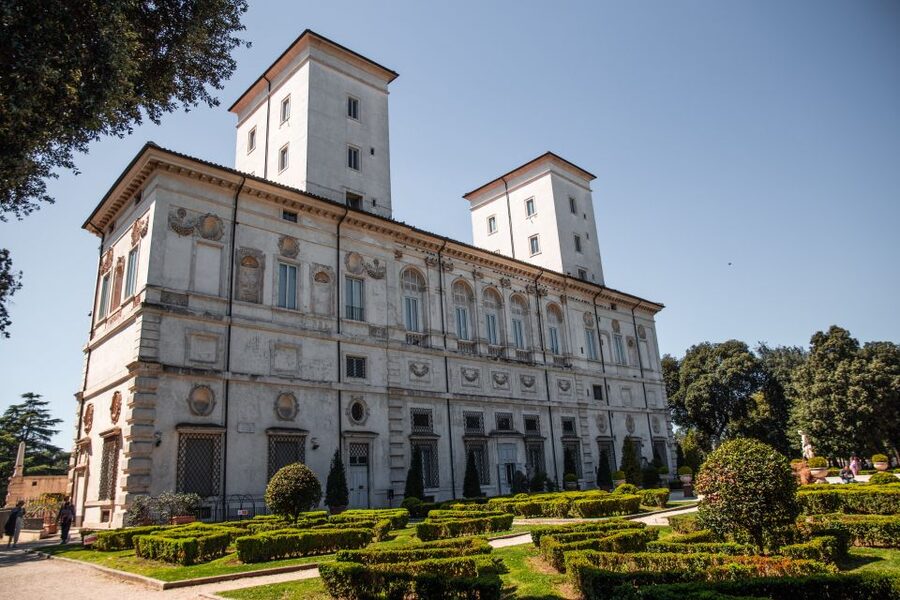
The first impression is often architectural. The villa itself frames the collection with grand rooms, decorative surfaces, and a sense of private wealth. You are not walking into a plain white-walled art space. The building and its contents were designed to impress together.
A two-hour visit cannot cover every object in equal detail. That is a good thing. The gallery rewards close attention, and trying to hear a full lecture on every painting would turn a lively visit into an exhausting catalog. The guide’s job is to select the works that best explain the collection and its artists.
Many guides arrange the story in a clear sequence. One particularly useful approach is to follow Bernini’s development from early work to more active and emotionally charged sculpture. This lets you see artistic growth instead of treating each statue as an isolated masterpiece.
The pace is focused. You will spend more time looking at the important pieces than wandering without direction, but you should not expect a leisurely morning to sketch every room. If you are a serious art student, you may want a separate return visit, if gallery access allows it.
Bernini’s Apollo and Daphne steals the show
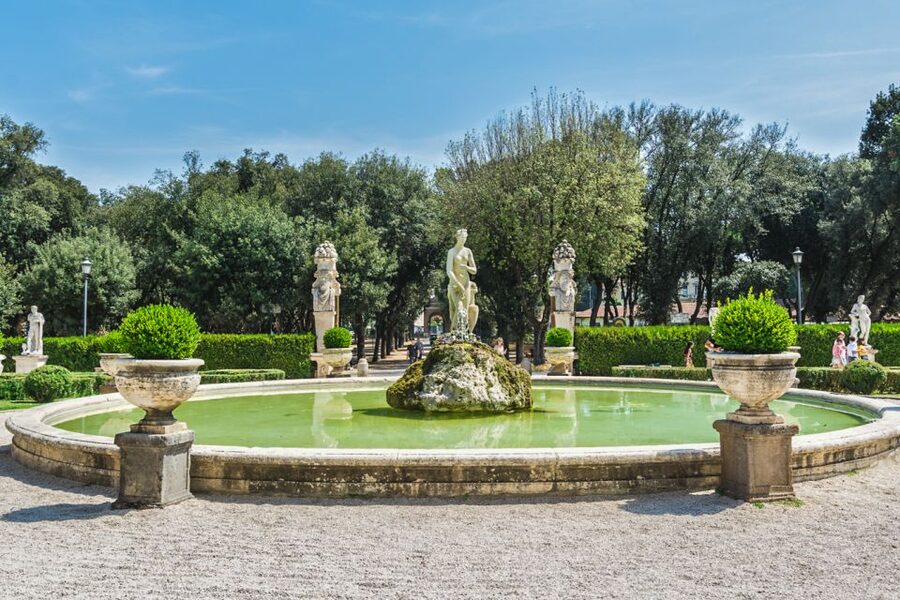
Apollo and Daphne is the work most likely to stay in your mind after you leave. The sculpture shows the moment from classical mythology when Daphne transforms into a laurel tree while fleeing Apollo.
Bernini turns a violent and desperate story into a scene full of motion. Daphne’s fingers become branches, her hair seems to trail behind her, and roots begin to form at her feet. Apollo reaches toward her, but the escape is already underway.
Walk around it slowly. From different angles, the sculpture reveals changing expressions and details that are easy to miss from the front. A guide can explain how Bernini uses marble to suggest soft skin, flowing hair, bark, and fabric.
This is also a good example of why a guided visit helps. Without context, you may see a beautiful statue of two figures. With the story and visual clues in mind, you can follow the transformation and understand the tension between the figures.
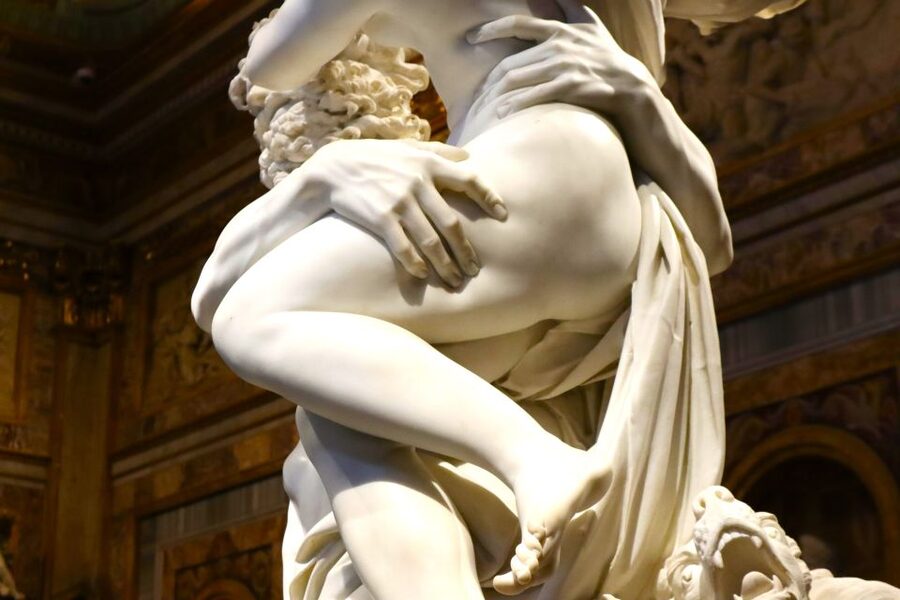
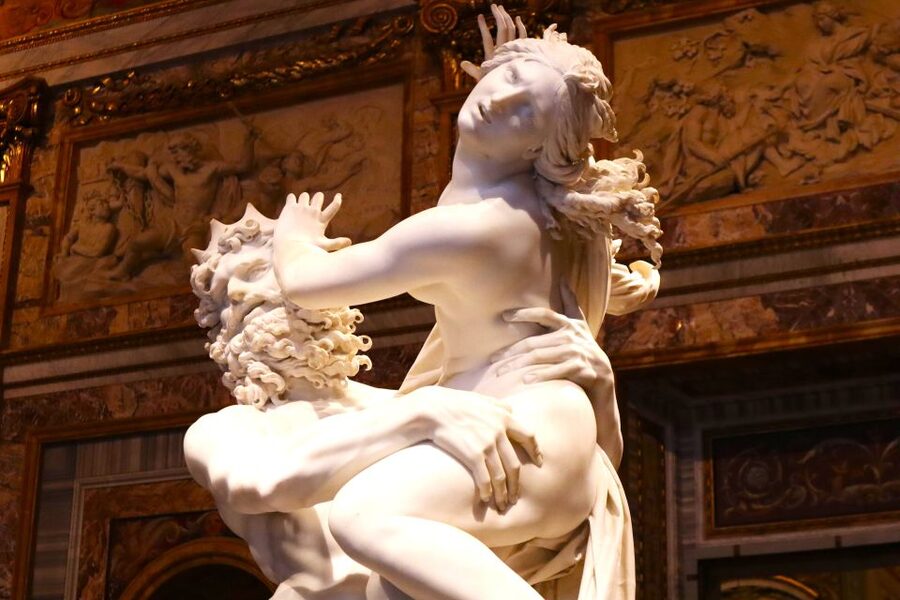
The gallery also displays Bernini’s Rape of Proserpine, another work that depends on close looking. The famous detail is Pluto’s hand pressing into Proserpine’s thigh, making hard marble seem soft. The sculpture’s subject is troubling, and a thoughtful guide can address both its technical brilliance and the darker story it depicts.
More Skip-the-Line Tickets in Rome
- Vatican Museums & Sistine Chapel Skip-the-Line Entry Ticket
★ 4.4 · 13,838 reviews - Skip-the-Line Group Tour of the Vatican, Sistine Chapel & St. Peter’s Basilica
★ 4.5 · 12,779 reviews - Vatican, Sistine Chapel & St. Peter’s Skip-the-Line Tour
★ 4.5 · 7,770 reviews - Skip-the-Line Vatican, Sistine Chapel & St. Peter’s | Small Group
★ 5.0 · 7,060 reviews
Caravaggio’s paintings bring ordinary faces into grand art

The Caravaggio paintings give the tour a different mood. His Young Sick Bacchus and Boy with a Basket of Fruit use ordinary-looking young men rather than idealized figures. Their faces, skin, and expressions feel close to real life.
In Young Sick Bacchus, the figure does not look like a flawless pagan god. He appears pale and tired, which makes the painting feel oddly personal. The guide can point out how this realism changes your response to a subject borrowed from classical mythology.
Boy with a Basket of Fruit is famous for its texture and sensual detail. Look at the fruit, leaves, skin, and fabric. Caravaggio makes these things feel immediate, but the image also carries a slightly uneasy mood beneath its beauty.
Caravaggio’s use of light is central. Bright faces and objects emerge from dark backgrounds, guiding your eye with force. A guide who asks you to notice where the light lands can change the way you look at the entire gallery.
The best commentary does not stop at dates and names. It explains what to look for, then gives you a moment to see it yourself. That approach has worked well for people who do not normally consider themselves museum enthusiasts.
Canova, Raphael, and the broader collection
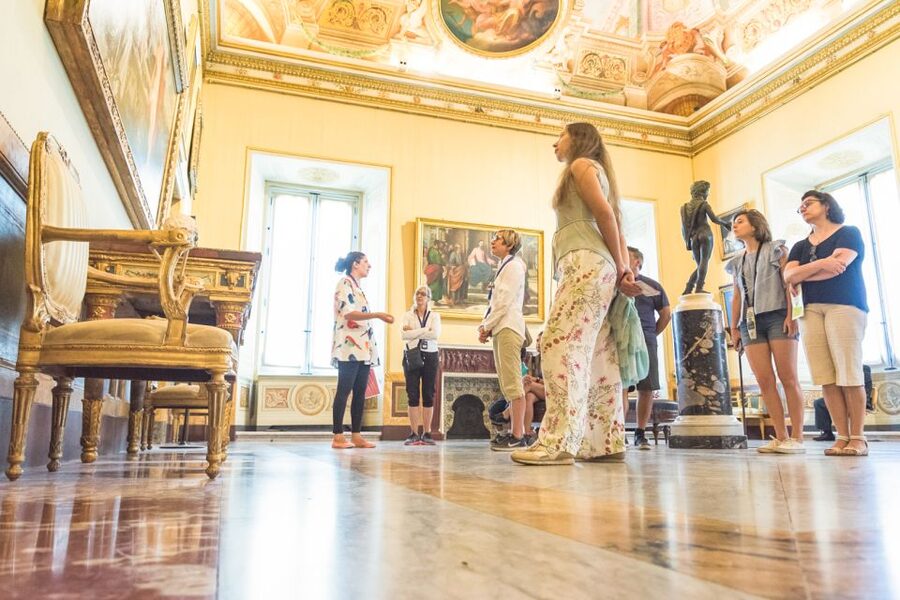
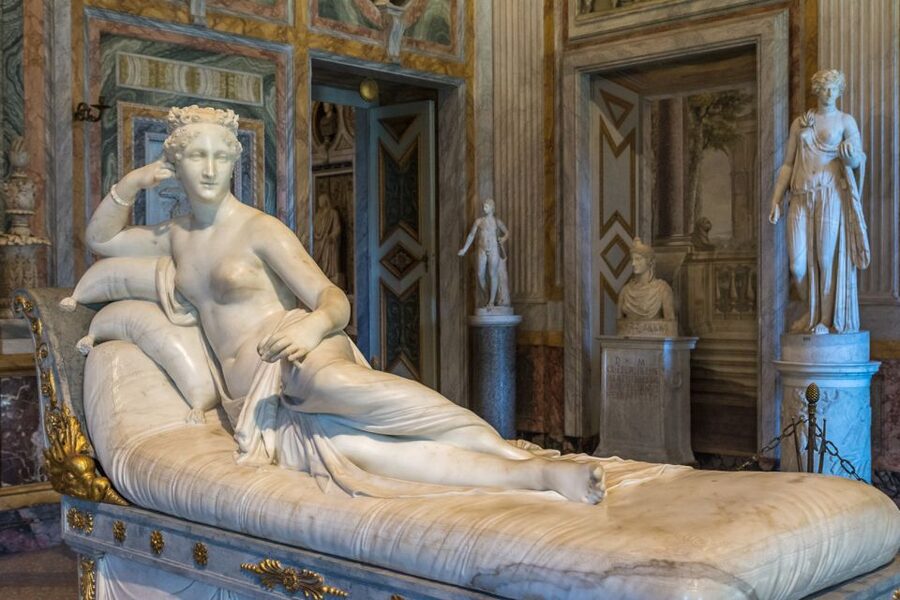
Bernini receives much of the attention, but the gallery is not only a Baroque sculpture museum. Canova’s work adds a smoother, more polished style, while Raphael represents an earlier tradition of Italian painting.
Seeing these artists together gives you useful contrast. Bernini’s sculpture often seems caught in a split second of action. Canova’s figures can feel more controlled and idealized. Raphael’s paintings invite a different kind of attention, with composition, balance, and refined figures guiding the eye.
A guide can make these differences easier to see by placing works in artistic and historical order. You do not need a background in art history. Basic ideas such as movement, light, realism, myth, and ideal beauty are enough to begin.
The gallery also includes early Bernini works such as Goat Amalthea with Infant Jupiter and Faun. Placing this beside his later sculpture helps you follow his progress. You can see an artist testing materials and subjects before reaching the dramatic confidence of Apollo and Daphne.
That chronological approach is one of the tour’s most useful features. It turns a collection of famous objects into a story about changing skill and ambition.
What the guides add to the visit
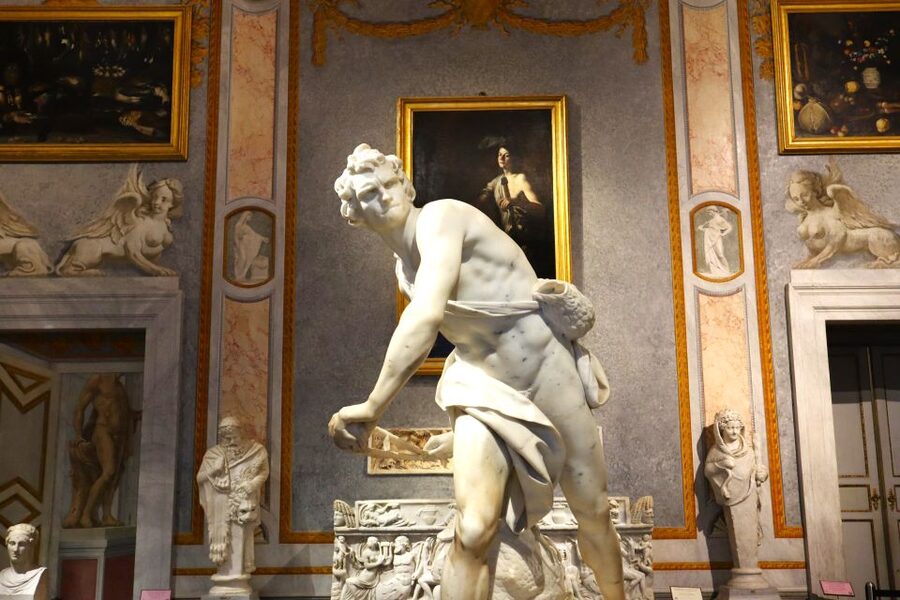
The strongest part of this experience is the guiding. Several guides are singled out for different strengths, so your exact experience depends on who leads your group.
Martina is praised for combining art history with stories about the artists’ lives. She has also been described as interactive, asking questions and inviting the group to interpret what it sees. Alessandra is noted for clear organization, humor, and enthusiasm, with a strong focus on the Borghese family as well as the art.
Sabrina is known for a friendly, engaging style, while Sylvia is praised for making anecdotes bring the paintings and sculptures to life. Other guides, including Monica, Francesca, and Alex, have also been described as warm, clear, and attentive.
The common thread is not a memorized list of facts. The best guides explain what to look at and why it matters. They may point out a hand, a fold of cloth, a ray of light, or a facial expression, then connect that detail to the artist’s larger purpose.
I particularly value the interactive approach for families and first-time museum visitors. You are less likely to drift away mentally when the guide asks you to make an observation or compare two works.
The tour may sometimes proceed even with only one participant. That is not guaranteed as a private tour, but it suggests the operator can be flexible with very small groups. Group size can vary, so check the booking details for your date.
Is $83 a fair price?
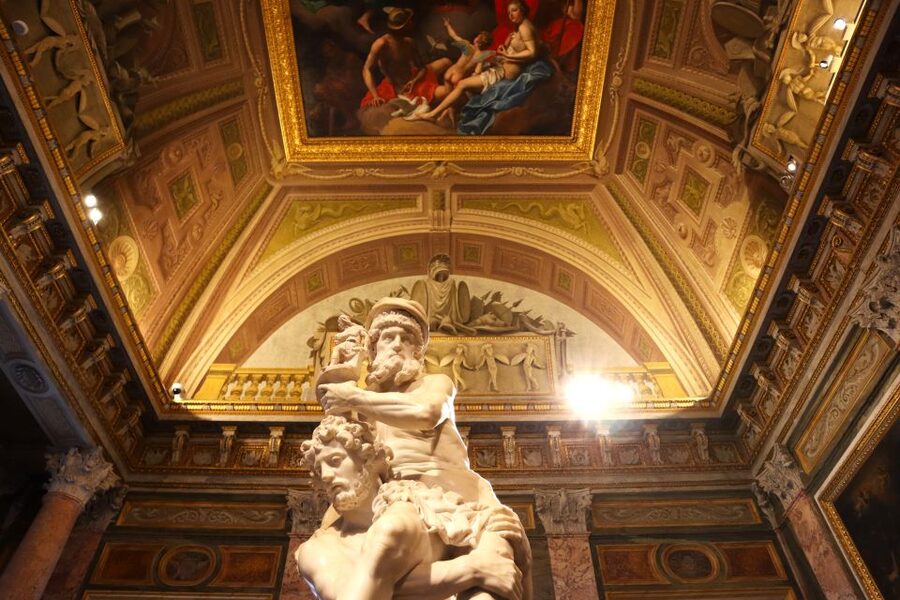
At $83 per person, this is not the cheapest way to enter the Borghese Gallery. You are paying for more than admission: the entrance fee, skip-the-ticket-line access, a live English-speaking guide, and a small-group format are included.
The value depends on your priorities. If you already know Baroque art and enjoy studying labels at your own pace, a standard ticket may suit you better, assuming you can secure one. If you have limited time in Rome or want the art explained in plain language, the guided option is easier to justify.
The gallery is a place where a guide can make a major difference. Bernini’s sculptures are technically astonishing, but their stories and details can be missed in a quick self-guided walk. Caravaggio’s lighting also becomes more meaningful when someone directs your eye.
Skip-the-line entry is another practical part of the price. It does not mean you should arrive late or ignore normal entry procedures, but it can save you the frustration of trying to find a ticket after the gallery has filled its available places.
I would consider the cost worthwhile for a first visit, especially if this is your main museum experience in Rome. For a repeat visit, an unguided ticket might offer better value if you can get one and want more time with selected works.
Timing, bags, and practical limits
Wear comfortable shoes. The tour lasts 1.5 to 2 hours, and you will be standing and walking through several rooms while keeping pace with the group.
Food and drinks are not allowed. Large bags, backpacks, and luggage are also not allowed, so do not arrive with your full day pack or rolling suitcase. The supplied information does not promise storage arrangements, so travel light.
The tour is not suitable for wheelchair users. If accessibility is important for your group, contact the provider before booking rather than assuming the route will work for you.
Gallery hours can change for special events. Some rooms may also be closed because of refurbishment, and restoration work connected with the Jubilee may affect monuments and access routes. Check your messages before the visit for any updates.
These changes do not necessarily ruin the experience, but they can alter the route and reduce access to selected rooms. If one particular artwork is the main reason you are booking, confirm its availability as close to the date as possible.
Free cancellation is available up to 24 hours before the scheduled visit, and you can reserve now and pay later. Those options help if your Rome plans are still shifting, but the late-arrival rule remains strict.
Who will enjoy this Borghese tour most?
I would recommend this experience to first-time visitors, couples, families with older children, and anyone who wants an art museum to feel more approachable. It is especially useful if the names Bernini, Caravaggio, Canova, and Raphael sound familiar but you would like help connecting them to the works in front of you.
It also suits people with only a few days in Rome. The compact length gives you room to visit the surrounding Villa Borghese park afterward. One easy way to use the morning is to tour the gallery, then spend time outdoors on the villa grounds.
Art specialists may find the tour too selective. You will not get equal attention for every room, and the commentary centers on major works rather than a full scholarly treatment of the collection.
The format is also less suitable if you dislike group pacing. You can ask questions, but you will still move with the guide and other participants. Visitors who prefer silence and long, private looking sessions may prefer a self-guided visit.
Should you book the Borghese Gallery guided tour?
Book it if you want expert interpretation without spending a full day in a museum. The combination of Bernini, Caravaggio, Canova, and Raphael is strong, and the guide helps you notice why the works matter instead of simply checking famous names off a list.
The $83 cost is easier to defend when tickets are scarce, your Rome schedule is tight, or art history is not your strong point. Skip-the-ticket-line access and a small group remove two common sources of museum frustration.
Think twice if you are on a very tight budget, need wheelchair access, or want to explore every room at your own speed. Also check for refurbishment notices before you commit.
For most first-time visitors, I would choose the guided tour. Two hours passes quickly here, and a good guide such as Martina, Alessandra, Sabrina, or Sylvia can turn a beautiful collection into a story you will remember.
FAQ
Where does the Borghese Gallery tour meet?
Meet the guide in front of the Borghese Gallery entrance at Piazzale del Museo Borghese. The guide will hold a sign with the Doooing Experience logo.
How long does the tour last?
The activity lasts about 1.5 to 2 hours. The guided gallery visit itself is listed as approximately two hours.
What language is the tour offered in?
The tour is offered in English with a live guide.
Is this a small-group tour?
Yes. A small-group format is available, although the exact group size is not stated.
Does the tour include gallery admission?
Yes. Entrance fees and the Borghese Gallery guided tour are included.
Does the tour include skip-the-line entry?
Yes. Skip-the-ticket-line entry is included.
Are headsets provided?
Headsets are provided if needed.
Can I bring food, drinks, or a backpack?
No. Food, drinks, luggage, large bags, backpacks, and bags are not allowed.
Is the tour suitable for wheelchair users?
No. The activity is listed as unsuitable for wheelchair users.
What happens if I arrive late?
Late arrivals will not be accommodated or refunded. Arrive at least 15 minutes before the scheduled departure time.
Can I cancel the booking?
You can cancel up to 24 hours in advance for a full refund. Reserve-now, pay-later booking is also available.
Fresh on the Rome list
- Exclusive Golf Tour Private VIP with Local & Gelato o Wine★ 5.0 · 500 reviews
- Colosseum, Palatine Hill and Roman Forum with Guided Tour★ 5.0 · 500 reviews
- Rome Trastevere Pasta Making Class with Eating Europe★ 5.0 · 505 reviews
- Rome by Night Walking Tour★ 4.5 · 506 reviews
- Rome: Colosseum Express Tour with Forum & Palatine Access★ 4.5 · 511 reviews
- Rome Food Experience Max 6 People Group Tour | w/Private Option★ 5.0 · 516 reviews
- Rome: Navona Square Underground Ticket with Audio Guide★ 4.0 · 518 reviews
- Rome: Escorted Papal Audience Experience with Entry Ticket★ 4.4 · 518 reviews
Museums, compared.
Vatican: Museums & Sistine Chapel Entrance Ticket
Read our review →
Vatican Museums & Sistine Chapel Tour with Optional Basilica
Read our review →
Vatican Museums, Sistine Chapel & St Peter’s Basilica Guided Tour
Read our review →
Skip-The-Line Uffizi Gallery Timed Entry Ticket
Read our review →
Vatican Museums, Sistine Chapel & Basilica Tour
Read our review →
Vatican Museums & Sistine Chapel Skip-the-Line Entry Ticket
Read our review →Vatican Museums, Sistine Chapel & Basilica Tour
Read our review →
Vatican Museums & Sistine Chapel Guided Tour
Read our review →Browse the lists this tour appears in