
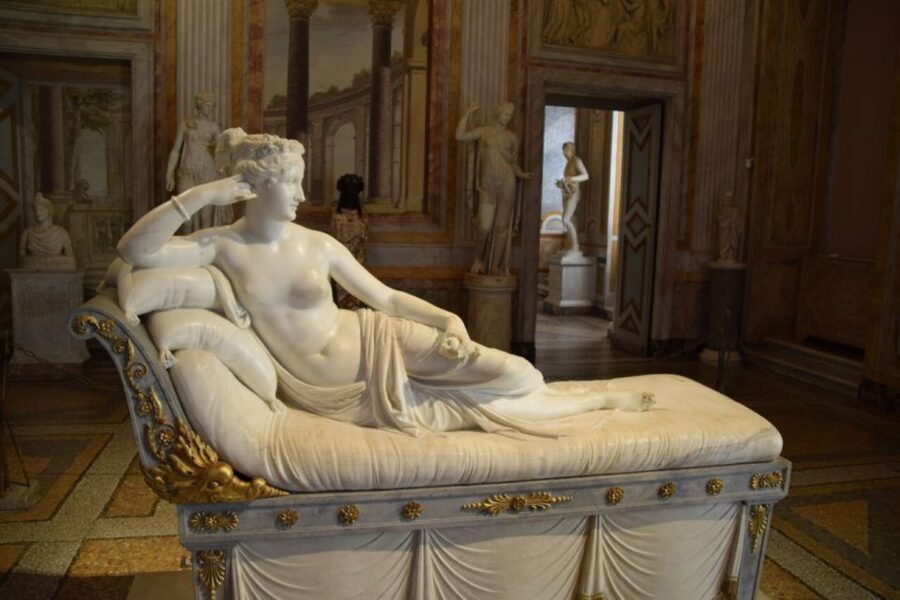
Reviewed · MUSEUMS
Rome: Borghese Gallery Guided Tour with Tickets
The Borghese Gallery gives you a rare kind of museum visit: great art in a small, richly decorated villa, not a giant hall where masterpieces blur together. In two hours, an art historian leads you from Bernini’s marble drama to Caravaggio’s sharp light and shadow, with Raphael, Titian, Canova, Roman mosaics, and painted ceilings along the way.
I especially like the reserved entry and small-group format, which save time and make it easier to hear the guide. I also like the storytelling. Guides such as Henry, Victoria, Federica, Irene, and Gaga have earned praise for explaining not only what you are seeing, but how the artists worked and why the Borghese family collected these pieces. The main drawback is time: two hours goes quickly, and the commentary can feel rushed when there is a great deal to cover.
Key points to know before you go
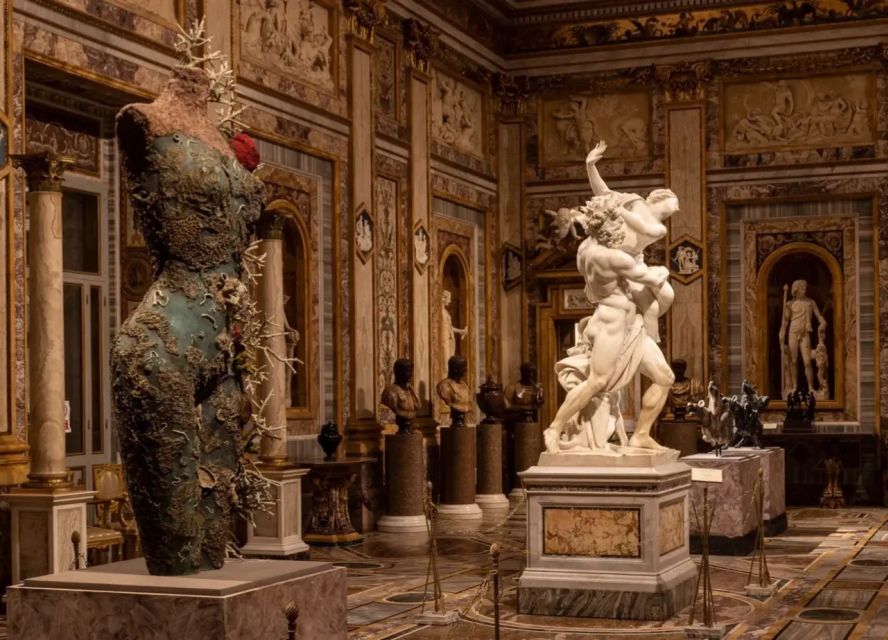
- Bernini gets the spotlight: Apollo and Daphne shows marble transformed into movement, emotion, and theatrical action.
- Caravaggio’s paintings are unusually well represented: The gallery holds the largest gathering of his works in one collection.
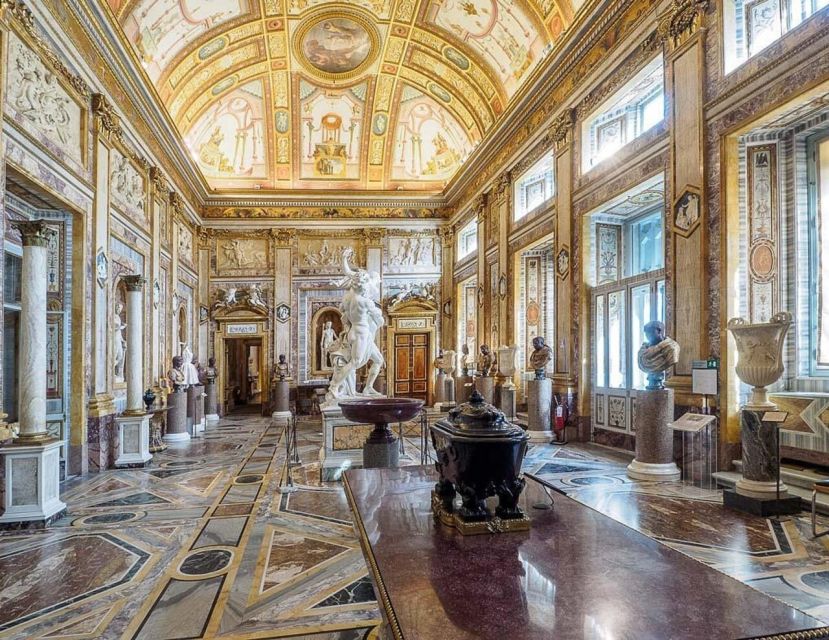
- The villa is part of the attraction: Floor mosaics, hand-painted frescoes, and decorated rooms frame the art.
- Small groups improve the experience: You get a better chance to hear the guide and ask questions.
- Headsets are provided: Radios and earpieces help you follow commentary in busy rooms.
- Bring identification and pack light: A passport or ID card is required, and larger bags go into the free cloakroom.
Why the Borghese Gallery feels different from Rome’s big museums
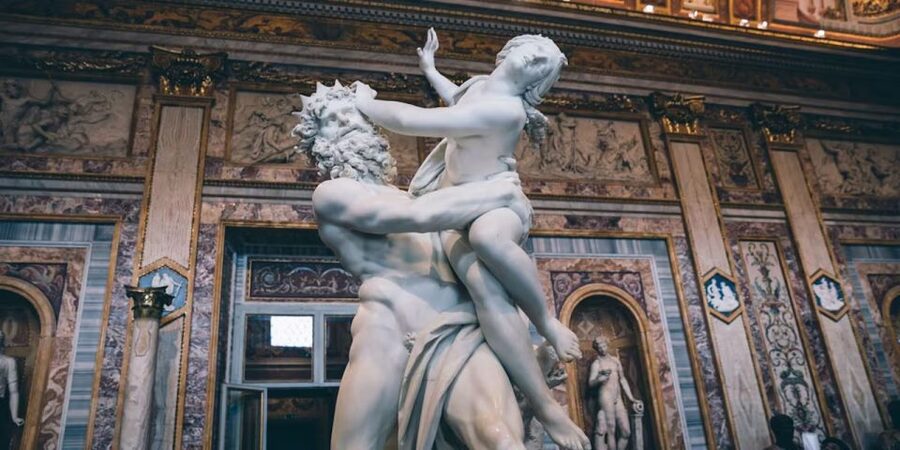
Rome has museums that can take half a day just to cross. The Borghese Gallery is more manageable, yet it does not feel thin or minor. The collection is packed into a former 17th-century villa, so the building, decoration, and art work together as one experience.
That setting matters. A sculpture by Bernini does not sit in a plain white box. It appears in a room with painted walls, patterned floors, and a sense of ceremony. You are looking at art in the kind of grand setting intended for powerful patrons, not simply in a modern display case.
The collection grew from Cardinal Scipione Borghese, an ambitious collector with a sharp eye for artists who were changing the course of European art. Your guide begins outside the villa by explaining his role, then connects the family’s collecting habits to the works you see inside.
I find that background useful because the gallery can otherwise feel like a beautiful but confusing procession of famous names. A good guide gives you a thread to follow: ancient Rome, the Renaissance, the Baroque, and the later sculptural tradition all meet under one roof.
More Museums in Rome
- Vatican Museums & Sistine Chapel Tour with Optional Basilica
★ 4.3 · 67,413 reviews - Vatican Museums, Sistine Chapel & St Peter’s Basilica Guided Tour
★ 4.5 · 39,149 reviews - Rome: Vatican Museums, Sistine Chapel & Basilica Tour
★ 4.3 · 13,872 reviews
Starting at Piazzale del Museo Borghese
You meet at one of two possible starting points, either the Fontana dei Mascheroni or Piazzale del Museo Borghese. The exact meeting place depends on the option you book, so check the booking details carefully before setting out.
The tour starts outside the grand villa. This is a good moment to get your bearings, meet the guide, and hear why the building became such an important home for the collection. Your guide may also explain the wider Borghese family story and how works came into the gallery.
The reserved ticket gives you priority access through the express security check. That does not mean you can ignore security rules. Small bags and purses are allowed, while larger bags and luggage must be left at the free cloakroom. Baby strollers, pets, weapons, sharp objects, alcohol, and drugs are not allowed.
Bring a passport or ID card. It is a small requirement, but forgetting it can turn an easy museum visit into a problem.
The ground-floor sculptures and Bernini’s marble theater
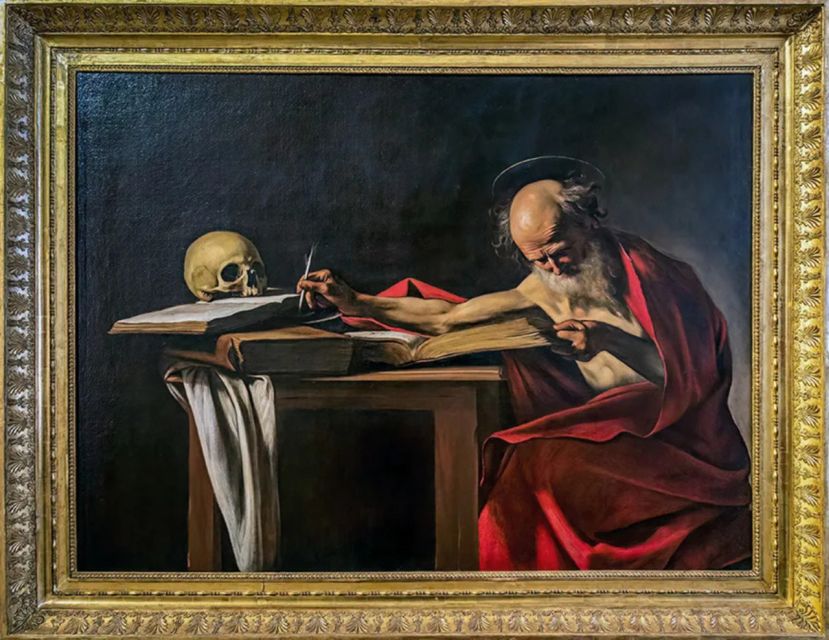
The first major section focuses on the ground-floor sculptures and lasts about 50 minutes. This is where the tour makes its strongest impression, especially if you are more interested in sculpture than painting.
Bernini’s Apollo and Daphne is the essential stop. The subject comes from classical mythology: Apollo pursues Daphne, who escapes by changing into a laurel tree. Bernini captures the instant of transformation. Daphne’s fingers turn into leaves, her hair streams upward, and the bark begins to climb her body.
Your guide can direct your attention to details that are easy to miss when you simply walk around the sculpture. Marble appears soft in one place and rough in another. Hair, leaves, skin, and tree bark seem to have different textures, even though the artist worked with one hard block of stone.
This is also a good place to think about the Baroque style. The sculpture is not meant to be viewed from one fixed front angle. You move around it, and the story unfolds as the viewpoint changes. The figure reaches outward, creating a sense of action that feels almost impossible for marble.
Other sculptures by Bernini and works by Canova help show how artists handled the human body, emotion, and movement in different periods. Your guide’s job is not just to name the artist. It is to point out the choices that make one work feel calm, another tense, and another almost theatrical.
The ground floor also contains Roman mosaics and lavish architectural details. Look down as well as up. The floors are part of the experience, and the frescoed rooms create a visual setting that can compete with the objects on display.
Caravaggio’s room, where light carries the story
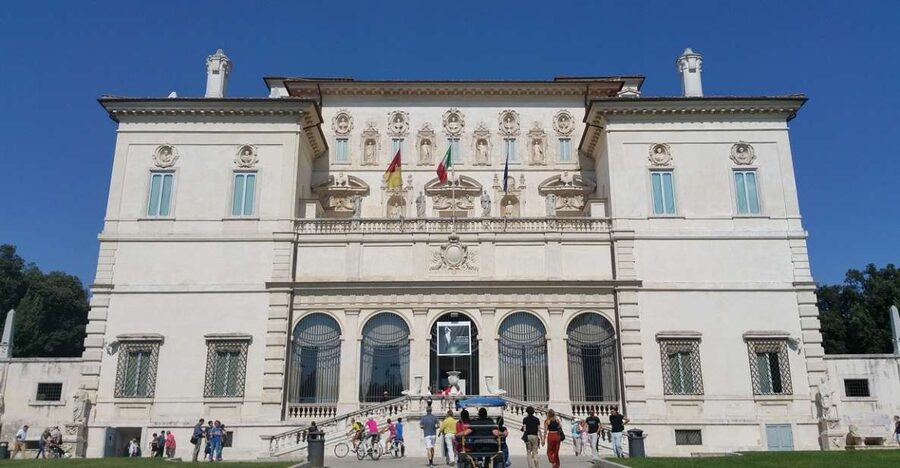
The Caravaggio section is one of the tour’s great rewards. The Borghese Gallery is known for having the largest gathering of Caravaggio’s works in a single collection, so this is not a quick appearance by one famous painting.
Two important works are David with the Head of Goliath and Boy with a Basket of Fruit. Caravaggio’s paintings can look simple at first glance, but the guide helps you read the drama in the light, expressions, and physical details.
In David with the Head of Goliath, the biblical story becomes a tense psychological scene. The strong contrast between darkness and light pulls your eye toward the faces and the severed head. The painting is not only about an act of victory. It carries sorrow, violence, and moral unease.
Boy with a Basket of Fruit brings you close to ordinary things: fruit, skin, leaves, and fabric. Caravaggio made these details feel immediate and physical. Your guide may draw attention to how the artist’s light creates volume and how his figures seem to occupy the same real space as the viewer.
This is where an art historian makes a practical difference. Without context, you may admire the paintings and move on. With a good explanation, you begin to see how Caravaggio used everyday faces and strong lighting to challenge the polished ideal often associated with earlier art.
The Caravaggio room can also be a useful pause after the excitement of the sculptures. Bernini creates movement through three-dimensional form. Caravaggio creates tension through a single frozen moment. Seeing both in the same visit makes the contrast clear.
Same city, an entirely different afternoon:
- Colosseum, Roman Forum & Palatine Guided Tour
★ 4.7 · 63,148 reviews - Rome: Colosseum, Palatine Hill and Roman Forum Guided Tour
★ 4.8 · 32,814 reviews - Rome: Guided Tour of Colosseum, Roman Forum & Palatine Hill
★ 4.7 · 27,897 reviews - Rome: Colosseum & Forum with Audio Guide App -Optional Arena
★ 4.2 · 24,770 reviews
Raphael, Titian, and the quieter side of the collection
The tour also brings you to Raphael and Titian, along with other works from the Renaissance and later periods. Raphael offers a calmer visual language than Bernini or Caravaggio. His compositions feel balanced, graceful, and controlled.
The guide can help you notice Raphael’s use of gesture, expression, and arrangement. These works reward a slower look, but the fixed two-hour schedule means you may not have much time to stand silently in front of each piece.
Titian adds another layer, especially through color and painterly handling. Canova, working much later, lets you compare the polish of neoclassical sculpture with Bernini’s restless Baroque energy. Seeing these artists together turns the gallery into a lesson in changing taste, technique, and artistic purpose.
One useful feature of this tour is the chance to ask questions. Several guides, including Victoria and Federica, have been praised for answering questions and placing paintings and sculptures in their proper period. If you are curious about restoration, lighting, or the way an artwork was made, ask. The strongest part of the experience is often the explanation that responds to your particular interest.
Frescoes, mosaics, and the villa itself
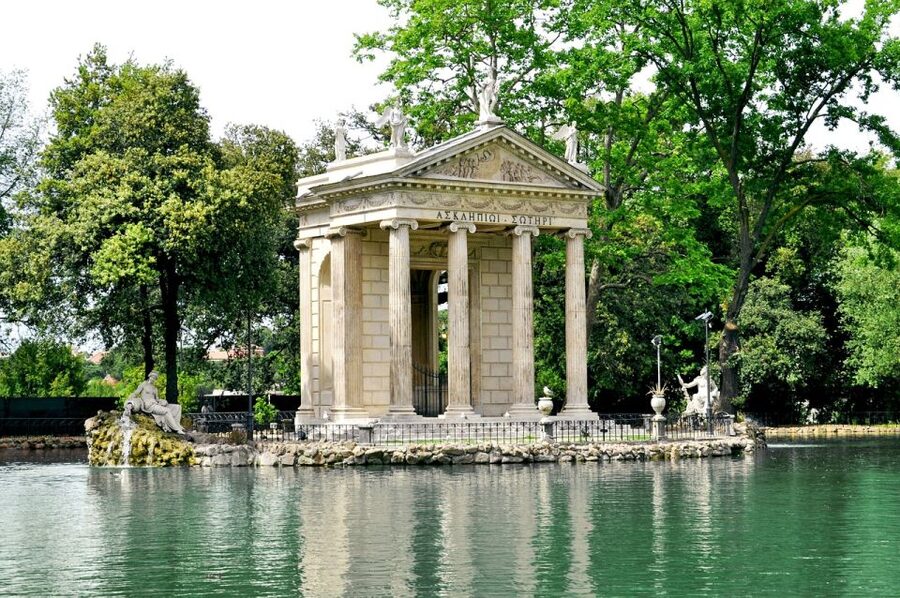
It is easy to focus only on famous names and forget the rooms around them. That would be a mistake. The Borghese Gallery includes detailed hand-painted frescoes, decorated walls, and Roman floor mosaics that help explain how the collection was meant to be experienced.
The architecture gives the art a particular mood. You are not moving through a neutral series of galleries. You are passing through a former villa designed to impress, and the decoration reinforces the power, wealth, and taste of the family behind the collection.
I recommend taking a moment between major works to look at the ceilings and floors. The guide will usually keep the group moving, but these details reward your attention. They also help explain why the visit can feel visually full even when you are not standing directly in front of a painting or sculpture.
Some rooms or works may be closed for restoration, and the route can change with current exhibitions. Do not treat the advertised order as a promise. The core collection remains the reason to come, but the exact path depends on what is open during your visit.
How the two-hour schedule works
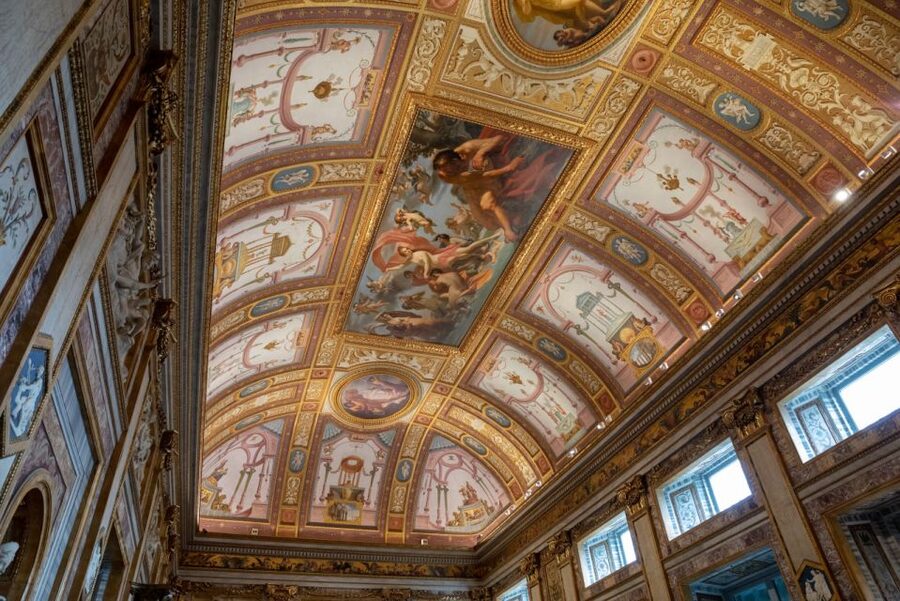
The listed itinerary breaks the visit into roughly 50 minutes of ground-floor sculpture commentary, 40 minutes through the gallery, and another 30 minutes focused on sculpture areas. In practice, this is a guided route through the villa rather than three completely separate stops.
That structure gives you a useful overview, but it also explains the most common limitation: there is more to see than the clock allows. One guide may spend longer on Bernini, another may give extra attention to Caravaggio or the family history. The route can also shift because of restoration or exhibition changes.
If you are new to art museums, this pace is helpful. You get a clear path and a short explanation of the major works instead of wandering without a plan. If you already know the gallery well, you may want to return on your own another time for a slower look.
An earlier time slot may help if you want to see more after the guided portion. The collection is large enough that one visit can feel like an introduction rather than a final word.
The guides are a major part of the value
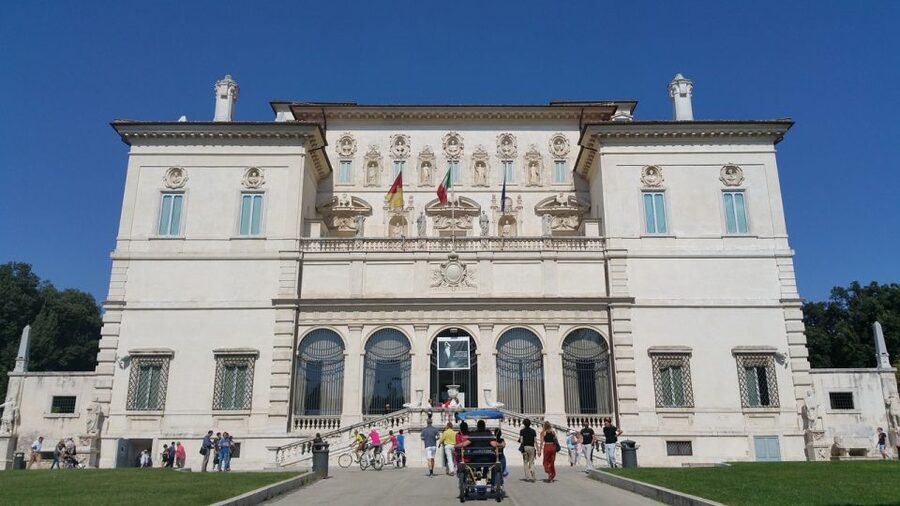
The tour is sold as an art historian led experience, and that promise matters more here than it would in a simple walk through a small museum. The rooms are full of visual information. A guide helps you decide where to look and gives you a reason to care.
The named guides praised most often include Henry, Victoria, Federica, Frederica, Irene, Gaga, Federico, Francesco, Ursus, Ursa, Natalia, Matteo, and Alesia. Spellings can vary, and you should not assume a particular guide will lead your departure, but the repeated pattern is clear: the guide is a central part of the experience.
Henry is noted for making a very small group feel personal and for bringing the art to life through storytelling. Victoria is praised for linking works to their completion dates, restoration, and artistic methods. Irene is associated with an engaging explanation of art history and the Baroque period.
The best guides keep a steady pace, welcome questions, and explain rather than lecture. One practical weakness has also appeared: commentary can feel rushed when the group is covering a lot, and microphone placement may affect how clearly you hear. The provided headsets and radios usually help, but stay near the guide and speak up if the sound is poor.
Is $57 a fair price?
At $57 per person, this is not the cheapest way to enter a museum. You are paying for the reserved ticket, priority access through security, a live art historian, and the convenience of a planned route.
I think the price makes sense if you want context and do not want to spend time researching the collection before you arrive. The Borghese Gallery is small enough to visit in two hours, but dense enough that a self-guided walk can leave you unsure which details matter.
The value is strongest for first-time visitors, people with limited time in Rome, and anyone who wants help connecting Bernini, Caravaggio, Raphael, Canova, and the Roman works. A private option may suit you if you want more flexibility, while a small group should give you a more personal feel without the higher cost of a fully private guide.
If you already have strong art-history training and prefer to set your own pace, the guided format may feel restrictive. You will hear useful information, but you may not get enough quiet time with every work.
Who should book this Borghese Gallery tour?
I would recommend it to first-time visitors, couples, families with older children, and anyone who wants a clear introduction to Baroque art. It also suits people who normally skip art museums. One guide’s plain, down-to-earth explanations helped make the collection accessible even to someone who did not consider themselves a major art fan.
Art lovers will appreciate the depth, especially in the Bernini and Caravaggio rooms. Repeat visitors can still learn something new if the guide discusses restoration, technique, collecting, or the historical setting of the works.
The tour is not suitable for wheelchair users according to the available activity information. Anyone traveling with a stroller or large luggage should plan to leave those items elsewhere or use the free cloakroom for permitted bags.
Afterward, allow time for a walk in the surrounding Villa Borghese park. The gallery visit itself lasts two hours, but the park provides a pleasant way to slow down after the concentrated visual experience.
Should you book it?
Book this tour if you want the Borghese Gallery’s major works explained by a passionate art historian rather than simply photographed and passed. Bernini’s sculptures, Caravaggio’s concentrated drama, and the villa’s floors and frescoes make the visit worthwhile, while the reserved entry removes some of the usual museum hassle.
Skip it only if you strongly prefer complete independence or need a wheelchair-accessible experience. For most first-time visitors, $57 is a fair price for a focused two-hour introduction to one of Rome’s finest collections, especially when the guide is as engaging as Henry, Victoria, Federica, or Irene.
Cancellation is free up to 24 hours before the activity, and you can reserve now and pay later. The tour is offered in English, Japanese, French, German, Portuguese, and Russian, with private and small-group options available.
FAQ
How long does the Borghese Gallery guided tour last?
The tour lasts two hours. Starting times vary, so check availability for the date you want.
What is included in the ticket price?
The experience includes an art historian guide, a skip-the-line Borghese Gallery entry ticket, and headsets with radios so you can hear the commentary clearly.
Where does the tour meet?
There are two possible starting locations: Fontana dei Mascheroni or Piazzale del Museo Borghese. The exact meeting point depends on the option booked.
Which languages are available?
Live tours are available in English, Japanese, French, German, Portuguese, and Russian.
Can I bring a large bag or stroller?
Only small bags and purses are allowed inside. Larger bags can be stored in the free cloakroom at the entrance. Baby strollers are not allowed.
Is the tour suitable for wheelchair users?
No. The activity is listed as unsuitable for wheelchair users.
Fresh on the Rome list
- Exclusive Golf Tour Private VIP with Local & Gelato o Wine★ 5.0 · 500 reviews
- Colosseum, Palatine Hill and Roman Forum with Guided Tour★ 5.0 · 500 reviews
- Rome by Night Walking Tour★ 4.5 · 506 reviews
- Rome Trastevere Pasta Making Class with Eating Europe★ 5.0 · 505 reviews
- Rome: Colosseum Express Tour with Forum & Palatine Access★ 4.5 · 511 reviews
- Rome Food Experience Max 6 People Group Tour | w/Private Option★ 5.0 · 516 reviews
- Rome: Navona Square Underground Ticket with Audio Guide★ 4.0 · 518 reviews
- Rome: Escorted Papal Audience Experience with Entry Ticket★ 4.4 · 518 reviews
Museums, compared.
Vatican: Museums & Sistine Chapel Entrance Ticket
Read our review →
Vatican Museums & Sistine Chapel Tour with Optional Basilica
Read our review →
Vatican Museums, Sistine Chapel & St Peter’s Basilica Guided Tour
Read our review →
Skip-The-Line Uffizi Gallery Timed Entry Ticket
Read our review →
Vatican Museums, Sistine Chapel & Basilica Tour
Read our review →
Vatican Museums & Sistine Chapel Skip-the-Line Entry Ticket
Read our review →Vatican Museums, Sistine Chapel & Basilica Tour
Read our review →
Vatican Museums & Sistine Chapel Guided Tour
Read our review →Browse the lists this tour appears in