
Reviewed · POMPEII & VESUVIUS TOURS
Herculaneum: Skip-the-Line Guided Tour with Archaeologist
Herculaneum gives you something Pompeii cannot: a smaller, more intimate Roman town where wooden beams, bright mosaics, wall paintings, and household details survived the eruption of Vesuvius. An archaeologist guide helps you read those remains instead of simply walking past them.
I like the skip-the-line entry, which saves useful time, and I like the way guides such as Luciano Leone, Diego, Teresa, and Angelo bring the town’s homes and people into focus. The main drawback is pace. Two hours covers a lot, and a group of 15 to 20 people can make it harder to hear or stop for long.
Key points to know before you book

- A smaller Roman town than Pompeii: Herculaneum is more compact, but its buildings often preserve finer domestic details.
- Archaeologist-led storytelling: Guides including Luciano, Diego, Teresa, and Angelo are praised for clear explanations, humor, and vivid comparisons with Pompeii.
- Skip the ticket queue: Your admission is included, so you can go directly to the meeting point at the ruins’ ticket office.
- Two hours covers the main sights: Expect the waterfront, major houses, baths, public buildings, and religious sites.
- You may stay longer afterward: The admission ticket allows you to continue exploring at your own pace, according to the tour details and guest experience.
- Wear proper shoes: The site is exposed, uneven, and difficult in open sandals. Bring sunscreen, a hat, and rain protection.
Why Herculaneum feels different from Pompeii
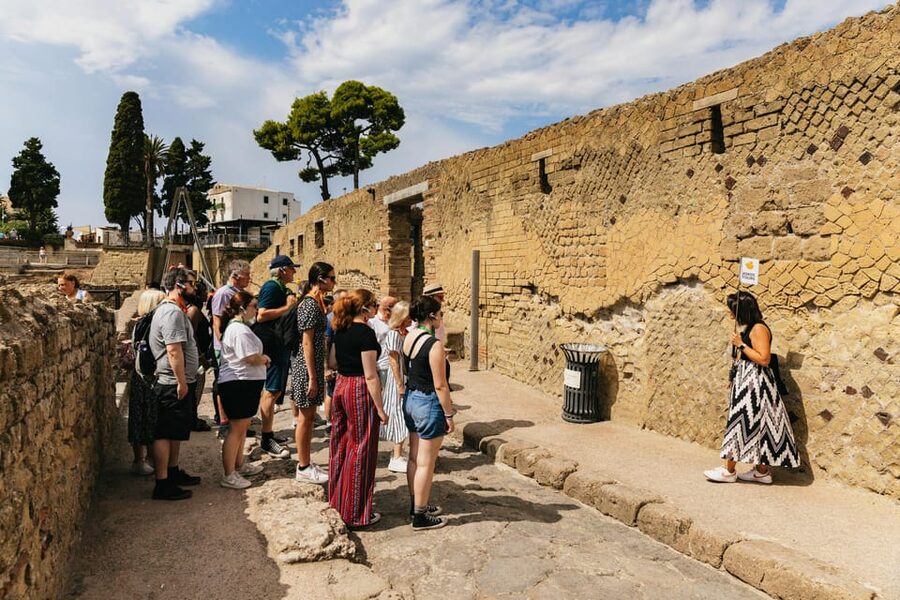
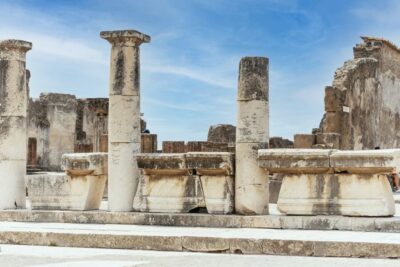
Pompeii is the larger name, but Herculaneum can make the stronger first impression. The ancient town is smaller and easier to grasp, while the surviving buildings often feel more complete. You can see upper floors, carbonized wood, painted walls, marble decoration, and mosaics that make Roman life feel close at hand.
The disaster also unfolded differently here. Herculaneum was overwhelmed by extremely hot volcanic material and mud, rather than receiving the same kind of ash fall associated with much of Pompeii. The result was a town sealed rapidly and deeply. That violent burial preserved materials that normally disappear, including wood and food-related objects.
A good guide keeps this from becoming a simple story about destruction. You learn how the town worked before the eruption, who lived there, and how wealthy merchants and noble families used their homes. The strongest guides use photographs, books, and visual comparisons to show what the ruins may have looked like before Vesuvius changed everything.
This is where an archaeologist-led tour earns its fee. A bare wall is easy to overlook. A guide can point out its construction, explain its use, and connect it with the people who moved through the room. Guides such as Luciano Leone have been especially praised for using picture books and overlays to make those changes easy to understand.
More Skip-the-Line Tickets in Naples
- Mount Vesuvius: Skip-the-Line Ticket and Smart Digital Guide
★ 4.2 · 2,780 reviews - From Naples: Pompeii Skip-the-Line Entry Ticket and Tour
★ 4.4 · 2,753 reviews - Pompeii: Skip-the-Line Entry Ticket with Audio Guide or Tour
★ 4.1 · 1,364 reviews
Meeting at the Via dei Papiri Ercolanesi ticket office
The meeting point is the ticket office at the Herculaneum ruins on Via dei Papiri Ercolanesi. Look for the guide holding an Askos Tours sign. Transportation is not included, so you need to make your own way to the archaeological site.
Check your booking information carefully before setting out. One visitor found that the map pin appeared about 300 meters away from the actual meeting point, which was at the ruins’ ticket booth. The ticket office is the practical place to aim for, rather than relying blindly on a street-view image or restaurant marker.
Bring a passport or identity card. The site requires valid identification, and children must be with an adult. Unaccompanied minors are not permitted.
The tour runs for two hours, with several possible starting times. If you want to continue looking around afterward, a morning or earlier afternoon slot is the safer choice. One late tour at 2:30 p.m. left little time for quiet exploration before the site closed at 5 p.m.
The waterfront and the first view of the catastrophe
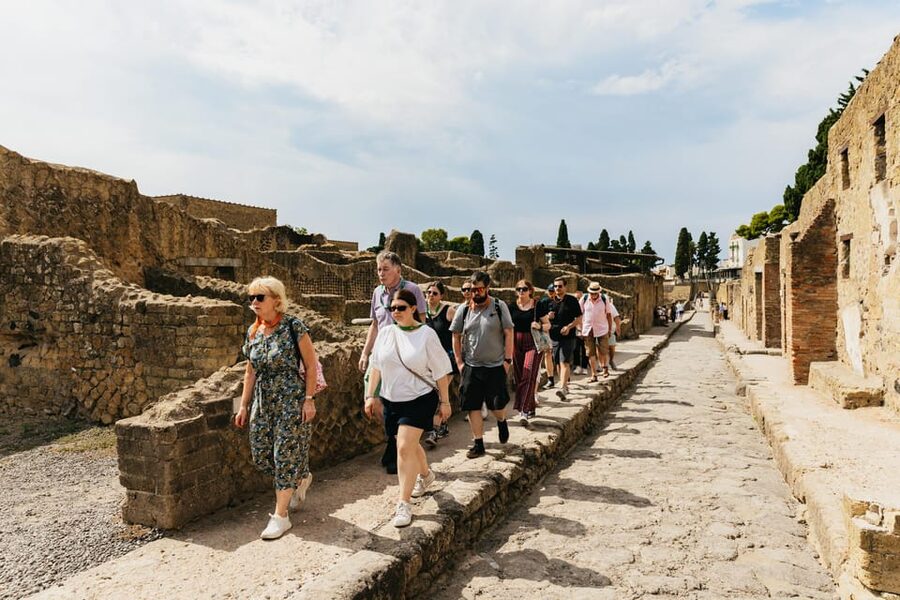
The route takes you down toward the ancient waterfront, one of the most powerful parts of the visit. Here, the remains of more than 300 people are associated with the eruption. They died while trying to escape toward the sea, and the setting gives the disaster a human scale that no general account can match.
Your guide can explain how Herculaneum functioned as a port town and why people were gathered near the shore when the eruption struck. This is not a quick scenic stop. Allow the location to sink in, even if the group needs to keep moving.
The waterfront is also a reminder that Herculaneum is not just an open-air collection of pretty houses. You are walking through a town whose residents had homes, shops, religious duties, and public routines. The remains are impressive because they preserve ordinary life alongside the final moments.
Casa dei Cervi and Herculaneum’s wealth
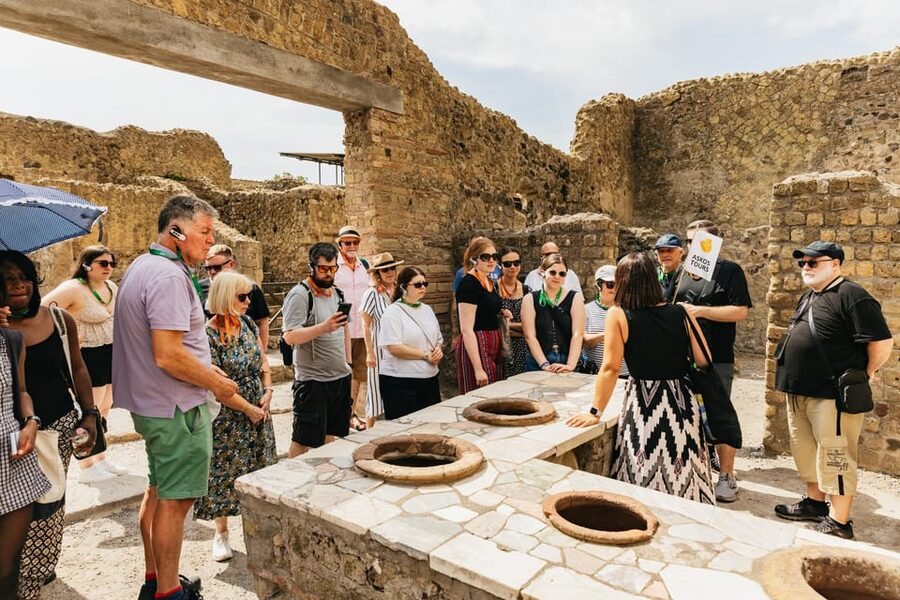
Casa dei Cervi, or the House of the Deer, is one of the houses that helps explain the town’s prosperous side. The name refers to decorative sculpture associated with the property. The house offers a useful contrast with smaller or more basic dwellings because it suggests the comfort and taste of Herculaneum’s wealthier residents.
Look for the relationship between rooms, decoration, and open areas. Rather than treating each wall painting as an isolated object, listen for how the guide explains the house as a place of status and daily life.
This is also a good stop for understanding why Herculaneum can feel more personal than Pompeii. Preserved household materials let you imagine meals, movement, decoration, and family life. The guide’s job is to keep that imagination tied to the evidence, rather than turning the visit into guesswork.
A few other Naples mornings to weigh against this
- From Naples: Pompeii Ruins & Mount Vesuvius Day Tour
★ 4.3 · 11,459 reviews - Naples or Sorrento: Full-Day Pompeii and Mount Vesuvius Tour
★ 4.6 · 4,235 reviews - Pompeii & Mt.Vesuvius Day Tour from Naples with Pizza Lunch
★ 4.0 · 2,901 reviews - Naples: Pompeii & Mt Vesuvius All-Inclusive Small Group w/ Lunch
★ 4.5 · 2,748 reviews
House of Neptune and Amphitrite
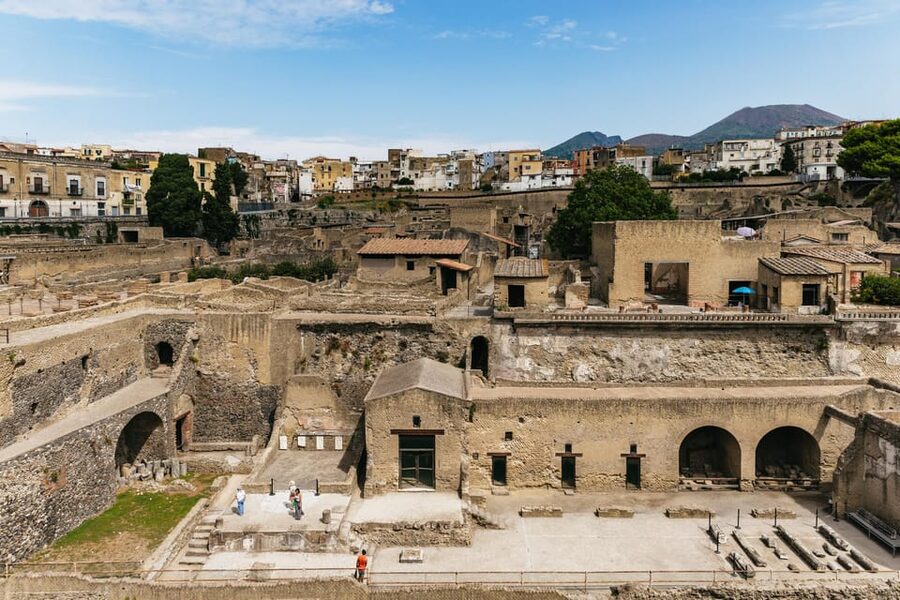
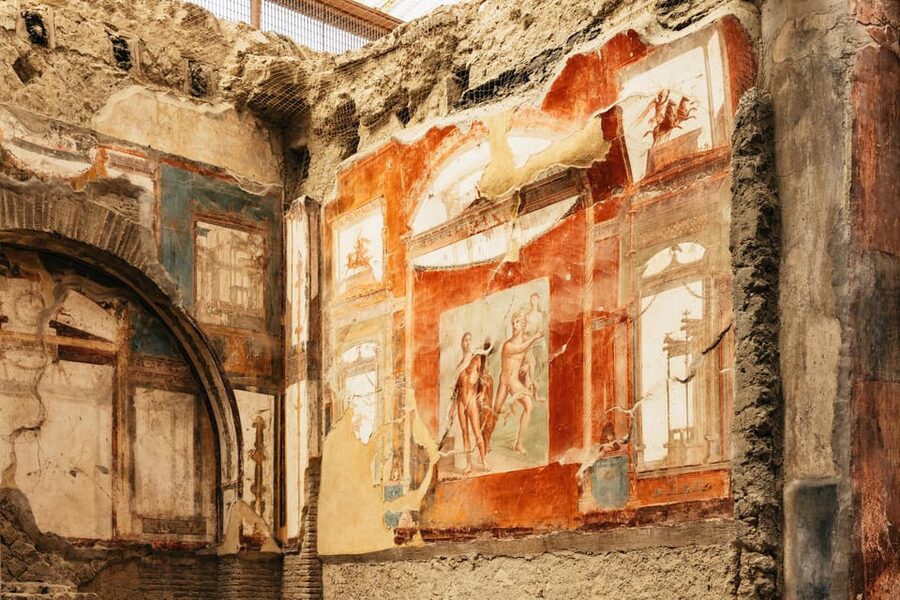
Casa di Nettuno ed Anfitrite is one of the tour’s visual highlights. Its name comes from the famous Neptune and Amphitrite mosaic, made with colorful glass paste and set into a wall fountain. The decoration shows how Roman homeowners used art to display taste, wealth, and knowledge of classical mythology.
This house is a place where the headset helps. You can stand back from the mosaic while still hearing the explanation, instead of crowding around a guide. The headsets are included, though you should stay fairly close. One visitor found the audio became difficult to follow when the guide marched ahead and moved out of range.
The preserved ceramics, marble, paintings, and mosaics make this section especially rewarding for anyone interested in Roman interiors. Pompeii has plenty of grand spaces, but Herculaneum’s surviving details can feel unusually immediate. You see not just foundations, but hints of how rooms were finished and used.
House of the Skeletons and the preserved waterfront story
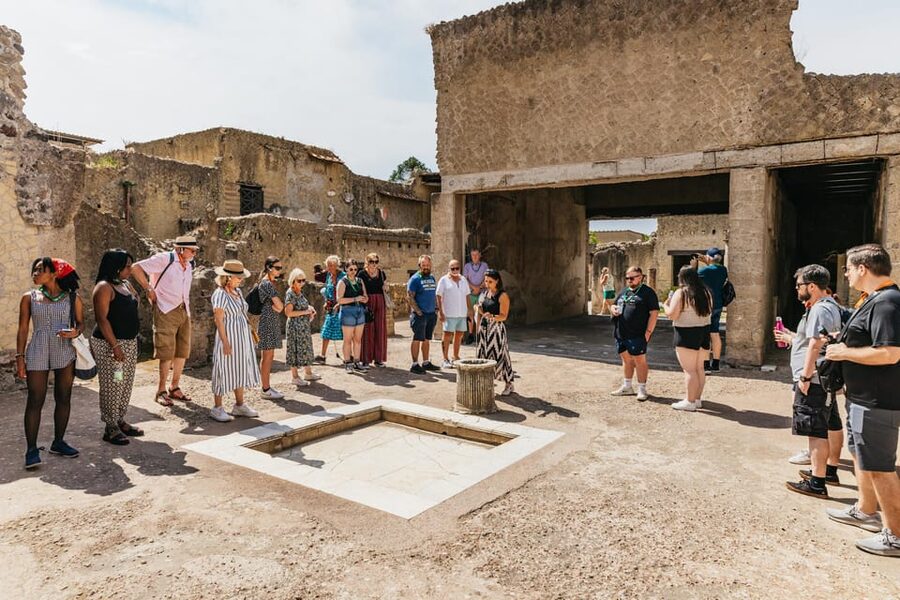
The House of the Skeletons is another stop tied to the town’s final disaster. The name reflects human remains found in the building. Your guide can place the house within the wider story of residents who did not escape the eruption.
This is one of the places where the emotional weight of the site may be stronger than its visual impact. You are not simply looking at decoration. You are confronting evidence of people caught in a disaster that unfolded with terrifying speed.
The subject can be intense, especially for children. Younger visitors may also find a two-hour archaeology tour demanding, particularly after a visit to Pompeii on the same trip. Teresa received special praise for explaining the site in a way that worked well for an eight-year-old, but every child is different.
Casa dell’Albergo and Casa del Salone Nero
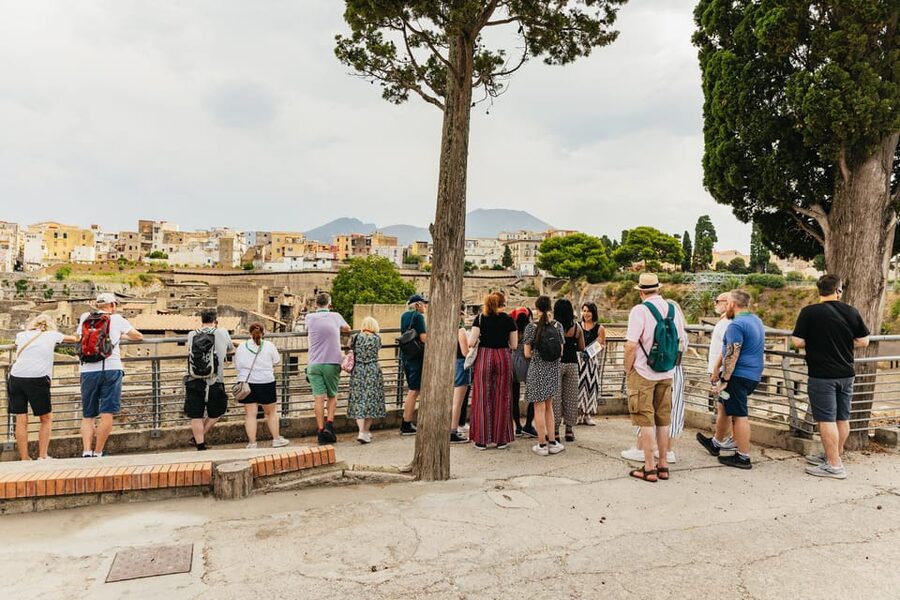
Casa dell’Albergo, often translated as the House of the Inn, and Casa del Salone Nero, the House of the Black Room, show the range of domestic architecture in Herculaneum. The second takes its name from a dark painted room, a reminder that Roman wall decoration was not limited to the pale colors many people expect.
These stops reward close attention. At first, several ancient houses can seem alike: walls, doorways, courtyards, and patches of decoration. A strong guide gives each one a purpose and identity, pointing out how changes in scale, decoration, and layout suggest differences in wealth and use.
The route is designed to cover the major highlights rather than every accessible corner. That is a sensible choice for a first visit. You get a clear introduction without spending half the tour on minor rooms, though you may wish you had more time in a few houses.
The Temple of the Augustales
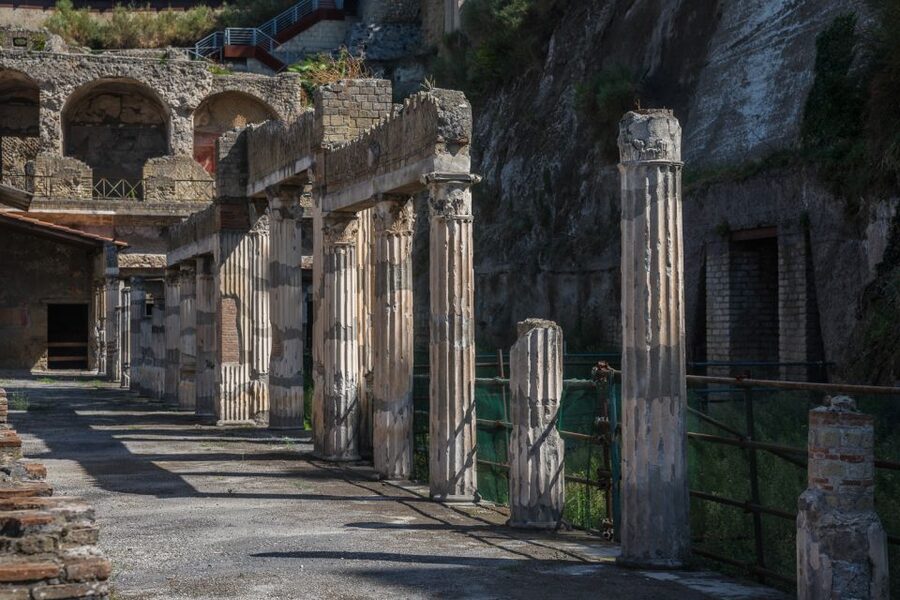
The Sacellum of the Augustales was a religious building connected with the imperial cult. It is one of Herculaneum’s most important public sites and helps balance the private houses on the route.
The building’s paintings and architecture show how religion, civic identity, and loyalty to the emperor overlapped in Roman towns. Your guide can explain who used the space and why such a small town invested in formal public and religious buildings.
This is a good example of what the archaeologist adds. Without context, the Augustales building might look like another decorated room. With an explanation of its role, you see it as part of the town’s political and religious system.
Thermal baths, the Forum, and the Gymnasium
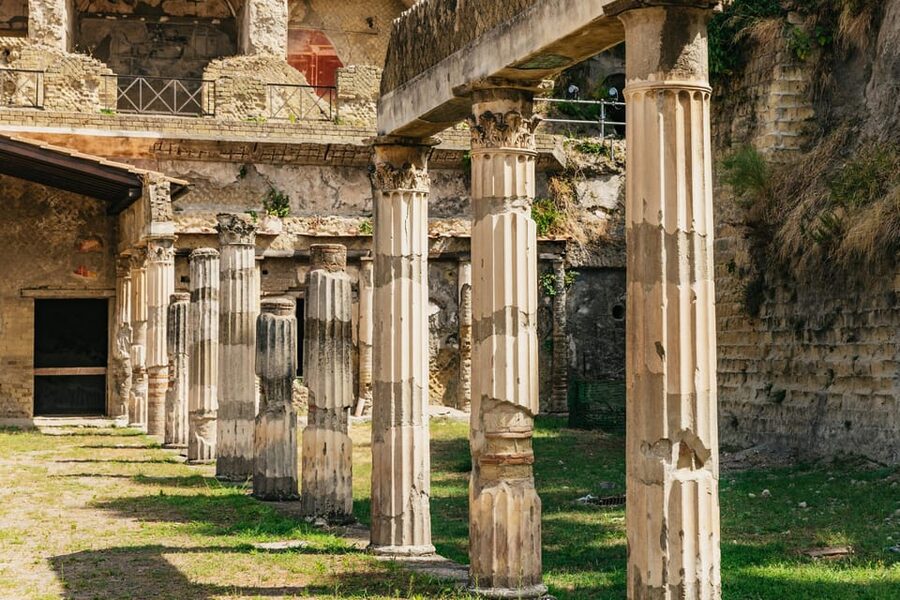
The thermal baths show the practical side of Roman public life. Bathing was not simply about washing. It was part of the social routine, with spaces designed for different temperatures and activities. The preserved walls and surfaces help you understand how engineering and leisure came together.
The Forum was the civic heart of the town. It connected public business, religion, and commerce. You might find that it feels less visually complete than some houses, but its importance comes from what it tells you about how Herculaneum operated as a community.
The Gymnasium adds another layer, showing the town’s educational and athletic life. One guide took the group into a tunnel leading toward the center of the Gymnasium, where the swimming pool would have been. Access and exact routing can vary, but this kind of stop shows why it is worth asking questions rather than simply following the crowd.
What the two-hour format is really like
Two hours is enough for a strong introduction, not a complete study of Herculaneum. The route covers most of the headline sights, but the guide has to keep moving. You will hear about the eruption, excavation, architecture, religion, domestic life, and social classes in a relatively short time.
Some guides pack in a remarkable amount. Luciano Leone is known for energetic explanations, visual aids, humor, and detailed comparisons between Pompeii and Herculaneum. Diego has been praised for clear English, a warm manner, and an ability to make the town feel inhabited rather than frozen in time. Teresa, Angelo, Anna, Roberta, Giulia, Giovanni, Bruno, and Gerardo have also led highly regarded tours, with different personal styles.
Because the guide and language can vary by departure, your exact experience will not be identical every time. The available languages are English, Italian, German, Spanish, and French.
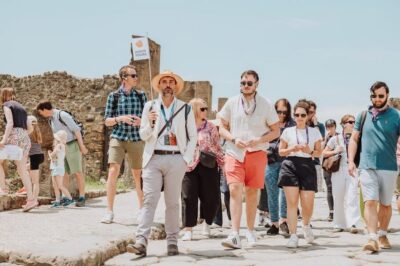
Groups have ranged from about 15 to 20 people in the experiences described. That is manageable, but it is not a private visit. Try to stay near the guide, especially at busy stops, and check that your headset is working. If you hear crackling or silence, speak up promptly.
Is $53 a fair price?
At $53 per person, the tour is not the cheapest way to enter Herculaneum. Adult admission alone is listed as €16, while EU citizens aged 18 to 25 pay €2. Still, your tour price includes the admission ticket, a two-hour archaeologist guide, and headsets.
The real value lies in interpretation and time saved. Herculaneum is compact enough to explore alone, but its details are easy to misunderstand or miss. Skip-the-line access also matters if the entrance is busy, since it gets you into the ruins without spending part of your visit waiting.
The included admission can also let you remain at the site after the guided portion. That makes the price more attractive if you book an earlier time and use the remaining hours to revisit a favorite house, see areas the group passed quickly, or visit the museums and displays at your own speed.
I would not book this tour solely for the phrase skip-the-line. I would book it for the archaeologist’s explanation. If you already have strong knowledge of Roman archaeology and prefer to move slowly, the two-hour group format may feel restrictive. For most first-time visitors, the combination of entry, guidance, and structure is a reasonable use of money.
Practical advice for heat, rain, and uneven ground
Herculaneum is broad, exposed, and subject to the weather. Use sunscreen and bring a hat. The tour operates rain or shine, so pack a raincoat when the forecast looks uncertain.
Closed-toe, comfortable shoes are important. Open sandals can be awkward on uneven ancient surfaces, and there is enough walking to make footwear matter. Large bags and luggage are not allowed, so travel light.
The site is not suitable for wheelchair users or people with mobility impairments. Children must remain with an adult, and the pace may test younger children, especially if you have already visited Pompeii.
Who will get the most from this tour?
I would choose this experience if you want Herculaneum explained rather than simply photographed. It suits first-time visitors, families with older children, history fans, and anyone comparing Herculaneum with Pompeii.
It is also a strong choice if you have only a few hours. The route takes you to the most important houses and public buildings without asking you to plan your own path through a large archaeological site.
You may prefer a self-guided visit if your priority is solitude, sketching, photography, or spending 30 minutes in one room. You may also want to skip the tour if uneven surfaces, heat, or a steady walking pace will make the site uncomfortable.
Should you book it?
Yes, if you want the ruins to make sense. Herculaneum’s preserved wood, mosaics, paintings, and domestic spaces deserve more than a quick walk-through, and an archaeologist can connect those pieces to real Roman lives.
Book an earlier time if you want to stay afterward. Arrive at the actual ticket office on Via dei Papiri Ercolanesi, bring identification, wear solid shoes, and stay close enough to hear the headset. For a first visit, this is a focused and worthwhile way to meet Herculaneum, especially if you plan to see Pompeii separately and want the contrast.
FAQ
How long does the Herculaneum guided tour last?
The guided tour lasts two hours. You may have time to continue exploring the site afterward, depending on your start time and closing hours.
What is included in the price?
The price includes the guided Herculaneum visit, admission fees, an archaeologist guide, and headsets.
Does the tour include transportation from Naples?
No. Transportation is not included. You meet at the ticket office of the Herculaneum ruins.
Where is the meeting point?
Meet at the ticket office at the Herculaneum ruins on Via dei Papiri Ercolanesi. Your guide will hold an Askos Tours sign.
Which languages are available?
The tour is offered in English, Italian, German, Spanish, and French.
Is skip-the-line entry included?
Yes. The activity includes skip-the-ticket-line access.
What should I bring?
Bring a valid passport or ID card, comfortable closed-toe shoes, and sunscreen. A hat and raincoat are also recommended because the site is exposed and the tour runs in all weather.
Can I bring luggage or a large bag?
No. Luggage and large bags are not allowed.
Is the tour suitable for wheelchair users?
No. The activity is not suitable for wheelchair users or people with mobility impairments.
Fresh on the Naples list
- Naples Pasta Class: Fettuccine & Ravioli with Grandma’s Recipe★ 5.0 · 506 reviews
- Naples Walking Tour with Underground Roman Ruins Ticket★ 4.5 · 510 reviews
- Private Day tour of Positano, Amalfi and Ravello from Naples★ 5.0 · 522 reviews
- Naples: Street Art & History Tour in the Spanish Quarters★ 4.9 · 540 reviews
- Private Day Tour: Sorrento, Positano, Amalfi, Ravello from Naples★ 4.5 · 546 reviews
- Day Trip of Pompeii, Herculaneum and Vesuvius from Naples★ 4.5 · 547 reviews
- Day Trip of Pompeii, Sorrento and Positano from Naples/Salerno★ 5.0 · 560 reviews
- Naples Underground Official Skip-the-line Ticket★ 4.0 · 563 reviews
Pompeii & Vesuvius Tours, compared.
Entry Ticket and Guided Tour with an Archaeologist
Read our review →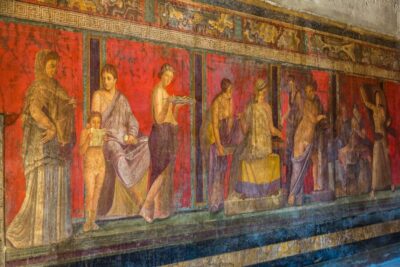
Pompeii Small Group Tour with an Archaeologist
Read our review →
Pompeii, Amalfi Coast and Positano Day Trip from Rome
Read our review →Browse the lists this tour appears in