Reviewed · ROME TOURS
10 Wonders of Rome in 3 hrs
Rome can feel like a city-sized museum with no clear starting point. This three-hour walk gives you a useful first look, linking the Colosseum, Pantheon, Trevi Fountain, and Spanish Steps in one compact route. Guides such as Joseph, Drita, and Isuf bring the stops to life with stories, questions, photos, and practical tips for the rest of your stay.
I like the small maximum of 12 people, which makes it easier to hear the guide and ask questions. I also like the thoughtful coffee break, along with help using the subway, finding food, choosing gelato, and getting better photos. The main drawback is simple: you will not go inside any monument, and three hours of city walking, including stairs near the final viewpoint, calls for decent fitness and comfortable shoes.
Key points to know before booking
- A fast introduction to Rome: See major ancient and Baroque sights in one continuous walk.
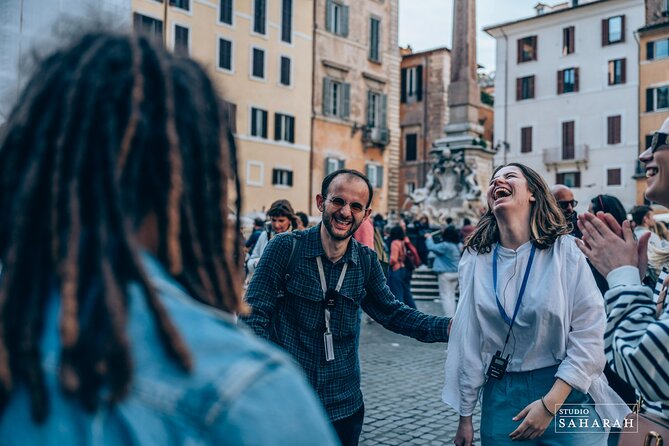
- Small groups up to 12: You get more room to ask questions and more personal attention.
- Guides who teach with energy: Joseph, Drita, and Isuf are praised for humor, quizzes, storytelling, and practical help.
- Coffee is part of the rhythm: The guide treats the group to Italian espresso near the Pantheon.
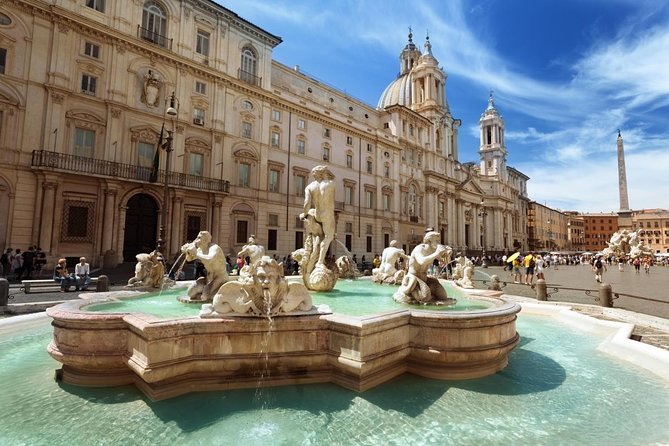
- Strong photo opportunities: The route includes stops at the Colosseum, Vittoriano, Trevi Fountain, Spanish Steps, and a final panoramic viewpoint.
- A sightseeing walk, not an inside tour: Admission tickets are not included, and the monuments are viewed from outside.
Why three hours works well for first-time Rome
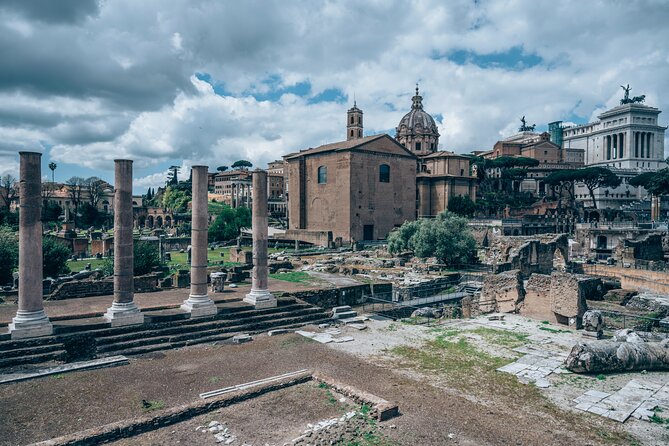
This is an orientation tour more than a deep visit to any single sight. You move through several historic districts, hear the basic story behind each place, and finish with a better sense of how Rome fits together.
That format is especially useful on your first day. Rome’s famous sites can feel scattered, and it is easy to spend half a day walking in the wrong direction. This route connects them for you. You can then return later to the places that deserve more time, such as the Colosseum or Pantheon.
The guides add value by doing more than reciting dates. Isuf has used quizzes to help you remember what you just learned. Drita has used art-history background, visual aids, and lively explanations. Joseph is especially praised for mixing history with restaurant suggestions, subway advice, and help with photos.
The tour is offered in English, with morning and afternoon departures. An afternoon start may suit you if you arrive in Rome later in the day, while a morning walk can leave the rest of your day open. Confirmation is sent within 48 hours, subject to availability, so do not leave the booking until the last minute if your schedule is tight.
A few other Rome mornings to weigh against this
- Vatican Museums & Sistine Chapel Tour with Optional Basilica
★ 4.3 · 67,413 reviews - Colosseum, Roman Forum & Palatine Guided Tour
★ 4.7 · 63,148 reviews - Vatican Museums, Sistine Chapel & St Peter’s Basilica Guided Tour
★ 4.5 · 39,149 reviews
Starting at the Colosseum
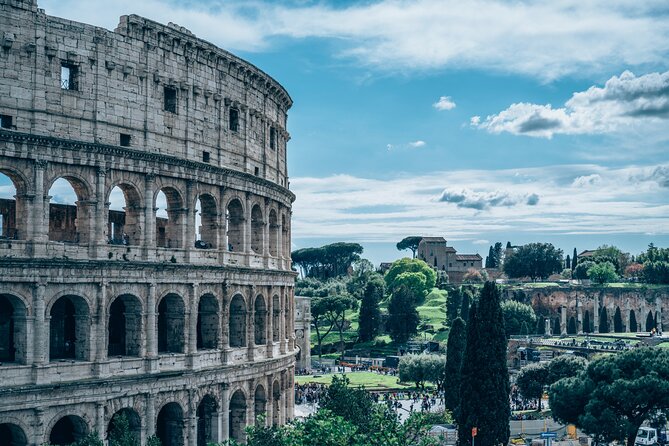
The walk begins in front of the Colosseum on Via del Monte Oppio. You spend about 15 minutes here, enough for an introduction, exterior views, and photographs.
Seeing the Colosseum at the start gives the tour an immediate sense of scale. The guide can set up the larger story of ancient Rome before leading you onward. You will learn from the outside, however, because an admission ticket is not included and the group does not enter.
That limitation matters. If your main goal is to explore the arena’s interior, book a separate Colosseum visit with its own entry ticket. This tour works better as a broad overview, especially if you already have an inside visit planned.
Wear shoes with a firm sole. The route is on foot, and Rome’s historic center is not designed like a smooth modern pedestrian path. The supplied details call for moderate physical fitness, and one participant specifically noted stairs near the end.
Walking Via dei Fori Imperiali to the Vittoriano
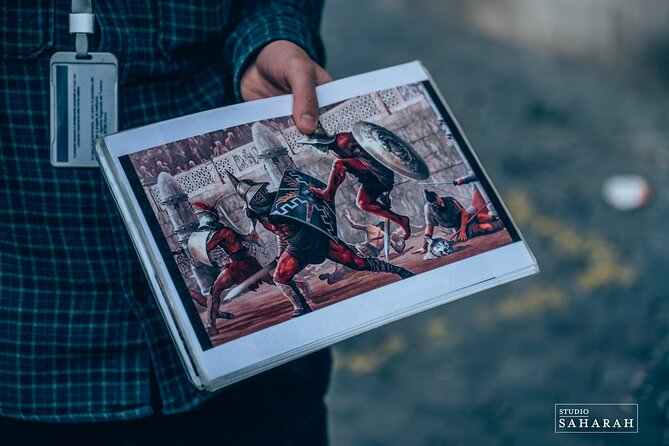
From the Colosseum, the group follows Via dei Fori Imperiali, the grand avenue associated with Mussolini’s redevelopment of central Rome. The walk then reaches Piazza Venezia and the Monumento a Vittorio Emanuele II, often called the Altar of the Fatherland or the Vittoriano.
The stop lasts about 10 minutes. That is enough for exterior explanations and photographs, but not for a full examination of the monument. The building has strong symbolic meaning in modern Italian history, and the guide helps place it within Rome’s changing political story.
This is one of the route’s useful contrasts. You move from the ancient imperial world to a much later national monument, all within a short walk. Rome’s layers become easier to understand when you see them side by side.
The grand avenue is also a practical route between major sights, though it can feel exposed and busy. Keep your attention on the guide and your belongings as you move through the city center.
The Pantheon and a well-timed espresso
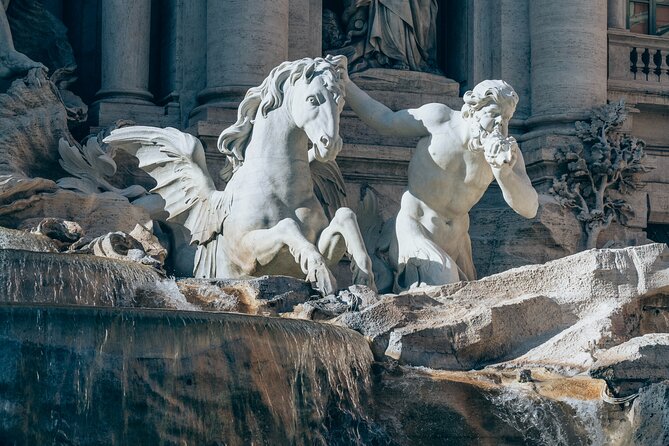
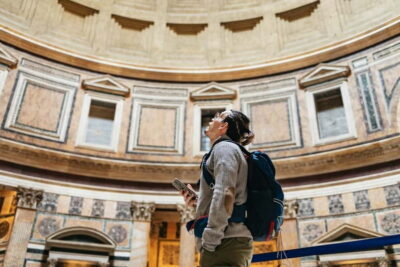
The Pantheon is one of the tour’s central stops. You spend roughly 15 minutes here, learning about the building and seeing its exterior before taking a coffee break nearby.
The Pantheon still functions as a church, which gives the site a living purpose rather than leaving it as a purely archaeological monument. The guide can explain its place in Rome’s religious and architectural story, but you will not enter as part of this walk.
The espresso stop is a small feature with real value. Three hours of walking is easier when the pace includes a pause, and coffee gives you time to ask the guide about Rome beyond the formal stops. The guide treats the group, which is included as part of the experience.
An ice-cream shop called Gelateria Fiocco Di Neve is also near the Pantheon. The information provided points it out for gelato lovers, but any purchase beyond the included coffee is your responsibility. If you prefer a slower café break or want a full snack, plan accordingly.
Same city, an entirely different afternoon:
- Rome: Colosseum, Palatine Hill and Roman Forum Guided Tour
★ 4.8 · 32,814 reviews - Rome: Guided Tour of Colosseum, Roman Forum & Palatine Hill
★ 4.7 · 27,897 reviews - Rome: Colosseum & Forum with Audio Guide App -Optional Arena
★ 4.2 · 24,770 reviews - Rome: Colosseum, Roman Forum and Palatine Hill Guided Tour
★ 4.5 · 23,903 reviews
Passing the Pontifical Gregorian University
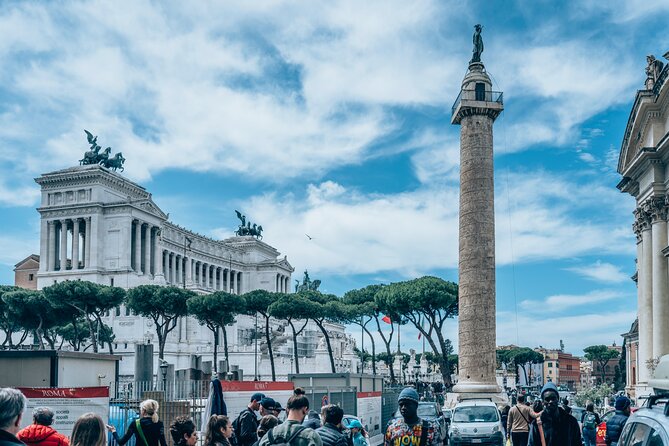
The walk continues past the Pontifical Gregorian University, described as the first university founded by Jesuits. The stop takes about 10 minutes.
This is not a grand monument in the same way as the Colosseum or Trevi Fountain. That is part of its appeal. It adds a less obvious piece of Rome’s intellectual and religious life and gives the route some variety between major photo stops.
The guide’s role matters here. Without explanation, you might pass the building without giving it a second look. With context, an ordinary-looking stretch of the city becomes part of the larger story.
Trevi Fountain: Rome’s most crowded photo stop
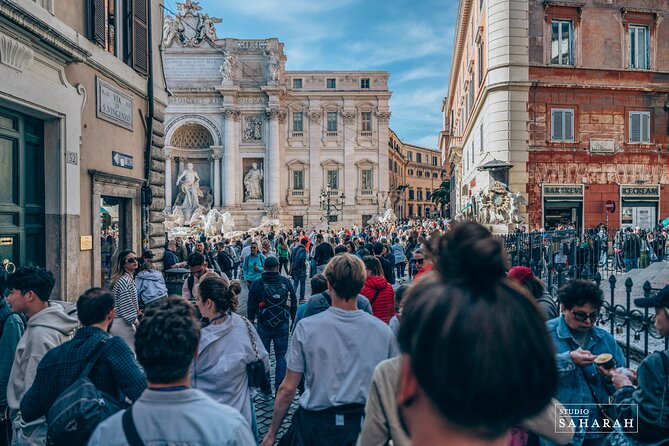
At Trevi Fountain, the group pauses for about 15 minutes. Admission is free, and the fountain is viewed from the public area.
This is the place where the guide’s photography help can make a difference. Joseph is praised for knowing where to position people for better images, including front-and-center photos at Trevi. Drita and Isuf are also described as helpful with photos and visual details.
Do not expect solitude. The fountain is one of Rome’s busiest sights, and 15 minutes goes quickly. The benefit of visiting with a guide is that you receive an explanation and help with the practical business of seeing the place, rather than simply arriving, taking a quick picture, and moving on.
The tour does not include a coin, but one guide has supplied coins for people who did not have one. Treat that as a thoughtful possibility, not a promised inclusion. The important point is that the stop allows time for the familiar fountain ritual without turning the whole afternoon into a queue.
The Temple of Hadrian and Marcus Aurelius
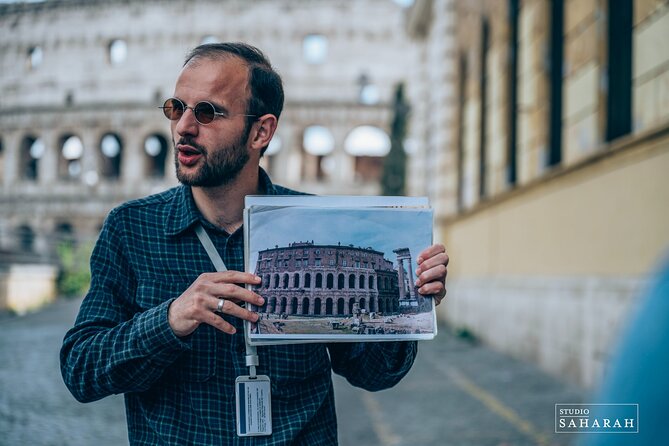
The itinerary also includes two shorter historical pauses. At the Tempio di Adriano, the guide speaks about the Temple of Hadrian for about five minutes. At the Column of Marcus Aurelius, the explanation lasts about four minutes.
These stops are brief, but they help you notice details that are easy to miss while crossing Rome’s center. The Temple of Hadrian gives you another connection to imperial Rome, while the column offers a chance to discuss ancient art and public storytelling.
Do not expect an extended lecture at either location. The short timing keeps the tour moving toward the Spanish Steps and final viewpoint. Think of these as focused introductions that you can build on later if one subject catches your interest.
Spanish Steps and the final panoramic view
The route reaches the French and Spanish Steps, a landmark known for its unusual design, elegance, and romantic setting. You spend about 10 minutes here, enough to take in the staircase and surrounding streets.
This stop is less about a single historical date and more about Rome’s urban character. The steps connect different levels of the city and create one of its most recognizable public spaces. Your guide can also point out photo positions and explain why the area has become such a popular meeting place.
After passing Villa Borghese Park, the walk ends at a secret panoramic viewpoint on Viale del Belvedere. The exact nature of the view is not specified, so you should treat it as a final scenic surprise rather than booking solely for a guaranteed landmark panorama.
The end of the route includes stairs. That is the clearest physical caution in the available information. If stairs are difficult for you, ask before booking, since the tour requires moderate fitness and does not offer a stated alternative route.
What the guides add
The strongest part of this experience is the guiding. The route itself is excellent, but Rome has no shortage of free walks between famous sights. You are paying for someone to explain what you see, keep the group moving, and help you use the rest of your time well.
Joseph is described as funny, caring, and good at storytelling. He has answered questions about public transport and offered restaurant suggestions. Drita is praised for her art-history background, energetic delivery, visual aids, quizzes, and careful attention to each person in a small group. Isuf is described as charismatic, entertaining, and particularly effective at keeping both adults and younger participants involved.
The experience uses interaction rather than a nonstop speech. Quizzes, questions, and small bits of participation help break up the information. That can be useful for families, including those with older children. The minimum age is 11, and one guide has kept a 12-year-old engaged for the full walk.
Guide assignments can vary, so you should not assume a specific person is guaranteed. Still, the repeated strengths are clear: lively delivery, practical advice, photo help, and a willingness to answer questions.
Price, group size, and practical value
At $48.39 per person, this is not the cheapest way to walk through Rome, but the price is reasonable if you want a guided orientation rather than a self-guided route. You are paying for three hours of interpretation, a small group, Wi-Fi, photo assistance, a coffee treat, and advice that can shape the rest of your visit.
The maximum group size is 12. That is small enough for the guide to hear questions and keep an eye on the group, while still being less expensive than a private tour. If the group is smaller, the experience may feel more personal, but the advertised limit is what you should plan around.
The tour is near public transportation, and the start and finish are in different parts of central Rome. The starting point is Via del Monte Oppio, 3, near the Colosseum. The endpoint is Viale del Belvedere, 00187 Rome. Plan your next activity from the endpoint, not the starting point.
The most important cost limitation is that monument admission is not included. You should budget separately if you want to enter the Colosseum, Pantheon, or another site after the walk. This tour is best value when you use it as a city introduction and arrange longer interior visits separately.
The booking is non-refundable and cannot be changed after purchase. Also, the activity needs a minimum number of participants. If the operator cancels because that minimum is not reached, you are offered another date or experience, or a full refund. That policy makes travel insurance or flexible planning worth considering.
Who should book this Rome walk?
I would choose this tour for a first visit, a short stay, or the first afternoon of a longer trip. It gives you the main visual markers quickly and leaves you with useful ideas about food, gelato, coffee, subway travel, and later sightseeing.
It also suits you if you prefer stories and conversation to silent audio-guide listening. The guides use humor and questions, so the experience has a social, informal feel.
Families with children aged 11 and up may find the quizzes helpful, though the walking and stairs still require attention. Older adults can join if three hours on foot feels manageable. The route does not suit someone seeking a relaxed, seated tour or a detailed interior visit to every monument.
Should you book 10 Wonders of Rome in 3 Hours?
Book it if you want a lively orientation to central Rome, especially early in your stay. The small group, strong guide-led storytelling, coffee pause, photo help, and practical recommendations give it more value than a simple checklist walk.
Skip it if you already know Rome well, dislike group tours, or want to spend serious time inside the monuments. You will see many major sights, but mostly from outside and for short periods.
For most first-time visitors who can walk steadily for three hours, this is a smart way to get your bearings fast. Wear comfortable shoes, keep your afternoon flexible, and save the places that capture your interest for longer visits later.
FAQ
How long does the 10 Wonders of Rome tour last?
The walking tour lasts approximately three hours.
Where does the tour begin?
It begins at Via del Monte Oppio, 3, 00184 Rome, in front of the Colosseum.
Where does the tour end?
The tour ends at Viale del Belvedere, 00187 Rome, near the final panoramic viewpoint.
Are admission tickets included?
No. The tour does not enter the monuments, and admission tickets are not included.
Is coffee included?
Yes. The guide offers the group an Italian espresso during the stop near the Pantheon.
How many people can join the tour?
The maximum group size is 12 participants.
Who can participate?
Participants aged 11 and older can join. Babies under two are free. The activity requires a moderate level of physical fitness and includes walking and stairs near the end.
Fresh on the Rome list
- Rome: Guided Catacombs Tour & Capuchin Crypt (Audio Guide)★ 4.3 · 191 reviews
- Guided tour of the Colosseum, Roman Forum and Palatine in Spanish★ 4.5 · 191 reviews
- Rome: Borghese Gallery Guided Tour with Skip-the-Line Ticket★ 4.5 · 192 reviews
- Rome: Arena Colosseum Tour with Arena Access★ 4.6 · 193 reviews
- Colosseum, Forum, Palatine Hill with audio guide and Arena or Bus option★ 4.0 · 193 reviews
- Rome: Colosseum & Roman Forum Guided Tour★ 5.0 · 194 reviews
- Rome: Domus Aurea Guided Tour and Virtual Reality Experience★ 4.7 · 194 reviews
- Rome Vintage Fiat 500 car Tour With Photographer★ 5.0 · 194 reviews
Rome Tours, compared.
Vatican Museums & Sistine Chapel Tour with Optional Basilica
Read our review →
Colosseum, Roman Forum & Palatine Guided Tour
Read our review →
Vatican Museums, Sistine Chapel & St Peter’s Basilica Guided Tour
Read our review →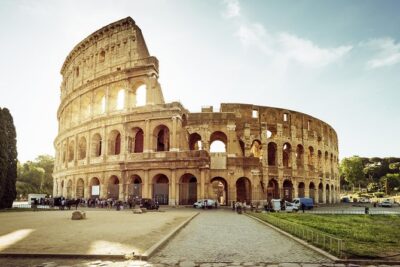
Colosseum, Palatine Hill and Roman Forum Guided Tour
Read our review →
Guided Tour of Colosseum, Roman Forum & Palatine Hill
Read our review →
Colosseum & Forum with Audio Guide App -Optional Arena
Read our review →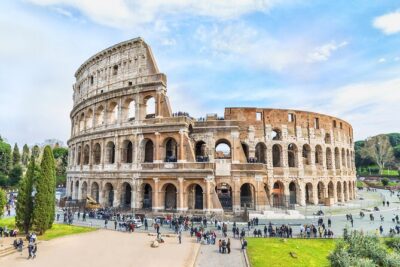
Colosseum, Roman Forum and Palatine Hill Guided Tour
Read our review →