
Reviewed · SICILY TOURS
Underground Catania
Catania makes more sense once you see what lies below it. This tour takes you under the cathedral, into a cave where the Amenano River still flows, and through a lava grotto reused by Greeks, Romans, and early Christians. Roman baths and volcanic rock tell the city’s story better than a quick stroll through its baroque streets.
I like two things right away. First, you get places that are difficult to find on your own, including the small underground river cave at A Putia dell’Ostello. Second, the archaeology guides, including Oreste, Matilde, Mathilde, and Maria, bring in the effects of Mount Etna, earthquakes, eruptions, religion, and daily life. The small-group format also leaves room for questions.
The main drawback is value. At $96.79 per person, this is not a cheap city walk, especially if your group is combined with other parties. The tour is limited to eight people and is described as private for your group, but one booking account found seven people from three separate parties. Confirm exactly what private means before paying.
Key points to know before booking
- Roman baths beneath Piazza Duomo: See the remaining section of the vast Terme Achilliane complex directly below the cathedral.
- A live underground waterway: Enter a sliding cave where a branch of the Amenano River still runs beneath central Catania.
- A lava cave with several lives: Visit San Gaetano alle Grotte, a natural cave reused as a Greek cistern, Roman catacomb, and Christian worship site.
- Guides with an archaeology focus: Oreste, Matilde, Mathilde, and Maria are praised for clear explanations and thoughtful answers.
- A walk through central Catania: Begin at Piazza del Duomo and finish near Piazza Stesicoro after about 2 to 3 hours.
- A welcome break from the heat: The underground sites offer cooler surroundings, though the pace can feel slow if you prefer to walk quickly.
Why Catania’s underground matters
Catania is not simply a baroque city built around a cathedral square. It is a city repeatedly covered, broken, rebuilt, and reshaped by lava flows, earthquakes, wars, and changing waterways.
That makes an underground tour especially useful here. You are not looking at isolated ruins with no connection to the streets above. You are seeing earlier layers of the same city. The baths below the Duomo explain Roman life. The Amenano cave shows how water once moved through the urban center. San Gaetano alle Grotte connects volcanic geology with Greek, Roman, and Christian use.
I like the way this tour links those pieces. A guide can point out how Catania changed over the centuries, then show you physical evidence of that change only minutes away. The result is less a parade of old rooms and more a lesson in why the modern city looks the way it does.
The tour is offered in English and usually lasts 2 to 3 hours. It starts at Piazza del Duomo, a convenient place to meet beside Catania’s main cathedral, and ends at Piazza Stesicoro. Since both points are in the central city, you can fit the experience around sightseeing, shopping, or a meal without arranging a separate transfer.
A few other Sicily mornings to weigh against this
- Etna Morning Trip
★ 4.5 · 1,241 reviews - Syracuse: Boat Trip of Ortigia Island and Sea Caves
★ 4.7 · 937 reviews - Tour of the island of Ortigia and exploration of sea caves with baths.
★ 5.0 · 668 reviews
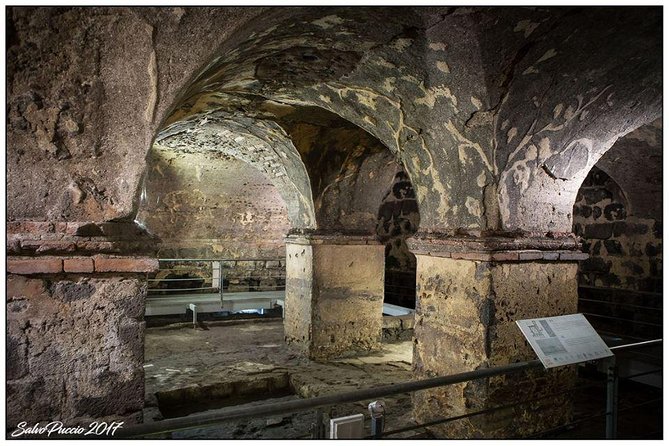
Terme Achilliane, Roman life below the Duomo
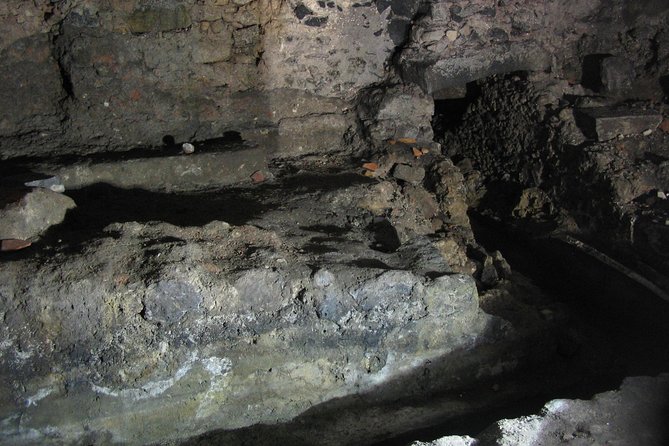
Your first stop is the Terme Achilliane, a large thermal complex dating from the third or fourth century AD. The bath complex once extended through the area of Piazza Duomo, but only a section below the cathedral remains accessible.
This is an excellent opening stop because it quickly changes your sense of Catania. Above you is one of the city’s most important religious buildings. Below you are rooms built for Roman bathing and social life. The contrast is the point.
Allow about 20 minutes here. The guide’s job is important because the surviving area is only one part of a much larger complex. Without context, you might see stone walls and arches. With a good explanation, you can picture the scale of the original thermal plant and understand how later construction covered much of it.
The stop also sets up the tour’s larger theme: Catania is a layered city. Buildings do not merely replace earlier buildings. In many places, the older city remains underneath.
Admission is included. The site is underground, so it also offers relief on a hot afternoon. Several people who took the tour appreciated the cooler setting as much as the archaeology.
Sant’Agata Cathedral, where sacred and civic Catania meet
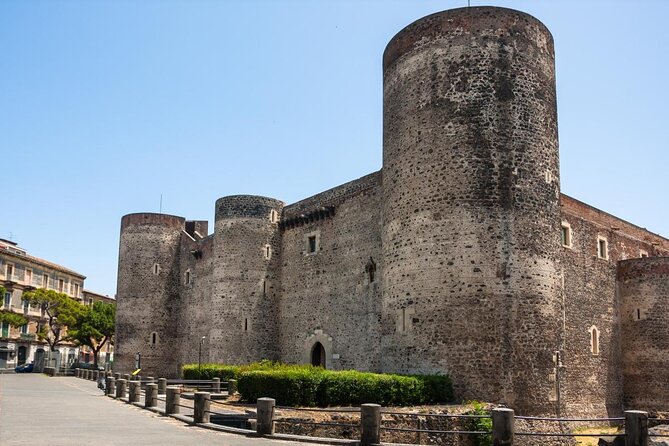
The next stop is the Basilica Cattedrale di Sant’Agata, the city’s central church and the spiritual heart of Catania. The visit lasts about 20 minutes, with no separate admission charge listed.
At first, this might seem like an above-ground interruption in an underground tour. It is actually useful. The cathedral gives you the setting needed to understand the Roman baths below it and the city’s repeated rebuilding.
The church’s story reaches from the Norman period to the baroque building you see today. Destruction and reconstruction shaped it over the centuries, as they shaped much of Catania. The cathedral also connects the city’s public identity with devotion to Saint Agatha, whose presence becomes even more important at the final stop.
I would not book this experience expecting a full cathedral tour. The listed visit is about 20 minutes, and the main focus remains Catania’s layers beneath the streets. Think of the cathedral as a bridge between the city you can see and the earlier city below.
A Putia dell’Ostello and the Amenano River
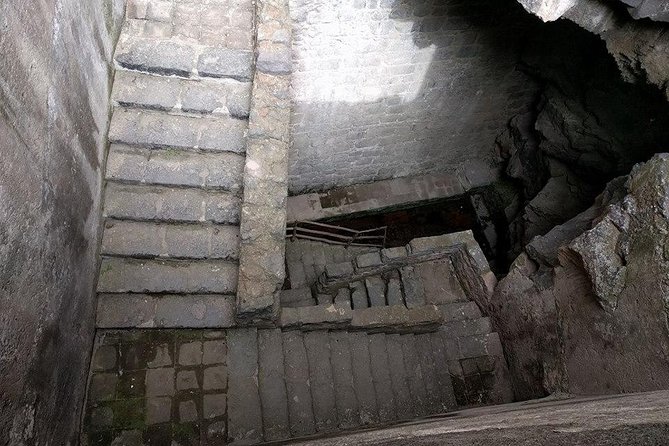
The tour then moves to A Putia dell’Ostello, where you enter a striking cave connected to the Amenano. This underground river winds beneath Catania’s historic center. In earlier times, the Amenano reached the surface and fed the Lake of Nicito.
Volcanic eruptions, earthquakes, and changes to the city altered the river’s route and the appearance of the surrounding land. Inside the cave, a branch still flows through the rock. The visit itself is brief, about 10 minutes, but it is one of the tour’s most unusual moments.
This is the kind of place you are unlikely to find by wandering around Piazza Duomo with a guidebook. The entrance is associated with a restaurant, which makes the setting feel especially unexpected. You move from the ordinary life of the modern city into a natural channel below it.
The guide can explain how Catania’s waterways and lava shaped one another. That connection is more valuable than simply seeing running water in a dark cave. You begin to understand why eruptions and earthquakes affected not only buildings but also the city’s natural systems.
Bring patience here. The stop is small rather than grand, and the space may feel close. If you want a polished monument with wide rooms and dramatic lighting, this is not that. If you enjoy odd, specific places with a strong link to the city’s geology, it is a highlight.
Same city, an entirely different afternoon:
- Pub Crawl Palermo
★ 5.0 · 595 reviews - SALT TOUR-all inclusive: salt tour: Trapani, Paceco, Nubia
★ 5.0 · 589 reviews - Mt. Etna nature and flavors half day Tour from Catania
★ 5.0 · 545 reviews - Boat tour Giardini Naxos Taormina Isola Bella Blue Grotto
★ 4.5 · 541 reviews
San Gaetano alle Grotte and the rock-cut past
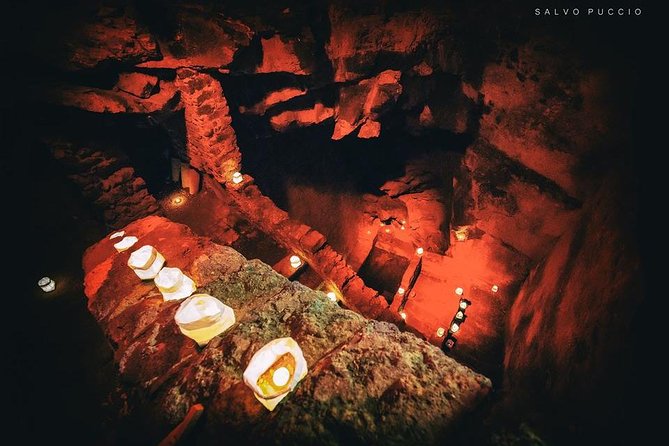
The final listed stop is Chiesa di San Gaetano alle Grotte, described as one of Catania’s most striking underground sites. It began as a lava-flow cave. In Greek times, the cave was reused as a cistern, and the Romans later used it as a catacomb tomb.
Christian tradition links the site to Saint Agatha’s first burial. A small church was built here as early as 262. Today, the crypt still contains traces of old frescoes and decorations cut directly into the living rock.
This stop brings together the tour’s main subjects: volcanoes, water, ancient engineering, burial customs, and faith. It also shows how one place can be reused across very different periods. A natural cave became a practical water store, then a Roman burial site, then a Christian sacred place.
You are not just looking at a church basement. You are seeing how people adapted to the volcanic ground beneath them. That makes the stop especially rewarding for anyone interested in archaeology or religious history.
Allow about 20 minutes. The remaining decorations may be fragmentary, so do not expect a perfectly preserved underground chapel. The interest lies in the layers and the rough rock itself. A guide who can explain what changed and what survived will make a major difference here.
The guides make the difference
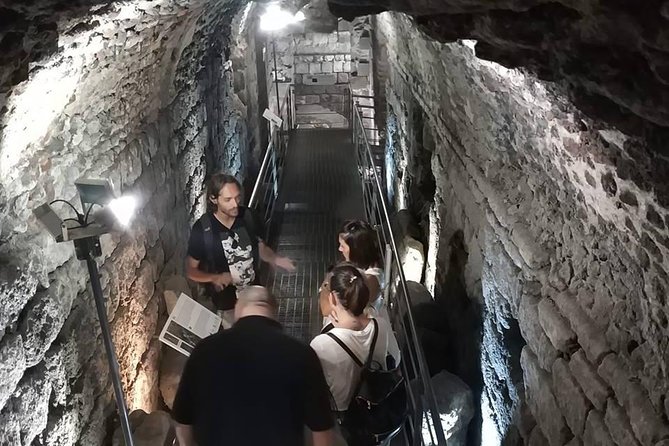
The strongest part of this experience is the guide’s ability to connect places that could otherwise feel separate. Oreste is praised for his archaeology background, broad knowledge of Catania, and willingness to answer detailed questions. Matilde and Mathilde are also singled out for warmth, clear storytelling, flexibility, and enthusiasm. Maria is described as passionate and well prepared.
Guide assignments can change, so you should not assume a particular person unless the provider confirms it. Still, the repeated strength of the guiding team is important. These sites are not self-explanatory. You need someone to explain how the 17th-century eruption and earthquake changed the city, how lava levels relate to present-day streets, and why the same cave served different communities.
The best guides also adjust to the group. Some people want a brisk walk and a broad overview. Others want to stop, ask questions, and look closely at construction materials or rock layers. The experience has been adjusted for timing needs, rain, and different interests, though one account found the pace a little slow.
If you prefer a fast itinerary, say so at the beginning. If you are curious about archaeology, ask questions. This is a tour that gains value from conversation.
Is $96.79 a fair price?
At $96.79 per person, Underground Catania is expensive for a 2 to 3-hour walking experience. Admission is included at the underground sites, and the group is capped at eight, but you are still paying mainly for access, organization, and specialist guiding rather than for a long list of ticketed attractions.
The price makes more sense if you value three things:
- You want a guide with an archaeology focus.
- You want unusual places that are hard to locate alone.
- You are visiting Catania for a short time and want a clear explanation of the city’s past.
It makes less sense if you are mainly looking for a cheap orientation walk or if you already plan to visit the same underground sites independently. The tour’s value also depends on group size and the meaning of private. The experience is advertised as exclusive to your group, but a separate account describes a mixed group of seven people from three parties. Ask before booking if complete exclusivity matters to you.
Group discounts may help. Since the experience is often booked well ahead, with an average booking lead time of 48 days, it is sensible to check availability early if your schedule is fixed.
Pace, comfort, and practical details
The walking route begins at Piazza del Duomo, 7, and ends at Piazza Stesicoro. It is near public transportation, and most people can participate. Service animals are allowed.
The underground settings may be cooler than the streets, which is welcome during Sicily’s hot months. You should still dress for a walking tour and be ready for enclosed historic spaces. The supplied information does not specify stairs, low ceilings, or uneven flooring, so ask the provider about current conditions if mobility is a concern.
English is the offered language. Confirmation arrives when you book. Free cancellation is available until 24 hours before the start time. After that point, cancellations and changes are not accepted for a refund.
Rain does not necessarily ruin the experience. The underground locations remain useful in wet weather, and the guides have adjusted the route and timing when conditions changed. That flexibility is helpful, but confirm the meeting details if the weather is poor.
Who will enjoy this most
I would choose this tour if you are interested in archaeology, geology, early Christianity, or the way cities rebuild after disaster. It is also a strong choice for a first visit to Catania because it explains why the city contains such a mix of Roman remains, lava rock, Norman traditions, baroque architecture, and local devotion to Saint Agatha.
Families with older children may enjoy the variety. You move from baths to a cathedral, then to a river cave and a catacomb-like grotto. That is more engaging than a long sequence of similar churches.
It also suits anyone who does not have the time or energy to visit Mount Etna but still wants a close look at how volcanic activity shaped Sicily. The tour does not replace a volcano excursion, but it gives you a grounded look at lava layers and the effects of eruptions within the city itself.
I would hesitate if you dislike enclosed spaces, want a very rapid pace, or are watching your budget closely. I would also hesitate if your only goal is major monuments. This experience is about the overlooked spaces between the famous sights.
Should you book Underground Catania?
Book it if you want Catania explained from below, not just photographed from above. The Roman baths, underground water, lava cave, and rock-cut church form a distinctive route, and the strongest guides make the connections memorable.
Before paying, confirm whether your booking is truly private, ask who will guide it, and decide if $96.79 fits your sightseeing budget. If the answer is yes, this is a thoughtful way to understand a city shaped by fire, water, earthquakes, and faith.
FAQ
How long does Underground Catania last?
The experience lasts approximately 2 to 3 hours.
What is the price?
The listed price is $96.79 per person.
Where does the tour begin?
It begins at Piazza del Duomo, 7, 95131 Catania, Italy.
Where does the tour end?
It ends at Piazza Stesicoro, Catania.
What language is offered?
The tour is offered in English.
How many people can join?
The activity has a maximum of 8 travelers.
Is the tour private?
It is described as a private tour exclusively for your group, but one booking account reported a group made up of three separate parties. Confirm the arrangement before booking if privacy is important to you.
Which underground sites are visited?
The route includes Terme Achilliane, the Basilica Cattedrale di Sant’Agata, the Amenano River cave at A Putia dell’Ostello, and Chiesa di San Gaetano alle Grotte.
Are admission tickets included?
Admission is included for Terme Achilliane, A Putia dell’Ostello, and Chiesa di San Gaetano alle Grotte. The cathedral stop has no separate admission charge listed.
Can I cancel for a full refund?
Yes. You can cancel up to 24 hours before the experience start time for a full refund. Cancellations or changes made less than 24 hours before the start time are not accepted for a refund.
Fresh on the Sicily list
- Egadi Sail Boat Tour to Favignana and Levanzo from Trapani★ 5.0 · 194 reviews
- Lampedusa: Yacht excursion, swimming stops and typical lunch★ 5.0 · 195 reviews
- Boat excursion Taormina Giardini Naxos★ 4.5 · 199 reviews
- Etna: Wine Tasting and Food Tour★ 4.7 · 201 reviews
- In the province of Palermo Sicilian Cooking Class near Cefalu★ 5.0 · 203 reviews
- Sicilian Cuisine Cooking Class in Palermo★ 5.0 · 208 reviews
- Electric scooter tour inside the Valley of the Temples Agrigento★ 4.5 · 212 reviews
- Snorkeling Tour Coast to Coast Taormina and Isola Bella★ 4.5 · 223 reviews
Sicily Tours, compared.

Tour of the island of Ortigia and exploration of sea caves with baths.
Read our review →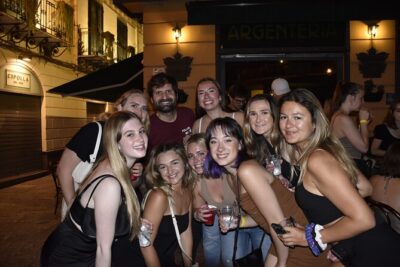
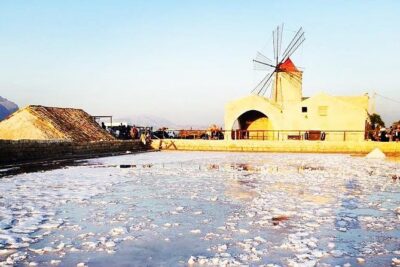
SALT TOUR-all inclusive: salt tour: Trapani, Paceco, Nubia
Read our review →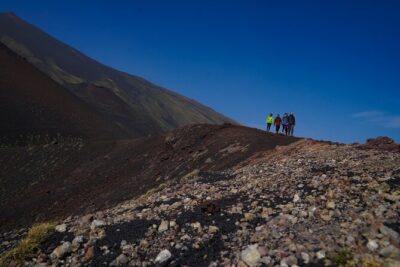
Mt. Etna nature and flavors half day Tour from Catania
Read our review →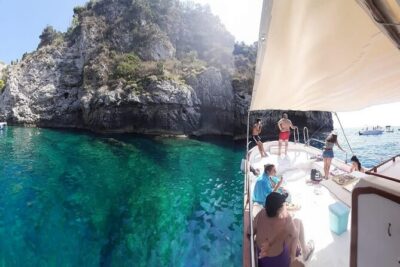
Boat tour Giardini Naxos Taormina Isola Bella Blue Grotto
Read our review →
Etna excursion 3000 meters with 4×4 cable car and Trekking
Read our review →Browse the lists this tour appears in