Reviewed · TOURS
Syracuse: Neapolis Archaeological Park Small Group Tour
Syracuse’s Neapolis Archaeological Park packs Greek theaters, Roman ruins, stone quarries, and a famous echoing grotto into one hillside. The ancient Greek Theater is the star, with views toward the bay, while the Ear of Dionysius gives the visit its bit of mystery.
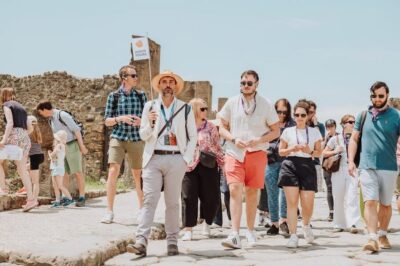
I like the way a guide turns scattered stones into a story you can follow, and I like the small-group option, which makes it easier to hear and ask questions. The main consideration is pace: the advertised visit lasts 1.5 hours, but some people find the route slower than expected, especially with frequent explanations and photo stops.
Key points to know before you book
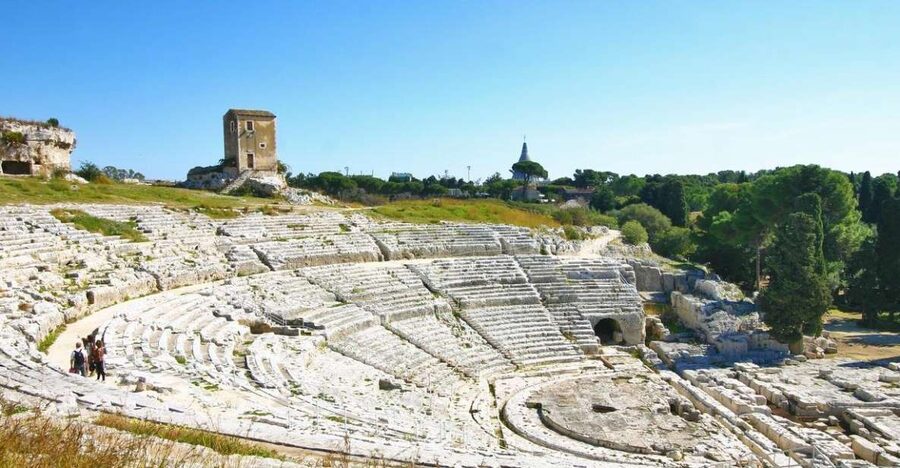
- The Greek Theater is the main event: Cut into Temenite Hill, it combines impressive engineering with open views toward Syracuse’s bay.
- The Ear of Dionysius is short but memorable: Its unusual shape and echoing acoustics give the old quarry a dramatic pause.
- A guide adds real value: Without context, many parts of the park can look like weathered rock and broken walls.
- Shared and private options are available: Small groups make it easier to hear, while a private tour lets you set a more personal pace.
- The route covers Greek and Roman Syracuse: You see the theater, quarry, altar, and amphitheater in one compact visit.
- Plan for warm or wet weather: Much of the tour is outdoors, and the park can feel exposed in summer.
Why Neapolis matters in Syracuse
Syracuse was one of the most important Greek settlements in Sicily, and Neapolis shows how large and ambitious the ancient city was. The park is not just one isolated ruin. It is a broad archaeological area where quarrying, theater, public ceremony, and Roman entertainment all meet.
That mix is what makes the visit worthwhile. You are not looking at one monument and then moving on. You are walking through several layers of Syracuse’s past, with Greek and Roman remains appearing along the same route.
I find this kind of site much easier to understand with a guide. The ancient theater, altar, and amphitheater were built for different purposes, but a quick visit on your own may leave you with little sense of how they fit into city life. A good guide gives each place a role in the larger story.
This tour is led by a licensed guide and costs about $26 per person. That is a fair price if entry is included in the option you choose, since you receive both the park visit and live explanations. Check the exact booking choice carefully, because entry tickets are listed as included only when that option is selected.
A few other Italy mornings to weigh against this
- Syracuse: Boat Tour with Captain Mirko, Snorkeling & Caves
★ 4.7 · 746 reviews - Siracusa: Ortigia Boat Tour with Marine Grotto
★ 4.7 · 617 reviews - Siracusa: Ortigia & Sea Caves Speedboat Tour with Swim Stop
★ 4.9 · 499 reviews
Starting at Largo Anfiteatro
The meeting point is listed at Largo Anfiteatro, 2, though it can vary depending on the option you book. Read the confirmation details rather than assuming every departure starts in exactly the same spot.
The tour begins at the park entrance, where you meet the guide and start on foot. There is no sightseeing vehicle involved, so wear shoes that are comfortable for a walking route through an archaeological site. Bring a passport or identity card, as this is listed among the required items.
The visit is advertised as 1.5 hours. The individual stops add up to roughly that length, with the longest explanation at the Greek Theater. In practice, timing can shift depending on group size, questions, weather, and how much time people take for photographs.
The operator offers shared group and private tours. A small shared group is the better value for most people. It keeps the cost low but still gives you a chance to follow the explanation and ask questions. Private touring makes more sense if you are traveling with family, want to move slowly, or need the guide to adjust the discussion for children.
Latomie del Paradiso: Syracuse carved from stone
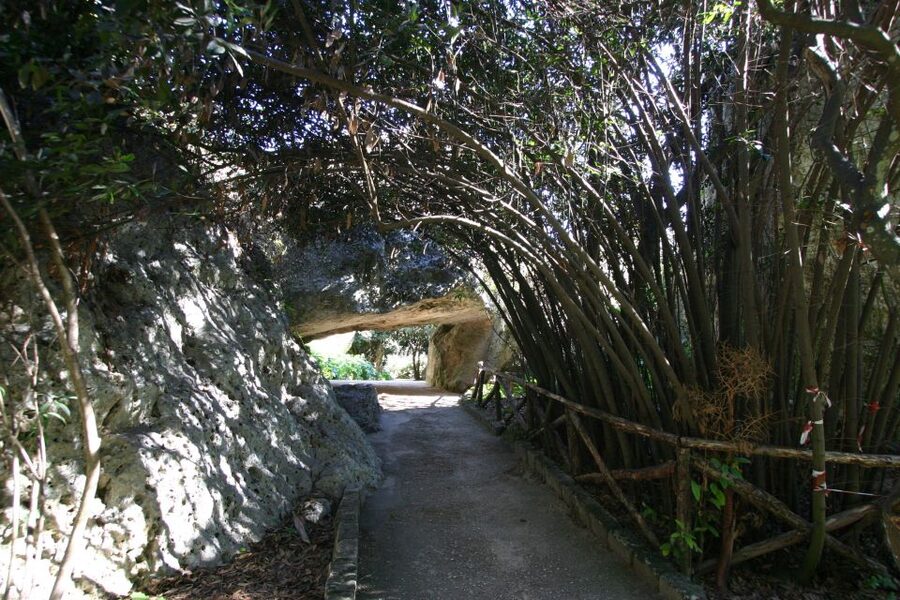
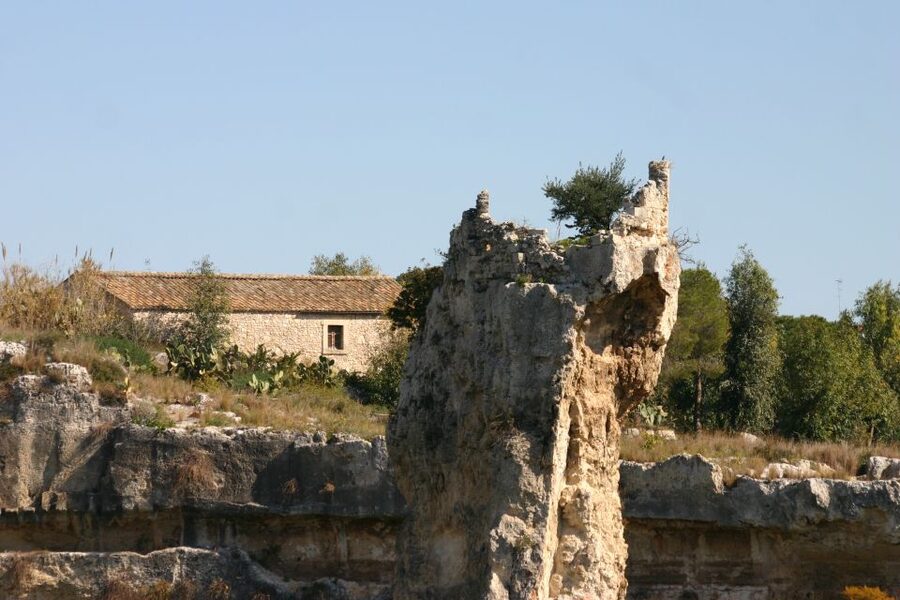
The first main stop is Latomie del Paradiso, an ancient stone quarry. These quarries are more than a scenic opening in the rock. They help you see the scale of construction in ancient Syracuse and the amount of stone removed to build the city.
The quarry area also has local plants and shaded pockets, which soften the hard rock walls. In spring, the setting can be especially pleasant, with orange and lemon blossom adding scent to the walk. That seasonal detail is worth noticing, since the park is not only about masonry and ruins.
Your guide spends about 15 minutes here. This is a good point to listen closely rather than rush for photographs. The quarry sets up the next stop and explains why the grottoes in this part of the park have such unusual shapes.
The drawback is that the site can be less immediately legible than a standing monument. You may see rock faces and open spaces before you understand their original use. That is exactly where the guide earns the fee.
Grotta dei Cordari and the old quarry spaces
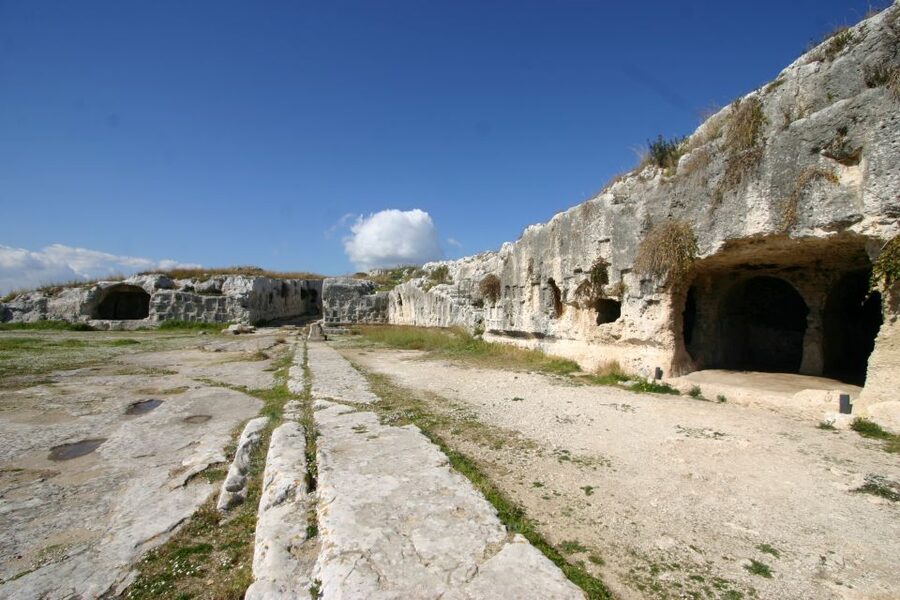
The route continues to Grotta dei Cordari, another quarry area, for about 15 minutes. The name is connected with rope makers who used the sheltered space, and the stop helps show how these ancient excavations continued to serve practical purposes long after their first use.
The grotto is not presented as a grand theater or formal monument. Its appeal comes from the combination of cut stone, enclosed space, and later human activity. Pay attention to the way the guide explains the relationship between the quarry and the working life of Syracuse.
This is also one of the places where group size matters. In a large shared group, a radio receiver may be provided, but radios are listed as available only for the large shared-group option. That sounds backward at first, but it means you should not assume every booking includes one. In a small group, you will likely hear the guide directly, while a crowded setting makes the equipment more useful.
Same city, an entirely different afternoon:
- Vatican: Museums & Sistine Chapel Entrance Ticket
★ 4.5 · 144,003 reviews - Vatican Museums & Sistine Chapel Tour with Optional Basilica
★ 4.3 · 67,413 reviews - Colosseum, Roman Forum & Palatine Guided Tour
★ 4.7 · 63,148 reviews - Milan: Cathedral and Duomo’s Terraces Entrance Ticket
★ 4.6 · 61,054 reviews
The Ear of Dionysius and its famous echo
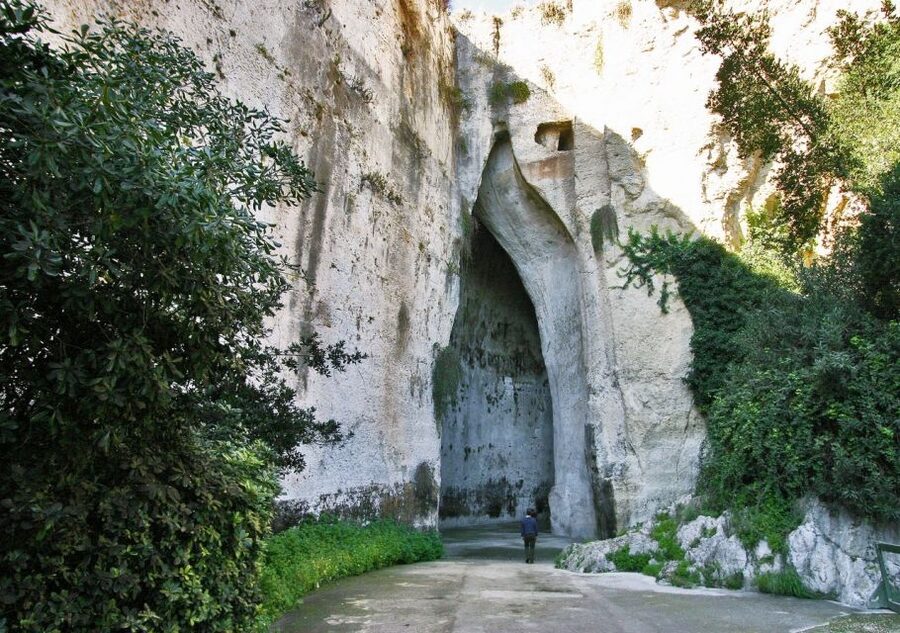
The Ear of Dionysius is the park’s most theatrical natural feature. This tall grotto is famous for its ear-like shape and echoing sound, and the enclosed space gives the visit a brief change of mood.
The name is tied to the legend of Dionysius, the ancient ruler of Syracuse. Your guide explains the story and separates the dramatic tradition from what can be seen in the quarry itself. The exact acoustics are the point here, so listen as well as look.
You spend about 15 minutes at the grotto. It is not a long stop, but it is one you are likely to remember. The dark, curved stone and strange sound make it feel different from the open theater and formal Roman ruins later in the route.
I would not book this tour only for the Ear of Dionysius. It is a memorable piece of the park, but the Greek Theater and the wider sequence of monuments provide the real substance. Think of the grotto as a strong middle chapter rather than the whole story.
The Greek Theater: the heart of the visit
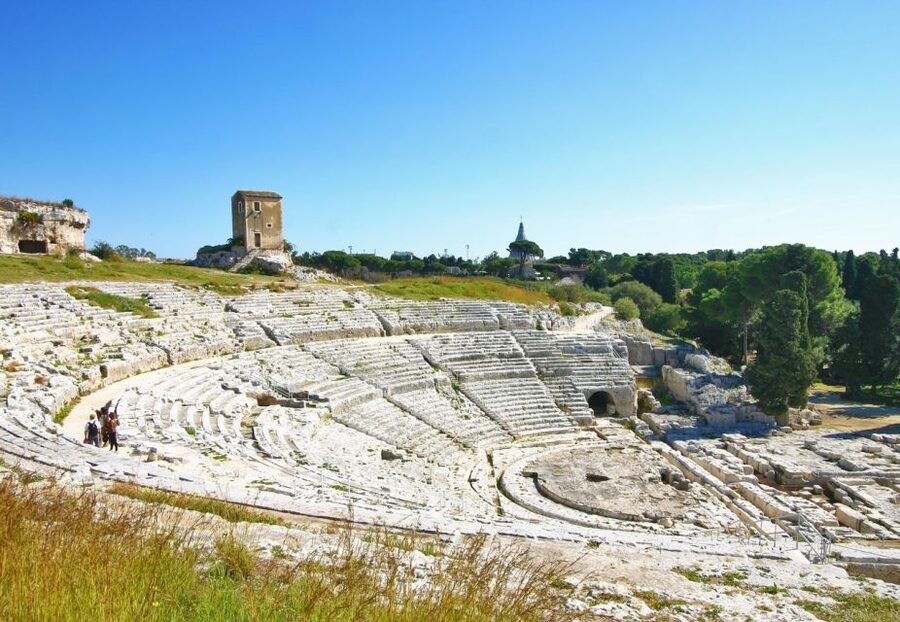
The ancient Greek Theater receives about 30 minutes, and rightly so. Cut into the rock of Temenite Hill, it is the largest and most important stop on the route.
The theater gives you both architecture and setting. From the seats, you can look across toward Syracuse’s bay, and the open view helps explain why this was more than a simple performance space. The shape of the hillside, the carved stone, and the broad outlook all work together.
A guide can point out features you might otherwise miss, including the layout, the relationship between the stage and seating, and the way the theater was shaped from the hill itself. You can walk around and take photographs, but the site becomes far easier to picture once someone explains how people would have used it.
The theater is also where the tour may feel slow if you prefer to explore independently. Thirty minutes is a substantial portion of a 90-minute visit, and the guide may pause for questions or give a detailed explanation. I think that time is well spent for first-time visitors, but those who already know Greek theater design may want a shorter, faster route.
Views are best appreciated without rushing. Take a moment to look beyond the stones toward the bay. This is one of the places where the park connects ancient life with the present-day city.
The Altar of Hieron II
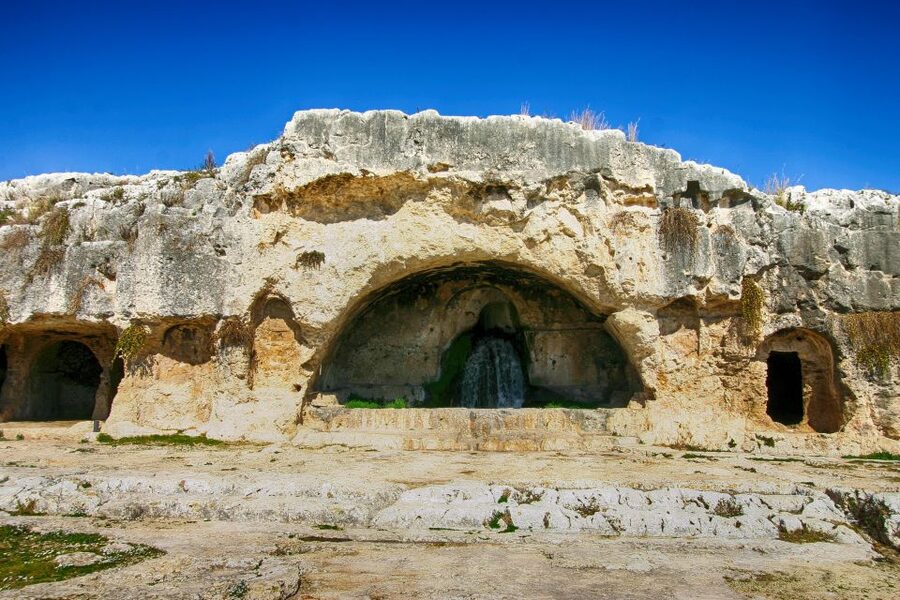
After a short photo stop in the park, the route reaches the Altar of Hieron II for about 10 minutes. This monument is associated with Hieron II, one of Syracuse’s major rulers, and its scale points to the importance of public religious ceremonies in the ancient city.
The altar is easier to appreciate after seeing the theater and quarries. You have already encountered spaces for performance and labor. Here, the focus shifts to ceremony and power.
Do not expect a complete structure rising in front of you. Like much of Neapolis, the remains require explanation and imagination. The guide’s job is to show you what the surviving foundations mean and why the altar mattered.
This is a short stop, but it gives the tour a useful change of subject. You are not simply moving from one large ruin to another. You are seeing different parts of civic life and how the city presented its power.
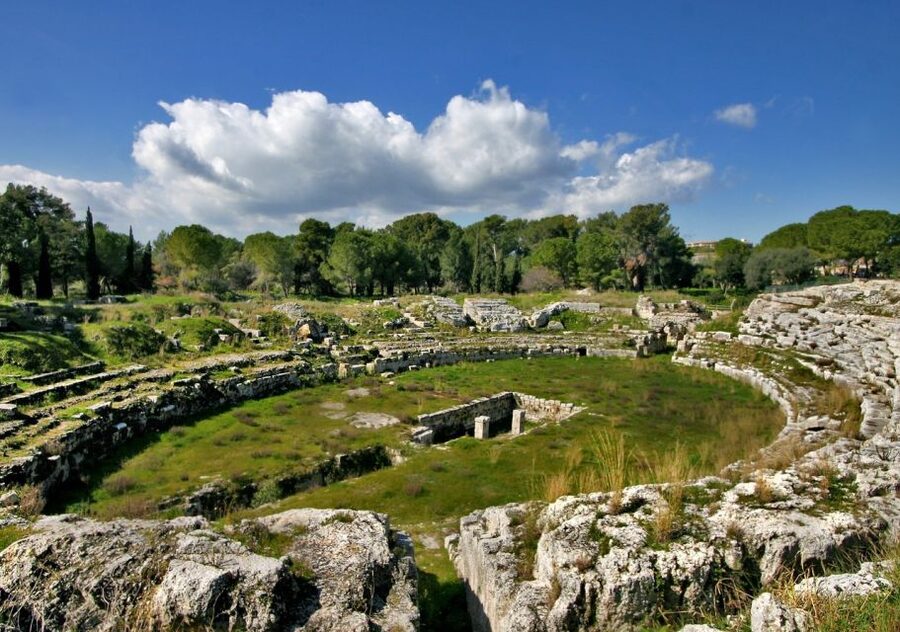
Syracuse’s Roman Amphitheater
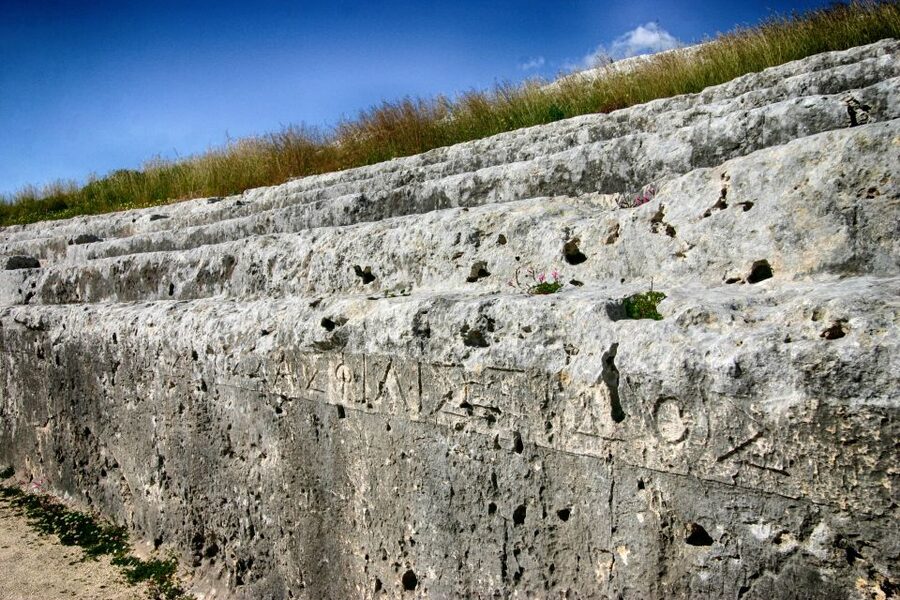
The final major stop is the Roman Amphitheater, with about 15 minutes of guided time. It adds a Roman layer to a route that begins with Greek monuments, making the visit especially useful if you want to understand how Syracuse changed under different rulers.
The amphitheater has a different design and purpose from the Greek Theater. Its form was suited to large public spectacles rather than the performance tradition associated with Greek drama. Your guide helps you compare the two instead of treating them as interchangeable ancient arenas.
Access can occasionally depend on the site’s opening arrangements. One past visit had an early closure of the Roman section, and the guide worked to get the group inside. That is a reminder to allow some flexibility: the tour operator can help, but it cannot control every last-minute change at a public archaeological site.
The Roman Amphitheater is a fitting final stop because it rounds out the Greek and Roman story. After seeing it, you can better understand why Neapolis is worth more than a quick photograph from the entrance.
How good is the guiding?
The strongest part of this experience is the guiding. Eva receives repeated praise for clear explanations, a friendly manner, and a good sense of pace. Federica is also singled out for making Greek and Roman culture easy to follow, while guides named Galina, Anne-Marie, and Carmine are described as engaging and well prepared.
That does not mean every guide will use the same style. Some explanations may be more detailed, while others may move briskly. The consistent point is that the tour is built around interpretation, not just escorting you from monument to monument.
The guides also connect the park with Syracuse beyond the ruins. Eva, in particular, has provided information about Ortigia and modern life in the city, while Federica has offered suggestions for things to do nearby. That extra local context can help you plan the rest of your day.
The booking information lists Italian as the tour language. At least some departures have included English explanations, and one small private group was handled in both English and Italian. If language is important to you, confirm the language of your selected departure before paying.
In rare cases, a very small shared group may receive explanations in two languages. That can add time, so keep it in mind if you are working around a tight schedule.
Small group or private tour?
For most couples and families, I would choose the small shared option. You get the social ease and lower price of a group, while a group of about 10 can still feel personal. Several visits have been described as easy to hear and well timed in a group of that size.
A large shared group may still be perfectly workable, especially if radio receivers are supplied. The tradeoff is less freedom to stop, ask questions, or adjust the pace.
A private tour is a better fit if you have young children, different mobility needs, or a strong interest in one period. One family with an eight-year-old appreciated being able to adjust the pace and content. Another guide helped a parent with a stroller find paved paths and waited when the child fell asleep.
The park is listed as wheelchair accessible. Even so, a private guide may be useful if you want help choosing the easiest route through the site. The general tour is on foot, so ask about the meeting point and route if access is a major concern.
Weather, timing, and comfort
Syracuse can be very warm, and much of this visit takes place outdoors. An evening departure can be a smart choice in summer. One July visit was described as particularly hot, with the later timing making the walk more comfortable.
Spring brings a different pleasure. Orange and lemon blossom can scent the park in April, adding something beyond the ruins. Rain does not necessarily cancel the tour, but it can make the walk harder and reduce the comfort of standing outdoors for explanations.
Bring water, sun protection, and your identity document. The supplied information specifically asks you to bring a passport or ID card. Comfortable walking shoes are sensible, even though the route is not described as a demanding hike.
Leave room for photographs, but do not expect unlimited free time at every monument. The schedule is compact, and the guide has several important stops to cover.
Is $26 good value?
At around $26 per person, this is good value if the entry-ticket option is included in your booking. You are paying for a licensed guide who covers the park’s main Greek and Roman sites in one organized visit, rather than paying for a long excursion with transport and extras you may not need.
The tour is especially good value for first-time visitors. The park contains enough ruins, quarry spaces, and historical layers to make an unguided walk feel incomplete. Several parts, such as the altar and Roman Amphitheater, need context before their importance becomes clear.
Independent visitors may prefer to buy admission and set their own pace. That can work if you already know the site or want time for quiet photographs. But you will give up the connected story, the comparisons between monuments, and the chance to ask questions as you go.
The short duration also keeps the cost practical. You can fit the visit into a half-day in Syracuse without giving up an entire afternoon. The price is less attractive only if the group is large, the language does not suit you, or you want a slow archaeological study rather than a focused introduction.
Who should book this tour?
I would recommend it to first-time visitors to Syracuse, families with older children, couples interested in ancient history, and anyone who wants the main monuments explained without committing to a long day.
It works particularly well for people who look at ruins and think, I need someone to tell me what I am seeing. The guides are praised for making the subject clear without overwhelming the group, and even teenagers have found the explanations interesting.
You might skip it if you strongly prefer solitude, already have a detailed understanding of Greek and Roman archaeology, or want to spend several hours at the Greek Theater alone. You should also check the language before booking if Italian or English service is essential.
Cancellation is free up to 24 hours before the start time, and you can reserve now while paying later. Those terms help if your Syracuse schedule is still changing.
Should you book the Neapolis tour?
Yes, if you want an efficient and well explained introduction to Syracuse’s ancient center. The Greek Theater, Ear of Dionysius, quarries, Altar of Hieron, and Roman Amphitheater make a varied route, while the $26 price keeps the experience accessible.
Choose a small shared group for the best balance of cost and personal attention. Choose private if you need a custom pace or are traveling with children. Just confirm the meeting point, entry-ticket choice, and tour language, then allow a little flexibility for weather and site access.
FAQ
How long does the Neapolis Archaeological Park tour last?
The tour is advertised as 1.5 hours. The planned stops include guided visits and short time for photographs.
How much does the tour cost?
The listed price is $26 per person.
What monuments are included?
The route includes Latomie del Paradiso, Grotta dei Cordari, the Ear of Dionysius, the Greek Theater, the Altar of Hieron II, and Syracuse’s Roman Amphitheater.
Is the Greek Theater part of the tour?
Yes. The guided visit to the ancient Greek Theater is scheduled for about 30 minutes.
Can I choose a private tour?
Yes. The experience offers both a shared group option and a private tour option.
Are entry tickets included?
Entry tickets are included when you select the option that includes them. Check the exact booking choice before confirming.
Is the tour wheelchair accessible?
The activity is listed as wheelchair accessible.
What should I bring?
Bring a passport or identity card. Comfortable walking shoes and suitable protection from sun or rain are practical choices for this outdoor walking tour.
What language is the tour in?
The activity information lists Italian as the tour language. Some departures have included English explanations, so confirm the language for your chosen option.
Can I cancel for a refund?
You can cancel up to 24 hours before the tour for a full refund. A reserve-now-and-pay-later option is also available.
Fresh on the Italy list
- Milan: Last Supper and Sforza Castle Guided Tour★ 4.6 · 498 reviews
- Boat trip La Maddalena Archipelago – Departure from Palau★ 4.5 · 499 reviews
- Florence: Uffizi Guided Tour with Skip-the-Line Entry Ticket★ 4.8 · 499 reviews
- Exclusive Golf Tour Private VIP with Local & Gelato o Wine★ 5.0 · 500 reviews
- Turin: Egyptian Museum Skip-the-Line Group Tour★ 4.7 · 500 reviews
- Itria Valley: Polignano, Ostuni, and Locorotondo, from Bari★ 4.6 · 502 reviews
- Colosseum, Palatine Hill and Roman Forum with Guided Tour★ 5.0 · 500 reviews
- Catania: Etna Nature Tour with Hiking, Cave Visit, & Tasting★ 4.7 · 502 reviews
Tours, compared.
Vatican Museums & Sistine Chapel Tour with Optional Basilica
Read our review →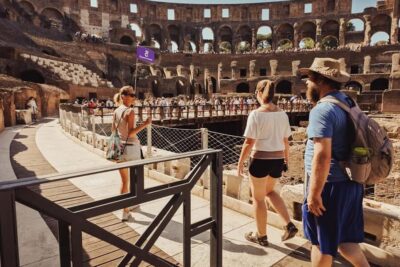
Colosseum, Roman Forum & Palatine Guided Tour
Read our review →
Vatican Museums, Sistine Chapel & St Peter’s Basilica Guided Tour
Read our review →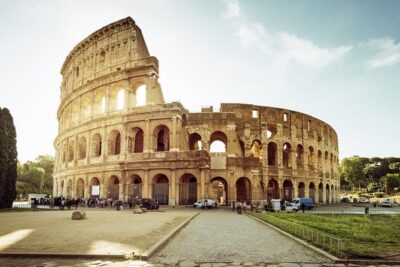
Colosseum, Palatine Hill and Roman Forum Guided Tour
Read our review →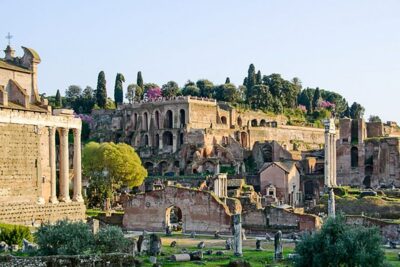
Guided Tour of Colosseum, Roman Forum & Palatine Hill
Read our review →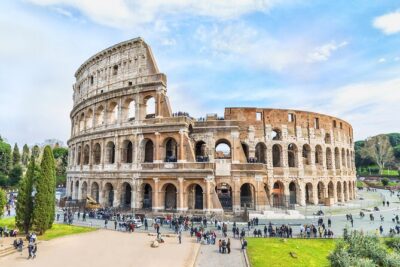
Colosseum, Roman Forum and Palatine Hill Guided Tour
Read our review →
Naples Underground Entry Ticket and Guided Tour
Read our review →