
Reviewed · VATICAN & SISTINE CHAPEL TOURS
Rome: Vatican & St Peter’s Basilica: unlock the wonders
The Sistine Chapel may be the headline, but this tour’s real strength is the way it connects the Vatican’s art, politics, and religious purpose. In three hours, you move from the Pinecone Courtyard and Laocoön to the Gallery of Maps, Michelangelo’s ceiling, and St. Peter’s Basilica.
I like the skip-the-line entrances and the clear route through several major rooms, especially if this is your first Vatican visit. I also like the guides’ personal style: Oxana, Kate, Lisa, Anna, Francesca, and others are praised for clear explanations, humor, and energy. The main caution is that the Vatican can close St. Peter’s Basilica for ceremonies, while the crowds can make the route feel rushed.
Key points to know before booking
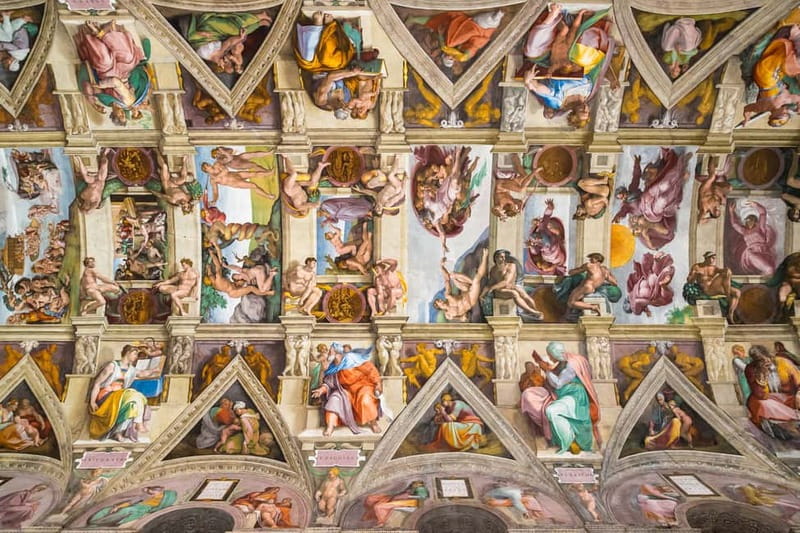
- Michelangelo’s Sistine Chapel: See the Creation of Adam, the Last Judgment, and side-wall scenes from the lives of Moses and Christ.
- Gallery of Maps: Walk through a long display of detailed regional maps commissioned by Pope Gregory XIII.
- Ancient sculpture first: The Pio-Clementino Museum includes Laocoön and His Sons, one of the Vatican’s best-known ancient works.
- Skip-the-line access: Separate entrances save time at both the Vatican Museums and St. Peter’s Basilica.
- Guide quality matters: Strong guides such as Oxana, Kate, Anna, Lisa, and Francesca add art context and keep the group together.
- Basilica access is not guaranteed: Worship and papal ceremonies can alter the route at short notice.
Why this Vatican tour is worth three hours
The Vatican Museums are too large for a casual wander. You can spend hours moving through corridors and still miss the point of what you are seeing. A guide gives the visit a shape, helping you understand why a sculpture, ceiling, or painted map matters before the next room pulls your attention away.
This three-hour visit is aimed at the first-time visitor who wants the essential sights without trying to cover every gallery. The Vatican Museums portion takes about two and a half hours, followed by roughly 30 minutes in St. Peter’s Basilica when access is available.
At $100.82 per person, this is not a budget museum ticket. You are paying for the guided route, separate entry arrangements, headsets, and the time saved by avoiding the standard entrance line. For a major Rome visit, I consider that fair value if you want context and a managed route. It is less appealing if you prefer to move slowly, study individual works for a long time, or already know the Vatican well.
The experience is offered in English and Russian. Guides are assigned by departure, so you cannot assume you will receive a particular person. Still, the repeated praise for guides such as Oxana, Kate, Anna, Lisa, Emma, and Francesca points to a strong guiding team. The most effective guides keep explanations lively without treating the art like a school lecture.
A few other Vatican City mornings to weigh against this
- Vatican: Museums & Sistine Chapel Entrance Ticket
★ 4.5 · 144,003 reviews - Rome: Vatican Museums & Sistine Chapel Skip-The-Line Ticket
★ 4.2 · 11,708 reviews - Vatican Museums, Sistine Chapel & St Peter’s Basilica Tour
★ 4.6 · 10,222 reviews
Finding the Emotion.club meeting point
The starting point is on Viale Vaticano at number 100. Your guide carries the rounded Emotion.club logo sign, which is useful because the Vatican entrance area is crowded with tour groups holding all sorts of boards and flags.
Arrive prepared to identify the sign quickly. The meeting point is near one of Rome’s busiest sightseeing zones, and a late arrival can cause stress even when a guide is patient. One guide, Anna, was praised for waiting kindly for a delayed participant, but you should not count on this happening every time.
The tour ends in St. Peter’s Square. If the basilica is closed during your visit, the guide will explain the building from outside and advise you on visiting independently. In that case, the route may include more time in the museums, as happened during an unusual closure connected with a papal event.
The Pinecone Courtyard and Laocoön
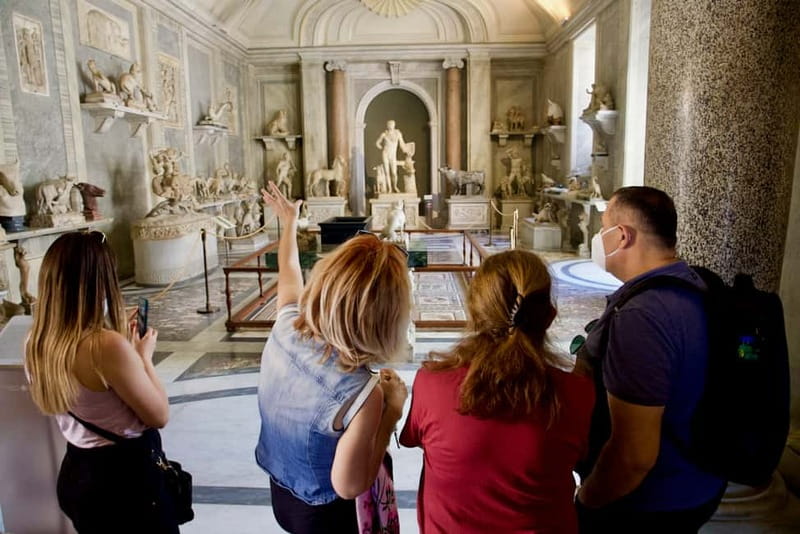
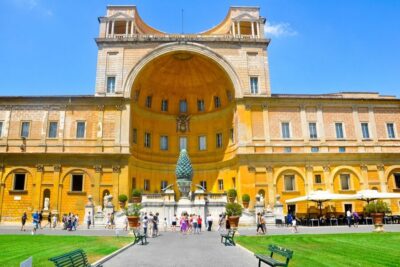
The first section introduces the Vatican’s grand scale. The Belvedere Courtyard, also called the Pinecone Courtyard, takes its name from the enormous bronze pinecone fountain. The fountain dates from the first or second century AD, giving you an immediate reminder that the Vatican collection reaches far beyond Renaissance painting.
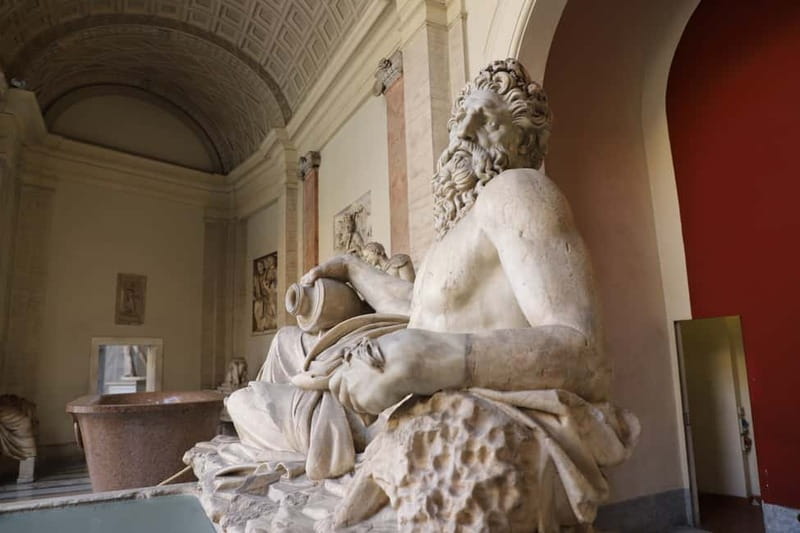
The Pio-Clementino Museum brings the ancient world into focus. Its best-known work here is Laocoön and His Sons, a dramatic marble sculpture showing the Trojan priest Laocoön and his sons attacked by sea serpents. The piece is large, theatrical, and easy to appreciate even if you are not an art specialist.
This is a good point to listen closely to your guide. Ancient sculpture can look like a series of beautiful bodies unless someone explains how the pose, expressions, and movement create the drama. Guides such as Oxana were praised for making sculpture approachable, including details about materials such as valuable red marble and the way later artists responded to earlier masters.
The drawback is pace. The Vatican’s route can be crowded, and you may not get a quiet moment in front of every work. If Laocoön is a personal priority, stay close enough to hear the explanation but allow yourself a few seconds to look without the group moving on.
The Gallery of Maps and papal power
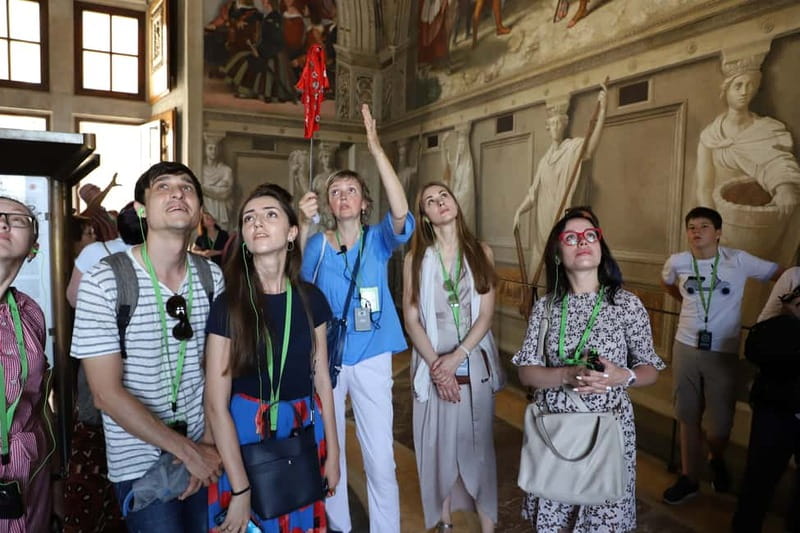
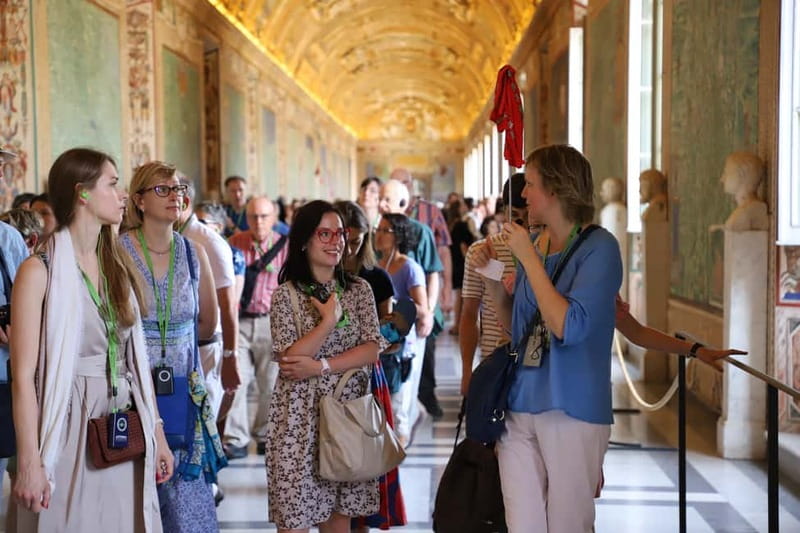
The Gallery of Maps is one of the most memorable parts of the route. Its walls hold a vast sequence of painted maps, often described as the world’s largest geographical museum. The maps were commissioned under Pope Gregory XIII, a pope associated with mathematics and astronomy who also gave his name to the Gregorian calendar.
The gallery is more than decoration. It shows how geography, religion, scholarship, and political power met inside the Vatican. The maps present Italy as a place that could be measured, ordered, and displayed under papal authority.
Look up and along the walls as you walk. The painted maps are detailed, but the ceiling above them competes for attention. This is one of those rooms where a guide helps you decide where to look first, since the amount of decoration can be tiring on the eyes.
The corridor can also become one of the most crowded stretches of the tour. Your guide will likely pause to explain key features, but you may be surrounded by other groups. Keep your headset on and stay with your party. Losing sight of the guide in a packed gallery is an easy way to miss the next section.
Same city, an entirely different afternoon:
- Skip the Line: Vatican & Sistine Chapel Ticket with Audio Guide
★ 4.0 · 3,271 reviews - Rome: Vatican Museums and St. Peter’s Tour with Dome Climb
★ 4.7 · 1,924 reviews - Vatican: Museums Sistine Chapel & St. Peter’s Basilica Tour
★ 4.4 · 1,605 reviews - Rome: Vatican & Sistine Chapel Tour + Optional Colosseum
★ 4.3 · 1,301 reviews
Renaissance art before the Sistine Chapel
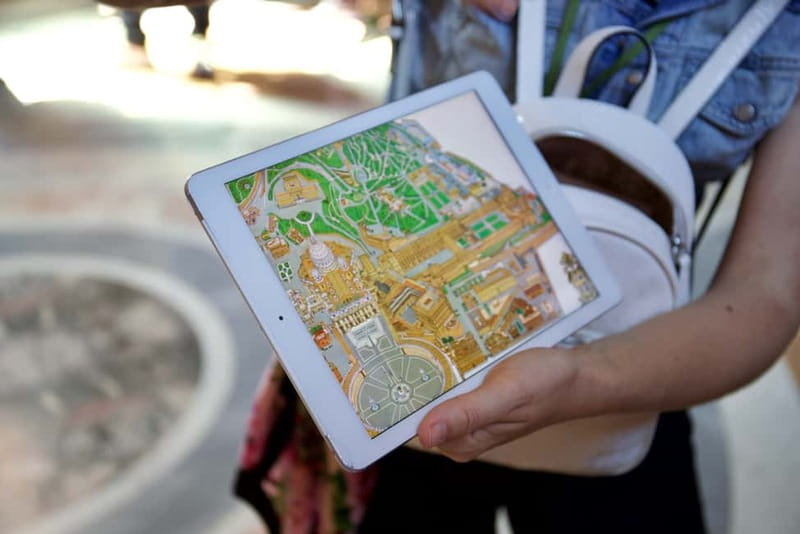
The Vatican Museums hold far more than the Sistine Chapel. You pass through rooms filled with religious paintings, sculpture, architectural details, and works connected with the Renaissance. The purpose of the guided route is not to show every object. It is to give you enough background to understand the artists and popes who shaped the collection.
Your guide may point out the rivalry between Michelangelo and Raphael. One useful detail shared during the tour is that Raphael studied Michelangelo’s muscular figures and began to adapt that powerful style in his own work. Seeing those connections in the galleries makes the Renaissance feel less like a list of famous names and more like an ongoing exchange between artists.
This portion suits visitors who want explanation rather than a checklist. Guides have been praised for humor, patience, and the ability to keep children interested. Kate, in particular, is described as energetic and funny, while Lisa is praised for making families feel comfortable during the long visit.
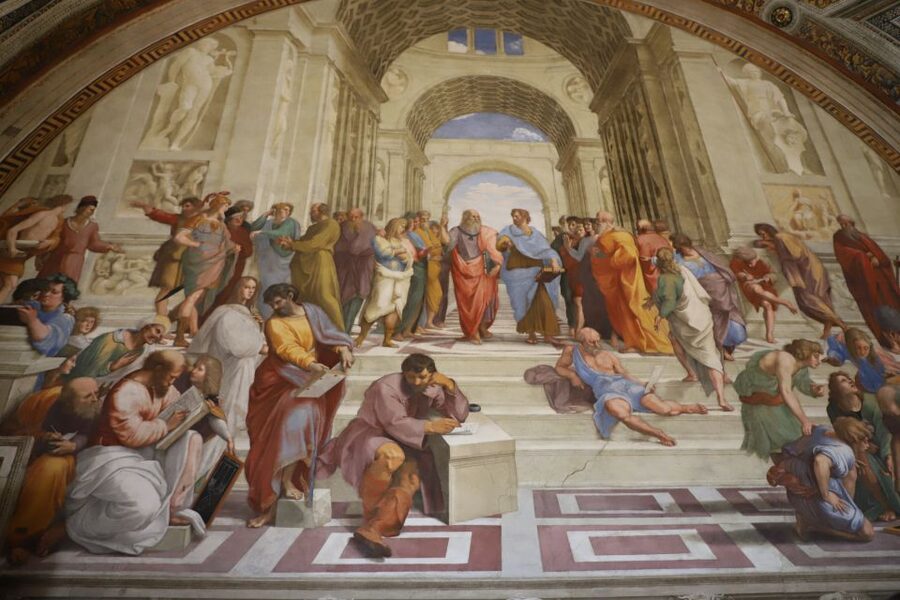
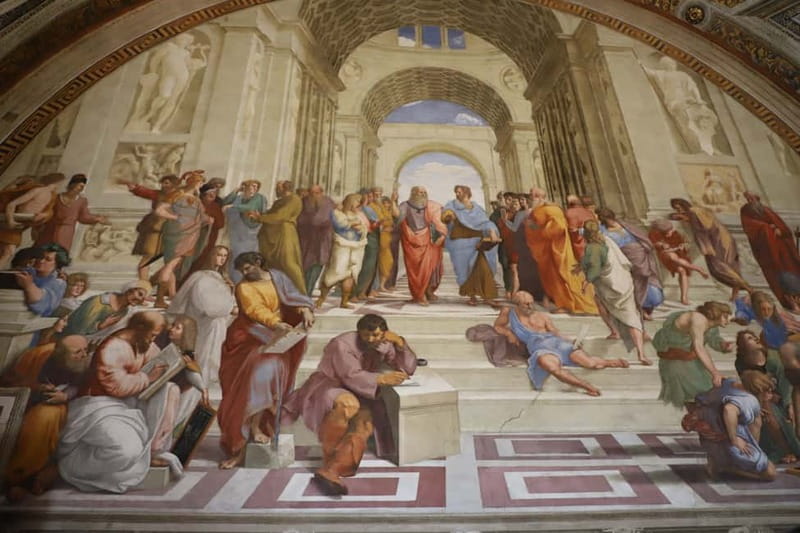
You should still set realistic expectations. The Vatican Museums are enormous, and no three-hour route can show everything. The tour gives you the major highlights, not a complete survey of the collection. If you want Raphael’s Rooms, note that they are specifically not included.
The Sistine Chapel: look up, then look forward
The Sistine Chapel is the emotional center of the tour. Michelangelo’s ceiling presents scenes from Genesis, including the Creation of Adam. At the far end, the Last Judgment covers the wall behind the altar.
The side walls contain frescoes showing episodes from the lives of Moses and Christ. Your guide explains how these scenes fit together, which makes the chapel easier to read as a program rather than a ceiling covered in separate pictures.
Before entering, listen carefully to the rules. The chapel is a place of worship, not simply an art gallery, and electronic devices are listed among the prohibited items. Photography and general conversation may be restricted, so follow the current instructions from staff and your guide.
The chapel can be crowded and quiet in a way that feels tense rather than peaceful. You may have only a short period to take it all in. I suggest deciding in advance what you most want to see: the Creation of Adam, the Last Judgment, or the side-wall scenes. That small plan helps you use your time well.
Access can also change. One tour had no access to the Sistine Chapel during a temporary disruption, yet the guide adapted the route and made the museum visit worthwhile. That is a reminder that Vatican plans are subject to religious events, security controls, and official closures.
St. Peter’s Basilica and Michelangelo’s Pietà
When the connection is open, the tour continues to St. Peter’s Basilica through a skip-the-line entrance. The basilica is one of the world’s major Catholic churches, and it functions first as a place of worship. That status explains why access can be withdrawn for ceremonies, papal events, or other religious reasons.
The guided visit lasts about 30 minutes. That is enough for an introduction to the vast interior and for a close look at Michelangelo’s Pietà, one of the most famous sculptures in the history of Western art. The work shows Mary holding the body of Christ, and its calm form contrasts with the suffering depicted elsewhere in the Vatican.
The Pietà is protected behind glass, so you will not walk right up to the marble. Even so, it is a powerful stop, and a guide can draw your attention to the smooth finish, the arrangement of the figures, and Michelangelo’s treatment of the subject.
The Dome is not included. You can visit it afterward on your own, usually between 7:30 in the morning and 5:00 in the afternoon, with tickets sold on site for €10 per person. If the dome is important to you, confirm the current opening situation after the tour, since the schedule provided is described as usual rather than guaranteed.
If the basilica is closed, you do not lose all value from the day, but you should understand the limitation before booking. You receive an explanation from outside and advice for a later independent visit, not a substitute interior tour.
What the guide adds to the experience
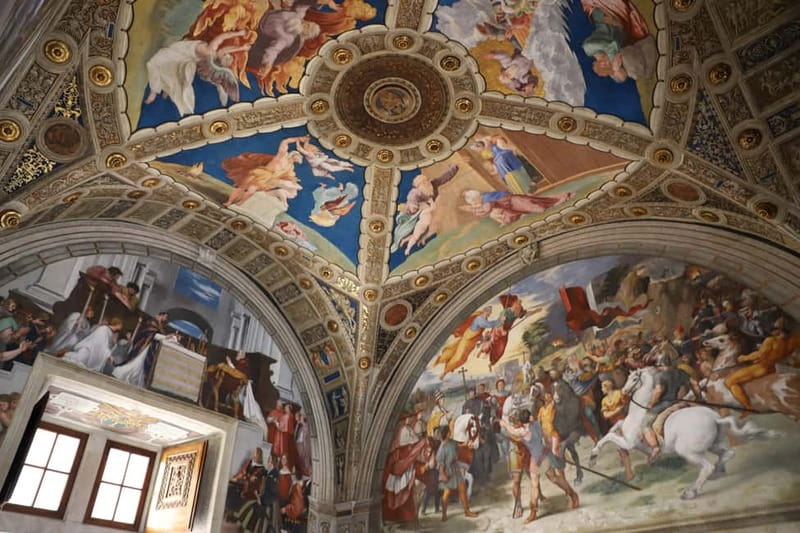
A Vatican guide does more than point toward famous names. The best guides help you see relationships: how popes used art to express authority, how Renaissance artists borrowed from one another, and how ancient sculpture influenced later work.
The strongest feedback centers on clear delivery and personality. Paul is praised for easy-to-follow explanations of art and history. Oxana is repeatedly described as energetic, witty, and passionate. Kate receives high marks for humor and for keeping children engaged. Anna is praised for patience and warmth, while Francesca is noted for balancing art detail with crowd control.
That last skill matters. The Vatican can be difficult to navigate when several groups converge in the same corridor. A good guide allows enough time to look, then gathers the group and moves on. You will still need to pay attention, especially when collecting headsets or crossing from one section to another.
The tour is described as small-group, but no fixed group size is provided. If you value quiet galleries and long independent stops, a private or self-guided visit may suit you better. If you want a clear route and someone to explain what you are seeing, this format is a sensible choice.
Practical clothing and comfort advice
Wear comfortable shoes. The tour lasts three hours and involves extended walking and standing through large museum spaces. It is not suitable for wheelchair users or people with mobility impairments.
Dress for a major religious site. Shorts, short skirts, sleeveless shirts, and large bags are not allowed according to the tour information. Pets, luggage, and large bags are also excluded, and umbrellas and electronic devices are listed as prohibited items.
Bring a passport or ID card. The tour includes headset pickup, which helps you hear the guide in crowded rooms. Keep your belongings light and follow staff instructions, since the Vatican’s rules can be strict and may change according to the area you enter.
The tour does not include hotel pickup or drop-off. You need to reach Viale Vaticano on your own and return from St. Peter’s Square after the visit.
Who should book this Vatican experience
I would choose this tour for a first visit to Rome, especially if you want to see the Vatican’s major works in one organized morning or afternoon. It is also a good fit for families, since several guides are praised for keeping children interested through humor and stories.
Art lovers will appreciate the connections between ancient sculpture, Renaissance painting, and Michelangelo’s work. History-minded visitors will enjoy the explanation of the Holy See, the papal conclave, and the meaning of the pope’s title.
I would hesitate if you need step-free access, dislike fixed routes, or want to spend an hour with one painting. The Vatican is too large for a relaxed, fully independent experience within three hours, and crowds can make the pace feel brisk.
Cancellation is free up to 24 hours before the tour, and you can reserve now and pay later. Those terms help if your Rome plans are still shifting, though they do not remove the main uncertainty: St. Peter’s Basilica may close without advance notice.
FAQ
How long does the Vatican tour last?
The activity lasts three hours. The Vatican Museums portion takes about two and a half hours, and the St. Peter’s Basilica visit lasts about 30 minutes when the basilica is accessible.
Which languages are available?
The tour is offered with a live guide in English or Russian.
Is the Sistine Chapel included?
Yes. The route includes a guided visit to the Sistine Chapel, with skip-the-line access to the Vatican Museums and Sistine Chapel. Access can change because of closures or official restrictions.
Is St. Peter’s Basilica guaranteed to be open?
No. St. Peter’s Basilica is an active place of worship and may close for ceremonies or other last-minute events. If it is inaccessible, the guide explains the basilica from outside and advises you on visiting independently.
Is the Dome of St. Peter’s included?
No. The dome is not part of the tour. You can visit it afterward on your own, with tickets sold on site for €10 per person. Its usual opening hours are listed as 7:30 AM to 5:00 PM.
What should I bring and wear?
Bring a passport or ID card and wear comfortable shoes. Shorts, short skirts, sleeveless shirts, large bags, luggage, pets, umbrellas, and electronic devices are not allowed according to the tour information.
Should you book it?
Book this tour if you want the Vatican’s main sights explained in a focused three-hour route, with separate entrances and a guide who can make sense of the art. The strongest reason to choose it is the guiding: names such as Oxana, Kate, Anna, Lisa, and Francesca are associated with clear, lively presentations that add real value.
Skip it if you need guaranteed access to every stop, including St. Peter’s Basilica and the Sistine Chapel, or if you prefer to explore at your own speed. For most first-time visitors who want Michelangelo, the Gallery of Maps, ancient sculpture, and St. Peter’s Basilica without wrestling with the entrance line, it is a practical and worthwhile way to spend part of a Rome day.
Fresh on the Vatican City list
- Rome: St. Peter’s Basilica & Dome Entry Ticket with Audio Guide★ 4.0 · 511 reviews
- Vatican: Sistine Chapel and Vatican Museums Guided Tour★ 4.3 · 536 reviews
- Skip the Line: Ticket to the Vatican Museum & Sistine Chapel★ 3.5 · 547 reviews
- Rome: Skip-the-Line Vatican Museums and Sistine Chapel Tour★ 4.3 · 719 reviews
- Rome: Guided Tour of St. Peter’s Basilica, Grottoes & Square★ 4.4 · 732 reviews
- Vatican Museums & Sistine Chapel Guided Tour★ 4.5 · 763 reviews
- Vatican, Sistine Chapel & St. Peter’s Skip-the-Line Tour★ 4.1 · 1,070 reviews
- Rome: Vatican Pass plus Top Attractions and Transport★ 3.5 · 1,242 reviews
Vatican & Sistine Chapel Tours, compared.
Vatican: Museums & Sistine Chapel Entrance Ticket
Read our review →
Vatican Museums & Sistine Chapel Tour with Optional Basilica
Read our review →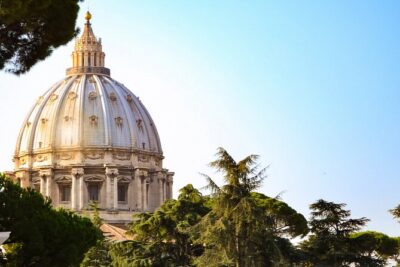
Vatican Museums, Sistine Chapel & St Peter’s Basilica Guided Tour
Read our review →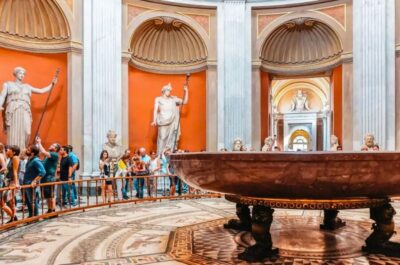
Vatican Museums, Sistine Chapel & Basilica Tour
Read our review →
Vatican Museums & Sistine Chapel Skip-the-Line Entry Ticket
Read our review →Vatican Museums, Sistine Chapel & Basilica Tour
Read our review →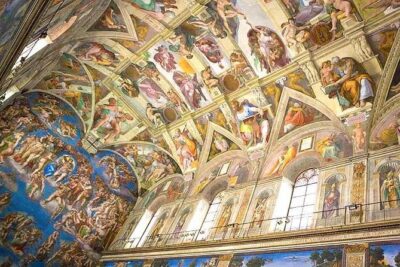
Skip-the-Line Group Tour of the Vatican, Sistine Chapel & St. Peter’s Basilica
Read our review →
Vatican Museums & Sistine Chapel Guided Tour
Read our review →Browse the lists this tour appears in