
Reviewed · VENICE TOURS
Musica a Palazzo ‘Traveling Opera’ Performance in Venice
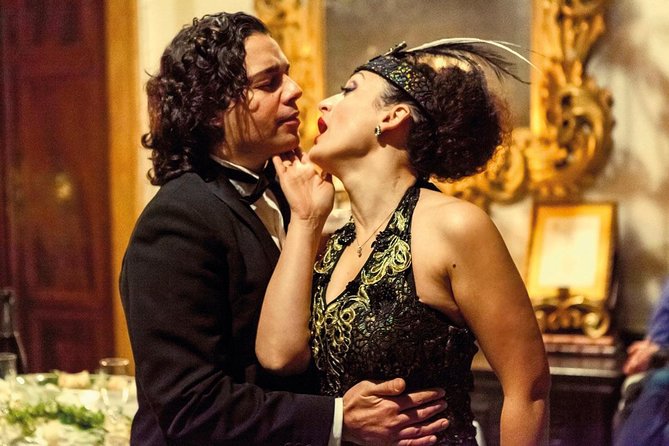
Opera usually means a large theater, rows of seats, and singers far away on a stage. Musica a Palazzo changes the scale completely. At Venice’s 15th-century Palazzo Barbarigo Minotto, you sit in candlelit salons only a few feet from the performers, then walk with the cast to another room for the next act.
I like two things right away: the palace becomes the set, and the small audience makes the music feel personal rather than distant. You also get a choice of The Barber of Seville, La Traviata, or Rigoletto, which helps you match the evening to your taste and schedule. The main consideration is comfort. Some rooms can feel hot and stuffy, seats are not luxurious, and the palace has only one unisex bathroom.
- A different salon for each act: You move through Palazzo Barbarigo Minotto instead of waiting for scenery to change.
- Three opera choices: Select an adapted version of The Barber of Seville, La Traviata, or Rigoletto.
- Close-up singing and music: The compact rooms put the vocalists and accompanying musicians right beside you.
- A palace setting: Ornate furnishings, candlelight, and views toward the Grand Canal provide the backdrop.
- One interval drink included: Choose prosecco, peach juice, or still or sparkling water.
- A friendly introduction to opera: The shortened productions make the evening less demanding than a full-length opera.
Entering Palazzo Barbarigo Minotto
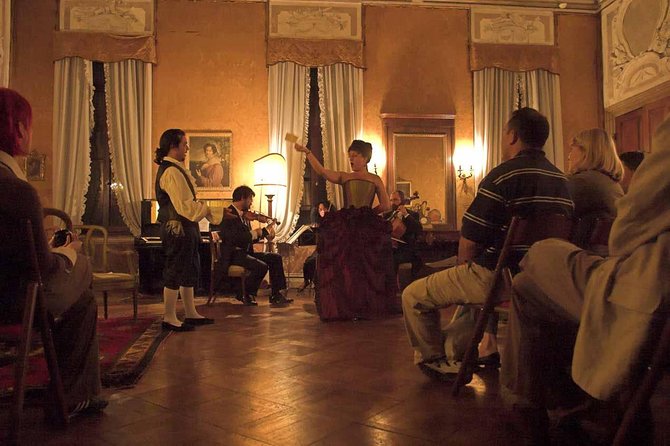
The experience begins at Palazzo Barbarigo Minotto, a grand old residence in central Venice overlooking the Grand Canal. Its age is part of the appeal. This is not a modern theater dressed up to look Venetian. You enter an actual historic palace, with period furnishings and ornate rooms that give the performance its character.
Allow extra time to reach the building. Venice’s lanes can be confusing, especially after dark or on a first visit. The palace is not impossible to find, and clear directions are provided with the booking voucher, but map apps can sometimes point you in the wrong direction. I would get near the address early, then check the signs and ask a local if needed.
At arrival, you may purchase a libretto for about €5. I consider this a smart extra, especially for La Traviata or Rigoletto, where following the plot helps you appreciate the emotional turns. The libretto provides an English translation, so you do not need to speak Italian to follow the action.
You also fill out a personal information card to become a member of the cultural club connected with the performance. The membership is included in the ticket price, but the form is required before you enter the show. This is a small administrative step, yet it is useful to know in advance so it does not come as a surprise.
Dress is elegant casual. You do not need formal evening wear, but this is a special night in a historic palace, so smart clothes feel appropriate.
Three operas, three different moods
Your choice of opera shapes the evening.
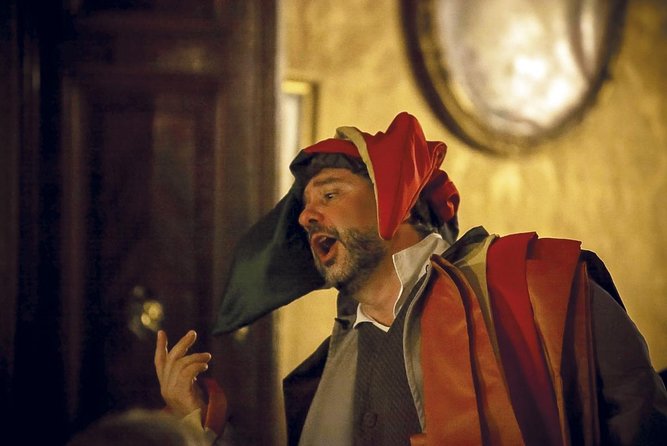
The Barber of Seville is the easiest pick if this is your first opera. Its comic plot, lively characters, and quick musical exchanges make it approachable even when you do not understand every word. One first-time opera attendee found the comic choice especially effective because the cast could play directly to the audience.
La Traviata offers a more serious and emotional evening. The music moves from social sparkle to heartbreak, and the palace rooms give the story an intimate edge. It is a good choice if you want romance, drama, and some of opera’s most recognizable melodies.
Rigoletto is darker and more theatrical. The third act has been a particular highlight for many people because the tension works well at close range. If you prefer a story with sharper drama and powerful confrontation, this may be your best choice.
These are not full, uncut productions. Each opera is adapted to fit the traveling format and the roughly two-and-a-half-hour schedule. That means major sections are shortened or omitted. You receive the central story and best-known musical moments, but not the complete scale of an opera house production.
A few other Venice mornings to weigh against this
- Venice: Doge’s Palace Reserved Entry Ticket
★ 4.6 · 42,716 reviews - Venice: Grand Canal Gondola Ride with App Commentary
★ 4.1 · 18,908 reviews - Boat Trip: Glimpse of Murano, Torcello & Burano Islands
★ 4.3 · 15,699 reviews
Act one begins in a candlelit salon
Once seated, you find yourself in a small room surrounded by palace details and period furniture. The candlelight helps create the mood, but it also makes the space feel old-fashioned in a very real way. The setting is beautiful, not polished into a modern performance venue.
The vocalists perform near the audience, accompanied live by musicians. Depending on your seat, you may be only a few feet from a singer. That distance changes the experience. You see facial expressions, hear the force of the voice without a large theater between you, and notice the performers working through each scene at close range.
The musicians are a major part of the evening. The accompanying ensemble supports the singers without swallowing them, and the music helps carry the action when the Italian words move too quickly to catch. One assessment praised the violin highly but found the piano in need of tuning, so do not expect every musical detail to be perfect on every date.
Photography and video are not allowed during the performance. In a room this small, that rule makes practical sense. A glowing phone or a raised camera would distract the people sitting nearby, and it would interrupt the direct connection between singer and audience.
Follow the cast from room to room
The unusual feature arrives when the act ends. Instead of sitting through a scene change, you get up and follow the performers into another salon. The cast and musicians move with you, and the next part of the story takes place in a new room.
This is more than a clever trick. It lets you see several parts of the palace, and it makes you feel involved in the production. You are not simply watching a stage from a fixed seat. You are moving through the setting as the story develops.
The arrangement also means each act has its own mood and acoustics. One room may feel especially close and intense, while another gives the performers a little more space. The palace itself becomes an active part of the evening.
There is a practical side to remember. Seating can be tight, and you need to stand and walk between acts. Anyone who finds extended standing difficult should take that into account. The shifting arrangement is central to the experience, not an optional extra.
The interval brings prosecco and a short reset
An interval gives you a chance to catch your breath and have one included drink. You can choose prosecco, peach juice, or still or sparkling water. Food and additional drinks are not included.
Pay attention to your glass during the break. With several people placing down unfinished prosecco at once, it can be easy to pick up the wrong glass. Keep yours in hand or set it somewhere clearly separate from other drinks.
The interval is useful beyond the refreshment. The rooms can feel warm, particularly when filled with people, so this is your chance to cool down and adjust your clothing. If you are sensitive to heat, dress lightly but neatly. Air conditioning is not available in the salons, according to the practical experience described by attendees.
Same city, an entirely different afternoon:
- Venice: Grand Canal by Gondola with Live Commentary
★ 4.1 · 13,681 reviews - Venice: La Fenice Opera House Entry Ticket with Audio Guide
★ 4.6 · 11,742 reviews - Doge’s Palace & St. Mark’s Basilica with Terrace Access Tour
★ 4.7 · 10,697 reviews - Venice: Burano, Torcello & Murano Boat Tour w/Glassblowing
★ 4.4 · 10,245 reviews
Why the intimate format works
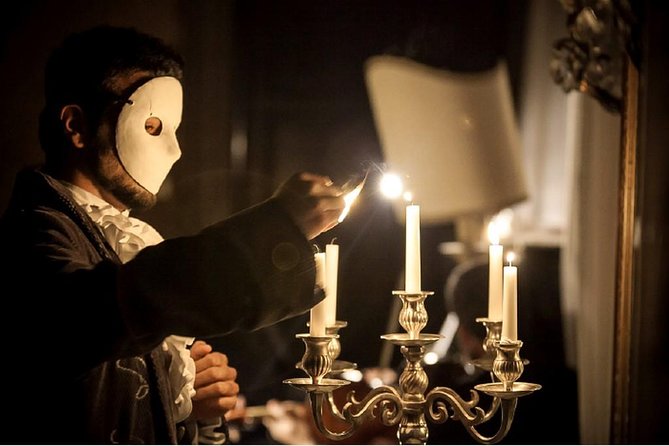
The strongest reason to choose Musica a Palazzo is the distance between you and the performers. In a large theater, opera depends on scale. Here, the singers can use expression, eye contact, and movement in a much smaller space.
That makes the performance especially suitable for someone who likes music but feels unsure about opera. You do not need years of experience or a detailed knowledge of Italian theater. The shortened format keeps the story moving, and the libretto can fill in the words.
It also suits an opera fan who wants something different from a standard production. You will not get the orchestra, stage machinery, chorus, or full staging of a major opera house. What you do get is a close view of the voices and a setting that a conventional theater cannot copy.
The music and singing receive the most praise, with particular attention given to the quality of the vocalists. The best moments can feel remarkably direct. At the same time, the small format exposes imperfections more clearly. A piano that needs tuning or a crowded room is harder to overlook when you are sitting so close.
Comfort, heat, and the one-bathroom reality
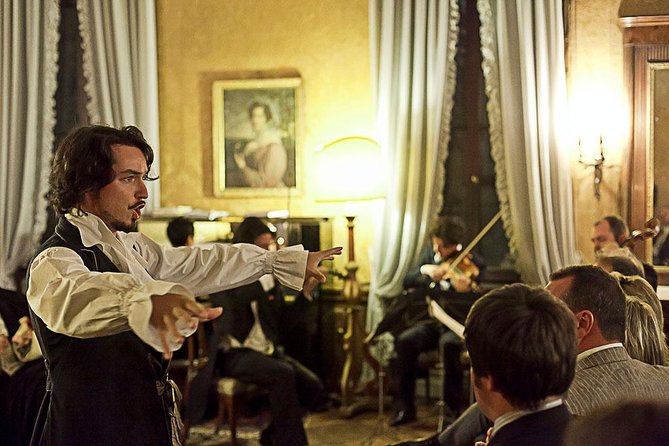
The palace rooms are lovely, but they are not designed like a modern auditorium. Some seating may feel hard or cramped, and the rooms can become hot. One account described sitting in shorts and a light shirt and still feeling uncomfortable.
Plan around this. Wear breathable elegant-casual clothing, arrive hydrated, and use the bathroom before the performance if possible. There is one unisex bathroom, so do not wait until the last moment during the interval.
The venue is near public transportation, service animals are allowed, and most people can participate. Still, the room-to-room format involves walking and changing seats or positions. The experience is not recommended for children under five, and very young children may find the length, heat, and quiet attention difficult.
Is $117.83 good value?
At $117.83 per person, this is not a bargain concert. You are paying for a small-scale cultural performance in a historic palace, not just for a seat and a drink.
The price makes more sense when you compare it with what is included: live opera, musicians, access to several palace salons, the moving production format, and one interval drink. The setting is a central part of the value. A conventional concert in a less distinctive room would not provide the same sense of place.
I would call it good value for a couple marking a special evening, an opera lover, or a visitor who wants one memorable cultural event in Venice. It is less compelling if you mainly want a complete opera at the lowest possible price. The adaptations leave out parts of the original works, and the furnishings and comfort do not match a newly built theater.
The experience is also booked an average of 51 days ahead, so it is wise to reserve early if your Venice dates are fixed. The current score is 4.7 from 722 ratings, with 93 percent recommending it, which suggests that the unusual format works well for most people who choose it.
Practical planning for your evening
Choose the opera before booking, and read a short plot summary if you do not know the story. The libretto is worth the extra €5 if you want to follow every scene.
Give yourself plenty of time to reach the palace. Venice rewards slow walking, but getting lost on the way to a timed performance is less charming. Use the directions supplied with your voucher rather than relying only on Google Maps or Apple Maps.
The experience uses a mobile ticket. Keep the voucher easy to open on your phone, and allow time at the entrance for the membership card. You do not need to arrange a separate transfer or meal, and no food is included.
If you are visiting Venice for the day from outside the city, check the municipal access-fee rules. On certain dates, many day visitors must pay a €5 fee, while exemptions apply in some cases. The official information is available at cda.ve.it.
Free cancellation is available until 24 hours before the local start time. Cancellations or changes inside that window are not accepted for a refund. The performance also requires a minimum number of participants, so a cancellation by the provider would result in another date or experience, or a full refund.
Who should book Musica a Palazzo?
I would choose this for an opera newcomer who wants a friendly first encounter, an opera fan looking for a more personal format, or anyone who values unusual Venetian settings as much as the performance itself.
It is particularly good for an evening date or a small family group with older children. The humor of The Barber of Seville makes it the safest introduction, while La Traviata and Rigoletto suit people looking for stronger drama.
I would think twice if you need cool rooms, generous seating, a full-length production, or easy access without stairs or movement between acts. The heat and close quarters are real considerations.
Should you book this opera in Venice?
Book it if you want close-up singing, live music, and a palace that becomes part of the story. The room-to-room format is the reason to choose this performance over a standard concert.
Pick The Barber of Seville for comedy and a first opera, La Traviata for romance, or Rigoletto for darker drama. Buy the libretto, arrive early, dress lightly, and leave time to find Palazzo Barbarigo Minotto. If those details suit you, Musica a Palazzo offers one of Venice’s most personal ways to hear Italian opera.
FAQ
Where does Musica a Palazzo take place?
The performance takes place at Palazzo Barbarigo Minotto, a 15th-century Venetian palace in central Venice overlooking the Grand Canal.
How long does the performance last?
The experience lasts approximately two hours and 30 minutes, including an interval. The exact running time can vary by opera and adaptation.
Which operas can I choose from?
You can choose an adapted version of The Barber of Seville, La Traviata, or Rigoletto.
Do I move between rooms during the show?
Yes. Each act or scene takes place in a different salon, and the audience moves through the palace with the performers and musicians.
Is a drink included?
Yes. One drink per person is included during the interval. You can choose prosecco, peach juice, or still or sparkling water.
Is food included?
No. Food and additional drinks are not included. A libretto with an English translation is available to purchase for about €5.
Do I need to understand Italian?
No. You can follow the plot with the optional libretto, which includes a translation. Reading a plot summary before the performance may also help.
Is the experience suitable for children?
The performance is not recommended for children under five. Most other participants can take part, though the room-to-room format and warm salons may be worth considering for young children.
Can I cancel my booking?
You can cancel for a full refund up to 24 hours before the local start time. Cancellations or changes made less than 24 hours before the experience are not accepted for a refund.
Fresh on the Venice list
- Murano: Glass Blowing Demonstration and Artistic Glass Gift★ 4.6 · 507 reviews
- From Venice: Dolomites, Lake Misurina, and Cortina Day Trip★ 4.6 · 508 reviews
- Venice Islands: Murano Glass & Burano Colors Guided Visit★ 4.5 · 510 reviews
- The Majestic Teatro La Fenice: Guided Tour in Venice★ 4.3 · 513 reviews
- Real Venetian Kayak – Tour of Venice Canals with a Local Guide★ 4.5 · 518 reviews
- Venetian Carnival Mask Making Class in Venice, Italy★ 4.5 · 525 reviews
- Half Day Murano and Burano Island Tour by Private Boat★ 4.5 · 529 reviews
- Venice Trilogy: Murano, Burano & Torcello by Lagoon Boat★ 4.5 · 532 reviews
Venice Tours, compared.
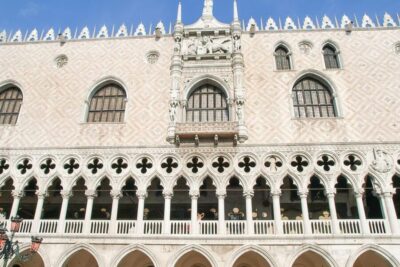
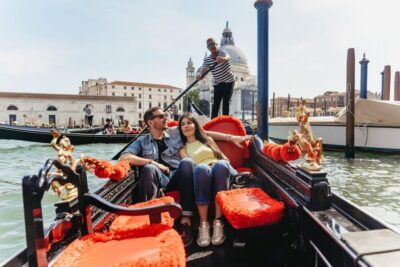
Grand Canal Gondola Ride with App Commentary
Read our review →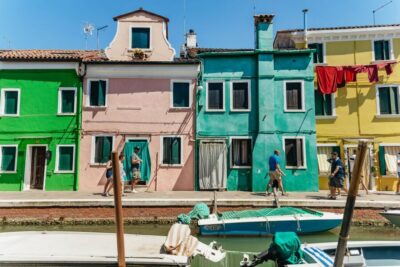
Boat Trip: Glimpse of Murano, Torcello & Burano Islands
Read our review →
La Fenice Opera House Entry Ticket with Audio Guide
Read our review →
Doge’s Palace & St. Mark’s Basilica with Terrace Access Tour
Read our review →
Burano, Torcello & Murano Boat Tour w/Glassblowing
Read our review →
Murano and Burano Boat Tour with Glass Factory Visit
Read our review →Browse the lists this tour appears in