
Reviewed · WINE TASTINGS
Montepulciano: Wine Tasting and Cellar Tour
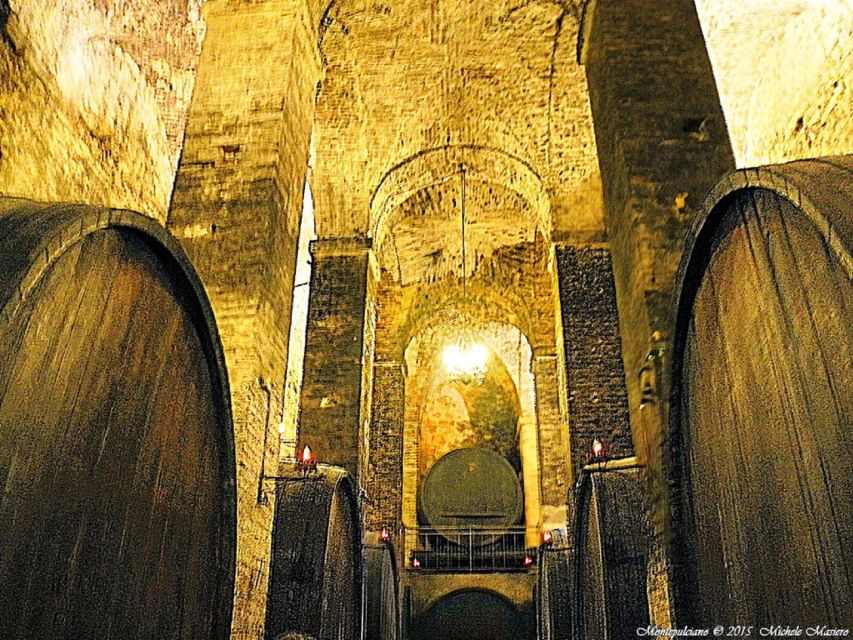
Montepulciano’s most memorable wine experience happens below the medieval streets, where rows of huge Slavonian oak barrels hold Nobile di Montepulciano. The one-hour visit combines a cellar tour with a tasting of five DOC and DOCG wines, plus pecorino, bruschetta, and local crostini.
I like the way the guides connect the wine to the town’s past, soil, and family cellars. I also like that the tasting comes with enough food to make the wines easier to understand, not just a few lonely sips. The main consideration is timing: one hour passes quickly, and the central cellar sits in a no-car zone, so you need to allow time to park and walk uphill.
Key points at a glance
- Huge Slavonian oak barrels: See where Nobile di Montepulciano ages in enormous casks made from quality wood.
- A cellar beneath the medieval town: The historic underground rooms provide the setting, not a modern tasting bar alone.
- Five Tuscan wines included: Taste DOC and DOCG wines from Montepulciano, with some sessions reported as offering six samples.
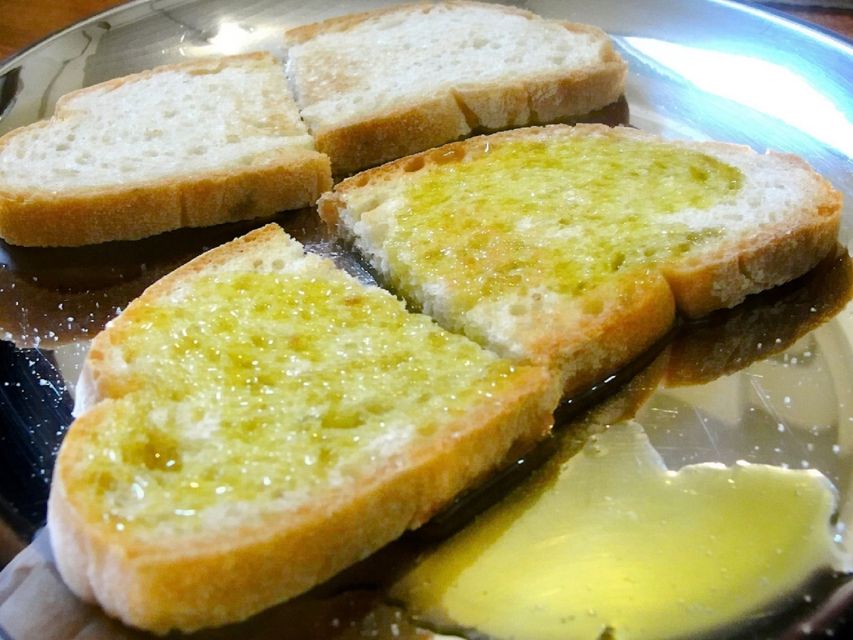
- Food makes the tasting more useful: Pecorino of different ages, bruschetta with extra-virgin olive oil, and typical crostini accompany the wine.
- Strong guiding is central to the experience: Guides including Mirko, Debi, Debbie, Emilio, and Ron are praised for clear explanations, humor, and local stories.
- Easy to add to a day in town: The cellar is in central Montepulciano, close to the sights, though cars cannot reach the meeting point.
Entering Montepulciano’s old cellar
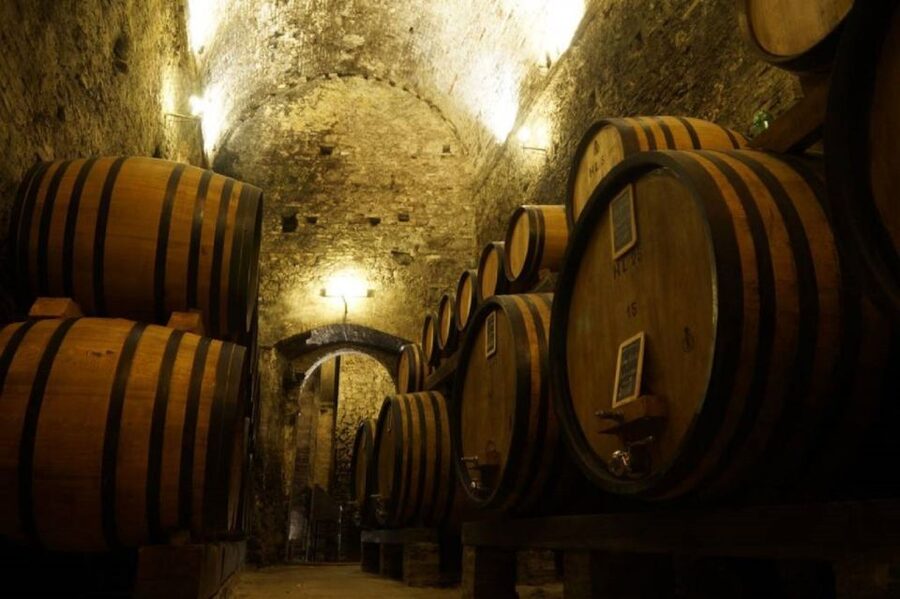
The appeal here is simple: you are not tasting Tuscan wine in an anonymous room. You are walking into a working historic cellar in the center of Montepulciano, a hill town known for its noble red wines.
The cellar is associated with the De’Ricci family in the descriptions and guest comments, and the family story forms an important part of the visit. You hear how the cellar developed, how wine production fits into Montepulciano’s past, and why this particular underground setting matters.
The architecture does much of the talking. Old stone and brick rooms, deep passageways, and carefully lit storage areas give the cellar a quiet, almost cathedral-like mood. The lighting is useful because it lets you see the structure and barrels without turning the tour into a dark-room shuffle.
The underground setting also explains the practical side of traditional wine storage. Cellars offer a stable environment, and the thick walls help create the conditions needed for aging. You are not simply being shown decorative old rooms. The space still relates directly to the wine being presented upstairs or at the tasting table.
More wine tastings in Italy:
- Tuscany Day Trip from Florence: Siena, San Gimignano, Pisa and Lunch at a Winery
★ 5.0 · 21,634 reviews - Florence: Pisa, Siena, San Gimignano, and Chianti Experience
★ 4.5 · 8,393 reviews - Florence: Chianti Wineries Tour with Wine Tasting
★ 4.5 · 8,301 reviews
The barrel room and the wood behind Nobile wine
One of the most interesting parts is the line of large barrels made from Slavonian oak. These enormous casks hold Nobile di Montepulciano, and their scale gives you a better sense of traditional production than a quick explanation in a shop ever could.
You also see barrels made from French wood. The guide explains how different woods play a role in aging and how the cellar uses them for refined wines. You do not need to be a wine expert to follow this. The point is not to memorize technical terms, but to understand that the barrel is part of the wine’s character.
The wood discussion is especially useful if you normally find wine tasting vague. Instead of simply hearing that a wine has a certain aroma or finish, you gain a basic idea of how aging choices affect it. The guide places the wines in a physical setting, surrounded by the equipment and materials that shape them.
Some guides are particularly good at making this section lively. Mirko is praised for his enthusiasm and humor, while Emilio is noted for telling stories about the cellar’s origins and the families connected with it. Debi, also referred to as Debbie, is described as warm, funny, and clear in English. Ron has also guided visits, explaining both the De’Ricci family business and the wine-making process.
Because guide assignments can change, you should not book expecting one particular person. Still, the repeated strength of the guiding is important. This experience depends on the explanation as much as the barrels, and the available guides appear to make the history accessible rather than overly formal.
Tufa soil, fossils, and Montepulciano’s sense of place
The tour also gives you a quick introduction to the ground beneath the vineyards. Montepulciano is known for sandy tufa soil, and fossils found in the area point to its ancient origins.
This is a small detail, but it adds useful context. Wine is often presented as a product of grape variety and technique alone. Here, the guide links the wine to the soil and the long geological story of the region. You begin to see why a bottle labeled with a particular place is not quite the same as a generic Tuscan red.
The explanation stays tied to Montepulciano rather than wandering into a broad lecture on all Italian wine. That makes good use of the short schedule. You get enough background to understand the wines, then move on to the part most people are waiting for: the tasting.
If you already know Tuscan wine, you may find the soil section familiar. For a first visit to the region, though, it is a helpful bridge between the town, the vineyards, and the glass in front of you.
Five wines, with occasional variations
The published tasting includes five DOC and DOCG wines from Montepulciano. Some tasting sessions described by visitors included six wines, so the exact number may vary by the day or the tasting format. You should treat five as the reliable expectation and see any additional sample as a bonus.
The important point is variety. You are not served one wine and asked to make a judgment about the whole region. Tasting several bottles lets you compare styles, aging, and the way the wines work with food.
The guide explains each wine before you taste it. That makes the experience more useful than simply receiving a flight of glasses with no direction. You can pay attention to differences in body, flavor, and finish, then return to a wine after trying a bite of cheese or bread.
Several people singled out the quality of the wine, with some mentioning a favorite bottle by name, including Sor Aldo. The experience is not designed as a formal professional tasting, so you should expect a friendly introduction rather than a certification course. It suits anyone who wants to learn what to order in Montepulciano or decide which bottles to take home.
The wines may also be available for purchase, and some visitors arranged shipping to the United States or ordered bottles after returning home. Shipping availability depends on destination and current arrangements, so ask the cellar directly if taking bottles home matters to you. Do not assume every country is covered.
A few other Italy mornings to weigh against this
- Small-Group Wine Tasting Experience in the Tuscan Countryside
★ 5.0 · 7,392 reviews - Rome: Tuscany & Montepulciano Day Trip with Lunch & Wine Tasting
★ 4.5 · 5,232 reviews - Winner 2025 Rome Twilight Trastevere Food Tour by Eating Europe
★ 5.0 · 5,157 reviews - SMALL-GROUP Wine Safaris: Tuscan Wine Tasting Tours from Florence
★ 5.0 · 5,088 reviews
Pecorino, bruschetta, and the practical value of food pairing
The tasting includes a selection of pecorino cheeses at different ages, bruschetta with extra-virgin olive oil, and typical crostini. Some descriptions also refer to small portions of meats or cold cuts accompanying the cheese and bread.
The food is more than a pleasant extra. Cheese at different stages of aging gives you a clear way to see how the same wine changes with a soft, mild bite or a firmer, more mature one. Olive oil and toasted bread offer another simple pairing, letting the wine remain the focus without making the tasting feel stiff.
The portions are described as small antipasti plates, not a full lunch. That distinction matters. I would happily schedule this before a meal, but I would not use it as a substitute for lunch, especially if you plan to taste every wine carefully.
The food also makes the visit easier for mixed groups. One review specifically notes that bread and charcuterie helped keep a young child occupied. Children are not the focus of the tour, but the simple snacks can make the hour more manageable for families.
A one-hour format that works best as part of a town visit
At one hour, this is a compact experience. You get the cellar, the wine-making explanation, the tasting, and the food without giving up half a day of sightseeing.
That short length is a strength if you are building a day around Montepulciano. You can visit the cellar, continue through the old town, and still have time for churches, viewpoints, shops, and a longer meal. It is also useful for couples or small groups who want a real wine experience without committing to a full vineyard excursion.
The tradeoff is that the tour cannot cover every detail. You will not receive an extended tour of the entire wine region or a long technical session on production. The guide has to keep the story moving, and the tasting can feel brisk if you want to linger over every glass.
I would arrive ready to listen from the start. The cellar history and barrel explanation are not filler before the wine. They are what gives the tasting meaning. If you rush in late, you may miss the part that separates this from a simple wine shop flight.
Parking and finding the meeting point
The cellar is in central Montepulciano, which is also a no-car zone. You cannot simply drive to the door, unload, and stroll inside.
The practical advice is to park at Parking S. Donato or Parking P8, then walk into the historic center. Build in extra time for the walk, particularly if you have luggage, young children, or difficulty with steep streets.
The meeting area could use clearer outside signage, so check the exact location before setting off. Montepulciano’s historic center can be confusing on foot, and a few extra minutes spent finding the entrance is better than arriving flustered.
Transportation is not included. This experience is best for people already visiting Montepulciano or arranging their own way there. It is not a transfer from Florence, Siena, or another Tuscan base.
Is $38 a fair price?
At $38 per person, the price is reasonable for a one-hour cellar tour that includes five wines, several cheeses, bruschetta, and crostini. If the tasting includes six wines on your visit, the value improves further.
You are paying for more than the liquid in the glasses. The price covers a guide, access to a historic cellar, an explanation of local wine-making, and a food pairing that helps you taste with some purpose. Comparable casual tastings can cost less if all you want is a pour at a shop, but they may not include the underground rooms or family story.
The experience may feel slightly expensive if you are not interested in wine or if you prefer a long vineyard visit outdoors. It is also not a meal. Think of it as a compact cultural visit with wine and snacks, not an afternoon winery excursion.
For anyone already spending time in Montepulciano, I see good value here. The central location means you can fit it into a sightseeing day, and the cellar gives the tasting a sense of place that a standard bar setting cannot match.
Who should book this Montepulciano wine tour?
I would recommend it most strongly to first-time visitors who want an introduction to Nobile di Montepulciano without needing extensive wine knowledge. The guides explain the region, family, soil, barrels, and wines in a way that gives beginners a clear starting point.
It also suits experienced wine drinkers who enjoy old cellars and traditional aging methods. The huge oak barrels and the contrast between Slavonian and French wood give you something concrete to examine, even if you already know the basics.
This is a good choice for:
- Couples looking for a short cultural stop with food and wine
- Friends who want several local wines in one sitting
- Families who need a manageable activity with bread and cheese available
- Visitors already exploring Montepulciano on foot
- Wine shoppers who may want to arrange bottles for delivery later
I would think twice if you dislike red wine, cannot manage a walk from the parking areas, or want a long vineyard tour with extensive time outdoors. The focus is the historic cellar and tasting, not transportation or a full-day countryside program.
Should you book it?
Book this tour if you want to understand why Montepulciano wine tastes connected to its town, soil, barrels, and family cellars. The combination of enormous wood casks, underground architecture, clear guiding, and food pairing gives the hour real substance.
I especially like it as a first Montepulciano wine experience. You learn enough to make later tastings more rewarding, and the price includes enough wine and food to feel fair. Just plan your parking carefully, expect a compact visit rather than a full meal, and allow for the possibility that your tasting includes five or six wines depending on the session.
With free cancellation up to 24 hours before the activity and a reserve-now, pay-later option, it is also easy to fit into a flexible Tuscany itinerary. If you are already in town, this is one of the more useful ways to spend an hour.
FAQ
Where does the Montepulciano wine tasting take place?
The cellar is in the center of Montepulciano, inside the town’s no-car zone.
Where should I park?
The recommended parking areas are Parking S. Donato and Parking P8. From there, you need to walk into the historic center.
How long does the tour last?
The activity lasts one hour. Starting times vary, so you need to check availability when booking.
How many wines are included?
The activity includes five DOC and DOCG wines from Montepulciano. Some tasting sessions have included six wines, so the exact number may vary.
What food is served with the wine?
You receive pecorino cheeses of different ages, bruschetta with extra-virgin olive oil, and typical crostini. Some descriptions also mention meats or cold cuts.
What languages are available?
The live tour guide is available in English and Italian.
Is transportation included?
No. Transportation is not included, so you must arrange your own way to Montepulciano and walk from the recommended parking areas.
Fresh on the Italy list
- Florence: Uffizi Guided Tour with Skip-the-Line Entry Ticket★ 4.8 · 499 reviews
- Milan: Last Supper and Sforza Castle Guided Tour★ 4.6 · 498 reviews
- Boat trip La Maddalena Archipelago – Departure from Palau★ 4.5 · 499 reviews
- Exclusive Golf Tour Private VIP with Local & Gelato o Wine★ 5.0 · 500 reviews
- Turin: Egyptian Museum Skip-the-Line Group Tour★ 4.7 · 500 reviews
- Itria Valley: Polignano, Ostuni, and Locorotondo, from Bari★ 4.6 · 502 reviews
- Colosseum, Palatine Hill and Roman Forum with Guided Tour★ 5.0 · 500 reviews
- Catania: Etna Nature Tour with Hiking, Cave Visit, & Tasting★ 4.7 · 502 reviews
Wine Tastings, compared.
Tuscany Day Trip from Florence: Siena, San Gimignano, Pisa and Lunch at a Winery
Read our review →
Pisa, Siena, San Gimignano, and Chianti Experience
Read our review →
Small-Group Wine Tasting Experience in the Tuscan Countryside
Read our review →
Tuscany & Montepulciano Day Trip with Lunch & Wine Tasting
Read our review →
SMALL-GROUP Wine Safaris: Tuscan Wine Tasting Tours from Florence
Read our review →
Winner 2025 Florence Sunset Food & Wine Tour by Eating Europe
Read our review →
Siena, San Gimignano, Pisa & Lunch at Winery
Read our review →Browse the lists this tour appears in