
Reviewed · MILAN TOURS
Milan: “Museo Teatrale Alla Scala” Guided Tour
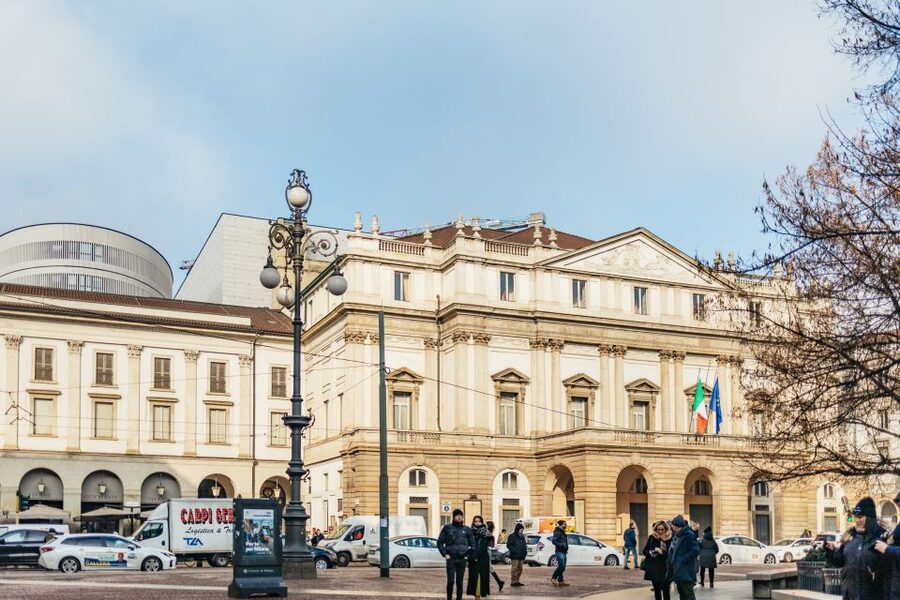
La Scala is more than a pretty opera house. It is a working stage where Verdi, Rossini, Callas, and Pavarotti helped shape opera history. This 90-minute tour links the elegant auditorium with the La Scala Museum, so you see both the grand room and the objects that made its performances possible.
I like the small-group feel and the guides’ lively storytelling. Fabio, Simone, Lorella, Chiara, and others bring in architecture, Milanese history, backstage work, and personal details instead of simply naming dates. I also like the chance to glimpse a rehearsal from a theatre box when the schedule allows.
The one catch is important: rehearsals and private events can limit the visit to the museum. At $44, the tour is fair value if you care about opera, music, or design, but less compelling if you only want a quick look inside a famous building.
Key points to know before booking
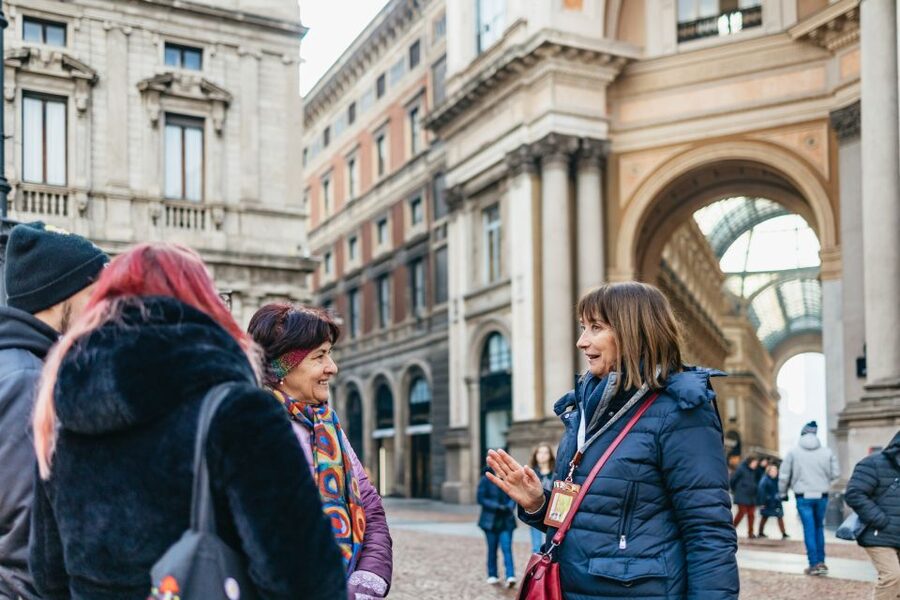
- A central Milan location: Meet outside the La Scala Theatre Museum, a short walk from the Duomo and Galleria Vittorio Emanuele II.
- A 90-minute guided visit: The tour combines the opera house, its auditorium when available, and the museum’s costumes, instruments, portraits, and set designs.
- Excellent guide coverage: Live tours are offered in English, Italian, French, German, and Spanish.
- Rehearsal access is possible, not promised: You might watch an orchestra, opera, or ballet rehearsal from a box, but theatre activity can also restrict the route.
- Small groups can feel personal: Several tours have had only two to five people, allowing time for questions and tailored explanations.
- Practical for families and wheelchair users: The theatre and museum are accessible to wheelchairs and strollers, but large bags must go in the cloakroom.
Why La Scala deserves a place in your Milan plans
Milan is often treated as a city of fashion, shopping, and the Duomo. La Scala gives you a different Milan, one shaped by composers, singers, musicians, stage crews, costume designers, and opera audiences.
The theatre opened in 1778, and its name carries unusual weight in the music world. You do not need to be an opera expert to appreciate the visit. A good guide explains why this particular house matters, how it developed, and how its performers turned it into an international name.
The location makes the tour easy to fit into a day in central Milan. You can meet at the museum entrance after visiting the cathedral or Galleria Vittorio Emanuele II. There is no hotel pickup, so you make your own way to the meeting point, but that is hardly a hardship in this part of the city.
Look for the guide holding a purple Hidden Experiences flag or board. Headsets are supplied, which matter more than you might expect. Even a small group can spread out inside a large theatre, and clear audio lets you focus on the room instead of chasing the guide’s voice.
A few other Milan mornings to weigh against this
- Milan: Da Vinci’s Last Supper Guided Tour
★ 4.7 · 10,143 reviews - Milan: City Sightseeing Hop-On Hop-Off Bus with Audio Guide
★ 4.0 · 6,256 reviews - Milan: Guided Walking Tour & Last Supper Visit with Ticket
★ 4.7 · 5,409 reviews
Starting outside the theatre and in Milan’s historic center
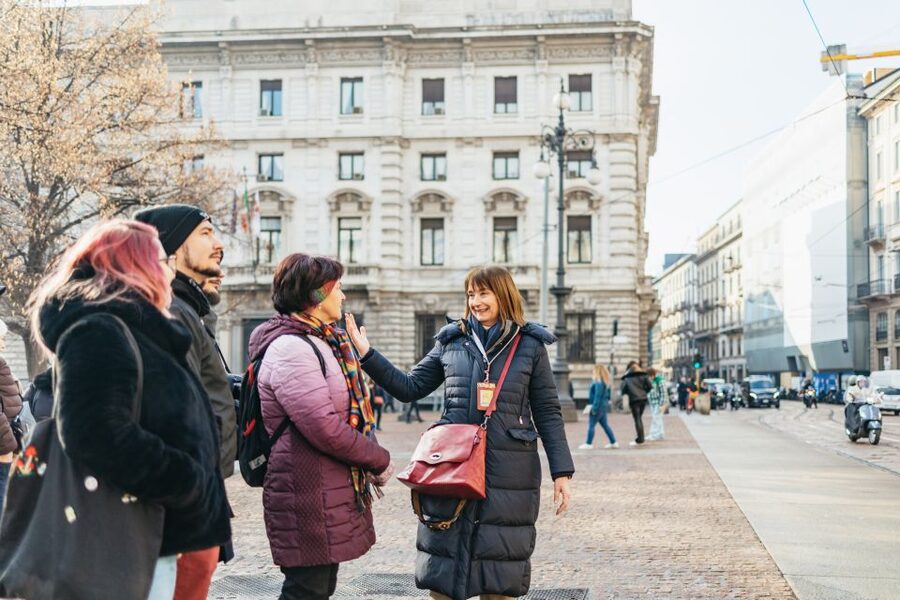
The tour begins outside La Scala, where the guide sets the building in its city context. This opening is useful because the theatre’s exterior is relatively restrained. You might not guess from the street how ornate the auditorium is inside.
Guides have used the nearby square and neighborhood to explain the building’s setting before taking the group indoors. That short introduction gives you a better sense of La Scala as part of Milan, not as an isolated monument.
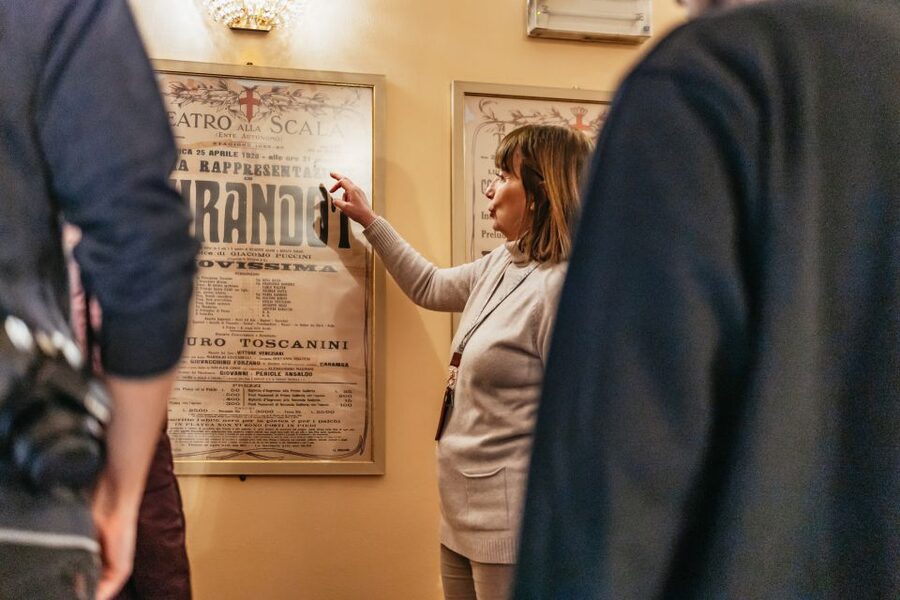
This is also where a strong guide can make the difference. Fabio has been praised for mixing history with humor, while Simone has been singled out for clear explanations of the theatre’s architecture and cultural role. Lorella has a reputation for making the story personal and lively, and Chiara has focused closely on the art and objects on display.
Guide assignments vary, so you cannot book a particular person. Still, the repeated praise for guides such as Giorgio, Alice, Silva, Lara, and Stefani points to a consistent strength: the tour depends on people who care about the subject and can explain it without turning the visit into a dry lecture.
Seeing La Scala’s auditorium and private boxes
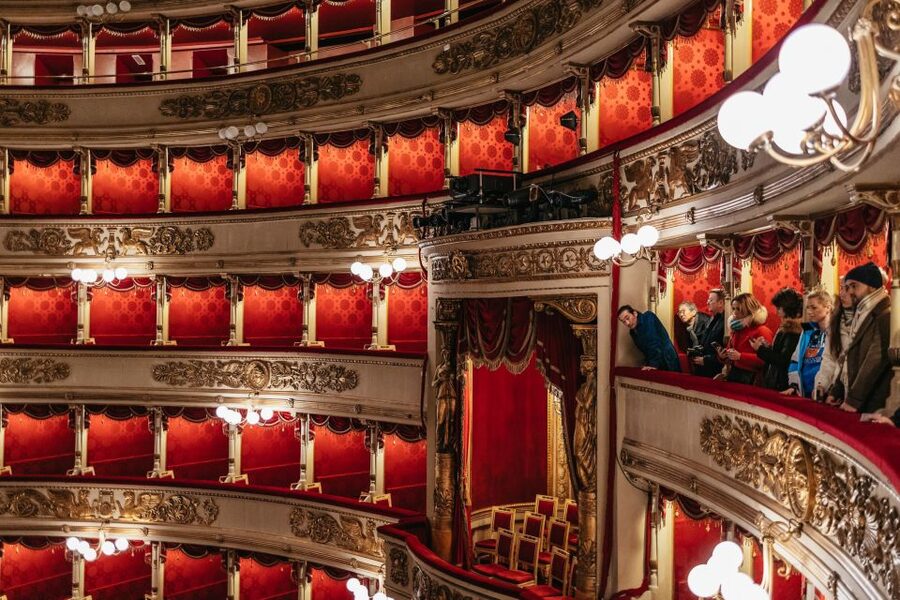
When theatre operations allow entry, the auditorium is the visual heart of the visit. From inside, you see the design that makes La Scala feel more intimate than its plain exterior suggests.
The theatre has the traditional horseshoe arrangement associated with Italian opera houses. The boxes give you a different view from the main seating area and help explain how audiences experienced performances in earlier periods. Guides may discuss the special boxes and the way the room was used by different levels of Milanese society.
The atmosphere changes when the lights are on or when musicians are rehearsing. A few minutes of live music can make the room feel like a working theatre rather than a preserved historic interior. Some tours have included views of orchestra, opera, or ballet rehearsals from a box. That is a memorable bonus, but it is not part of every visit.
You should keep your expectations flexible. The theatre remains an active venue, not a museum that is always open for inspection. Rehearsals, private functions, or other preparations may mean you see only selected areas or the museum. In some cases, a guide may offer a voucher to return to the theatre later, but you should not assume that arrangement will be available on your date.
This limitation is the main reason I would not book the experience solely for rehearsal access. Book it for the guided story and museum, then treat any rehearsal view as an extra.
Meeting the performers through objects in the museum
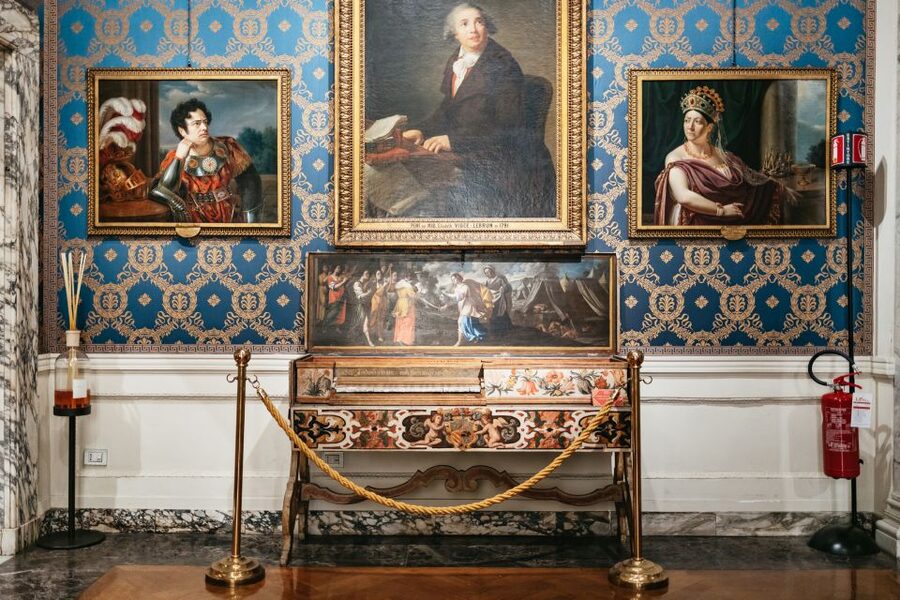
The La Scala Museum gives the tour its strongest backup. If theatre access is restricted, the museum still offers a substantial visit rather than a token add-on.
Its collection includes costumes, set designs, musical instruments, portraits, sculptures, and private objects connected with major performances and performers. Each item becomes more interesting when the guide explains who used it, where it fits into La Scala’s story, and what it reveals about opera production.
You might see ballet costumes with striking shapes and materials, along with stage designs that show how a production was imagined before performers entered the theatre. Musical instruments offer another route into the subject. One especially memorable object noted during a tour was a Liszt piano.
The museum also brings famous names into focus. Giuseppe Verdi and Gioachino Rossini connect La Scala to the great Italian opera tradition. Luciano Pavarotti and Maria Callas show how the theatre remained important to modern audiences and international stars.
The private artifacts are valuable because they make the history human. A name on a program can feel remote. A personal object, portrait, costume, or instrument gives you a physical link to the person behind the performance.
I would allow yourself time to look closely rather than treating the museum as a corridor before the theatre. The guide’s explanations are the reason to join a tour instead of visiting only on your own. Alice has been praised for adding facts that are easy to miss without commentary, while Chiara has connected the instruments, sculptures, and costumes to the people who appeared on stage.
Same city, an entirely different afternoon:
- Milan: Cathedral and Duomo’s Terraces Entrance Ticket
★ 4.6 · 61,054 reviews - Milan Cathedral: Duomo Terraces Ticket (No Church Access)
★ 4.6 · 6,111 reviews - Milan: Milan Cathedral Direct Entrance – Terrace Excluded
★ 4.5 · 5,782 reviews - Milan: Fast-Track Milan Cathedral and Terraces Guided Tour
★ 4.7 · 5,240 reviews
How the guided format changes the visit
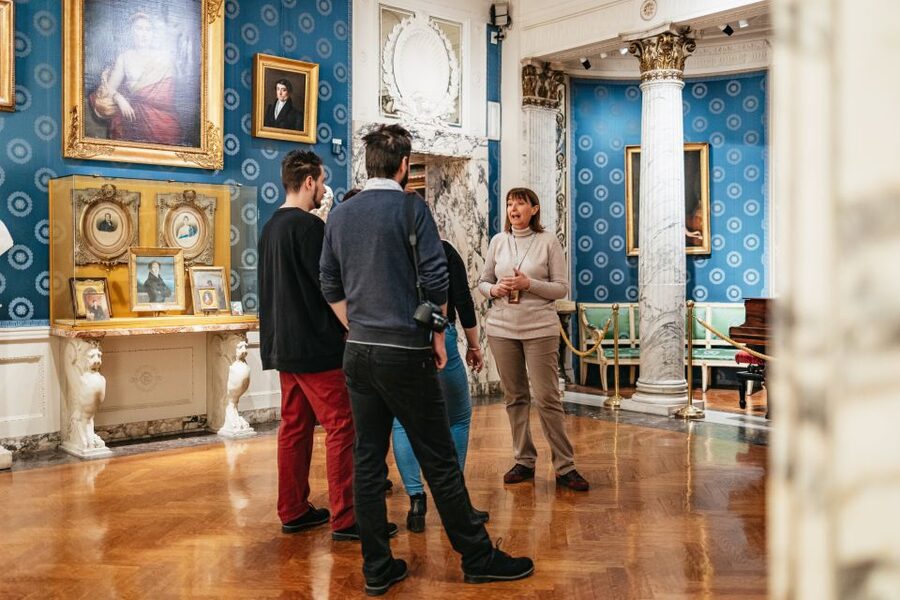
La Scala’s subject can become technical quickly. Opera has its own vocabulary, and the building has layers of architectural and performance history. A guide helps sort the essential points from the trivia.
The best tours described by participants have combined facts with stories about the people who built the theatre, performed there, and worked behind the scenes. That balance keeps the 90 minutes moving. You learn about singers and composers, but also about the practical work that turns a written score into a full production.
The guides also appear willing to adjust their explanations. A music fan may want more detail about performers and rehearsals. Someone interested in design may ask about boxes, costumes, stage sets, or architecture. Small groups make those questions easier.
Group size can vary. Some tours have felt almost private with two people, while others have had four or five participants. A larger group would be less personal, but the headsets help with basic listening. Private groups are also available if you want a more tailored format.
Families can make good use of this tour. A family of four with children aged seven and ten found that the 90 minutes held their attention. The museum’s visual material helps, and a guide who uses stories rather than a long lecture can make opera less intimidating for younger visitors.
Still, this is not a hands-on attraction. Children who need constant activity may tire during the historical explanations. Older children and teenagers with an interest in music, costumes, architecture, or performance are more likely to enjoy the pace.
The rehearsal possibility, and why timing matters
A rehearsal is the most unpredictable part of the experience. You might hear an orchestra or see ballet or opera activity from a box. That brief glimpse can be the moment when the theatre comes alive for you.
One person watched an orchestra rehearsal for a few minutes. Others saw ballet work from the boxes or entered while preparations were under way. These moments offer something a standard museum visit cannot: a look at La Scala as a functioning workplace.
The tradeoff is access. Rehearsals and private events can close parts of the building, and the visit may be limited to the museum. Treat the schedule as a practical condition, not a failure of the tour. A working theatre has to protect its performers and production staff.
If entering the auditorium matters most to you, ask the guide about current access at the start of the visit. If the theatre is closed during your time, find out if a later return is possible. A voucher has been offered in at least one reported case, but it is not listed as a standard guarantee.
Is $44 a fair price for 90 minutes?
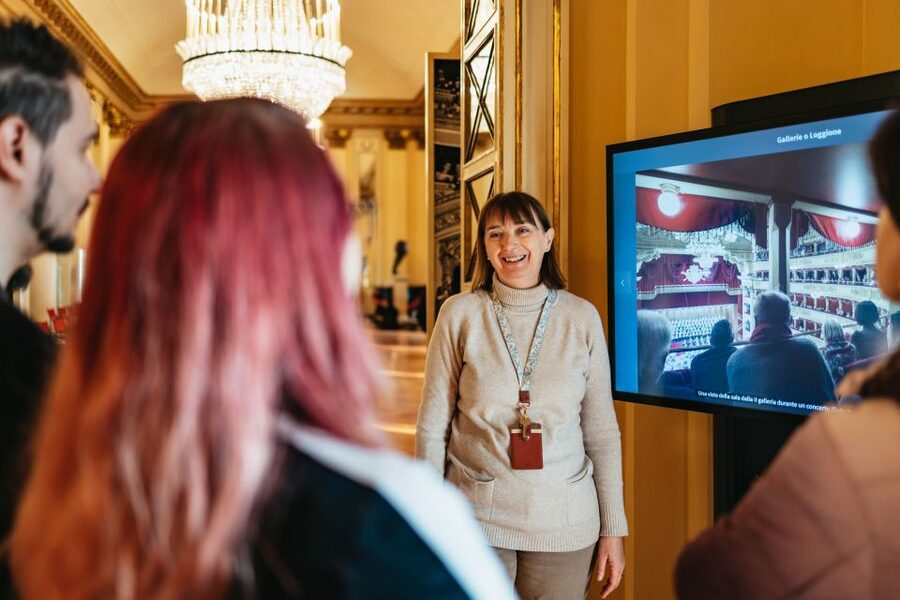
At $44 per person, this is not the cheapest way to see a museum in Milan. The value comes from the combination of admission, a live guide, headsets, and the chance to enter one of Europe’s best-known opera houses when conditions permit.
I think the price works best for three types of visitors. First, opera and classical music fans get context they would miss by simply looking around. Second, architecture and theatre-design enthusiasts gain access to the auditorium, boxes, costumes, and set models. Third, first-time visitors who want a focused cultural experience near the Duomo get a well-contained activity that takes only an hour and a half.
The value is weaker if you already plan to attend an opera or ballet performance and will have plenty of time inside the building. It is also less convincing if your main goal is a guaranteed auditorium visit, since theatre access can change.
The flexible booking terms help reduce the risk. You can reserve now and pay later, and cancellation is free up to 24 hours before the activity for a full refund. Those terms are useful when you are building a Milan schedule around museums, meals, and changing performance plans.
Practical details that affect your visit
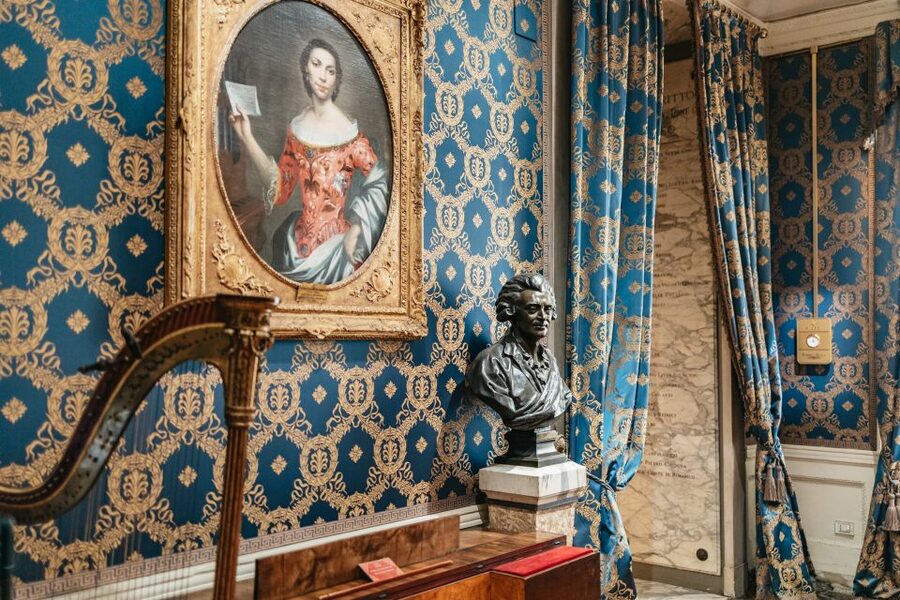
Wear something comfortable for standing and walking through the theatre and museum. The duration is 1.5 hours, so the pace is manageable, but you will get more from it if you arrive ready to listen and look closely.
Large bags and backpacks must be left in the cloakroom. Oversize luggage is not allowed, so do not arrive with airport bags or bulky cases. The theatre and museum are wheelchair accessible, and strollers are allowed, which makes the tour workable for many families and visitors with mobility needs.
The meeting point is directly in front of the La Scala Theatre Museum entrance. Since the site is close to the Duomo and Galleria Vittorio Emanuele II, it is easy to combine with other central Milan sights, but allow enough time to find the correct entrance and the purple tour marker.
Tours operate in English, Italian, French, German, and Spanish. If you have a strong language preference, select it when booking and confirm the available start time. The exact schedule changes, so you need to check availability for your date.
Who should book this La Scala tour?
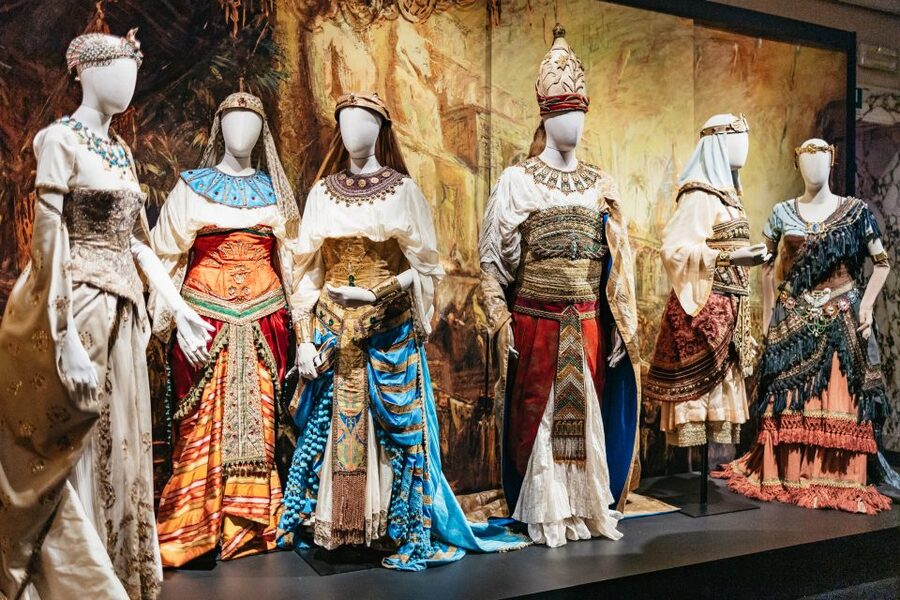
I would choose this tour if you want the building to make sense, not just appear in a photograph. A guide adds the names, personalities, objects, and production details that turn a beautiful room into a living cultural institution.
It suits adults with an interest in opera, music, architecture, painting, fashion, and theatre. It also works for families with older children, especially when the guide keeps the explanation lively.
I would think twice if you dislike guided visits, want to wander alone, or need guaranteed access to every part of the theatre. The route can be affected by rehearsals and private events, and the experience is strongest when you enjoy listening to a guide.
Should you book it?
Yes, if La Scala interests you but an opera ticket is too expensive or unavailable during your stay. For $44, you receive a focused introduction to the theatre and museum, with a real chance of seeing rehearsal activity and a strong chance of hearing useful stories that you would miss alone.
Book it with realistic expectations. The museum is not a consolation prize, and the auditorium is not guaranteed on every date. If you can accept that flexibility, this is a smart way to spend 90 minutes in central Milan, especially with a lively guide such as Fabio, Simone, Lorella, or Chiara.
FAQ
Where does the La Scala guided tour meet?
Meet in front of the entrance to the La Scala Theatre Museum. Look for the guide holding a Hidden Experiences purple flag or board.
How long does the tour last?
The tour lasts 1.5 hours, or 90 minutes. Starting times vary by date, so check availability when booking.
What languages are available?
Live tours are available in English, Italian, French, German, and Spanish.
Does the tour include entry tickets?
Yes. Entry to La Scala Theatre and the La Scala Museum is included, along with the guided tour and headsets.
Can I see a rehearsal during the tour?
You might see an orchestra, opera, or ballet rehearsal, but access is not guaranteed. Rehearsals and private events can limit the visit to the museum.
Is La Scala accessible by wheelchair or stroller?
Yes. The theatre and museum are accessible to wheelchairs and strollers.
What should I do with a large bag?
Large bags and backpacks must be checked into the cloakroom. Oversize luggage is not allowed.
Fresh on the Milan list
- Milan: Last Supper and Sforza Castle Guided Tour★ 4.6 · 498 reviews
- Milan: San Sepolcro Crypt Skip-the-Line Entry Ticket★ 4.2 · 512 reviews
- Milan: Sunset Navigli Food & Drinks Tour by Do Eat Better★ 4.5 · 517 reviews
- Milan Duomo Cathedral and Rooftop Terrace Guided Tour★ 4.8 · 531 reviews
- Small-Group Lake Como – Bellagio, Varenna & Hidden Waterfall★ 5.0 · 541 reviews
- Milan: Leonardo’s Last Supper and Michelangelo’s Pietà Tour★ 4.6 · 559 reviews
- From Milan: Cinque Terre Guided Full-Day Trip With Cruise★ 4.0 · 559 reviews
- Milan: Skip-the-Line Guided Walk and “The Last Supper”★ 4.5 · 606 reviews
Milan Tours, compared.
Cathedral and Duomo’s Terraces Entrance Ticket
Read our review →
City Sightseeing Hop-On Hop-Off Bus with Audio Guide
Read our review →
Milan Cathedral: Duomo Terraces Ticket (No Church Access)
Read our review →
Milan Cathedral Direct Entrance – Terrace Excluded
Read our review →
Guided Walking Tour & Last Supper Visit with Ticket
Read our review →
Fast-Track Milan Cathedral and Terraces Guided Tour
Read our review →
Browse the lists this tour appears in