
Reviewed · MUSEUMS
Leonardo3 The World of Leonardo: Tickets for the Interactive Exhibition
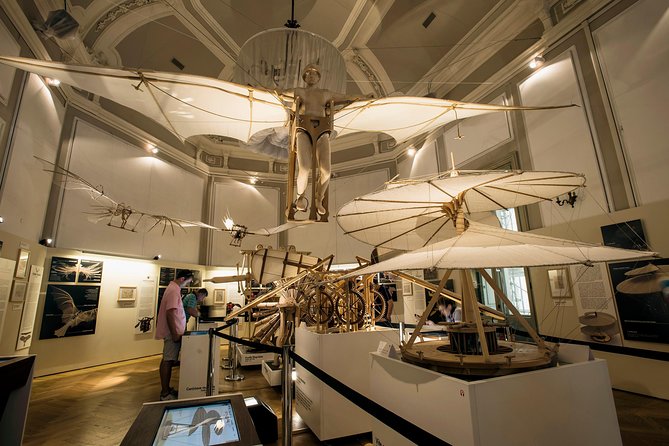
Leonardo3 turns Leonardo da Vinci’s sketches into things you can see and operate. Working models of his machines sit beside digital restorations of his paintings, including a close look at The Last Supper and the techniques behind it. I like the hands-on design and the unusual focus on Leonardo as an engineer, anatomist, and musician, not only as a painter.
I also like the central location, just off Milan’s Galleria near the Duomo, and the freedom to visit at your own pace. The main drawback is size: this is a compact exhibition, and it can feel crowded or warm, while children may lose interest if they do not enjoy reading and experimenting.
Key points to know before you go
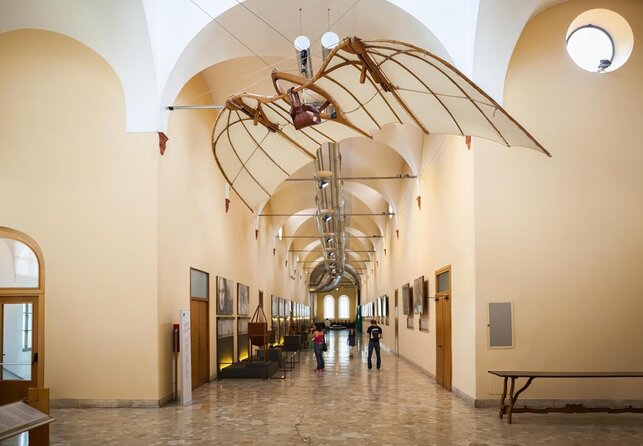
- Leonardo’s inventions become working models: See physical reconstructions of machines based on his notebooks, rather than only reading about them.
- The Last Supper gets a digital makeover: Study a digital restoration and learn more about the fragile fresco before or after seeing the original elsewhere in Milan.
- Plan on 1 to 2 hours: The exhibition is small but packed, so your time depends on how much you read and use the interactive stations.
- The audio guide costs extra: It is available in Chinese, English, French, German, Italian, Portuguese, Russian, and Spanish.
- The location saves time: Find it near the Duomo, at the end of the Galleria toward the next small piazza.
- Check the date details carefully: The supplied ticket information gives a validity date of November 13, 2024, while opening information also lists dates in late 2025.
Seeing Leonardo as an inventor, not just a painter
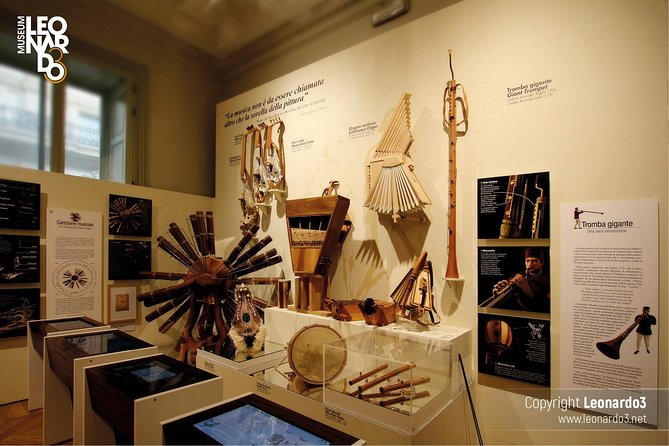
Many people arrive in Milan thinking of Leonardo mainly as the man who painted The Last Supper. Leonardo3 corrects that narrow picture quickly. The exhibition shows how his interests crossed art, mechanics, anatomy, architecture, music, and scientific observation.
That wider view is the real reason to come. Leonardo’s notebooks are full of compact sketches and mirror writing, but a drawing of a machine can be hard to understand on a page. Here, reconstructed models give those ideas physical form. You can see how a mechanism might move, how separate parts fit together, and how Leonardo approached a problem before modern engineering terms existed.
I especially like this approach for first-time visitors who want context without committing to a full museum day. The exhibition does not ask you to spend hours in a large collection. Instead, it gives you a concentrated look at one remarkable mind, with screens and models doing much of the explaining.
The displays also make clear that Leonardo’s ideas were not all practical successes. That is part of the fun. You are looking at experiments, proposals, observations, and inventions from different stages of his work. Some are elegant. Others are strange. Together, they show a restless thinker who kept testing how the world worked.
More Museums in Milan
- Official San Siro Stadium and Museum Guided Tour
★ 4.4 · 3,573 reviews - Milan: Leonardo3 The World of Leonardo Museum Entry Ticket
★ 4.4 · 3,241 reviews - Milan: La Scala Theater & Museum Guided Experience
★ 4.1 · 2,931 reviews
Starting at Museo Leonardo3 beside the Duomo
The museum is in Milan’s city center, close to the Duomo and the Galleria. It is an easy stop to add before or after sightseeing in the heart of town, although the entrance can be easy to miss.
A useful way to find it is to walk through the Galleria from the Duomo toward the next small piazza. Look for the city information storefront. The museum is just after it on the left. This is worth knowing because a central address does not always mean an obvious doorway.
Your ticket includes admission and is described as skip-the-line access. That can be useful at busy times, especially since the exhibition occupies a relatively small space. Still, compare the online price with the museum’s direct admission before booking. One practical criticism is that visitors may be able to walk in and pay a lower normal entrance price, so the convenience of advance booking and skip-the-line entry is what must justify the difference.
The listed price is about $19.22 per person. For that amount, I see the best value in the models and interactive stations, not in the idea of a traditional guided tour. This ticket does not include transportation, souvenirs, or an audio guide.
The machine models make the notebooks understandable
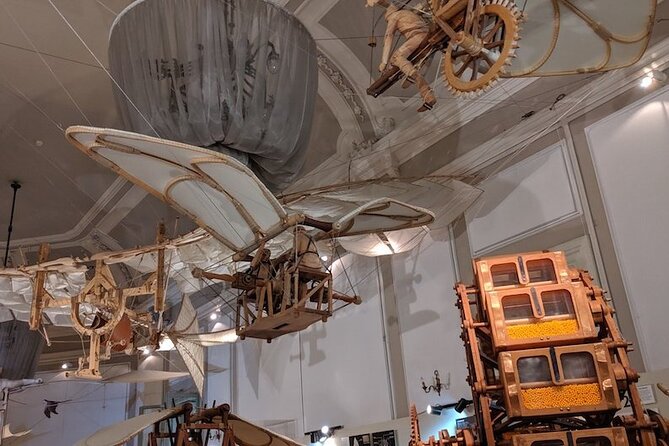
The strongest section is the collection of physical models based on Leonardo’s designs. His sketches of gears, flying devices, bridges, military machines, and other mechanisms can look mysterious when printed in a book. A three-dimensional reconstruction gives you a much better sense of his method.
Look closely at the details. The value is not just in seeing a large object on display. It is in noticing the relationships between wheels, frames, levers, and moving parts. Several displays are designed for interaction, so you can test ideas rather than simply stand in front of a label.
This is also where the exhibition feels most useful for families and school-age children. Hands-on material gives younger visitors something to do. But the experience is not automatically child-friendly for everyone. Much of the appeal depends on reading, concentrating, and being curious about how machines work. A child who wants a fast-moving attraction may be ready to leave well before the two-hour mark.
Adults often need more time than expected. The exhibition is compact, yet there is plenty to study. If you read the labels, test the interactive displays, and use the audio guide, one hour can pass quickly. Two hours is a sensible upper limit for most people.
Digital restorations and Leonardo’s artistic work
Leonardo3 is not only about machinery. Digital restorations bring several of his artistic works into the exhibition, allowing you to examine details and techniques that are difficult to appreciate in a quick glance at a famous original.
The digital material is particularly helpful for visitors who want to connect Leonardo’s art with his scientific habits. He observed bodies, movement, proportion, light, and expression with the same intense attention he brought to machines. The exhibition places those interests side by side, so Leonardo feels less like two separate people, artist and inventor, and more like one person using many tools to understand the world.
One unusual attraction is the attention given to his writing. Leonardo’s notes and Codex Atlanticus material are part of the story, and the presentation helps show how his ideas were recorded. The mirror writing can be fascinating on its own, especially when paired with a reconstruction of the object he was describing.
English translations are available, but they may be brief beside some displays. If you want every detail, the audio guide is the better choice. It is sold separately in eight languages: Chinese, English, French, German, Italian, Portuguese, Russian, and Spanish.
Same city, an entirely different afternoon:
- Milan: Cathedral and Duomo’s Terraces Entrance Ticket
★ 4.6 · 61,054 reviews - Milan: Da Vinci’s Last Supper Guided Tour
★ 4.7 · 10,143 reviews - Milan: City Sightseeing Hop-On Hop-Off Bus with Audio Guide
★ 4.0 · 6,256 reviews - Milan Cathedral: Duomo Terraces Ticket (No Church Access)
★ 4.6 · 6,111 reviews
Why the digital Last Supper matters
The digital restoration of The Last Supper is a major reason to include this stop in a Milan itinerary. You are not seeing the original fresco here. Instead, you are seeing a restored digital presentation that helps explain its condition, details, and importance.
That distinction matters. If you have a reservation to see the actual Last Supper at the refectory of Santa Maria delle Grazie, this exhibition cannot replace it. The original viewing is a separate experience with its own admission and booking arrangements. But Leonardo3 can be a useful introduction, especially if you visit it first.
Seeing the digital material before the original may help you notice more when you stand in front of the fresco. You will have already considered the composition, the figures, and the restoration work. Then, at Santa Maria delle Grazie, you can focus on the actual surface and the feeling of being in the room where Leonardo painted it.
If you cannot see the original, the digital display is a good substitute for learning about the work, but not a physical substitute for standing before the fresco. Think of it as interpretation and reconstruction, not the original artwork.
Allow time for the interactive stations
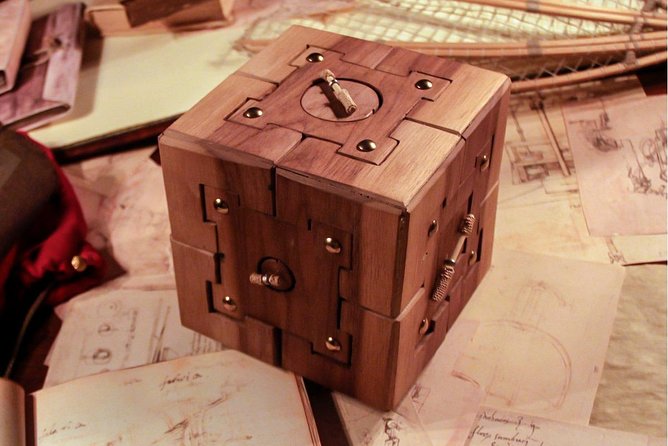
The exhibition’s best displays invite you to do more than look. Screens and hands-on elements let you explore Leonardo’s designs at your own pace. This makes the visit feel more like a workshop than a silent gallery.
I like that you are not forced into a fixed route or a timed presentation. You can spend longer with a machine that catches your interest and move quickly past a display that does not. The flexibility also helps if you are fitting Leonardo3 between the Duomo, the Galleria, and another central Milan sight.
At times, the compact layout may work against the exhibition. If several groups stop at the same interactive station, you may need to wait or circle back. The space can feel crowded, and one visitor found it uncomfortably hot on a very warm day because there was no air conditioning. This is a good reason to avoid treating the museum as a quick five-minute stop during the busiest part of the day.
The exhibition has lockers, which are useful if you are carrying bags. Souvenirs are available for purchase, but they are not included in the ticket.
When to go and how long to stay
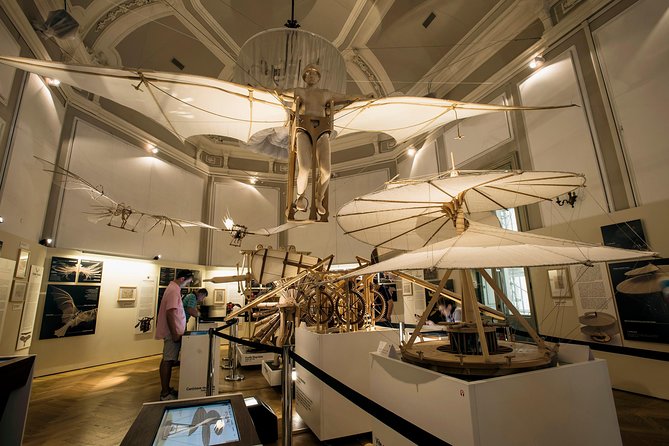
The experience is listed as lasting about one to two hours. I would set aside at least 60 minutes for a basic visit and closer to two hours if you plan to read the material, use the audio guide, and try the interactive displays.
The published opening information includes daily hours of 9:30 a.m. to 8 p.m. from November 18 through December 15, 2025, a special Tuesday schedule of 2 p.m. to 8 p.m. on December 16, and daily hours of 9:30 a.m. to 8 p.m. from December 17 through December 23, 2025.
Because the supplied ticket details also say the ticket is valid until November 13, 2024, you should check the exact date and current admission terms before paying. Those dates do not line up, and the attraction’s current schedule matters more than a general description.
Morning visits may give you a calmer start, although the exhibition’s flexible hours make it easy to place later in the day. If you want to study the machines quietly, avoid the most crowded periods. If you are traveling with children, a shorter visit with a clear focus may work better than promising them two full hours.
Is this a guided tour?
No guide name is provided, and the admission does not include a live guide. This is a self-directed museum visit for your own group, with an audio guide available for an additional fee.
The audio guide is worth considering if you want more background than the printed English explanations provide. It can also help you understand the reasoning behind the models instead of treating them as decorative objects.
The phrase private activity should not lead you to expect a personal docent or a private lecture. It means only your group is participating in the booked activity. You still explore the museum independently.
Who will get the most from Leonardo3?
I would choose this for anyone interested in Leonardo’s inventions, engineering, notebooks, or the working process behind his art. It is also a smart add-on for a first visit to Milan because the central location makes it easy to combine with the Duomo and Galleria.
Art lovers who already plan to see The Last Supper can use the digital restoration as preparation. Science and design enthusiasts may enjoy the machines even more than the paintings. The exhibition also suits adults who want a compact cultural stop rather than another large museum.
Families should make the decision based on the children, not the name Leonardo alone. The interactive elements help, but the exhibition still rewards patience and reading. Younger children may find the displays interesting for a while and then lose interest.
I would be more cautious if you dislike small indoor exhibitions, expect a full-scale museum, or want to see original Leonardo paintings. This is a focused presentation built around reconstructions and digital material. Its strength is explanation and access, not the number of original objects.
Booking, cancellation, and practical details
Instant confirmation is provided at booking, and cancellation is free if you cancel at least 24 hours before the experience’s start time. Cancellations made less than 24 hours in advance are not refunded, and changes within that period are not accepted.
The attraction is near public transportation, and most people can participate. Children must be accompanied by an adult. Transportation to and from the museum is not included, but the central location makes it practical to reach as part of a day in central Milan.
Bring your booking confirmation and check the ticket date carefully. Since one reported problem involved difficulty downloading tickets, it is sensible to make sure your confirmation is accessible before you set out and to contact the provider promptly if anything looks wrong.
Should you book Leonardo3?
Book it if you want Leonardo’s machines to make sense, enjoy interactive displays, or need a useful one to two-hour stop near the Duomo. The working models, digital restorations, and Last Supper presentation give you a better idea of how wide Leonardo’s interests really were.
Skip it if your main goal is original art or a large museum collection. Also compare the direct entrance price, since the online ticket may not always be the cheapest route. For most visitors who value convenience and want a clear introduction to Leonardo’s inventions, the $19.22 price is reasonable, provided the date and entry terms are confirmed first.
FAQ
Where is Leonardo3 located?
Leonardo3 is in central Milan near the Duomo and the Galleria. Walk through the Galleria from the Duomo toward the next small piazza. The entrance is after the city information storefront on the left.
How long does the visit take?
The visit takes approximately one to two hours. You may need less time for a quick look or closer to two hours if you read the displays and use the interactive stations.
What does the ticket include?
The ticket includes admission to Museo Leonardo3, also known as Il Mondo di Leonardo. It also grants skip-the-line access.
Is the audio guide included?
No. The audio guide costs extra and is available in Chinese, English, French, German, Italian, Portuguese, Russian, and Spanish.
Does the exhibition show the original Last Supper?
No. It presents a digital restoration of The Last Supper and information about the fresco. The original painting is not included in this admission.
Can I buy souvenirs at the museum?
Yes. Souvenirs are available to purchase, but they are not included in the admission ticket.
Is transportation included?
No. Transportation to and from the attraction is not included. The museum is near public transportation in central Milan.
Can children visit Leonardo3?
Yes, but children must be accompanied by an adult. The interactive displays may appeal to children, although some may lose interest quickly.
Can I cancel for a full refund?
Yes, if you cancel at least 24 hours before the experience’s start time. Cancellations made less than 24 hours before the start time are not refunded.
What are the listed opening hours?
The listed hours are 9:30 a.m. to 8 p.m. daily from November 18 through December 15, 2025, 2 p.m. to 8 p.m. on Tuesday, December 16, 2025, and 9:30 a.m. to 8 p.m. daily from December 17 through December 23, 2025. Check the date carefully because the ticket information also gives a validity date of November 13, 2024.
Fresh on the Milan list
- Walking Food Tour of Milan with Tastings★ 4.5 · 194 reviews
- Milan: Fresh Pasta and Tiramisù Class in A Historical Home★ 4.9 · 195 reviews
- Milan: City Highlights Walking Tour with The Last Supper★ 4.9 · 195 reviews
- Inside Milan’s Duomo: Cathedral Tour with Optional Rooftop★ 4.5 · 210 reviews
- Milan:Lake Como, Lugano & Bellagio Day-Trip with Boat Cruise★ 4.5 · 210 reviews
- Milan: San Siro Stadium Entry Ticket and Optional Bus Ticket★ 4.1 · 212 reviews
- Choose three recipes to cook from all the traditional cuisine★ 5.0 · 214 reviews
- Verona and Lake Garda Day Trip from Milan★ 4.5 · 214 reviews
Museums, compared.
Vatican: Museums & Sistine Chapel Entrance Ticket
Read our review →
Vatican Museums & Sistine Chapel Tour with Optional Basilica
Read our review →
Vatican Museums, Sistine Chapel & St Peter’s Basilica Guided Tour
Read our review →
Skip-The-Line Uffizi Gallery Timed Entry Ticket
Read our review →
Vatican Museums, Sistine Chapel & Basilica Tour
Read our review →
Vatican Museums & Sistine Chapel Skip-the-Line Entry Ticket
Read our review →Vatican Museums, Sistine Chapel & Basilica Tour
Read our review →
Vatican Museums & Sistine Chapel Guided Tour
Read our review →Browse the lists this tour appears in