
Reviewed · ITALY
Langhe: Truffle Hunting Experience
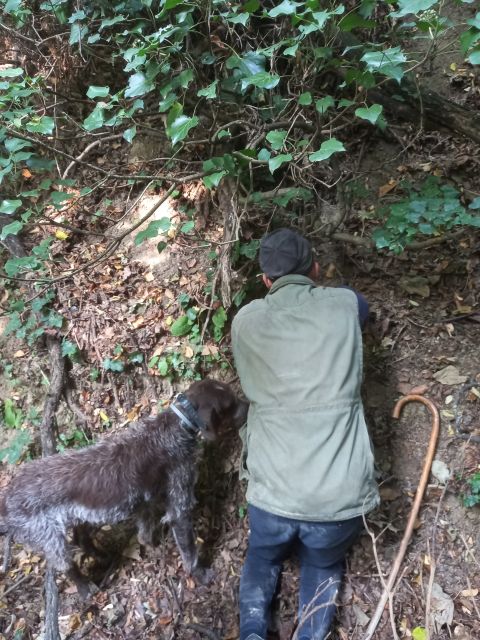
The dog knows what it is doing. That is the magic of this Langhe truffle hunt. You follow a professional Trifolao through the Piedmont hills, watch the dog read the forest floor, and see the hunter uncover the prize. It is part woodland walk, part local food lesson, and part live performance.
I like the direct, hands-on style. You learn how truffles grow, why different varieties appear at different times, and how a dog is trained to find them. I also like the human scale: groups are limited to 10, and guides such as Margherita and hunters such as Giovanni make the experience feel personal.
The main catch is value. At $94 per person, the shorter option is not cheap, especially since truffles found during the hunt are extra and transport is not included. The paths can also be steep, muddy, and hot in summer, so this is not a polished stroll through a manicured garden.
Key points to know before you go
- Turbo and the other dogs do the real searching: Watching the bond between hunter and dog is the best part of the outing.
- You follow the guide in your own car: The drive from the Alba meeting point to the woodland site usually takes about 5 to 10 minutes.
- White truffles are seasonal: The white truffle season runs from October 1 through January 31, while black truffles appear at different times of year.
- The longer option adds wine: Choose the 3.5-hour version for a winery visit and tastings that can include Barolo or Barbaresco.
- The forest is not always easy underfoot: Rubber boots and rain ponchos are supplied, but you still need comfortable clothing and a reasonable level of fitness.
- The find belongs to the hunter: You can buy truffles uncovered during the hunt, but they are not part of the $94 price.
What the Langhe truffle hunt is really about
This is not a truffle tasting dressed up as a nature walk. It is a look at an old local trade, led by a Trifolao, the Piedmontese truffle hunter, and the dog that works beside him.
Your guide explains where truffles grow, what conditions they need, and how hunters tell black and white varieties apart. You also learn why the dog matters. A trained dog follows scent below the soil, then signals the place where the hunter can carefully search.
The result is wonderfully simple. You walk through the woods, stop when the dog becomes interested, and watch the hunter work. Sometimes the dog finds several truffles. Sometimes it finds fewer. A white truffle may appear, or the morning may produce only black ones. That uncertainty is part of the activity, not a fault in the tour.
The experience is strongest for people who want to understand the food before eating it. A truffle on a plate can seem mysterious and expensive. Here, you see the time, patience, training, and luck behind it.
What else people book in Italy on the same trip:
- Vatican: Museums & Sistine Chapel Entrance Ticket
★ 4.5 · 144,003 reviews - Vatican Museums & Sistine Chapel Tour with Optional Basilica
★ 4.3 · 67,413 reviews - Colosseum, Roman Forum & Palatine Guided Tour
★ 4.7 · 63,148 reviews
Meeting in Alba and following the hunter into the hills
The meeting point may be at Cimitero di Alba or another nearby location, depending on the option and the hunter’s availability. Check your final instructions carefully, since the meeting place can change.
You then follow the guide in your own car. The transfer to the hunting area is not included, and the drive is generally only 5 to 10 minutes. This is easy if you have a rental car, but it is an important detail if you are staying in Alba without one. You should not assume that a vehicle transfer is part of the price.
The route takes you away from the town and into the surrounding Langhe hills. The setting matters. Truffles do not grow in a shop or a tidy vineyard row. The hunt takes place in a natural woodland area, and the exact spot is treated as one of the Trifolao’s secrets.
That secrecy is practical, not theatrical. Truffle hunters protect their productive places. You will be shown enough to understand the habitat, but do not expect a map to the best patch or a promise of a guaranteed haul.
Walking the woods with a Trifolao and his dog
The central walk is short enough to fit into a wider day in the Langhe, but it is not necessarily easy. The ground can be muddy, steep, or uneven. In June, the heat can also make the woods feel harder than the distance suggests.
Rubber boots and a rain poncho are included. Wear socks with the boots, as well as clothes you do not mind getting dirty. Bring comfortable shoes for the approach, though the supplied boots may be the better choice once you reach the hunting area.
The dog usually sets the pace. You watch it move ahead, sniff around tree roots, and return to spots that seem promising. When the scent is strong, the hunter takes over and checks the soil. The dog may be Turbo, Gigi, Flora, or another dog connected with the hunter working that day.
Giovanni and Turbo receive especially warm praise for their teamwork. Turbo is described as friendly and energetic but focused when the search begins. That combination makes the activity appealing to children. Families with children aged 8 and 13 found it engaging, though muddy clothing and summer heat were practical concerns.
You should also expect a real working animal, not a staged photo opportunity. The dog may be playful between searches, then suddenly become serious when it catches a scent. That change in mood is one of the most memorable parts of the morning.
Learning the difference between black and white truffles
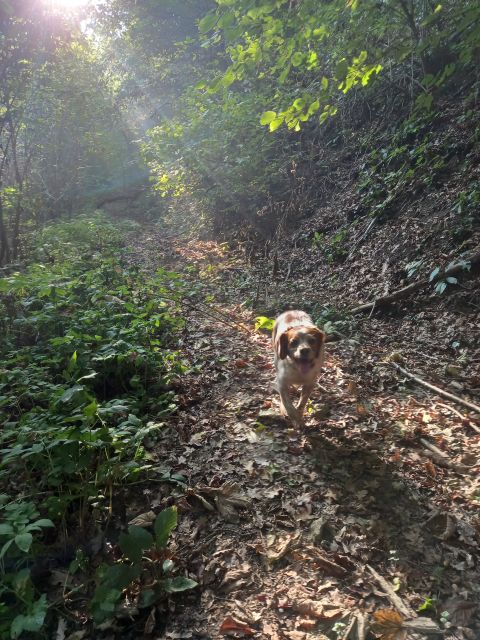
The guide gives the hunt a useful structure. You learn the difference between black and white truffles, when each type is found, and how the dog’s training begins at an early age.
The white truffle season runs from October 1 to January 31. Autumn is the classic time for the white truffle hunt, and it is also when the woods may be wet and cool. Black truffles have different varieties at different times of year, so a summer or spring outing is more likely to focus on a black type.
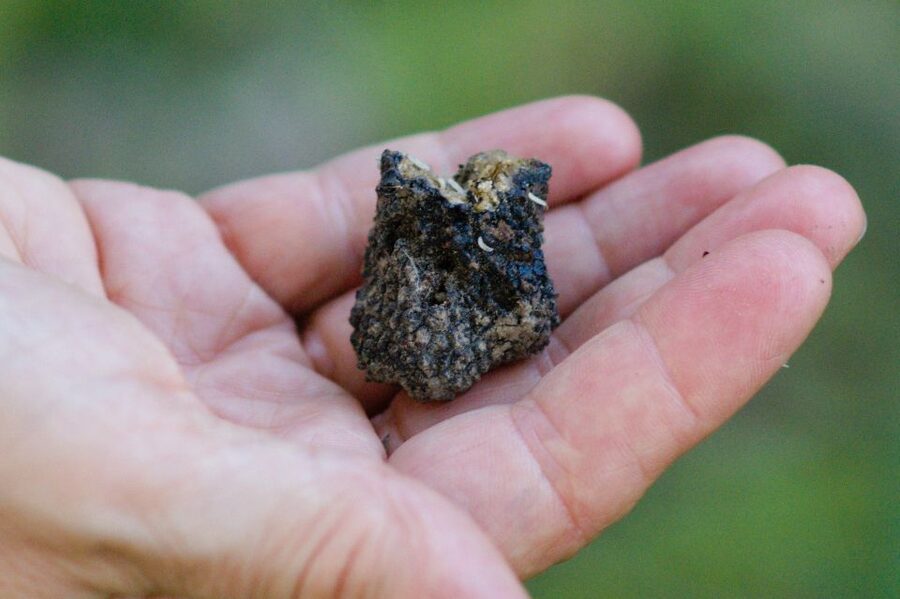
One especially useful explanation compares black and white truffles through their scent and market value. The hunt itself makes clear why the white truffle is so prized, but you should not book expecting to find one every time. A lucky group might uncover several white and black truffles. Another might find only black truffles.
That variation is worth accepting before you arrive. You are paying for access to the hunter’s skill, the dog’s training, and the explanation of the process, not for a guaranteed amount of truffle.
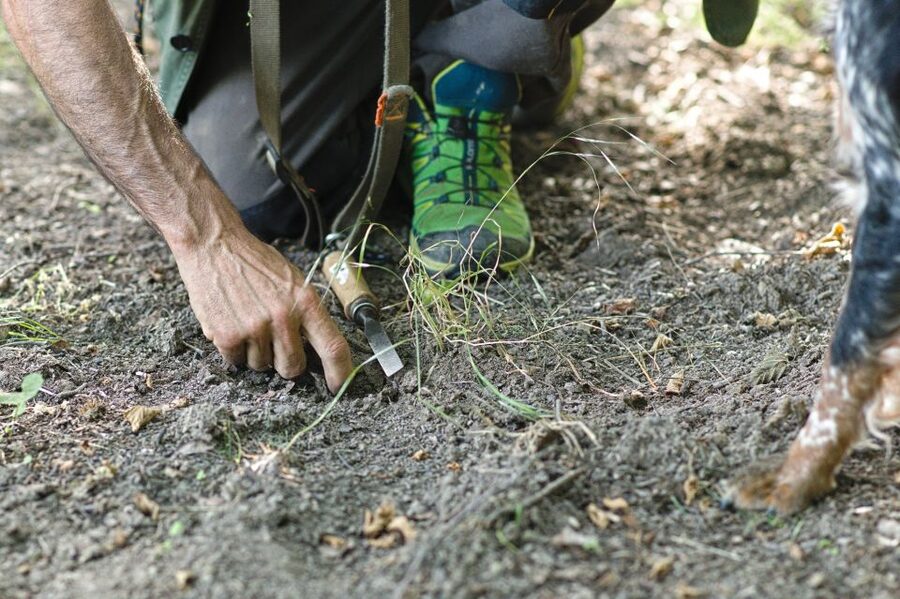
The guides also explain the family knowledge tied to the work. This is not simply a matter of taking a dog into the forest and hoping for the best. The hunter needs to read the area, understand the soil and trees, work with the dog, and know how to remove the truffle without damaging the site.
Same city, an entirely different afternoon:
- Milan: Cathedral and Duomo’s Terraces Entrance Ticket
★ 4.6 · 61,054 reviews - Venice: Doge’s Palace Reserved Entry Ticket
★ 4.6 · 42,716 reviews - Vatican Museums, Sistine Chapel & St Peter’s Basilica Guided Tour
★ 4.5 · 39,149 reviews - Rome: Colosseum, Palatine Hill and Roman Forum Guided Tour
★ 4.8 · 32,814 reviews
What happens when the dog finds one
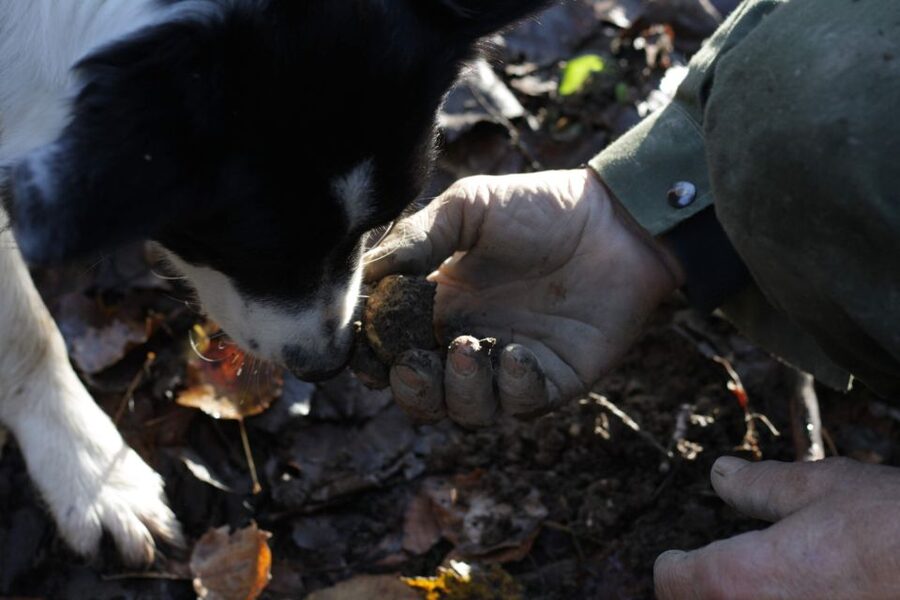
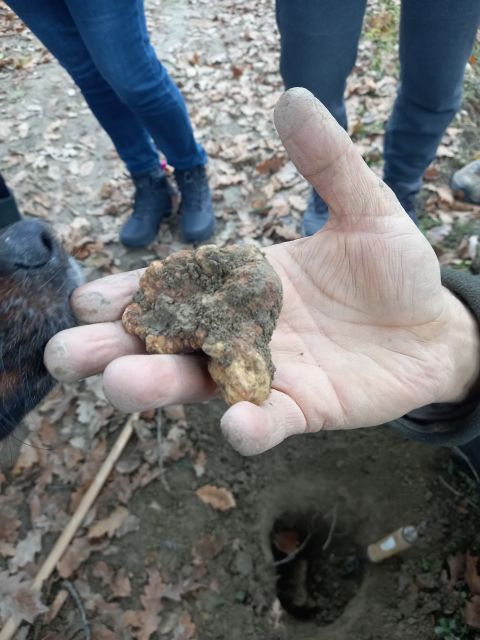
The most exciting moment comes when the dog signals a find. The hunter examines the place and digs carefully. You may watch a black truffle emerge, or you may get the great prize of a white one.
One outing produced several black truffles and one white truffle. The hunter jokingly compared the black ones to Fiat cars and the white one to a Ferrari. That gives you a sense of the difference in status without turning the hunt into a lecture.
The truffles found are the hunter’s property. You may buy them afterward, but the purchase is separate from the tour. This is worth planning for if you want to take some home or cook with them that evening.
A visitor once bought a couple and used them in risotto. That is a sensible way to enjoy the experience: see the truffle in the soil, smell it in the hunter’s hands, then taste it in a simple dish. Just remember that the cost and availability of any truffle purchase depend on what the dog finds.
The short option and the longer winery visit
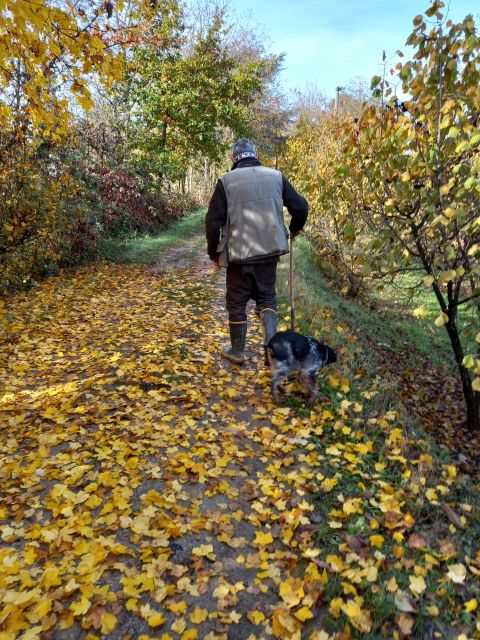
The activity lasts between 1.5 and 3.5 hours, depending on the option you book.
The shorter version focuses on the hunt and the explanations. It suits you if your day already includes Alba, a castle, a vineyard, or another appointment. The walk itself may be fairly brief, so do not book the short option expecting a full-day expedition in the forest.
The itinerary also allows about 10 minutes of break time or self-guided time in the Langhe. This gives the outing a little breathing room, but the precise flow can depend on the hunting site and timing.
The 3.5-hour option adds a 1.5-hour winery visit. This is the better choice if you want the truffle hunt to become a full Piedmont food-and-wine experience rather than a single activity.
The tasting includes several local wines and can include Barolo or Barbaresco. That addition improves the value of the longer option, especially if you were planning to visit a winery anyway. It also connects the truffle to the wider food culture of the Langhe, where serious wines and prized seasonal ingredients share the same table.
Food is not included, however. The wine tasting is part of the longer option, but you should plan your own meal separately.
Is $94 a fair price?
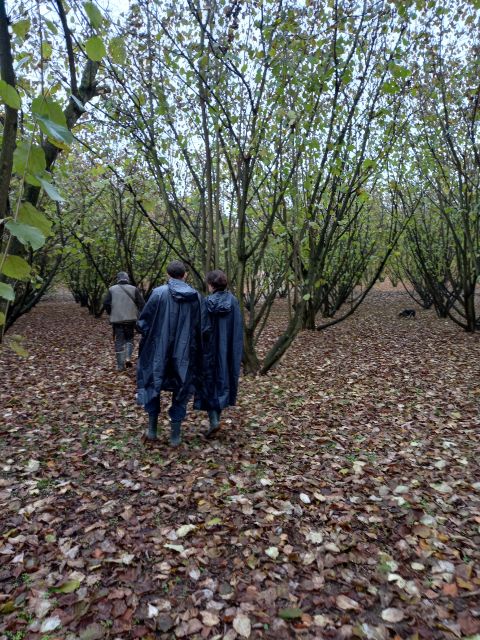
At $94 per person, the price sits in the range where expectations matter. You are not buying a basket of truffles. You are paying for a small-group activity, a local guide, the Trifolao, the trained dog, equipment such as rubber boots and a poncho, and the chance to learn a specialized local skill.
The small group limit of 10 helps. You should be close enough to see the dog and hunter work, and the guides can answer questions without addressing a large crowd. English, French, and Italian are available, and the English guidance has been praised as clear and fluent.
The price feels easier to justify with the 3.5-hour option because the winery visit and tasting add another substantial part to the outing. If you choose the 1.5-hour hunt alone, the cost can feel high if the dog finds only a small number of truffles.
Still, the activity is less expensive than some other truffle outings in the area. If you are comparing options, check what else is included rather than looking only at the headline price. A more expensive tour may not give you more time with the dog or a better chance of finding truffles.
My advice is simple: book it for the access and the lesson, not as a bargain food purchase. If you love truffles and local traditions, the cost is easier to accept. If you mainly want a cheap walk in the woods, choose something else.
The best seasons and the right clothing
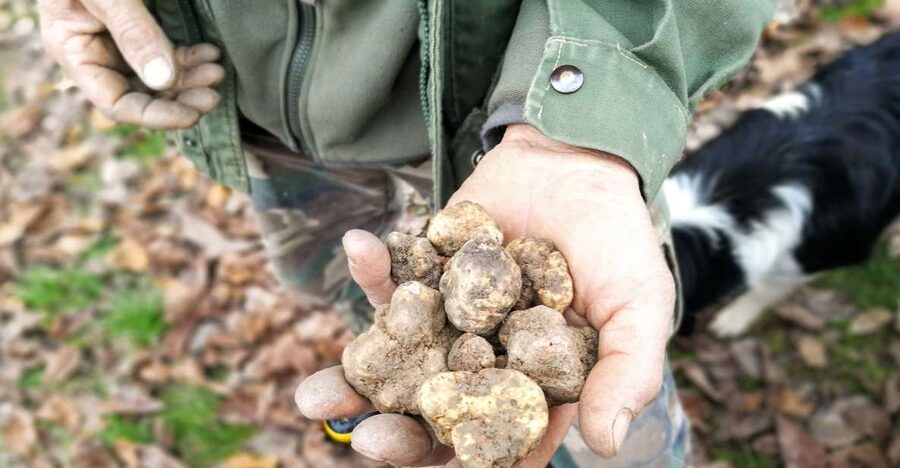
October through January is the clearest choice if white truffles are your main goal. The stated white truffle season runs from October 1 to January 31, while black truffle seasons vary.
Autumn brings the classic atmosphere but also damp ground. Warm clothes, a raincoat, and socks for the rubber boots are sensible. The supplied poncho helps, but it does not replace clothing suited to changing weather.
Summer can be hot. A June outing was described as muddy despite the heat, and children became dirty and uncomfortable. If you have another activity afterward, pack a change of clothes or leave time to clean up and cool down.
The activity is not suitable for wheelchair users. You should also be comfortable walking on steep or muddy paths. Oversize luggage is not allowed, so leave large bags at your accommodation or in your car.
Who will enjoy this most
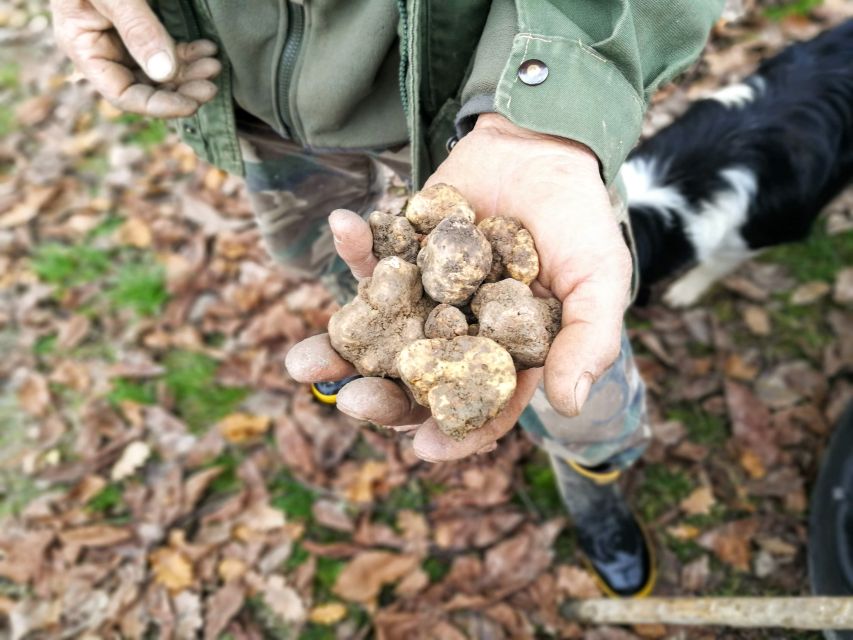
I would recommend this to food lovers, curious families, couples, and anyone who wants a break from standard winery visits. Children can enjoy the dog and the surprise of each find, provided they can manage the path and do not mind getting muddy.
It also works well for visitors who already plan to explore Alba and the Langhe wine country. The short walk leaves room for other stops, while the longer option combines the hunt with a winery visit and tasting.
You may want to skip it if you need guaranteed luxury, level paths, or a guaranteed white truffle. The activity takes place outdoors, conditions change, and the result depends on the dog and the forest.
The guides are a major part of the experience. Margherita has led several outings, while Giovanni has worked with dogs including Turbo and Gigi. Other sessions have featured Aldo and his dog Flora. Since the exact team may vary, the key point is the personal knowledge of the local guide and hunter rather than one fixed cast.
Booking details worth knowing
You can cancel up to 24 hours before the activity for a full refund. A reserve-now-and-pay-later option is also available, which helps if your Piedmont plans are still shifting.
Starting times vary, so you need to check availability for your date. The meeting point may change based on the hunter’s schedule, and you should be prepared to follow the guide by car to the hunting area.
The tour is offered in English, French, and Italian. It is a small-group experience with no more than 10 participants.
Should you book the Langhe truffle hunt?
Book it if you want to see how a prized Piedmont ingredient is found, not just eat it shaved over pasta. The dog, the Trifolao, and the woodland setting give you a direct look at a local tradition that a restaurant meal cannot provide.
Choose the 3.5-hour version if you want wine included and can spare the time. Choose the shorter hunt if you are mainly interested in the dog and the search, then plan your own meal and winery visit.
Bring sturdy clothing, accept that the truffle count is uncertain, and budget extra if you hope to buy a find. With those points clear, this is a friendly, unusual, and genuinely local addition to a Langhe itinerary.
FAQ
Where does the truffle hunting experience meet?
The starting location can be Cimitero di Alba or another nearby meeting point, depending on the option and the hunter’s availability. The meeting point may change, so check the final details before setting out.
Do I need my own car?
Yes. The transfer to the hunting area is not included. You follow the guide in your own car, usually driving about 5 to 10 minutes from the meeting area.
How long does the experience last?
The available options last from 1.5 to 3.5 hours. The longer option includes a winery visit lasting about 1.5 hours.
Are truffles included in the price?
No. Truffles found during the hunt belong to the hunter. You may buy them separately if the hunter has them available.
Can I find white truffles all year?
No. The stated white truffle season runs from October 1 to January 31. Black truffle varieties are found at different times of year.
What should I wear?
Bring comfortable clothes and comfortable shoes. In autumn, warm clothing is recommended. Rubber boots and a rain poncho are provided, and socks are suggested for the boots.
Is wine tasting included?
Wine tasting is included with the 3.5-hour option. It features different local wines and can include Barolo or Barbaresco. Food is not included.
Is the activity suitable for wheelchair users?
No. The experience is not suitable for wheelchair users, and some paths can be steep and muddy.
Fresh on the Italy list
- Rome: Guided Catacombs Tour & Capuchin Crypt (Audio Guide)★ 4.3 · 191 reviews
- Guided tour of the Colosseum, Roman Forum and Palatine in Spanish★ 4.5 · 191 reviews
- Bolgheri: Winery Tour with Wine Tasting★ 4.7 · 191 reviews
- Stories of Pompeii: Small Group tour with archeology expert guide★ 5.0 · 191 reviews
- Palinuro: Costa del Mito Boat Tour★ 4.9 · 191 reviews
- From Palau/La Maddalena: All inclusive Yacht Tour★ 4.8 · 191 reviews
- Small-Group Cooking Class in Positano: Gnocchi, Tiramisù & Drinks★ 5.0 · 191 reviews
- Semi Private Deep Wine Chianti and San Gimignano from Florence★ 5.0 · 191 reviews