
Reviewed · ITALY
Knossos-Zeus Cave -Old Traditional Villages-Olive Oil Factory
The most appealing part of this Crete day trip is that Knossos is only one piece of the day. You also travel into the Lasithi mountains, walk old village lanes, see historic windmills, taste local olive oil and raki, and stop at places that show daily Cretan life beyond Heraklion.
I like the small maximum of 10 people and the way guides such as Stavros, Ed, Mike, Spyros, and Demetrius make room for local food, farms, and conversation. I also like that lunch and Knossos are optional, so you have some control over the day. The drawback is pace: with many stops packed into about seven and a half hours, time at each place is fairly brief, and entrance fees are extra.
At a glance
- Olive oil made the old and modern way: See machinery at Omalia Olive Press, then taste olive oil and raki.
- Quiet mountain villages: Walk through Mochos and Krasi, with time for coffee, juice, photos, and old stone buildings.
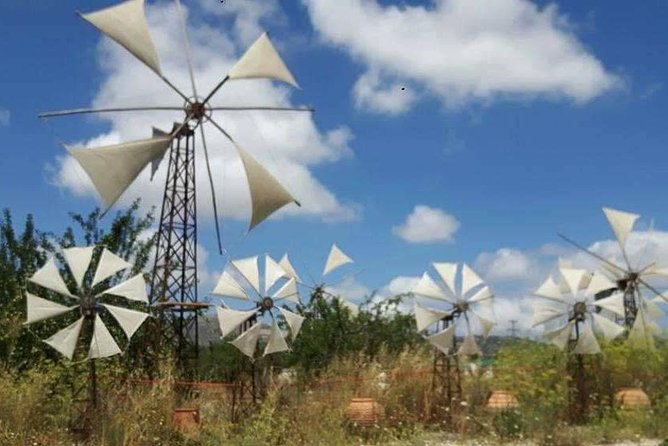
- Lasithi countryside: See traditional windmills once used for pumping water and grinding grain.
- Local food opportunities: Optional lunch is served at a family restaurant, and the day may include fruit, yogurt, honey, or farm visits.
- Two major sights, both optional in different ways: Dikteon Cave is the mythical birthplace of Zeus, while Knossos closes the day with Minoan archaeology.
- Small-group value: Transport, hotel or port pickup, Wi-Fi, water, hot drinks, tastings, and an English-speaking local driver-guide are included.
Why this day shows more than the usual Crete
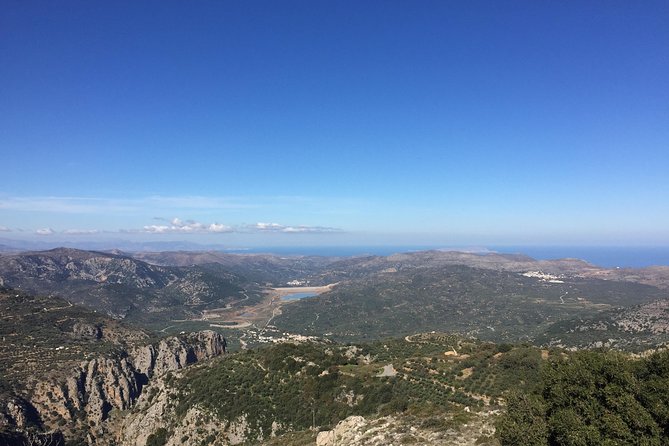
Many first visits to Crete focus on Heraklion’s museums, beaches, and Knossos. This trip gives you a wider view. You leave the city and head toward farmland, mountain roads, and villages where stone houses, cafés, family farms, and old equipment still shape the setting.
The strongest feature is the mix. You get mythology at Dikteon Cave, archaeology at Knossos, food at the olive press and lunch stop, and simple village walks in between. I find that combination more satisfying than a day made only of monuments.
The human element matters, too. Guides named Stavros, Ed, Mike, Spyros, and Demetrius are associated with this experience, and the guide assigned to your vehicle may vary. The best guides bring humor, local stories, and flexibility. Families have especially appreciated guides who keep children interested during the longer drives.
This is not a formal sightseeing coach with a fixed script at every stop. It is closer to a hosted day in the Heraklion region, with the guide helping you decide how much time to spend on optional parts. That flexibility is useful, but you should also expect the day to shift slightly depending on timing, weather, and group interest.
What else people book in Italy on the same trip:
- Vatican: Museums & Sistine Chapel Entrance Ticket
★ 4.5 · 144,003 reviews - Vatican Museums & Sistine Chapel Tour with Optional Basilica
★ 4.3 · 67,413 reviews - Colosseum, Roman Forum & Palatine Guided Tour
★ 4.7 · 63,148 reviews
Omalia Olive Press and the taste of Crete
The first substantial stop is Omalia Olive Press, where you learn how olive oil is produced with both modern and older machinery. The visit lasts about 35 minutes, so it is a short introduction rather than a full agricultural workshop.
Still, it gives useful context. Olive oil is not just a bottle on a restaurant table in Crete. Here you can connect the finished product with the equipment and work behind it. The included tasting adds value, and the experience also includes raki, the clear local spirit often served in Cretan hospitality.
Some versions of the day include extra tastings or food moments arranged by the guide. You may encounter olive paste, bread, tomatoes, grapes, yogurt with honey, or seasonal fruit, but these additions are not promised as fixed stops. Think of them as possible local touches rather than part of the guaranteed core program.
If you want to buy olive oil, ask about shipping and luggage rules before purchasing. The supplied details confirm tasting, but they do not promise a retail allowance or a particular product to take home.
Mochos: a short walk through an old village
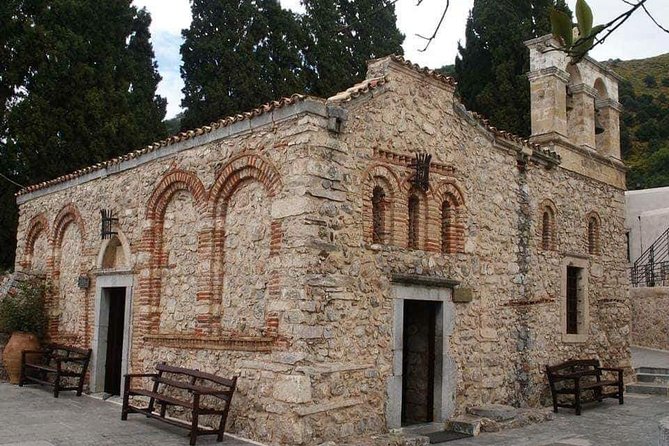
At Mochos, you walk through narrow older streets and spend time near the main square. The planned stop is about 30 minutes, enough for a quick look, coffee, or fresh juice.
This is a good counterpoint to Knossos. You are not looking at a major archaeological site with formal interpretation. Instead, you get a sense of village scale, with lanes and buildings that reward a slow stroll and a few photos.
The stop is brief, so do not expect a long independent exploration. I would use the time to stay close to the square, listen to the guide’s local background, and enjoy a drink rather than trying to cover the whole village.
The tour also passes other locations without stopping. Those drive-through sections help connect the main stops, but the published route includes several possible pickup points and pass-by locations. The overall day is therefore as much about the road through inland Crete as it is about the formal attractions.
Lasithi windmills and mountain scenery
The windmills of the Lasithi Plateau are one of the more distinctive stops. You see old mills once used to lift underground water for crops, along with other mills used to grind wheat and corn into flour.
The visit lasts about 30 minutes. That is enough to understand the different purposes of the machines and take photographs, though not enough for a long technical explanation or extended walking route.
The value here is visual and practical. These are not simply decorative objects placed for pictures. They show how farming communities used wind power and local materials before modern systems took over. If you enjoy rural technology, traditional agriculture, or old village infrastructure, this will likely be more memorable than another quick viewpoint.
The mountain drive is also part of the appeal. You move from the city into higher country, with changing views of fields, slopes, villages, and roads. This is a good day for you if the journey between sights matters as much as the sights themselves.
Same city, an entirely different afternoon:
- Milan: Cathedral and Duomo’s Terraces Entrance Ticket
★ 4.6 · 61,054 reviews - Venice: Doge’s Palace Reserved Entry Ticket
★ 4.6 · 42,716 reviews - Vatican Museums, Sistine Chapel & St Peter’s Basilica Guided Tour
★ 4.5 · 39,149 reviews - Rome: Colosseum, Palatine Hill and Roman Forum Guided Tour
★ 4.8 · 32,814 reviews
Krasi and the great plane tree
The village of Krasi brings another short walk, this time through stone lanes and past old houses. The centerpiece is the famous plane tree, described as the oldest and largest in Crete.
You have about 30 minutes here. That makes it a photo stop and a quick village visit, not a full historical tour. The tree gives the stop a clear focus, while the stone streets offer a pleasant setting for a little wandering.
I like that Mochos and Krasi are not interchangeable. Mochos centers on the square and a drink. Krasi focuses on old buildings and the plane tree. Together, they break up the drive and give you two different looks at inland settlement.
Bring comfortable shoes. The route calls for walking through narrow stone streets, and the surfaces may be less even than a city pavement. The tour is described as suitable for most people, but anyone with limited mobility should ask the provider about the exact walking conditions before booking.
Optional lunch above Lasithi Mesa
Lunch takes place at a family restaurant in the mountains and is optional. The scheduled stop is about 45 minutes, which is a fairly tight window for a leisurely meal.
You should ask the guide about the menu and expected cost on the day. Lunch is not included in the tour price, and the supplied information does not give a set amount. Still, the stop can be worthwhile because it lets you eat in a local setting while looking out over the mountain country.
Several accounts of the experience describe farm-style food, fresh ingredients, friendly service, and good views. That does not guarantee a particular dish or restaurant arrangement, but it does tell you what kind of meal the stop aims to provide.
If you are trying to keep costs down, you can skip the lunch. If you want the day to feel less rushed, the optional meal may be one of the better uses of your time. The tradeoff is that 45 minutes leaves little room for a long, relaxed Cretan lunch.
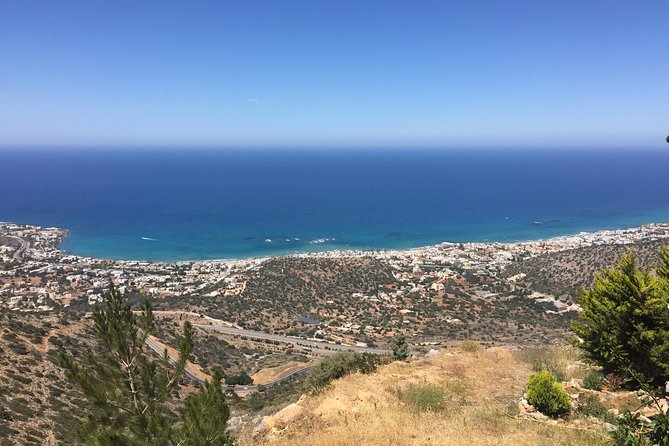
Aposelemis Canyon viewpoint
The stop above Aposelemis Dam and canyon lasts only about five minutes. That sounds short, but the purpose is clear: step out, take in the view, and get back on the road.
Photo lovers will appreciate the pause. It breaks up the drive and gives you a high viewpoint over the dam and canyon area. Do not expect a hike or a detailed canyon visit. This is a quick scenic stop, and weather or road timing may affect how long you stay.
I would keep your camera or phone ready before arriving. With only a few minutes, you will not want to search through a bag while the group is waiting.
Dikteon Cave, the birthplace of Zeus in mythology
Dikteon Cave is linked to the Cretan myth that Zeus was born here. The planned visit lasts about one hour, but the entrance fee is not included.
There is an important date issue. The cave is currently described as closed, with an expected reopening at the end of April according to the authorities. Conditions can change, so confirm its status close to your travel date rather than assuming the stop will operate exactly as described.
When open, the cave adds a mythological layer to the day. Knossos gives you archaeology, while Dikteon connects Crete with the stories of Zeus and the ancient Greek world. You should also allow for the fact that a cave visit involves walking and potentially uneven surfaces, though the exact access conditions are not provided.
If the cave remains closed, the provider may adjust the route, but no specific replacement stop is guaranteed in the supplied details. Ask before departure if this sight is a top priority for you.
Finishing at Knossos Archaeological Site
Knossos is the final stop and is also optional. The visit lasts about one hour, and the entrance fee is 20 euros per person, with half-price admission for people up to age 25.
One hour is enough for a focused first look, especially if you already know which parts of the site matter most to you. It is not enough for a slow, detailed study of every area. A private guide inside Knossos can be arranged for an extra charge, which may suit you if archaeology is a major reason for booking the day.
The timing at the end has a practical advantage. The guide can return you to your hotel after the site, or take you back earlier if you choose not to enter Knossos. This makes the tour more adaptable than a package that forces every person into the same final activity.
You should budget for the admission fee separately. The tour price covers transport and the guide’s service, not the archaeological entrance. Also note that the day ends back at the meeting point or your accommodation, depending on your pickup arrangement.
Is $136.65 a fair price?
At $136.65 per person, this is not the cheapest way to see one Cretan sight. It becomes better value if you want a full day of transportation, several inland stops, a small group, and local food experiences without renting a car.
Included are air-conditioned transport, free Wi-Fi, pickup and drop-off from listed hotels, the port, or meeting points, bottled water, coffee, tea, olive oil and raki tastings, an English-speaking local driver-guide, and liability insurance. You still pay for lunch, Dikteon Cave if open, and the 20 euro Knossos entrance.
The maximum group size is 10. That matters because the guide can check in with people, adjust the pace within reason, and make conversation easier than on a large bus. It also explains why the cost is higher than a basic coach excursion.
For cruise passengers, the port pickup is a strong practical benefit. The guide meets you at the Heraklion port passenger station with a sign. You should provide precise ship and timing details when booking, since a seven-and-a-half-hour day needs a clear return plan.
Who should book this Crete tour?
I would choose this experience if you want variety and prefer seeing villages, farms, food producers, and mountain scenery alongside major sights. It suits first-time visitors who want a broad introduction to the Heraklion region without organizing several separate trips.
Families may like the mix of short stops, snacks, scenery, and guides who keep children involved. Couples and small groups will appreciate the local food and flexible feel. Cruise passengers also get a practical way to reach the countryside during a port call.
I would hesitate if you want a long, scholarly visit to Knossos, a serious cave hike, or a slow lunch with no time pressure. You may be happier booking a dedicated archaeological tour or arranging a private day with fewer stops.
Pickup is available in Heraklion, Kartero, Gouves, Analipsi, Hersonissos, Anissaras, Stalida, Malia, and Sisi for the shared tour. Private tours also list Agios Nikolaos, Elounda, and Rethymno. There is no pickup from Chania, though a meeting point in the Heraklion region may be arranged for some outside areas.
Free cancellation is available up to 24 hours before the start time. Poor weather or failure to reach the minimum number of participants can lead to a new date, a different experience, or a full refund.
My booking advice
Book this tour if your idea of a good day includes local food, mountain villages, and a lively guide as much as famous monuments. Ask before departure which stops are operating, whether Dikteon Cave is open, and what the optional lunch costs.
The best reason to choose it is the range. You can taste olive oil, walk old streets, see working-era windmills, photograph Aposelemis, visit the mythical Zeus cave if open, and finish at Knossos. It is a full day with some driving and several short visits, but it gives you a broad and personal look at central Crete.
FAQ
How long does the tour last?
The tour lasts approximately 7 hours and 30 minutes. The listed schedule includes several short stops, an optional 45-minute lunch, Dikteon Cave for about one hour, and optional Knossos for about one hour.
Where can I be picked up?
Shared-tour pickup is available in Heraklion, Kartero, Gouves, Analipsi, Hersonissos, Anissaras, Stalida, Malia, and Sisi. Private-tour pickup also includes Kokkini Hani, Agios Nikolaos, Elounda, and Rethymno.
Does the tour pick up from Chania?
No. The provider does not pick up from Chania. For some areas outside the listed zones, a meeting point in the Heraklion region may be arranged.
Is lunch included?
No. Lunch is optional and is not included in the tour price. The stop is at a family restaurant in the mountain area of Lasithi Mesa.
Is the entrance fee for Knossos included?
No. Knossos admission costs 20 euros per person. The price is half rate for people up to 25 years old. A private guide inside Knossos may be arranged for an additional charge.
Is Dikteon Cave open?
The supplied information says Dikteon Cave is currently closed and is expected to reopen at the end of April according to the authorities. Confirm its status before your tour because this schedule may change.
How many people are in the group?
The tour has a maximum of 10 participants. Private tour arrangements are also available in some pickup areas.
What happens if the weather is poor?
The experience requires good weather. If it is canceled because of poor weather, you will be offered another date or a full refund. Free cancellation is also available when you cancel at least 24 hours before the start time.
Fresh on the Italy list
- Florence: Uffizi Guided Tour with Skip-the-Line Entry Ticket★ 4.8 · 499 reviews
- Milan: Last Supper and Sforza Castle Guided Tour★ 4.6 · 498 reviews
- Boat trip La Maddalena Archipelago – Departure from Palau★ 4.5 · 499 reviews
- Exclusive Golf Tour Private VIP with Local & Gelato o Wine★ 5.0 · 500 reviews
- Turin: Egyptian Museum Skip-the-Line Group Tour★ 4.7 · 500 reviews
- Itria Valley: Polignano, Ostuni, and Locorotondo, from Bari★ 4.6 · 502 reviews
- Colosseum, Palatine Hill and Roman Forum with Guided Tour★ 5.0 · 500 reviews
- Catania: Etna Nature Tour with Hiking, Cave Visit, & Tasting★ 4.7 · 502 reviews