Reviewed · GUIDED
Guided Tour of Mosaic Tiles in Ravenna
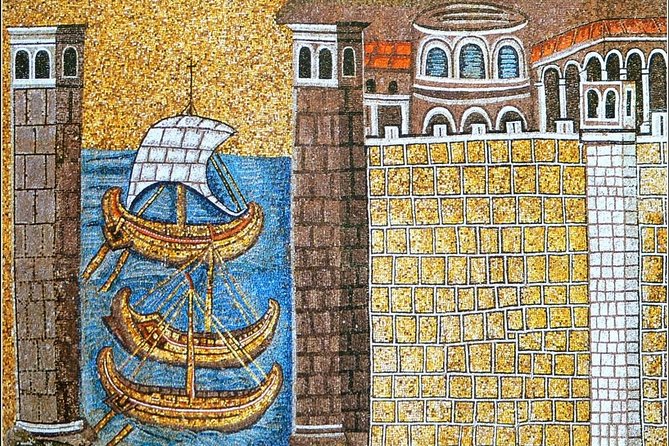
Ravenna’s mosaics are not just pretty pictures on old church walls. They are glittering records of Roman power, Byzantine faith, and a city caught between East and West. This walking tour brings that story into focus, from Galla Placidia’s starry ceiling to the imperial parade of Justinian and Theodora at San Vitale.
I like two things right away: your monument entry is included, so you avoid sorting out tickets on your own, and the guides connect the artwork to religion, politics, Dante Alighieri, and daily life. The main drawback is practical: the tour can run longer than its advertised two to three hours, and a large group or faulty audio equipment can make quiet churches harder to follow.
Key points to know before booking
- Three essential monuments are named in the core route: the Mausoleum of Galla Placidia, Basilica di San Vitale, and Neonian Baptistery.
- Some departures visit five mosaic sites, so the exact route may vary by day and schedule.
- Admission is included, a useful saving in both money and queue time.
- Radio equipment helps with larger groups, with a maximum of 28 people.
- The walk combines art with power and religion, including stories about Dante and Ravenna’s rulers.
- Plan for 2 to 3 hours, with some departures lasting longer, and dress warmly in cold weather.
Why Ravenna’s mosaics deserve a guided visit
Ravenna can fool you at first. Its brick exteriors and quiet streets do not prepare you for the blaze of gold, blue, green, and red inside its early Christian buildings. Step through a plain doorway and suddenly the ceiling, walls, and apse glow with tiny pieces of glass and stone.
That surprise is part of the fun, but it also creates a problem. Without some background, you may see saints, animals, stars, and imperial figures without understanding who commissioned them or what message they carry. A good guide gives you a way to read the images rather than simply admire them.
This tour focuses on that meaning. Guides such as Elisabetta, Chiara, Marco, Francesca, Serena, Silvia, and Assunta have been praised for explaining the art, architecture, society, and religious ideas behind the mosaics. The individual guide changes, of course, but the best version of the tour gives you the bigger picture: Ravenna was shaped by Roman emperors, Christian bishops, Byzantine rulers, and shifting religious traditions.
The experience is also a useful shortcut. You can see major monuments in a few hours, with admission arranged in advance. That matters in Ravenna, especially if you are making a day trip from Bologna and need to use your time carefully.
A few other Italy mornings to weigh against this
- Colosseum, Roman Forum & Palatine Guided Tour
★ 4.7 · 63,148 reviews - Vatican Museums, Sistine Chapel & St Peter’s Basilica Guided Tour
★ 4.5 · 39,149 reviews - Rome: Colosseum, Palatine Hill and Roman Forum Guided Tour
★ 4.8 · 32,814 reviews
Starting at Piazza San Francesco 7
The meeting point is at the Tourist Information Office in Piazza San Francesco 7. Do not simply wait outside and search for a guide in the square. Go into the information office and check in there.
That small detail matters because the address can feel vague if you do not know you need to enter the office. Give yourself extra time to find the correct doorway, particularly if you are arriving by train, bus, or from another part of the historic center.
The tour is offered in English, uses a mobile ticket, and is suitable for most people. You will be walking between monuments, so comfortable shoes make sense. The group limit is 28, though departures described in the tour feedback often had about 20 to 25 people.
That is not a tiny group. In a church, you may need to stay close and keep your voice down. The radio transmitter and earpiece are meant to solve that problem. When the system works well, you can stand a little away from the guide and still hear the explanation. That is especially useful when a group gathers beneath a crowded dome or in front of a busy apse.
Audio equipment is not perfect, though. One poor experience involved a malfunctioning system and a guide whose accent was difficult for one participant to understand. I would treat the headset as helpful rather than guaranteed. If you are having trouble hearing, tell the guide early instead of waiting until the group has moved on.
Galla Placidia and the famous starry ceiling
The first named stop is the Mausoleum of Galla Placidia, built around the middle of the fifth century at the request of Galla Placidia, a powerful woman who ruled the Western Roman Empire.
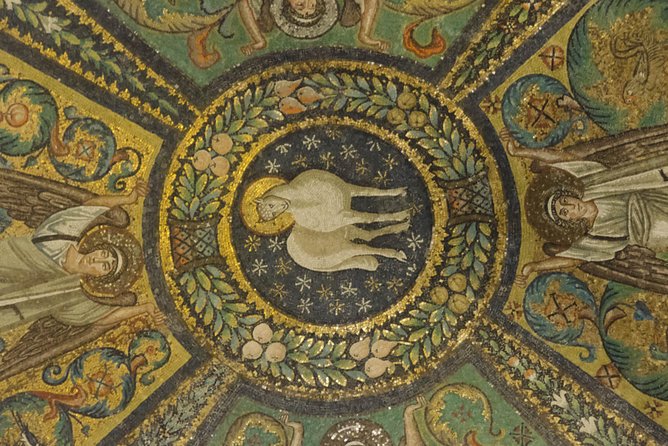
Outside, the building is modest. It has the simple, sturdy look of a small Latin cross. Inside, it is a different world. The ceiling is covered with a field of stars, and the effect is intimate rather than grand. You do not need a huge building to feel the force of the design.
The stars have captured imaginations for centuries. Dante Alighieri was struck by them, and the ceiling is linked with images that inspired verses in the Divine Comedy. A guide can help you connect this small room to the larger cultural life of Italy, rather than treating it as an isolated art stop.
The scheduled visit here is about 10 minutes. That is brief, but it can be enough for the main explanation and a close look if the building is not crowded. You may wish for more time, especially if you want to study the symbols and take in the color shifts in the glass.
This is also one of the places where warm clothing matters. Early Christian monuments can feel cold inside, even when the day outside is mild. One extended tour on a cold day became uncomfortable for someone who had expected a shorter visit. Bring a light layer, and remember that the tour may continue beyond the planned end time.
San Vitale and the imperial message in mosaic
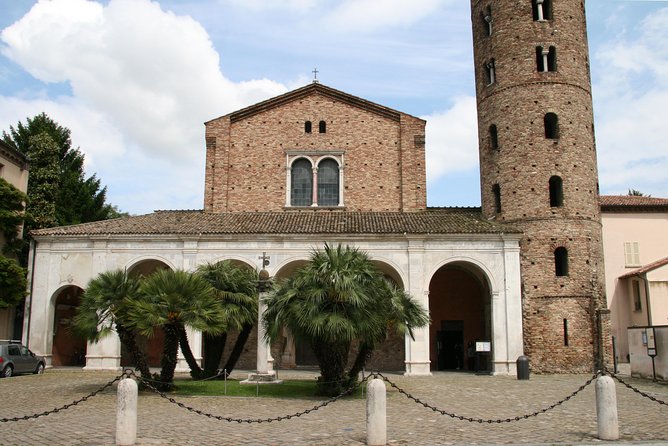
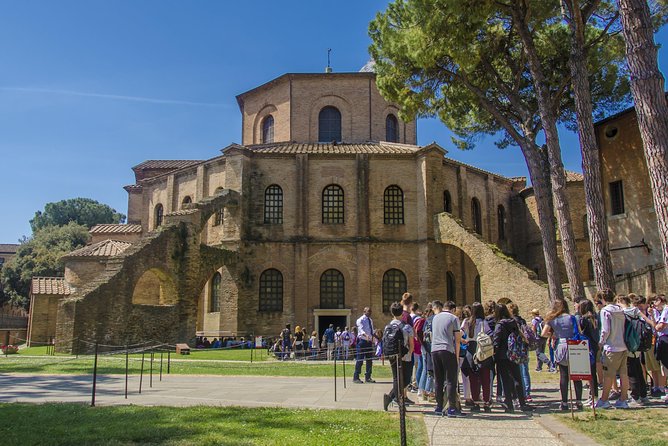
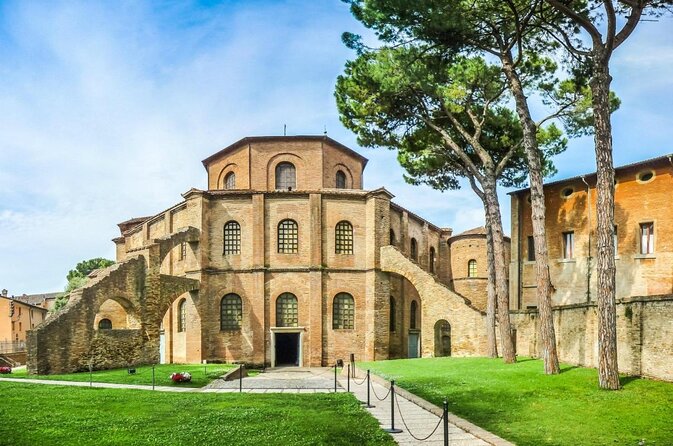
Basilica di San Vitale is the major event of the tour. Built in the sixth century, it is one of Italy’s key early Christian monuments and has a clear eastern, or Byzantine, character.
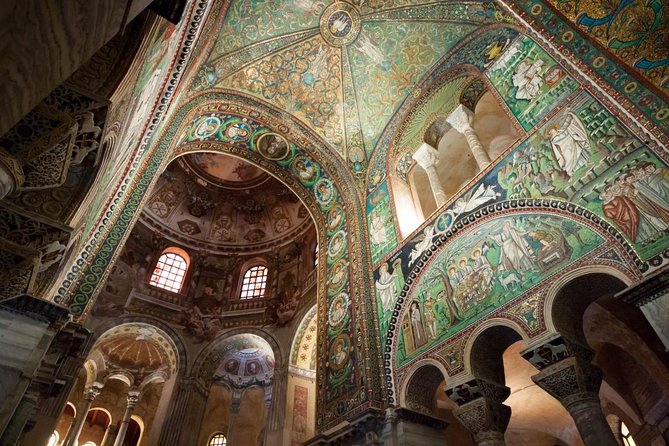
The building’s octagonal plan gives the interior a sense of height and movement. Your eye is drawn upward to the dome, then forward toward the apse and its mosaics. The space feels much bigger inside than its exterior suggests.
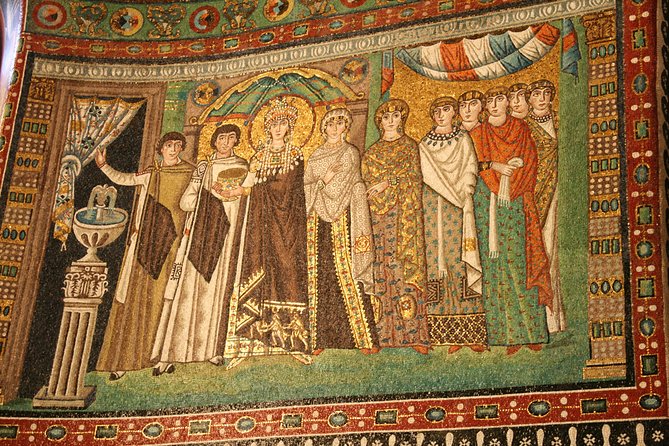
The famous imperial panels show Justinian and Theodora with their attendants. These are not casual portraits. The emperor and empress are presented as central figures in the religious and political order of the Byzantine world. Their clothing, gestures, attendants, and placement all carry meaning.
This is where the guide’s commentary can transform the visit. You are not only looking at gold backgrounds and carefully arranged figures. You are seeing a statement about authority, faith, and the emperor’s role in shaping religious life.
The scheduled stop is about 30 minutes, longer than the other named monuments. That makes sense. San Vitale has more space to understand, more architectural detail, and more visual information competing for your attention.
A strong guide keeps the explanation moving while giving you enough time to look. Guides such as Marco, Chiara, and Francesca have been praised for clear historical context, humor, organization, and the ability to answer questions. The best guides avoid turning the basilica into a lecture. They give you a few useful points, then let the mosaics do their work.
Large groups can be awkward here. You may not get a perfect view of every panel at the same moment, and church rules require quiet. The radio device helps, but you still need to remain aware of where the group is. Listen first, then take a few minutes to look around once the explanation ends.
Same city, an entirely different afternoon:
- Vatican: Museums & Sistine Chapel Entrance Ticket
★ 4.5 · 144,003 reviews - Vatican Museums & Sistine Chapel Tour with Optional Basilica
★ 4.3 · 67,413 reviews - Milan: Cathedral and Duomo’s Terraces Entrance Ticket
★ 4.6 · 61,054 reviews - Venice: Doge’s Palace Reserved Entry Ticket
★ 4.6 · 42,716 reviews
The Neonian Baptistery and its blue dome
The Battistero Neoniano, also called the Baptistery of the Orthodox, is among Ravenna’s oldest monuments. Its exterior is plain brick, like the mausoleum. Inside, marble, stucco, and mosaics create a far more polished effect.
The dome is the main attraction. At the center is the Baptism of Christ, surrounded by the twelve Apostles. The figures move around a brilliant field of blue tesserae, the small pieces that make up the mosaic surface.
The scene is easy to appreciate visually, but the religious details reward explanation. The placement of Christ, the procession of the Apostles, and the shape of the dome all relate to the ritual purpose of the building.
The baptistery still contains a Renaissance baptismal font that follows the building’s octagonal plan. It also preserves a fifth-century ambo. Those later and earlier elements share the same compact space, giving you a quick lesson in how a religious building can change over time without losing its original role.
The planned stop lasts about 10 minutes. That may feel short, especially if the room is crowded or you want to examine the figures closely. Use the guide’s explanation to identify the main scene, then look upward again after the group begins to move.
Three named stops, and sometimes five sites
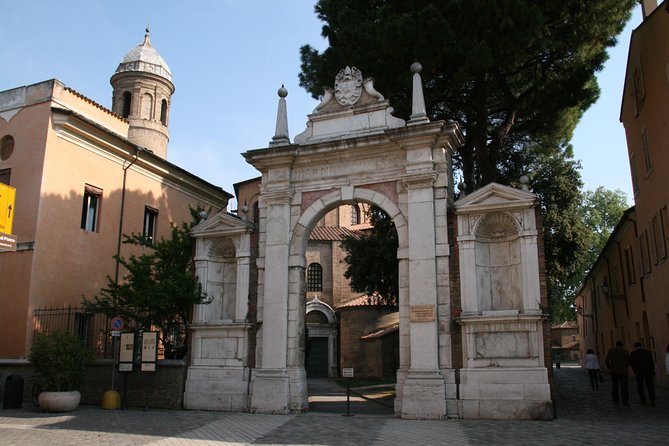
The published core itinerary names three monuments, but several tour descriptions refer to visits to five mosaic sites. That difference is worth noting before you book.
The exact number may depend on the departure, timed entry arrangements, church schedules, or the day’s route. You should expect the three named highlights at minimum based on the supplied program, but do not assume every departure follows an identical five-stop plan.
This is not necessarily a weakness. A shorter route can work well if you have limited time or want a focused introduction. A five-site route gives you more art and more context, but it also means more walking, more standing, and a greater chance of finishing later than expected.
The guides generally keep a steady pace. Several descriptions point to an easy or reasonable walking speed and enough time for the group to keep up. Still, this is a walking tour, not a series of short rides between buildings. If you have a tight train connection or a fixed lunch reservation, leave a generous buffer.
What the tour teaches beyond decoration
The strongest part of this experience is the link between image and power. Ravenna’s mosaics are beautiful, but they were also tools of communication.
A church interior could show who held authority, which religious ideas mattered, and how a ruler wanted to be seen. The imperial panels at San Vitale make this especially clear, while the baptistery and mausoleum show how Christian belief appeared in different settings.
You will also hear stories that reach beyond church art. Dante’s response to Galla Placidia’s starry ceiling brings Ravenna into the story of Italian literature. The guides also discuss different rulers and the religious changes that shaped the city’s buildings.
That wider context is why I would choose a guided visit over simply buying tickets and walking in alone. You can certainly admire the gold surfaces by yourself. A guide helps you notice the relationship between architecture, ceremony, politics, and belief.
The quality depends on presentation. Most of the strongest feedback praises guides for clear explanations, humor, enthusiasm, and good time management. One guide was described as turning a simple look at beautiful images into a much more meaningful experience. That is exactly what you want here.
Price, time, and overall value at $33.86
At $33.86 per person, the tour is not the cheapest way to see Ravenna. The value comes from combining entry to major monuments with a live explanation and a planned route.
You avoid the work of identifying the key sites, arranging admission, and deciding how long to spend in each one. You also get historical interpretation that is difficult to reproduce with a quick guidebook paragraph.
The price makes the most sense if Ravenna is a day trip or your first visit. You can cover the central mosaic highlights in roughly three hours and then use the rest of your day for lunch, additional sites, or a relaxed walk through town.
The value is less clear if you have several days in Ravenna and prefer long, independent visits. You might want to return to San Vitale or the baptistery after the tour and spend more time looking at small details. The guided route gives you an efficient introduction, not unlimited time at each monument.
Be ready for some schedule flexibility. The advertised duration is about two to three hours, but one departure continued for nearly four hours. That appears to have been an unusually difficult day, with cold weather and a slower experience, but it shows why you should not book a train immediately after the planned finish.
Who will enjoy this Ravenna walking tour
I would choose this experience if you want the main mosaic monuments explained in plain English and you do not want to manage admission on your own.
It suits:
- First-time visitors to Ravenna
- People making a day trip from Bologna
- Anyone interested in early Christian or Byzantine art
- Visitors who want religious symbolism explained
- Readers of Dante who want a literary link to the city
- People who prefer a guide to a self-led museum visit
It may be less suitable if you dislike group tours, need complete control over timing, or want to linger silently at every mosaic. A group of 20 to 25 people is manageable, but it will not feel private.
You should also consider the physical side. The tour involves plenty of walking and standing. Most people can participate, but the provided information does not promise a private vehicle, a small group, or special accessibility arrangements.
Booking and day-of-tour tips
The experience can be canceled for a full refund up to 24 hours before the start time. Changes or cancellations inside that window are not accepted for a refund. The tour also requires a minimum number of participants, so a cancellation for low enrollment would result in another date or experience, or a full refund.
The tour is often booked about 30 days ahead. That suggests planning early if your Ravenna visit is tied to a particular date, though availability can change.
I would arrive early at Piazza San Francesco 7, enter the Tourist Information Office, and check in there. Keep your phone ready for the mobile ticket, wear comfortable shoes, and bring a warm layer for the monuments.
If the group is large, use the radio headset. Stay close enough to see where the guide is, but do not worry about standing shoulder to shoulder every second. When possible, find a clear view of the apse or dome after the main explanation.
Finally, tell the guide if you cannot hear. Clear audio makes a major difference in churches, where echoes, quiet rules, and crowd noise can all get in the way.
Should you book the Mosaic Tiles Tour in Ravenna?
I would book it for a first visit, especially if you have only a few hours. The included admission, central route, and focus on the meaning behind the mosaics make the $33.86 price reasonable.
The tour is at its best with a strong guide such as the highly praised Elisabetta, Chiara, Marco, Francesca, or Serena, though the guide assigned to your departure may be someone else. You should expect an informed, lively introduction, not a private art lesson.
Skip it only if you already know Ravenna well, dislike group pacing, or need a firm finish time. For most first-time visitors, this is a practical way to see the city’s essential mosaics and understand why they matter.
FAQ
Where does the tour begin?
It begins at Piazza San Francesco 7 in Ravenna, at the Tourist Information Office. Enter the office and check in there before the tour starts.
Where does the tour finish?
The activity finishes at a different location from the starting point. The supplied information does not specify the exact ending address.
How long does the tour last?
The planned duration is approximately two to three hours. Some departures may take longer, so allow extra time afterward.
Which monuments are included?
The named stops are the Mausoleum of Galla Placidia, Basilica di San Vitale, and Battistero Neoniano, also called the Baptistery of the Orthodox. Some tour descriptions refer to visits to five mosaic sites, so the exact route may vary.
Are entrance tickets included?
Yes. Admission tickets to the listed monuments are included in the tour price.
Is the tour available in English?
Yes. The experience is offered in English.
How large can the group be?
The maximum group size is 28 people. A radio device and earpiece may be provided for larger groups so you can hear the guide more easily.
Fresh on the Italy list
- Florence: Uffizi Guided Tour with Skip-the-Line Entry Ticket★ 4.8 · 499 reviews
- Milan: Last Supper and Sforza Castle Guided Tour★ 4.6 · 498 reviews
- Boat trip La Maddalena Archipelago – Departure from Palau★ 4.5 · 499 reviews
- Exclusive Golf Tour Private VIP with Local & Gelato o Wine★ 5.0 · 500 reviews
- Turin: Egyptian Museum Skip-the-Line Group Tour★ 4.7 · 500 reviews
- Itria Valley: Polignano, Ostuni, and Locorotondo, from Bari★ 4.6 · 502 reviews
- Colosseum, Palatine Hill and Roman Forum with Guided Tour★ 5.0 · 500 reviews
- Catania: Etna Nature Tour with Hiking, Cave Visit, & Tasting★ 4.7 · 502 reviews
Guided, compared.
Colosseum, Roman Forum & Palatine Guided Tour
Read our review →
Vatican Museums, Sistine Chapel & St Peter’s Basilica Guided Tour
Read our review →
Colosseum, Palatine Hill and Roman Forum Guided Tour
Read our review →
Guided Tour of Colosseum, Roman Forum & Palatine Hill
Read our review →
Colosseum & Forum with Audio Guide App -Optional Arena
Read our review →
Colosseum, Roman Forum and Palatine Hill Guided Tour
Read our review →
Naples Underground Entry Ticket and Guided Tour
Read our review →