
Reviewed · CATANIA TOURS
From Catania: Neapolis of Syracuse, Ortygia, and Noto Tour
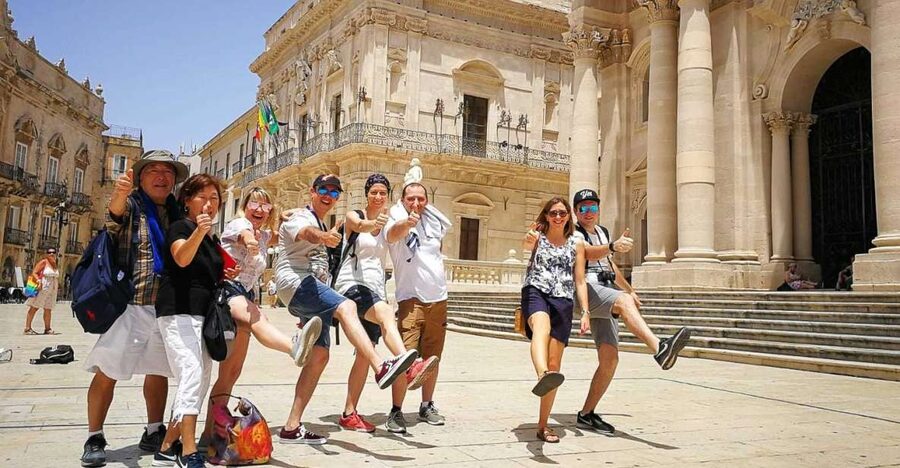
The ancient Greek theatre at Syracuse is the star of this day, with a huge carved stone cavea that helps you grasp the scale of classical Sicily. Then you move from ruins to the graceful streets of Ortygia and Noto, two very different towns with plenty of visual drama. Nando, Salvo, Andrea, Franco, and Lorena are among the guides praised for clear explanations, warm service, and good pacing.
I like the small group of up to eight, which makes hotel pickup and questions easier than on a big coach tour. I also like the range: one day gives you ancient Syracuse, island-town Ortygia, and the Sicilian Baroque of Noto. The main catch is time. Noto and Ortygia can feel short, and Neapolis is self-guided, so you need to read signs and manage your own visit there.
Key points to know before booking
- Syracuse’s Greek Theatre: See one of the largest ancient Greek theatre caveas ever built, along with Roman ruins and the Ear of Dionysius.
- Three major Sicilian sights: Combine Noto, Neapolis, and Ortygia without arranging separate buses or trains.
- Small-group transport: The van carries no more than eight participants, with hotel pickup and drop-off in Catania.
- Self-guided archaeological park: Your entry ticket is included, but a guided tour inside Neapolis is not.
- Excellent guide record: Nando, Salvo, Andrea, Lorena, Franco, and other tour leaders receive repeated praise for friendliness, history explanations, and flexibility.
- A full day on the road: Expect 8 to 9 hours, with about three hours of total transfer time.
Three different faces of southeastern Sicily
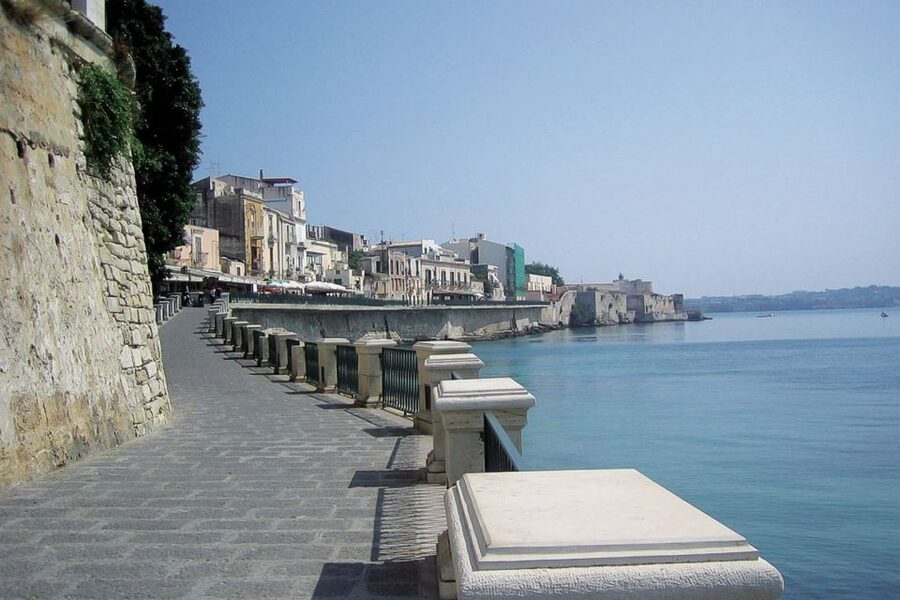
This is a sightseeing day built around contrast. Noto gives you polished Baroque architecture. Syracuse gives you the physical remains of Greek and Roman power. Ortygia, separated from Syracuse by a narrow channel, adds churches, ancient temples, Arab-influenced lanes, and seaside atmosphere.
That combination is the reason to choose this outing. You are not spending the whole day in one archaeological site. Instead, you get a broad look at southeastern Sicily, with someone else handling the driving from Catania.
The tradeoff is just as clear. You cannot give every place the time it deserves in a single day. The schedule allows about 90 minutes in Noto, one hour at Neapolis, and 90 minutes in Ortygia. That is enough for a strong first look, but not enough for a slow museum day, a long lunch, and every side street.
A few other Catania mornings to weigh against this
- Catania: Mount Etna Morning or Sunset Day Trip with Tasting
★ 4.8 · 4,028 reviews - Mount Etna: Guided Volcano Summit Hiking Tour with Cable Car
★ 4.7 · 3,784 reviews - Catania: Sunset Jeep Tour of Mount Etna and Lava Flow Caves
★ 4.8 · 2,113 reviews
The ride from Catania to Noto
Pickup is provided at hotels and bed-and-breakfasts in Catania. The first transfer lasts about 90 minutes, so this is not a quick city outing. It is a long day with a fair amount of road time, but the distance is what makes the three-stop plan possible.
The small shuttle matters here. A group limited to eight is easier to gather at pickup points and less cumbersome when the van reaches busy historic centers. Several guides are praised for arriving on time, and that is important on a tightly packed schedule.
The guide also serves as driver, a setup that has both benefits and limits. You get one person who manages the day and explains what you are seeing. On the other hand, parking in historic areas can take time, and the guide cannot talk to you while concentrating on the road. One group also found that the guide was difficult to hear from the back of the vehicle because there was no microphone or speaker system.
That is a practical point, not a small one. If you sit in the rear, road noise and air conditioning may make commentary hard to follow. Ask questions when the van is stopped, and do not feel shy about asking the guide to repeat an important point.
Noto and the Stone Garden
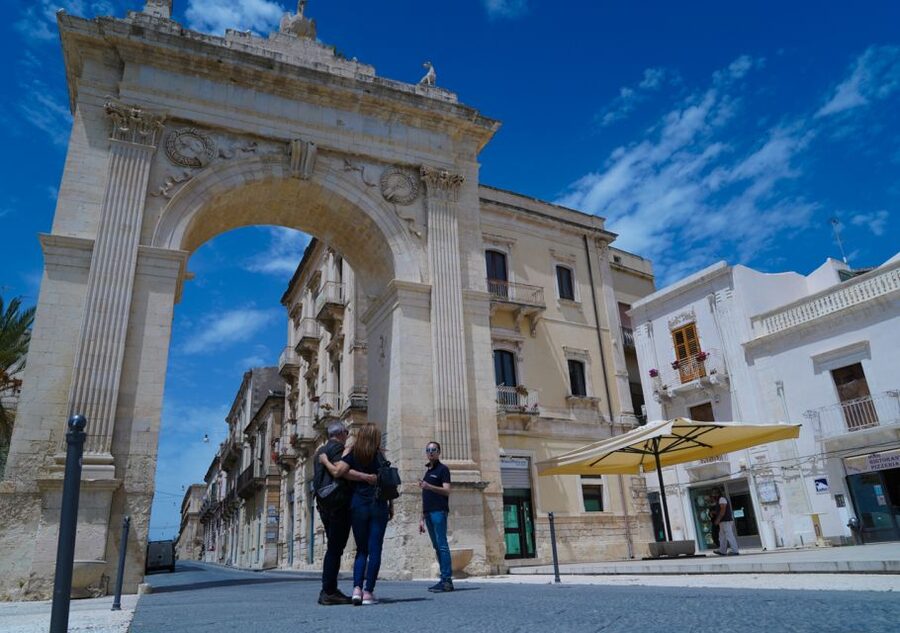
Noto is the first scheduled stop, with about 90 minutes for a guided visit. The town is known for Sicilian Baroque architecture, and its main street, Corso Vittorio Emanuele, works almost like an outdoor gallery.
After the 1693 earthquake that reshaped much of southeastern Sicily, Noto was rebuilt in a unified Baroque style. Here, the reward is visual rather than archaeological: pale stone facades, grand churches, ornate balconies, and palaces grouped closely along the center.
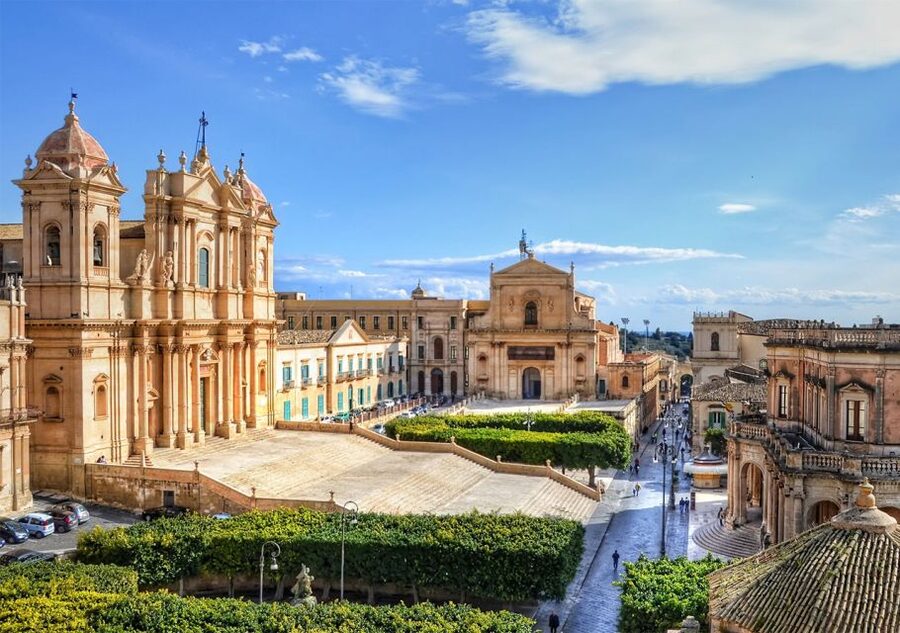
Piazza del Duomo is the natural focus. The cathedral and surrounding palaces show how civic and religious buildings were designed to work together. Beneventano del Bosco Palace and the Senate Palace are among the notable buildings you can admire in and around the square.
The nickname Stone Garden makes sense as you walk. Soft local stone catches the light, and the town’s facades use curves, columns, sculpted figures, and theatrical stairways. You do not need a long lecture to enjoy Noto, but the guide’s explanation helps you notice the planning behind what might otherwise look like a pretty collection of buildings.
The 90-minute allocation is the weak point for anyone who likes to wander. One visitor specifically wanted more time in Noto, and that is easy to understand. You may have time for the main street and central square, but not for every church, palace, shop, and cafe.
A festival can make this stop harder. During one visit, a flower festival filled the town and crowds made some sights difficult to see. That sort of event can add color, but it can also slow walking and reduce your free time. If your date falls during a major local celebration, expect a livelier and less orderly visit.
Neapolis, where Syracuse turns monumental
After roughly 30 minutes in the van, you reach the Neapolis Archaeological Park of Syracuse. Admission is included, and you have about an hour to explore.
This is the most demanding stop in terms of what you are looking at. The park contains monuments from Greek and Roman Syracuse, old streets, quarries, and religious buildings. The famous Greek Theatre is the central attraction, and its enormous cavea is a reminder that ancient entertainment took place on a very large public scale.
The theatre was cut into the limestone slope, giving the site a strong sense of place. Even if you know little about ancient architecture, the broad sweep of the seating area is easy to understand. The highlight here is not a single delicate object. It is the size of the site and the amount of stone shaped by human hands.
Near the theatre are the latomie, ancient stone quarries used for extraction and, at times, confinement. The best-known cavern is the Ear of Dionysius, a tall limestone cave with a distinctive shape. Your guide can provide the story and historical setting, while you take in the cool, enclosed space for yourself.
The Christian church of San Nicolò ai Cordari adds another layer. It sits near the ancient monuments and shows how the area continued to serve different communities across the centuries. The Roman Amphitheatre, built during the Roman imperial age, gives the park another major stop and helps you compare Greek and Roman public architecture.
Here you should pay close attention to the tour format. Neapolis is self-guided, even though a multilingual tour leader accompanies the day. The entry ticket is included, but a guided tour inside the archaeological park is not. You may receive useful background before entering, yet you will be responsible for finding the monuments and deciding how long to spend at each one.
One person found it hard to locate several monuments, and another wished the park provided a clearer printed guide. That is useful advice. Stay aware of the park map and signs, and keep your eye on the meeting time. An hour passes quickly, especially if you stop often for photographs.
Conditions can also affect the experience. The Roman Amphitheatre was closed for maintenance during one visit, showing that access to a particular monument can change. The tour still offers plenty to see, but you should accept that ancient sites are not always fully open.
The park is not suitable for people with mobility impairments. Uneven paths, open archaeological ground, and the walking required between monuments make comfortable movement important. Wear shoes suited to walking and bring clothing that matches the weather.
Same city, an entirely different afternoon:
- Mount Etna: Trek to 3000m with cable car and jeep
★ 4.7 · 1,978 reviews - Mount Etna: Summit Crater Trek with Cable Car
★ 4.8 · 1,875 reviews - Sicily: Etna and Alcantara Gorges Full-Day Tour with Lunch
★ 4.8 · 1,766 reviews - Mount Etna: Roundtrip Cable Car and 4×4 Bus Ticket
★ 4.3 · 1,602 reviews
Ortygia, the historic heart of Syracuse
Ortygia receives about 90 minutes, and I think this is the stop most likely to leave you wishing for more. The island is the historic heart of Syracuse, linked to the mainland by a narrow channel and packed with layers of history.
The mood changes immediately from open ruins to compact streets. Greek temples, Christian churches, and lanes shaped by Arab influence sit close together. The pleasure of Ortygia is in the transitions: a narrow passage opens onto a bright square, an old stone wall meets a Baroque facade, and a fountain appears beside the water.
The Arethusa Fountain is one of the key sights. Its name comes from a Greek myth, and the spring has long been connected with the identity of Syracuse. It is a pleasant place to pause, especially because it gives you a break from the denser streets.
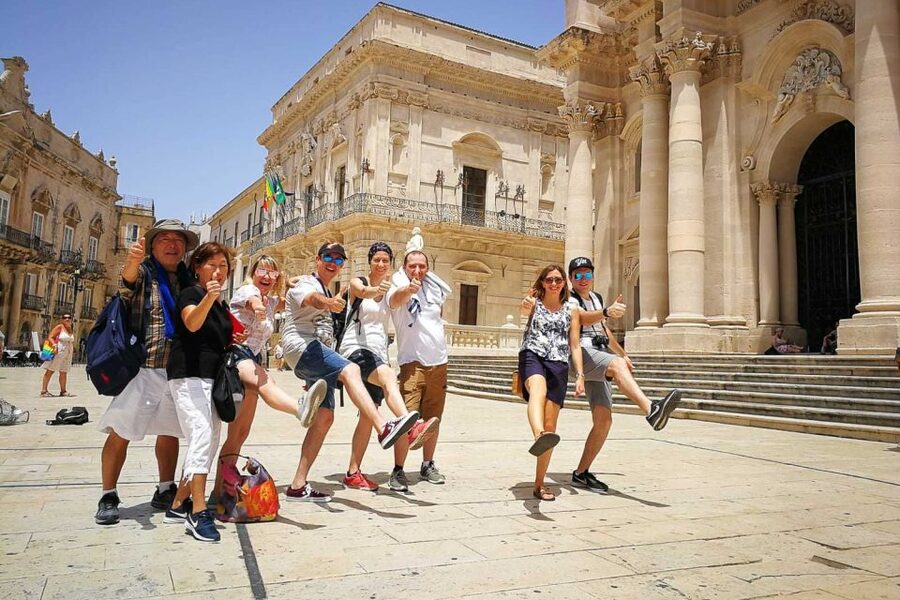
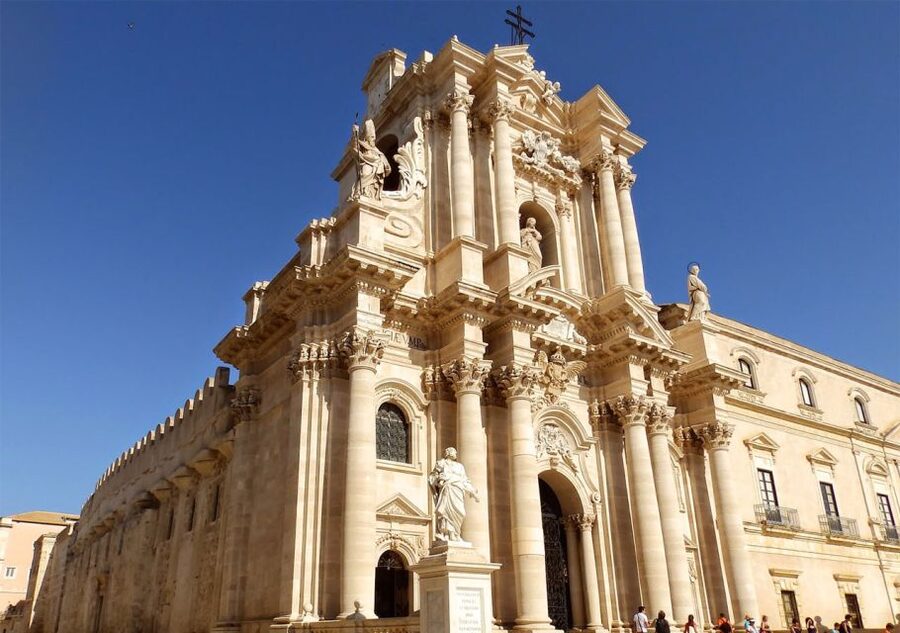
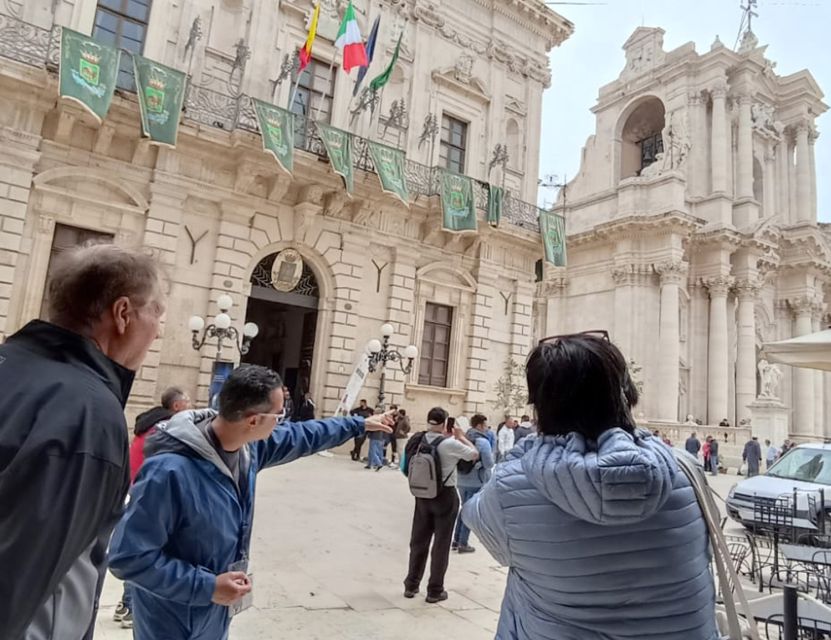
Piazza del Duomo is the other major focus. The square is framed by handsome Baroque buildings, including Beneventano del Bosco Palace and the Senate Palace. The cathedral is especially interesting because the site carries evidence of different eras, a quality that sums up Ortygia better than any single monument can.
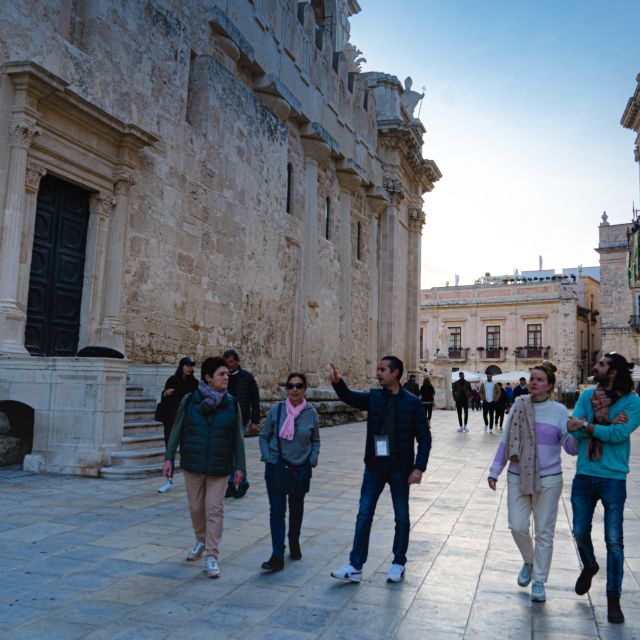
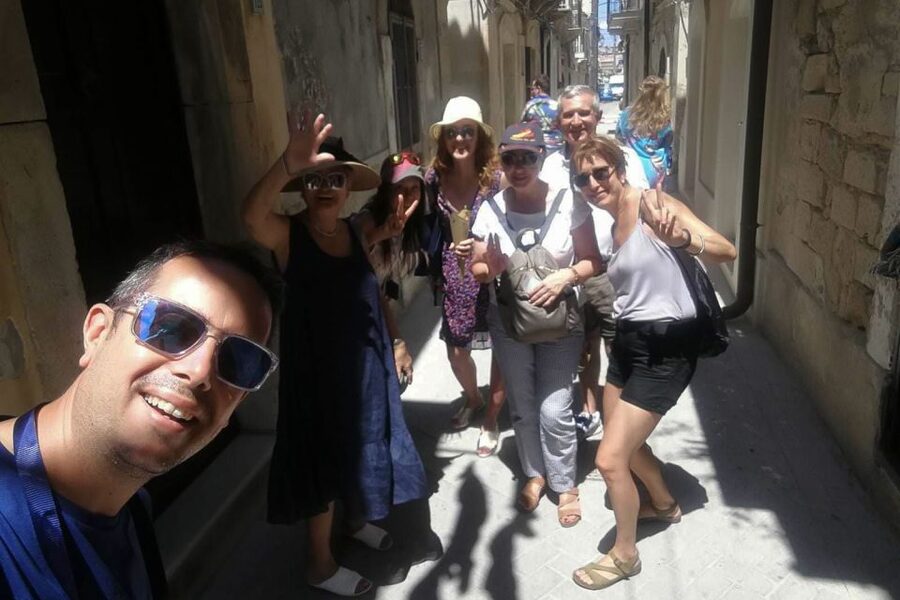
Your guide can help you read the town. Salvo was praised for speaking clearly in English and keeping everyone informed from the van and on foot. Andrea was appreciated for explaining complicated history in a way that was easy to follow. Lorena was noted for being kind, funny, and attentive to different needs within the group. Those details matter in a place like Ortygia, where the pleasure often comes from connecting small features to a larger story.
The schedule allows time to see the main sights, but not to explore every lane at leisure. Lunch is at your own expense, and food and toilet stops can reduce the time available for sightseeing. One group found the chosen restaurant very expensive, so I would ask the guide for options and confirm prices before sitting down.
A boat ride around Ortygia is not part of the standard plan. Still, Salvatore was able to arrange an unplanned boat outing for one small group during the low season. Treat that as a possible bit of flexibility, not a guaranteed feature. The day already has a firm schedule, and an extra activity may not fit every departure.
Guides make or break this busy day
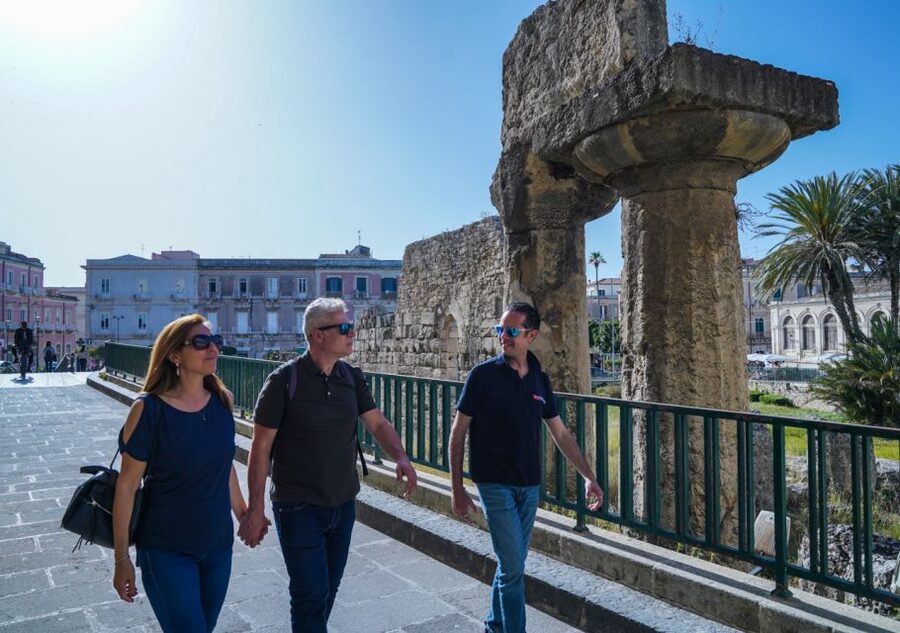
The strongest part of this experience is the human element. Several guides receive praise for arriving on time, giving clear explanations, and keeping a warm tone throughout a long day. Nando is repeatedly described as enthusiastic, helpful, and good at choosing a lunch spot. Salvo is praised for broad local knowledge and easy-to-hear English. Franco is described as cheerful and thorough, with explanations in both English and Italian.
That range of names tells you something useful: the experience is not tied to one single guide. Your exact tour leader depends on the departure, but the company has several guides who can handle mixed-language groups. Italian, English, and Spanish are available.
The best guides also add flexibility. They answer questions, help with practical matters, and adjust when possible. Yet flexibility has limits when the guide is also driving and three major stops must fit into one day.
Mixed-language commentary may affect the pace. A good guide can repeat information in more than one language, but each explanation takes time. If your main aim is a detailed archaeological lecture in English, a dedicated guide at Neapolis would suit you better. If you want a broad day with transport and local context, this format makes more sense.
What $130.28 buys you
At $130.28 per person, this is not the cheapest way to see Syracuse and Noto. The price includes hotel pickup and drop-off in Catania, shuttle transport, a multilingual tour leader, and admission to Neapolis.
The value comes from convenience. Catania is a useful base, but reaching Noto, Syracuse, and Ortygia independently requires separate transport planning. A small van also saves you from navigating unfamiliar roads and looking for parking near old town centers.
The price is harder to justify if you want long, unhurried visits. You pay for three destinations in one day, but the limited time at each means you are buying access and orientation rather than a complete exploration. Food and drinks cost extra, and lunch can be expensive if you choose the wrong place.
I see this as good value for a first visit, a short stay, or anyone who does not want to rent a car. It is less compelling for repeat visitors, slow sightseers, or anyone focused mainly on Noto or the archaeological park.
Free cancellation up to 24 hours before departure adds useful flexibility, and the reserve-now, pay-later option lets you hold a place without paying immediately. Solo visitors should note that the tour cannot be booked as a private tour for one person. If you cannot book alone, it may simply mean that no other participants are currently scheduled for that date.
How to handle the day well
Wear weather-appropriate clothing and comfortable walking shoes. You will be outdoors at the archaeological park and walking through historic centers, so the day is more pleasant when you are ready for sun, heat, or changing weather.
Eat efficiently. Lunch is not included, and a long meal can take a sizable part of your Ortygia time. Ask the guide for a quick, fairly priced option, and check the menu before ordering.
Keep your own watch. The guide will set meeting times, but the park is self-guided and it is easy to spend too long at the Greek Theatre or Ear of Dionysius. Arrive back at the van on time so the whole group is not delayed.
If you are sensitive to sound, ask where to sit in the van. Without a microphone, people in the back may miss some commentary, especially on rough streets or with the air conditioning running.
Finally, accept the tour’s purpose. This is a sampler of southeastern Sicily, not a slow cultural retreat. You will see a lot, learn the basic story of each place, and leave with a good sense of where you would like to return.
Who should book this excursion?
Book it if you are based in Catania, have one free day, and want to see several major sights without arranging your own transport. It suits first-time visitors, couples, small friend groups, and anyone who values a friendly guide more than a rigid audio system or long independent visits.
It is also a good choice if you enjoy variety. Ancient theatres, limestone quarries, fountains, churches, palaces, and Baroque streets give the day a strong rhythm.
Think twice if you have limited mobility, dislike long van transfers, or want a detailed guided experience inside Neapolis. You may also prefer separate day trips if Noto’s architecture or Ortygia’s streets deserve your full attention.
For most people with a short Sicilian stay, I would book it, while keeping expectations realistic. You get three important places, a small group, helpful local commentary, and a practical route from Catania. Just remember that the day’s success depends on staying on schedule, choosing lunch wisely, and treating the archaeological park as your own self-guided visit.
FAQ
How long does the tour last?
The experience lasts about 8 to 9 hours. The listed route includes around 90 minutes from Catania to Noto, 30 minutes to Neapolis, and 90 minutes back to Catania, along with time at each site.
Where does pickup take place?
Pickup and drop-off are included at hotels and bed-and-breakfasts in Catania only.
Is transportation included?
Yes. Transportation is provided by shuttle bus, with the tour leader also handling the driving.
How many people are in the group?
The tour is limited to eight participants, making it a small-group experience.
Is the Neapolis Archaeological Park guided?
No. Your entry ticket is included, but the visit inside Neapolis is self-guided. A guided tour of the archaeological park is not included.
Which languages are available?
The tour is offered in Italian, English, and Spanish.
Is lunch included?
No. Food and drinks are not included, so you pay for lunch yourself during the day.
Fresh on the Catania list
- From Catania: Etna tour by Panoramic Bus★ 4.2 · 197 reviews
- Catania: Pistachio Ravioli, Pasta Home Cooking Class w/ Wine★ 4.7 · 204 reviews
- Catania: Gulf Scuba Diving Tour with Marine Biologist★ 4.9 · 212 reviews
- From Catania: Mount Etna Half-Day Tour and Wine Experience★ 4.5 · 214 reviews
- Etna: Craters of the 2002 Eruption Trekking Experience★ 4.8 · 218 reviews
- Catania: Sail Tour of Cyclops Coast with Sicilian Aperitif★ 4.6 · 221 reviews
- Mount Etna: Return Funivia dell’Etna Cable Car Ticket★ 4.0 · 240 reviews
- Etna Morning Jeep Tour★ 4.5 · 241 reviews
Catania Tours, compared.

Mount Etna Morning or Sunset Day Trip with Tasting
Read our review →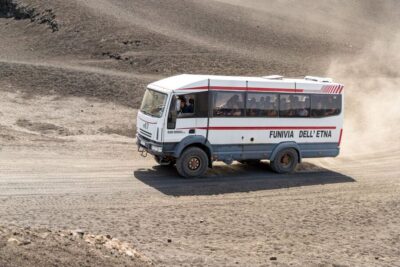
Mount Etna: Guided Volcano Summit Hiking Tour with Cable Car
Read our review →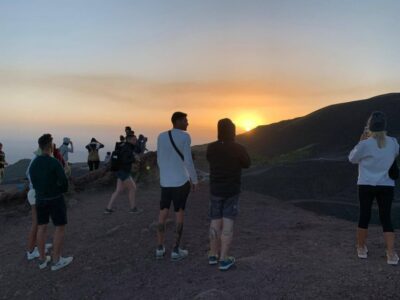
Sunset Jeep Tour of Mount Etna and Lava Flow Caves
Read our review →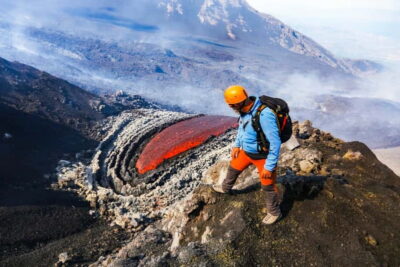
Mount Etna: Trek to 3000m with cable car and jeep
Read our review →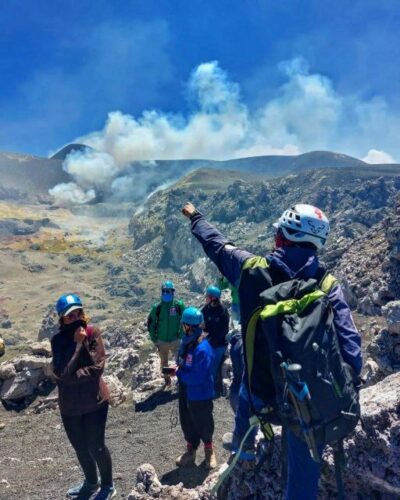
Mount Etna: Summit Crater Trek with Cable Car
Read our review →
Etna and Alcantara Gorges Full-Day Tour with Lunch
Read our review →
Mount Etna: Roundtrip Cable Car and 4×4 Bus Ticket
Read our review →
Browse the lists this tour appears in