
Reviewed · FOOD & DRINK
From Carrara: Marble Quarries Jeep Tour with Lardo Tasting
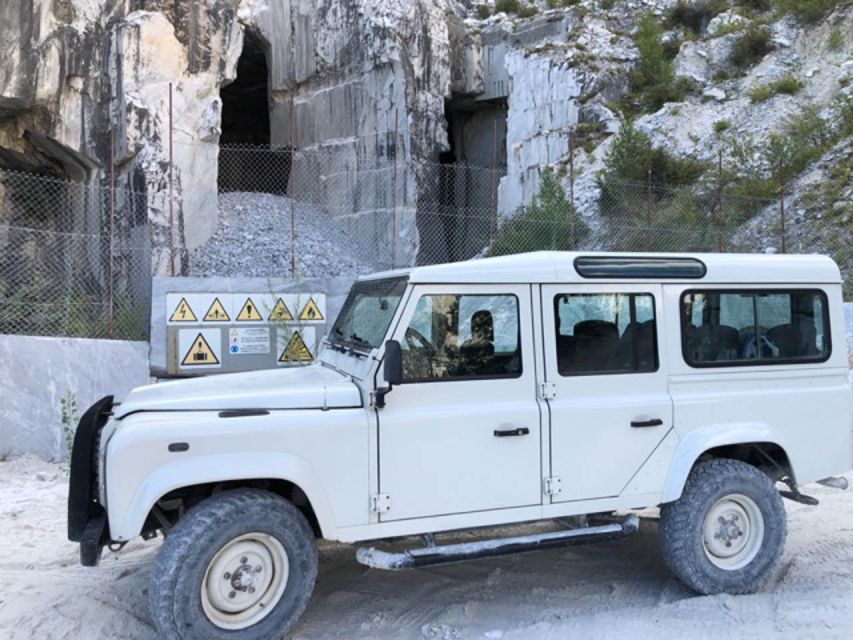
Carrara’s mountains are not merely streaked with marble. In places, the mountain itself is the marble. This three-hour jeep tour carries you up to quarries as high as 1,000 meters, including an indoor quarry where you can see the stone from the inside. Michelangelo’s marble source gives the visit an art-world connection, but the working quarry is the real star.
I like the lively ride up in a small off-road vehicle, and I like that the tour explains both Roman methods and modern cutting. The stop for Lardo di Colonnata adds a local food tradition that makes sense once you understand the hard life of the quarry workers.
The main drawback is sound. In a multilingual group, explanations may be split between languages, and the back seats can be harder to hear. The three-hour schedule also leaves limited time for extra photo stops.
Key points to know before you go
- Inside and outside the mountain: The tour can include outdoor quarry views and an indoor marble cave, giving you two very different perspectives.
- A ride to 1,000 meters: The jeep handles the steep road to the quarry zone, with mountain views along the way.
- Michelangelo connection: You learn about the marble selected for some of his sculptures and Carrara’s wider influence on art and culture.
- Lardo di Colonnata tasting: The tasting introduces the traditional food associated with quarry workers and gives you a chance to buy local souvenirs.
- Small groups: With no more than eight participants, it is easier to ask questions than on a large coach excursion.
- Three-hour format: The tour fits well into a half-day, but it is tightly timed if you want long stops for photography.
Why Carrara marble feels different from a normal museum visit
I have seen plenty of marble inside Italian churches and museums, polished into statues, floors, and grand staircases. Carrara offers the missing chapter: the mountain before the artwork exists.
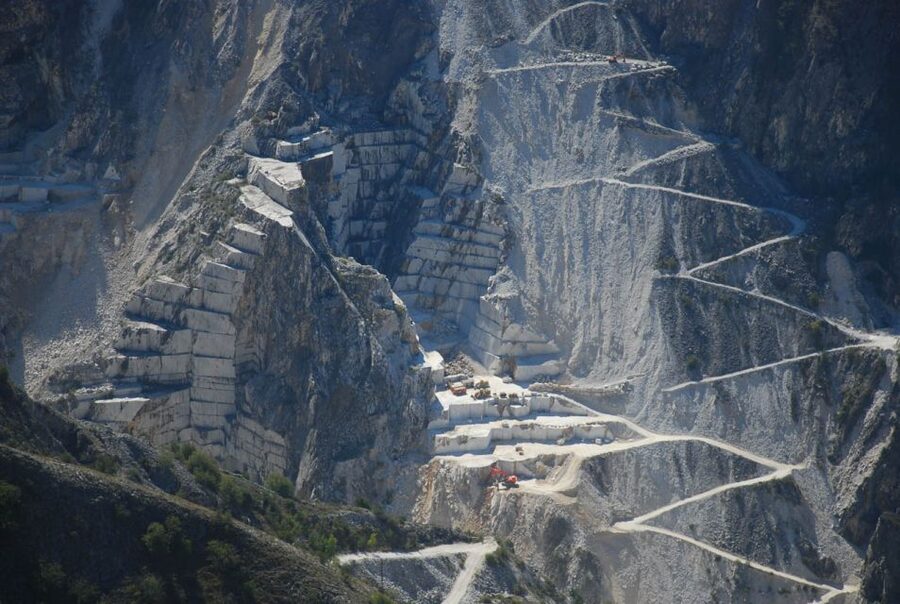
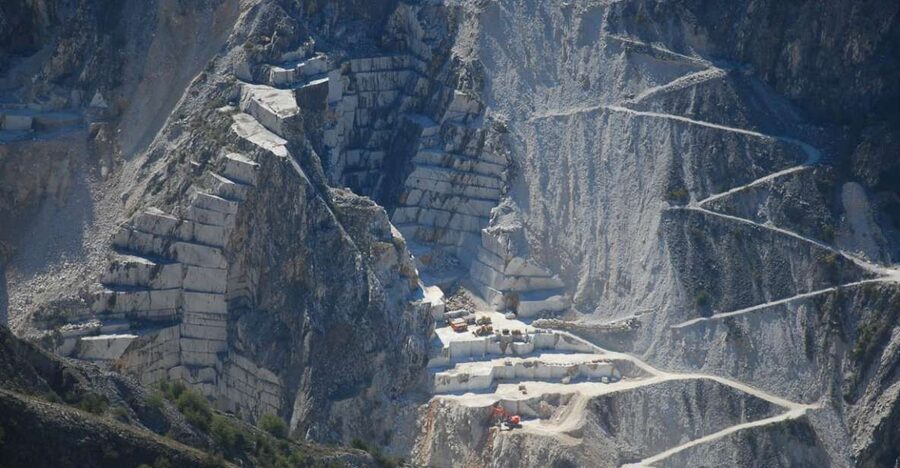
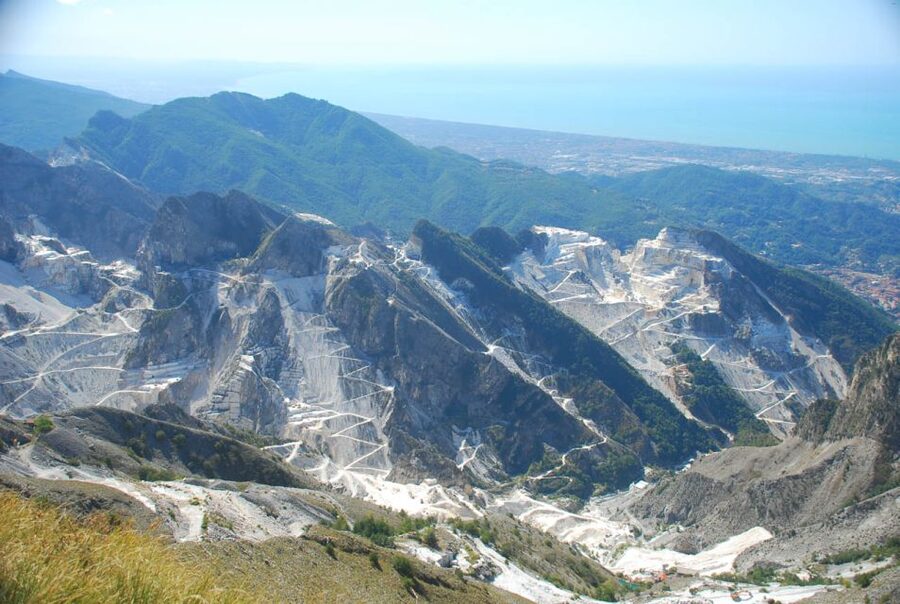
From the quarry roads, you see enormous white cuts across the Apuan mountains. The exposed stone can look almost artificial, as if someone has taken a giant knife to the hillside. Trucks, cutting equipment, and fresh quarry faces help you understand that this is not only an historic source of sculpture. It remains an active industry.
That contrast gives the tour its value. You are not simply looking at a scenic mountain or hearing a familiar Michelangelo story. You are seeing the difficult beginning of a material that later appears in churches, monuments, galleries, and private homes around the world.
The guide connects the working site with the cultural importance of Carrara marble. Michelangelo came here to choose stone for his sculptures, and the tour explains how his selection of the right block mattered. Marble is not identical from one section of a mountain to another. Its color, grain, flaws, and size affect what a sculptor can do with it.
You do not need to be an art specialist to enjoy this. If you know Michelangelo mainly from the David or the Sistine Chapel, the quarry adds a useful piece of the story. If you are a sculptor, architecture fan, or stone enthusiast, the technical side may be just as important as the famous name.
A few other Italy mornings to weigh against this
- Florence: Chianti Wineries Tour with Wine Tasting
★ 4.5 · 8,301 reviews - Small-Group Wine Tasting Experience in the Tuscan Countryside
★ 5.0 · 7,392 reviews - Rome: Tuscany & Montepulciano Day Trip with Lunch & Wine Tasting
★ 4.5 · 5,232 reviews
The jeep ride up to the Carrara quarries
The meeting point is Piazza Vittorio Veneto in Carrara, in front of the Stadium. Tours begin at 9:30 a.m. or 2:30 p.m., so check the available departure when booking. The exact meeting point matters because the tour does not begin at the top of the mountain. You meet in town and then ride up with the guide.
The off-road vehicle is part of the experience, not just a transfer. The route climbs toward the quarry area, reaching heights of up to 1,000 meters above sea level. The road and the changing views help you see why a standard city tour could never give the same sense of place.
Guides such as Luca, Lucca, Beatrice, Giorgio, Manuela, and Tomas have received especially strong praise for their explanations, driving, and friendly manner. Luca appears often in the experience’s recent feedback, with several people singling out his ability to explain the quarry and handle the climb. That matters here. A good driver makes the uphill ride feel like part of the visit rather than a stressful commute.
Bring comfortable clothes. You are visiting a working quarry environment, not a polished museum, and the vehicle ride may be dusty or bumpy. The tour information does not list special equipment, but practical clothing is the sensible choice.
One small seating tip is worth keeping in mind: if you care most about hearing every word, ask about a front seat when possible. A past participant found the back seats harder to hear, especially when the guide was speaking in more than one language.
Outdoor quarry views and the scale of the work
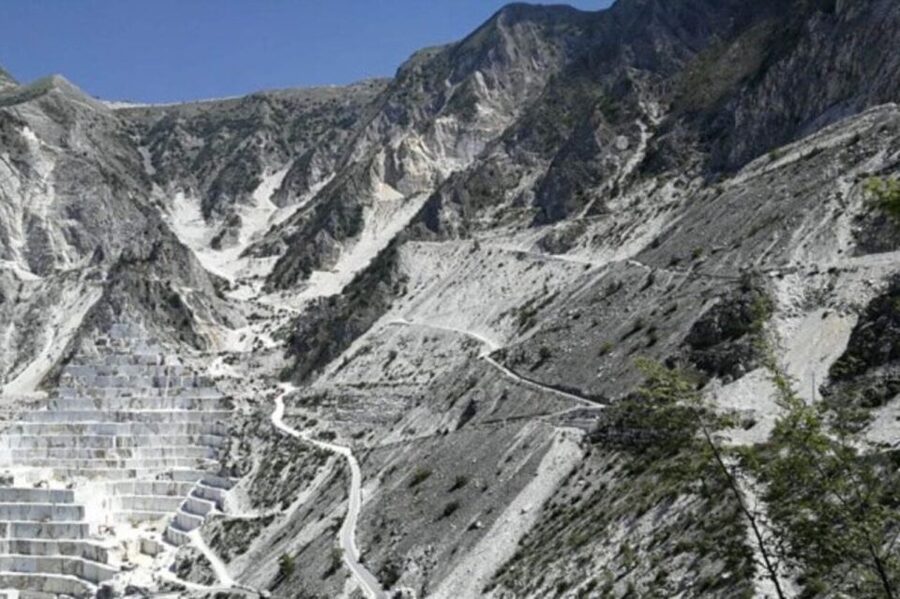
The first major reward is the view from the mountain. Carrara’s quarries are impressive because of their size, but also because they alter your sense of what a mountain is. Large sections are cut away, exposing bright marble faces that catch the light from far below.
From above, you can see the connection between the quarry roads, the stone faces, and the town of Carrara. The view is not a quiet nature panorama. It is an industrial mountain scene, and that is precisely why it is interesting.
The guide explains how marble extraction has changed since Roman times. Ancient workers relied on far more physical labor and basic methods. Modern quarrying uses machinery and cutting systems that allow larger blocks to be removed with greater control, though the scale of the task remains striking.
This history is useful because it keeps the marble from becoming a simple luxury product. Every slab and sculpture began with a mountain, a cut, a haul, and a great deal of work. The tour lets you see that chain in the place where it starts.
There may also be a quick roadside stop connected with marble cutting. One participant described seeing a diamond saw demonstration at close range, along with time to pick up souvenirs. This is not presented as a guaranteed separate stop in every departure, so treat it as a possible bonus rather than a promise.
Photography is a major reason to take the tour, and you will want to keep your camera ready. One limitation is time. The schedule includes several elements, so you may wish for more dedicated photo stops. You get memorable views, but this is not a slow scenic drive with unlimited time at every lookout.
Inside the marble cave
The indoor quarry is the tour’s most powerful moment for many people. Outdoor viewpoints show the size of the operation, but entering the mountain shows the material in a more direct way. You are surrounded by the stone rather than simply looking at a white quarry face across a valley.
The interior is described as impressive without being claustrophobic. That is helpful if you are unsure about entering an underground site. The experience is not framed as a narrow-cave adventure. It is a broad quarry space that reveals the cuts and surfaces left by extraction.
Some departures may also let you see marble being cut fairly close up. The sight of the saw working through solid stone makes the process easier to understand than a spoken explanation alone. You can see that the marble is handled as a valuable block, with care taken to cut and move it rather than simply break it apart.
The quarry may not operate normally during holiday periods. Around the New Year break, one departure could still enter the site but did not see the mine operating. This is an important distinction. You can visit the quarry and learn about extraction even when active cutting is paused, but the industrial action may vary by date.
The indoor stop also gives the tour an advantage over a simple roadside viewpoint. Several Carrara excursions focus mainly on exterior panoramas, while this one includes access to an internal quarry. If seeing the inside of the mountain is high on your list, confirm the current itinerary when booking, since quarry conditions can change.
Same city, an entirely different afternoon:
- Vatican: Museums & Sistine Chapel Entrance Ticket
★ 4.5 · 144,003 reviews - Vatican Museums & Sistine Chapel Tour with Optional Basilica
★ 4.3 · 67,413 reviews - Colosseum, Roman Forum & Palatine Guided Tour
★ 4.7 · 63,148 reviews - Milan: Cathedral and Duomo’s Terraces Entrance Ticket
★ 4.6 · 61,054 reviews
From Roman stonework to Michelangelo’s marble
The guide’s explanation is what turns the quarry from an impressive hole in the mountain into a meaningful cultural visit. Carrara marble shaped more than local commerce. It influenced sculpture, architecture, and the way European art used white stone.
Michelangelo’s connection is the obvious starting point. The tour takes you to the quarry area associated with the marble he selected for his work and explains why Carrara became so important to artists. The point is not simply that a famous artist came here. It is that an artist personally cared about the character of the material.
You learn how the extraction process developed from Roman times to the present. That long view helps you see why Carrara became known across centuries. The Romans had to move stone with much simpler tools, while modern cutting allows a different level of scale and precision.
The guides also appear willing to follow questions beyond the standard script. One group discussed mining and excavation projects in the United States, including the Crazy Horse monument. That kind of comparison is useful because it links Carrara’s methods to other large stone projects instead of treating the quarry as an isolated curiosity.
If your group includes people with different interests, a small party helps. With a maximum of eight participants, you have a better chance to ask about sculpture, engineering, local work, or the mountain itself. The tradeoff is that a multilingual group may divide the guide’s attention. One participant felt that some Italian explanations were not repeated fully in English, though a translator helped.
Lardo di Colonnata and the workers’ table
After the quarry visit, the tour turns from stone to food. You visit a lard factory and taste Lardo di Colonnata, a local specialty closely linked with the quarry workers’ diet.
Lardo is cured pork fat, traditionally prepared in the Colonnata area. In this setting, it is more than a tasting gimmick. Quarry workers needed filling food during hard physical labor, and the dish remains one of the area’s best-known products.
The tasting is a smaller part of the three-hour tour, so do not book this mainly as a food excursion. It rounds out the quarry visit rather than replacing it. You may have time to order a drink and browse souvenirs, and several people found the local products affordable enough to take home.
If you already enjoy cured meats and savory regional food, you will probably find the tasting worthwhile. If pork products are not for you, the quarry portion carries the tour on its own. The food stop is a cultural footnote with flavor, not the main event.
The combination works because it connects the mountain with daily life. You first see the labor of removing marble, then learn about the food associated with the people who worked there. That makes Colonnata feel like a living quarry town rather than a backdrop for a short sightseeing stop.
What the three-hour schedule really gives you
Three hours is a sensible length for this outing. You get transport from Carrara, the climb into the mountains, quarry explanations, outdoor views, an indoor visit when available, and the lardo tasting without giving up an entire day.
The pace is active but not designed for lingering. You will want to listen during the drive, look out at the views, and make the most of each stop. If you are hoping to spend a long time sketching, photographing every angle, or examining marble samples, the timetable may feel brief.
The morning and afternoon departures make this easy to fit around other plans. A 9:30 a.m. start leaves the rest of the day open. The 2:30 p.m. option can work well if you are arriving in Carrara later or want a shorter afternoon excursion.
The group limit of eight is a real plus. Small groups usually make it easier to hear explanations and get answers, though vehicle seating still matters. The overall rating is 4.8 from 309 reviews, and the strongest praise consistently centers on the guides, the quarry views, the indoor cave, and the quality of the driving.
Some guides have also helped with transport beyond the listed meeting point. Manuela and Luca were each praised for returning people to a cruise ship or train station. Do not assume this is included on every departure, but it shows that the local team may be flexible when circumstances allow. Ask before relying on an extra transfer.
Is the tour good value?
No price is provided here, so I cannot judge the exact fare. I would judge the value by what the three hours replace: arranging transport into the quarry zone, finding an approved way to reach the mountain, locating an indoor quarry, and hiring someone to explain the technical and cultural background.
For a first visit to Carrara, that package has clear value. You get a small-group vehicle, a guide, access to quarry areas, the mountain ride, and a local tasting. The experience is also more focused than a general Tuscany day trip, which might show you Carrara only from the road.
I would be less convinced if your sole goal is a long food tasting or a private art lesson. The lardo stop is brief, and the group is not described as a private tour. The strongest reason to pay for this experience is the combination of access, transport, and explanation.
The cancellation policy also reduces the risk of committing too early. You can cancel up to 24 hours in advance for a full refund, and the reserve-now, pay-later option keeps your plans flexible. Still, check the current price and departure details before booking, especially if you are coordinating with a train or cruise schedule.
Who should book the Carrara jeep tour?
I would recommend this tour to you if you want a break from churches, piazzas, and standard city sightseeing. One participant called it an excellent alternative to those familiar stops, and that is exactly right. The quarries offer a different side of Tuscany, one built around work, stone, machinery, and mountain roads.
It is especially well suited to:
- Michelangelo and sculpture fans
- Architecture and industrial history enthusiasts
- People who enjoy unusual half-day outings
- Cruise passengers or rail visitors with limited time
- Families and small groups who prefer direct explanations
- Anyone curious about local food traditions as well as scenery
You should think twice if you dislike off-road vehicle rides, want a quiet nature walk, or need guaranteed long photography stops. The experience is also less ideal if you need every explanation repeated at equal length in multiple languages.
The tour is offered in English, Italian, and French. If hearing every detail is important to you, tell the operator your preferred language and sit where the guide can be heard clearly.
Should you book it?
I would book this if you want to see Carrara as a working place, not just a famous name on a map. The indoor quarry, the climb to the high marble faces, and the explanation of how stone reaches the world of art make this far more memorable than a quick scenic stop.
The lardo tasting is a pleasant extra, but it should not decide the booking. Choose the tour for the mountain, the quarry access, the guides, and the chance to understand what Carrara marble really is before it becomes a sculpture or a polished surface.
If you want the most from the visit, choose a language you can follow easily, arrive at Piazza Vittorio Veneto a little early, wear comfortable clothes, and keep some room in your bag for a local souvenir.
FAQ
How long is the Carrara marble quarry tour?
The tour lasts three hours.
Where is the meeting point?
Meet the guide at Piazza Vittorio Veneto in Carrara, in front of the Stadium. The coordinates are 44.06465148925781, 10.074934005737305.
What time does the tour begin?
Available departures are listed at 9:30 a.m. and 2:30 p.m. Check availability for the date you want.
Which languages are available?
The tour is offered in English, Italian, and French.
How many people are in the group?
The tour is limited to eight participants.
Will I visit an indoor marble quarry?
The tour includes an indoor quarry visit when site conditions allow. Quarry operations may vary, especially during holiday periods.
How high do you travel into the mountains?
The jeep takes you to quarry areas as high as 1,000 meters above sea level.
Is Lardo di Colonnata included in the experience?
The itinerary includes a visit to a lard factory and a tasting of Lardo di Colonnata.
What should I bring?
Wear comfortable clothes. If you want to hear the guide clearly, consider requesting a seat toward the front, since the back seats can be harder to hear.
Can I cancel the booking?
You can cancel up to 24 hours in advance for a full refund. A reserve-now, pay-later option is also available.
Fresh on the Italy list
- Rome: Guided Catacombs Tour & Capuchin Crypt (Audio Guide)★ 4.3 · 191 reviews
- Guided tour of the Colosseum, Roman Forum and Palatine in Spanish★ 4.5 · 191 reviews
- Bolgheri: Winery Tour with Wine Tasting★ 4.7 · 191 reviews
- Stories of Pompeii: Small Group tour with archeology expert guide★ 5.0 · 191 reviews
- From Palau/La Maddalena: All inclusive Yacht Tour★ 4.8 · 191 reviews
- Small-Group Cooking Class in Positano: Gnocchi, Tiramisù & Drinks★ 5.0 · 191 reviews
- Palinuro: Costa del Mito Boat Tour★ 4.9 · 191 reviews
- Semi Private Deep Wine Chianti and San Gimignano from Florence★ 5.0 · 191 reviews
Food & Drink, compared.
Small-Group Wine Tasting Experience in the Tuscan Countryside
Read our review →
Tuscany & Montepulciano Day Trip with Lunch & Wine Tasting
Read our review →
Winner 2025 Rome Twilight Trastevere Food Tour by Eating Europe
Read our review →
SMALL-GROUP Wine Safaris: Tuscan Wine Tasting Tours from Florence
Read our review →
Winner 2025 Florence Sunset Food & Wine Tour by Eating Europe
Read our review →
San Gimignano, Siena, Monteriggioni, Chianti Day Trip with Lunch & Wine Tasting
Read our review →
Browse the lists this tour appears in