
Reviewed · MOUNT ETNA TOURS
Etna – Trekking to the summit craters (only guide service) experienced hikers
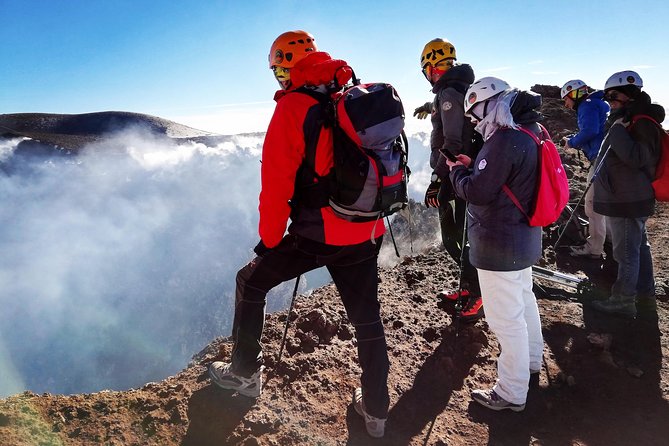
Etna’s north side gives you the volcano in its rawest form: black lava, deep lateral craters, high winds, and a long walk toward the summit at about 3,323 meters. I like the early start at Piano Provenzana, a quieter base than Etna’s southern station, and I like that the guides explain the volcano as you move through forests, lava flows, and ash fields rather than treating the hike as a simple uphill march.
I also appreciate the small groups, capped at 12 people, and the useful equipment package, which includes trekking poles, shoes, a helmet, warm jacket, extra socks, and a backpack. The catch is serious: this is not a gentle sightseeing trip. The final descent can be harder than the climb, the €50 off-road vehicle charge is extra, and volcanic or weather conditions can prevent you from reaching the summit.
Quick facts about the Etna summit hike
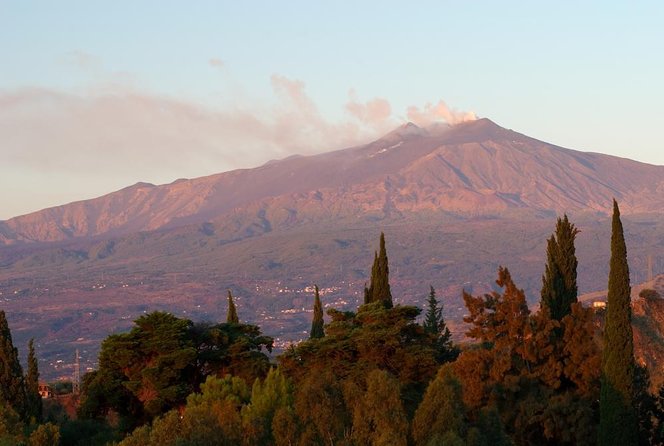
- The north-side route feels quieter and wilder: Piano Provenzana is less crowded and sits among the scars of the 2002 eruption.
- The 4×4 ride saves your legs for the high mountain: You climb from about 1,800 meters to the upper slopes before starting the main hike.
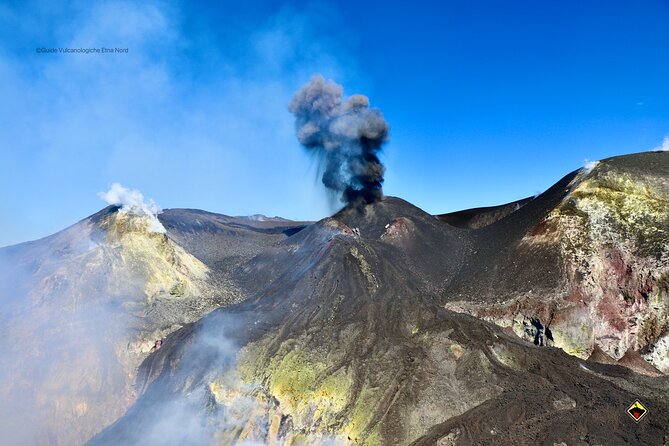
- The target is the summit crater area: The route may approach North-East, Voragine, Bocca Nuova, or South-East craters, depending on safety.
- The hike covers about 12 to 13 kilometers: The ascent is roughly 5 kilometers, followed by a long descent of about 7 kilometers.
- Guides include volcano specialists: Nikos, Daniele, Poldo, Paolo, Raphael, and other licensed guides lead groups in English.
- The advertised summit height is not guaranteed: Active gas, heat, fractures, snow, wind, and official restrictions can change the route.
Why Etna’s north side is worth your morning
Mount Etna is not just a mountain with a crater at the top. It is an active volcano, and the ground changes character as you climb. At Piano Provenzana, pine forest and cafés give way to the broad black scars left by the October 27, 2002 eruption. The original tourist facilities were destroyed, and the rebuilt area still feels tied to the volcano rather than polished apart from it.
That setting is one of the strongest reasons to choose this route. The north side generally sees fewer crowds than the southern approach, and the meeting point is easy to reach by car on paved public roads. You can park, use the restroom, get coffee and a pastry, and meet your guide without first navigating a busy city pickup.
The early meeting time is 7:45 a.m., with departure around 8:00 to 8:15. That matters. Morning conditions are often the best chance for clearer views, and an early start leaves time for the lengthy return. From May through October, an afternoon departure at 1:00 p.m. is also offered, but the morning trip makes more sense for a full summit attempt.
The group size is limited to 12. That is small enough for the guide to keep an eye on your pace and answer questions without turning every stop into a speech for a crowd. Guides such as Nikos, Daniele, and Poldo are repeatedly praised for their clear explanations, good humor, and steady pacing. The best part of their job is not simply naming craters. It is helping you understand why the rock is loose, where lava once flowed, and how current volcanic activity affects your route.
A few other Sicily mornings to weigh against this
- Etna Morning Trip
★ 4.5 · 1,241 reviews - Mt. Etna nature and flavors half day Tour from Catania
★ 5.0 · 545 reviews - Etna excursion 3000 meters with 4×4 cable car and Trekking
★ 4.5 · 504 reviews
Piano Provenzana and the 2002 lava flow
Piano Provenzana is both the starting point and a quick lesson in Etna’s power. The area lies within the lava flow from 2002, which destroyed the former ski and tourist facilities. Today, cafés, bars, souvenir shops, parking areas, and summer excursion services operate beside a stark volcanic setting.
You will meet at Chiosco Bar Mareneve di Ferraro, on Via Provenzana in the Etna Nord area. The meeting point is reachable by private or rental car. Blue-lined parking spaces are available for cars and camper vans, with a stated charge of €5 on weekdays and €8 on Sundays and public holidays.
Use the facilities before departure and fill your water bottle. The café is practical, but do not assume you will find a full meal at altitude. One useful suggestion is to bring a packed lunch. Eating outdoors after the hardest part of the climb can be a welcome reward, and the overall schedule may run closer to six or six and a half hours than the shorter estimate suggests.
The pre-hike briefing is important. Your guide checks the conditions, explains the route, and supplies the equipment. The package includes trekking poles, trekking shoes, a helmet, warm jacket, extra socks, and an additional backpack. You still need your own hat and gloves in autumn, winter, and spring. Bring sunscreen, long trousers, and warm layers even if the weather at sea level feels mild.
The 4×4 ride across Etna’s northern flank
From Piano Provenzana, an authorized off-road vehicle carries you up the northern side. The drive follows about 9.5 kilometers of rough volcanic track, crossing forest, recent lava flows, eruptive fractures, a lava-flow channel, and lateral craters more than 40 meters deep.
This is not filler before the walking begins. The vehicle ride lets you see how quickly Etna changes as it rises. Green woodland gives way to open lava fields, then to a high, almost empty zone of scoria and ash. On clear days, the route can reveal northern Sicily, Calabria, the Strait of Messina, the Aeolian Islands, and both the Ionian and Tyrrhenian seas.
Rarely, visibility extends toward the Madonie range, the Gulf of Catania, Syracuse, Augusta, and the Valle del Bove. Do not build your decision around seeing every one of these places. Clouds, haze, wind, and volcanic smoke can erase the views. Still, even a partly cloudy day can give you striking contrasts between dark lava, pale ash, and distant coastlines.
There is an important price detail here. The tour price is listed at $139.13 per person, but the off-road vehicle connection is not included. The stated extra charge is €50 per person, paid locally. The supplied information describes this transfer as running one way from roughly 1,800 meters toward the upper route, with published heights varying between about 2,825 and 2,960 meters. If you choose the return bus from around 2,850 meters to 1,800 meters, the stated charge is €70 instead of €50.
That extra cost can surprise you because the ride is short compared with the whole day. Still, it is the piece that makes the summit attempt possible without walking the entire lower slope. Add it to the advertised price when comparing tours. The package remains reasonable for a licensed volcano guide, equipment, insurance, and access to the upper route, but it is not a €139 all-in outing.
The climb from 2,960 meters to the summit area
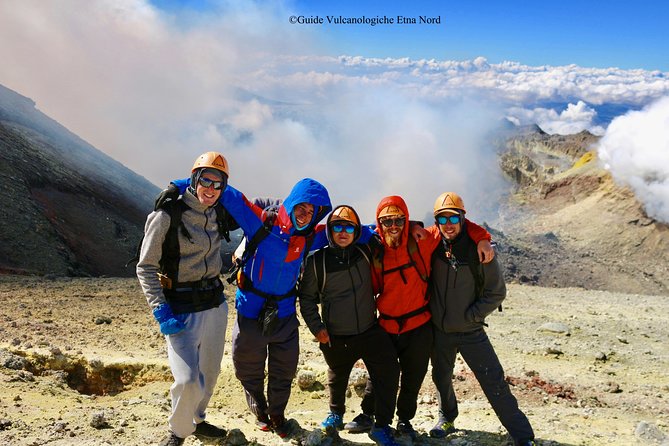
The main trek begins near 2,960 meters and climbs about 5 kilometers, gaining roughly 550 meters. The upper height range is listed as 2,960 to 3,323 meters. At this altitude, even a fit person can notice fatigue, shortness of breath, or a slower pace.
The route is not a smooth mountain trail. You walk over loose scoria, sandy gullies, recent lava, and unstable volcanic rock. The guide may take you along crater rims and toward the most active crater that can be reached safely. The exact target is not fixed, since gas, heat, fractures, explosions, and official restrictions can change from day to day.
The four principal summit craters are North-East, Voragine, Bocca Nuova, and South-East. You may see one or more of them, but reaching all four is not promised. One of the most memorable moments is often the first view over a crater edge, where the scale and color of the volcano become clear. In periods of activity, you may see gas, hear explosions, or observe fresh volcanic features, but the guide’s safety decision comes first.
A strong guide makes a real difference here. Daniele is described as patient and good at calming nervous hikers, while Nikos is praised for maintaining a sensible pace and stopping when the group needs a break. Poldo is noted for his enthusiasm and detailed explanations. The names may vary on your date, but the service is led by licensed volcano guides rather than a general hiking escort.
Do not mistake the word trekking for an easy walk. Some people with limited mountain experience manage the ascent, especially with breaks and a steady pace. The complete route, however, demands good fitness. You need to be comfortable walking several hours on loose ground at altitude and managing a long downhill section afterward.
More hikes in Sicily:
- Mount Etna Adventurous Hiking Tour with Equipment
★ 4.5 · 439 reviews - Cinque Terre Day Trip with Optional Hiking or Pisa
★ 5.0 · 8,486 reviews - Florence: Cinque Terre Day Trip with Optional Hike
★ 4.8 · 4,178 reviews - Mount Etna: Guided Volcano Summit Hiking Tour with Cable Car
★ 4.7 · 3,784 reviews
The descent is the real test
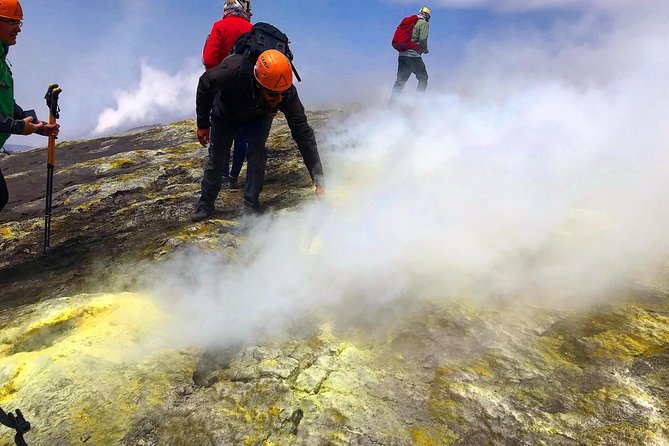
The return drops from about 3,300 meters to 1,800 meters, losing around 1,500 meters over roughly 7 kilometers. This is where strong knees matter more than a fast uphill pace.
The upper descent follows soft scoria and sandy gullies. Walking downhill through loose ash can feel like controlled sliding, and small lava stones can work into your shoes. Wear long socks and trousers that cover the tops of your boots. Sturdy footwear is essential, and the operator warns that insurance does not cover you if you use inadequate shoes.
Lower down, the route crosses about 2.5 kilometers of ski slopes with rougher, stony ground before returning to Piano Provenzana. Trekking poles are useful for balance, especially when the surface shifts underfoot. You may also want lightweight gloves, since hands can touch rough lava when you steady yourself.
The total route is about 12 to 13 kilometers, and the overall excursion is described as roughly six hours, despite the headline duration of five and a half hours. Actual timing can stretch with stops, conditions, group pace, and changes to the route. Plan the rest of your day loosely rather than booking a tight connection or dinner reservation.
The descent is beautiful in its own way. You pass from high, barren volcanic ground into wider views and lower slopes, watching Etna’s textures change under your feet. It is also the point where tired hikers learn why this outing is aimed at experienced hikers rather than young children or casual sightseers.
Equipment, clothing, and safety
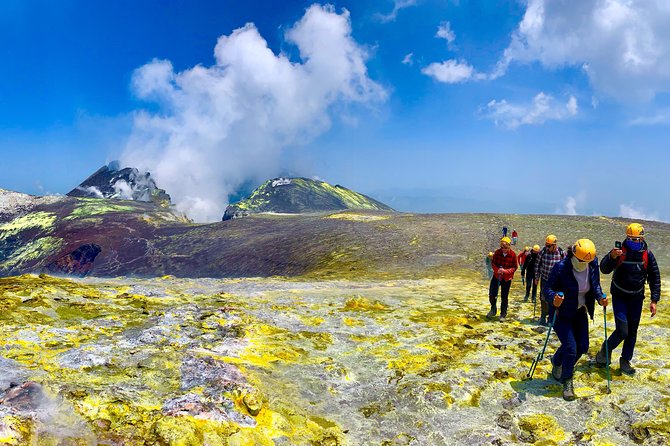
The included kit removes some of the worry about specialist gear. You receive trekking poles, hiking shoes, helmet, warm jacket, extra socks, and a backpack. Some past participants paid only a small local rental fee for shoes or jackets, but the supplied package is the safer assumption for planning.
Bring your own:
- Hat and gloves, especially outside summer
- Long trousers and long socks
- Sunscreen
- Water and a packed lunch
- Warm layers that can handle wind
- Eye protection if you are sensitive to ash or volcanic gas
Contact lenses are discouraged because ash and exhaled gases can irritate the eyes. The route may pass areas with continuous gas release and unstable rock, so stay with the guide and do not wander toward a crater edge for a better photograph.
The excursion can be altered, shortened, or stopped if weather, volcanic activity, snow, ice, wind, or official orders make the route unsafe. This is not a technicality. One scheduled outing was changed because of conditions, and another was stopped in poor weather after about two hours. A full refund or a different date is offered if the operator cancels for poor weather, but a changed route may still be disappointing if your main goal is the summit.
Tell the guide about relevant health conditions before setting out. The hike is not suitable for people with certain breathing conditions or hypertension, and it is not suitable for children under 12. Pregnant women beyond the third month cannot participate. Anyone prone to dizziness should take the crater-edge walking and altitude seriously.
Is the $139 price good value?
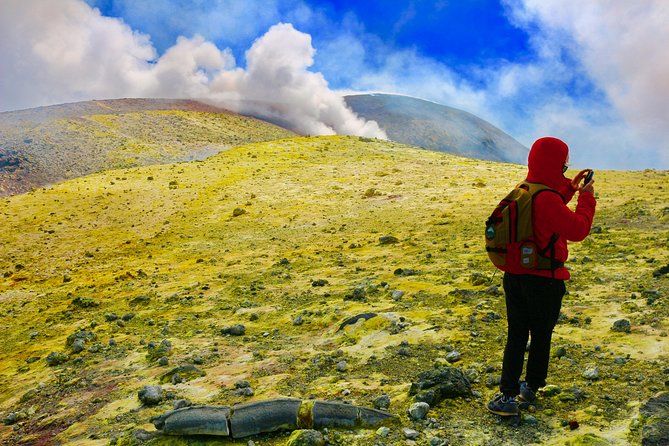
At $139.13, the tour is fairly priced for what is included, but only after you account for the extra vehicle charge. You receive a licensed volcano guide, accident insurance, equipment, and access to a route that reaches far higher than many basic Etna walks.
The strongest value comes from the interpretation. You are not simply paying for a ride and a marked path. The guide explains the history of eruptions, lava formations, crater activity, and the reason for route changes. That turns a dramatic day outdoors into a better understanding of the mountain.
The weak point is transparency around the extra transport. Add €50 per person for the one-way off-road transfer, or €70 if you choose the return bus option described in the conditions. Parking is also extra. The amount is stated in advance, so it is not an unexpected charge at the meeting point, but your real budget should include it.
The 97 percent recommendation rate and 4.9 rating suggest a consistently strong operation, especially for guide quality and organization. The small number of poor experiences also shows why you should read the weather and access conditions closely before booking. A summit tour on an active volcano cannot guarantee a summit, clear views, or a fixed route.
Who should book this Etna excursion?
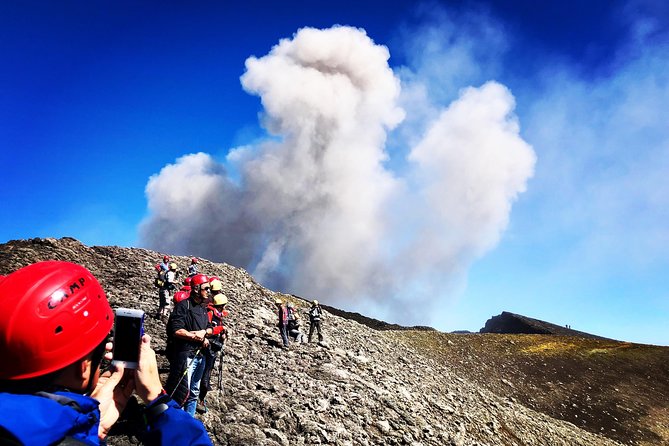
Book it if you want the most serious hiking option from Etna’s north side and are happy to trade comfort for volcanic terrain. You should be fit, comfortable with long descents, and willing to accept a route change without treating it as a failure.
It suits hikers who value explanation as much as scenery. The guides are a major part of the experience, and names such as Nikos, Daniele, Poldo, Paolo, and Raphael appear in the service’s guide team. Their role is to pace the group, explain the volcano, and decide how close you can safely get to active areas.
Think twice if you want a short, easy outing, dislike loose ash, or need a firm promise of reaching 3,323 meters. You should also avoid it if your knees struggle with steep descents or if you are not prepared for high-altitude cold and wind.
The cancellation policy allows a full refund when you cancel at least 24 hours before the start time. If the operator cancels because of weather or insufficient numbers, you can choose another date or a refund. That flexibility helps, but it does not remove the need to keep your schedule open.
Final verdict: a strong choice for serious Etna walkers
I would choose this tour for the north-side setting, the smaller group, and the chance to walk through Etna’s changing volcanic zones rather than stop at a viewpoint. The equipment and volcano guide add real value, and a good guide such as Daniele, Nikos, or Poldo can make the science clear without slowing the day to a crawl.
Book it only after adding the €50 vehicle cost and checking your ability to handle 12 to 13 kilometers with a very long downhill finish. If you accept that the summit height depends on safety conditions, this is one of the more rewarding ways to meet Etna up close.
FAQ
Where does the Etna summit hike begin?
It begins at Chiosco Bar Mareneve di Ferraro in Piano Provenzana, Etna Nord, on Via Provenzana near Linguaglossa. The meeting time is 7:45 a.m.
How long is the excursion?
The listed duration is about five and a half hours, while the route information gives roughly six hours. Actual timing can vary with weather, volcanic conditions, route changes, and group pace.
Is the off-road vehicle included in the tour price?
No. The stated extra charge is €50 per person for the one-way off-road vehicle transfer. The information also gives a €70 charge for those who choose the return bus from about 2,850 meters to 1,800 meters.
What equipment is provided?
The tour includes trekking poles, trekking shoes, helmets, a warm jacket, extra socks, an extra backpack, and accident insurance. You need to bring your own hat and gloves during autumn, winter, and spring.
How fit do I need to be?
You need good physical fitness. The route covers about 12 to 13 kilometers, reaches roughly 3,323 meters, includes loose and unstable volcanic ground, and finishes with a descent of about 1,500 meters.
Can the tour be changed or canceled because of volcanic activity?
Yes. Guides may change, shorten, or stop the excursion because of volcanic activity, gas, heat, fractures, weather, snow, ice, or official safety restrictions. If the operator cancels because of poor weather, you are offered another date or a full refund.
Fresh on the Sicily list
- Egadi Sail Boat Tour to Favignana and Levanzo from Trapani★ 5.0 · 194 reviews
- Lampedusa: Yacht excursion, swimming stops and typical lunch★ 5.0 · 195 reviews
- Boat excursion Taormina Giardini Naxos★ 4.5 · 199 reviews
- Etna: Wine Tasting and Food Tour★ 4.7 · 201 reviews
- In the province of Palermo Sicilian Cooking Class near Cefalu★ 5.0 · 203 reviews
- Sicilian Cuisine Cooking Class in Palermo★ 5.0 · 208 reviews
- Electric scooter tour inside the Valley of the Temples Agrigento★ 4.5 · 212 reviews
- Snorkeling Tour Coast to Coast Taormina and Isola Bella★ 4.5 · 223 reviews
Mount Etna Tours, compared.
Mount Etna Morning or Sunset Day Trip with Tasting
Read our review →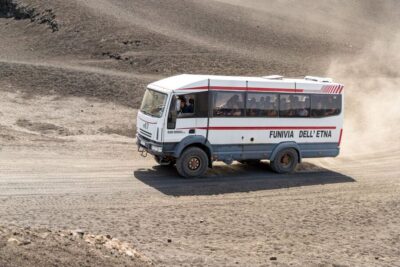
Mount Etna: Guided Volcano Summit Hiking Tour with Cable Car
Read our review →
Sunset Jeep Tour of Mount Etna and Lava Flow Caves
Read our review →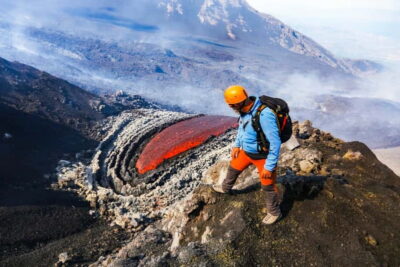
Mount Etna: Trek to 3000m with cable car and jeep
Read our review →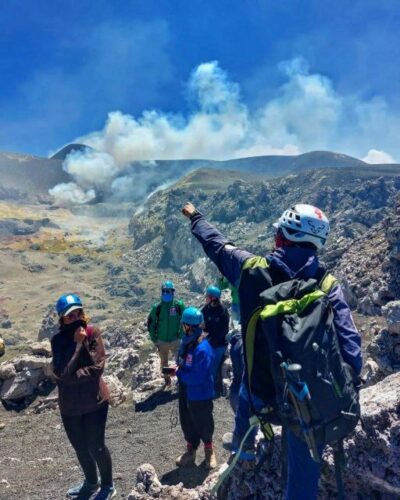
Mount Etna: Summit Crater Trek with Cable Car
Read our review →
Etna and Alcantara Gorges Full-Day Tour with Lunch
Read our review →
From Milazzo: Panarea and Stromboli Boat Trip by Night
Read our review →
Mount Etna: Roundtrip Cable Car and 4×4 Bus Ticket
Read our review →Browse the lists this tour appears in