Reviewed · TOURS
Cavedoni Balsamic Vinegar Tour: The Oldest in Modena
The remarkable thing about the Cavedoni Balsamic Vinegar Tour is how clearly it shows that real balsamic is a slow craft, not simply a dark dressing in a fancy bottle. You walk among the estate’s vineyards, visit the cellar, and taste vinegar at several ages with local food and Lambrusco.
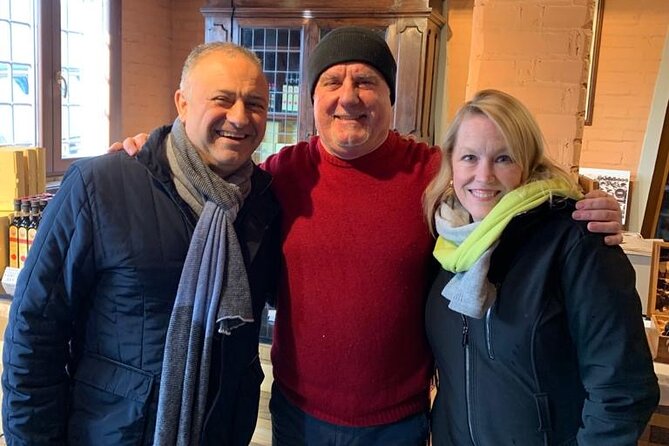
I especially like the family welcome, with guides such as Elisa explaining the process in excellent English, and the generous tasting, which can feel more like a light lunch than a sample tray. The chance to meet members of a family producing vinegar since 1860 adds a personal touch that a large factory tour cannot match.
The main drawback is the setting. The acetaia is outside central Modena, and transportation to and from the meeting point is not included. At $90.74 per person, this is good value if you care about food and traditional production, but it is not a quick city-center tasting.
Key points to know before you book
- A family cellar dating to 1860: Antica Acetaia Cavedoni is presented as a seven-generation vinegar-making family.
- A full production story: You see the vineyards, the barrel rooms, the museum, and the steps from grapes to finished vinegar.
- A serious tasting: Vinegars aged from five to 30 years are paired with regional foods and Lambrusco made on the estate.
- Possible older vintages: Depending on the visit, you might be offered balsamic aged 50, 80, 125, 145, or even 165 years.
- A countryside location: The meeting point is at Via Guerro di Qua 2 in Ca’ Montanari, not in Modena’s historic center.
- A two-hour English tour: The 3 p.m. visit includes a local guide, food tasting, and coffee, with a maximum group size of 17.
Why Cavedoni is more than a vinegar tasting
Modena is famous for balsamic vinegar, but the name covers very different products. Some bottles contain young wine vinegar, caramel, thickeners, or flavoring. Traditional balsamic, made in the old style, takes years of careful reduction and aging in wooden barrels.
That distinction is the heart of the Cavedoni visit. You are not just shown shelves of bottles and asked to buy one. You learn how grape must becomes vinegar, why age changes the taste, and how to spot the difference between a traditional product and a cheaper imitation.
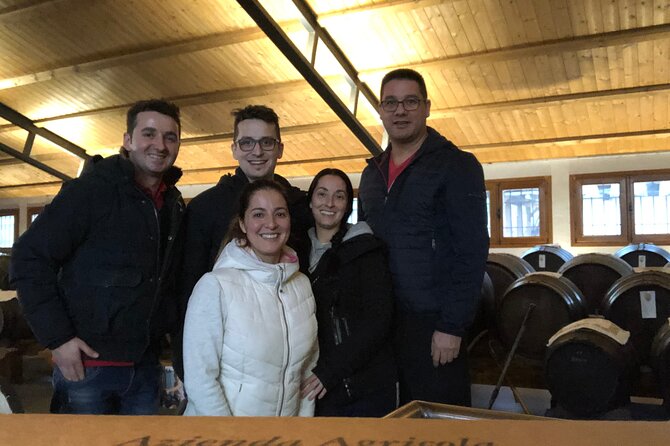
The family’s story reaches back to 1860, and the cellar reflects that long view. Several generations remain involved, including Paolo and Marcello, who may greet you during the visit. The family also describes the tradition of beginning a vinegar battery for a new family member, a custom that turns the barrels into part of family life rather than just business equipment.
That personal connection is one of the strongest reasons to make the trip. You can find balsamic in shops all over Italy, but you cannot get the same sense of place from a bottle on a supermarket shelf.
What else people book in Italy on the same trip:
- Vatican: Museums & Sistine Chapel Entrance Ticket
★ 4.5 · 144,003 reviews - Vatican Museums & Sistine Chapel Tour with Optional Basilica
★ 4.3 · 67,413 reviews - Colosseum, Roman Forum & Palatine Guided Tour
★ 4.7 · 63,148 reviews
Starting among the Modena vineyards
The tour begins at 3 p.m. at the acetaia. Your guide starts with the broad story of authentic balsamic vinegar from Modena, then takes you outside to the vineyards.
This first part matters because the vinegar begins with grapes. You learn about the types used for production and how the harvest becomes the raw material for the must. The walk also gives you a better feel for the estate itself. This is a working family property in the countryside, not a polished museum built only for visitors.
Do not expect a long rural hike. The vineyard visit is part of a two-hour tour, so the focus remains on seeing the vines and understanding their role. Still, it is useful to begin outdoors. By the time you enter the acetaia, you have already followed the product from its first stage.
The countryside location gives the outing a calm rhythm, though it also creates the transportation issue. If you have a car, reaching the property is simpler. If you rely on public transportation, plan carefully for the return trip. A taxi may be needed, and the exact availability of buses can make an otherwise easy visit more complicated.
Inside the acetaia and barrel rooms
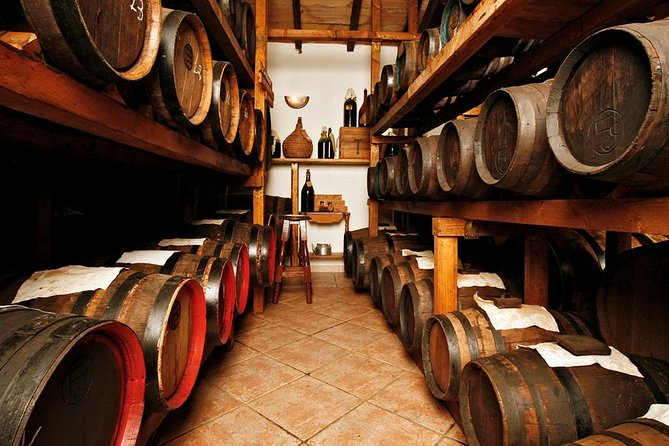
After the vineyard walk, you enter the vinegar house and barrel rooms. This is where the tour becomes especially memorable for anyone who likes traditional food production.
The aging process is gradual. Vinegar rests in wooden barrels and changes over time, with different woods contributing different qualities. The visit explains the move from younger vinegar to older product and shows why a bottle that has spent decades in the cellar costs far more than an ordinary supermarket condiment.
The exact cellar presentation can vary, but the key feature is the chance to see the barrels up close. You are given a practical explanation of how the vinegar is managed over the years, rather than a quick statement that it is simply aged.
The Cavedoni Museum adds family and production context. Its presence helps connect the current business with the earlier generations who built the tradition. For me, this is where the tour earns its place on a Modena itinerary. You are not only tasting a finished product. You are seeing the tools, setting, and family customs behind it.
The guide also explains how to distinguish genuine protected products from imitations. That lesson is useful after you leave. The Modena area has many bottles labeled balsamic, but the label, ingredients, aging details, and certification can tell you a great deal about what is inside.
The tasting: vinegar with food, not vinegar alone
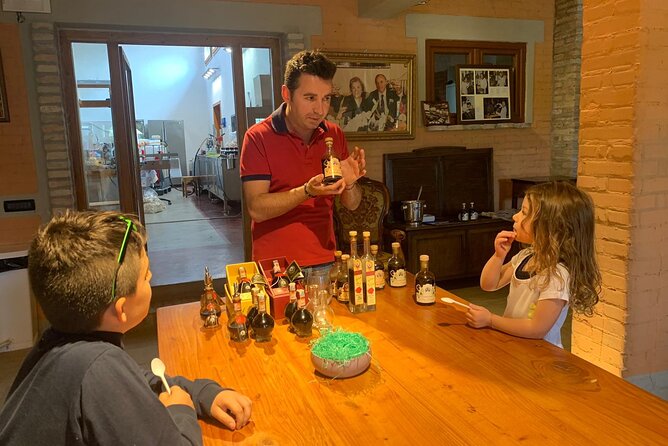
The tasting is the most generous part of the afternoon. You sample different balsamic vinegars, normally ranging from five to 30 years old, then compare their flavor and texture with regional foods.
Expect items such as:
- Parmigiano-Reggiano, including different aging periods
- Prosciutto and other cured meats
- Mortadella
- Salami
- Bread
- Dessert
- Lambrusco made on the estate
This pairing approach is far better than tasting vinegar from a spoon and moving on. A younger balsamic may work well with savory foods, while an older, thicker product can be more striking with cheese or dessert. You begin to understand that balsamic is not only a salad ingredient.
The food portions are described as generous, and the tasting can function as a substantial snack or light lunch. If you have already eaten a large meal, pace yourself. The point is to compare the vinegars, not rush through the food.
Lambrusco comes from the estate as well. It is served alongside the food without overpowering the vinegar. That makes the tasting feel tied to the region, where wine, cured meat, cheese, and balsamic naturally belong together.
Coffee is also included at the end. It is a small detail, but it gives the visit a relaxed finish rather than sending you straight from the last sample to the shop.
Same city, an entirely different afternoon:
- Milan: Cathedral and Duomo’s Terraces Entrance Ticket
★ 4.6 · 61,054 reviews - Venice: Doge’s Palace Reserved Entry Ticket
★ 4.6 · 42,716 reviews - Vatican Museums, Sistine Chapel & St Peter’s Basilica Guided Tour
★ 4.5 · 39,149 reviews - Rome: Colosseum, Palatine Hill and Roman Forum Guided Tour
★ 4.8 · 32,814 reviews
The older bottles are a special possibility
The listed tasting focuses on balsamic aged five to 30 years, but some visits include much older bottles. Past tastings have featured vinegar aged 50, 80, 125, 130, 145, and 165 years.
You should treat these very old vintages as a possibility, not a guaranteed part of every booking. They are rare family products, and the standard outline promises the five-to-30-year range. Still, knowing that the cellar may hold vinegar from the 1800s adds real weight to the visit.
An older balsamic is not automatically better for every use. It is usually more concentrated and suited to careful tasting, cheese, or dessert. A younger bottle may be more practical in everyday cooking. The tour helps you see why price and age are not the only things that matter.
This is also where the visit can become expensive in a useful way. You may leave understanding why a small bottle of traditional balsamic costs much more than a large bottle of ordinary vinegar. If you plan to buy, taste first and ask the family which product suits the way you cook.
Is the $90.74 price fair?
At $90.74 per person, Cavedoni is not a bargain basement food stop. The price makes more sense when you consider what is included: a two-hour guided visit, vineyard walk, cellar and museum access, a family-led production explanation, a broad food tasting, Lambrusco, and coffee.
The food is an important part of the value. This is not a tiny sample of three vinegars. You may be served enough cheese and cured meat to count as a light meal, with several pairings that show how the product works at the table.
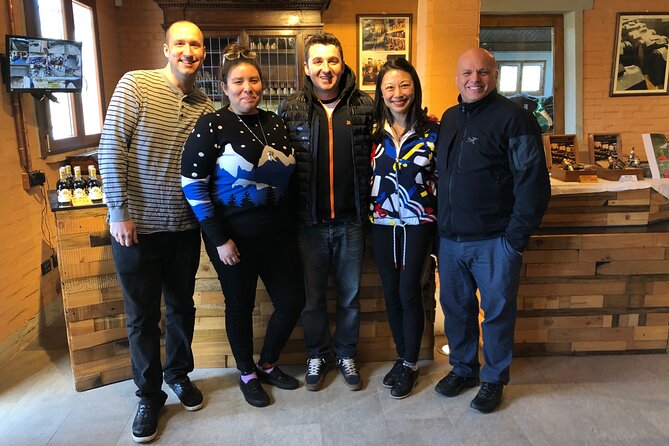
The personal scale also matters. The maximum group size is 17, and some scheduled visits are much smaller. A very small group can lead to more questions and a more relaxed exchange with the family. A full group will feel less private, so do not book this expecting a one-on-one cellar visit.
For someone with little interest in food production, the cost may feel high. For a cook, a food-focused visitor, or anyone collecting regional ingredients, the price is easier to justify. It includes a lesson you can use at home, not just a quick tasting.
Buying balsamic at the cellar shop
You have time to purchase balsamic and other local specialties after the tasting. This is the right moment to shop because you have already compared the products and learned what the labels mean.
The family can also ship purchases. Some visitors have arranged delivery home rather than carrying bottles through several trains and flights, and shipments are insured according to the information provided. That can be a sensible choice for older or more expensive bottles.
Do not feel pressured to buy simply because the tour ends at a shop. The tasting gives you enough information to make a reasoned choice. If you cook often, a younger or mid-aged vinegar may be more useful. If you want a special bottle for cheese or dessert, an older product may make sense.
Ask about serving suggestions and storage before you leave. You will get more from the purchase if you know how the family uses each age and style.
Getting to Ca’ Montanari
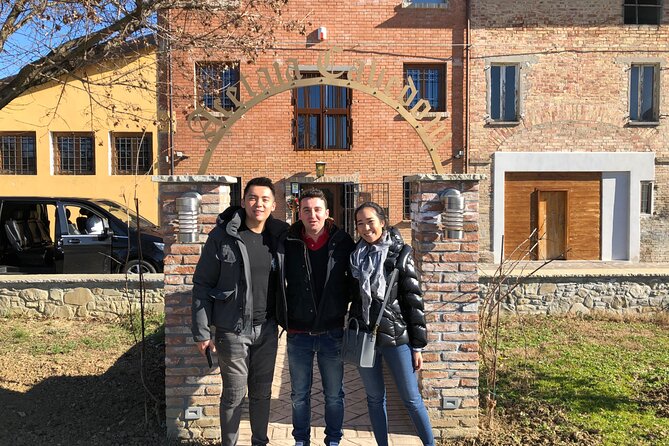
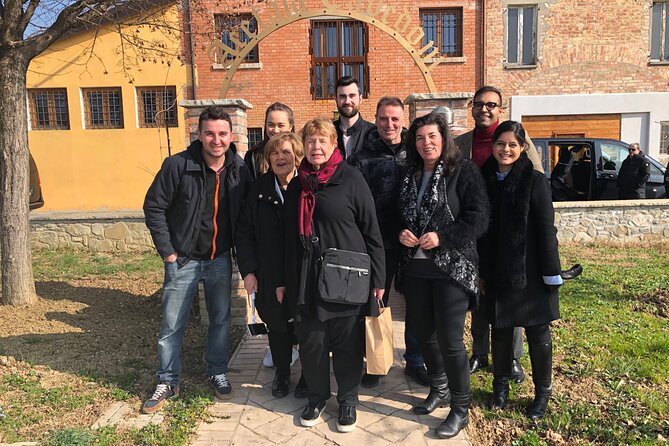
The meeting point is Via Guerro di Qua 2, 41014 Ca’ Montanari MO, Italy. The activity ends back there, so you must arrange your own transport in both directions.
This is the one practical weakness to take seriously. The acetaia is in the countryside outside Modena, and the tour does not include transfers. It is near public transportation, but the service may not line up neatly with a 3 p.m. start and the end of a two-hour visit.
If you are using buses, check the return connection before booking. A taxi may be the safer plan. Some family members have helped arrange rides in difficult cases, but you should not rely on that as part of the official service.
The setting is worth the extra effort if you want a visit at a real family acetaia. It is less convenient if you have only a few hours in Modena and want to stay within the city center.
Who will enjoy this visit most?
I would choose Cavedoni for several types of visitors:
- Food-focused visitors who want to understand a famous regional product
- Home cooks who want practical help choosing and using balsamic
- Wine and cheese lovers who enjoy guided pairings
- Families and couples looking for a slower countryside outing
- Repeat Italy visitors who have already seen the main city sights
- Small groups who prefer a personal family business to a large commercial tour
Children can participate, but they must be accompanied by an adult. Most people can take part, and the tour is offered in English.
You do not need to be an expert in Italian food. The format starts with basic production and builds from there. Elisa has been praised for clear English and a warm manner, while Paolo and Marcello add the family perspective when they join the visit.
The tour may be less suitable if you dislike tastings, have no interest in vinegar, or cannot manage the transport to the rural meeting point. It is also not designed as a broad Modena food tour. Its focus is firmly on balsamic, with local foods used to explain and complement it.
How the two hours are likely to feel
The tour has a good sequence. You start with the family story and the vineyards, move into the cellar and barrels, then finish with food and wine. Each stage answers a different question: where the grapes come from, how the vinegar ages, and how you actually use it.
The tasting takes up much of the final part, which is appropriate. Balsamic is hard to understand from a lecture alone. You need to taste the differences, then try the vinegar with cheese, meat, bread, and dessert.
The two-hour length is long enough to feel substantial but short enough to fit into an afternoon. Since the start time is 3 p.m., you can spend the morning in Modena or nearby Castelvetro, then head to the acetaia. Plan the return trip before you set out.
The tour is offered in English and uses a mobile ticket. Confirmation arrives when you book. Free cancellation is available up to 24 hours before the start time, but changes or cancellations inside that window are not accepted.
Should you book the Cavedoni tour?
Book it if you want a real family food experience, not just a quick taste in town. The vineyard, barrel rooms, museum, family stories, generous regional food, and Lambrusco create a complete afternoon. The chance to taste a very old vintage, if available, is an added treat.
I would give it extra weight if you are staying in Modena for more than one day, cooking with Italian ingredients, or looking for a personal visit outside the usual city sights. The $90.74 price is fair for the amount of food and instruction included.
Skip it if rural transport will cause stress or if balsamic is not something you care to understand beyond a salad dressing. For everyone else, Cavedoni offers a clear lesson in one of Modena’s signature foods, served by the people who have kept the barrels going for generations.
FAQ
Where does the Cavedoni Balsamic Vinegar Tour begin?
The tour begins at Antica Acetaia Cavedoni at Via Guerro di Qua 2, 41014 Ca’ Montanari MO, Italy.
What time does the tour start?
The scheduled start time is 3 p.m.
How long does the tour last?
The visit lasts approximately two hours and ends back at the meeting point.
Is transportation included?
No. Transportation to and from the acetaia is not included. The property is near public transportation, but you may need a taxi depending on your route and return schedule.
What foods and drinks are included?
The tasting includes regional food products, such as Parmigiano-Reggiano, prosciutto, mortadella, salami, bread, and dessert. Lambrusco produced on the estate and coffee are also included.
How old are the balsamic vinegars in the tasting?
The standard tasting includes balsamic vinegars aged from five to 30 years. Depending on the visit, older products may also be available to taste, including bottles aged many decades.
Can I cancel the tour for a refund?
Yes. You can cancel up to 24 hours before the experience start time for a full refund. Cancellations or changes made less than 24 hours before the start time are not accepted.
Fresh on the Italy list
- Rome: Guided Catacombs Tour & Capuchin Crypt (Audio Guide)★ 4.3 · 191 reviews
- Guided tour of the Colosseum, Roman Forum and Palatine in Spanish★ 4.5 · 191 reviews
- Bolgheri: Winery Tour with Wine Tasting★ 4.7 · 191 reviews
- Stories of Pompeii: Small Group tour with archeology expert guide★ 5.0 · 191 reviews
- Palinuro: Costa del Mito Boat Tour★ 4.9 · 191 reviews
- From Palau/La Maddalena: All inclusive Yacht Tour★ 4.8 · 191 reviews
- Small-Group Cooking Class in Positano: Gnocchi, Tiramisù & Drinks★ 5.0 · 191 reviews
- Semi Private Deep Wine Chianti and San Gimignano from Florence★ 5.0 · 191 reviews
Tours, compared.

Vatican Museums & Sistine Chapel Tour with Optional Basilica
Read our review →
Colosseum, Roman Forum & Palatine Guided Tour
Read our review →
Vatican Museums, Sistine Chapel & St Peter’s Basilica Guided Tour
Read our review →
Colosseum, Palatine Hill and Roman Forum Guided Tour
Read our review →
Guided Tour of Colosseum, Roman Forum & Palatine Hill
Read our review →
Colosseum, Roman Forum and Palatine Hill Guided Tour
Read our review →
Naples Underground Entry Ticket and Guided Tour
Read our review →