
Reviewed · SICILY TOURS
At Casa Di Cilla
Palermo’s Capo Market is the real opening act here. You meet chef Marco Cillari at Porta Carini, then follow him through narrow market lanes to choose the ingredients for a Sicilian meal. I like that you are not just shown a market from the sidelines, and I like that the menu can reflect the group’s tastes, from ravioli and pasta alla Norma to swordfish, caponata, and cannoli.
The cooking takes place in Marco’s home near Piazza Politeama, so this feels personal rather than polished for mass tourism. The trade-off is time: five hours is an estimate, and the relaxed market-to-lunch rhythm can take most of your day. If you want a quick lesson, this is not it.
Key points at a glance
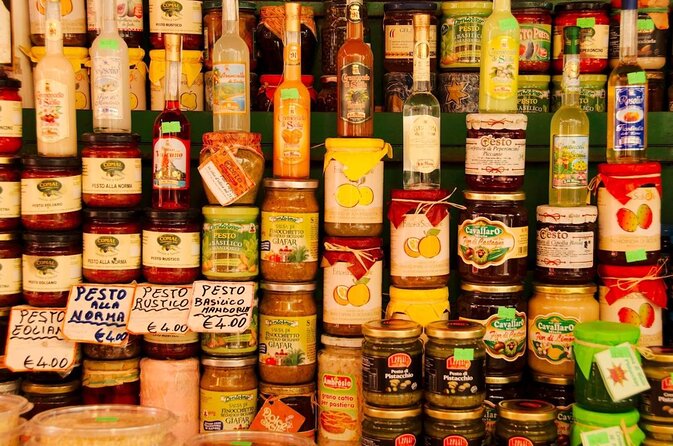
- Capo Market first: Shop for the day’s produce, fish, meat, pasta ingredients, and dessert supplies with Marco.
- Chef Marco Cillari: Expect a funny, energetic host who mixes cooking instruction with stories about Sicilian food and culture.
- A menu shaped by the group: Typical dishes include a Sicilian starter, pasta, a fish or meat course, and cannolo or another local dessert.
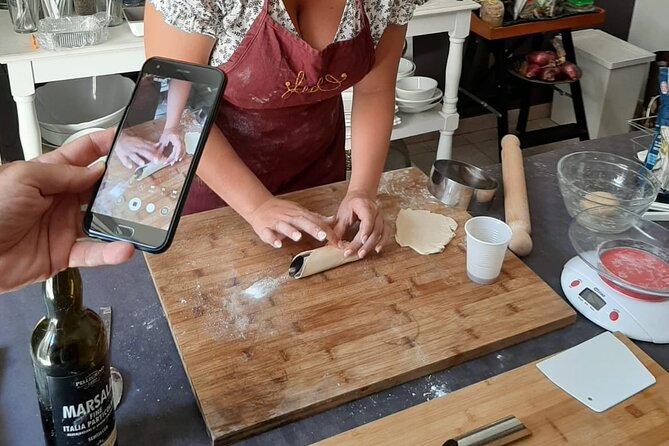
- Hands-on kitchen work: You take part in preparation, including pasta making, knife work, sauces, fillings, and dessert when the menu allows.
- Small-group setting: The maximum is 10 people, though some sessions may be smaller.
- Five hours and $119.77: The price is reasonable if you value a market visit, instruction, a full meal, and a social afternoon in one booking.
Starting at Porta Carini and Palermo’s Capo Market
The meeting point is Via Volturno, 78, near Porta Carini, with a 10:00 am start. Porta Carini is one of the gateways to the Capo Market, making it a useful place to begin. You do not waste the first part of the morning in a classroom. The city’s food scene is already in motion.
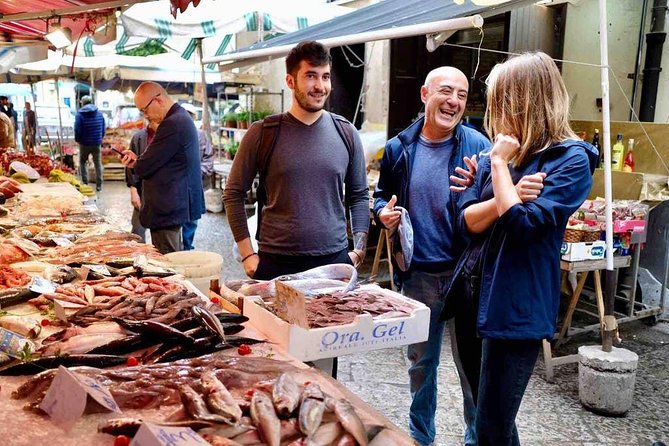
The Capo is one of Palermo’s old street markets, spread through lanes near the historic center. Its setting helps explain Palermo better than a neat list of monuments can. Palermo has long absorbed influences from different cultures, and the market’s sounds, smells, sellers, and goods reflect that mix. The atmosphere can feel closer to a North African souk than to an orderly European food hall.
Marco’s role matters here. He knows how to move through the stalls and how to judge what looks good that day. You may see him speak with vendors, ask about produce, and select ingredients with a purpose rather than simply pointing out local specialties. The shopping becomes part of the lesson: how Sicilian cooks build a meal from what is fresh.
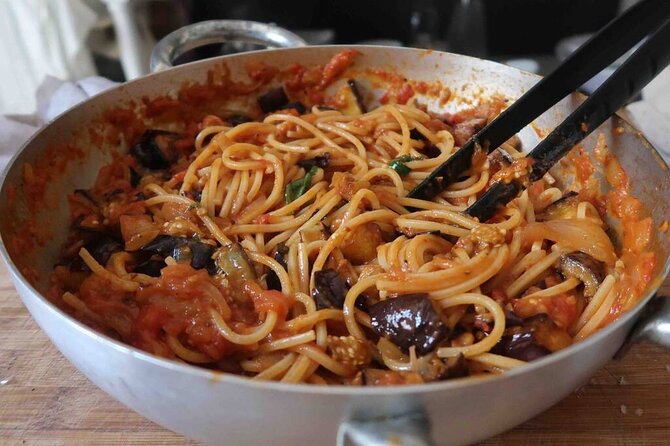
The menu is discussed with the group. Past meals have included pesto-stuffed ravioli with tomato sauce, pasta alla Norma, lasagna, stuffed swordfish, swordfish rolls, stuffed calamari, caponata, eggplant rolls, and cannoli. That range is useful because it shows the class is not tied to one fixed recipe card.
Still, you should understand the limit. The exact dishes depend on what the group chooses and what the market offers. If you have your heart set on zucchini flowers, a particular fish, or a specific pasta shape, tell Marco early. One session ended without the hoped-for zucchini flowers, a small reminder that market cooking involves some give and take.
A few other Sicily mornings to weigh against this
- Etna Morning Trip
★ 4.5 · 1,241 reviews - Syracuse: Boat Trip of Ortigia Island and Sea Caves
★ 4.7 · 937 reviews - Tour of the island of Ortigia and exploration of sea caves with baths.
★ 5.0 · 668 reviews
Shopping for a meal instead of taking a market walk
Many food tours pass through a market, point out a few stalls, and move on. This one uses the Capo as a working pantry. That difference gives the first hour a clear purpose.
You will help select what goes into lunch. The shopping can include fresh fish, vegetables, herbs, fruit, pasta ingredients, and supplies for dessert. In one menu, swordfish took a North African turn with mint, raisins, orange, and lemon. That kind of dish shows how Sicilian food is shaped by the island’s location and past connections.
I especially like the chance to see how a local cook handles abundance. Instead of asking only what is famous, you can learn how a dish comes together from available ingredients. You might also encounter small tastes from market stalls. Crema di caffè, a sweet coffee treat, has been part of this kind of market stop.
This portion is also social. The group shops together, compares food preferences, and begins to decide who will do what in the kitchen. If you are traveling alone, it offers an easy way to meet people. If you are with family, it gives children and teenagers a role before you even reach the stove.
The market is not a quiet museum. Expect voices, movement, merchandise, and narrow lanes. Keep your belongings close as you would in any crowded public market, and wear shoes suited to walking. The tour is near public transportation, but the provided meeting point is the address to follow.
Walking to Marco’s home near Piazza Politeama
After the shopping, the group goes to Marco’s home, a few minutes from Piazza Politeama. From there, the market visit changes into a home cooking class. This is the part that makes the booking more intimate than a standard restaurant lesson.
A home kitchen has practical limits. You will not be in a large teaching studio with a separate workstation for every person. The upside is a more natural setting, where the meal develops around one kitchen and one table. The apartment has been described as clean, organized, and welcoming, with a cooking area suited to group work.
The setting may give you pause when booking. Going to a host’s home is more personal than entering a commercial venue, and that is precisely why some people hesitate. The available details point to an immaculate, comfortable apartment, but anyone who prefers a formal cooking school should know this is a different style of activity.
The group size helps. With a maximum of 10 people, Marco can move between tasks and keep the meal on track. A smaller group can feel especially relaxed. Larger groups may mean you share certain jobs, so do not expect to prepare every dish entirely on your own from start to finish.
Making pasta, fish, caponata, and cannoli
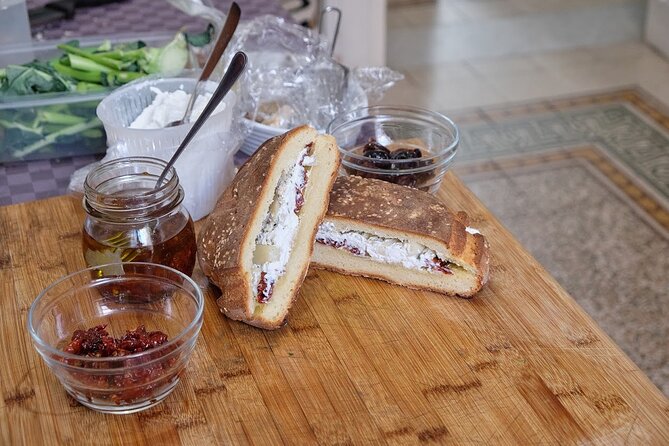
The sample structure is a Sicilian starter, a pasta first course, a fish or meat second course, and cannolo or another typical dessert. That is a full meal, not a quick demonstration followed by a small tasting.
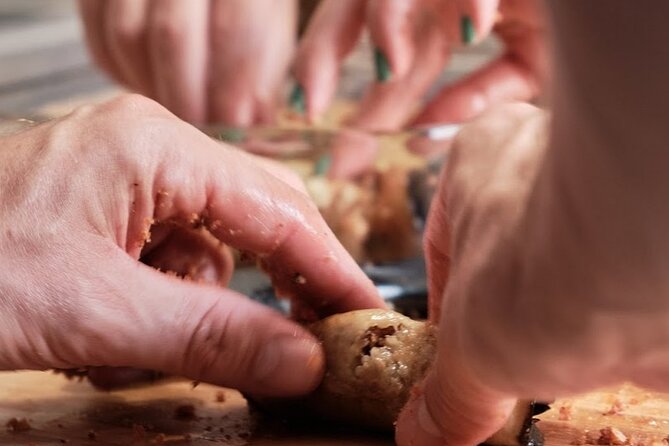
You should expect to work with your hands. Past sessions have included making ravioli from scratch, preparing sauces, handling fish, assembling stuffed dishes, and making cannoli. Knife skills are part of the instruction, and Marco pays attention to safe handling while still allowing you to work independently.
The menu can show several sides of Sicilian cooking. Pasta alla Norma brings together pasta, eggplant, tomato, and cheese in a dish tied to Sicily’s everyday food culture. Caponata gives you the sweet-sour side of the island’s cooking. Swordfish and stuffed calamari bring in the sea, while cannoli finish the meal with a classic pastry.
Marco also explains where dishes come from and how food connects with Sicily’s cultural and religious past. That context adds value because you are not simply copying steps. You learn why a recipe belongs to the island and how outside influences became part of local cooking.
The class has a playful tone. Marco is described as patient, funny, energetic, and willing to turn kitchen mistakes into something usable. He may tease you about Italian cooking rules, including the stern warning not to cut your pasta. The humor is part of the appeal, though anyone seeking a quiet, formal lesson may find the energy a bit much.
Families can take part. Children aged 7 and 10 have been included in cooking tasks, and a 14-year-old who usually avoided kitchen work was given a role. That does not guarantee every child will love the class, but the hands-on format gives younger cooks something real to do rather than asking them to watch.
Food allergies can also be discussed. Marco has adjusted a menu for unusual allergies in the past. You should still provide complete information at booking and again at the start, since a market kitchen works with many ingredients and the exact menu changes.
Same city, an entirely different afternoon:
- Pub Crawl Palermo
★ 5.0 · 595 reviews - SALT TOUR-all inclusive: salt tour: Trapani, Paceco, Nubia
★ 5.0 · 589 reviews - Mt. Etna nature and flavors half day Tour from Catania
★ 5.0 · 545 reviews - Boat tour Giardini Naxos Taormina Isola Bella Blue Grotto
★ 4.5 · 541 reviews
Sitting down to a long Sicilian lunch
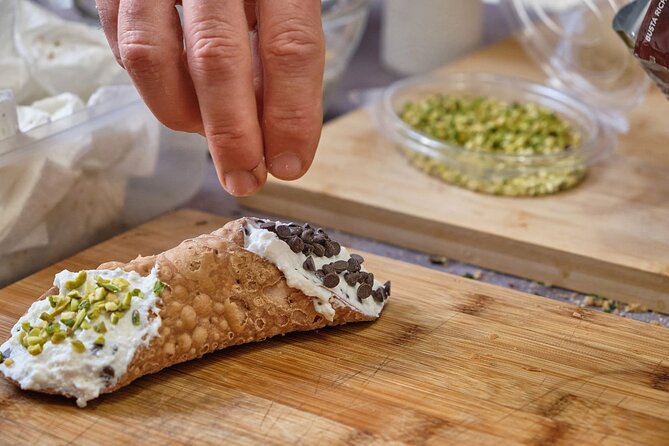
Once the cooking is done, everyone sits down to eat what the group prepared. This shared meal is a major part of the value. You are not only taking home techniques, you are spending time with the people who made the food beside you.
The menu can be substantial enough that you should not plan another large meal immediately afterward. One session lasted about three and a half hours, while the advertised duration is approximately five hours. The difference likely reflects the pace of the group, market time, menu, and conversation.
Wine has been included during some sessions, along with music, laughter, and long conversation. Since the formal details do not promise specific drinks, ask if wine matters to you. The same goes for the exact dessert. Cannoli are a common possibility, but the menu says cannolo or another typical Sicilian sweet.
This is also where the social side pays off. You may share the table with people from the United Kingdom, the United States, or elsewhere, then compare notes about Palermo over the meal. The cooking creates a natural connection, without requiring you to join a separate nightlife or dining event.
What the $119.77 price really covers
At $119.77 per person, the cost is not low for a five-hour activity. But it covers several pieces that would cost money and planning if arranged separately: a guided market visit, ingredient selection, cooking instruction, a multi-course meal, and time with a local chef in his home.
The strongest value comes if you enjoy participation. If you only want to eat Sicilian food, a restaurant will be simpler and possibly cheaper. If you want a market introduction, basic techniques, cultural context, and a meal you helped make, the price is easier to justify.
The small maximum of 10 also matters. You are paying for access to Marco’s attention, not just a seat in a large demonstration. The more people in your party who will cook, the better the value becomes. Families can make the class part of a shared memory, while solo participants gain a ready-made group for the morning.
Remember that the experience is offered in English. That makes the historical and cooking explanations easier to follow if English is your preferred language. A mobile ticket and confirmation at booking keep the practical side simple.
Timing, transport, and the cruise-stop question
The official start is 10:00 am at Via Volturno, 78. Plan to arrive with enough time to find Porta Carini and settle in. The activity ends back at the meeting point, although the cooking portion takes place at Marco’s home near Piazza Politeama.
If you are staying in central Palermo, the location is convenient for combining with other sightseeing later. If you are arriving from a cruise ship, the route described for one cruise stop took about 15 minutes on foot from the port to the market. Build in extra time for finding the meeting point, and do not schedule a tight shore excursion immediately after the class.
The five-hour estimate deserves attention. A market visit can stretch when the group is choosing a menu, and cooking several courses takes time. I would treat this as a morning that flows into lunch, not as a timed attraction you can leave precisely at 3:00 pm.
Service animals are allowed, and the meeting area is near public transportation. The group maximum is 10. Those details make the activity easier to plan, but the home setting means you should raise any mobility or dietary concern before booking if it could affect your participation.
Who will enjoy Casa Di Cilla most
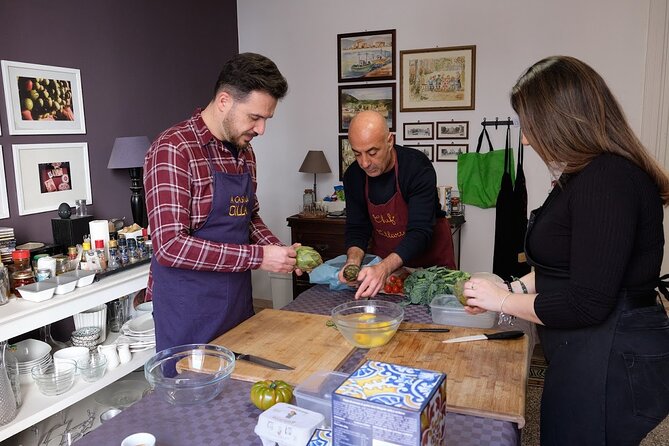
I would choose this for people who want to meet Palermo through food, not just collect photographs of its landmarks. It suits curious cooks, food lovers, couples, families, and solo visitors who like a social setting.
You do not need advanced cooking ability. The class has worked for people who were comfortable in the kitchen and for those who mainly wanted to eat well. The key is willingness to participate, handle ingredients, listen to instructions, and share tasks.
It is a particularly good pick for a first full day in Palermo if you want local orientation through the market. It can also work well during a cruise stop, provided your schedule allows the full morning and lunch.
I would skip it if you dislike group activities, do not want to enter a private home, or need a guaranteed fixed menu. I would also avoid placing it on a day packed with timed attractions. The class rewards patience.
Should you book it?
Book Casa Di Cilla if the combination of market shopping, hands-on cooking, and a shared Sicilian lunch sounds better than a formal restaurant meal. Marco Cillari is the center of the activity, and his mix of instruction, humor, and personal attention is a major reason this works.
Before you commit, tell Marco about allergies, food dislikes, children, or must-try dishes. Allow most of the day, wear comfortable shoes, and arrive ready to share the kitchen. At $119.77, it is best value when you take part in every stage, from choosing the fish or eggplant at the Capo to rolling pasta and sitting down to eat it.
Free cancellation is available up to 24 hours before the 10:00 am start. After that point, the payment is not refunded, and late changes are not accepted.
FAQ
Where does the Casa Di Cilla cooking class begin?
It begins at Via Volturno, 78, 90138 Palermo, near Porta Carini and the Capo Market.
What time does the activity start?
The stated start time is 10:00 am.
How long does the experience last?
The advertised duration is approximately five hours. The actual pace can vary with the market visit, menu, cooking, and meal.
Where does the activity end?
The activity ends back at the meeting point, although the cooking takes place at Marco Cillari’s home near Piazza Politeama.
What food is included in the menu?
The sample menu includes a typical Sicilian starter, a pasta first course, a fish or meat second course, and cannolo or another typical Sicilian dessert. The group chooses the menu together, so dishes can vary.
How many people can join?
The maximum group size is 10 people.
Is cancellation free?
Yes. You can cancel for a full refund up to 24 hours before the experience start time. Cancellations or changes made less than 24 hours in advance are not accepted for a refund.
Fresh on the Sicily list
- Egadi Sail Boat Tour to Favignana and Levanzo from Trapani★ 5.0 · 194 reviews
- Lampedusa: Yacht excursion, swimming stops and typical lunch★ 5.0 · 195 reviews
- Boat excursion Taormina Giardini Naxos★ 4.5 · 199 reviews
- Etna: Wine Tasting and Food Tour★ 4.7 · 201 reviews
- In the province of Palermo Sicilian Cooking Class near Cefalu★ 5.0 · 203 reviews
- Sicilian Cuisine Cooking Class in Palermo★ 5.0 · 208 reviews
- Electric scooter tour inside the Valley of the Temples Agrigento★ 4.5 · 212 reviews
- Snorkeling Tour Coast to Coast Taormina and Isola Bella★ 4.5 · 223 reviews
Sicily Tours, compared.

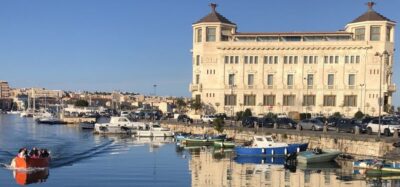
Tour of the island of Ortigia and exploration of sea caves with baths.
Read our review →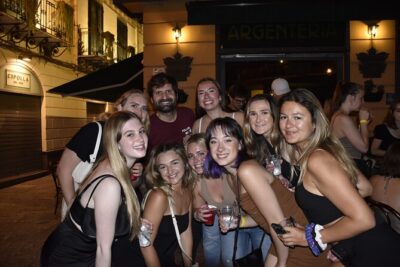
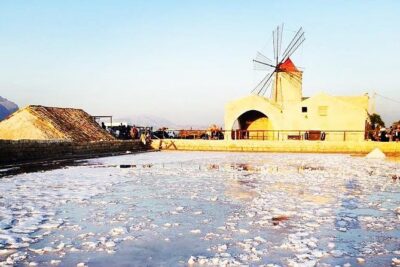
SALT TOUR-all inclusive: salt tour: Trapani, Paceco, Nubia
Read our review →
Mt. Etna nature and flavors half day Tour from Catania
Read our review →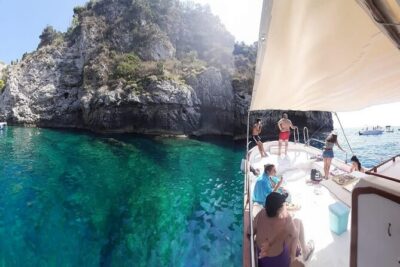
Boat tour Giardini Naxos Taormina Isola Bella Blue Grotto
Read our review →
Etna excursion 3000 meters with 4×4 cable car and Trekking
Read our review →Browse the lists this tour appears in