
Reviewed · VENICE TOURS
All-Inclusive Tour: Doge Palace, St Mark’s Basilica & Square
Venice reveals its secrets best on foot, and this four-hour tour gives you a strong first look at the city’s famous core. You’ll pass Marco Polo’s House, Santa Maria Formosa, the Campo SS. Giovanni e Paolo, the Mercerie, and St. Mark’s Square before entering Doge’s Palace and St. Mark’s Basilica.
I like the way the route links ordinary Venetian streets with the city’s grandest monuments. I also like that the ticket covers both major interiors, with skip-the-line entry, so you spend more time seeing art and less time waiting outside.
The main caution is group size. One group reached more than 40 people inside the basilica, and although the guide could be heard, not everyone could see what she was pointing toward. Backpacks are also not allowed, so pack light.
Key points to know before booking
- Marco Polo’s House puts Venice’s famous explorer into the street scene, rather than leaving him as a name in a history book.
- Santa Maria Formosa and Campo SS. Giovanni e Paolo add local character before the grand palace and basilica.
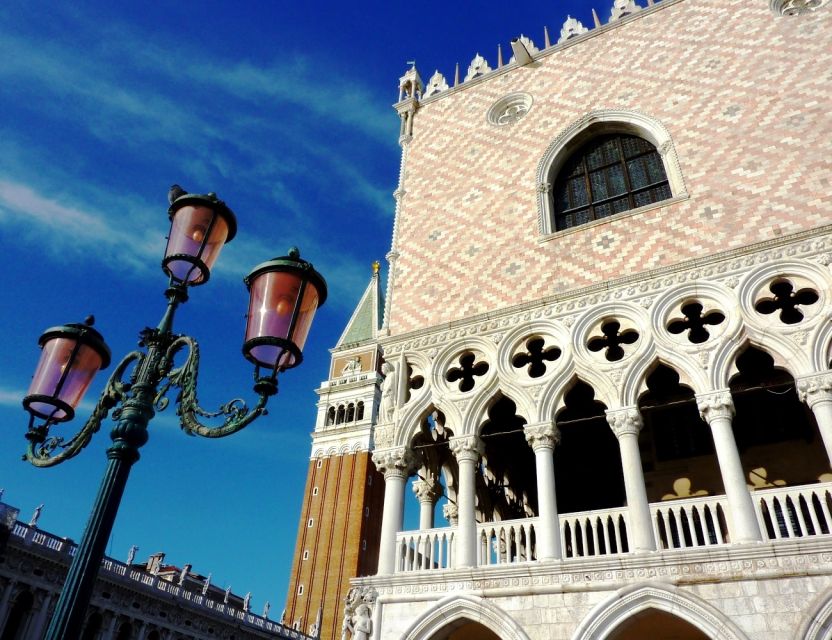
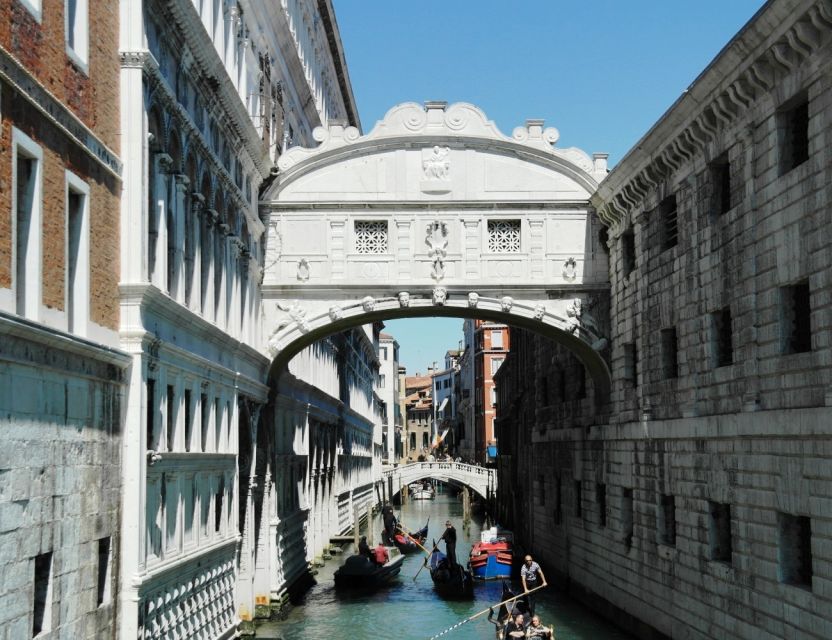
- Doge’s Palace includes the Bridge of Sighs, where Venice’s political power takes a darker turn.
- St. Mark’s Basilica is the visual high point, with gold mosaics, marble inlays, Byzantine art, and a Treasury.
- The tour lasts four hours and covers a lot of ground, so comfortable walking shoes and water matter, especially in warm weather.
- English, Spanish, French, and German tours are offered, though mixed-language groups can make explanations less smooth.
A four-hour introduction to Venice’s historic center
At $151.80 per person, this is not a bargain-priced stroll. The value comes from combining a guided city walk with entry to two of Venice’s biggest sights, Doge’s Palace and St. Mark’s Basilica.
If you are in Venice for a short stay, the arrangement makes sense. You get an organized route, a guide to explain what you are seeing, and admission fees included. You also avoid the ticket line at the two main monuments.
I would not book this simply to tick off attractions as fast as possible. Four hours is a long walking session, and the route includes several stops before the interiors. Book it if you want a structured orientation and prefer having the city’s layers explained as you go.
The tour begins at Calle larga de l’Ascension, near the post office behind the Correr Museum. A TURIVE staff member checks your voucher there. Several tours may gather in the same area, so allow time to find the correct staff member and group. The start can feel a little untidy when many departures are being organized at once.
A few other Venice mornings to weigh against this
- Venice: Doge’s Palace Reserved Entry Ticket
★ 4.6 · 42,716 reviews - Venice: Grand Canal Gondola Ride with App Commentary
★ 4.1 · 18,908 reviews - Boat Trip: Glimpse of Murano, Torcello & Burano Islands
★ 4.3 · 15,699 reviews
Marco Polo’s House and Venice beyond the postcard
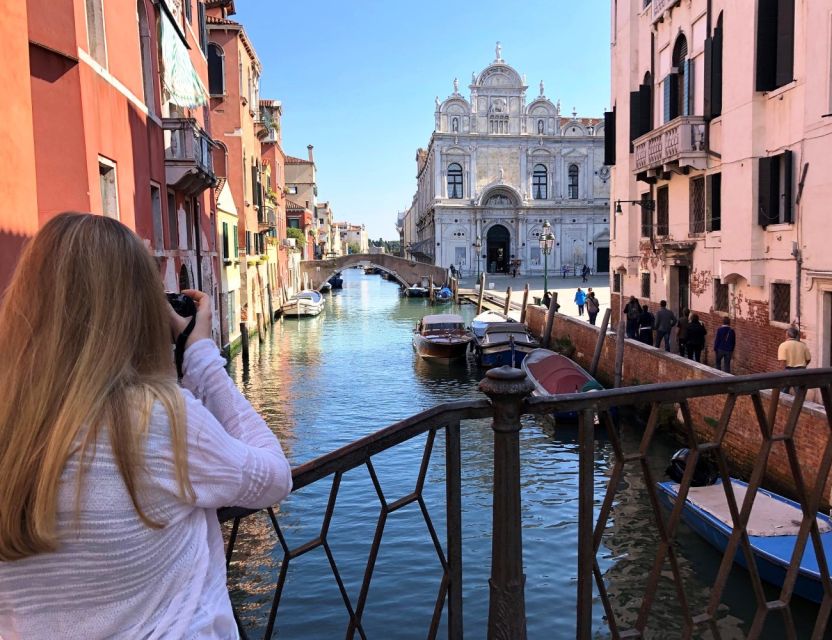
The walk begins around St. Mark’s Square, but it does not stay in the square. You head into narrow streets, along canals, and past old houses that show the less polished side of Venice.
That is one of the best features of the route. St. Mark’s Square gives you the grand public face of the city, while the walking section shows how Venice works at street level. The canals are close, the lanes can be tight, and the historic buildings often show their age. You are not just moving from one monument entrance to another.
A stop at Marco Polo’s House connects the city to one of its most famous sons. The site is presented as the place where Marco Polo was born and raised. Even if you already know the broad outline of his travels, seeing the location within Venice gives the story a physical setting.
I find this kind of stop useful because it turns a distant historical figure into part of the city’s fabric. You are looking at a building and a neighborhood, not simply hearing a name while standing in front of a grand church.
The walk then continues to Chiesa Santa Maria Formosa. The church is linked to a local story about the Holy Virgin appearing in the form of a voluptuous woman. That unusual detail gives the stop a bit of Venetian personality. It is the sort of story that helps you remember a place long after you have forgotten a list of dates.
Campo SS. Giovanni e Paolo and the city’s civic side
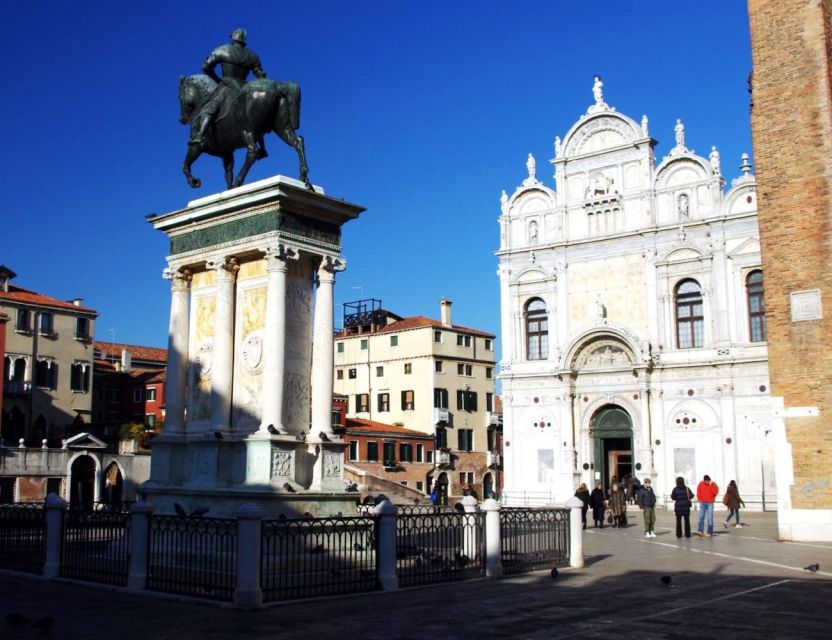
The tour passes through Campo SS. Giovanni e Paolo, described as the second-largest square in Venice. This gives you a change of scale after the narrow lanes.
Venetian squares, or campi, were practical social spaces as well as pretty places to photograph. On this route, the square helps show how the city’s public life extends beyond St. Mark’s. Your guide can point out details that are easy to miss when you are walking alone, especially after several turns through the surrounding streets.
The route returns toward San Marco through the Mercerie. This historic shopping area links St. Mark’s Square with the commercial heart of the city. It is a useful transition: the walk moves from neighborhood sights back toward Venice’s political and religious center.
Expect to cover a fair amount of ground. One guide described the pace as hard work in the heat, though worth the effort. I would schedule this tour earlier in the day if your starting time allows, bring water, and avoid carrying anything bulky.
The tour is suitable for a young child in terms of the walking itself. One family completed it with a three-and-a-half-year-old child and found the route manageable. Still, four hours is a long period for any small child, particularly in hot weather, so your own family’s pace matters.
Entering Doge’s Palace, the seat of Venetian power
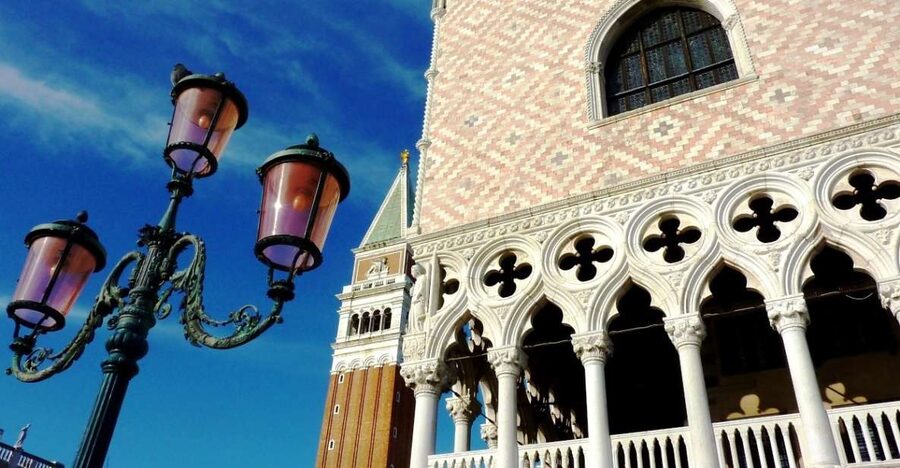
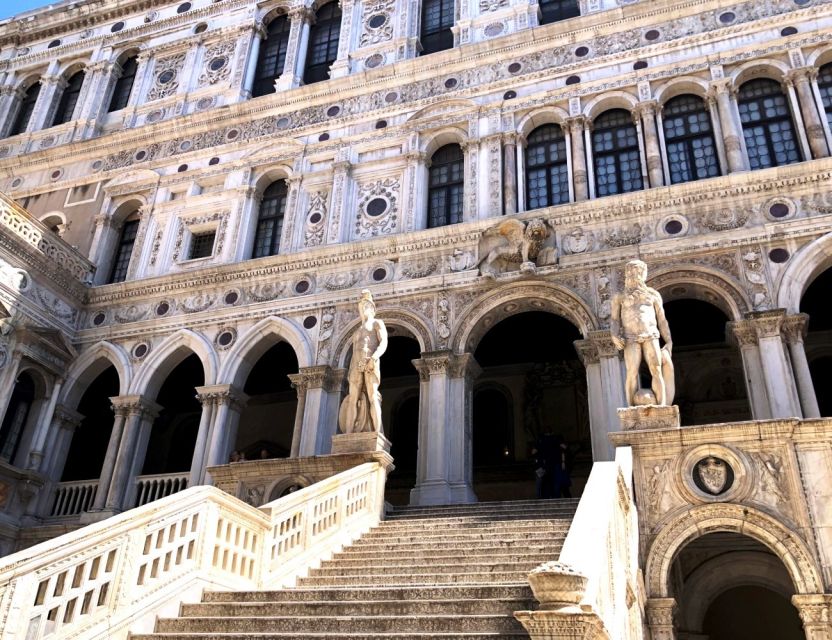
The indoor portion begins at Palazzo Ducale, or Doge’s Palace. For centuries, this was the center of Venetian political power. The palace is not simply a beautiful residence. It was the place where the doge and the ruling institutions of the republic directed government, law, and punishment.
Inside, you move through grand rooms lined with paintings and other works of art. The scale is part of the message. Large halls, decorated ceilings, and formal spaces were designed to make Venice’s government appear stable, wealthy, and commanding.
A guide adds value here because the rooms can blur together when you visit alone. A good explanation helps you understand who used each space and why the decoration mattered. The tour’s guides are available in English, Spanish, French, and German. One guide named Alyssia was described as friendly, professional, and very well prepared, while other guides were praised for clear historical explanations.
The experience can vary with the group. Individual headsets are used on some departures, which helps you follow the commentary without standing shoulder to shoulder with the guide. That is important in crowded rooms, where voices can echo and the group may spread out.
There have also been problems with microphone technique. If the guide turns away while indicating a detail, some sentences can be lost. This is a small issue, but it matters in a palace where the art and architecture are often high above your head or across a large room.
Same city, an entirely different afternoon:
- Venice: Grand Canal by Gondola with Live Commentary
★ 4.1 · 13,681 reviews - Venice: La Fenice Opera House Entry Ticket with Audio Guide
★ 4.6 · 11,742 reviews - Doge’s Palace & St. Mark’s Basilica with Terrace Access Tour
★ 4.7 · 10,697 reviews - Venice: Burano, Torcello & Murano Boat Tour w/Glassblowing
★ 4.4 · 10,245 reviews
The Bridge of Sighs and the cost of political power
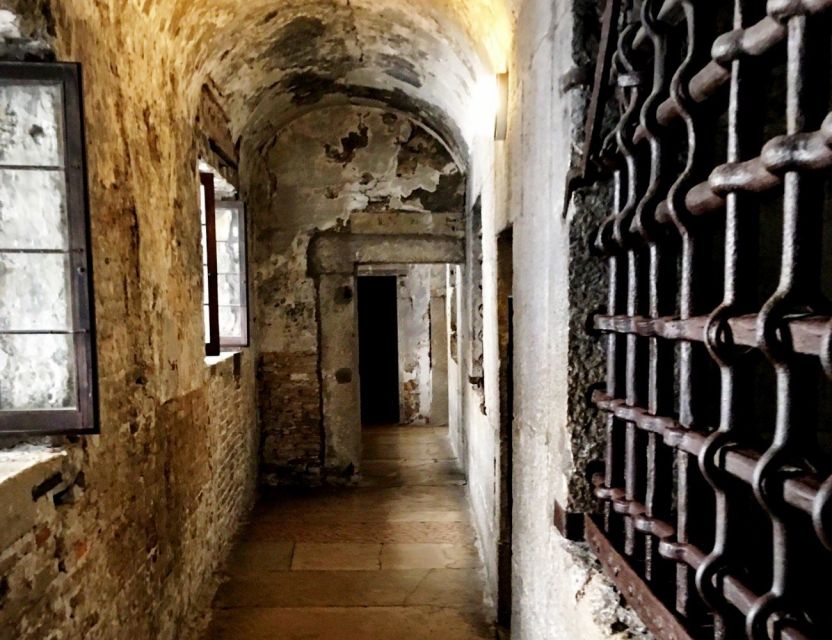
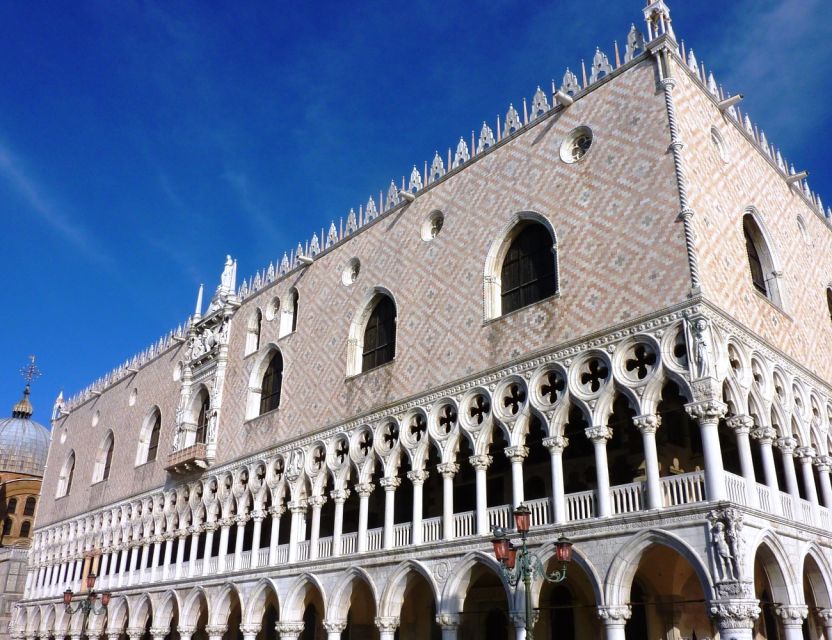
The Bridge of Sighs is one of Venice’s most photographed sights, but the tour gives it a more serious setting. The bridge connected the palace to the prisons, allowing prisoners to cross from judgment to confinement.
Its name suggests a final look at Venice through the windows before imprisonment. The point is not simply the view. The bridge shows what happened when the republic’s impressive political system turned its power against individuals.
This is where the palace’s decoration gains a harder edge. You first see rooms built to express authority, then reach a passage connected to punishment. I like that the tour makes this connection instead of treating the bridge as a quick photo stop.
The Bridge of Sighs is also a good example of why a guide can be useful in Venice. The structure itself is easy to admire, but the meaning depends on the story attached to it. Without that context, you may see an attractive stone bridge and miss the consequence of the power exercised inside the palace.
St. Mark’s Basilica and its gold interior
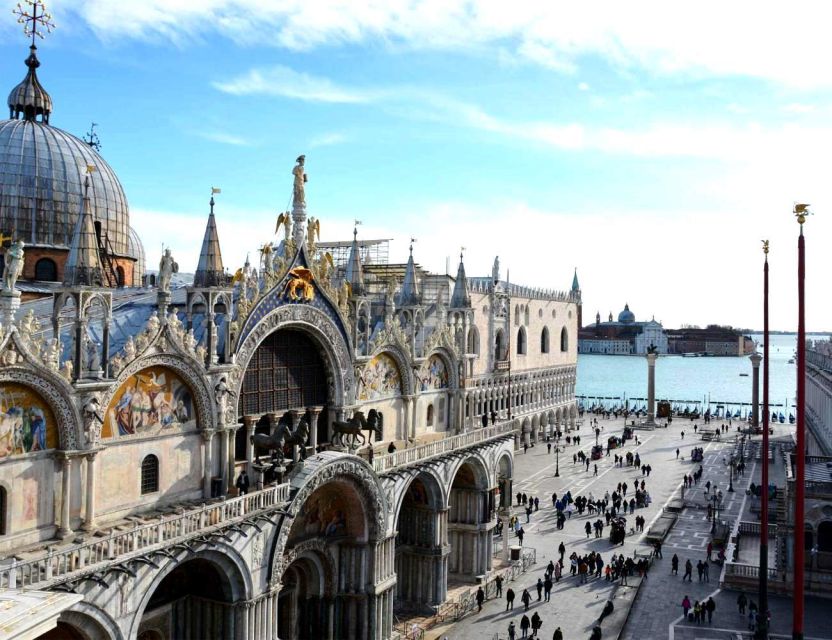
The final major stop is St. Mark’s Basilica, one of Venice’s most striking churches. The interior is famous for its gold mosaics, marble inlays, Byzantine art, and religious works in the Treasury.
The building’s decoration is meant to overwhelm you. Gold catches the light, marble patterns spread across the surfaces, and the art reflects Venice’s long connection with the eastern Mediterranean and Byzantine world. You are looking at a church, but also at a statement about faith, wealth, and the city’s place in international trade.
The basilica can be difficult to appreciate in a large group. One group had more than 40 people inside. The guide could be heard, but some people could not see her or the details she was describing. This is the biggest practical weakness of the tour.
Headsets help, but they cannot solve every problem. If you care about seeing exactly what the guide indicates, try to stay near the front of your group. If the tour combines two languages, the commentary may take longer and feel less direct for everyone.
The basilica visit includes the main guided entry, but the balcony requires an additional fee if you want to visit it. That extra charge disappointed one participant. Keep it in mind when comparing this tour with options that may include more of the church.
The Treasury is included in the planned visit and adds another layer to the basilica experience. It contains religious art and objects rather than the wide open drama of the main nave. The Treasury is valuable for you if you enjoy close views of smaller works and church history, not just grand interiors.
Guides, languages, and how the group affects the day
The guide is central to this experience. The strongest part of the tour is not simply getting through the doors. It is having someone explain why the places matter and point out details you might otherwise walk past.
Alyssia received especially strong praise for being friendly, professional, and clear. Other guides were described as effective at explaining history and drawing attention to features that even repeat visitors had missed. That suggests the tour can offer something to people who have already visited Venice, provided the group remains manageable.
You can choose English, Spanish, French, or German. Check the language at booking, since combining two languages in one group can slow the presentation and make it harder for the guide to keep everyone engaged.
The opening organization is another point to consider. Many tours leave from the same area near the post office, and there may be some waiting while groups are sorted. Once the walk begins, the organization generally settles down, but do not expect a completely private or perfectly quiet start.
The tour ends back at the original meeting point. That is useful if you want to continue exploring St. Mark’s Square, return to your hotel, or make another reservation nearby.
What to carry, and what to leave behind
The backpack rule deserves special attention. Backpacks are not allowed, even when you are traveling with a young child. A small carry bag is acceptable according to the practical advice provided for the tour.
Pack light. I would take only essentials, such as a small wallet, phone, water, and any medication you need. The rule may cause a problem if you arrive with a daypack after sightseeing elsewhere, so plan your luggage around the visit.
Wear shoes suited to four hours of walking on Venetian streets. The tour moves through narrow lanes, squares, and historic areas before entering the palace and basilica. Heat can make the route tiring, so water and a sensible pace are important.
The tour includes skip-the-line entry, but that does not mean every minute will be free of waiting. You may wait at the meeting point while groups are organized, and large crowds inside the monuments can slow movement.
Is $151.80 a fair price?
At $151.80 per person, the cost is easiest to justify when you want both major monument entries and a guide-led introduction in one booking.
You are paying for:
- Entry to Doge’s Palace
- Entry to St. Mark’s Basilica
- A guided walking route through central Venice
- Commentary in English, Spanish, French, or German
- Skip-the-line access at the two headline sights
The price is less attractive if you prefer to explore at your own pace, already know Venice well, or want a small private group. A large group can limit how much you see and hear, especially inside St. Mark’s Basilica.
For a short stay, I think the package can be good value because it covers a lot in four hours. You get orientation, history, art, and major interiors without having to arrange each ticket separately.
The free cancellation policy, available up to 24 hours before the activity, also helps if your Venice plans may change. You can reserve now and pay later, which keeps some flexibility in a busy Italian itinerary.
Who should book this Venice walking tour?
I would recommend it most strongly to first-time visitors with limited time. The route introduces several neighborhoods and major sights without asking you to plan the sequence yourself.
It also suits anyone who wants history and explanation rather than a simple entrance ticket. The stories connected to Santa Maria Formosa, Marco Polo’s House, Doge’s Palace, and the Bridge of Sighs give the walk more shape.
Families can manage it, including those with a young child, but you should consider the four-hour duration and the heat. Bring a small carry bag instead of a backpack.
I would hesitate if you dislike group tours, need a quiet visit inside the basilica, or want balcony access included. I would also think twice if you have mobility concerns, since the tour is a walking route through Venice and the supplied information does not describe specific accessibility arrangements.
Should you book it?
Book this tour if you want a solid first-day introduction to Venice and value having Doge’s Palace and St. Mark’s Basilica handled in the same four-hour visit. The walking route adds Marco Polo’s House, Santa Maria Formosa, Campo SS. Giovanni e Paolo, and the Mercerie, so you see more than the usual square-to-basilica route.
Skip it if you want a small group, a slow pace, or guaranteed personal views of every detail inside the basilica. The occasional confusion at the start, mixed-language departures, large groups, backpack restriction, and extra fee for the balcony are real limitations.
For many visitors, the deciding factor is time. If Venice is a short stop and you want the essential sights with useful context, $151.80 can be reasonable. Go prepared for a busy morning or afternoon, pack lightly, and stay close to the guide once you enter the palace and basilica.
FAQ
How long does the tour last?
The tour lasts four hours. Starting times vary, so check availability when booking.
Where does the tour begin?
It begins at Calle larga de l’Ascension, near the post office behind the Correr Museum. A TURIVE staff member checks your voucher there.
Where does the tour end?
The activity ends back at the original meeting point.
Which sights are included?
The route includes Marco Polo’s House, St. Mark’s Square, Santa Maria Formosa, Campo SS. Giovanni e Paolo, the Mercerie, Doge’s Palace, the Bridge of Sighs, and St. Mark’s Basilica.
Are entrance fees included?
Yes. Entry to Doge’s Palace and St. Mark’s Basilica is included.
Is the balcony at St. Mark’s Basilica included?
No. Visiting the basilica’s balcony requires an additional fee.
Which languages are available?
Live guided tours are available in English, Spanish, French, and German.
Can I bring a backpack?
No. Backpacks are not allowed. A small carry bag is acceptable, including when you are visiting with a child.
Fresh on the Venice list
- Venice Doge’s Palace & St. Mark’s Semi-Private Tour, Max 6 People★ 5.0 · 192 reviews
- Venice: Crimes, Legends, and Mysteries Sunset Tour★ 4.9 · 195 reviews
- Venice Small Group Walking Tour of Most-Famous Sites &Attractions★ 4.5 · 195 reviews
- Murano and Burano Islands Semi-Independent Tour★ 4.0 · 195 reviews
- From Venice: Dolomites Day Trip★ 4.8 · 197 reviews
- 4 hours Private Boat Tour to Murano, Burano with local real guide★ 4.5 · 203 reviews
- St Mark’s Basilica & Doge’s Palace with Secret Passages Access★ 4.5 · 204 reviews
- Murano and Burano half-day trip from Punta Sabbioni Jesolo★ 3.9 · 204 reviews
Venice Tours, compared.
Grand Canal Gondola Ride with App Commentary
Read our review →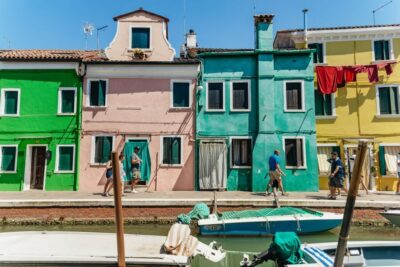
Boat Trip: Glimpse of Murano, Torcello & Burano Islands
Read our review →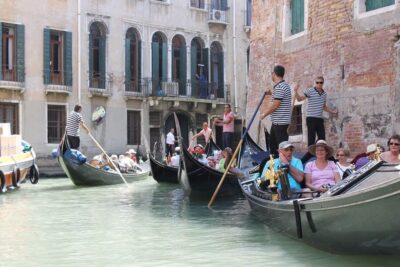
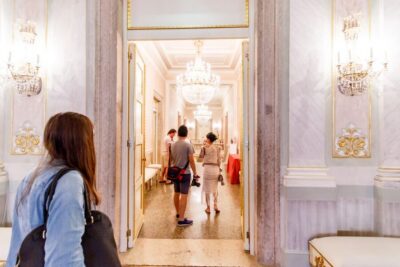
La Fenice Opera House Entry Ticket with Audio Guide
Read our review →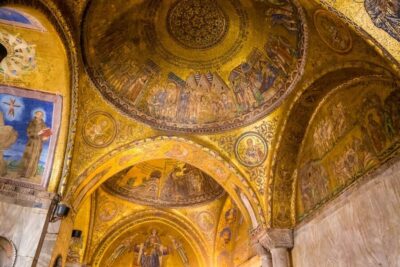
Doge’s Palace & St. Mark’s Basilica with Terrace Access Tour
Read our review →
Burano, Torcello & Murano Boat Tour w/Glassblowing
Read our review →
Murano and Burano Boat Tour with Glass Factory Visit
Read our review →Browse the lists this tour appears in