
Reviewed · VENICE TOURS
Venice Deluxe Tour
Venice makes more sense when someone explains how its art, politics, trade, and odd little customs fit together. This walking tour puts you beside a native Venetian, Antonio Barbini, for a focused route through St. Mark’s Square, Doge’s Palace, St. Mark’s Basilica, the Grand Canal, and Palazzo Contarini del Bovolo.
I like the small maximum group of 14, which makes it easier to hear and ask questions. I also like the skip-the-line access to the palace and basilica, since waiting in the sun or rain can eat up a large part of a short Venice visit.
The main caution is that this is not a light stroll with occasional facts. You should expect a serious art and history lesson, several hours on foot, and a schedule that can change if high water, religious ceremonies, strikes, or official events close a site.
Key points to know before booking
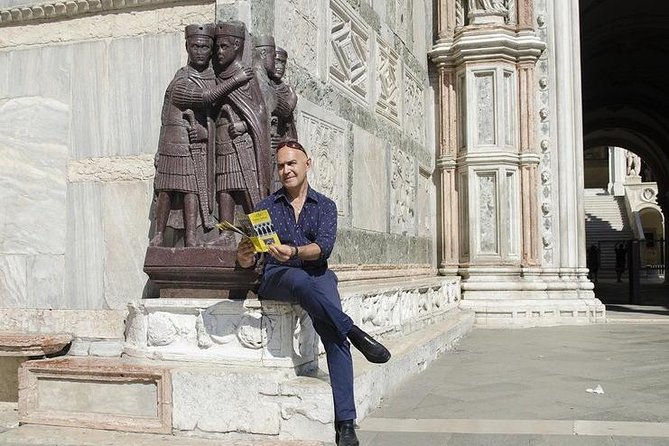
- A native Venetian leads the experience: Antonio Barbini is known for his strong command of Venetian history, art, architecture, and local life.
- The route covers Venice’s essential center: You visit St. Mark’s Square, Doge’s Palace, St. Mark’s Basilica, the Grand Canal area, and Palazzo Contarini del Bovolo.
- Skip-the-line entry saves real time: Admission to Doge’s Palace and St. Mark’s Basilica is included, subject to basilica ticket availability.
- Expect a flexible walking tour: Antonio may adjust the pace and add local touches such as a drink, gelato, glassmaking, or lace when time and circumstances allow.
- Dress carefully for the basilica: Knees and shoulders must be covered, and large bags and backpacks are not allowed inside.
- The price reflects access and guiding: At $266.05 per person, this suits visitors who place a high value on expert interpretation and limited waiting.
Why this Venice tour feels different
Many Venice walks give you a quick view of the major buildings and a string of dates. The Venice Deluxe Tour aims for something more substantial: it uses the monuments as a doorway into the Venetian Republic, its leaders, its artists, its merchants, and its daily life.
That approach depends heavily on the guide. Antonio Barbini is a native Venetian who has spent decades explaining the city and has guided in several languages, including Japanese. His English is described as excellent, and his style is more like a lively public lecture than a rehearsed script.
You should book this tour if you enjoy asking questions and looking closely at paintings, mosaics, buildings, and public spaces. If you prefer to move quickly, take a few photographs, and hear only the basics, the experience may feel too detailed.
The group size is capped at 14 people. That is small enough for a personal exchange without requiring the cost of a fully private tour. When the group happens to be very small, Antonio can tailor the pace and conversation more closely to your interests.
The advertised duration is about three to four hours, starting at 11:15 a.m. The tour ends back at the meeting point on Riva degli Schiavoni. In practice, the length can vary. Antonio has sometimes continued longer when the group was especially interested, but you should not count on an extended private outing when planning the rest of your day.
A few other Venice mornings to weigh against this
- Venice: Doge’s Palace Reserved Entry Ticket
★ 4.6 · 42,716 reviews - Venice: Grand Canal Gondola Ride with App Commentary
★ 4.1 · 18,908 reviews - Boat Trip: Glimpse of Murano, Torcello & Burano Islands
★ 4.3 · 15,699 reviews
Starting at Riva degli Schiavoni
The meeting point is Riva degli Schiavoni, 4195, near the San Marco waterfront. This is a practical place to begin because it puts you close to the heart of Venice’s political and religious center.
Arrive with comfortable shoes and enough time to find the exact meeting spot. Venice’s lanes and water crossings can make even a short distance take longer than expected, especially if you are carrying luggage or navigating from a hotel outside the central district.
The tour is conducted in English and uses a mobile ticket. No food or drinks are included in the formal price, although Antonio has sometimes paused for a drink, gelato, or a small bite during longer outings. Treat those stops as possible personal touches rather than guaranteed inclusions.
St. Mark’s Square and the machinery of Venetian power
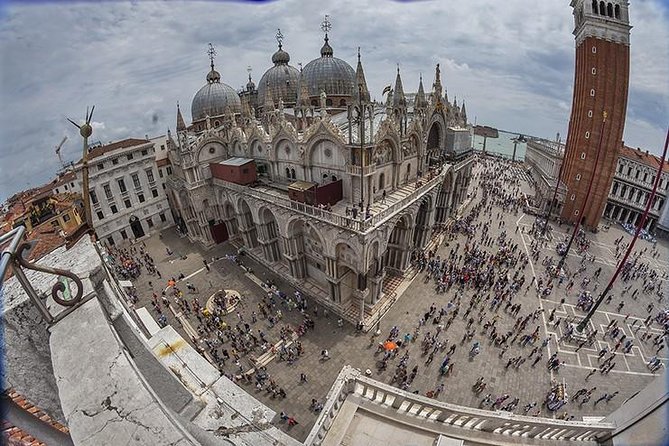
The first major section of the walk spends about 90 minutes around Piazza San Marco. This is not simply a large open square for photographs. It was the public face of the Venetian Republic, surrounded by buildings that expressed religious authority, political control, ceremony, and wealth.
Your guide introduces the major sights here, including Doge’s Palace and St. Mark’s Basilica. The value of having an expert at this point is that the square can otherwise feel visually overwhelming. You see domes, arcades, columns, sculptures, and elaborate façades, but it takes explanation to understand how each part served Venice’s public image.
This is also where Antonio’s broader teaching style matters. He does not limit the conversation to famous names and construction dates. The experience can include stories about artists, powerful Venetian families, punishments, customs, and the way the city functioned as a republic for centuries.
Give yourself time to look up. St. Mark’s Square rewards attention to small details, but the crowds and constant movement can make it hard to focus. A guide can point out details before you are swept toward the next photograph.
The square is also the least quiet part of the route. Expect activity, queues, and plenty of people moving between the waterfront, cafés, palace, and church. The tour’s interpretation helps turn that busy setting into a meaningful starting point.
Doge’s Palace and the rooms where Venice ruled
Doge’s Palace receives about an hour, with admission included and skip-the-line access. This is one of the strongest reasons to consider the tour. The palace is not just a grand residence. It was the center of political power and the official home of the Doge, the elected head of the Venetian Republic.
Inside, enormous halls are lined with paintings and decorative work. Antonio’s strength here is explaining how the art worked as political communication. The rooms were designed to impress ambassadors, officials, and citizens, while presenting Venice as wealthy, orderly, powerful, and favored by history.
You will see the halls where the government met and learn about the institutions that directed the republic. The palace is far easier to appreciate when you understand the difference between the Doge as a powerful-looking figure and the more restricted reality of his office.
The tour also includes the notorious prison associated with Casanova. That adds a human and slightly theatrical note to the formal political story. The palace becomes not only a place of grand ceremonies, but also a setting for confinement, judgment, and personal drama.
Skip-the-line entry does not mean the building will feel empty. Doge’s Palace is a major attraction, and you should still expect people inside. The benefit is that your limited time in Venice is spent seeing the rooms rather than standing outside them.
A guide-led palace visit is especially useful for people who do not usually study art. Paintings in these rooms can appear decorative at first glance. With the right explanation, gestures, symbols, historical references, and placement begin to reveal the political message.
Same city, an entirely different afternoon:
- Venice: Grand Canal by Gondola with Live Commentary
★ 4.1 · 13,681 reviews - Venice: La Fenice Opera House Entry Ticket with Audio Guide
★ 4.6 · 11,742 reviews - Doge’s Palace & St. Mark’s Basilica with Terrace Access Tour
★ 4.7 · 10,697 reviews - Venice: Burano, Torcello & Murano Boat Tour w/Glassblowing
★ 4.4 · 10,245 reviews
St. Mark’s Basilica and its golden mosaics
The basilica portion lasts about 30 minutes, with entry included when interior access is available. St. Mark’s began as the Doge’s private chapel and became one of Venice’s most important religious and civic symbols.
The interior is famous for its golden mosaics and collected treasures. The domes and the exterior loggia are equally memorable, especially the famous golden horses. The short visit works best when you know what to watch for before entering, since the interior can be visually dense.
This is another place where careful preparation matters. You must cover your knees and shoulders, and that rule applies to both men and women. Large bags and backpacks are not allowed inside St. Mark’s Basilica, so pack lightly and dress in a way that will not create trouble at the entrance.
The basilica has several access limits that are outside the guide’s control. Interior tickets are limited and offered on a first-come-first-served basis. There is also a 72-hour cutoff for access bookings, so late reservations may receive an alternative rather than entry.
High tides, religious ceremonies, and special closures can also prevent an interior visit. In that case, the tour provides an extended explanation outside the basilica. That is not the same as seeing the mosaics up close, but it avoids pretending that Venice’s operating conditions are predictable.
If the basilica is closed during your visit, Antonio can explain how to return independently when it reopens. That kind of practical help is valuable, especially during Easter and other periods when church ceremonies affect visiting hours.
The Grand Canal and Venice’s oldest bridge
The route also brings you to the oldest bridge over the Grand Canal, still lined with shops much as it was in the Middle Ages. The supplied description does not name the bridge, but the setting and shop-lined design point to the Rialto Bridge.
From the bridge, you get one of the classic views of Venice. Palaces line the water in both directions, and the Grand Canal shows why Venice was built around waterborne movement rather than roads.
The bridge itself can be crowded, and the central view is not a quiet place for reflection. Still, it is worth pausing here. Antonio’s explanations can connect the canal to Venice’s commercial life, trade networks, and the city’s unusual relationship with boats and bridges.
This section adds welcome variety after the enclosed palace and basilica. You move from formal interiors to a working urban setting where shops, water traffic, and grand façades share the same narrow space.
Palazzo Contarini del Bovolo and the quieter lanes
One of the tour’s more unusual sights is the spiral staircase at Palazzo Contarini del Bovolo. It sits in a side alley between Rialto and St. Mark’s Square, away from the broad ceremonial spaces.
The staircase is easy to miss if you simply follow the main route. Its unusual form gives the tour a change of mood and shows how Venice rewards people who pay attention to side lanes and courtyards.
Do not expect this stop to rival Doge’s Palace in scale. Its appeal is precisely that it is smaller and less obvious. After the grand political rooms and golden mosaics, the staircase offers a reminder that Venetian architecture is also full of private experiments and tucked-away details.
The route between the main sights is part of the experience. Venice is best understood on foot, where a short walk can shift from a famous square to a nearly anonymous passage. The guide’s local perspective gives those transitions more meaning than a simple transfer between attractions.
Local additions that may shape the afternoon
The formal program centers on monuments, but Antonio has sometimes added small cultural stops or pauses when the day allows. These have included gelato, prosecco or a spritz, a glassblowing demonstration, and a look at traditional lace work.
These extras are not listed as included benefits, so you should not book this tour solely for them. Still, they help explain why the experience may run longer than the advertised three to four hours when the group is engaged and the schedule is flexible.
A glassmaking demonstration can offer a quick connection to Venetian craft traditions without requiring a separate trip to Murano. A lace-related stop can give you a glimpse of another local art associated with the Venetian lagoon. Again, availability depends on the day and on the guide’s route.
Antonio may also recommend places to eat or other sights for the rest of your stay. Those suggestions are most useful when you ask for the kind of experience you want, such as a quiet meal, a local specialty, or another art-focused visit.
Price, pace, and practical value
The cost is $266.05 per person. That is a substantial price for a three to four-hour walk, so this is not the right pick if you are comparing tours mainly by length or by the number of stops.
The value comes from three things. First, you get a professional guide who can explain the city beyond memorized facts. Second, admission to Doge’s Palace and St. Mark’s Basilica is included. Third, skip-the-line access can protect a large part of your day during busy periods.
The price makes the most sense for a first visit when you want the major sights explained properly and have limited time in Venice. It is also a good fit for people who enjoy art, architecture, political history, and conversation.
The value is less clear if you already know Venice well, plan to visit the palace and basilica independently, or prefer to spend your money on a private guide for a longer custom route. You should also remember that food and drinks are not included.
The physical demand is moderate but real. The tour uses Venice’s bridges, lanes, and uneven walking surfaces, and it is not recommended for people with mobility issues. Children must be accompanied by an adult, and everyone should wear supportive shoes.
Venice can also impose a day access fee of €5 for many people staying outside the city on certain dates. That charge is separate from the tour, and you should check the official city access information before arriving.
Closures, substitutions, and schedule changes
Doge’s Palace can close because of strikes, state visits, exceptional closures, or official events. If that happens, the Correr Museum may be offered instead, with its Imperial Rooms and Venetian collection included under the palace ticket arrangement.
St. Mark’s Basilica has more specific restrictions. Interior access may be unavailable because of limited tickets, high water, religious services, or the 72-hour booking cutoff. You may receive an alternative or an outside-focused visit instead.
These conditions are not a reason to dismiss the tour, but they are a reason to keep your plans flexible. Venice’s most important buildings are working religious and civic spaces, not just attractions operating on a fixed timetable.
There is also a minimum group requirement. If that number is not reached, the tour can be canceled after confirmation, with an alternative or full refund offered.
Free cancellation is available up to 24 hours before the local start time. Changes made within 24 hours are not accepted, and cancellations inside that window are not refunded.
Who should book the Venice Deluxe Tour
I would choose this for a first or second visit to Venice, especially if you want the city’s famous buildings to make intellectual sense rather than simply appear in a photo album.
It suits adults, families with older children, and small groups who enjoy a guide with personality. The tour is particularly useful if you like asking why a building looks the way it does, what a painting is saying, or how Venice managed its political and commercial life.
It may not suit you if you want a casual walk, dislike extended explanations, have mobility limits, or need a guaranteed basilica interior visit on a strict schedule. The limited ticket supply and possible closures make that impossible to promise.
Should you book it?
Book the Venice Deluxe Tour if you want a serious but personable introduction to Venice, led by Antonio Barbini and built around the city’s most important political, religious, and architectural sights. The skip-the-line access is a major practical benefit, and the small group keeps the experience more personal than a large city walk.
At $266.05, it is expensive for a half-day outing. I would pay it when expert interpretation matters to you and you want to make the most of a short stay. If your priority is simply seeing the buildings from outside, save the money and explore on your own.
FAQ
How long does the Venice Deluxe Tour last?
The advertised duration is approximately three to four hours. The tour may last longer when the group shows strong interest and the guide has time to continue.
What time and where does the tour begin?
It starts at 11:15 a.m. at Riva degli Schiavoni, 4195, 30122 Venezia VE, Italy. The activity ends back at the meeting point.
Is admission to Doge’s Palace and St. Mark’s Basilica included?
Yes. Admission fees and skip-the-line entry for Doge’s Palace and St. Mark’s Basilica are included, subject to ticket availability and site access.
What should I wear to enter St. Mark’s Basilica?
You must cover your knees and shoulders. Shorts and sleeveless tops are not allowed for men or women, and entry may be refused if you do not follow the dress code.
Can I bring a large backpack into St. Mark’s Basilica?
No. Large bags and rucksacks are not allowed inside the basilica.
What happens if the basilica or Doge’s Palace is closed?
If high tides or religious ceremonies prevent access to the basilica, an extended outside visit is provided. If Doge’s Palace closes, the Correr Museum may be offered as an alternative. If interior basilica tickets are unavailable, you will be offered an alternative or a full refund.
Fresh on the Venice list
- Murano: Glass Blowing Demonstration and Artistic Glass Gift★ 4.6 · 507 reviews
- From Venice: Dolomites, Lake Misurina, and Cortina Day Trip★ 4.6 · 508 reviews
- Venice Islands: Murano Glass & Burano Colors Guided Visit★ 4.5 · 510 reviews
- The Majestic Teatro La Fenice: Guided Tour in Venice★ 4.3 · 513 reviews
- Real Venetian Kayak – Tour of Venice Canals with a Local Guide★ 4.5 · 518 reviews
- Venetian Carnival Mask Making Class in Venice, Italy★ 4.5 · 525 reviews
- Half Day Murano and Burano Island Tour by Private Boat★ 4.5 · 529 reviews
- Venice Trilogy: Murano, Burano & Torcello by Lagoon Boat★ 4.5 · 532 reviews
Venice Tours, compared.
Grand Canal Gondola Ride with App Commentary
Read our review →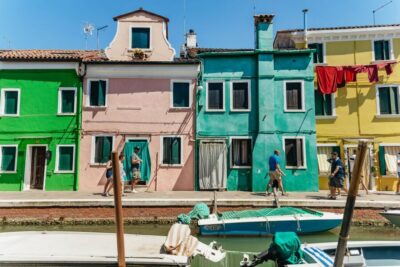
Boat Trip: Glimpse of Murano, Torcello & Burano Islands
Read our review →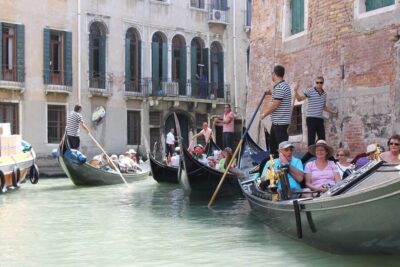
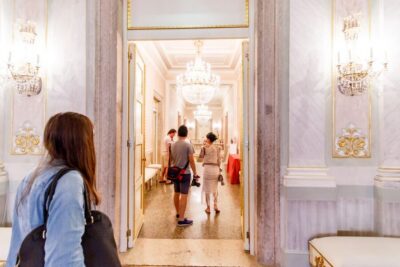
La Fenice Opera House Entry Ticket with Audio Guide
Read our review →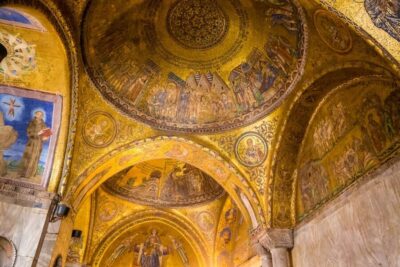
Doge’s Palace & St. Mark’s Basilica with Terrace Access Tour
Read our review →
Burano, Torcello & Murano Boat Tour w/Glassblowing
Read our review →
Murano and Burano Boat Tour with Glass Factory Visit
Read our review →Browse the lists this tour appears in