
Reviewed · VENICE TOURS
Teatro La Fenice Tour in Venice
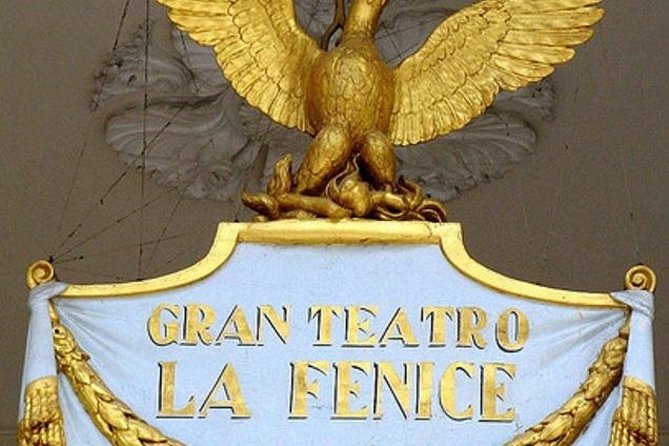
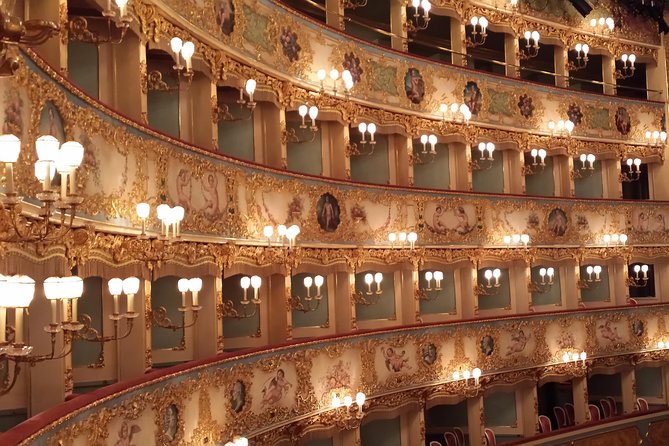
Teatro La Fenice is one of Venice’s great surprises: behind an unassuming entrance is a glowing opera house of gilded decoration, velvet seating, ornate boxes, and a royal box once used by Napoleon. The theater’s name means phoenix, and its story fits the name. It burned twice and rose again each time.
I like the short format, which fits neatly into a day of sightseeing, and I like that a live guide can explain details an audio guide may pass over, including the theater’s political past and famous performances such as Verdi’s La Traviata. The main caution is organization. Several bookings have suffered from unclear meeting instructions, cancellations, or a guide who spoke too quickly, so confirm the starting point and arrive early.
Key points to know before you book
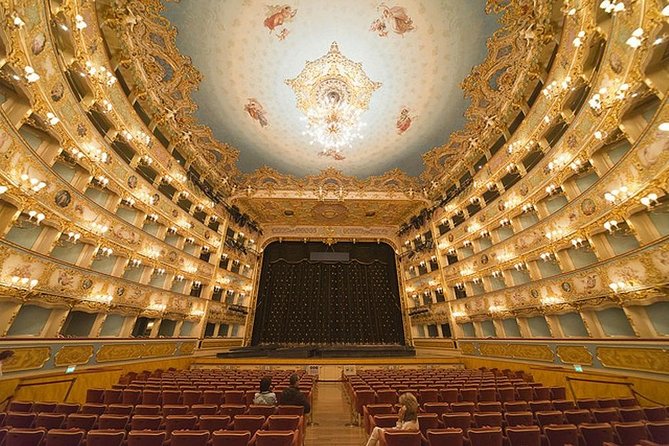
- Two fires shaped the theater: La Fenice was rebuilt after major fires and restored to its former appearance with a multimillion-dollar renovation.
- The royal box is a highlight: You can expect access to this ornate space, though backstage and orchestra-pit access are not included.
- The visit lasts about 45 to 60 minutes: That makes it easy to pair with St. Mark’s Square, the Rialto, or an evening performance.
- Guide quality matters: Nicole, Vanda, Wanda, and Nikko received especially warm praise for clear, friendly explanations.
- Meeting details need care: Information places the start at Campo San Luca and also lists Teatro La Fenice, so read your voucher closely.
- The price is moderate: At about $30.04 per person, the tour makes sense if you value context and questions, but a direct theater visit with an audio guide may suit independent sightseers better.
Why La Fenice matters in Venice
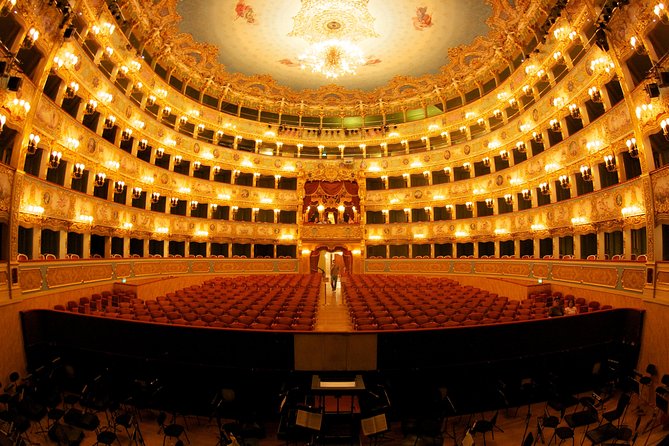
Venice has no shortage of decorated churches and palaces, but La Fenice gives you a different look at the city. This was a place for music, politics, fashion, and public life. Opera brought wealthy patrons, visiting rulers, celebrated singers, and composers into the same splendid room.
The theater opened in the late 18th century and became a major cultural meeting place. Its program today reaches well beyond opera, with symphonic concerts, ballet, chamber music, contemporary works, and major cycles devoted to composers including Beethoven, Schumann, Brahms, and Mahler.
That broader role helps explain why the building is worth seeing even if opera is not your thing. You are not simply looking at a pretty auditorium. You are entering a building tied to Venice’s changing fortunes, from French and Austrian rule to Italian independence.
The name La Fenice, meaning the phoenix, was chosen before the theater’s most dramatic disasters. Yet it became remarkably apt after the building burned to the ground twice. The rebuilding preserved its visual character while bringing back a working theater capable of hosting more than a hundred opera performances in a year.
A few other Venice mornings to weigh against this
- Venice: Doge’s Palace Reserved Entry Ticket
★ 4.6 · 42,716 reviews - Venice: Grand Canal Gondola Ride with App Commentary
★ 4.1 · 18,908 reviews - Boat Trip: Glimpse of Murano, Torcello & Burano Islands
★ 4.3 · 15,699 reviews
Meeting in Campo San Luca at 12:30 pm
The stated meeting time is 12:30 pm. The tour information identifies Bucintoro Viaggi in Campo San Luca as the meeting point, a central square that is easy to place on a Venice map. Elsewhere, the start is listed as Teatro La Fenice itself, at Campo San Fantin. That inconsistency is the biggest practical weakness of the booking.
Read your confirmation carefully, and allow extra time to reach the correct place. Venice’s narrow lanes can turn a short map distance into a frustrating search, especially if you are coming from the railway station, Piazzale Roma, or the Rialto area.
Some participants have found it difficult to exchange a voucher for theater tickets, so do not wait until the last minute to sort out the instructions. Arrive early and ask the Bucintoro Viaggi office or theater staff if you are uncertain.
The walk from Campo San Luca to the theater is short. That is useful because your guide can gather the group before you enter, rather than leaving you to locate an unfamiliar theater entrance on your own. The group can include up to 20 people, small enough for a personal visit but large enough that you should stay close and make sure you can hear.
First look at the theater’s exterior and entrance
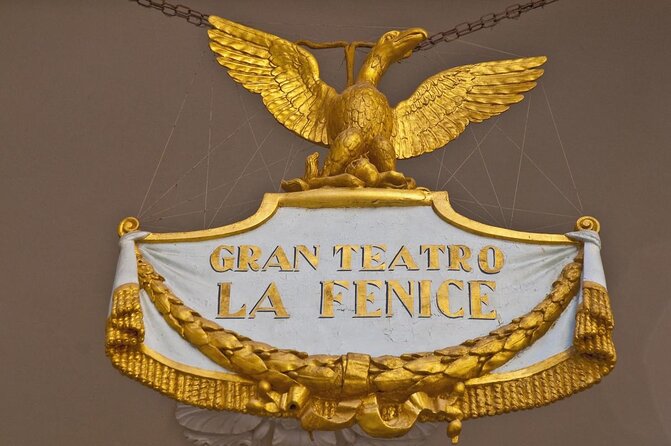
The visit begins with a short introduction before or near the theater entrance. This opening is more useful than it may sound. La Fenice’s exterior does not fully prepare you for the interior, and the guide helps you understand why the building carries such importance in Venetian cultural life.
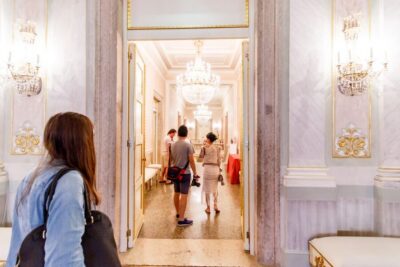
Once inside, the contrast is immediate. The decoration is theatrical in the best sense: gilded surfaces, ornate details, private boxes, and deep-colored seating create a room designed to impress before a single note is played.
Take a moment to look up and around rather than rushing toward the auditorium. The pleasure here comes from small details as much as from the overall glow. A guide can point out how the theater was arranged for different ranks of society and how the royal box fit into the social order of an evening at the opera.
The tour is not a theatrical performance, so the building may feel quiet and still. That quiet gives you time to study the craftsmanship, but it also means the quality of the commentary becomes important. Clear delivery makes a large difference in a room with a group gathered around one speaker.
The auditorium, boxes, and royal box
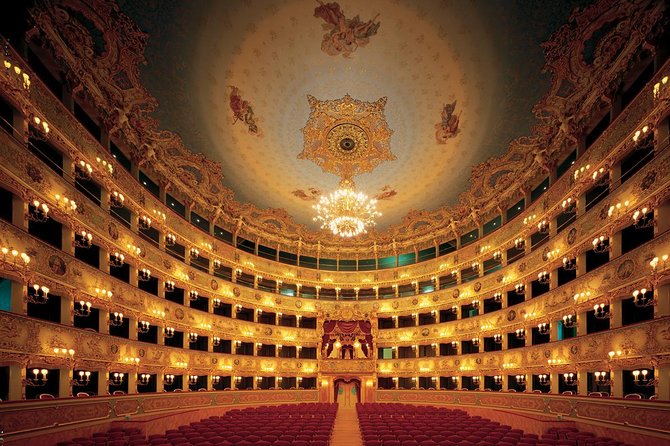
The auditorium is the heart of the visit. You sit or gather inside while the guide explains the theater’s layout, major performances, and changing role in Venetian life. This is where stories about celebrated musicians, singers, patrons, and composers connect with the room in front of you.
The royal box is one of the strongest parts of the tour. It is ornate, intimate, and tied to the political power that once shaped Venice. Napoleon used the box, a detail that adds a sharp human connection to the decoration and ceremony.
Access to the main seating area can vary. One account describes a visit that could not enter the regular seating section but did reach the royal box. You may therefore see the auditorium from a different position than expected, depending on theater operations, rehearsals, or access rules that day.
Do not book this expecting a backstage visit. The experience does not include backstage areas, the orchestra pit, or special access beyond the rooms normally included in the guided visit. The focus is the public interior, architecture, royal box, and story of the theater.
The visit often lasts about 45 minutes, though the advertised duration is approximately one hour. At the end, you may have a little time to take photographs or look around before leaving. If you want a long architectural study, this will feel brief. If you want a focused stop between other Venetian sights, the length works well.
Same city, an entirely different afternoon:
- Venice: Grand Canal by Gondola with Live Commentary
★ 4.1 · 13,681 reviews - Venice: La Fenice Opera House Entry Ticket with Audio Guide
★ 4.6 · 11,742 reviews - Doge’s Palace & St. Mark’s Basilica with Terrace Access Tour
★ 4.7 · 10,697 reviews - Venice: Burano, Torcello & Murano Boat Tour w/Glassblowing
★ 4.4 · 10,245 reviews
The fires and the phoenix story
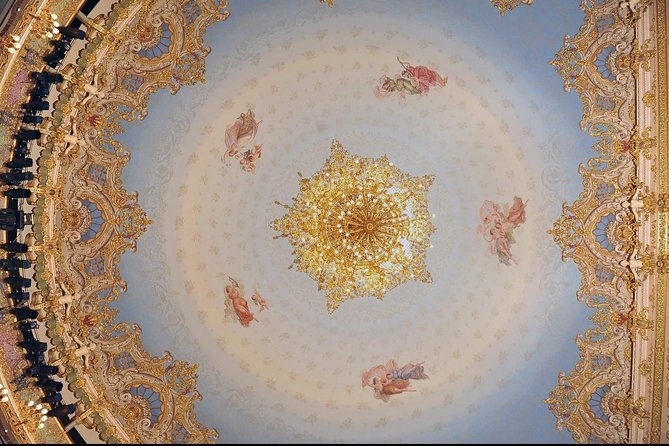
The most memorable subject is La Fenice’s destruction and rebirth. The theater burned completely on two occasions, and each rebuilding required careful work to restore its appearance and function.
The guide explains how the theater returned to use after these disasters and how a multimillion-dollar restoration sought to bring back its former splendor. That story gives the decoration more weight. The gilded rooms are not untouched relics from one uninterrupted age. They are part of a repeated effort to preserve what Venice considers important.
The fires also make the tour more than a recitation of dates. You can look at the elegant interior while knowing that the building’s survival depended on restoration, memory, and money. The phoenix symbol becomes a useful way to understand the theater rather than just a translation of its name.
The best guides connect the fires with the theater’s wider life. Nicole has been praised for explaining the subject at an easy pace, while Vanda and Wanda have been singled out for clear, warm presentations. Nikko has also been noted for answering questions and explaining the building in a friendly way.
Famous opera and the La Traviata connection
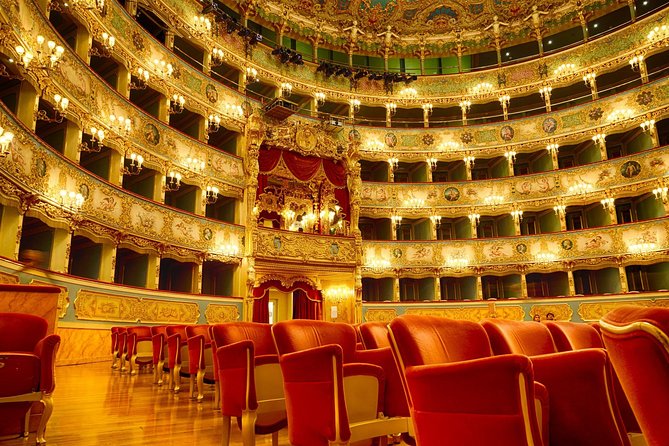
La Fenice is closely tied to major opera history. Verdi’s La Traviata is one of the celebrated works associated with the theater, and hearing about such performances helps you picture La Fenice as a living stage rather than a decorated museum.
The building has also welcomed prominent conductors, singers, composers, and patrons. Maria Callas is another name connected with the theater, adding to its appeal for anyone interested in 20th-century opera.
You do not need a strong opera background to enjoy this part. The guide can explain why certain performances mattered and how the theater functioned as a public space. If you already follow opera, you may want to use the tour as a short architectural and historical introduction before attending a performance later.
Seeing an evening opera is a separate experience. The tour does not include a performance, and it does not promise access to rehearsals. Still, the daytime visit can help you notice the royal box, auditorium design, and social rituals when you return for music.
What the guides add, and where the tour can falter
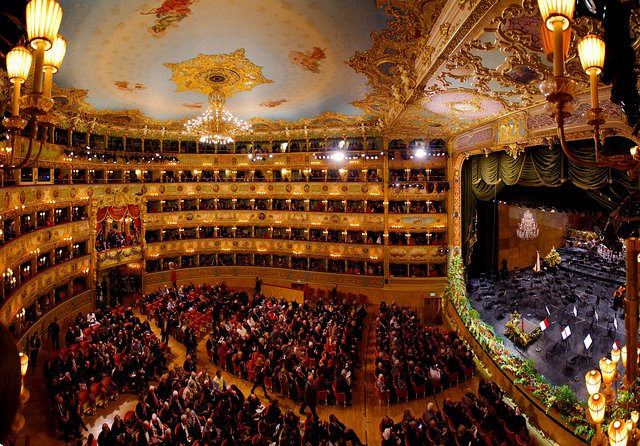
A good guide is the difference between admiring a pretty room and understanding the building. The strongest accounts describe guides who answered questions clearly, spoke at a comfortable pace, and explained both the two fires and the theater’s political setting.
Nicole, Vanda, Wanda, and Nikko are names associated with particularly strong visits. Their good qualities are practical: clear English, a friendly manner, factual answers, and enough patience for questions.
The weaker experiences have a common problem: delivery. Some guides have spoken softly, turned their backs to the group, hurried through the material, or appeared eager to finish. One guide had to repeat information in both English and Italian, which made the 45-minute visit longer and left little time for questions.
If you are in the group, stand close to the guide and ask politely if you cannot hear. A quiet voice in a large decorated room can lose half its meaning. If your guide seems rushed, focus on the main points and save time for photographs at the end.
The option of an audio guide is worth considering. Some people prefer exploring at their own pace and feel that the recorded information covers much of what a short guided tour provides. The live tour makes more sense if you want to ask questions or prefer a person to shape the visit.
Is $30.04 good value for an hour?
At about $30.04 per person, this is not a bargain basement attraction, but it is a reasonable price for a central Venice stop that includes admission and a local guide. The value depends on how much you want interpretation.
For your money, you receive a guided visit of roughly 45 to 60 minutes, access to the theater’s principal interior spaces, and an explanation of the building’s fires, restoration, famous performances, and royal box. You do not receive a performance, hotel pickup, or backstage access.
I see the price as fair for first-time visitors who want the story made clear. La Fenice can look beautiful without explanation, but the political and musical connections give the rooms more meaning. If you are happy reading signs and using an audio guide, going directly to the theater may be less expensive or more flexible.
The group limit of 20 is helpful. This is not a private tour, but it is more manageable than a large sightseeing crowd. The tour is also easy to fit into a day because it starts at midday and ends back at the meeting point.
Who should book this La Fenice visit?
I would recommend it to anyone who enjoys historic interiors, architecture, opera, or Venice’s cultural story. It is also a good rainy-day activity, since the main attraction is indoors and the visit is short.
You will get the most from it if you want a clear account of the two fires and the restoration, or if you like learning why a room looks the way it does. The royal box and Napoleon connection give the visit a memorable detail even for people who do not listen to opera.
I would be more cautious if you want backstage access, a long tour, or a fully independent visit. An audio guide may suit you better if you prefer to stop for photographs, move slowly, and control the pace.
Also think about your schedule. The tour is offered in English, but mixed-language groups have caused problems with pace. If clear English commentary and time for questions are essential, confirm that the scheduled group will meet that expectation.
Practical details that can save your afternoon
The activity is near public transportation, although the final walk through Venice is on foot. Hotel pickup and drop-off are not included, so plan your own route to Campo San Luca or the theater entrance named on your confirmation.
Most people can take part, and the group can have a maximum of 20 participants. The tour ends back at the meeting point. Gratitude for the guide is optional.
Book early if your dates are fixed, since this experience is often reserved well ahead of the visit. At the same time, check the theater’s operating schedule before committing. A small number of serious problems have involved cancellations, closures, or a guide who did not appear, with no timely communication.
Free cancellation is available up to 24 hours before the start time for a full refund. Changes or cancellations inside that 24-hour window are not accepted, so keep that deadline in mind.
If you are making a day trip from outside Venice, check the city access-fee rules for your date. The fee applies on certain days, with exemptions for some visitors. The official information is available at cda.ve.it.
Should you book Teatro La Fenice Tour?
Book it if you want a compact, guided look at one of Venice’s most beautiful interiors and care about the story behind the decoration. The two fires, the restoration, the royal box, and links to Verdi and Callas give the visit real substance.
I would book with two safeguards: verify the exact meeting point and confirm that the theater is open for the scheduled visit. If you do that, $30.04 is a sensible price for a short cultural stop.
Skip this tour if you want a performance, backstage access, or complete control over your pace. In that case, a direct theater visit with an audio guide may be the better choice. For most first-time visitors, though, a good live guide can turn La Fenice from a handsome room into a memorable piece of Venice.
FAQ
How long does the Teatro La Fenice tour last?
The visit lasts approximately one hour, with the theater portion listed at about 45 minutes.
What time does the tour start?
The scheduled start time is 12:30 pm.
Where does the tour meet?
The information identifies Bucintoro Viaggi in Campo San Luca as the meeting point, while another location reference lists Teatro La Fenice in Campo San Fantin. Check your confirmation carefully because the directions are not fully consistent.
Is admission to Teatro La Fenice included?
Yes. Admission to the theater is included with the local guide.
Is the tour offered in English?
Yes. English is listed as an available tour language.
Can I see the backstage area or orchestra pit?
No. Backstage and orchestra-pit access are not included. The visit focuses on the theater interior, auditorium, royal box, and other accessible rooms.
How many people can join the tour?
The activity has a maximum group size of 20 people.
Can I cancel for a refund?
You can cancel at least 24 hours before the scheduled start for a full refund. Cancellations or changes made less than 24 hours before the start time are not accepted.
Fresh on the Venice list
- Venice Doge’s Palace and St Mark’s Basilica Guided Tour★ 4.5 · 189 reviews
- Exclusive Prosecco Wine Tour from Venice – Small Group★ 5.0 · 189 reviews
- From Venice: Murano and Burano Private Tour with Transfer★ 4.2 · 190 reviews
- Venice Doge’s Palace & St. Mark’s Semi-Private Tour, Max 6 People★ 5.0 · 192 reviews
- Venice: Crimes, Legends, and Mysteries Sunset Tour★ 4.9 · 195 reviews
- Venice Small Group Walking Tour of Most-Famous Sites &Attractions★ 4.5 · 195 reviews
- Murano and Burano Islands Semi-Independent Tour★ 4.0 · 195 reviews
- From Venice: Dolomites Day Trip★ 4.8 · 197 reviews
Venice Tours, compared.
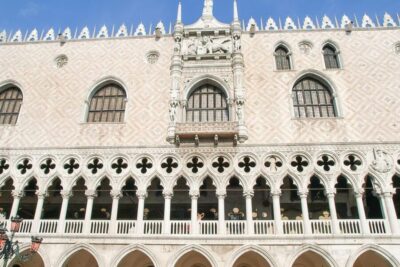
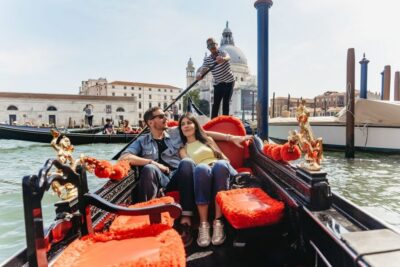
Grand Canal Gondola Ride with App Commentary
Read our review →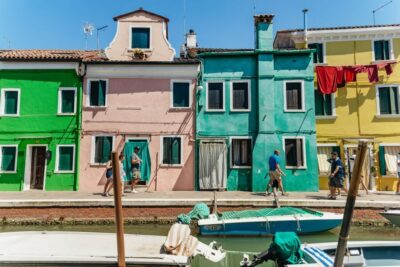
Boat Trip: Glimpse of Murano, Torcello & Burano Islands
Read our review →
La Fenice Opera House Entry Ticket with Audio Guide
Read our review →
Doge’s Palace & St. Mark’s Basilica with Terrace Access Tour
Read our review →
Burano, Torcello & Murano Boat Tour w/Glassblowing
Read our review →
Murano and Burano Boat Tour with Glass Factory Visit
Read our review →Browse the lists this tour appears in