
Reviewed · POMPEII & VESUVIUS TOURS
Skip-the-Line Pompeii Guided Tour from Sorrento
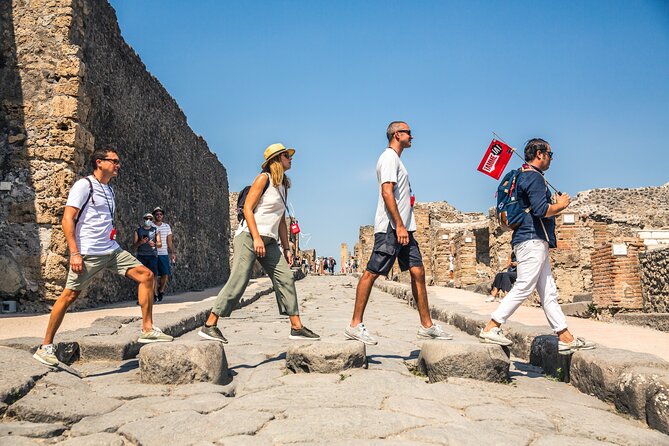
Pompeii is not a tidy collection of ruins. It is a whole Roman city, with streets, snack bars, baths, theaters, homes, and election graffiti spread across rough ancient paving. I like that this tour gets you past the entrance line and gives you a guide to help make sense of the scale. The air-conditioned coach from central Sorrento also takes the strain out of reaching the site.
I especially like the choice of morning or afternoon departure and the early start, which can get you inside before the hottest part of the day. Guides such as Lulu, Luisa, and Roberta have earned praise for mixing clear history with humor and practical help. The tradeoff is simple: Pompeii is hard walking, and the guided route gives you little or no time to wander off on your own.
Key points to know before booking
- Plan for uneven ground: Ancient stones, steps, and inclines make this a poor fit if you struggle to walk for long periods.
- The early tour is the smart choice: The site becomes warmer and more crowded later in the day.
- Expect a focused visit: You see major highlights, but Pompeii is too large to cover in roughly two hours.
- The guide adds real value: A good guide explains how the Forum, baths, shops, homes, and theaters worked together.
- Transport is easy: Meet at Piazza Torquato Tasso in Sorrento and return to the same central meeting point.
- Budget around $90.70 per person: That covers transport, admission, skip-the-line access, and the Pompeii guide, but not food or drinks.
Why a guide matters in a city buried by Vesuvius
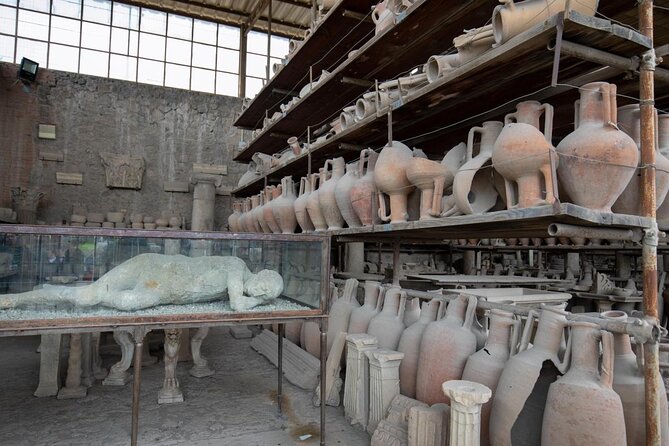
Pompeii was buried by the eruption of Mount Vesuvius in 79 A.D., but the first shock comes from seeing how ordinary the city feels. You walk along streets where homes opened onto shops, where residents stopped for food and drink, and where public buildings formed the center of civic life.
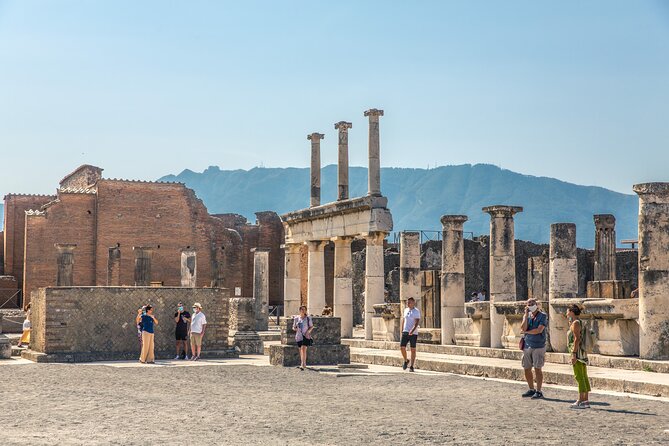
Without context, a broken column can look like just another broken column. With a guide, the Forum becomes the city’s administrative, legal, commercial, and religious center. A bathhouse is no longer a pile of brick rooms. It becomes a carefully planned place with dressing rooms, hot rooms, warm rooms, and cold plunges.
That is the main reason I would choose this organized tour over arriving alone and trying to follow a map. Pompeii’s streets can be confusing, and it is easy to spend your limited time wandering without understanding what you are seeing. Several guides associated with this tour, including Lulu, Luisa, Lucio, Patricia, and Roberta, are praised for explaining the site clearly and keeping the group moving.
The group can contain up to 29 people. That is not an intimate private tour, but it is still manageable if everyone stays together. Headphones are supplied when the group has more than 10 people, which matters in a noisy archaeological park. One caution: one guide was criticized for walking while speaking, leaving slower walkers behind. Stay near the front if hearing every explanation is important to you.
A few other Sorrento mornings to weigh against this
- Sorrento: Skip-the-Line Pompeii Express Tour by Train
★ 4.8 · 2,038 reviews - Priority Access Pompeii & Mt. Vesuvius Full day from Sorrento
★ 4.5 · 1,376 reviews - Pompeii Express Guided Tour by Train from Sorrento
★ 4.5 · 770 reviews
Leaving Sorrento by comfortable coach
The meeting point is IAMME IA! Gray Line Amalfi Coast at Piazza Torquato Tasso, 16, right in central Sorrento. That location is useful if you are staying in town and do not want to find a distant bus stop or arrange a taxi before breakfast.
The round-trip ride is in an air-conditioned vehicle. That sounds like a basic detail, but it matters in Campania, especially after several days of walking through Sorrento, Capri, or the Amalfi Coast. The ride also lets you leave the driving to someone else while you look ahead to the visit.
The coach has been praised for being comfortable, smooth, and punctual. Drivers such as Giuseppe, Rosario, and Vincenzo have also received warm comments for handling busy roads. You get a central pickup, transport to Pompeii, and a return to the same meeting point at the end.
The total outing lasts about five hours, with about two hours inside the archaeological park. That makes this a practical half-day trip. You still have time for lunch in Sorrento, a beach visit, or another afternoon activity.
Entering Pompeii before the crowds build
Skip-the-line admission is one of the clearest benefits here. You do not have to spend part of your short visit waiting at the entrance, and an early departure can put you among the first groups entering.
I would choose the morning option if you can manage it. The site is exposed, the stones hold heat, and the busiest paths become less pleasant later in the day. An early visit also gives you a better chance of hearing the guide and taking photos before large crowds fill the main routes.
You should still expect other people. Skip-the-line does not mean private access, and Pompeii is one of Italy’s major sights. The tour helps you enter efficiently, but it cannot remove the crowds inside the park.
Before and after the guided visit, there is time to use the facilities and get a snack. Food and drinks are not included, so bring money and plan around that break rather than expecting a meal as part of the tour.
The Forum and Temple of Jupiter
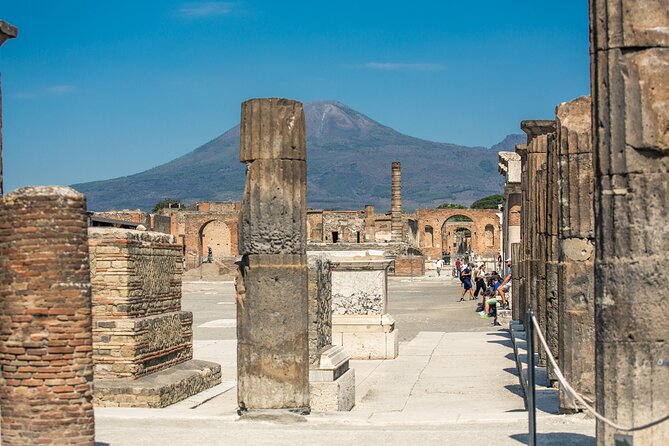
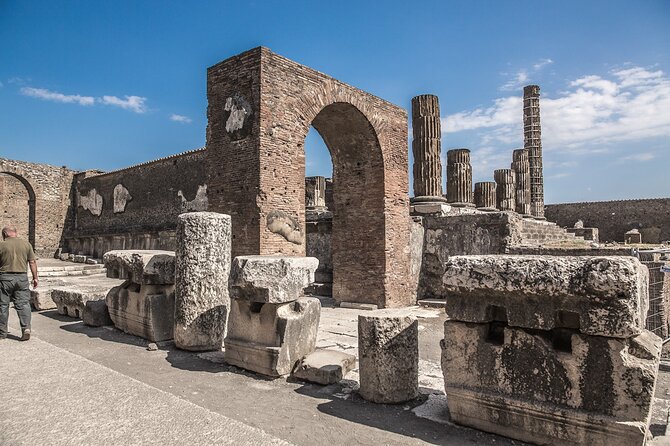
The Civil Forum is the natural starting point because it explains how Pompeii functioned. This broad public space was surrounded by buildings used for government, justice, trade, markets, and worship. It was not just a plaza for pretty views. It was the city’s working center.
The Temple of Jupiter dominates the north side. Mount Vesuvius rises behind it, creating one of the site’s most memorable views and a grim reminder of what happened. When Pompeii became a Roman colony in 80 B.C., the temple was rebuilt as a Capitolium dedicated to Jupiter, Juno, and Minerva.
This is where a guide’s explanation earns its keep. The ruins do not always reveal their purpose at a glance, but the position of the temple, the open forum, and the surrounding public buildings show how religion, politics, business, and justice were closely linked.
You will want photos here, but do not rush past the guide to take them. The Forum is one of the places where a few minutes of explanation can turn a dramatic view into a clearer picture of Roman city life.
More skip-the-line tickets in Sorrento:
- From Sorrento: Pompeii Half-Day Skip-the-Line Tour
★ 4.6 · 541 reviews - Florence: Skip-The-Line Uffizi Gallery Timed Entry Ticket
★ 4.5 · 27,832 reviews - Vatican Museums & Sistine Chapel Skip-the-Line Entry Ticket
★ 4.4 · 13,838 reviews - Skip-the-Line Group Tour of the Vatican, Sistine Chapel & St. Peter’s Basilica
★ 4.5 · 12,779 reviews
Macellum, Basilica, and the business of daily life
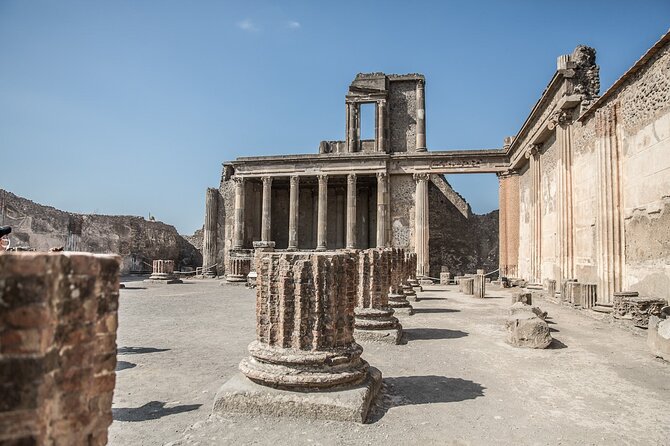
The Macellum was a market building with a covered quadriporticus and rooms arranged around a central area. A masonry counter may have been used for selling fish, while other rooms served religious and civic purposes.
The building also had links to the imperial cult. Copies of statues and other fragments point to ceremonies honoring the emperor. This is a useful reminder that Pompeii’s commercial spaces were not separate from religion and politics.
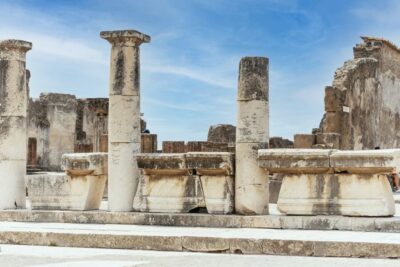
Nearby, the Basilica covered about 1,500 square meters and was used for business and the administration of justice. The name can confuse modern visitors because today a basilica usually suggests a church. Here, the building was a Roman civic and legal center.
These stops are easy to underestimate if you focus only on houses and mosaics. I like them because they show the city as a functioning community. Pompeii was not built only for wealthy homeowners. It needed markets, courts, administrators, merchants, and public gathering places.
Via dell’Abbondanza, the city’s busy main street
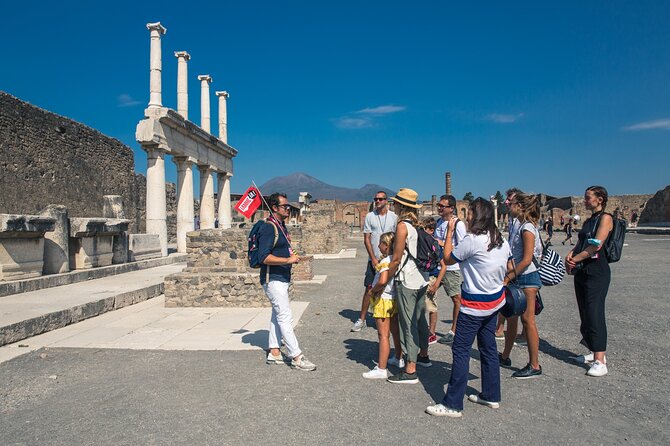
Via dell’Abbondanza was Pompeii’s main east-west street, running from the Forum toward Porta Sarno. In ancient times, it was lined with shops, workshops, cafés, snack bars, and restaurants.
The tour allows only about 10 minutes here, so expect a quick look rather than a long stroll. That short stop is enough to understand the street plan and notice how commercial life crowded around the road.
Look down as you walk. The paving stones are uneven, and raised stepping stones helped pedestrians cross the road while allowing carts to pass. Those same stones are part of what makes Pompeii fascinating and physically demanding.
This is also one of the places where you can picture ordinary routines more easily. A public forum can feel grand and distant. A street with counters and small businesses feels closer to daily life.
The Stabian Baths and Roman comfort
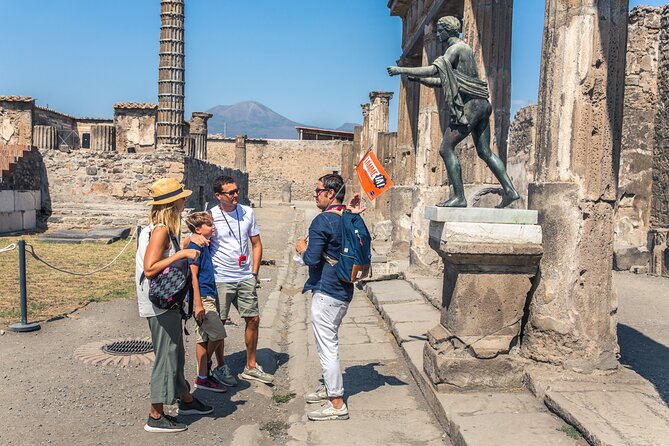
The Stabian Baths, also called the Forum Baths, date to the years after Sulla’s veterans founded the Roman colony in 80 B.C. Separate entrances served the men’s and women’s sections.
The men’s area included an apodyterium, or dressing room, along with cold, warm, and hot bathing rooms. The Romans understood the pleasure of a well-planned public bath, and the arrangement shows that bathing was a social and practical part of urban life.
The baths were damaged by the earthquake of 62 A.D., seventeen years before the eruption. That detail helps you see Pompeii as a city already dealing with disaster and rebuilding before Vesuvius caused its final destruction.
You get about 10 minutes here. It is enough for an overview, though anyone hoping to study every room or architectural detail will want more time than this tour provides.
The Lupanar and the less polished side of Pompeii
The Lupanar is Pompeii’s most famous official brothel. It was a small, purpose-built building with five ground-floor rooms, stone beds, erotic frescoes, and graffiti left by customers.
The paintings above the doors may have acted as a visual guide to the services available. The graffiti offers a less formal record of Roman social life and language. It is direct, crude, and revealing, which is part of why this small building attracts so much attention.
The house was associated with Quintus Poppaeus Sabinus and the Poppei family, relatives of Poppea Sabina, Nero’s second wife. That connection adds a layer of status and politics to a site often treated as a simple curiosity.
You have about 10 minutes here. Lines and crowds can make this stop feel rushed, and the narrow rooms are not ideal for lingering. Still, it is one of the most memorable stops because it connects the monumental city with private behavior and working life.
The House of the Faun and elite Pompeii
The House of the Faun occupies an entire city block and was one of Pompeii’s grandest private residences. Its name comes from the bronze dancing faun found in the main atrium.
The house is famous for its two peristyle gardens, detailed floor mosaics, and the Alexander Mosaic, which shows Alexander the Great battling Darius III of Persia. The design reflects Roman wealth and strong Hellenistic influence.
This is a place where you should slow down mentally, even if the group keeps moving. The size of the home tells you that Pompeii had a sharp social divide. Some residents lived in modest rooms above shops, while families like the owners of this house had gardens, grand reception spaces, and costly artwork.
The guide can help you notice details you might miss alone. If the route passes the mosaic or a major courtyard, listen first, then take your photos when the group pauses.
The Large Theater and the end of the guided route
The Large Theater was built into a natural slope, using the shape of the ground to create an auditorium divided into five sections. Tragedies from Greek and Roman traditions were performed on its stage.
The theater gives the visit a strong closing scene. After seeing government buildings, shops, baths, homes, and a brothel, you reach a space built for public entertainment. It completes the picture of Pompeii as a city with work, worship, politics, pleasure, and performance.
The stop lasts about 10 minutes. You will not see every corner of the archaeological park, and that is worth understanding before booking. Pompeii is enormous, while this tour offers a selected route through major sites in roughly two hours.
Afterward, you return to Sorrento by coach. The activity ends at the original meeting point, which makes the rest of your day easy to plan.
What $90.70 buys you
At about $90.70 per person, this is not the cheapest way to see Pompeii. But the price includes round-trip air-conditioned transportation from Sorrento, Pompeii admission, skip-the-line access, and an official guide inside the park.
That package can be good value if you are based in Sorrento and want a simple half-day visit. You avoid sorting out transport, buying entry separately, finding the correct route through the site, and learning the meaning of each building from a guidebook or audio app.
The value drops if you want a slow, independent exploration. There is little or no free time to return to a favorite house, browse the bookstore, or follow a side street alone. You are paying for structure and interpretation, not unlimited time.
Group discounts may help lower the cost for some bookings. The maximum group size is 29, so this is best seen as a small-to-medium group experience rather than a private tour.
Walking, weather, and who should book
Pompeii’s ground is uneven, with ancient paving, steps, and inclines. You need enough agility to walk over rough stones and keep up with the group. The tour is not wheelchair accessible, and the information about strollers should not be taken as proof that the route is easy for anyone with mobility limits.
If you have walking difficulties, ask yourself whether you can manage a fairly active visit over uneven terrain. One person with mobility concerns found it hard to stay with the group, even though the guide tried to help. A museum or a more accessible historic site may suit you better.
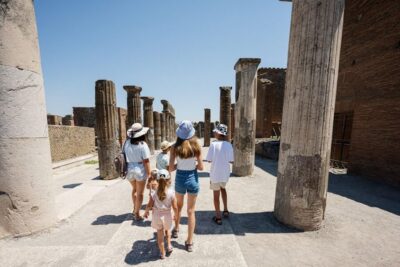
For families, the tour can work well. One guide, Luisa, was praised for using stories and humor that held the attention of five children of different ages. The Lupanar may not suit every child, but the Forum, baths, streets, homes, and theater give you plenty to discuss together.
The tour is offered in English, though the guide may be multilingual. If you are placed with a guide whose English is not your first language, stay close and use the supplied headphones when provided.
Should you book this Pompeii tour?
I would book it if you want an efficient first visit from Sorrento, prefer organized transport, and want a guide to explain the ruins as you walk. The early morning departure is the best pick for cooler conditions, smaller crowds, and a less tiring experience.
I would not book it if you want to cover the entire archaeological park or spend time alone inside each building. The route is focused, and the walking can be demanding. For most reasonably mobile visitors, though, the combination of transport, admission, and guided interpretation makes the price fair.
You can cancel for a full refund up to 24 hours before the start time. That gives you some flexibility if weather or plans change, but changes made inside that 24-hour window are not accepted.
FAQ
How long does the Pompeii tour from Sorrento last?
The experience lasts approximately five hours, including the round-trip coach journey between Sorrento and Pompeii.
How much time is spent inside Pompeii?
The planned visit to the Archaeological Park is about two hours. The route includes several major areas, but it is not a full tour of the entire site.
Where does the tour meet in Sorrento?
The meeting point is IAMME IA! Gray Line Amalfi Coast at Piazza Torquato Tasso, 16, 80067 Sorrento, Italy.
Does the tour return to Sorrento?
Yes. The activity ends back at the original meeting point in Sorrento.
Is admission to Pompeii included?
Yes. Pompeii Archaeological Site admission and skip-the-line access are included in the tour price.
Are food and drinks included?
No. Food and drinks are not included, though there is time at the beginning and end of the visit to use facilities and get a snack.
Is this tour suitable for people with mobility difficulties?
The route includes uneven ancient stones, steps, and inclines. The tour is not wheelchair accessible, and you need enough mobility to walk with the group over rough terrain.
Fresh on the Sorrento list
- Amalfi Coast Boat Tour from Sorrento with Positano Visit★ 4.5 · 507 reviews
- From Sorrento: Path of the Gods Guided Hike with Transfers★ 4.8 · 530 reviews
- Small Group Boat Tour: Day Cruise from Sorrento to Capri★ 4.5 · 532 reviews
- From Sorrento: Pompeii Half-Day Skip-the-Line Tour★ 4.6 · 541 reviews
- From Sorrento: Capri Small-Group Boat Tour with 4 Hours ashore★ 5.0 · 552 reviews
- Private / Small Group at “Quanto Basta” School in Sorrento center★ 5.0 · 574 reviews
- Capri Boat Tour with Optional Blue Grotto Visit from Sorrento★ 5.0 · 593 reviews
- From Sorrento: Positano & Amalfi Coast Small-Group Boat Day Tour★ 5.0 · 599 reviews
Pompeii & Vesuvius Tours, compared.

Entry Ticket and Guided Tour with an Archaeologist
Read our review →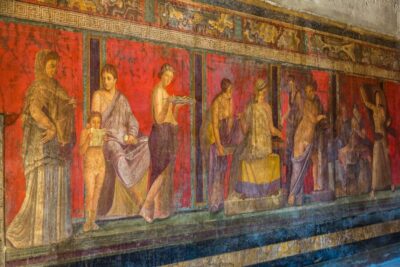


Pompeii Small Group Tour with an Archaeologist
Read our review →
Pompeii, Amalfi Coast and Positano Day Trip from Rome
Read our review →Browse the lists this tour appears in