
Reviewed · SICILY TOURS
SALT TOUR-all inclusive: salt tour: Trapani, Paceco, Nubia
Trapani’s salt pans turn an everyday ingredient into a story about work, trade, nature, and Sicilian tradition. This tour takes you from the port to three working salt sites, ending in a more-than-600-year-old mill where you can taste plain salt and fleur de sel flavored with citrus and herbs.
I like the small-group format, which is designed for as few as eight people, and I like the mix of outdoor scenery and hands-on tasting. Guide Alessio gets special praise for explaining the craft in clear, lively detail, including old measuring systems and the human work behind the salt.
The main caution is value. At $60.46 per person for roughly two and a half hours, this is not the cheapest way to reach the salt museum. Also, the group-size information says both eight and sixteen, so confirm the expected number before booking.
Key points to know before you book
- Three salt pans in one outing: See Maria Stella, Salina Calcara, and Saline Culcasi rather than visiting only the museum.
- A 600-year-old mill: The Culcasi stop includes an old windmill and a museum explaining tools, roles, and salt collection.
- A real tasting: Compare salt crystals and fleur de sel, including orange, lemon, rosemary, and oregano versions.
- Strong guiding: Alessio is praised for his passion, clear explanations, flexibility, and entertaining stories.
- Best for scenery and learning: Sunset can be beautiful, but clouds and timing can affect the view.
- Check the final group size: The experience is promoted as intimate with eight places, while the additional information lists a maximum of sixteen.
From Trapani port to the salt country
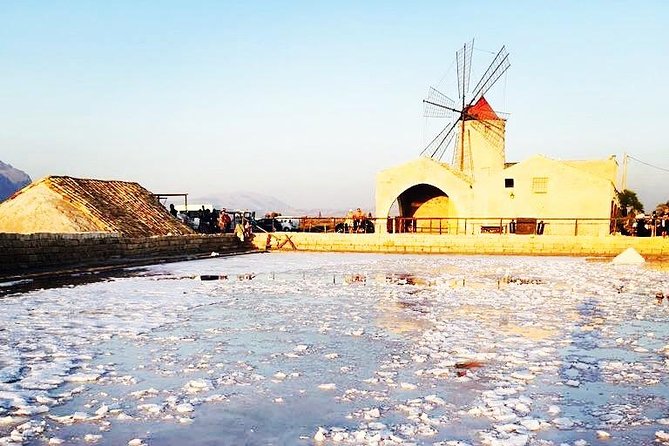
The meeting point is at the Vigili del Fuoco port fire station on Via Ammiraglio Staiti 101. This is useful if you are staying near central Trapani or arriving by ship, since the tour begins and ends at the port area.
From there, an air-conditioned vehicle takes you toward the salt pans. The drive to the first site takes about ten minutes, followed by stops that combine short rides, explanations, museum time, and walking beside the salt ponds.
I like this setup because you do not have to arrange separate transport to the reserve. A taxi or rental car could get you to the salt museum, and one critical assessment found that option better value. But the guided vehicle matters if you want the three-site route, commentary along the way, and a tasting without organizing the day yourself.
The tour is offered in English. Alessio is also described as speaking Italian, and one French-speaking couple found that some language effort was needed. If you are not comfortable with English, keep that in mind before paying the full price.
A few other Italy mornings to weigh against this
- Etna Morning Trip
★ 4.5 · 1,241 reviews - Syracuse: Boat Trip of Ortigia Island and Sea Caves
★ 4.7 · 937 reviews - Tour of the island of Ortigia and exploration of sea caves with baths.
★ 5.0 · 668 reviews
Maria Stella and Trapani’s first salt mill

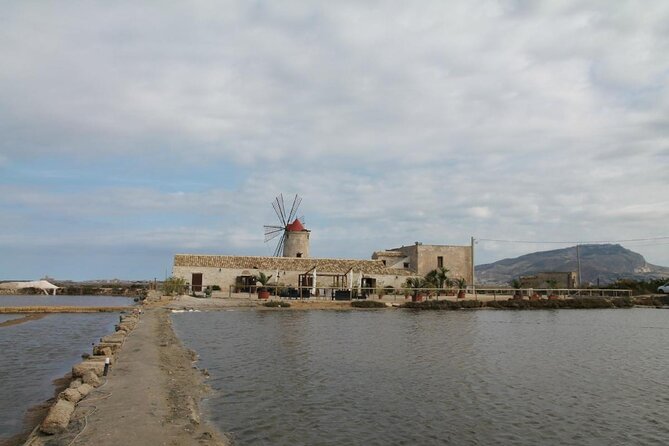
After the short drive, the tour reaches the Maria Stella salt pan. The main point here is the old mill, described as the first mill built in Trapani and dating from the end of the fifteenth century.
This opening stop gives the tour a useful sense of time. Salt making here is not a modern attraction placed beside a scenic view. It is an old local trade, shaped by water, wind, masonry, tools, and generations of workers.
Your guide explains how the sites developed and how the salt industry affected the area. Alessio is particularly good at adding small details that make the past easier to picture. One example from his explanations concerns the use of twelve as a divisor instead of the decimal system based on ten. Another concerns roof tiles shaped around the artisan’s thigh, a detail that connects the buildings to the people who made them.
You should not expect a long independent visit at Maria Stella. The supplied timing does not give this first salt pan a separate extended stop, so think of it as an introduction before the longer visits later in the afternoon or evening.
Salina Calcara and the four stages of salt making
The next stop is Salina Calcara, also described as Salina Chiusicella. Here, the guide explains the four orders of salt tanks and how seawater changes as it moves through the system.
That process is the heart of the visit. The ponds are not simply colorful pools. Each tank has a role in concentrating seawater until salt crystals can be gathered. I find that this kind of explanation is what makes the view worthwhile. Without it, you see shallow water and white banks. With it, you can read the site as a working system.
This stop lasts about thirty minutes. It also offers the best chance to look for birds. Flamingos, herons, egrets, and the Italian stilt are specifically mentioned as possible sightings. They are wild animals, so no sighting is guaranteed, but birdlife adds another reason to bring patience and keep your attention on the ponds.
The reserve is especially appealing if you enjoy places where industry and nature share the same space. You are seeing a traditional form of production while also passing through an area used by birds. The experience is educational rather than strenuous, but you should expect some walking outdoors around exposed salt tanks.
Saline Culcasi and the 600-year-old mill
The longest stop is at Saline Culcasi, where you spend about an hour and fifteen minutes. This is the tour’s main event.
You enter an old mill more than six centuries old, now used as the Salt Museum. Inside, the guide explains how salt was collected, how the mill worked, which tools were used, and how the work was organized. You also hear about the hierarchies among salt workers and the role salt played in the community.
That human side is important. A visit based only on production stages could feel technical. The explanation of jobs, ranks, tools, and manual labor shows what daily life around the salt pans demanded. Several comments about the tour point to this combination of practical facts, local history, and Alessio’s personal enthusiasm.
The mill also includes a rooftop windmill and old buildings belonging to a family salt farm. These details give the museum a working character rather than the feel of a display hall filled with unrelated objects.
You then compare different salt crystals and the more delicate fleur de sel, sometimes called salt flower. The tasting includes natural salt and flavored versions with orange, lemon, rosemary, oregano, and other seasonings. It is a small tasting, not a meal, but it gives you a direct way to notice how texture, shape, and flavor differ.
I especially like this part for cooks. The tasting helps you understand why all salt is not treated as the same product. You can examine the crystals, taste the fine flower, and connect the ingredient on your table with the work required to produce it.
Same city, an entirely different afternoon:
- Vatican: Museums & Sistine Chapel Entrance Ticket
★ 4.5 · 144,003 reviews - Vatican Museums & Sistine Chapel Tour with Optional Basilica
★ 4.3 · 67,413 reviews - Colosseum, Roman Forum & Palatine Guided Tour
★ 4.7 · 63,148 reviews - Milan: Cathedral and Duomo’s Terraces Entrance Ticket
★ 4.6 · 61,054 reviews
Walking the salt worker’s path
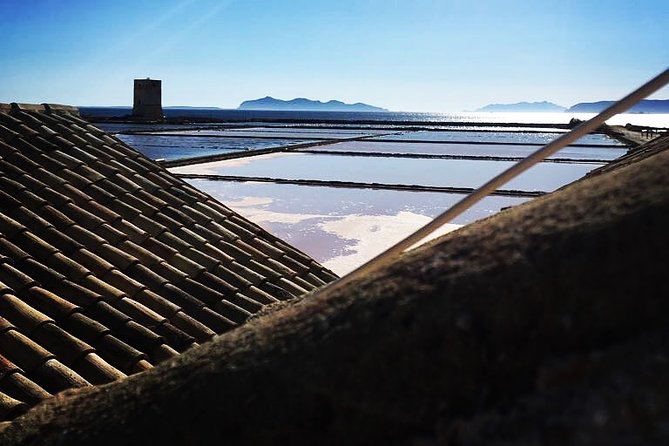
After the museum and tasting, you follow the path of the salt worker inside the salt tanks. This is the most physical part of the experience, though the supplied information does not give a precise walking distance or describe the surface in detail.
The walk matters because it puts you inside the working area instead of leaving you at an overlook. You see the ponds from the level of the people who once moved through them to gather and handle the salt.
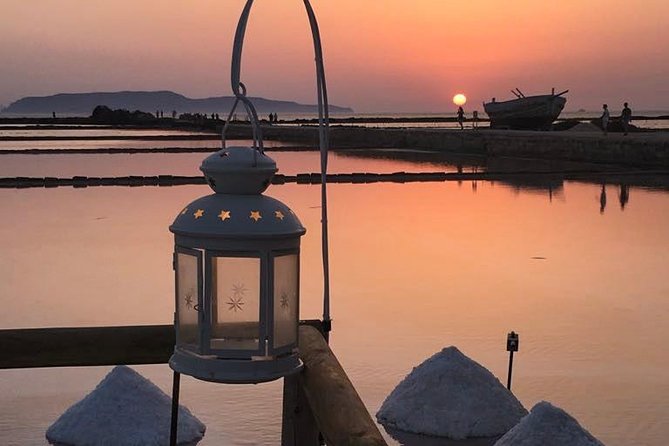
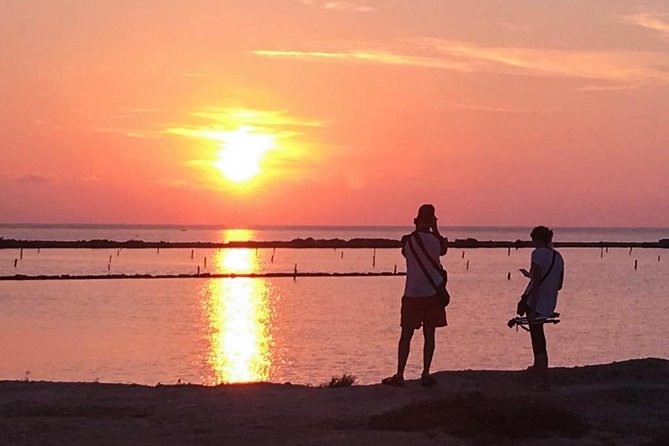
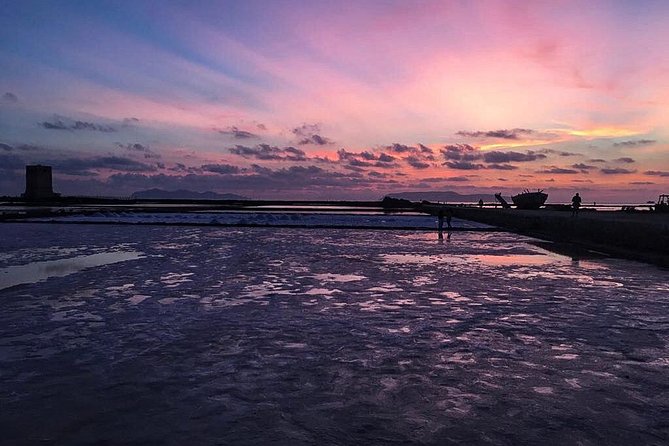
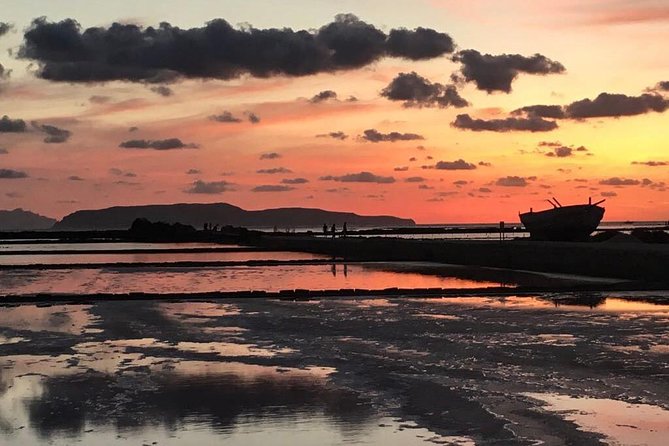
The timing also makes this section suitable for a sunset departure, and sunset is repeatedly praised as a highlight. The reflections across the water can make the final walk very striking. Still, do not book solely for a perfect sunset. Cloud cover has prevented the view on some departures, and weather conditions can change the mood quickly.
A sunset schedule may also create a practical problem. One account describes an aperitif being suggested at the salt pans for an extra €10, extending the outing well beyond the planned duration. The setting may be attractive, but if you have a dinner reservation, ask clearly if the aperitif is optional and how long the tour will last before agreeing.
What the $60.46 price includes
The advertised price is $60.46 per person. That is a moderate to high charge for an outing lasting about two hours and thirty minutes, so the value depends on what you want.
The fee includes:
- Air-conditioned transport from the Trapani port meeting point
- A guide
- All listed taxes and fees
- Entry to the Salt Museum
- Visits to three salt pans
- The salt worker’s path
- Tasting of salt crystals and flavored fleur de sel
Tips are not included. Any extra aperitif is also separate, according to the experience described above.
If you only want to see the museum, a taxi or rental car could cost less and let you set your own pace. You would, however, lose the organized route between Maria Stella, Salina Calcara, and Saline Culcasi. You would also miss the continuous explanation of how the ponds work and how the industry shaped the area.
I consider the price easier to justify if you value a guide and do not have a car. It also makes more sense for a first visit to Trapani, when you want a compact introduction rather than a self-guided afternoon. If you already have transport and enjoy reading museum displays at your own speed, the price may feel steep.
Why Alessio matters to the experience
The guide is a major part of this outing. Alessio is described as entertaining, professional, flexible, and deeply familiar with salt production. His strengths appear to be explanation and storytelling rather than simply pointing out sights.
You can expect more than basic facts about evaporation. His discussions have included health claims connected with Trapani’s integral salt, the twelve-part measuring system, tile making, labor roles, and differences between past and present production.
That range suits you if you enjoy learning through specific details. It also helps families, since the salt-making process has been explained in a simple way that children can follow.
The tour seems less suited to anyone who wants complete independence or a quick photo stop. You will be part of a guided sequence, and the value comes from listening as much as looking.
Group size, timing, and practical concerns
The experience is described as limited to eight people to keep the visit personal. The additional information also gives a maximum of sixteen, so there is a clear inconsistency. I would contact Trapani Emotions before booking if a very small group is important to you.
The total duration is about two and a half hours, with roughly thirty minutes at Salina Calcara and one hour fifteen minutes at Culcasi. The remaining time covers the first salt pan, driving, transitions, and the return to the port.
The vehicle is air-conditioned, and the minivans are sanitized under the stated health procedures. Confirmation is provided when you book. Service animals are allowed, and the meeting point is near public transport.
Most people can take part, but the outdoor portion means you should be prepared for time beside the salt tanks and a walk through the site. The available information does not specify an accessibility standard, walking distance, or surface conditions, so ask the operator directly if you have mobility concerns.
The tour requires good weather. If poor weather cancels it, you are offered another date or a full refund. A minimum number of bookings is also required, and if that minimum is not reached, you are offered another option or a refund.
Free cancellation applies when you cancel at least 24 hours before the start time. A later cancellation does not qualify for a refund, and changes made within that period are not accepted.
Who should book the Trapani salt tour
I would recommend this experience to you if you want an informed introduction to western Sicily’s salt industry, especially if you are staying in Trapani without a car. It works well for families, couples, cooks, photographers, and anyone who enjoys local crafts tied to place.
It is also a good choice if you prefer a short outing with several layers: transport, scenery, birds, a museum, a tasting, and a guided walk. You get a clear picture of how seawater becomes salt and why the work remains meaningful.
I would think twice if you only want the cheapest route to the museum. I would also check the timing carefully if you have a fixed dinner booking, since a sunset add-on may extend the evening.
For the best chance of seeing salt piled for photographs, the period from July through September is worth considering. Salt collection is more visually active then, though the tour can still explain the industry outside that season.
Should you book it?
Book this tour if Alessio’s guiding, three salt pans, the old mill, and the tasting sound more valuable to you than simply reaching the museum. The strongest part is the connection between the scenery and the people who worked there.
Skip it if you have a car, want a self-guided visit, or find $60.46 too much for a short excursion. Before confirming, ask about the actual group size and make sure any aperitif is optional if you have evening plans.
FAQ
Where does the salt tour begin?
It begins at the Vigili del Fuoco Distaccamento Portuale Trapani, Via Ammiraglio Staiti 101, at the port.
Where does the tour end?
The activity ends back at the same meeting point in the port area.
How long does the tour last?
The tour lasts approximately two hours and thirty minutes.
What language is the tour offered in?
The tour is offered in English. Alessio is also described as speaking Italian.
What does the price include?
The price includes air-conditioned transport, guide services, taxes and fees, entry to the Salt Museum, three salt pans, the salt worker’s path, and tastings of salt crystals and flavored fleur de sel.
Is the tour suitable for most people?
Yes. Most people can participate, and service animals are allowed. The experience includes outdoor walking, but no exact distance or accessibility details are provided.
Can I cancel for a refund?
You can cancel for a full refund up to 24 hours before the experience begins. Poor weather or failure to meet the minimum number of participants can also lead to a different date or a full refund.
Fresh on the Italy list
- Florence: Uffizi Guided Tour with Skip-the-Line Entry Ticket★ 4.8 · 499 reviews
- Milan: Last Supper and Sforza Castle Guided Tour★ 4.6 · 498 reviews
- Boat trip La Maddalena Archipelago – Departure from Palau★ 4.5 · 499 reviews
- Exclusive Golf Tour Private VIP with Local & Gelato o Wine★ 5.0 · 500 reviews
- Turin: Egyptian Museum Skip-the-Line Group Tour★ 4.7 · 500 reviews
- Itria Valley: Polignano, Ostuni, and Locorotondo, from Bari★ 4.6 · 502 reviews
- Colosseum, Palatine Hill and Roman Forum with Guided Tour★ 5.0 · 500 reviews
- Catania: Etna Nature Tour with Hiking, Cave Visit, & Tasting★ 4.7 · 502 reviews
Sicily Tours, compared.
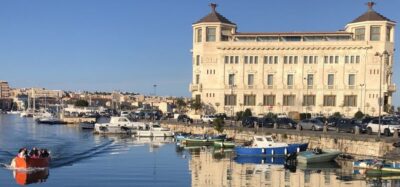
Tour of the island of Ortigia and exploration of sea caves with baths.
Read our review →
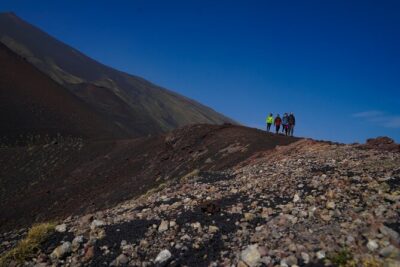
Mt. Etna nature and flavors half day Tour from Catania
Read our review →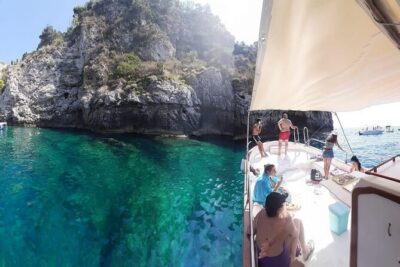
Boat tour Giardini Naxos Taormina Isola Bella Blue Grotto
Read our review →
Etna excursion 3000 meters with 4×4 cable car and Trekking
Read our review →
7 hours Boat trip to Lampedusa lunch, SUP and Snorkeling
Read our review →Browse the lists this tour appears in