
Reviewed · SALERNO TOURS
Paestum Small Group Tour with an Archaeologist
Paestum gives you something rare in Italy: three major Greek temples standing within an ancient city that was later reshaped by the Romans. With an archaeologist at your side, the columns become more than impressive stone. You learn how the city changed, why one temple was wrongly called the Temple of Poseidon, and how Greek art survived in the nearby museum.
I especially like the included museum visit, since the Tomb of the Diver frescoes are easy to miss if you only walk through the ruins. I also like the chance to ask questions in English, with guides such as Mario and Maria bringing clear explanations, humor, and useful comparisons to sites such as Pompeii, Herculaneum, and Greek temples.
The main concern is the group size. The maximum is 20 people, and one group found it hard to hear without headsets when the guide moved ahead. You also need to walk over uneven ground, steps, ramps, and a slight climb, so this is not the best choice if mobility is a serious concern.
Key points at a glance
- See the Temple of Hera II: This is the larger and more famous temple often called the Temple of Poseidon, though that name comes from an old mistake.
- Hear the site explained by an archaeologist: Mario, Maria, and other guides have been praised for clear English, strong storytelling, and answers to detailed questions.
- Visit the Tomb of the Diver frescoes: The museum adds important art and context that the outdoor ruins cannot provide.
- Two hours covers the essential sights: You see the archaeological park and museum without giving up an entire day.
- Admission and skip-the-line entry are included: At $47.79 per person, the price mainly pays for interpretation and convenience rather than transport.
- Plan for outdoor walking: Comfortable shoes, sunscreen, sunglasses, and a small bottle of water will make the visit easier.
Why Paestum is worth the side trip from Salerno
Paestum is not simply another pile of ancient stones. It is a remarkably preserved Graeco-Roman city, and its Greek temples are the reason to come. The scale is easy to appreciate because the temples are not buried among dense modern construction. You can look across the site and understand the relationship between the buildings, roads, and open spaces.
The city was first Greek, known as Poseidonia, and later became Roman Paestum. That shift matters. A guide can show you where Greek ideas remain visible and where Roman use changed the town. Without that context, you may admire the columns but miss the larger story.
I also like that Paestum offers a different experience from Pompeii and Herculaneum. Those sites are famous for their streets, homes, and sudden preservation. Paestum’s great strength is its temples and the way they let you see Greek architecture in Italy. One guide, Mario, was particularly praised for explaining the site in a way that helped connect it with other ancient places.
The tour is listed at $47.79 per person. That is not the cheapest way to enter Paestum, since you can visit independently, but it is fair if you want a trained guide and prefer not to spend time figuring out what each ruin represents. If you already own a good guidebook and enjoy exploring at your own pace, the added cost may be harder to justify.
A few other Italy mornings to weigh against this
- Salerno: Amalfi Coast Cruise with Lunch, Aperitif & Swimming
★ 4.5 · 879 reviews - Small-Group Amalfi Coast Day Cruise from Positano
★ 5.0 · 678 reviews - Amalfi Coast Boat tour Small Group
★ 5.0 · 501 reviews
Starting at the Basilica Paleocristiana dell’Annunziata
You meet at the Basilica Paleocristiana dell’Annunziata on Piazza della Basilica in Capaccio Paestum. The tour ends back at this same meeting point, and transportation is not included, so you need to arrange your own way to Paestum.
The meeting location deserves a little care. It is given clearly, but the broader archaeological area is large, and one guide arrived early because the meeting point could be confusing. I would allow extra time rather than rushing across the site at the last minute.
The tour is offered in English and has a maximum of 20 people. That is smaller than a large coach excursion, but it is not a private tour. If your group reaches the maximum, stay close to the guide whenever the group moves between stops. One person found that explanations began before everyone had arrived and that the lack of headsets made some comments difficult to hear.
Walking the Parco Archeologico di Paestum e Velia
The main walking portion takes about one hour within the archaeological park. Your archaeologist leads you through the important remains and explains how Paestum developed from Greek settlement to Roman city.
This is where the tour earns its keep. A temple can look complete and still leave you with basic questions: Who built it? Which god was honored? Why are the columns shaped this way? What changed under Roman rule? Guides such as Mario and Maria have been praised for answering those questions in plain, engaging English.
The best guides also help you picture the city as a working place rather than a set of isolated monuments. Maria was praised for explaining how the Greek temples would have looked in their original setting and how the Romans made the city their own. Another guide used recent archaeological research to add a sense of ongoing discovery.
You should expect a walking pace rather than a leisurely sit-down visit. The park includes steps, ramps, uneven surfaces, and a small steep section. Comfortable shoes are important, and summer visitors should bring sunscreen, sunglasses, and water. The tour is not recommended for people with mobility issues or impairments, though a private tour suited to specific needs may be available if you contact the provider.
Temple of Hera II and the Poseidon mistake
The Temple of Hera II receives about 15 minutes on the tour. It is the more northern and more recent of Paestum’s two temples dedicated to Hera, and it is one of the clearest examples of Greek temple architecture at the site.
You will often hear it called the Temple of Poseidon or the Temple of Neptune. That name is based on a former misidentification, not firm evidence that Poseidon was the deity honored there. This small point is exactly the kind of detail that makes a guided visit worthwhile. It corrects a familiar label without taking away from the temple’s drama.
The temple is especially impressive because so much of its structure remains visible. A guide can point out the columns, proportions, and design choices that are easy to overlook when you are focused only on taking photographs. One guide also explained how Paestum’s temples compare with famous sites in Greece, giving you a useful frame of reference.
Fifteen minutes is enough for a strong explanation and photographs, but not enough for a long independent study. If you love architecture and want to examine every column base, you may wish for more free time.
Same city, an entirely different afternoon:
- Vatican: Museums & Sistine Chapel Entrance Ticket
★ 4.5 · 144,003 reviews - Vatican Museums & Sistine Chapel Tour with Optional Basilica
★ 4.3 · 67,413 reviews - Colosseum, Roman Forum & Palatine Guided Tour
★ 4.7 · 63,148 reviews - Milan: Cathedral and Duomo’s Terraces Entrance Ticket
★ 4.6 · 61,054 reviews
The Temple of Athena near the so-called Basilica
The Temple of Athena, also called the Temple of Ceres, dates to about 500 BC. It sits near the building known as the Basilica, which is considerably larger. The tour gives this temple another 15 minutes.
The different names can be confusing, especially when ancient identities are uncertain. Your guide helps separate what archaeologists know from what earlier visitors assumed. That makes the stop more useful than a quick walk past a sign.
The Temple of Athena offers a helpful contrast with Hera II. Seeing both lets you notice differences in size, placement, and design. The guide’s role is to tie those details into the development of the city rather than present each temple as a separate photo stop.
I would not expect a long pause here. The two-hour schedule must also allow time for the rest of the archaeological park and the museum. Still, the temple is one of the main points of interest, and the tour does not treat it as an afterthought.
The National Archaeological Museum and the Tomb of the Diver
The museum visit lasts about 30 minutes, and I consider it essential. The outdoor temples show Paestum’s grand public architecture. The museum shows the objects, decoration, and burial art that help explain the people who used the city.
Its collection includes local Greek works dating back to the 7th century BC. You can see examples of pottery and Greek friezes, along with other finds from the area. The museum is also a useful refuge if the weather turns bad. During one rainy visit, the indoor collection provided a welcome place to wait while still seeing something worthwhile.
The highlight is the Tomb of the Diver frescoes. These paintings were found in a tomb and are a major reason to include the museum rather than leave after the temple walk. Your guide can explain what makes the scene unusual and how it fits into the wider art of Paestum.
One particularly interesting detail concerns figures on Greek pottery. The women are often shown with white paint, a point that can pass unnoticed unless someone draws your attention to it. Small observations like this can change the way you look at the cases.
Thirty minutes is a sensible introduction, but it is brief. If museum displays are your main interest, you may want additional time after the guided portion. One person also felt disappointed about not being able to explore the archaeological park freely after the tour, so it is worth clarifying how much independent time is available on your chosen departure.
The guides: Mario, Maria, and the value of good explanations
The strongest part of this experience is the guide. Mario has been praised for his passion, precise English, humor, and ability to handle questions. He has also been known to go beyond the allotted time when the group’s interest and the subject called for it.
Maria has earned similar praise for her clear delivery, engaging style, and ability to adapt explanations to families and mixed groups. She has answered many questions patiently and helped visitors connect Paestum with other ancient sites. Another guide, Ivan, was noted for discussing current research and accommodating a person who had difficulty walking.
Guide quality can vary from departure to departure, and the scheduled guide is not guaranteed in the information provided. Still, the repeated praise for Mario and Maria suggests that the company has several strong English-speaking archaeologists.
I would pay attention to where you stand. If the group is large, move with the guide and speak up if you cannot hear. This is especially important outdoors, where wind, distance, and other groups can swallow a soft voice. The small-group format helps, but a maximum of 20 is large enough for listening position to matter.
Is two hours enough for Paestum?
Two hours is enough to cover the main story, not every corner. The planned balance is roughly one hour in the park, 15 minutes at Hera II, 15 minutes at Athena, and 30 minutes in the museum. The temple stops form part of the park visit, so the timing should be viewed as an approximate structure rather than a promise that every minute is fixed.
I like this length for a day when Paestum is one stop among several. You get the major temples, the city’s Greek and Roman background, and the museum’s most important art without committing to a full day.
If you want quiet photography, detailed architectural study, or extended museum time, two hours may feel short. A private option may suit you better if you need a slower pace or more flexibility. The standard tour is best for getting a strong overview and leaving with a clear sense of why Paestum matters.
Who will get the most from this tour?
I would choose this tour if you want ancient history explained rather than simply photographed. It suits first-time visitors, families with older children, and anyone who has seen Pompeii or Herculaneum and wants a different kind of Roman-era site.
It is also a good match if you have visited Greece and want to compare Greek temple design in Italy. One guide made that comparison especially useful, and another tied Paestum to the Parthenon and Agrigento in a way that helped place the site in a wider ancient world.
You may prefer to visit independently if you like setting your own pace, want to stay longer in the museum, or are comfortable using guidebooks. Independent admission can cost less, and two guidebooks from the museum bookstore may be enough for a self-guided visit.
For families, the guide can make a big difference. Maria was praised for working well with children and adults together, while Mario’s humor and storytelling helped keep the ancient material lively. Just remember that the group may move at a steady pace, and the ground is not suited to every mobility level.
Practical details before you book
The tour costs $47.79 per person and includes the guided visit with an archaeologist, admission to Paestum, and skip-the-line entry. Food, drinks, and transportation are not included.
Confirmation is provided at booking. Service animals are allowed, and the site is near public transportation. Most people can participate, but steps, ramps, uneven ground, and a slight climb make this a poor fit for serious mobility limitations.
Bring:
- Comfortable walking shoes
- Sunscreen and sunglasses in summer
- A small bottle of water
- A passport or ID for anyone under 18 who may qualify for free admission
The cancellation policy allows a full refund if you cancel at least 24 hours before the start time. Changes or cancellations made inside that 24-hour window are not accepted for a refund. One cancellation did occur the day before for an emergency, so I would avoid building an entire complicated travel plan around this single timed activity.
Should you book the Paestum archaeologist tour?
I would book it if you want the temples to make sense, not just look beautiful. The admission and skip-the-line access are useful, but the real value is the archaeologist’s explanation of Greek construction, Roman reuse, mistaken temple names, and the museum’s Tomb of the Diver.
The $47.79 price is reasonable for a two-hour guided visit, especially if you have limited time or do not want to prepare in advance. I would choose it over an independent visit if Mario, Maria, or another well-regarded guide is leading your departure.
Skip it if you need a slow, fully independent exploration or if steps and uneven surfaces will make the walk difficult. In that case, ask about a private option suited to your needs, or visit on your own with extra time. For most history-minded visitors coming from Salerno, though, Paestum is a worthwhile side trip, and a good archaeologist can turn its magnificent temples into a coherent story.
FAQ
How long does the Paestum tour last?
The tour lasts approximately two hours.
What is included in the tour price?
The price includes a guided tour with an archaeologist, Paestum admission, and skip-the-line entry.
Is transportation to Paestum included?
No. Transportation is not included. You meet at the Basilica Paleocristiana dell’Annunziata on Piazza della Basilica, and the tour ends at the same meeting point.
Is the tour offered in English?
Yes. The experience is offered in English.
How large is the group?
The tour has a maximum of 20 participants.
What should I bring?
Wear comfortable shoes and bring sunglasses, sunscreen in summer, and a small bottle of water. Anyone under 18 should bring a passport or ID to qualify for possible free admission.
Is the tour suitable for people with mobility issues?
The standard tour is not recommended for people with mobility issues or impairments because the route includes steps, ramps, uneven surfaces, and a slight steep climb. You can contact the provider to ask about a private tour suited to your needs.
Fresh on the Italy list
- Venice Doge’s Palace and St Mark’s Basilica Guided Tour★ 4.5 · 189 reviews
- From Cala Gonone: Grotta del Bue Marino Boat Trip★ 4.4 · 189 reviews
- Rome: Award-Winning Roman Food Tours★ 4.9 · 189 reviews
- Rome Private Custom Tour with a Local, Highlights & Hidden Gems★ 5.0 · 189 reviews
- Vatican Museums and Sistine Chapel Skip-the-Line Entry Ticket★ 4.5 · 189 reviews
- Cagliari: Old Town Guided E-Bike Tour★ 4.9 · 189 reviews
- VIP Colosseum & Roman Forum Small Group Guided Tour★ 5.0 · 189 reviews
- Rome: Tiramisu & Pasta Small-Group Cooking Class★ 4.9 · 189 reviews
Salerno Tours, compared.

Amalfi Coast Cruise with Lunch, Aperitif & Swimming
Read our review →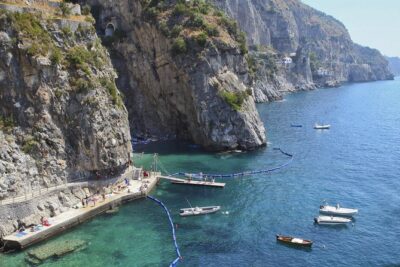
Small-Group Amalfi Coast Day Cruise from Positano
Read our review →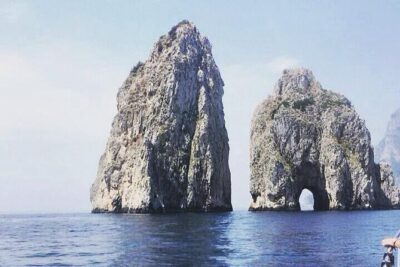


Small Group Amalfi Coast boat tour with stops in Positano & Amalfi
Read our review →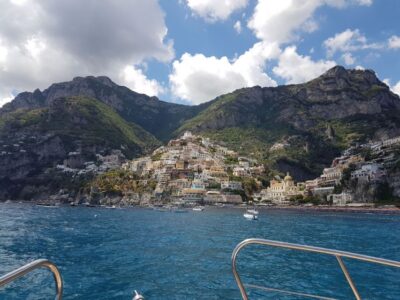
Browse the lists this tour appears in