
Reviewed · MILAN TOURS
Milan: Pinacoteca Ambrosiana and San Sepolcro Crypt Ticket
Milan’s Pinacoteca Ambrosiana packs an astonishing number of famous names into a compact museum. You can stand before Caravaggio’s Basket of Fruit, Raphael’s Cartoon for the School of Athens, Leonardo’s Musician, and Brueghel’s flamboyant Vase of Flowers without spending a whole day marching through endless galleries.
I especially like the quiet pace and the chance to study the works without a tour group hustling you along. I also like the way the ticket links art with archaeology: after the gallery, you walk out toward Piazza San Sepolcro and descend into a medieval crypt built over the stones of ancient Milan. The main drawback is that the crypt is small, and the combined visit is not suitable for wheelchair users or people with mobility limitations.
Key points to know before you book
- Caravaggio’s Basket of Fruit is one of the museum’s essential stops, but Raphael’s large preparatory cartoon and Leonardo’s drawings may be just as memorable.
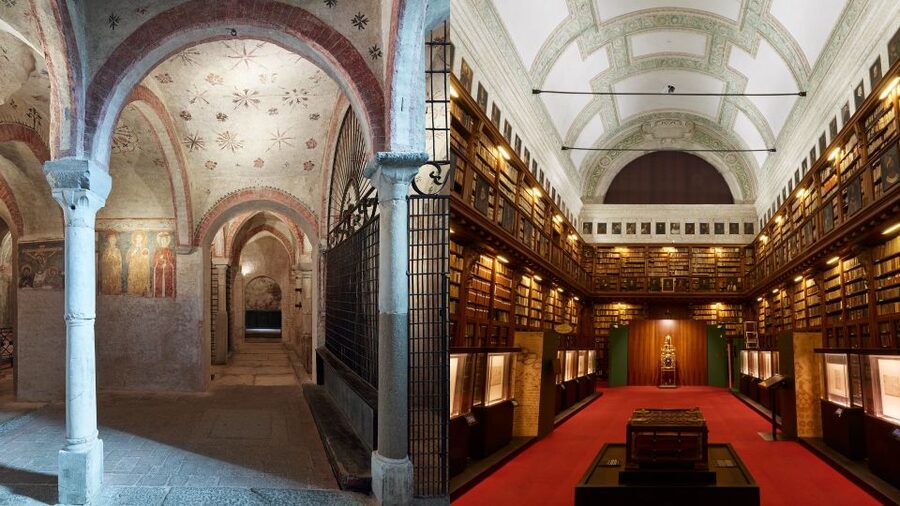
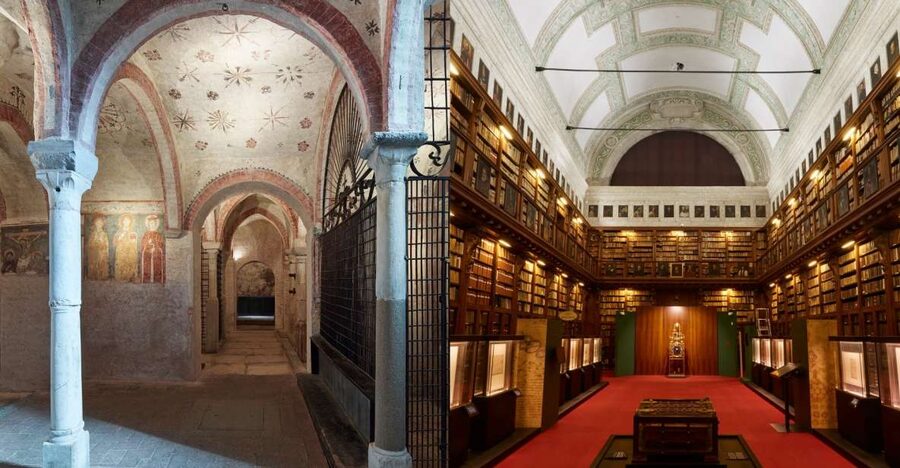
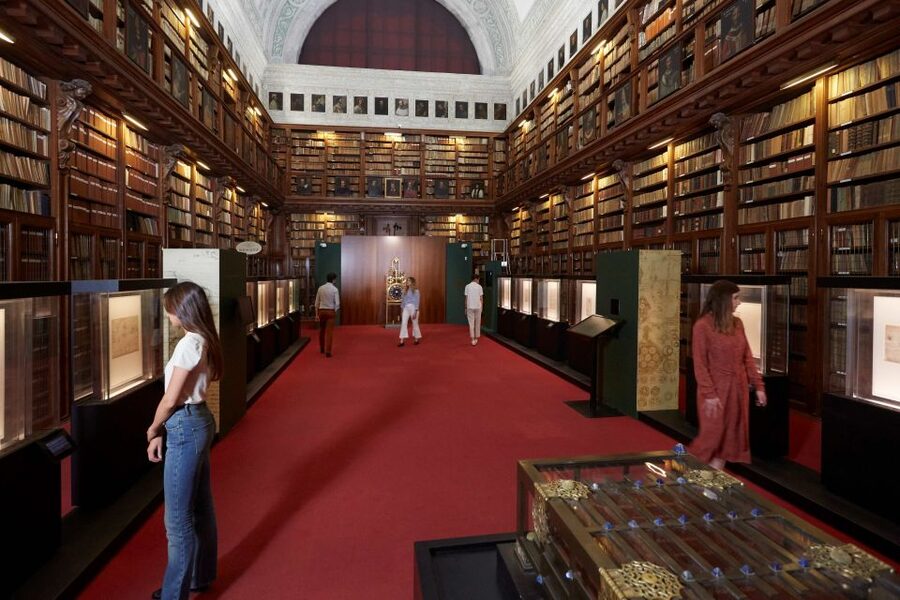
- The 17th-century library reading room gives the Codex Atlanticus a striking setting, with original Leonardo drawings on display.
- The Crypt of San Sepolcro takes only about 30 to 40 minutes, but its floor preserves stones linked to ancient Mediolanum.
- The whole Pinacoteca visit usually takes 1.5 hours, though art lovers can easily spend longer.
- This is a self-guided experience, with a downloadable app and an optional audio guide available for an extra charge.
- Visit the crypt before 5:30 PM, since its final admission comes half an hour before closing.
Why this small Milan museum deserves your time
Milan is often reduced to the Duomo, La Scala, shopping streets, and Leonardo’s Last Supper. Those are worthy stops, but the Ambrosiana gives you a different kind of Milan: quieter, more personal, and focused on the collecting habits of Cardinal Federico Borromeo.
The museum is close to the Duomo, about a five-minute walk according to the practical experience of past visitors. That makes it easy to fit between major sights, and it is also a smart shelter on a hot afternoon or during a spell of rain.
I would not describe the Pinacoteca as a giant museum. That is part of its appeal. You can see the main rooms in around an hour and a half, yet there is enough here to reward a slower visit. You do not need to reserve an entire morning unless you want to read every label, use the audio material, and linger over the drawings.
The collection moves through centuries of European painting, with a strong emphasis on Italian masters. You will also see Flemish work, sculpture, decorative details, and displays tied to the Ambrosian Library. The museum’s scale makes it easier to connect individual works with the people who collected, commissioned, and preserved them.
A few other Milan mornings to weigh against this
- Milan: Cathedral and Duomo’s Terraces Entrance Ticket
★ 4.6 · 61,054 reviews - Milan Cathedral: Duomo Terraces Ticket (No Church Access)
★ 4.6 · 6,111 reviews - Milan: Guided Walking Tour & Last Supper Visit with Ticket
★ 4.7 · 5,409 reviews
Caravaggio, Raphael, and Leonardo in the opening galleries
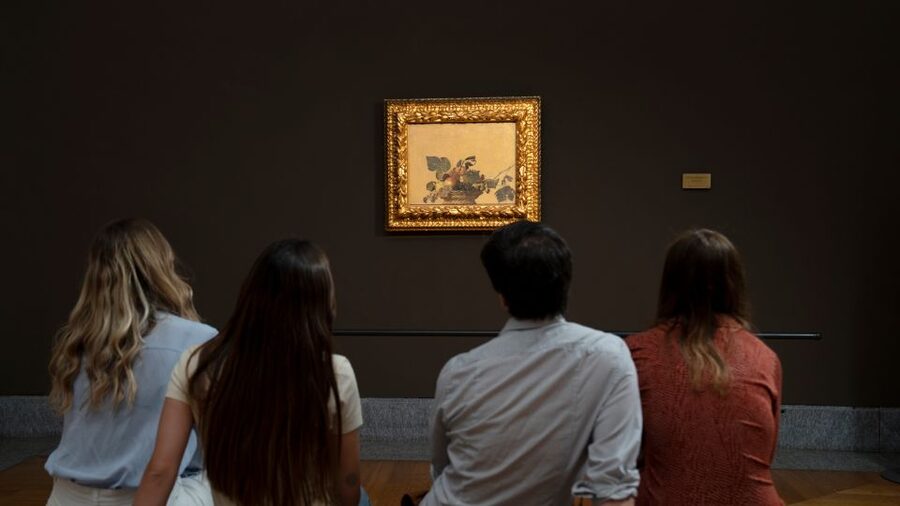
Caravaggio’s Basket of Fruit is the obvious headline work for many visitors. It is not a vast history painting, but its directness gives it force. The fruit looks close enough to touch, and the picture asks you to notice both beauty and decay in an ordinary arrangement.
Give it a few quiet minutes rather than treating it as a quick photo stop. The painting is a good reminder that great art does not always need a dramatic story or a crowd of figures.
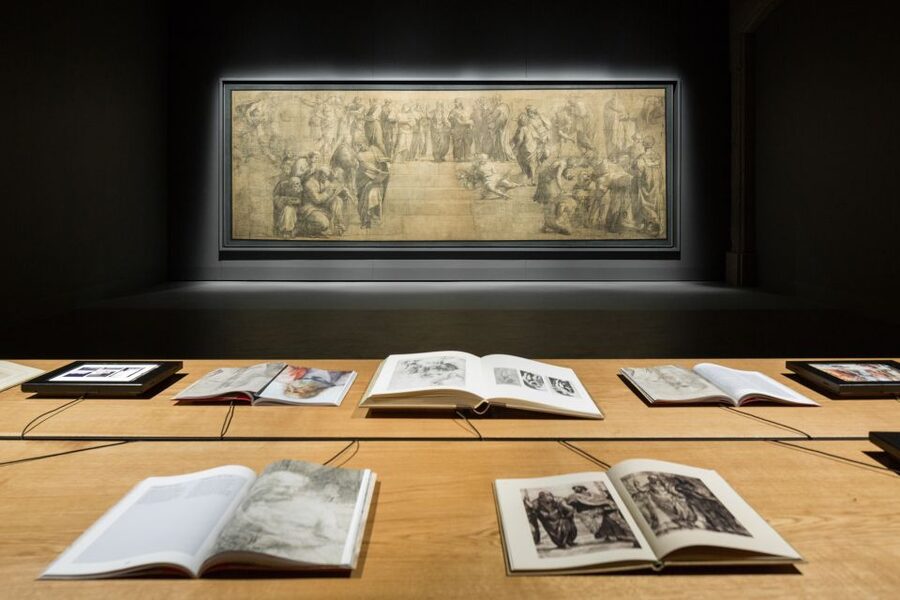
Raphael’s Cartoon for the School of Athens is another major reason to come. The word cartoon here means a full-scale preparatory drawing, not a humorous sketch. Raphael used the design as a working model for his famous Vatican fresco, so you are looking at an important stage in the making of one of the Renaissance’s best-known compositions.
The scale matters. A reproduction can show the overall design, but standing near the original lets you see the planning lines and the way figures were arranged. If you have seen the finished School of Athens in Rome, this drawing offers a useful comparison. It shows the thinking behind the final painted scene.
Leonardo’s portrait known as The Musician brings a different mood. It is less theatrical than the Raphael and less immediately familiar than the Caravaggio, but it gives you a chance to look closely at Leonardo’s treatment of the face and expression.
The museum’s Leonardo material is not limited to one painting. The Codex Atlanticus display brings scientific and artistic thinking into the same visit. Leonardo’s drawings cover ideas, observations, machines, and working notes. You are not simply looking at polished art. You are seeing a mind testing possibilities on paper.
The Ambrosiana Library and its remarkable reading room
The library portion is one of the strongest parts of the visit, especially if you enjoy books, drawings, or the physical spaces where ideas were studied. You enter a 17th-century reading room with original drawings from Leonardo’s Codex Atlanticus displayed within it.
The room itself helps explain the purpose of the institution. This was not just a picture gallery built for quick sightseeing. The Ambrosiana joins art, books, scholarship, and religious learning in one setting.
I recommend slowing down here. The drawings can look small and technical at first, especially after large Renaissance paintings. Look for the mix of diagrams, handwritten notes, and studies. The value lies in the evidence of process. Leonardo’s work feels immediate because you are seeing marks made to think through a problem, not just a finished object made for public display.
The museum also presents material linked to the wider intellectual interests of the collection. Several visitors have found the library and Leonardo displays more memorable than expected, and I understand why. The room provides a strong change of pace after the paintings.
An audio guide or downloadable app can help if you want more context. The included activity is not a guided tour, so you will set your own speed. The app can be downloaded to your device and listened to after the visit, which is useful if you want to revisit a detail later. An audio guide has also been available for about €4, but check the current arrangement when you arrive because it is not part of the combined admission.
Brueghel’s flowers and the pleasure of looking slowly
Brueghel’s Vase of Flowers supplies a burst of color after the more solemn religious works. Its detailed flowers invite close inspection, and the painting rewards the kind of slow looking that is hard to manage in Milan’s busiest museums.
The Ambrosiana includes works by many other Italian and Flemish painters, along with sculpture and historical objects. Not every room will matter equally to you. Some pieces are stronger than others, and the lighting has not pleased every visitor.
That unevenness is normal in an older collection. I find the museum works best when you identify a few major targets, then let the surrounding rooms fill out the story. Do not feel obliged to give every picture the same amount of time. The map can help you keep your bearings, while the audio material can add meaning to the works that catch your eye.
There are seats in the galleries, which is a small but valuable detail. You can sit with a painting rather than glance at it while standing in a traffic flow. Families and older visitors may appreciate this, and anyone who has already spent the morning at the Duomo will be glad for the rest.
Same city, an entirely different afternoon:
- Milan: Da Vinci’s Last Supper Guided Tour
★ 4.7 · 10,143 reviews - Milan: City Sightseeing Hop-On Hop-Off Bus with Audio Guide
★ 4.0 · 6,256 reviews - Milan: Milan Cathedral Direct Entrance – Terrace Excluded
★ 4.5 · 5,782 reviews - Milan: Fast-Track Milan Cathedral and Terraces Guided Tour
★ 4.7 · 5,240 reviews
From the Pinacoteca to San Sepolcro Crypt
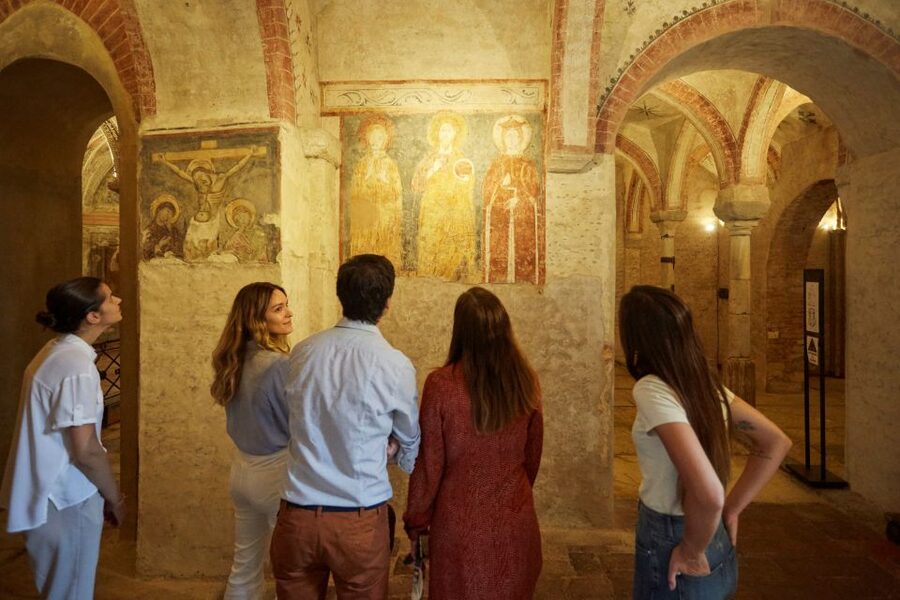
The combined ticket turns the visit into a short historical walk rather than two unrelated admissions. You begin at Piazza Pio XI 2, inside the Pinacoteca Ambrosiana. When you finish, you exit onto Piazza San Sepolcro, where the crypt entrance is located.
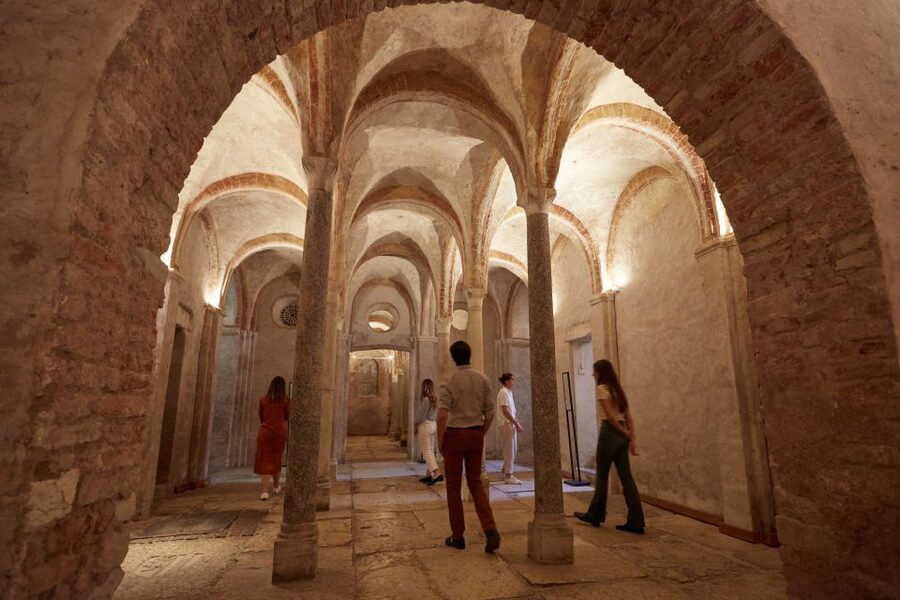
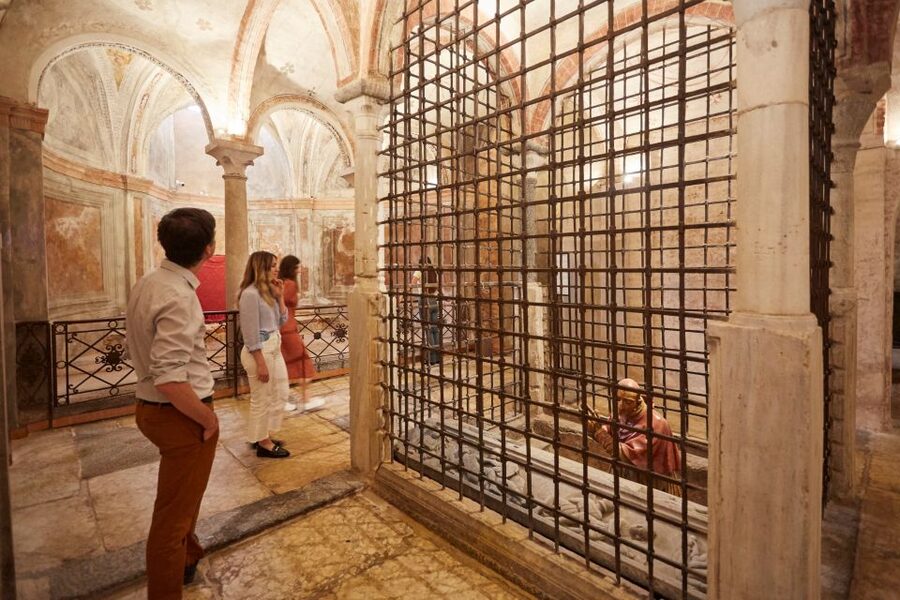
The change is striking. Upstairs, you have paintings, drawings, books, and carefully lit displays. Below ground, you enter a medieval hypogean church. The word hypogean simply means built or located beneath the ground, and the underground setting gives the crypt its atmosphere.
San Sepolcro is tied to the older city beneath modern Milan. Its pavement uses ancient stones from Mediolanum, the Roman city that preceded Milan. You are therefore walking over physical pieces of the city’s earlier streets and buildings, not just reading a date on a wall.
Allow 30 to 40 minutes for the crypt. It is not a large church, so do not expect another full museum. Some people may find it underwhelming if they arrive without historical context. The plain space needs a little imagination, and the ceiling deserves a careful look.
If the optional virtual reality experience is still available when you visit, it may help you understand the crypt and the layers of Milan beneath it. The experience has been especially useful for visitors who want more than a quick look at an underground room. It is an extra, not part of the stated combined ticket, so ask at the entrance about the current price and format.
The crypt works best as the final chapter of the visit. After seeing Renaissance artists and Leonardo’s studies, you move into a physical reminder that Milan existed long before those masters. That connection gives the ticket more purpose than a standard gallery admission.
Timing the one-day ticket carefully
The ticket is valid for one day, but that does not mean you can arrive at any hour and take your time without checking the clock. The crypt’s last admission is at 5:30 PM, and it closes at 6:00 PM.
Start early enough to complete the Pinacoteca before that deadline. The main museum usually takes about 1.5 hours. Add 30 to 40 minutes for the crypt, and leave a little extra time for moving through the galleries, finding the crypt entrance, or returning to a favorite painting.
A sensible plan is:
- Begin at the Pinacoteca Ambrosiana.
- Spend at least 90 minutes with the major paintings, library, and Leonardo material.
- Exit toward Piazza San Sepolcro.
- Enter the crypt well before 5:30 PM.
- Allow extra time if you want the optional virtual reality presentation.
The skip-the-ticket-line feature is useful because it keeps the visit simple, but it does not turn the experience into a private tour. You still explore the museum independently, and the busiest periods may affect how long you spend at the best-known works.
Is $25 a fair price?
At $25 per person, the combined ticket is reasonable if you plan to see both sites. The Pinacoteca alone would already give you several major works by artists most people associate with Italy’s great museums. Adding the crypt gives you a second type of experience and helps justify the price for anyone interested in Milan’s past.
The value is strongest for independent visitors. You are not paying for a long guided excursion, transportation, or a fixed group schedule. You get entry to both attractions and decide how long to spend with each work.
You should also budget mentally for the optional audio guide, which has been offered for roughly €4. It is not required, but it can make the collection easier to follow, especially if you want background on the Codex Atlanticus, Raphael’s preparatory drawing, or the history of the building.
If you only want a quick look at the crypt, the value depends on your interest in archaeology and old churches. The crypt is small, and one visitor spent only 10 to 15 minutes there when it was quiet. For someone focused only on major paintings, a Pinacoteca-only ticket may make more sense. For most first-time visitors who want a fuller picture of Milan, the combination is worthwhile.
What the self-guided format is really like
This is not a traditional guided tour. You enter the Pinacoteca, collect or use the available map and digital material, and move through the rooms at your own pace.
I like that arrangement here. The collection contains several works that deserve silence and patience, and you can stop whenever a painting catches your attention. You can also move quickly through rooms that do not interest you without worrying about holding up a group.
The tradeoff is that you must provide your own structure. Without an audio guide, some displays may seem less connected than they would on a guided walk. The museum map is useful, though it may not answer every question. The app gives you the chance to listen on your device, including after the visit.
Plan on about two hours for a normal visit to both attractions, not counting a long stop with the audio material. Art lovers can spend three hours or more, while a focused visitor can see the main highlights faster.
Accessibility and practical limits
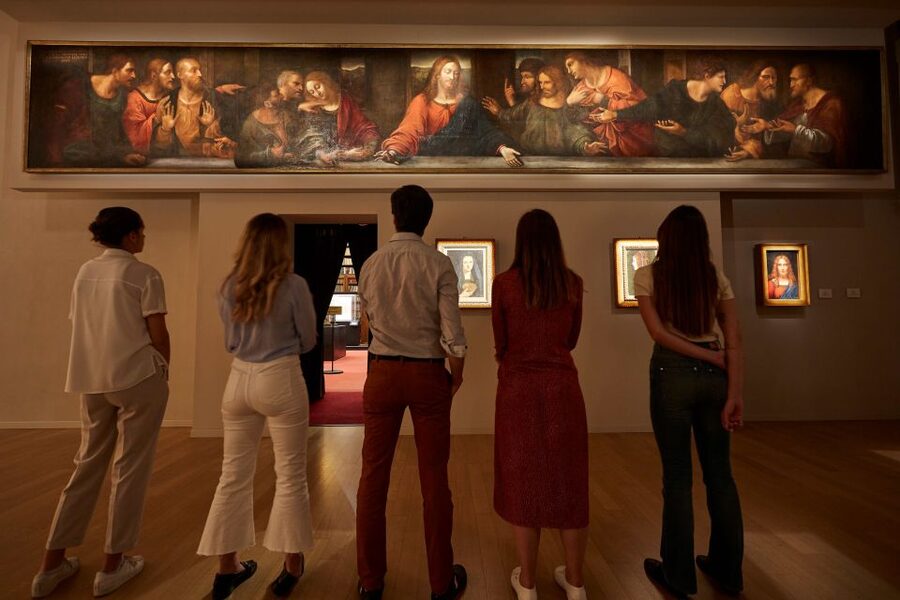
The Pinacoteca’s exhibition rooms are mostly wheelchair accessible, but the complete combined experience is not. The crypt has architectural barriers and is not suitable for wheelchair users or people with significant mobility limitations.
Baby strollers, luggage, large bags, and backpacks are not allowed. Leave bulky items elsewhere before arriving, since this is not the place to bring your full day bag.
The starting point is Piazza Pio XI 2. The visit ends in Piazza San Sepolcro after you leave the Pinacoteca and enter the crypt. That layout is convenient because the two sites connect naturally, but you should not expect to return to the starting entrance after the crypt.
Who will enjoy this visit most?
I would recommend this ticket to you if you like:
- Renaissance and Baroque painting
- Leonardo da Vinci’s drawings and working methods
- Libraries, manuscripts, and historic interiors
- Quiet museums that can be explored without a group
- Archaeology and the older layers of a city
- Short cultural stops close to the Duomo
It is also a good family choice for older children who can appreciate drawings, famous paintings, and an underground church. The variety keeps the visit from feeling like a single long gallery.
You may want to skip the combined ticket if you need a fully accessible outing, dislike self-guided museums, or have no interest in historical religious spaces. The crypt is atmospheric rather than grand, and it depends on context to make a strong impression.
Should you book the Ambrosiana and San Sepolcro ticket?
Book it if you want major art without the scale and crowds of Milan’s biggest sights. The Caravaggio, Raphael, Leonardo, Brueghel, and Codex Atlanticus provide plenty of substance, while the library room and underground crypt give the visit character.
Make sure you can manage stairs and uneven access in the crypt, leave large bags behind, and schedule your entry early enough to reach the crypt before 5:30 PM. If you prefer more explanation, add the audio guide or use the downloadable app. If you want only the paintings, choose the Pinacoteca alone.
For $25, this is a strong pick for an independent art lover who wants a compact, thoughtful stop near the Duomo, with a little ancient Milan added at the end.
FAQ
Where does the visit begin?
You begin at the Pinacoteca Ambrosiana at Piazza Pio XI 2 in Milan.
Where is the Crypt of San Sepolcro?
The crypt is in Piazza San Sepolcro. You exit the Pinacoteca onto this square, where the crypt entrance is located.
How long does the complete visit take?
The Pinacoteca normally takes about 1.5 hours. The crypt takes approximately 30 to 40 minutes, though you can spend more or less time depending on your pace.
What time is the last admission to the crypt?
The last admission is at 5:30 PM. The crypt closes at 6:00 PM, so finish the Pinacoteca in time to reach it.
Is this a guided tour?
No. The visit is self-guided. You can use a map, download the app to your device, or ask about the optional audio guide.
Is the audio guide included?
The audio guide is not included in the admission ticket. It has been available for an additional fee of about €4, while the app can be downloaded to your own device.
Can I use the ticket on another day?
The ticket is valid for one day. Check the available starting times when booking.
Can wheelchair users visit both attractions?
The complete combined visit is not suitable for wheelchair users because the crypt has architectural barriers. Most Pinacoteca exhibition rooms are wheelchair accessible, so visitors with mobility needs should consider booking the Pinacoteca only.
Are backpacks, luggage, or strollers allowed?
No. Baby strollers, luggage, large bags, and backpacks are not allowed.
Fresh on the Milan list
- Milan: Last Supper and Sforza Castle Guided Tour★ 4.6 · 498 reviews
- Milan: San Sepolcro Crypt Skip-the-Line Entry Ticket★ 4.2 · 512 reviews
- Milan: Sunset Navigli Food & Drinks Tour by Do Eat Better★ 4.5 · 517 reviews
- Milan Duomo Cathedral and Rooftop Terrace Guided Tour★ 4.8 · 531 reviews
- Small-Group Lake Como – Bellagio, Varenna & Hidden Waterfall★ 5.0 · 541 reviews
- Milan: Leonardo’s Last Supper and Michelangelo’s Pietà Tour★ 4.6 · 559 reviews
- From Milan: Cinque Terre Guided Full-Day Trip With Cruise★ 4.0 · 559 reviews
- Milan: Skip-the-Line Guided Walk and “The Last Supper”★ 4.5 · 606 reviews
Milan Tours, compared.
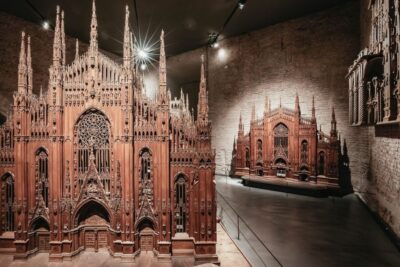
Cathedral and Duomo’s Terraces Entrance Ticket
Read our review →
City Sightseeing Hop-On Hop-Off Bus with Audio Guide
Read our review →
Milan Cathedral: Duomo Terraces Ticket (No Church Access)
Read our review →
Milan Cathedral Direct Entrance – Terrace Excluded
Read our review →
Guided Walking Tour & Last Supper Visit with Ticket
Read our review →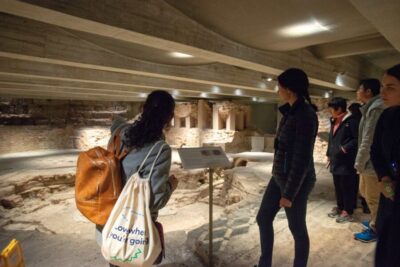
Fast-Track Milan Cathedral and Terraces Guided Tour
Read our review →
Browse the lists this tour appears in