Reviewed · TOURS
Caserta: Small-Group Royal Palace Tour
Caserta’s Royal Palace is the kind of place that makes a normal palace tour feel undersized. Built for the Bourbon rulers of Naples and completed in 1774, it contains about 1,200 rooms, a grand staircase with 116 marble steps, and royal apartments that rival the grandest courts in Europe. A two-hour guided visit gives you a useful route through this enormous building without wasting time at the ticket counter.
I like two things here. First, the guide brings the palace’s politics and family stories into rooms that could otherwise blur together. Second, the small-group format makes it much easier to hear and ask questions. The main consideration is that this tour covers the palace only, not the Royal Park or English Gardens, and the building is not suitable for wheelchair users or people with mobility impairments.
Key points at a glance

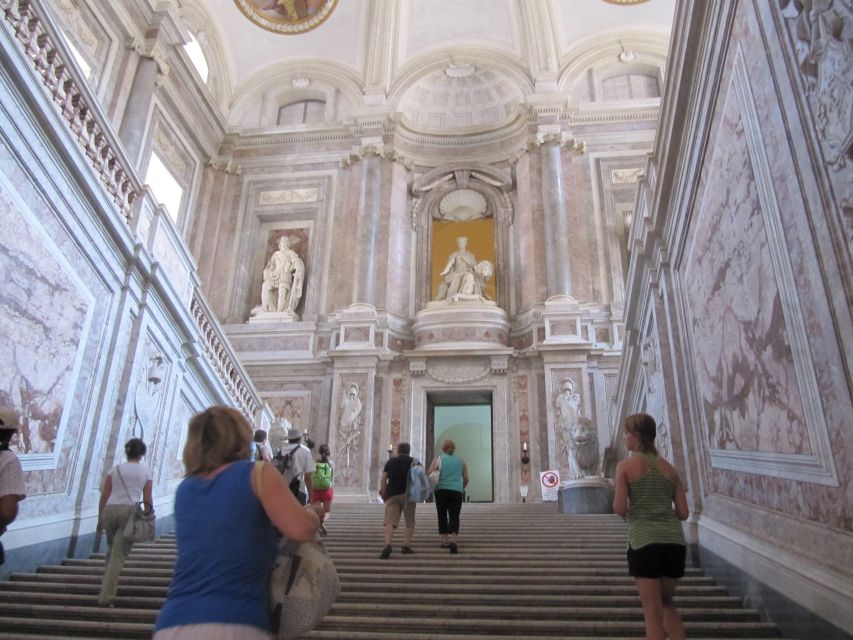
- The 116-step monumental staircase gives you a dramatic entrance to the royal apartments.
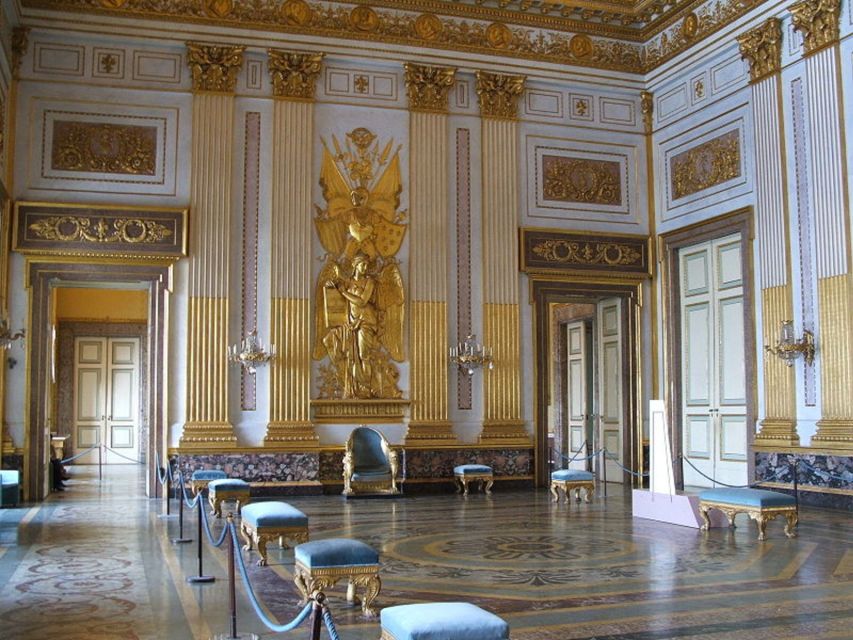
- The Throne Room, Astrea Room, and Four Seasons Room show off the palace’s decorative style from different angles.
- The Palatine Library adds a quieter, more scholarly side to the royal residence.
- Joachim Murat’s apartments connect the palace to Napoleon’s family and the changing politics of Naples.
- Small groups and live guides make the vast interiors easier to understand and navigate.
- The gardens require extra planning, since they are not included in this two-hour palace tour.
Why Caserta Palace deserves your time

Many grand European residences are famous for one ceremonial room and a few royal bedrooms. Caserta is different in scale. Its long corridors, grand apartments, formal chapel, library, and decorated state rooms were designed to express the power of the Bourbon rulers of Naples.
The building was designed by Luigi Vanvitelli, one of the leading architects of 18th-century Italy. Construction was completed in 1774, and the finished palace was intended to compete with Versailles in size and ceremony. That comparison is useful, but Caserta has its own character. The focus here is not just on glitter. You also see administration, religion, literature, dynastic politics, and the personal spaces of later rulers.
I recommend a guided visit because the palace can be visually overwhelming. Without context, you may remember marble, painted ceilings, chandeliers, and one enormous room after another. A good guide gives each space a purpose and explains why it was built, who used it, and how it fits into the story of Naples and the Kingdom of the Two Sicilies.
The tour is led in English, Spanish, Italian, French, German, or Portuguese. Several guides have received especially warm praise for clear explanations and an engaging manner, including Alessia, Gennaro, Bruno, Walter, Sylvia, Antonietta, and Michele. Guides may vary by date, so you should not book expecting one particular person unless the operator confirms it.
What else people book in Italy on the same trip:
- Vatican: Museums & Sistine Chapel Entrance Ticket
★ 4.5 · 144,003 reviews - Vatican Museums & Sistine Chapel Tour with Optional Basilica
★ 4.3 · 67,413 reviews - Colosseum, Roman Forum & Palatine Guided Tour
★ 4.7 · 63,148 reviews
Meeting at Piazza Carlo di Borbone
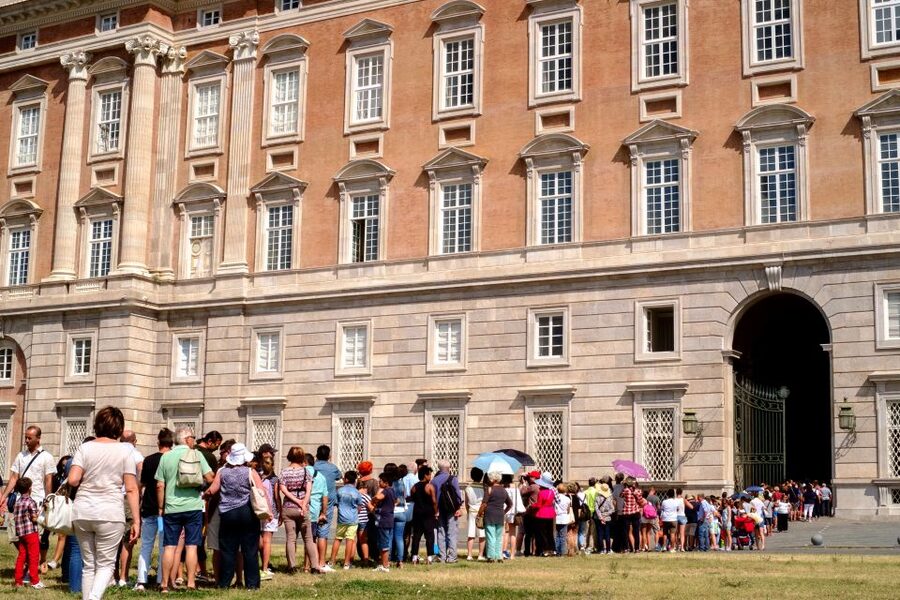
The meeting point is Piazza Carlo di Borbone, at the central entrance portal beneath the hanging flags. Look for the guide holding an ASKOS TOURS sign. This is a simple meeting arrangement, but the square and palace entrance are large enough that arriving a little early is sensible.
Transportation is not included. You need to make your own way to the palace and arrive at the stated starting time. The tour begins at the palace rather than at a Naples hotel or railway station, so check your route before booking if Caserta is part of a wider Campania day.
The skip-the-line ticket is useful here. Caserta attracts substantial interest, and avoiding the ticket queue means more of your two hours can be spent inside the building. Skip-the-line access does not mean you can ignore the meeting time. You still need to find the group and pass through the entrance with the guide.
Starting with the chapel and garden view
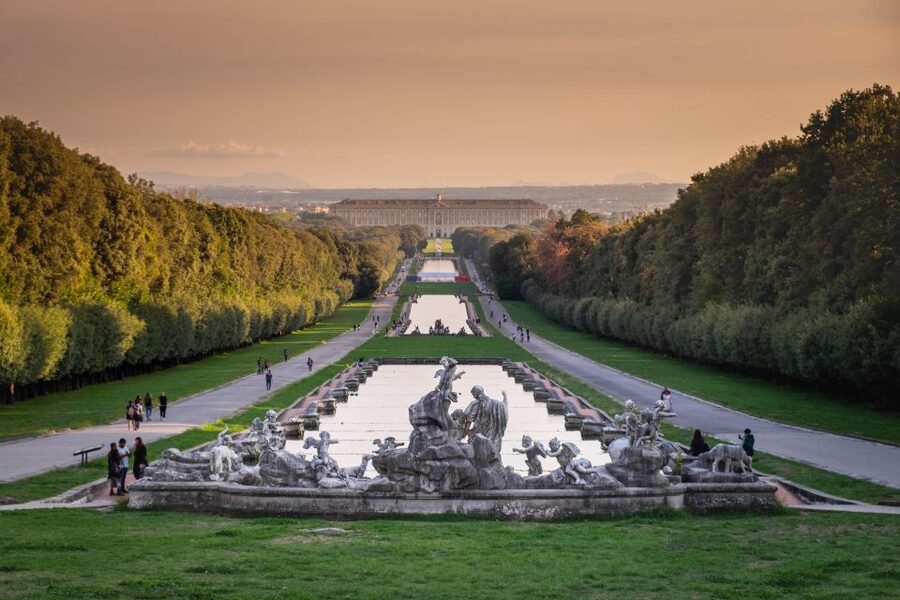
The visit begins with a look toward the gardens, giving you an early sense of the palace’s scale. This is a smart introduction. The gardens stretch out from the building in a long formal axis, and seeing them from the palace helps explain why Caserta is more than a collection of decorated rooms.
The tour then includes the Palatine Chapel. This is a sacred room within the royal complex, decorated with frescoes and detailed architectural work. It provides a change of pace from the palace’s state rooms and shows how religious life was built into court life.
I find this part valuable because it reminds you that the royal residence was not only a stage for banquets and official ceremonies. Worship, ceremony, and political image were closely linked. The chapel’s decoration rewards a slower look, although the two-hour schedule means your guide will keep the group moving.
The gardens are not part of this guided visit. If you want to see the Royal Park and English Gardens afterward, allow extra time and plan your route. The grounds are very large. One practical detail is especially important: the English Gardens close at 2 p.m., so check the timing before you leave the palace. Transport options around the grounds include an electric bike, a shuttle, or a golf cart, according to the information provided. These services differ in how far they take you, and a golf cart can continue through the gardens while an electric bike or shuttle takes you to the garden entrance.
The grand staircase with 116 marble steps
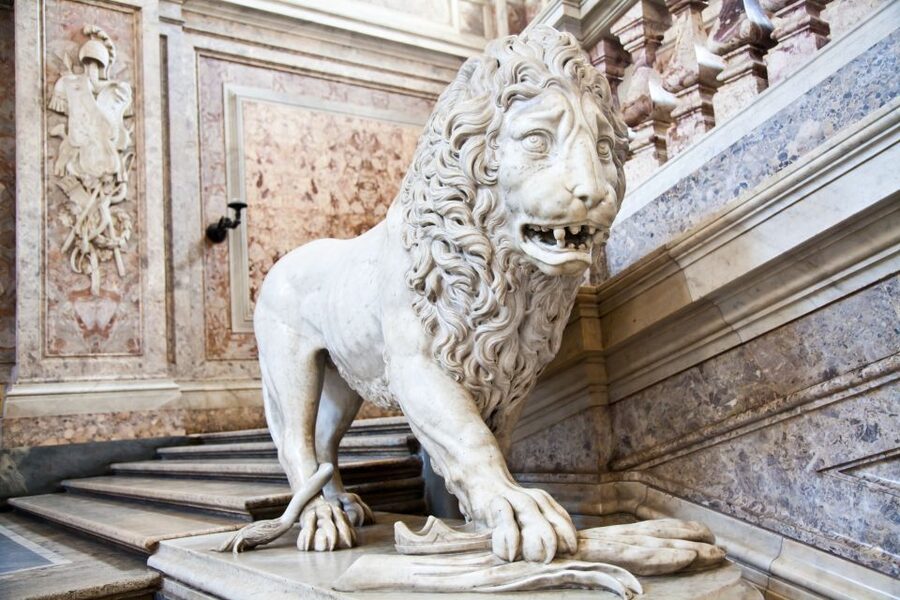
From the chapel, you go up the monumental staircase to the upper floor. The staircase has 116 marble steps and is decorated with statues. It is not a minor passage between rooms. It was designed as a theatrical approach to the royal apartments, making visitors feel the weight and ceremony of the court before they reached the king.
Take a moment here to look upward and back toward the entrance. The scale is easy to appreciate from the staircase, and the statues add to the sense that you are moving from the public entrance into a more private royal world.
This is also the part of the visit that matters most for anyone with limited mobility. The activity is specifically listed as unsuitable for people with mobility impairments and wheelchair users. Even if you can manage stairs, the palace route involves standing and walking for much of the two hours. Ask the operator directly about your needs before booking rather than assuming the route can be adapted.
Same city, an entirely different afternoon:
- Milan: Cathedral and Duomo’s Terraces Entrance Ticket
★ 4.6 · 61,054 reviews - Venice: Doge’s Palace Reserved Entry Ticket
★ 4.6 · 42,716 reviews - Vatican Museums, Sistine Chapel & St Peter’s Basilica Guided Tour
★ 4.5 · 39,149 reviews - Rome: Colosseum, Palatine Hill and Roman Forum Guided Tour
★ 4.8 · 32,814 reviews
State rooms: ceremony in the Throne Room
The Throne Room is the main ceremonial stop. It was used by the Neapolitan kings and is decorated to project authority, rank, and wealth. The room’s details make more sense when your guide explains how royal audiences worked and why every part of the setting was carefully arranged.
You should expect decoration on a grand scale, but do not rush past the smaller details. Ceiling work, wall ornament, furnishings, and the arrangement of the room all contribute to its purpose. The throne was not simply a comfortable chair. It was the visual center of a political system.
The guides are particularly useful here because the palace’s size can make it hard to know what deserves your attention. Alessia, for example, is praised for adding historical context and connecting palace stories to modern life. Other guides, including Gennaro and Sylvia, are noted for clear English and detailed explanations about the palace, Naples, and the families who built it.
Celestial designs in the Astrea Room
The Astrea Room offers a different mood from the Throne Room. Its decoration uses celestial motifs, giving the room an atmosphere shaped by stars, sky, and mythological imagery. This is one of the places where the artistic program becomes easier to read as a whole.
The room is worth seeing alongside the Four Seasons Room because the two show different ways artists used painted decoration to shape a room’s identity. Astrea points upward and outward to the heavens. The Four Seasons Room turns to the cycle of nature, with frescoes representing spring, summer, autumn, and winter.
I like this pairing because it gives you a simple way to compare the palace’s decorative language. You are not only looking at pretty ceilings. You are seeing how royal interiors used mythology, nature, and cosmic imagery to suggest order and control.
The Four Seasons Room and the palace’s visual storytelling
The Four Seasons Room is decorated with frescoes representing the seasons. It is a good stop for anyone who likes art but does not want a tour limited to dates and royal names. The images give your guide a chance to explain symbolism, changing moods, and the way decoration was used to create an ideal courtly setting.
Caserta can sometimes feel too large to absorb in one visit. The best guides help by turning rooms into chapters. One room may be about ceremony, another about religion, another about learning, and another about a ruler’s personal taste. That structure keeps the tour from becoming a parade of names and dates.
The group format matters here. With a small group, you can stand close enough to hear the explanation and ask a quick question without holding up a large crowd. Headphones are provided if the group exceeds six people. A very small group may not need them, which can make the visit feel more personal.
A quieter stop in the Palatine Library
The Palatine Library brings literature and learning into the story. Its shelves contain a large collection of rare books, making it one of the palace’s more distinctive rooms. It also gives you a break from the most theatrical spaces.
Royal libraries were practical places of study, but they also represented status. A ruler who collected books was displaying access to education, scholarship, and European intellectual life. Your guide can help you see the library as part of the court’s identity, not just as a room filled with shelves.
If you enjoy books, architecture, or the quieter parts of grand residences, this may be your favorite stop. If you prefer only dramatic interiors, it may feel less immediately exciting than the staircase or Throne Room. That contrast is useful. The palace was a working court with many functions, not one continuous showpiece.
Joachim Murat’s apartments and Napoleonic connections

The tour finishes with the apartments of Joachim Murat, Napoleon’s brother-in-law and King of Naples. These rooms add a later political layer to the palace. They show how the residence continued to serve changing rulers and how European power struggles reached Naples.
Murat’s apartments are also more personal in tone than the major ceremonial rooms. Their lavish decoration gives you an idea of how elite residents lived, while the historical connection puts the rooms in the wider story of Napoleonic Europe.
This final section works well because it moves away from the earliest Bourbon project and shows that Caserta was not frozen in one period. Different rulers left their mark, and the palace remained tied to the political life of southern Italy.
What the two-hour schedule really covers
Two hours is enough for a well-planned introduction to the main palace rooms. You see the chapel, monumental staircase, state apartments, Throne Room, Astrea Room, Four Seasons Room, Palatine Library, and Murat apartments. For a first visit, that is a strong selection.
It is not enough for every corner of a complex this size. Caserta has about 1,200 rooms, and you will not inspect all of them. The tour’s value lies in choosing important rooms and giving them context rather than trying to cover the entire building at walking speed.
I would treat the two hours as the guided core of your visit. Afterward, you can decide if you want to spend more time in the palace or tackle the grounds. Do not assume the garden visit will fit automatically. The Royal Park and English Gardens are excluded, and their size can add a substantial amount of walking.
Price, group size, and overall value
At $23 per person, this is a strong-value option if you want both admission and a live explanation. You are paying for skip-the-line entry and a two-hour guide, not transportation, meals, or a garden tour. That distinction matters when you set your total budget.
A self-guided visit may cost less depending on the admission arrangement available on your date, but a palace this large is easy to experience as a sequence of grand rooms without a clear story. The guide adds value by pointing out details such as the hidden orchestra in the main entrance and hidden passages, details that Alessia has been praised for explaining during the route.
The small group is another reason the price works. Groups of around five or fewer can hear easily and interact with the guide. Larger groups may use headphones when there are more than six people. A private group is also available if you want a more tailored visit, though the supplied price is for the standard experience and does not establish the private-group cost.
The operator offers free cancellation up to 24 hours before the activity for a full refund, and you can reserve now and pay later. Those terms are helpful if your Campania plans are still shifting.
Who should book this Caserta tour
I would choose this tour if you are visiting Caserta for the first time, want historical context, or have limited time before continuing through Campania. It is also a good fit for anyone who likes architecture, royal politics, painted interiors, or the connection between Naples and wider European history.
Families can benefit from the guide’s storytelling. Alessia has been especially effective with children between nine and eleven, using details suited to their interests rather than giving only a formal lecture. A lively guide can make the size of the building feel exciting instead of tiring.
You should think twice if your priority is the gardens. They are not included, and the grounds are large enough to require separate planning. You should also reconsider if stairs and prolonged walking are difficult, since the activity is not suitable for wheelchair users or people with mobility impairments.
The palace is closed every Tuesday, January 1, and December 25. Check the available start times when booking, and make sure the tour schedule leaves enough time for the gardens if you want to see them before the English Gardens close.
Should you book it?
Book this tour if you want the palace’s major rooms explained by a live guide and you value a small group more than complete independence. At $23, the combination of admission, skip-the-line access, and two hours of interpretation is good value for a building of this size.
Skip it if you only want to roam at your own pace, need a fully accessible route, or mainly came for the Royal Park and English Gardens. For most first-time visitors, though, the guide is the sensible choice. Caserta is too large for its best details to explain themselves.
FAQ
Where does the Caserta Palace tour meet?
Meet the guide at the central entrance portal in Piazza Carlo di Borbone, beneath the hanging flags. The guide will be holding an ASKOS TOURS sign.
How long does the guided tour last?
The guided visit lasts two hours.
What rooms are included?
The route includes the Palatine Chapel, monumental staircase, Throne Room, Astrea Room, Four Seasons Room, Palatine Library, and the apartments of Joachim Murat.
Are the gardens included?
No. The guided tour covers the Royal Palace. A guided tour of the Royal Park and English Gardens is not included.
Which languages are available?
Live guides are available in English, Spanish, Italian, French, German, and Portuguese.
Is the tour suitable for wheelchair users?
No. The activity is listed as unsuitable for wheelchair users and people with mobility impairments.
Fresh on the Italy list
- Venice Doge’s Palace and St Mark’s Basilica Guided Tour★ 4.5 · 189 reviews
- From Cala Gonone: Grotta del Bue Marino Boat Trip★ 4.4 · 189 reviews
- Paestum Small Group Tour with an Archaeologist★ 5.0 · 189 reviews
- Rome: Award-Winning Roman Food Tours★ 4.9 · 189 reviews
- Rome Private Custom Tour with a Local, Highlights & Hidden Gems★ 5.0 · 189 reviews
- Vatican Museums and Sistine Chapel Skip-the-Line Entry Ticket★ 4.5 · 189 reviews
- Cagliari: Old Town Guided E-Bike Tour★ 4.9 · 189 reviews
- VIP Colosseum & Roman Forum Small Group Guided Tour★ 5.0 · 189 reviews
Tours, compared.

Vatican Museums & Sistine Chapel Tour with Optional Basilica
Read our review →
Colosseum, Roman Forum & Palatine Guided Tour
Read our review →
Vatican Museums, Sistine Chapel & St Peter’s Basilica Guided Tour
Read our review →
Colosseum, Palatine Hill and Roman Forum Guided Tour
Read our review →
Guided Tour of Colosseum, Roman Forum & Palatine Hill
Read our review →
Colosseum, Roman Forum and Palatine Hill Guided Tour
Read our review →
Naples Underground Entry Ticket and Guided Tour
Read our review →