
Reviewed · FOOD & DRINK
Sorrento: Guided Walking Tour & Limoncello Tasting
The best part of this Sorrento tour is that it treats the town as more than a pretty stop on the Bay of Naples. You’ll learn how its valleys formed, why its old streets look the way they do, and how local crafts and lemons became part of the city’s identity. I like the local perspective from guides such as Mario, who grew up in Sorrento, and I like the well-paced route with plenty of time for questions and photographs.
The main caution is that the limoncello is a tasting, not a full food tour. You’ll sample small amounts of several liqueurs, then walk away with a much better sense of Sorrento. The route is easy for many people, but it covers about 3 kilometers and includes some hills and steps.
Key points to know
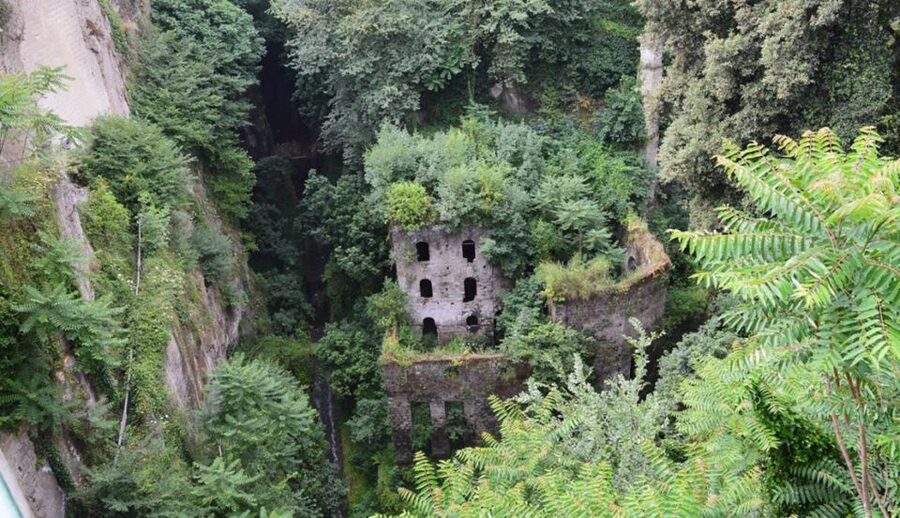
- The Vallone dei Mulini comes first: See Sorrento’s famous abandoned valley and learn how water, rock, and old mills shaped the city.
- Mario brings local context: The English-speaking guide grew up in Sorrento and explains the town through its stories, buildings, customs, and daily life.
- The route covers major sights: You’ll visit Via San Cesareo, Sant’Antonino Square, the San Francesco cloister, Villa Comunale, and Sedil Dominova.
- Sorrento’s inlay gets proper attention: You’ll learn how the town’s signature wood-inlay craft developed and why it remains important.
- The tasting is small but varied: Try organic Sorrento lemon liqueur, limoncello cream, pistachio cream, and cantaloupe melon cream.
- It works best early in your stay: The walk helps you get your bearings and gives you ideas for places to revisit later.
Why this two-hour walk is useful
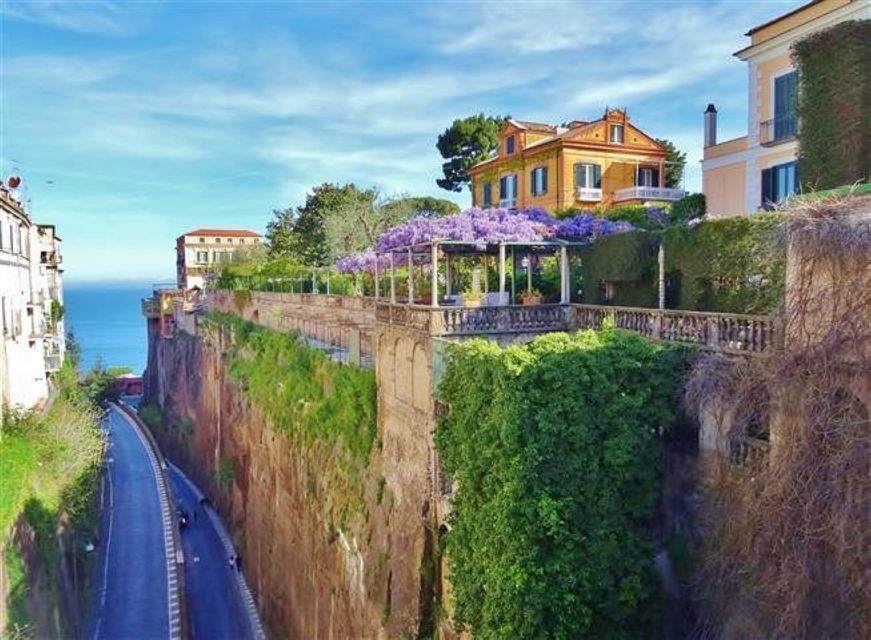
Sorrento is easy to enjoy and surprisingly easy to misunderstand. You can stroll its shopping lanes, admire the sea views, and eat well without learning much about the place beneath your feet. This tour fills in that missing layer.
For $41 per person, you get two hours with a local English-speaking guide, a walk of roughly 3 kilometers, several important sights, and a limoncello tasting. That is a fair price if you want an introduction rather than a quick photo walk or a dedicated drinks experience.
I especially like the way the tour connects different parts of Sorrento. The old street system, the deep valley, the Franciscan cloister, the sea-facing park, the wood-inlay tradition, and the lemon trade are not presented as unrelated stops. Together, they explain why Sorrento feels both like a resort town and an old southern Italian city.
The tour is also useful at the beginning of a visit. If you take it during your first day, you’ll pass restaurants, shops, viewpoints, and historic corners that may deserve a second look. One afternoon starting between 4 and 6 p.m. worked well for an arrival day, while an early morning may be better if you want cooler temperatures and lighter foot traffic.
A few other Sorrento mornings to weigh against this
- Sorrento Farm and Food Experience including Olive Oil, Limoncello, Wine tasting
★ 5.0 · 2,524 reviews - Pizza School with Wine and Limoncello Tasting in a Local Farm
★ 5.0 · 845 reviews - Walking Food Tour in Sorrento w/ Limoncello Factory Lemon Grove
★ 4.5 · 821 reviews
Starting at Piccadilly Pub
The meeting point is in front of Piccadilly Pub at Via Fuorimura 1. Look for the guide wearing a red sports cap. You must wait directly in front of the entrance, not across the street or somewhere beside the building.
This detail matters because the guide arrives exactly at the scheduled start time, rather than waiting there well in advance. Arrive a few minutes early, but do not worry if you do not see the guide before the official start. If you have a delay or cannot find the meeting point, contact the provider through the booking platform’s messaging service. International phone calls are not accepted.
The tour cannot accommodate delays of more than 10 minutes once the group has moved into the city. Sorrento’s lanes and courtyards make it hard for a guide to communicate with late arrivals, so punctuality is part of the bargain.
Vallone dei Mulini: Sorrento’s dramatic first view

The Vallone dei Mulini is one of the most unusual sights in Sorrento. From the viewing point, you look down into a deep, overgrown valley containing the remains of old mills and other signs of the town’s working past.
The guide uses this stop to explain Sorrento’s physical formation. That gives you more than a scenic photograph. You begin to understand how the deep ravines and high edges shaped movement through the town, where water once powered industry, and why Sorrento has such a distinct arrangement of streets and viewpoints.
You will spend about 15 minutes here. Bring your camera, but listen before rushing to the rail for a picture. The explanation of the valley gives the view its meaning.
The drawback is simple: you see the Vallone dei Mulini from above rather than wandering through it. This is a viewpoint and interpretation stop, not a hike into the valley.
Via San Cesareo and the old-town streets

From the valley, the walk continues into Sorrento’s historic center. Via San Cesareo is the city’s oldest street, a narrow route lined with artisan shops and local businesses.
This is where you get a feel for Sorrento as a lived-in town rather than a string of monuments. The street can be busy, and its narrow shape means you need to stay aware of other pedestrians. Still, the slower pace makes it easier to notice doorways, workshops, small details in the buildings, and the way the old street fits modern shopping.
The guide provides the historical setting while you walk, stopping for explanations rather than delivering one long speech in a single square. That format suits Sorrento well. You can ask questions, take photographs, and keep moving at a comfortable pace.
If you have already visited Sorrento, do not assume this section will feel repetitive. A local explanation can change how you read streets you previously saw only as shopping lanes.
More walking tours in Sorrento:
- Milan: Guided Walking Tour & Last Supper Visit with Ticket
★ 4.7 · 5,409 reviews - Naples: Street Food Walking Tour with Local Guide
★ 4.8 · 4,256 reviews - Venice Walking Tour and Gondola Ride
★ 3.5 · 3,630 reviews - Venice: Rialto Bridge & Offbeat Unusual Venice Walking Tour
★ 4.2 · 3,538 reviews
Sant’Antonino Square and local devotion
Sant’Antonino Square is named for Sorrento’s patron saint. Here, the guide explains the story of Saint Antonino, including the traditions surrounding his life and miracles.
This stop gives you a useful look at the religious side of Sorrento. The city’s identity is not only based on sea views, citrus fruit, and craft shops. Catholic traditions remain part of its public spaces and annual calendar, and the square helps place those traditions in the city’s daily setting.
The tour may change slightly if a religious event or institutional activity affects access. The provider says an alternative point of equal quality will be used when needed, while the duration and general content remain the same.
San Francesco cloister: quiet stone beside the town
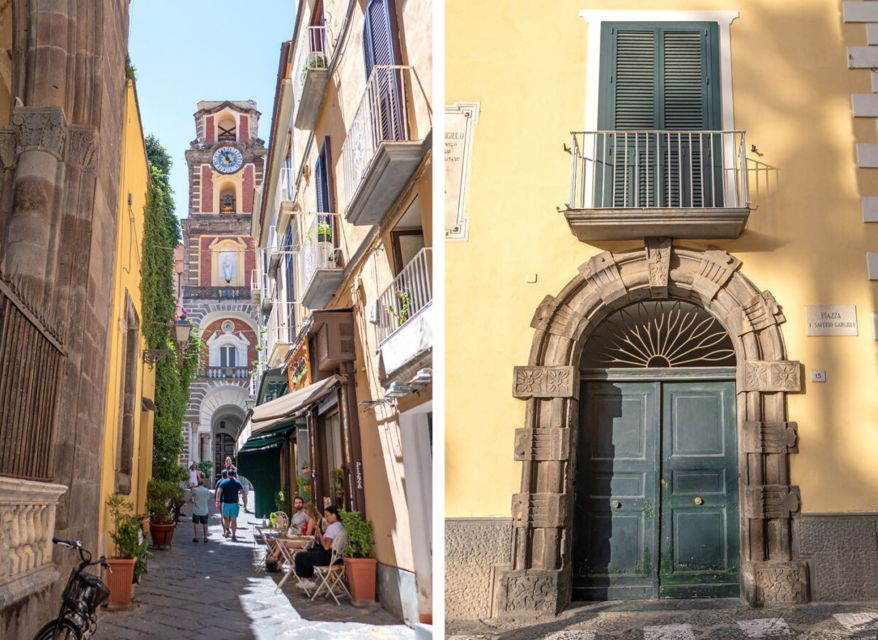
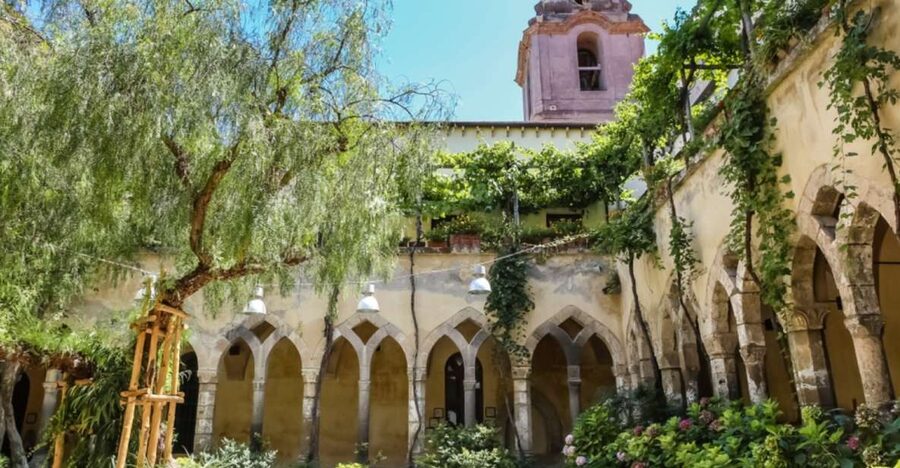
The Chiostro di San Francesco is a 13th-century cloister connected with the Franciscan friars. It is one of Sorrento’s oldest and most attractive buildings, and the tour allows about 15 minutes for the visit.
I like this stop because it changes the rhythm of the walk. After the street activity and open views, the cloister offers a quieter architectural setting. Its age also helps you see Sorrento in a wider time frame. This is not simply a modern resort with a few old walls attached. Its religious buildings reach back many centuries.
The visit can be affected by closures or special events, so do not treat entry as guaranteed on every date. The tour is designed to replace unavailable stops with another point of interest, rather than leaving a gap.
Villa Comunale and the Bay of Naples
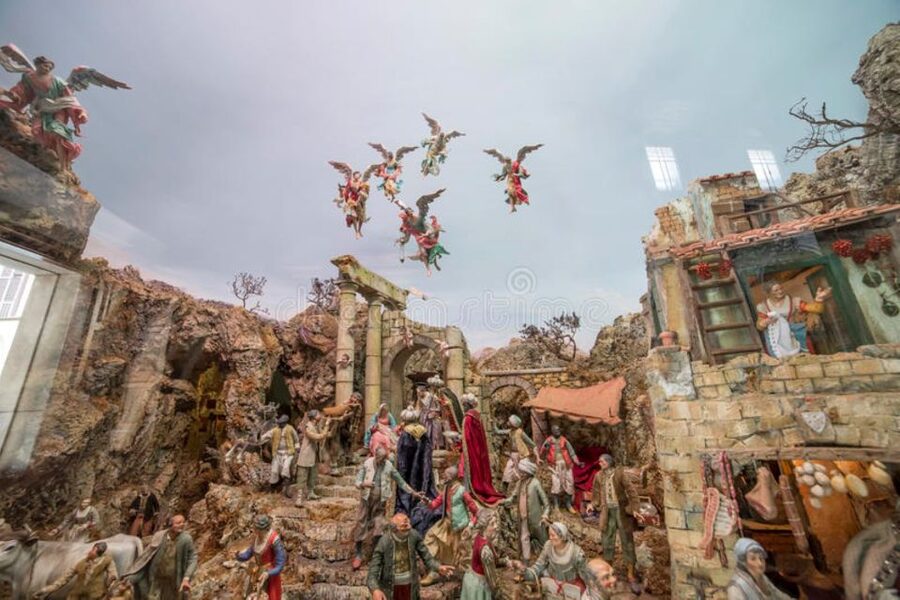
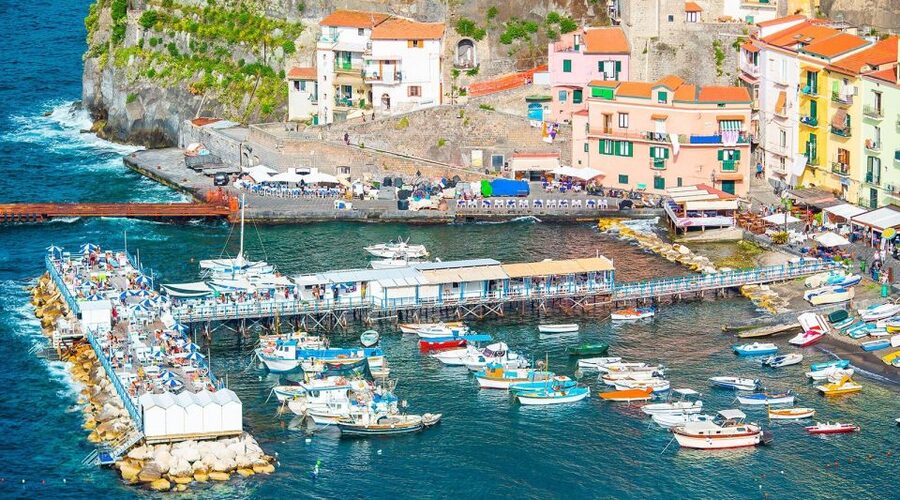
Villa Comunale is Sorrento’s public park overlooking the sea. It is the main photography stop, with views across the Gulf of Naples and the surrounding coast.
You’ll want to pause here. The park provides one of the clearest chances to connect the town’s elevated position with its seaside setting. It is also a good place to ask the guide about orientation, especially if you are still figuring out how Sorrento relates to the water, the port, and the wider region.
The exact view depends on weather and visibility. On a clear day, you can expect a strong scenic payoff. In rain or heavy cloud, the view may be less impressive, but the stop still helps explain Sorrento’s position.
Do not confuse this with a beach visit. The tour focuses on the town above the sea, not swimming, boating, or transport down to the waterfront.
Sedil Dominova and the old civic center
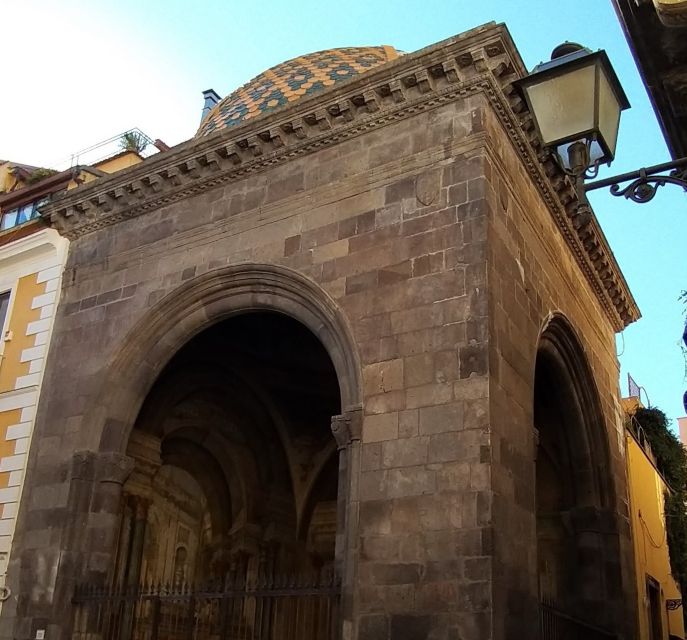
Sedil Dominova was Sorrento’s ancient parliament and is one of the city’s most distinctive old buildings. The stop lasts about 10 minutes, enough to introduce its civic purpose and place in Sorrento’s development.
This is a particularly useful detail for understanding how the town once governed itself. Many walking tours focus only on churches and scenic terraces. Sedil Dominova adds a public, political layer to the story.
The stop is short, but it fits the tour’s purpose. You are building a broad picture of Sorrento rather than studying one building at length. If you prefer detailed architectural analysis, a specialist tour may give you more time at each site. If you want a well-organized first look, the variety works in your favor.
Sorrento inlay: the city’s signature craft

The tour also explains Sorrento’s famous inlay work. This traditional art uses carefully arranged pieces of wood to create decorative pictures and patterns.
You will learn about the history, tradition, and production method behind the craft. That context is valuable when you browse shops later. Without it, an inlaid box or tabletop can look like just another souvenir. With it, you can better judge the care involved and recognize why the craft is closely linked with Sorrento.
The experience does not promise a full workshop demonstration, and it is not primarily a shopping trip. The focus is on understanding the art. You may find local artisan shops along Via San Cesareo, but purchases are your choice.
The lemon garden and limoncello tasting
Near the end, you visit a small lemon garden. The guide explains the history of Sorrento lemons and the basic method used to produce limoncello, the city’s best-known liqueur.
The tasting takes place at a partner shop and includes traditional organic limoncello made with certified organic lemons of the Amalfi Coast. You can also try limoncello cream, pistachio cream, and cantaloupe melon cream. Food and olive oil tasting is included only if you select that option, so check the booking choice if those products matter to you.
The pours are deliberately small, about half the amount normally served in a bar. That is sensible. Limoncello has a high alcohol content, and several samples add up quickly. Think of this as a chance to compare aroma, sweetness, texture, and finish, not as an evening of drinking.
I like that the tasting is placed between the cultural stops and the tour’s end. It gives you a relaxed break and ties the city’s famous lemon produce to something you can actually taste. The shop also offers products suitable for gifts or for enjoying during your stay, but buying is not required and the tasting is not meant to pressure you into a purchase.
If you come mainly for a generous food spread, you may find the final stop modest. One participant felt the cost seemed high for a two-hour walk and only a few small pours. That is a fair concern. The value rests mainly in the guide, the historical explanations, and the route, with the liqueur as a pleasant finish.
Pace, distance, and practical comfort
The walk covers about 3 kilometers at an easy, fairly slow pace. There are regular pauses for explanations, questions, and photographs, and the route is mostly on flat ground.
You should still expect some hills and steps. Parts of Sorrento’s old center can be challenging if you have difficulty walking, particularly if the route includes steps toward the port area. The activity is not suitable for people with mobility impairments, heart problems, or hearing impairments.
Wear comfortable shoes with a secure grip. Bring water, and pack an umbrella or rain gear. Heavy rain, thunderstorms, or hail can cancel the tour, with a full refund communicated through the provider.
Oversize luggage, bikes, electric wheelchairs, party groups, alcohol, and drugs are not allowed. Hotel pickup and drop-off are not included, so you need to reach Piccadilly Pub on your own.
Who gets the most from this tour
I would choose this experience if you want a clear introduction to Sorrento’s past, architecture, traditions, and local products in one compact walk. It suits first-time visitors especially well, but it can also work for repeat visitors who want a stronger sense of place.
It is a good match for you if:
- You prefer a local guide to a map or audio app.
- You want major sights explained in context.
- You enjoy a moderate walking route with stops for photographs.
- You are curious about lemons, limoncello, and Sorrento inlay.
- You want restaurant and local suggestions from someone who knows the town.
I would skip it if you want a beach outing, a long food tasting, a private car tour, or a focused workshop on wood inlay. The tasting is secondary. The main event is the town itself.
Is the $41 price worth it?
At $41, the tour offers solid value when you consider the amount covered in two hours. You get a local guide, a route through several central sights, explanations of Sorrento’s physical setting and history, a look at local craft, and a tasting of several liqueurs.
The value drops if you are interested only in limoncello. Small pours are intentional, and the tour does not include a full meal. You could visit shops independently for products, but you would miss the explanation of how the lemon tradition fits into Sorrento’s identity.
Free cancellation up to 24 hours before the start and the option to reserve now and pay later make it easier to fit into a changeable itinerary. I would book it early in your stay, then use the rest of your time to return to the places that caught your eye.
Should you book the Sorrento walking tour?
I would book this tour if you want an informed first look at Sorrento led by someone who lives its local story. Mario is repeatedly described as warm, clear, enthusiastic, and deeply familiar with the town, and that personal connection is the experience’s strongest feature.
Choose an earlier time if possible, especially during busy periods when cruise visitors fill the center. Bring good shoes, arrive at the red-cap meeting point on time, and set realistic expectations about the tasting. If you want history, architecture, views, local crafts, and a small taste of lemon liqueur in one efficient outing, this is a strong choice. If you want the liqueur to be the main attraction, spend your money elsewhere.
FAQ
How long is the Sorrento walking tour?
The tour lasts two hours and covers approximately 3 kilometers at an easy, fairly slow pace with pauses for explanations and photographs.
Where does the tour begin?
It begins in front of Piccadilly Pub at Via Fuorimura 1. The guide wears a red sports cap and waits directly in front of the pub entrance.
Where does the tour finish?
The tour finishes at Campaniadamare.
Is hotel pickup included?
No. Hotel pickup and drop-off are not included, so you must make your own way to the meeting point.
What liqueurs are included in the tasting?
The tasting includes organic traditional limoncello. You can also sample limoncello cream, pistachio cream, and cantaloupe melon cream.
Is the tour suitable for people with limited mobility?
No. The activity is not suitable for people with mobility impairments or heart problems. The route is mostly flat but includes some hills and steps.
What happens if it rains?
You should bring an umbrella, rain gear, water, and suitable shoes. In cases of heavy rain, thunderstorms, or hail, the tour may be cancelled and a full refund provided.
Fresh on the Sorrento list
- Sorrento: Positano & Amalfi Coast Small-Group Boat Tour★ 4.7 · 194 reviews
- Shared Cooking Class with Fresh Garden Ingredients in Sorrento★ 5.0 · 194 reviews
- Amalfi Coast Private Boat Tour★ 5.0 · 194 reviews
- Bella Sorrento Evening ‘Progressive Dinner’ Experience★ 5.0 · 196 reviews
- From Sorrento : Private Capri Island Daily Boat Tour★ 5.0 · 198 reviews
- From Sorrento: Pompeii and Vesuvius Tour★ 4.5 · 201 reviews
- SORRENTO: Pizza School Mastering Neapolitan Delights★ 4.9 · 201 reviews
- Full-Day Capri, Anacapri and Blue Grotto Tour from Sorrento★ 5.0 · 204 reviews
Food & Drink, compared.

Small-Group Wine Tasting Experience in the Tuscan Countryside
Read our review →
Tuscany & Montepulciano Day Trip with Lunch & Wine Tasting
Read our review →
Winner 2025 Rome Twilight Trastevere Food Tour by Eating Europe
Read our review →
SMALL-GROUP Wine Safaris: Tuscan Wine Tasting Tours from Florence
Read our review →
Winner 2025 Florence Sunset Food & Wine Tour by Eating Europe
Read our review →
San Gimignano, Siena, Monteriggioni, Chianti Day Trip with Lunch & Wine Tasting
Read our review →
Browse the lists this tour appears in