
Reviewed · MILAN TOURS
Milan: Sforza Castle and Michelangelo’s Pietà Rondanini Tour
Michelangelo’s final sculpture is the heart of this tour. The Pietà Rondanini is unfinished, spare, and strangely modern, with long, almost weightless figures that look far removed from the polished bodies of his youth. I like the way the guide connects this quiet marble work to Michelangelo’s old age and the fear of death. I also like the tour’s focus on the castle courtyards, where Milan’s rulers, artists, engineers, and family dramas come together.
The main drawback is the clock. Ninety minutes goes quickly, especially if you want to linger in the museums or examine every architectural detail. The archaeological museum and other collections may receive only a quick look, so this works best as a guided introduction rather than a complete museum visit.
Key points to know before booking
- Michelangelo’s final work: Study the Pietà Rondanini, an unfinished sculpture shaped by the artist’s late-life spiritual concerns.
- Leonardo at the ducal court: Learn how Leonardo served Ludovico il Moro as an engineer and architect, not only as the painter of The Last Supper.
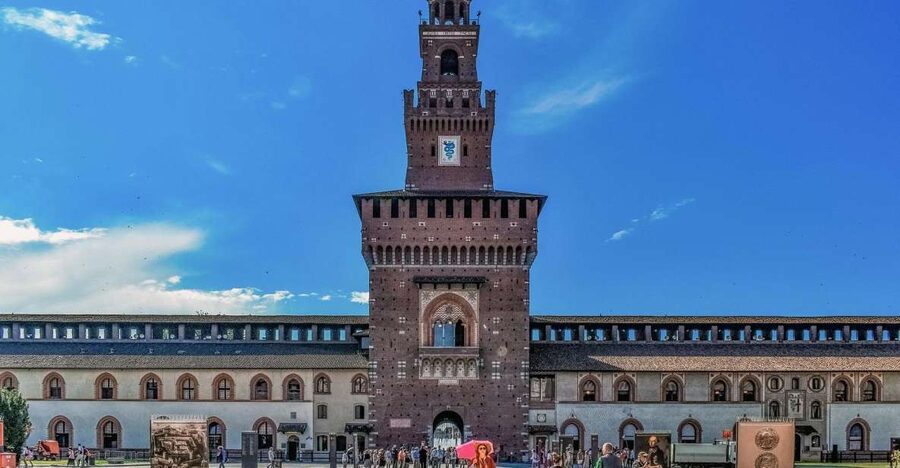
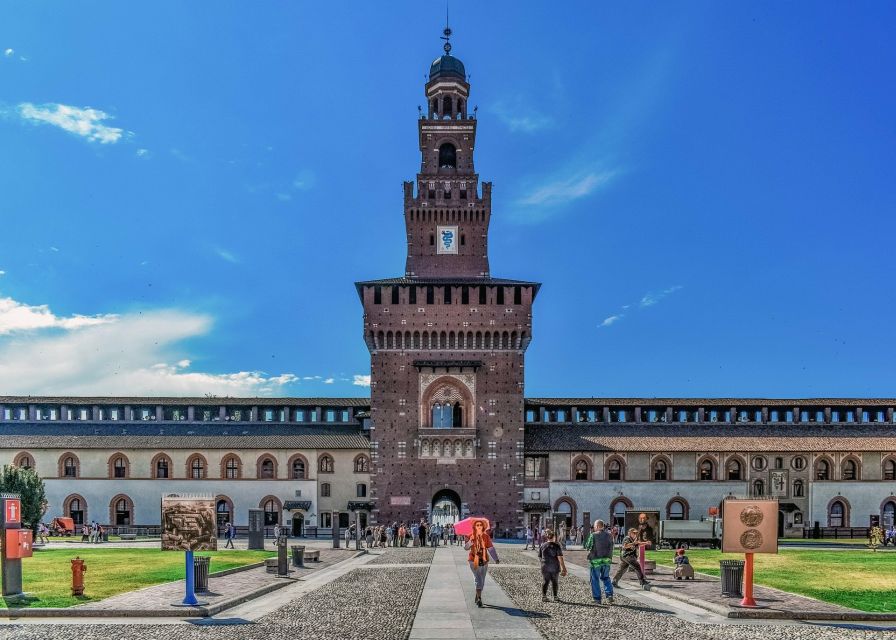
- Two major courtyards: Walk through the Corte Ducale and Cortile della Rocchetta, the castle’s grand internal spaces.
- A short, focused format: The 1.5-hour schedule suits a busy Milan itinerary, but it limits time for browsing museums alone.
- Small-group attention: The experience is designed for a small group, with private bookings also available.
- Easy central meeting point: Meet in Piazza Castello beneath the Filarete clock tower, outside the castle courtyards.
Why Pietà Rondanini deserves the first look
Many people arrive at Sforza Castle expecting thick walls, towers, and military history. They get that, but the most affecting moment comes inside the museum with Michelangelo’s Pietà Rondanini.
This was the sculpture Michelangelo worked on until only a few days before his death at age 89. It was not finished in the usual sense. The marble still carries rough surfaces, cuts, and unfinished areas. The figures seem to emerge from the stone rather than sit fully apart from it.
You will not see the smooth anatomical perfection associated with Michelangelo’s David or the Sistine Chapel figures. Instead, Mary and Christ appear elongated and almost fused together. Christ’s body seems to sink into Mary’s support, while the rough marble gives the work a sense of strain and uncertainty.
That unfinished quality is not a defect to rush past. It is the point of the conversation. A good guide can help you see how the sculpture differs from Michelangelo’s earlier work and why its emotional force depends on its incomplete form.
The guide’s interpretation is especially useful here because the sculpture can look simple at first glance. You need time to adjust your eyes. The guided explanation gives you a way into the work, connecting its shape, texture, and subject to Michelangelo’s final years.
Allow yourself a quiet moment after the explanation. This is not a loud, showy masterpiece. It rewards close attention and a willingness to accept ambiguity.
A few other Milan mornings to weigh against this
- Milan: Cathedral and Duomo’s Terraces Entrance Ticket
★ 4.6 · 61,054 reviews - Milan: Da Vinci’s Last Supper Guided Tour
★ 4.7 · 10,143 reviews - Milan: City Sightseeing Hop-On Hop-Off Bus with Audio Guide
★ 4.0 · 6,256 reviews
Entering Castello Sforzesco from Piazza Castello
The meeting point is in Piazza Castello, beneath the Filarete clock tower, in front of Sforza Castle. Do not go inside the courtyards looking for the guide. Look outside for the purple Hidden Experiences flag or board.
This detail matters because the castle is large, and arriving at the wrong side can cost you precious minutes. I would arrive a little early, especially if you are unfamiliar with Milan or are coming from the Duomo area.
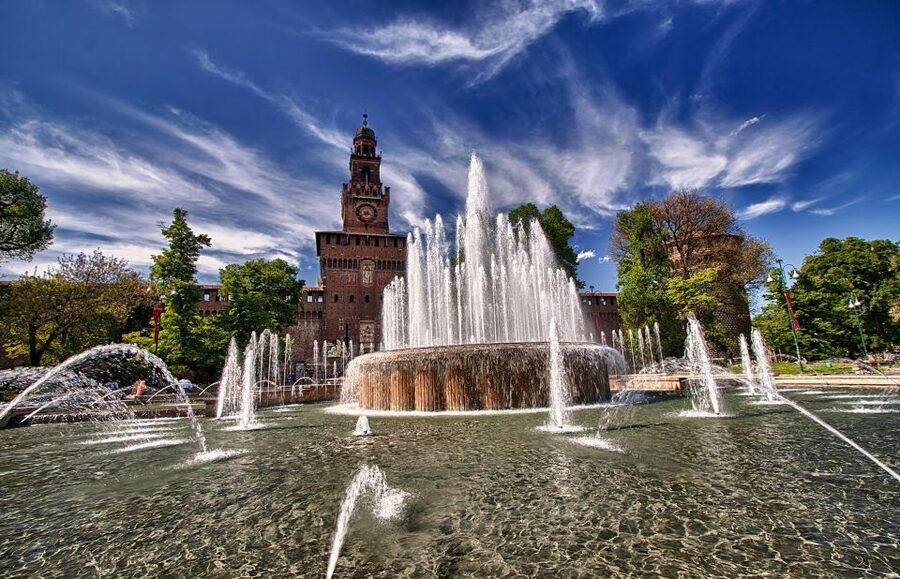
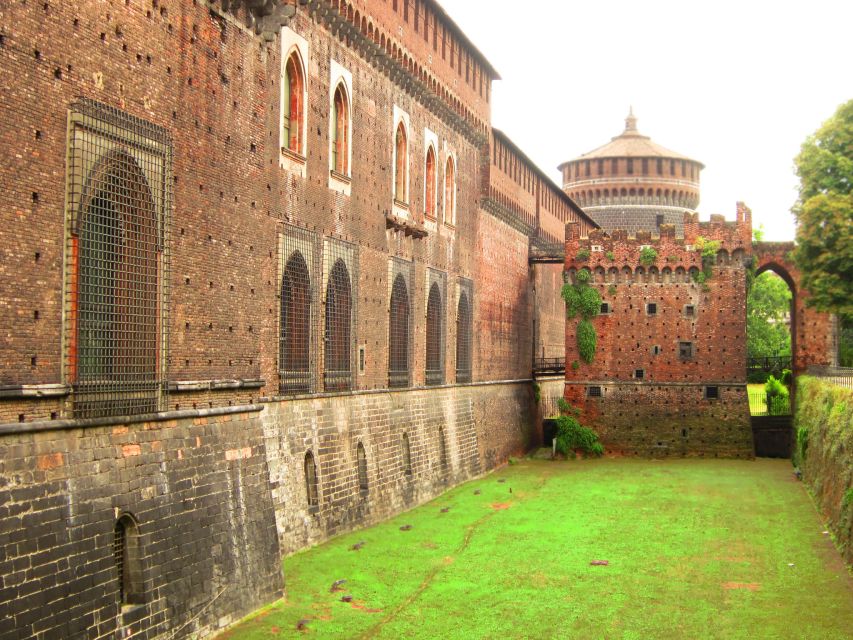
The Filarete Tower gives you an immediate sense of the castle’s scale. Its position at the main entrance also sets up the tour’s central theme: this was not simply a noble residence. It was a fortress, a political headquarters, and later a home for art collections.
Your guide handles the entry to the castle and museums, so you do not need to spend the opening minutes working out which ticket line to use. The admission fee is included in the $47 price.
The Visconti and Sforza story in plain language
Sforza Castle makes more sense once you understand the change from the Visconti family to the Sforza family.
The Visconti established Milan as a powerful duchy and developed the original fortress tradition. The Sforza family later took control and reshaped Milan into a major Renaissance court. The castle reflects both sides of that story: hard military defenses outside, courtly ambition and art inside.
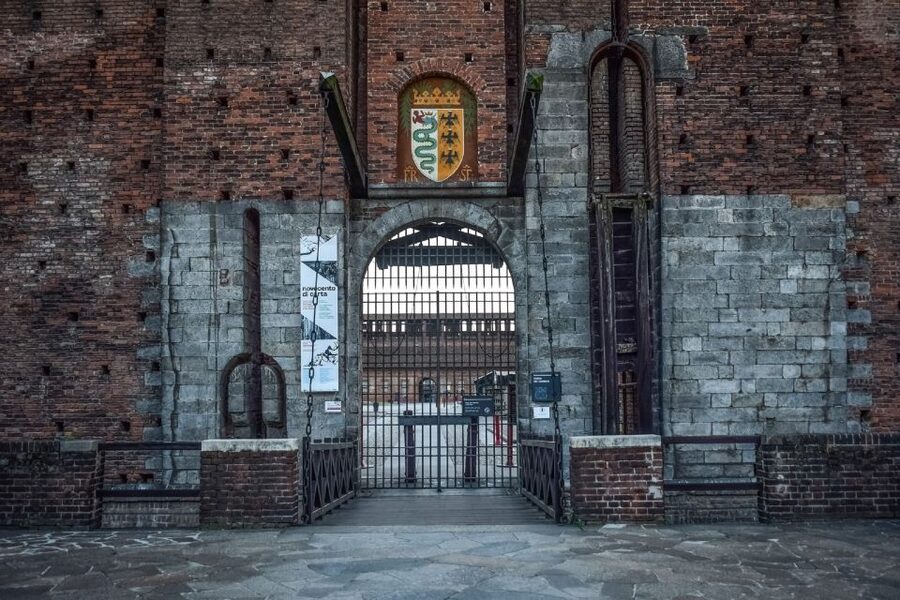
The guide explains how these families used architecture to show authority. Towers, walls, coats of arms, and ceremonial spaces were political tools. They told people who ruled Milan and where power lived.
One symbol to watch for is the Biscione, the serpent associated with Milan and the Visconti family. It appears in the city’s visual identity and helps link the castle to Milan beyond the immediate site.
You will also hear about the people around the dukes, including ambitious men and noblewomen who influenced court life. That human detail keeps the tour from becoming a dry list of rulers. Political marriages, family loyalties, and personal ambition shaped the same world that produced the castle’s art.
The Corte Ducale and Cortile della Rocchetta
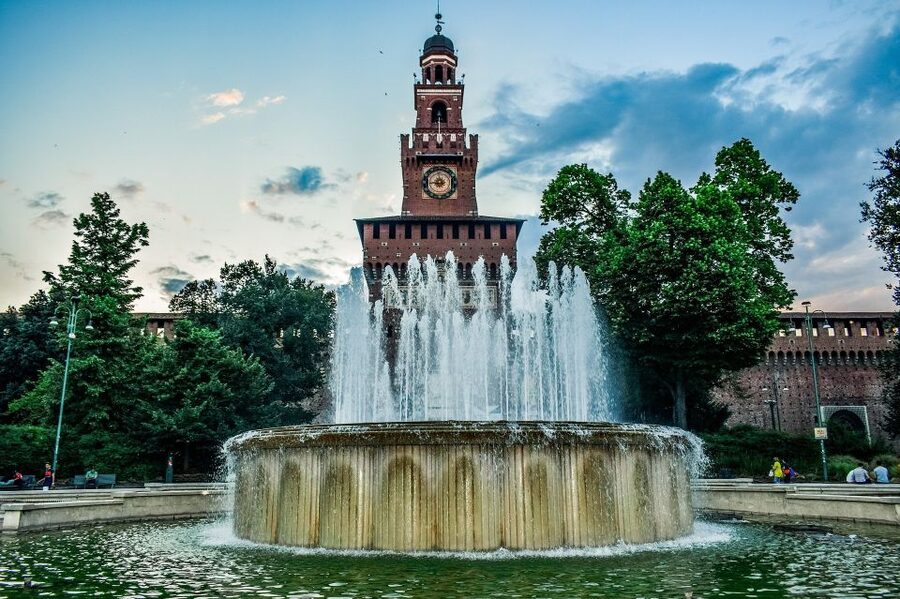
The internal courtyards are the architectural center of the tour. They give you a sense of how the castle changed from a defensive stronghold into a ducal residence.
The Corte Ducale presents the more elegant side of court life. Here, the castle’s scale and ordered spaces suggest ceremony and display. It is easy to picture officials, visitors, artists, and members of the ruling household moving through the complex.
The Cortile della Rocchetta has a different character. Its defensive purpose is more apparent, and the contrast between the two courtyards helps explain how the castle served both palace and fortress roles.
You will not simply walk through these spaces while hearing dates. The guide points out the relationship between military power and Renaissance style. That connection is one of the tour’s strengths. Milan’s rulers did not abandon defense when they adopted the culture of the Renaissance. They used art and architecture to make power look refined.
The courtyards are also useful visual breaks after the close concentration required by the Pietà Rondanini. If the weather is hot, the pace and route matter. One guide, Flora, was specifically praised for seeking shade and breezy places during the outdoor portions. Conditions and guide choices vary, but it is sensible to carry water and dress for time outside.
Same city, an entirely different afternoon:
- Milan Cathedral: Duomo Terraces Ticket (No Church Access)
★ 4.6 · 6,111 reviews - Milan: Milan Cathedral Direct Entrance – Terrace Excluded
★ 4.5 · 5,782 reviews - Milan: Guided Walking Tour & Last Supper Visit with Ticket
★ 4.7 · 5,409 reviews - Milan: Fast-Track Milan Cathedral and Terraces Guided Tour
★ 4.7 · 5,240 reviews
Leonardo da Vinci’s nearly 20 years in Milan
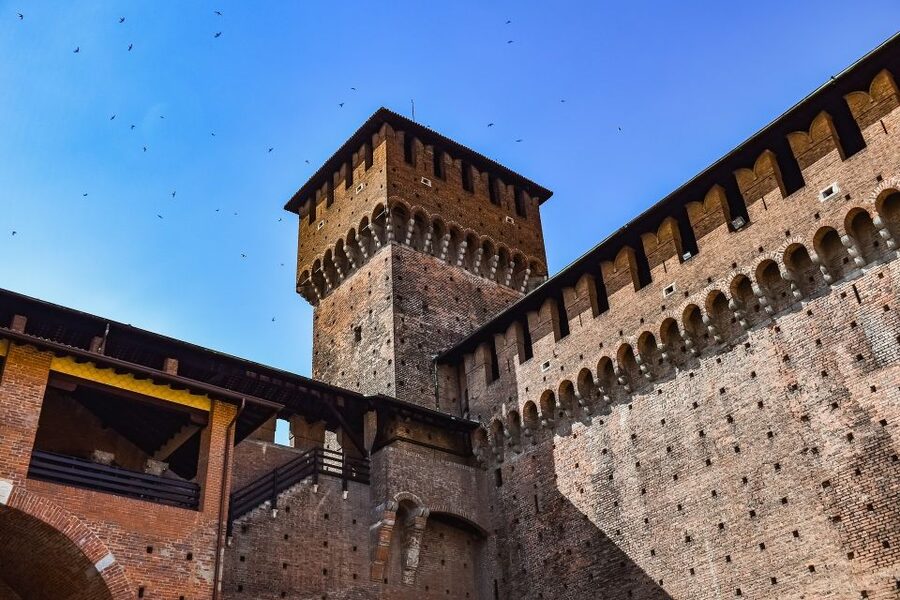
Leonardo’s link to Sforza Castle is more interesting than the usual Milan shorthand of The Last Supper.
Leonardo lived and worked in Milan for nearly 20 years under Ludovico il Moro. At the ducal court, he served as an engineer and architect as well as an artist. His work included planning, design, technical ideas, and court projects.
The castle was part of that working environment. Your guide points out traces of Leonardo’s connection to the site and explains his relationship with the Sforza family. This gives you a fuller picture of Leonardo as a court professional, not just a painter whose famous works happen to be in Milan.
I find this part especially helpful for visitors who have already seen The Last Supper. Instead of treating Leonardo as an isolated genius, the tour places him in the practical world of patronage. He needed wealthy, powerful employers. The Sforza court gave him room to work, but it also gave him duties and expectations.
The guides vary, but names such as Giorgio, Stefania, Simon, Fabio, and Lorella have been praised for making historical material easy to follow and for adding lesser-known facts. A strong guide can connect Leonardo’s engineering interests to the castle’s political setting without letting the story wander too far.
What the museums add, and what they cannot do in 90 minutes
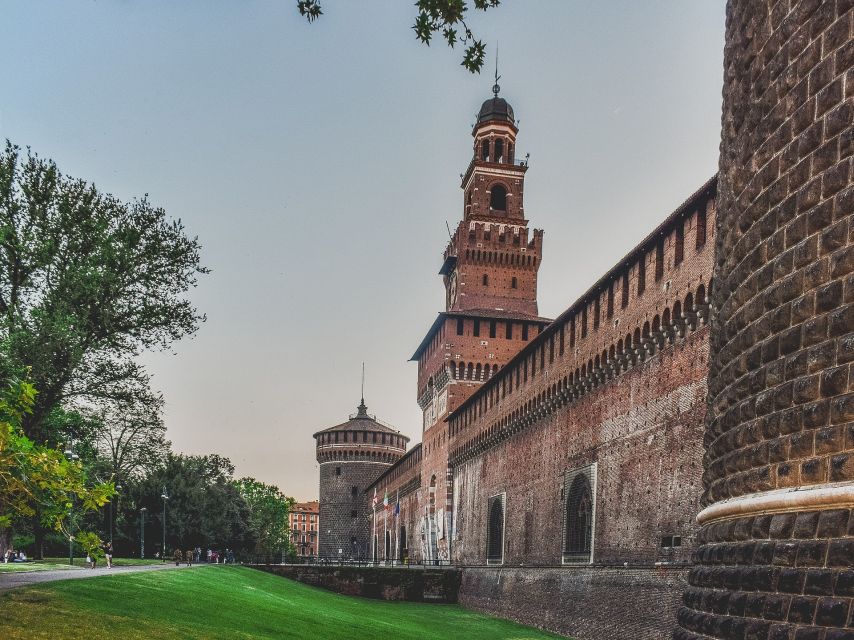
Admission includes the castle museums, which makes the tour more useful than a simple walk through the courtyards. You will see selected art and artifacts while the guide explains what matters most.
The benefit is selection. You do not need to guess which rooms or objects deserve your limited time. Guides often cherry-pick the key pieces and explain how they relate to Milan, the Visconti and Sforza families, or the broader Renaissance period.
The tradeoff is depth. Sforza Castle contains more than can reasonably fit into an hour and a half. One participant found the archaeological museum rushed, and that is a fair warning. If you want to read every label or visit each museum section at your own pace, plan extra time after the guided portion.
The tour is best thought of as a map. It gives you the main story, the important works, and enough context to return on your own. If a particular collection catches your attention, you can spend more time there after the guide leaves.
Guide quality and group size
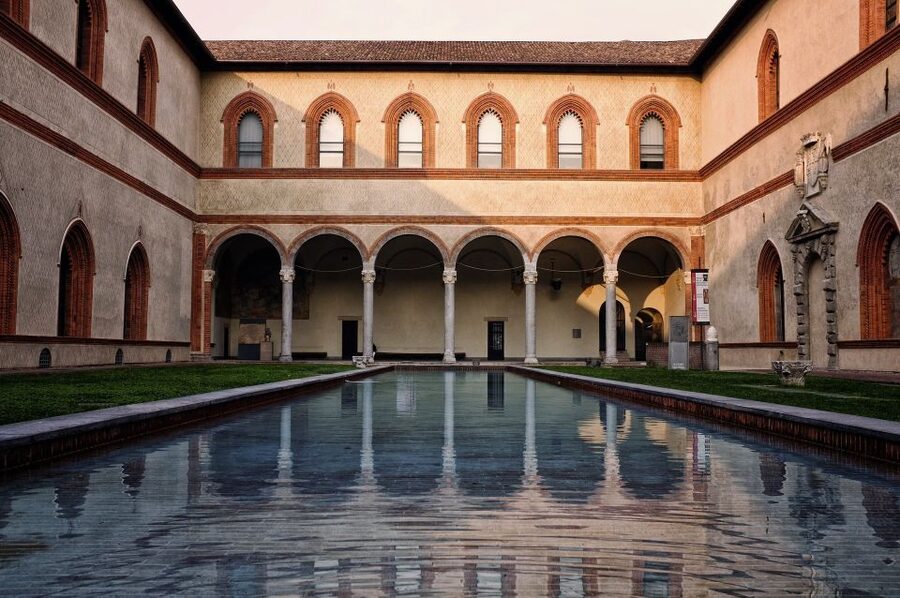
The guide is the main reason to book this rather than wander through the castle alone. The castle’s layers can blur together without a clear explanation. A certified guide helps place the Visconti period, Sforza rule, Leonardo’s career, and Michelangelo’s final sculpture in one understandable sequence.
The available languages are Italian, English, German, French, and Spanish. Clear speech matters in a large stone complex, so pay attention at the meeting point and stay close when moving between rooms.
The experience is described as a small-group tour, and some departures may be very small. That can make a real difference. A group of three or six allows more questions and makes it easier to hear the guide. Private groups are also available if you want the pace and attention tailored to your party.
Headphones are provided from 11 participants onward. In a larger group, this helps, though one past participant reported intermittent earpiece problems. If you have trouble hearing, say so early rather than waiting until the group has moved on.
The strongest guide comments focus on clarity, patience, and storytelling. Giorgio was praised for putting Michelangelo’s final work into context. Stefania was singled out for connecting details and offering useful Milan suggestions. Simon was noted for bringing the exhibits to life, while Lorella was valued for explaining the castle timeline in an easy way.
No guide can remove every limit imposed by a short tour. Still, this is the sort of place where expert explanation pays off.
Is $47 a fair price?
At $47 per person, this is not Milan’s cheapest castle visit. You are paying for admission, a certified guide, and a small-group structure rather than entry alone.
I think the price is reasonable if you want the Pietà Rondanini explained properly and do not have time to research the castle before arriving. The guide saves you from treating Sforza Castle as a collection of disconnected walls and rooms. You leave with a usable story about Milan’s rulers, Leonardo’s court work, and Michelangelo’s final artistic statement.
The value is weaker if you are already well read on Milanese history or prefer to inspect museums slowly. In that case, the 1.5-hour tour may feel too quick, and you may still want extra time inside afterward.
The price also makes sense for a first visit when your Milan schedule is tight. The tour can fit neatly between other central sights, and the castle is close to the Duomo. Hotel pickup and drop-off are not included, though they may be available for an added charge.
Who should book this castle tour?
I would choose this experience for a first-time Milan visit, especially if you want art and history without committing to a full-day program.
It suits:
- Art lovers curious about Michelangelo’s late work
- Visitors who want more than a quick photo outside the castle
- Families who benefit from a guide turning dates into stories
- People interested in Leonardo beyond The Last Supper
- Anyone with only a short window for Sforza Castle
- Visitors who prefer a small group to exploring alone
It is less suitable if you want a relaxed, exhaustive museum visit. The castle has too much material for 90 minutes, and the guide must keep moving.
The tour is wheelchair accessible. Since part of the experience includes courtyards and outdoor spaces, practical footwear and weather-appropriate clothing are sensible, though no special equipment is listed.
Booking and timing advice
Free cancellation is available up to 24 hours before the tour for a full refund. You can also reserve now and pay later, which helps if your Milan plans are still shifting.
Check the available starting times before choosing your day. The duration is fixed at 1.5 hours, but the exact route and pace may vary with group size, guide, and how much time is needed at the Pietà Rondanini.
Keep the rest of your day flexible enough for a possible overrun. Some guides finish close to the stated time, while a detailed explanation or questions can stretch the visit slightly. That is not necessarily a problem, but it matters if you have a timed reservation elsewhere.
Should you book it?
Book this tour if you want the castle to make sense, not just look impressive. The Pietà Rondanini alone gives the experience a strong artistic focus, while the courtyards and Leonardo story broaden it into a portrait of Milan’s ruling court.
At $47, the tour earns its price through context, selection, and access to a guide who can answer questions. Just keep your expectations realistic: this is a focused introduction, not a complete museum day.
If you are short on time, interested in Renaissance art, or unsure how to approach Sforza Castle, I would book it. If you already plan to spend several unhurried hours inside the museums, enter independently and save the guided format for another sight.
FAQ
How long does the Sforza Castle tour last?
The tour lasts 1.5 hours.
What is the main artwork on the tour?
The main artwork is Michelangelo’s Pietà Rondanini, his final unfinished sculpture.
Is admission to Sforza Castle included?
Yes. Entrance fees to the castle and its museums are included.
Where is the meeting point?
Meet in Piazza Castello, under the Filarete clock tower, in front of Sforza Castle. Do not go inside the courtyards to find the guide.
How do I identify the guide?
Look for a guide holding the Hidden Experiences purple flag or board.
Which languages are available?
Live tours are available in Italian, English, German, French, and Spanish.
Is the tour wheelchair accessible?
Yes, the activity is wheelchair accessible.
Can I book a private group?
Yes, a private group option is available.
Fresh on the Milan list
- Milan: Last Supper and Sforza Castle Guided Tour★ 4.6 · 498 reviews
- Milan: San Sepolcro Crypt Skip-the-Line Entry Ticket★ 4.2 · 512 reviews
- Milan: Sunset Navigli Food & Drinks Tour by Do Eat Better★ 4.5 · 517 reviews
- Milan Duomo Cathedral and Rooftop Terrace Guided Tour★ 4.8 · 531 reviews
- Small-Group Lake Como – Bellagio, Varenna & Hidden Waterfall★ 5.0 · 541 reviews
- Milan: Leonardo’s Last Supper and Michelangelo’s Pietà Tour★ 4.6 · 559 reviews
- From Milan: Cinque Terre Guided Full-Day Trip With Cruise★ 4.0 · 559 reviews
- Milan: Skip-the-Line Guided Walk and “The Last Supper”★ 4.5 · 606 reviews
Milan Tours, compared.
Cathedral and Duomo’s Terraces Entrance Ticket
Read our review →
City Sightseeing Hop-On Hop-Off Bus with Audio Guide
Read our review →
Milan Cathedral: Duomo Terraces Ticket (No Church Access)
Read our review →
Milan Cathedral Direct Entrance – Terrace Excluded
Read our review →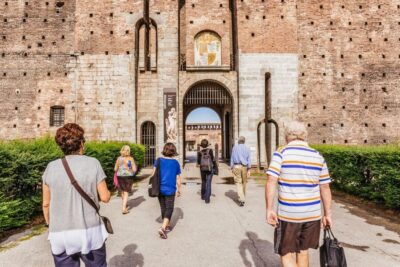
Guided Walking Tour & Last Supper Visit with Ticket
Read our review →
Fast-Track Milan Cathedral and Terraces Guided Tour
Read our review →
Browse the lists this tour appears in