Reviewed · TICKETS
Paestum: Small-Group Tour with an Archaeologist and Tickets
Paestum gives you something rare in Italy: three towering Greek temples that remain remarkably complete, set within the ruins of a later Roman city. The Temple of Neptune, Temple of Ceres, and Basilica are the stars, but the forum, amphitheater, markets, walls, and museum turn the visit into a much fuller story.
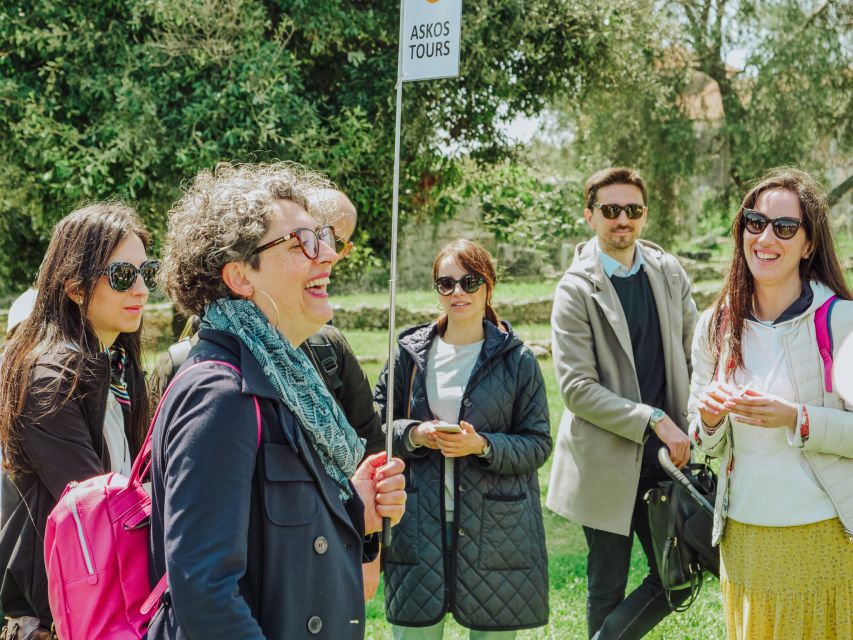
I like the small groups because you can hear the guide and ask real questions. I also like having an archaeologist lead the walk, since Paestum is far more rewarding when someone explains the layers of Greek, Lucanian, and Roman life beneath the stones.
The main drawback is the tight two-hour schedule. You spend about 90 minutes in the park and 30 minutes in the museum, which is enough for the main sights but can leave little time to rest, browse, or return to exhibits on your own, especially in hot weather.
Key points at a glance
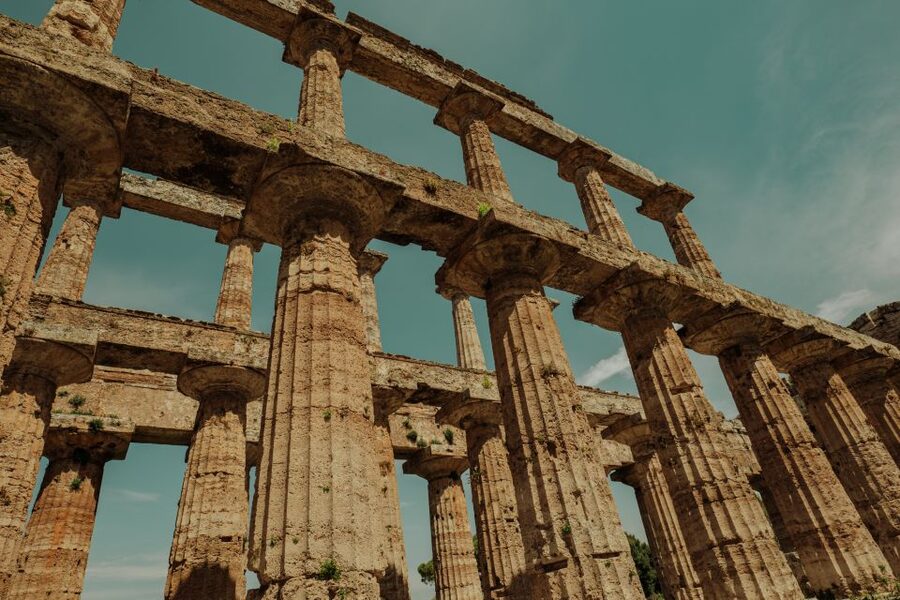
- Three exceptionally preserved Greek temples: See the Temple of Neptune, Temple of Ceres, and Basilica, all dating from the 6th century B.C.
- Archaeologist-led explanations: Guides including Mario, Ivan, Maria, and Francesca bring architectural details, excavation work, mythology, and local history into the walk.
- Roman Paestum beyond the temples: Visit the forum, comitium, amphitheater, markets, roads, and city walls.
- The Tomb of the Diver: The National Archaeological Museum adds painted Greek artworks and the site’s most famous funerary discovery.
- Small groups help with questions: Groups can be small enough for easy conversation, and private group bookings are available.
- Bring water and good shoes: Much of the visit is outdoors, on foot, with limited relief from sun and heat.
Why Paestum deserves a place on your Campania itinerary
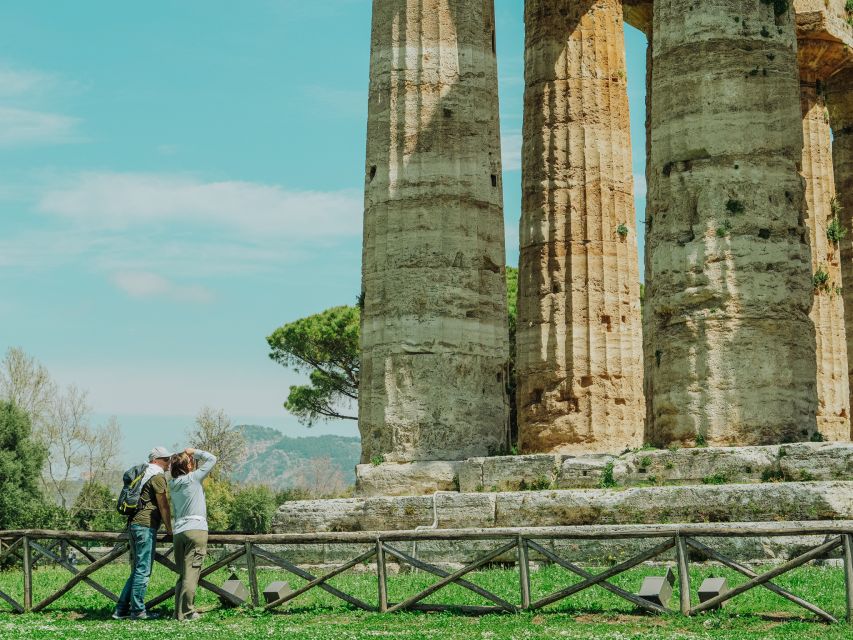
Paestum is often overshadowed by Pompeii, but it offers a different kind of archaeological visit. Pompeii gives you intimate glimpses of daily Roman life. Paestum gives you the powerful geometry of Greek temples, followed by the remains of a city that changed hands and cultures over many centuries.
The site began as a Greek settlement known as Poseidonia. Later, it became Paestum under Roman rule. You can see those layers in the buildings and street plan, but they are not always obvious when you first arrive. A column may look simple until a guide explains its date, purpose, and place in the city.
That is where this tour earns its keep. You are not simply walking toward three impressive buildings, taking photographs, and leaving. An archaeologist helps you read the site as a living city, with political spaces, public buildings, religious areas, and walls that once shaped everyday life.
I would especially recommend the tour if ancient Greek architecture interests you but you are not trained to identify different building styles. The guides explain the temples in clear terms, without requiring you to arrive with a textbook’s worth of preparation.
A few other Italy mornings to weigh against this
- Vatican: Museums & Sistine Chapel Entrance Ticket
★ 4.5 · 144,003 reviews - Milan: Cathedral and Duomo’s Terraces Entrance Ticket
★ 4.6 · 61,054 reviews - Venice: Doge’s Palace Reserved Entry Ticket
★ 4.6 · 42,716 reviews
Meeting near the Basilica Paleocristiana
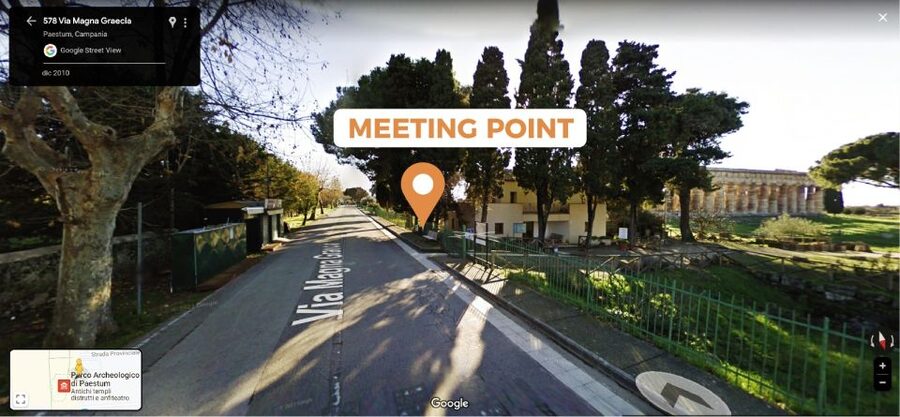
The stated meeting point is the Basilica Paleocristiana dell’Annunziata on Via Magna Graecia, 919, though the exact meeting place can vary with the option you book. Check your confirmation closely before setting out, since arriving at the wrong entrance is an avoidable way to lose part of a short tour.
The experience does not include transportation, food, or drinks. You need to make your own way to Paestum and bring water with you. Nearby parking is available on surrounding streets, and one account described meter parking at about €1 per hour, though the machines can be confusing to use.
The meeting point is convenient for a visit centered on the archaeological area and museum, but you should allow enough time to find the correct spot. The tour has a two-hour limit, so do not plan to arrive at the last minute.
Walking through the archaeological park
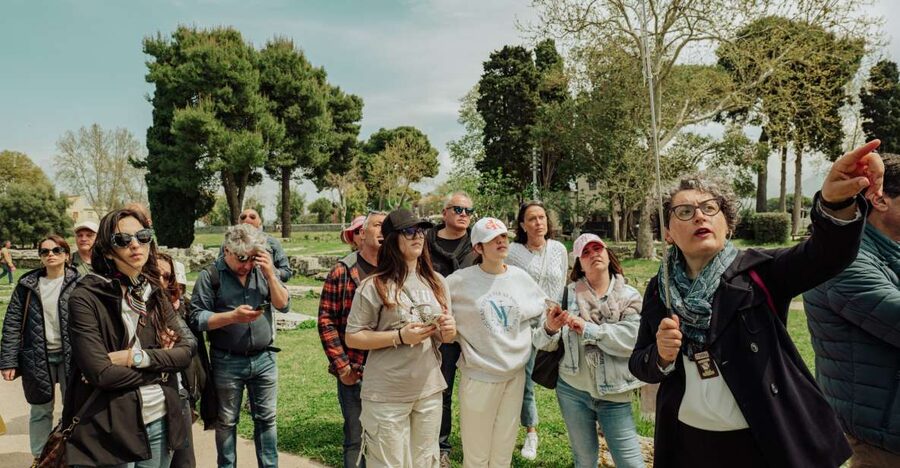
About 90 minutes are devoted to the archaeological park. This is the heart of the experience, and the order of the sights may vary, but you can expect to see the major temples along with the civic and defensive remains.
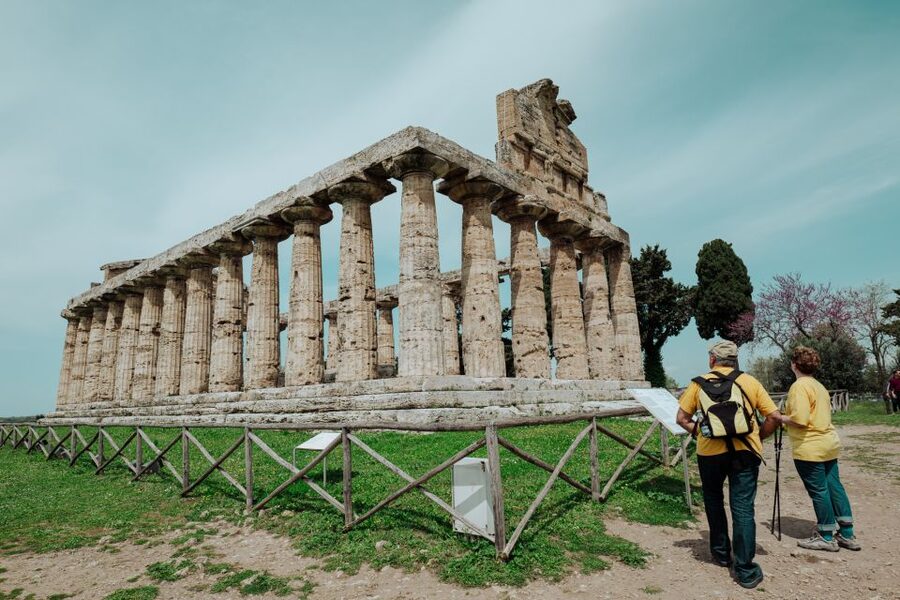
The temples are the first great payoff. The Temple of Neptune is the most imposing of the three, with tall columns and a strong sense of proportion. The Temple of Ceres is smaller, while the so-called Basilica is an early Greek temple whose name reflects an old misunderstanding about its original use.
All three date to the 6th century B.C. Their survival is extraordinary, especially when you consider how many ancient structures were dismantled, altered, or reduced to fragments. The guide helps you notice more than size. You learn to look at the columns, stonework, layout, and differences between the buildings.
The Temple of Neptune is often compared with the Parthenon in Athens. That comparison gives you a useful reference point, but Paestum has its own character. The temples are less crowded and are close enough together for you to understand how the sacred area related to the rest of the city.
One pleasant feature of the tour is the chance to step inside one of the temples. That changes your sense of scale. From the outside, the columns appear monumental. From within, you get a better idea of how the building’s proportions worked and how much labor went into creating such a structure.
The Roman forum, comitium, and amphitheater
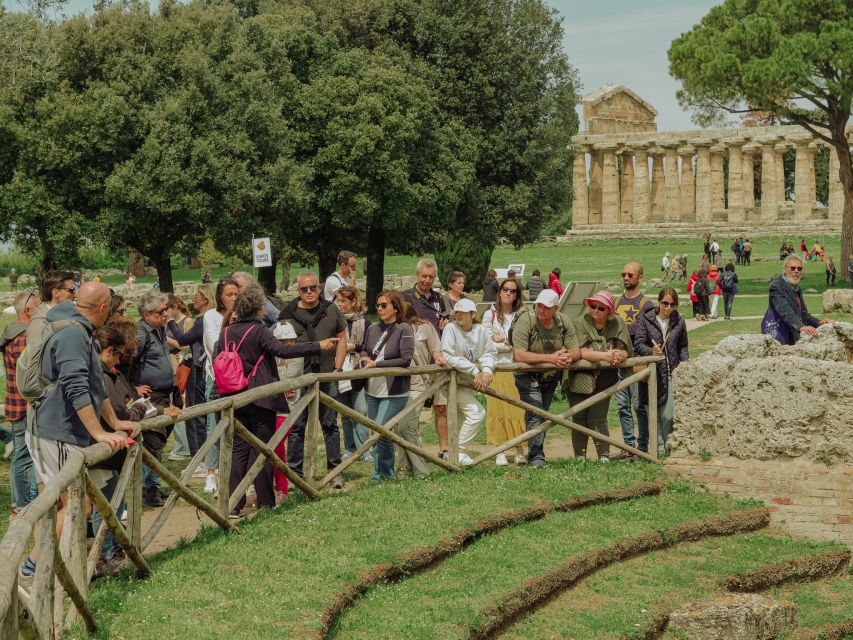
Paestum is not only a Greek temple site. After the Greek period came the Lucanians and then the Romans, and the tour uses the ruins to explain those changes.
The Roman forum is one of the key stops. This was a public center where civic and commercial activity took place. Nearby, you can see the comitium, a political assembly hall, along with remains linked to markets and other public buildings.
The amphitheater is another important reminder that the city continued to function long after the temples were built. You may pass over it quickly if you are exploring alone, but a guide can point out how the structure fits into the wider Roman town.
The city walls help you understand Paestum’s size and protection. They are not just a photogenic border around the site. They show that this was a planned settlement with clear limits, entrances, streets, and public spaces.
I like this part of the route because it prevents the temples from becoming isolated monuments. You see how religion, politics, trade, entertainment, and defense worked together in one ancient city.
Same city, an entirely different afternoon:
- Vatican Museums & Sistine Chapel Tour with Optional Basilica
★ 4.3 · 67,413 reviews - Colosseum, Roman Forum & Palatine Guided Tour
★ 4.7 · 63,148 reviews - Vatican Museums, Sistine Chapel & St Peter’s Basilica Guided Tour
★ 4.5 · 39,149 reviews - Rome: Colosseum, Palatine Hill and Roman Forum Guided Tour
★ 4.8 · 32,814 reviews
What an archaeologist adds to the visit
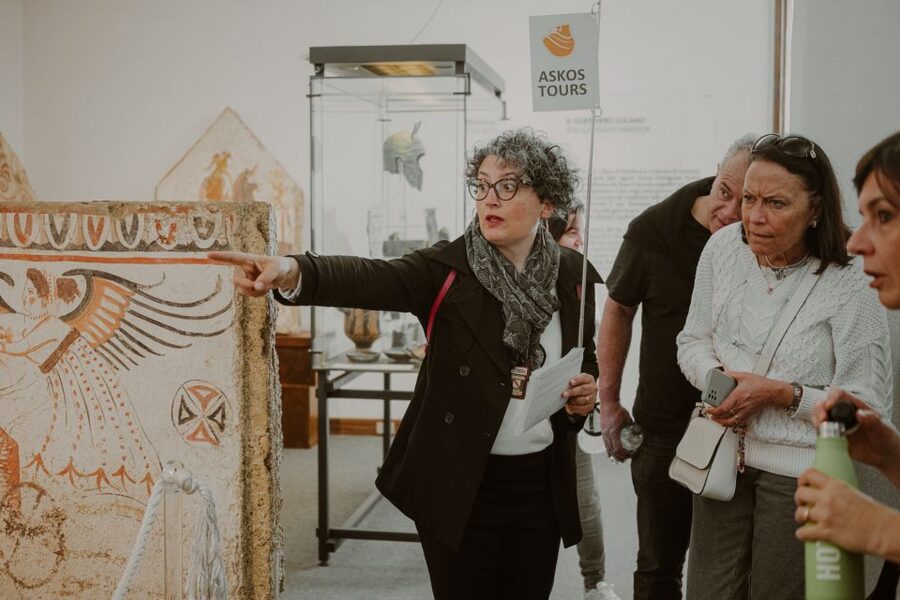
The guides receive the strongest praise for their ability to explain the site clearly and keep the walk lively. Mario appears often among the guides, along with Ivan, Maria, Francesca, Angelo, Silvia, Nan, and others. The exact person depends on the departure and language, but the experience is built around specialist-led interpretation rather than a basic escort service.
Ivan is particularly connected to the site through archaeological excavation work. He has explained personal experience from digs at Paestum, including excavation details linked to material displayed in the museum. That kind of connection can give the visit an extra sense of immediacy, since you are hearing about how discoveries were made, not only what the finished ruins mean.
Mario is praised for explaining the Greek, Lucanian, and Roman periods in accessible language. He has also been described as patient with questions and good at pointing out features that are easy to walk past. Guides such as Francesca and Maria are noted for adjusting their explanations to the group and keeping children interested.
That matters at Paestum because the site can be visually clear but historically dense. You can see a temple without understanding its date or function. You can see a row of stones without realizing it belonged to a political or commercial space. The guide supplies the connections.
Language choices include English, Italian, French, Spanish, and German. For a larger group, disposable earphones are provided so you can follow the explanation more easily. Small groups are preferable if you like asking questions, and a private option is available if you want a more tailored pace.
The National Archaeological Museum and the Tomb of the Diver
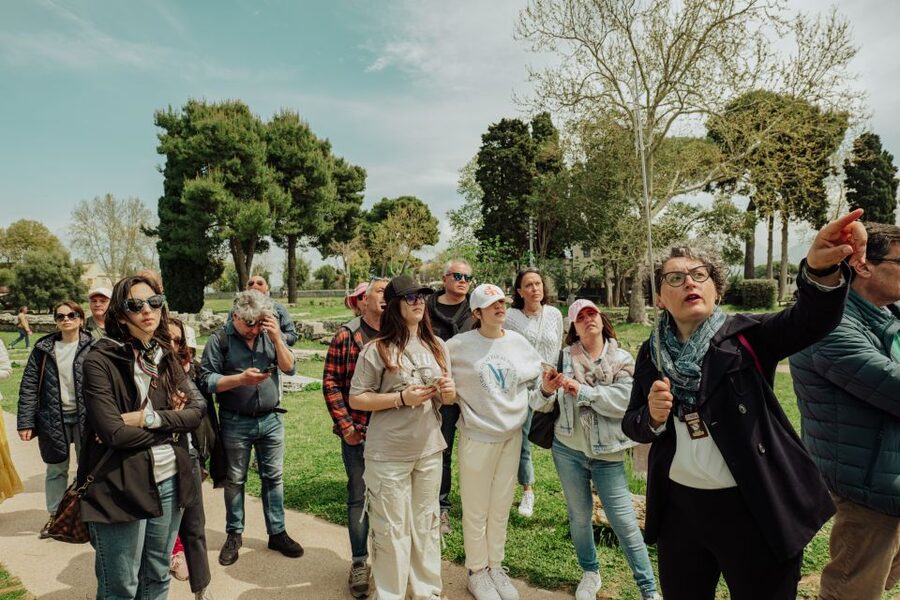
The final 30 minutes take place in the National Archaeological Museum of Paestum. Its collection includes local Greek artworks dating from the 7th century B.C., giving you a useful indoor continuation of what you have seen outside.
The museum’s main prize is the Tomb of the Diver. This painted burial chamber is one of Paestum’s most famous discoveries. Its imagery is unusual and memorable, and it gives you a direct look at ancient artistic ideas that stone temples alone cannot provide.
The museum also helps explain the archaeology of the park. Objects and artwork can show details of religious practice, burial customs, decoration, and craftsmanship that are difficult to understand from foundations and columns. I find the combination of outdoor ruins and indoor objects much more satisfying than seeing either one alone.
The limitation is time. Thirty minutes is a brisk museum visit, especially if you want to read labels or spend longer with the Tomb of the Diver. One important practical point is that you should not assume you can re-enter the museum after the guided portion. A visitor who wanted a rest, refreshments, and more time with the exhibits found that access back in was not possible.
If you know you like museums, plan your expectations carefully. The guide will show you the essential pieces, but this is not a leisurely afternoon museum visit.
Is two hours enough?
Two hours works well as an introduction. You see the temples, the Roman city, and the museum without needing to organize the route yourself. It is also a sensible length for a hot day, since much of the park is outdoors and you remain on your feet.
Still, two hours is demanding. The park is open and exposed, and summer temperatures can pass 30 degrees Celsius. Several people have found the walking and standing tiring, even while enjoying the site and the guide.
I would choose a morning departure when possible, particularly in summer. Wear comfortable shoes, loose clothing, and a hat if you use one. Water is essential. There is no included food or drink, so arrange refreshments before or after the tour rather than expecting the guide to provide a break.
Families can enjoy this experience, especially with a guide who uses stories and questions to hold a child’s attention. The short format helps, but children still need to be comfortable walking and standing for most of the visit.
Price and overall value at $47
At $47 per person, the tour is a strong value if you want context rather than a quick look at the ruins. Your price covers the archaeologist guide and skip-the-line entry ticket, so you are paying for both access and interpretation.
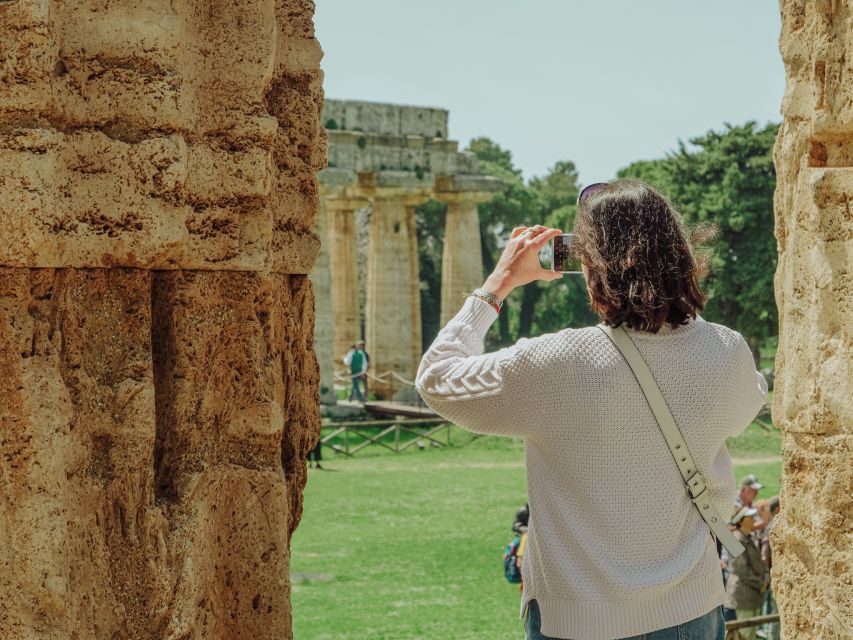
The ticket inclusion is useful because it removes one task at the entrance. The larger value comes from the specialist guide. Paestum’s temples are impressive enough to photograph on your own, but the Roman forum, comitium, amphitheater, markets, and museum objects become much easier to understand when someone gives you a clear timeline.
A self-guided visit may suit you if you want to set your own pace, linger in the museum, or return to a favorite temple. The guided tour suits you better if you have limited time, want the main points explained, or are visiting Paestum as part of a wider Campania trip.
The rating is 4.9 from 451 reviews, with repeated praise for the guides’ subject knowledge, clear English, enthusiasm, patience, and ability to answer questions. The most consistent strength is not a single landmark. It is the quality of the explanation.
Who should book this Paestum tour?
Book it if you want an efficient first visit and prefer to understand what you are seeing. It is especially suitable for people interested in ancient Greek history, architecture, archaeology, and the transition from Greek to Roman rule.
It also suits couples, families, and small groups who value conversation over a large crowd. A private group option gives you more control, while a standard small group keeps the cost down and still allows questions.
Think twice if you have mobility limitations. The activity is not suitable for wheelchair users or people with mobility impairments, and the visit involves sustained walking and standing. Also reconsider it if your top priority is unhurried museum time, since the schedule gives the museum only about 30 minutes and re-entry may not be possible after the tour.
The cancellation policy is flexible, with a full refund available when you cancel at least 24 hours ahead. You can also reserve now and pay later, which helps if your Campania plans are still shifting.
My recommendation
I would book this tour for a first visit to Paestum. The temples are the obvious reason to come, but the archaeologist guide gives you the political, religious, and everyday setting that makes the whole site click.
Choose it with realistic expectations: two hours is a focused overview, not a full day of independent study. Arrive prepared to walk, carry water, and give the museum your attention while you are there. If that suits your plans, $47 buys a well-organized introduction to one of Italy’s most impressive ancient sites.
FAQ
How long does the Paestum tour last?
The tour lasts two hours, including about 1.5 hours in the archaeological park and 30 minutes in the National Archaeological Museum.
What does the tour include?
It includes a guided tour with an archaeologist and a skip-the-line entry ticket to Paestum.
Is transportation included?
No. Transportation to and from Paestum is not included.
Where does the tour meet?
One stated meeting point is the Basilica Paleocristiana dell’Annunziata at Via Magna Graecia, 919. The meeting point may vary depending on the option you book, so check your booking details.
Which languages are available?
The tour is available in English, Italian, French, Spanish, and German.
Can I book a private group?
Yes. A private group option is available.
Is the museum included?
Yes. The National Archaeological Museum of Paestum is part of the guided itinerary.
Can I enter the museum again after the tour?
You should not assume re-entry is possible. Plan to see the museum during the scheduled 30-minute guided visit.
What should I bring?
Bring comfortable shoes, water, and comfortable clothing. The tour includes outdoor walking and standing.
Is the tour suitable for wheelchair users?
No. The activity is not suitable for wheelchair users or people with mobility impairments.
Fresh on the Italy list
- Rome: Guided Catacombs Tour & Capuchin Crypt (Audio Guide)★ 4.3 · 191 reviews
- Guided tour of the Colosseum, Roman Forum and Palatine in Spanish★ 4.5 · 191 reviews
- Bolgheri: Winery Tour with Wine Tasting★ 4.7 · 191 reviews
- Stories of Pompeii: Small Group tour with archeology expert guide★ 5.0 · 191 reviews
- Palinuro: Costa del Mito Boat Tour★ 4.9 · 191 reviews
- From Palau/La Maddalena: All inclusive Yacht Tour★ 4.8 · 191 reviews
- Small-Group Cooking Class in Positano: Gnocchi, Tiramisù & Drinks★ 5.0 · 191 reviews
- Semi Private Deep Wine Chianti and San Gimignano from Florence★ 5.0 · 191 reviews
Tickets, compared.
Vatican: Museums & Sistine Chapel Entrance Ticket
Read our review →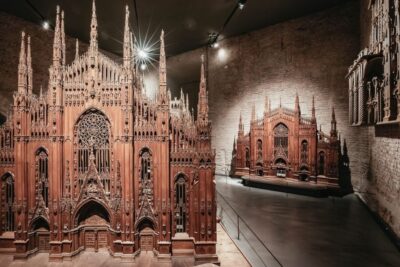
Cathedral and Duomo’s Terraces Entrance Ticket
Read our review →
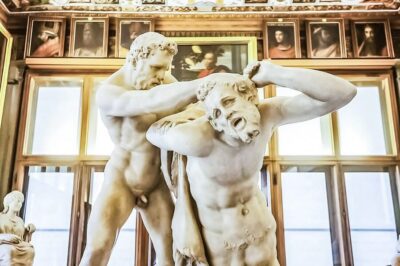
Skip-The-Line Uffizi Gallery Timed Entry Ticket
Read our review →
Naples Underground Entry Ticket and Guided Tour
Read our review →
Pantheon Fast-Track Ticket and Official Audio Guide
Read our review →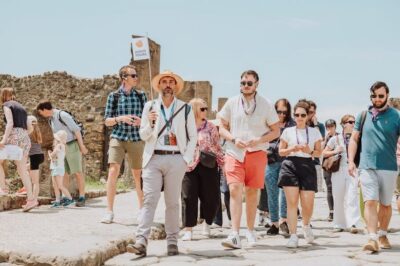
Entry Ticket and Guided Tour with an Archaeologist
Read our review →