
Reviewed · MILAN TOURS
Milan: Last Supper Guided Visit
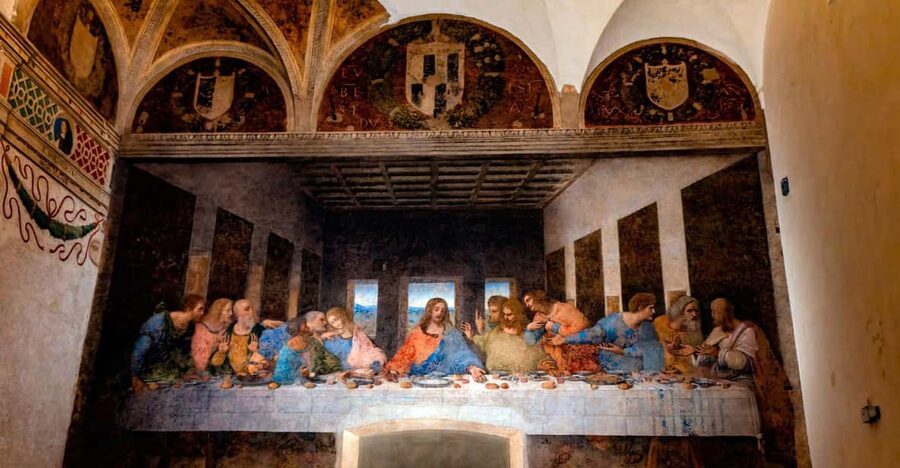
Leonardo da Vinci’s Last Supper is not a painting you can stroll up to whenever you like. Entry is tightly controlled, and you get only 15 minutes inside the refectory. This one-hour tour makes that brief visit count by giving you the story, visual clues, and historical setting before you face the mural.
I like two things here: the licensed art historian guide turns a familiar image into a work full of movement and meaning, and skip-the-line entry removes some of the uncertainty around one of Milan’s hardest tickets to secure. Guides such as Gabriella and Sara have earned especially warm praise for clear storytelling and humor. The drawback is the price, $75 per person, which is high for an hour and much higher than basic museum admission.
Key points to know before you book
- Only 15 minutes with the mural: The time limit applies to everyone, with or without a guide.
- The guide does the teaching before entry: Expect the main explanation before you enter the refectory, then use your viewing time to inspect the details.
- Gabriella and Sara are praised by name: Guide assignments can vary, but these guides have been singled out for warmth, humor, and strong art knowledge.
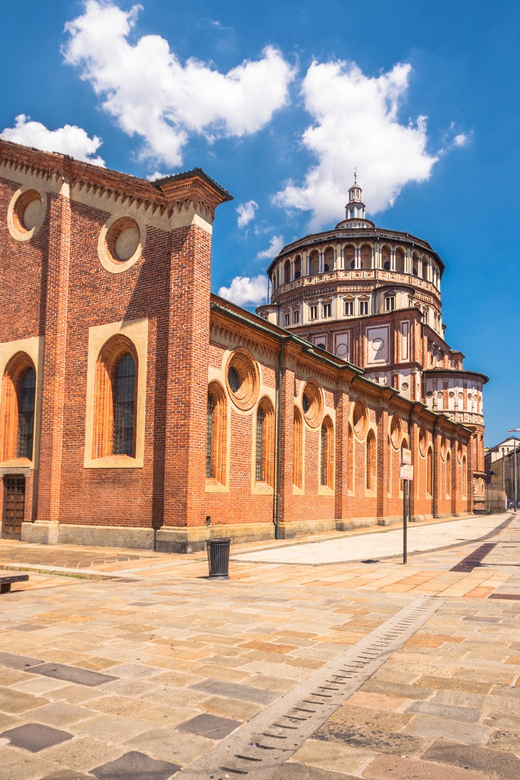
- Santa Maria delle Grazie adds context: You see the UNESCO-listed church from outside, and the former refectory holds another important mural on the opposite wall.
- The price pays for access and interpretation: At $75, this makes most sense if tickets are scarce or you want help reading the artwork.
- Book carefully: Every traveler’s name must be entered, and the scheduled time cannot be changed.
Why the Last Supper needs a guided visit
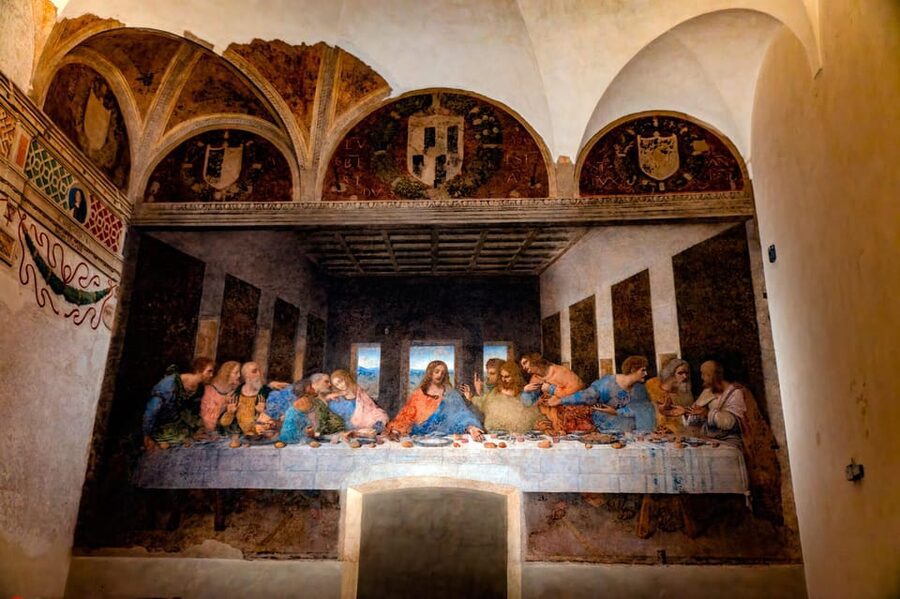
At first glance, you may think you already know the scene. Jesus sits at the center. The apostles cluster around him. Judas holds his place among them. Yet the work is less about a calm religious image than the instant after Jesus announces that one of the disciples will betray him.
That is where a guide earns the fee. You can look at the apostles’ hands, heads, and facial expressions and see a room full of separate reactions. One figure recoils. Another leans forward. Others point, question, or turn toward their neighbors. The group is arranged with remarkable order, but the emotions are anything but orderly.
A good guide helps you follow that movement without getting lost in a famous image. Visitors have especially praised Gabriella for explaining the personalities suggested by each apostle’s pose and expression. Sara Nuzzi has also been praised for explaining Leonardo’s methods, the mural’s fragile condition, and the difficulties it has faced over time.
The tour is in English, with headsets supplied so you can hear the guide clearly. One visitor did find the headset quality worth improving, so you should still pay attention to where you stand in relation to the group. The equipment helps, but it cannot replace careful listening.
A few other Milan mornings to weigh against this
- Milan: Da Vinci’s Last Supper Guided Tour
★ 4.7 · 10,143 reviews - Milan: City Sightseeing Hop-On Hop-Off Bus with Audio Guide
★ 4.0 · 6,256 reviews - Milan: Guided Walking Tour & Last Supper Visit with Ticket
★ 4.7 · 5,409 reviews
Meeting outside Santa Maria delle Grazie
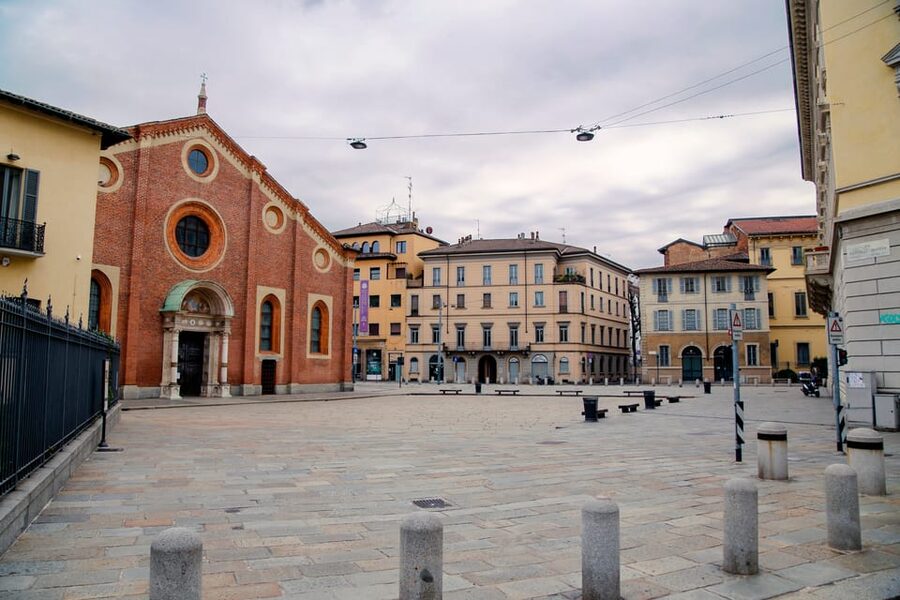
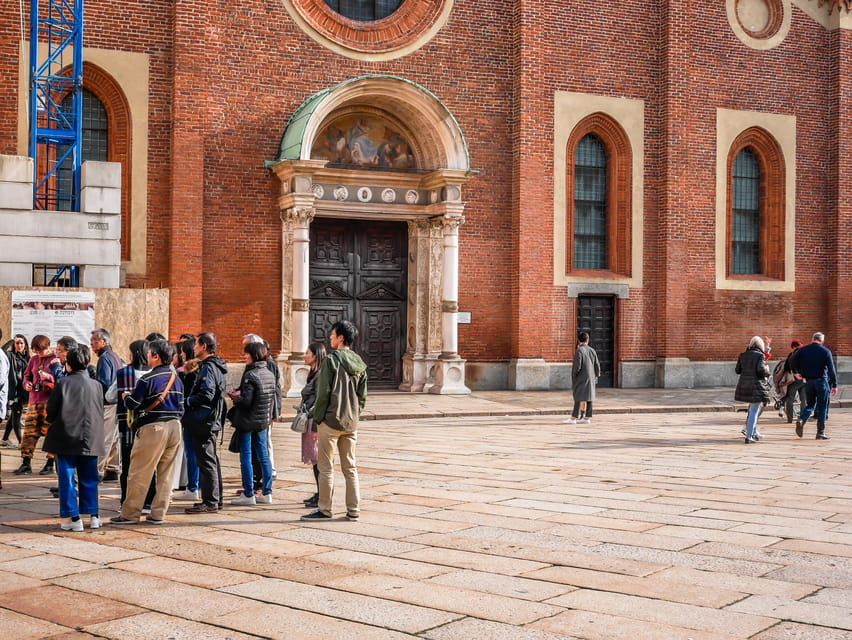
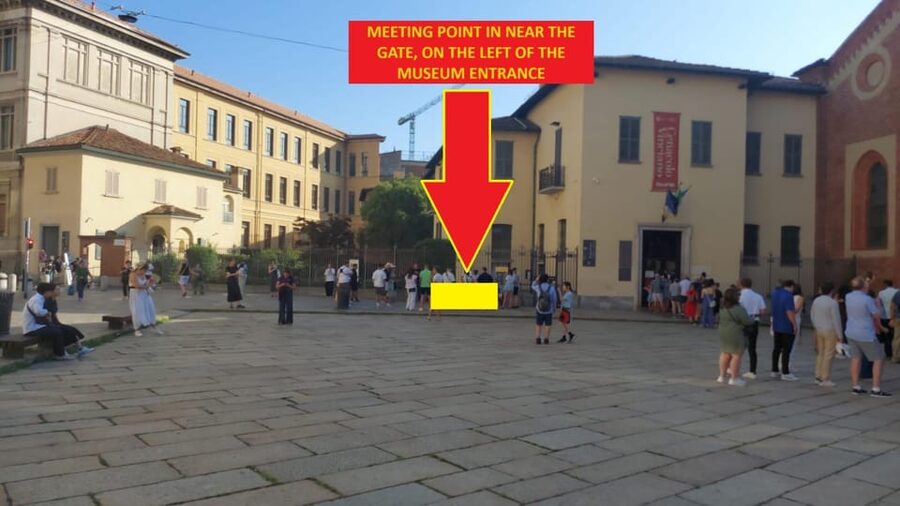
Your meeting point is outside the museum entrance, in the square by Santa Maria delle Grazie. Look for the only door in the square with flags above it. The guide carries an orange GetYourGuide sign.
This is a small but important detail. The church and museum entrance can be confused, especially if you arrive while looking at the elegant exterior of the basilica. Give yourself enough time to locate the correct door rather than assuming every entrance in the square leads to the mural.
The tour does not include hotel pickup or transportation. You make your own way to the meeting point, then stay with the guide through the entry process. The outside portion is brief, but it gives you a chance to appreciate the church that houses Leonardo’s work.
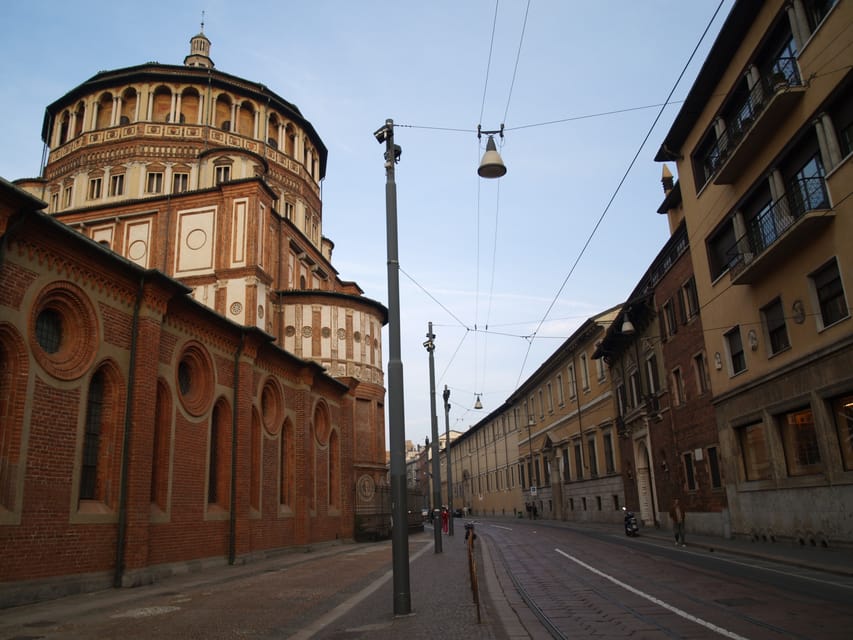
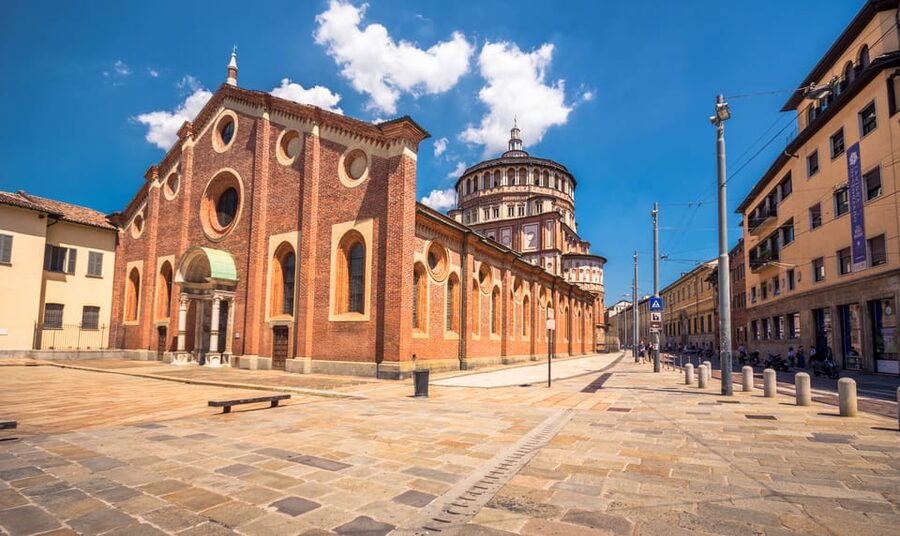
Santa Maria delle Grazie is worth noticing before you go inside. Its brick and stone exterior has the quiet dignity of a working historic church rather than a grand civic monument. The visit focuses on the Last Supper, not on a full architectural tour, so keep your expectations in the right place.
Entering the former refectory
Once the group is assembled, the guide leads you through the museum entrance and past the ticket line. Skip-the-line access does not mean you can ignore the scheduled entry time. The museum controls access by timed admission, and the authorities do not permit changes to the assigned time.
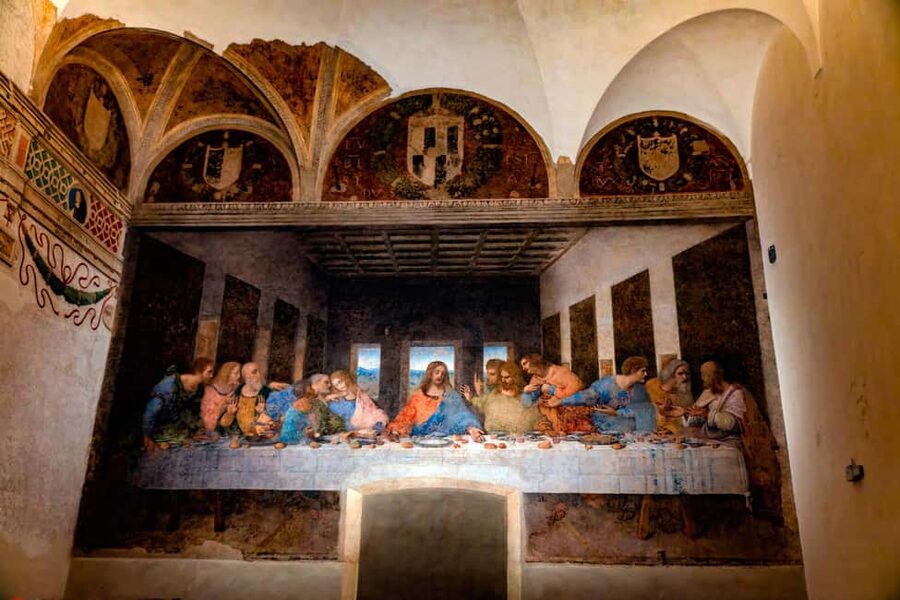
Inside, you enter the ancient refectory, the dining hall where the mural was painted between 1494 and 1498. The setting matters. This was not originally a stand-alone gallery designed for casual viewing. The image was made for a religious dining space, where the monks would have encountered it as part of daily life.
The tour’s history lesson helps you understand why the work is both famous and fragile. Leonardo tried methods that allowed him to work with the freedom of a panel painter rather than the speed demanded by traditional wet fresco. That innovation helped him develop subtle expressions and details, but it also contributed to the mural’s vulnerability.
Your guide points out the perspective and the way the room seems to continue into the painted space. Christ becomes the visual center, with the architecture guiding your eye toward him. The apostles are grouped in small clusters, giving the scene structure while preserving the feeling of sudden shock.
This is the kind of information that can be hard to grasp from a postcard or online image. A reproduction shows the overall composition, but it does not give you the same sense of the room, the scale, or the relationship between the mural and the painted architecture.
Making 15 minutes count
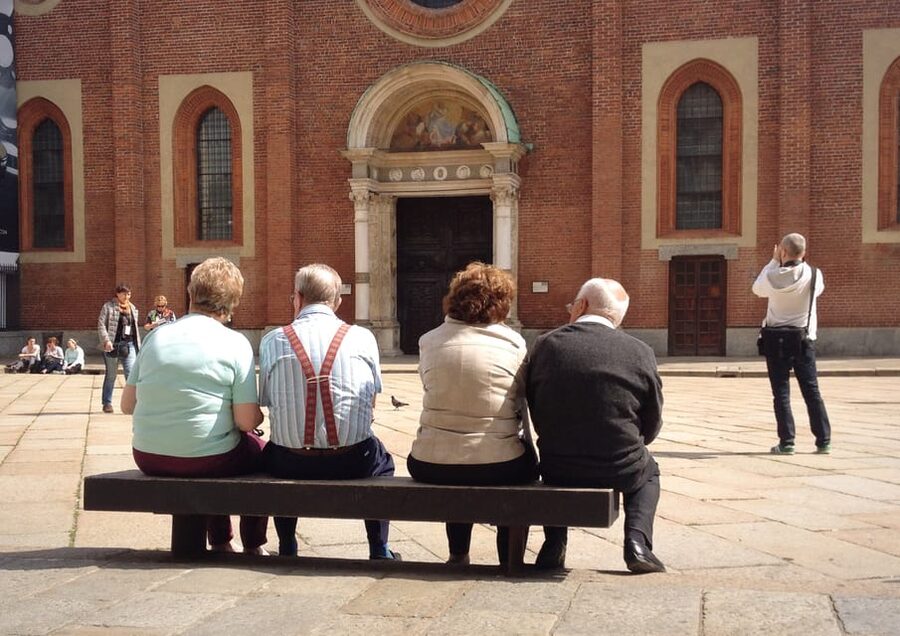
The strict 15-minute limit is the central fact of this experience. It may sound short, but it is enough to inspect the mural if you arrive prepared.
You should listen closely to the guide’s explanation before entering. Once inside, do not spend the whole period trying to take photographs. Take the pictures you want early, then put the phone away and look carefully. The guide’s explanation may have already shown you where to focus: the hands, the faces, the clusters of apostles, and the central position of Christ.
You are not being rushed because of poor tour management. The time limit is imposed by the Last Supper authorities and applies to ordinary admission as well as guided visits. The purpose is to protect the fragile mural from heavy crowds, heat, humidity, and prolonged exposure.
The group size may feel large at some times of day. One visitor found the group manageable because the room itself is large, while another noted that the space can feel packed. An early time slot, such as 8:15 in the morning, may suit you if you have a flight or want to begin your Milan day early. A late slot can also be quieter, but availability changes.
The guide’s timing matters. Several visitors praised guides for keeping everyone ready and making sure no part of the 15 minutes was wasted. That preparation is a real benefit. You enter knowing what you are seeing instead of spending half your visit figuring out the composition.
Same city, an entirely different afternoon:
- Milan: Cathedral and Duomo’s Terraces Entrance Ticket
★ 4.6 · 61,054 reviews - Milan Cathedral: Duomo Terraces Ticket (No Church Access)
★ 4.6 · 6,111 reviews - Milan: Milan Cathedral Direct Entrance – Terrace Excluded
★ 4.5 · 5,782 reviews - Milan: Fast-Track Milan Cathedral and Terraces Guided Tour
★ 4.7 · 5,240 reviews
Leonardo’s technique and the mural’s fragile past
The Last Supper is famous for its subject, but it is also a lesson in artistic risk. Leonardo used experimental materials and methods instead of relying on a standard fresco process. This gave him more time to work on expressions, gestures, and subtle effects.
The result is a mural that has needed major care. Its condition has changed over the centuries, and the guide explains the environmental problems and restoration efforts that have shaped what you see today. The surface is not the fresh, glowing image you might expect from a poster.
That does not make the work less important. In some ways, the visible wear reminds you that this is an old object with a long and difficult life. Its survival is part of the story.
The building itself faced danger during the Second World War. A bomb damaged Santa Maria delle Grazie, yet the walls bearing the murals survived. The opposite wall contains a Crucifixion scene, which guides may also discuss. This detail adds weight to the room. You are not looking at one isolated masterpiece, but at a surviving part of a religious and artistic setting that came close to being lost.
What you see on the opposite wall
The Last Supper receives the attention, as it should, but do not ignore the painting on the other wall. The Crucifixion is part of the same former refectory setting and gives you a second work to consider while you are inside.
The visit does not promise a separate, extended tour of every feature in the museum. Still, guides have used the opposite mural to explain the room’s purpose and the damage the building suffered during wartime. If you have a question about it, ask while the guide is nearby.
You may also want to visit the church and bookstore beside the museum after the tour. This is not included as a formal part of the guided visit, but it is a sensible way to make more of the area once your timed entry is over.
Is $75 a fair price?
At $75 per person, this tour is not the cheapest way to see the Last Supper. The basic admission price cited by one visitor was €15, though ticket availability and official pricing can change. That makes the guided option a substantial premium.
The value comes from three things: securing a timed entry, skipping the ticket queue, and receiving an art historian’s explanation in English. If you are already comfortable studying art on your own and have secured a regular ticket, the extra cost may not suit your budget.
If you have waited too long to book, the calculation changes. Last Supper tickets can sell out well in advance, and one visitor called the tour pricey but still worth it after booking late. You are paying for a scarce time slot as well as the guide.
I would choose this tour if the Last Supper is high on your Milan list and you want to understand why it matters, not just take a quick look. I would think twice if you are counting every euro or if you prefer quiet independent visits. The tour is one hour, but the actual time in front of the mural remains 15 minutes for everyone.
Who will get the most from this tour?
This is a strong fit for first-time visitors who want a clear introduction to Leonardo, Renaissance art, and the mural’s story. You do not need a background in art history. The guide explains the key ideas in plain language and can answer questions during the visit.
It also suits anyone who has seen reproductions for years and wants help noticing details that do not register immediately. The apostles’ expressions and hand movements are easier to read when someone directs your attention to them.
Families can attend, but small children need special care. Children up to age two do not need a Last Supper ticket, yet they must be in a stroller or held by an adult inside the museum. Food, drinks, and liquids are not allowed, and there is no storage service for bulky bags or backpacks.
The museum is wheelchair accessible. You must bring a passport or ID card, and every traveler’s name must be entered correctly when booking. Without those names, entry can be refused.
How to prepare for the visit
Book as far ahead as your Milan plans allow. The exact time cannot be changed, and last-minute availability may be limited. The flexible cancellation policy allows a full refund if you cancel at least 24 hours ahead, and the reserve-now, pay-later option can help if your schedule is still moving.
Arrive at the flagged entrance rather than the general church entrance. Bring your passport or ID card, leave food and drinks behind, and avoid a bulky backpack. Since storage is not provided, packing light is more than a convenience.
Before entry, decide what you most want to study. You might focus on the apostle groups, Leonardo’s use of perspective, or the way the room’s architecture frames Christ. With only 15 minutes, a simple plan helps.
The guide may be Gabriella, Sara, Marica, Katrina, or another member of the English-speaking team. Gabriella has received repeated praise for warmth, humor, and clear explanations. Sara has been praised for her academic background and storytelling. The individual guide can shape the tone, but the activity includes a live art historian and headsets in English.
Should you book the Last Supper guided visit?
Book it if you want a reliable way to see Leonardo’s mural and learn how to read it. The 15-minute limit is unavoidable, so the guide’s preparation is the main advantage. You enter ready to look, not scramble for context.
Skip it if $75 feels too steep and you can obtain a regular ticket through official channels. You will still receive the same limited viewing period, and the mural itself does not become larger or less crowded because you joined a tour.
For most first-time visitors with room in the budget, I think the guided visit is worthwhile. It combines rare access with a focused explanation, and the best guides make the short viewing feel purposeful rather than hurried. Just book early, enter every traveler’s name, arrive at the correct door, and treat those 15 minutes as precious.
FAQ
How long does the Last Supper guided visit last?
The guided activity lasts one hour. Entry to the room containing the Last Supper is limited to 15 minutes for every visitor.
What language is the tour in?
The live tour guide speaks English. English headsets are included so you can hear the explanation clearly.
Is skip-the-line entry included?
Yes. The activity includes a skip-the-line ticket for the Last Supper Museum.
Where do I meet the guide?
Meet outside the museum entrance door in the square beside Santa Maria delle Grazie. It is the only door in the square with flags above it, and the guide carries an orange GetYourGuide sign.
What should I bring?
Bring your passport or ID card. Every traveler’s name must also be entered when booking, or entry may be denied.
Can I bring food or drinks inside?
No. Food, drinks, and liquids are not allowed inside the museum. Bulky backpacks and bags are also prohibited, and no storage service is provided.
Is the visit wheelchair accessible?
Yes. The activity is listed as wheelchair accessible.
Can I change my scheduled visit time?
No. Modifications to the scheduled visit time are strictly prohibited by the Last Supper authorities. You can cancel for a full refund up to 24 hours in advance.
Fresh on the Milan list
- Milan: Last Supper and Sforza Castle Guided Tour★ 4.6 · 498 reviews
- Milan: San Sepolcro Crypt Skip-the-Line Entry Ticket★ 4.2 · 512 reviews
- Milan: Sunset Navigli Food & Drinks Tour by Do Eat Better★ 4.5 · 517 reviews
- Milan Duomo Cathedral and Rooftop Terrace Guided Tour★ 4.8 · 531 reviews
- Small-Group Lake Como – Bellagio, Varenna & Hidden Waterfall★ 5.0 · 541 reviews
- Milan: Leonardo’s Last Supper and Michelangelo’s Pietà Tour★ 4.6 · 559 reviews
- From Milan: Cinque Terre Guided Full-Day Trip With Cruise★ 4.0 · 559 reviews
- Milan: Skip-the-Line Guided Walk and “The Last Supper”★ 4.5 · 606 reviews
Milan Tours, compared.
Cathedral and Duomo’s Terraces Entrance Ticket
Read our review →
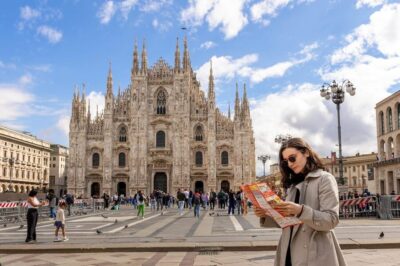
City Sightseeing Hop-On Hop-Off Bus with Audio Guide
Read our review →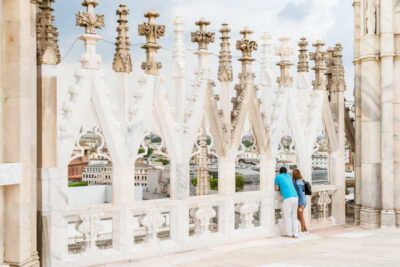
Milan Cathedral: Duomo Terraces Ticket (No Church Access)
Read our review →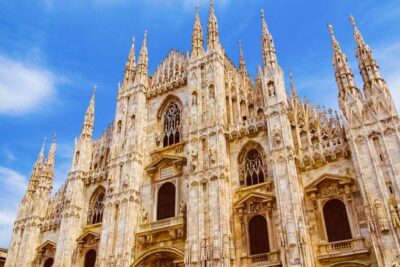
Milan Cathedral Direct Entrance – Terrace Excluded
Read our review →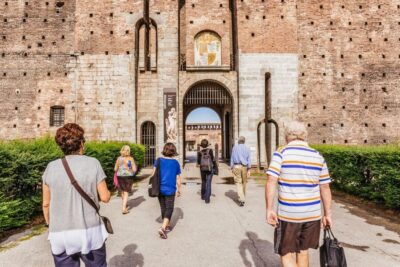
Guided Walking Tour & Last Supper Visit with Ticket
Read our review →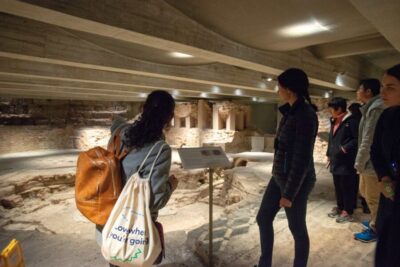
Fast-Track Milan Cathedral and Terraces Guided Tour
Read our review →
Browse the lists this tour appears in