
Reviewed · VENICE TOURS
The Majestic Teatro La Fenice: Guided Tour in Venice
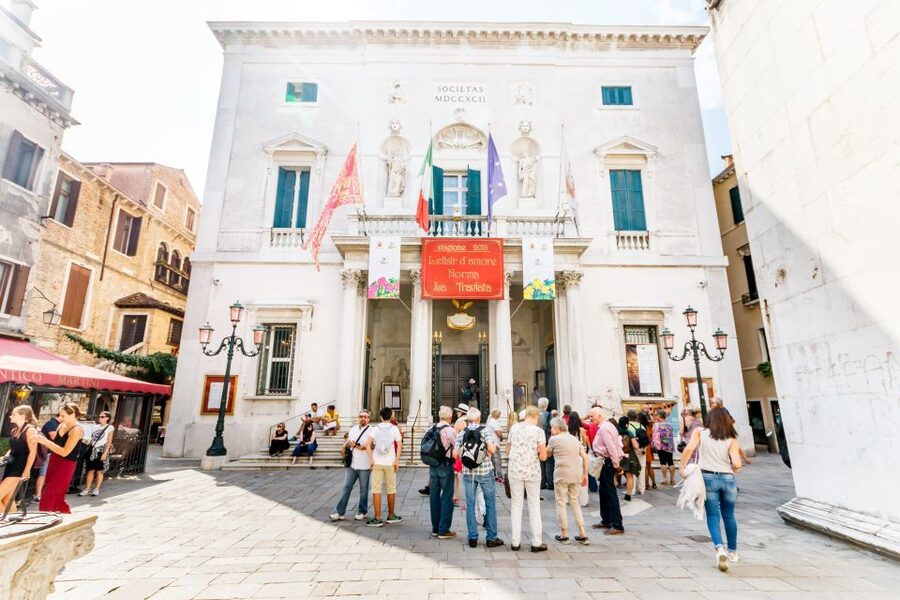
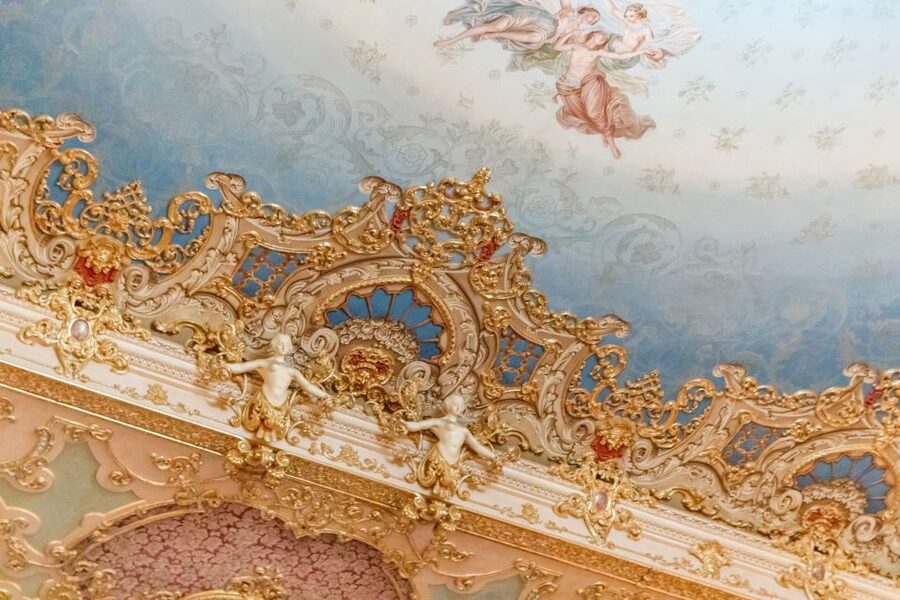
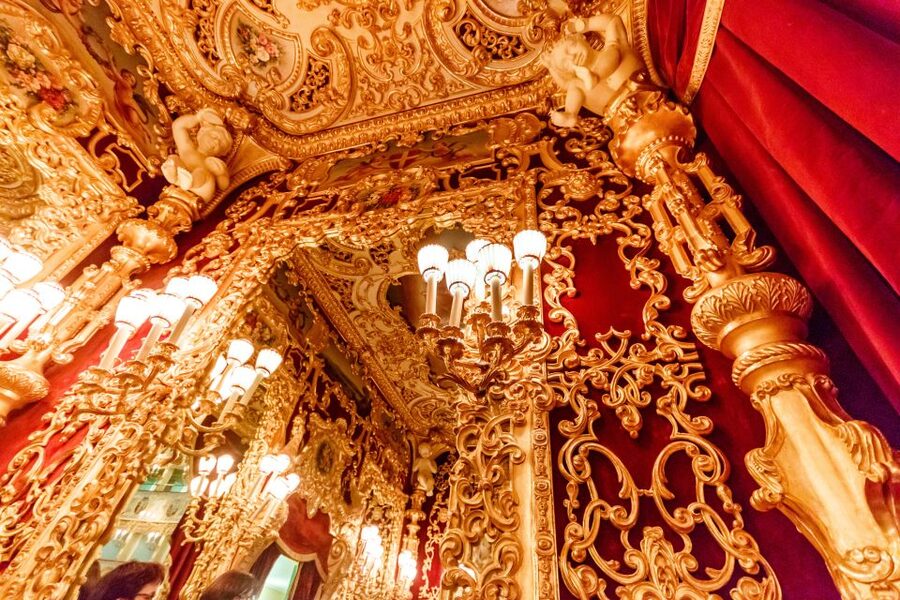
Teatro La Fenice is not simply a pretty opera house. It is a survivor. Founded at the end of the 18th century, rebuilt after major fires, and tied to premieres by Rossini, Bellini, Stravinsky, and Britten, it gives you a compact lesson in Venice’s musical life. The royal box and lavish public rooms are the visual treats.
I like two things here: the one-hour format fits neatly into a day of sightseeing, and a good guide turns gilt decoration into a story about composers, audiences, rebuilding, and stagecraft. Guides such as Sara, Nicole, Marina, Matilda, and Sabin have been praised for clear explanations and friendly answers. The main consideration is that the tour is in English, some parts may be affected by rehearsals or technical testing, and backstage access is not promised.
Key points at a glance
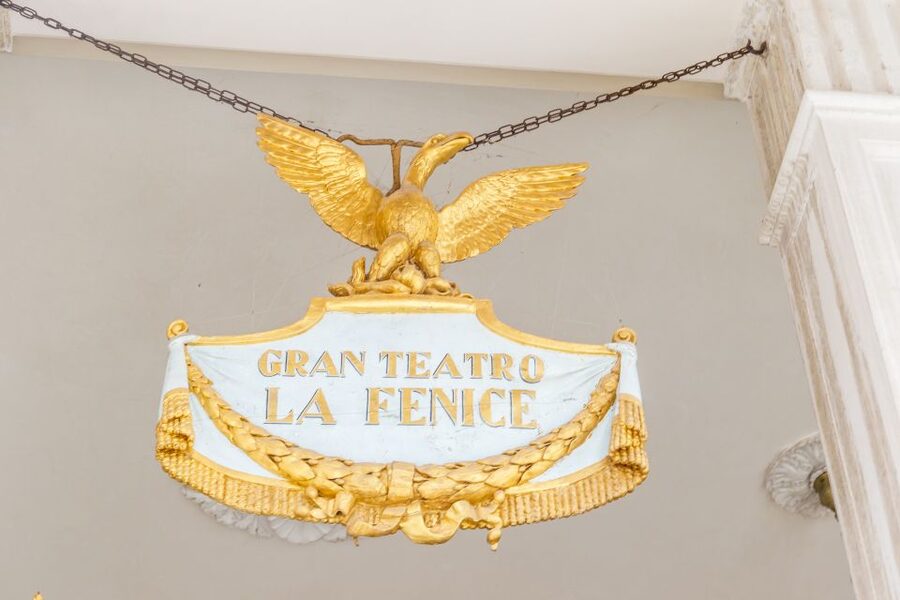
- A famous opera stage: Learn why La Fenice became a major home for premieres by Rossini and Bellini.
- The royal box: See the theater from one of its most privileged viewpoints when access is available.
- A one-hour visit: The short guided tour works well between Venice’s churches, museums, and evening plans.
- A dramatic rebuilding story: Hear how the theater’s direction changed over time, including its welcome for modern productions.
- English live guide: Expect spoken explanations inside the theater rather than a long talk on the walk there.
- A practical limitation: The theater is not suitable for wheelchair users, and backstage areas are not part of the stated visit.
Why La Fenice matters in Venice
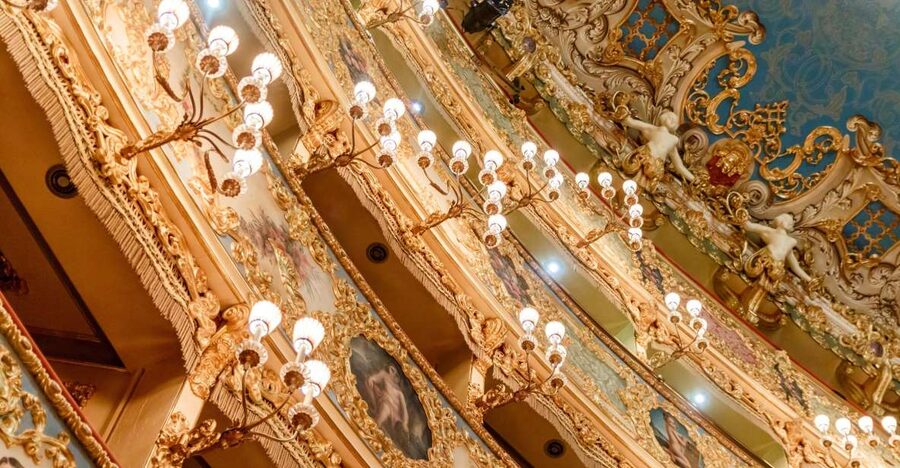
Venice is packed with grand interiors, but La Fenice has a special claim on your attention because its decoration is tied to performance. You are not only looking at painted ceilings and gilded boxes. You are standing in a place built for music, ceremony, social display, and the shared suspense of a live opera.
The theater opened near the close of the 18th century and quickly became a favored setting for important new works. The program connected with La Fenice includes Rossini’s Tancredi, Sigismondo, and Semiramide, along with Bellini’s The Capulets and the Montagues and Beatrice di Tenda. These names matter even if you are not an opera expert. They show that La Fenice was not just a venue for established favorites. It was a place where new works could make their first major impression.
The theater’s later life also reaches into modern music. Stravinsky’s The Rake’s Progress and Britten’s The Turn of the Screw had world premieres there. That shift gives the visit more range than a simple look at an old building. You hear about a theater that continues to support new work while preserving its formal Venetian setting.
A few other Venice mornings to weigh against this
- Venice: La Fenice Opera House Entry Ticket with Audio Guide
★ 4.6 · 11,742 reviews - Murano & Burano Islands Guided Small-Group Tour by Private Boat
★ 4.5 · 7,580 reviews - Venice Islands: Murano Glass & Burano Colors Guided Visit
★ 4.5 · 4,581 reviews
Meeting your guide in front of the theater
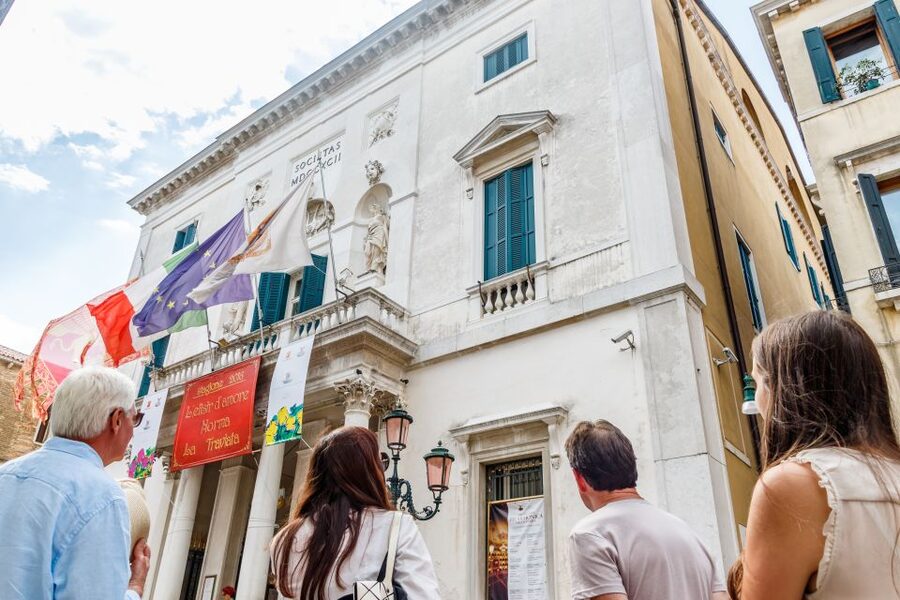
Your meeting point is directly in front of the Teatro La Fenice entrance. This sounds simple, but Venice’s lanes can make even a well-known building tricky to find, so allow extra time. One visitor arrived about ten minutes late and found the guide still waiting, but you should not count on that courtesy every time.
The explanation takes place inside the theater, not during a walking approach from another part of Venice. Once the group enters, the guide leads the visit through the accessible public areas included that day. The format is guided rather than a simple audio-only admission, which gives you a chance to ask questions.
The guide names highlighted in the feedback include Sara, Nicole, Marina, Matilda, and Sabin. You may receive another guide, but the repeated praise for clear English, friendly manner, and useful answers suggests that the quality depends more on the individual guide than on a fixed script.
One small point matters for group tours: stay close when the guide moves between rooms. A guide may begin speaking before everyone has gathered, which can make a detail easy to miss. If you are interested in the building’s design or opera customs, ask your question promptly rather than waiting until the group has moved on.
Inside the theater: decoration with a purpose
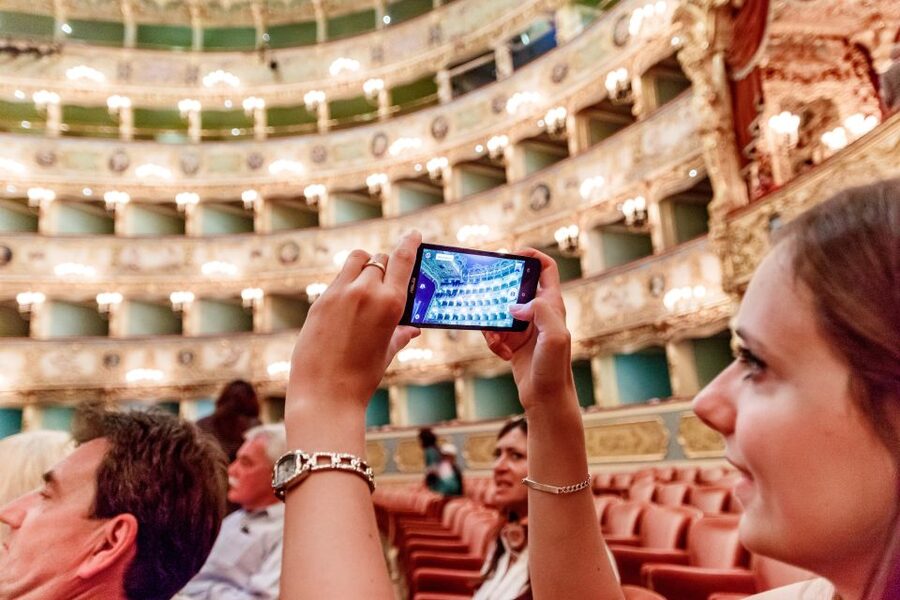
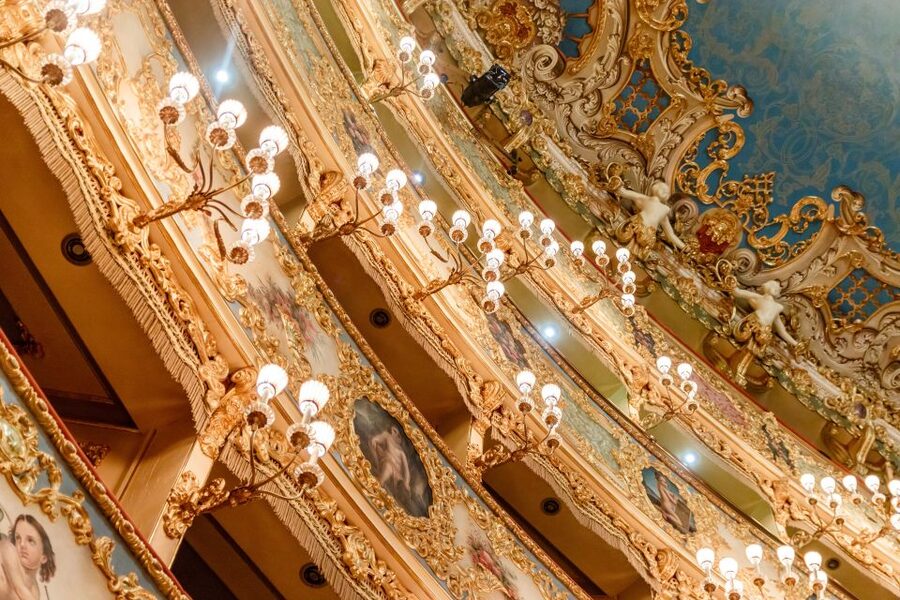
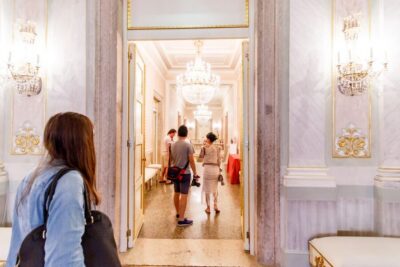
La Fenice’s interior is the part most people come to see, and the visit gives you time to look beyond the first burst of gold and ornament. The large auditorium, private boxes, and formal rooms create a strong sense of how opera once functioned as both entertainment and public ritual.
The theater seats more than 1,000 people. That scale helps explain the contrast between the grand auditorium and the smaller, more intimate feeling of the boxes. You can picture different levels of society watching the same production from separate spaces, with the stage as the common focus.
The ceiling is one detail worth seeking out. A visitor specifically praised its design and clock, a feature that can be easy to overlook when your attention is pulled toward the stage and balconies. Look upward before the guide moves on. La Fenice rewards slow observation, even during a short tour.
The public rooms are equally useful for understanding the building’s character. One guide may focus on decoration, another on performance arrangements, but the best explanations connect both. The ornate setting was not added merely for display. It helped create the ceremony of arriving, being seen, taking your place, and waiting for the curtain.
The royal box and the best viewpoint
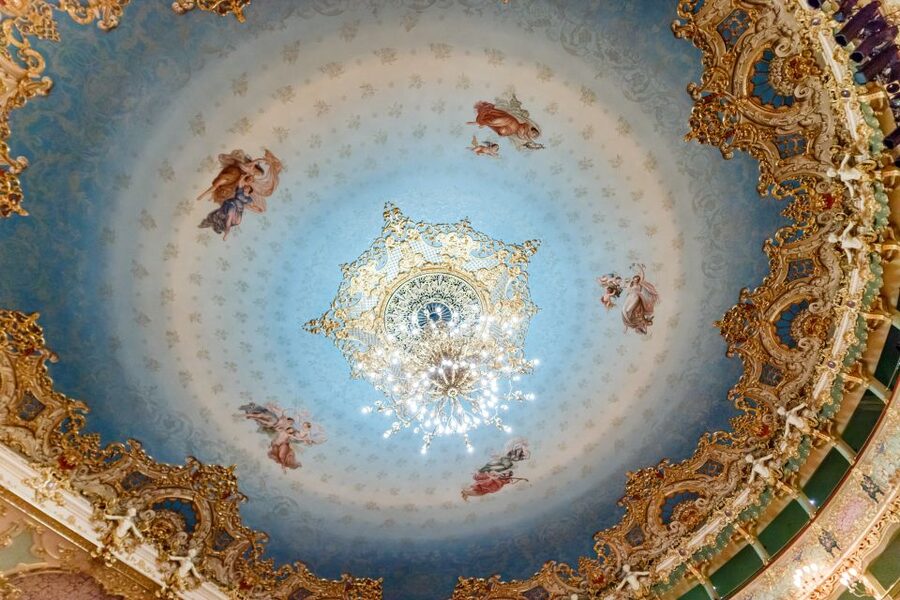
Access to the royal box is one of the most appealing details of this visit. When it is open, you can step inside and see the auditorium from a privileged position. The view helps you understand the theater’s design in a way that photographs cannot quite match.
From the royal box, notice how the room frames the stage and how the auditorium rises around it. This is also a good moment to imagine the difference between attending a guided visit and attending an opera. During a performance, the room would be filled with sound, movement, and a dressed-up audience. During the tour, you get the quieter chance to study the lines, decoration, and relationship between the boxes and stage.
Access can depend on theater operations, so treat it as a likely highlight rather than an absolute guarantee. The same practical point applies to other rooms. A lighting test or theater preparation once required a guide to adjust the route, but the visit still went ahead.
Same city, an entirely different afternoon:
- Venice: Doge’s Palace Reserved Entry Ticket
★ 4.6 · 42,716 reviews - Venice: Grand Canal Gondola Ride with App Commentary
★ 4.1 · 18,908 reviews - Boat Trip: Glimpse of Murano, Torcello & Burano Islands
★ 4.3 · 15,699 reviews - Venice: Grand Canal by Gondola with Live Commentary
★ 4.1 · 13,681 reviews
From Rossini and Bellini to modern productions
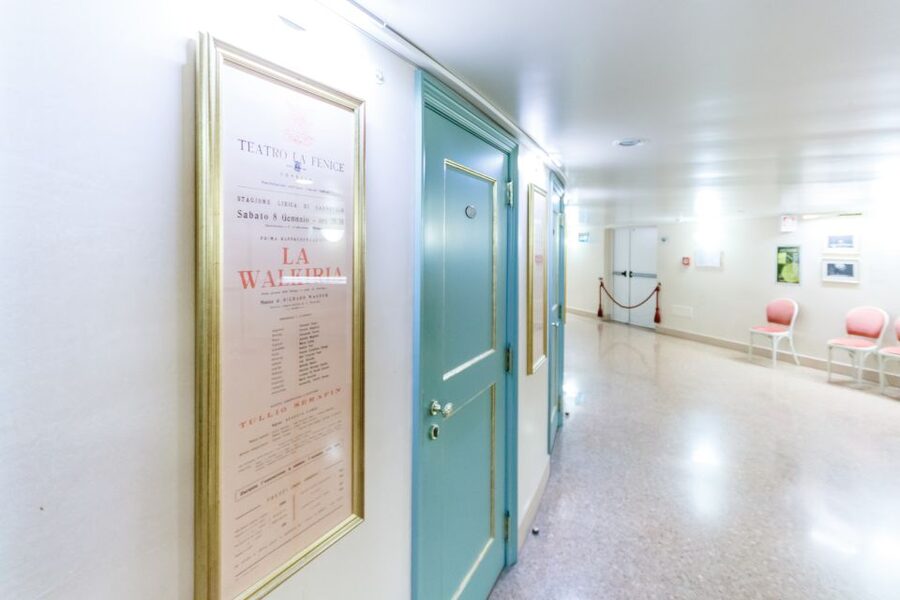
The strongest part of the tour is often the story connecting famous names to the rooms around you. Rossini’s works linked with La Fenice include Tancredi, Sigismondo, and Semiramide. Bellini’s The Capulets and the Montagues and Beatrice di Tenda add another important chapter.
You do not need to know these operas in advance. The guide’s job is to give the names meaning and explain why La Fenice was important to their presentation. If you enjoy opera, the setting adds a physical sense of place to music you may already know. If opera is new to you, the building itself provides an easy way in.
The theater’s contemporary direction broadens the story. Stravinsky’s The Rake’s Progress and Britten’s The Turn of the Screw show that La Fenice has not been locked in the past. It has also welcomed demanding 20th-century works and world premieres.
That balance is valuable. You see a highly decorated theater, but you do not get only a nostalgic account of old productions. The guide can place the building between its historic role and its continuing work as an opera venue, supported by a 98-member orchestra and a 66-person chorus.
Rebuilding, loss, and a theater that returned
The word La Fenice means the phoenix, and the name feels especially apt once you hear about the theater’s rebuilding. Its story includes major damage and reconstruction, which makes the interior’s polished appearance more striking.
The tour does not treat the building as untouched. Instead, the rebuilding is part of what makes the place worth visiting. You see a theater that carries the idea of return in its name and in its physical survival.
The amount of detail depends on your guide. Some guides spend more time on construction and restoration, while others concentrate on opera and the rooms. If the rebuilding story matters to you, ask directly about it. Guides have been praised for answering questions and adding extra historical details when time permits.
What a typical one-hour route feels like
The visit is short, focused, and mainly indoors. You meet at the entrance, join the English-speaking guide, and hear the main explanation inside the theater. The route can include the auditorium, formal rooms, royal box, and exhibition areas, depending on what is open.
A possible sequence looks like this:
- You gather outside the entrance and enter with the guide.
- You receive an introduction to La Fenice, its founding, and its place in Venice’s opera tradition.
- You move through the principal interior spaces, looking at the auditorium, boxes, ceilings, and decoration.
- You hear about Rossini, Bellini, Stravinsky, Britten, and the theater’s changing artistic direction.
- You may visit the royal box and see the Maria Callas exhibition.
- The guided portion ends back at the meeting point.
This is not a backstage production tour. One visitor found the experience would have been more revealing with backstage access, and that is a fair limitation. If you want to see scenery workshops, dressing rooms, technical areas, or the machinery behind the curtain, this is not the right product.
You might also see signs of the theater at work. One group caught part of a rehearsal, while another encountered lighting tests. These moments can add life to the visit, but they can also restrict where you go or change the route. The theater is an operating performance space, not a museum that remains frozen for sightseeing.
The Maria Callas exhibition and extra time inside
A Maria Callas exhibition may be part of the visit. It adds a personal and historical layer to the theater, especially if you are interested in opera singers rather than only architecture.
The exhibition also gives the visit a useful change of pace. After looking across the auditorium and ornate rooms, you can focus on an individual performer and the tradition of opera as a human art, built around voices, personalities, and demanding roles.
Your ticket allows you to remain inside after the guided portion, according to the experience details. A small cafe is also available inside. This makes the hour feel less rushed, since you can stay a little longer to absorb the theater on your own instead of leaving as soon as the guide finishes.
The extra time is particularly useful if you want to photograph details, revisit the ceiling, or look again from the royal box. Keep in mind that access to specific rooms can change with theater activity.
Guides, language, and the value of live explanation
The tour is conducted in English by a live guide. That matters at La Fenice because the building’s meaning is not obvious from its decoration alone. Without context, you see a handsome theater. With a good explanation, you understand why certain composers, rooms, and rebuilding episodes matter.
Guides named Sara, Nicole, Marina, Matilda, and Sabin have been singled out for friendly delivery, strong subject knowledge, storytelling, and willingness to answer questions. One guide was praised for handling questions from people who knew little about opera, which is encouraging if you are coming mainly for the building.
The experience has a rating of 4.3 from 513 reviews, a solid result that also leaves room for variation. One issue raised was that a tour conducted in both English and Italian gave Italian speakers more detail. If your booking is advertised as English, confirm the language arrangement when you reserve, especially if you want a fully English presentation.
Stay near the guide and listen for transitions. The tour is only one hour, so a missed explanation can be difficult to recover.
Is $28 a fair price?
At $28 per person, I consider this a sensible purchase for anyone who already plans to visit La Fenice. The price covers an hour inside one of Venice’s most important theaters with a guide, rather than a quick look at the foyer followed by a self-guided wander.
The value depends on how much you want interpretation. If you are happy to admire the interior without knowing who performed there or how the theater changed, admission alone might suit you better. If you want the building connected to Rossini, Bellini, Stravinsky, Britten, the orchestra, chorus, and rebuilding story, the guided format earns its price.
The chance to remain inside afterward improves the value. So does access to the royal box when available. The visit is also short enough that it does not consume half a day, which matters in Venice, where every hour competes with churches, museums, canals, and wandering.
The price does not buy backstage access, a full opera performance, or a guaranteed rehearsal sighting. Think of it as a focused introduction to the theater, not a production tour.
Timing, access, and small practical cautions
The duration is one hour, with starting times shown according to availability. Choose a slot that leaves a little breathing room before your next plan. Venice’s narrow streets can slow you down, and the theater entrance may be harder to locate than expected.
Cancellation is free up to 24 hours before the scheduled visit, and you can reserve now and pay later. Those terms are useful if your Venice plans are still shifting, but check the exact conditions at booking.
The experience is not suitable for wheelchair users. That is an important decision point, so do not assume the ornate theater route will work for every mobility need.
The guide meets you in front of the theater, and the activity ends there. No transport is included or needed for the tour itself.
Who will enjoy this most?
I would choose this for first-time visitors who want a clear introduction to Venice’s opera tradition, architecture fans who enjoy decorated interiors, and anyone attending an opera at La Fenice later the same day. One visitor had evening opera tickets and found the daytime tour added meaning to the performance, which makes good sense.
It also works for people who know little about opera. The guide can answer basic questions, and the rooms provide an immediate visual entry point. You do not need to recognize every composer to appreciate the ceiling, boxes, royal viewpoint, and scale of the auditorium.
Opera specialists may want more. If your priority is backstage work, stage machinery, rehearsal access, or technical detail, this one-hour visit may feel limited. The same is true if you want a long, quiet museum visit rather than a guided route.
Should you book the Teatro La Fenice tour?
Book it if you want to understand why this theater matters, not just take a quick photograph of a beautiful room. The combination of a compact schedule, English guide, major composer connections, royal box access when available, and time to remain inside makes $28 reasonable.
I would be especially keen to book before an evening performance, when the tour can turn the theater from an impressive building into a place with names, stories, and expectations. Just arrive early, stay close to the guide, and keep your plans flexible in case rehearsals or lighting tests alter the route.
Skip it if you need wheelchair access, insist on backstage areas, or prefer to explore without spoken commentary. For most other visitors, La Fenice offers a memorable hour and a useful piece of Venice that is easy to miss amid the city’s better-known sights.
FAQ
Where does the Teatro La Fenice tour start?
The guide meets you directly in front of the Teatro La Fenice entrance.
Where does the activity end?
The tour ends back at the meeting point in front of the theater.
How long does the guided visit last?
The guided visit lasts one hour.
What language is the tour conducted in?
The tour includes a live English-speaking guide.
Is the explanation given outside while walking to the theater?
No. The explanation takes place inside the theater, not during the walk to the theater.
What is included in the price?
The price includes a guided visit inside Teatro La Fenice.
Does the tour include backstage access?
Backstage access is not listed as part of the activity, so you should not book this expecting to see backstage areas.
Can I see the royal box?
The royal box may be included when the theater’s operations allow access. It has been part of the visit for some groups, but it is not stated as a guaranteed feature.
Can I stay inside after the guided tour?
The ticket allows you to remain inside after the tour. A small cafe is also available inside the theater.
Is the tour suitable for wheelchair users?
No. The activity is listed as not suitable for wheelchair users.
Can I cancel the booking?
You can cancel up to 24 hours in advance for a full refund.
Fresh on the Venice list
- Murano: Glass Blowing Demonstration and Artistic Glass Gift★ 4.6 · 507 reviews
- From Venice: Dolomites, Lake Misurina, and Cortina Day Trip★ 4.6 · 508 reviews
- Venice Islands: Murano Glass & Burano Colors Guided Visit★ 4.5 · 510 reviews
- Real Venetian Kayak – Tour of Venice Canals with a Local Guide★ 4.5 · 518 reviews
- Venetian Carnival Mask Making Class in Venice, Italy★ 4.5 · 525 reviews
- Half Day Murano and Burano Island Tour by Private Boat★ 4.5 · 529 reviews
- Venice Trilogy: Murano, Burano & Torcello by Lagoon Boat★ 4.5 · 532 reviews
- Create Your Glass Artwork: Private Lesson With Local Artisan★ 5.0 · 556 reviews
Venice Tours, compared.
Grand Canal Gondola Ride with App Commentary
Read our review →
Boat Trip: Glimpse of Murano, Torcello & Burano Islands
Read our review →
La Fenice Opera House Entry Ticket with Audio Guide
Read our review →
Doge’s Palace & St. Mark’s Basilica with Terrace Access Tour
Read our review →
Burano, Torcello & Murano Boat Tour w/Glassblowing
Read our review →
Murano and Burano Boat Tour with Glass Factory Visit
Read our review →Browse the lists this tour appears in