Reviewed · TOURS
From Tuscany Carrara: Marble Quarries Tour by Jeep
Carrara’s marble quarries are not a pretty backdrop added to a Tuscan outing. They are working mountain sites, cut into the slopes in huge white scars. This 4×4 quarry tour takes you up steep, twisting roads to see where the stone comes from, then into an underground quarry where machinery and mining work feel close at hand.
I like two things here. First, the ride gives you access to places that would be hard to reach on your own, including quarries high in the mountains and a long underground passage. Second, the guide connects the rock to Roman monuments, Renaissance sculpture, and today’s marble trade. The main consideration is comfort: the roads are steep and winding, and the tour is not suitable for pregnant women, people with back problems, or wheelchair users.
Key points to know before you book
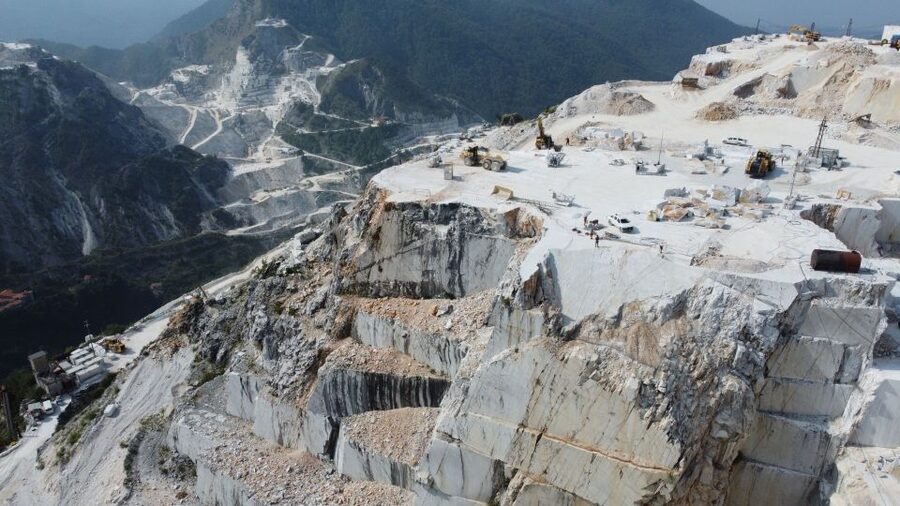
- Carrara marble in its working setting: See active open-air quarries rather than only finished marble in a showroom.
- A real 4×4 ride: Hairpin bends, steep inclines, and rough mountain roads explain why a Jeep or SUV is needed.
- Underground quarry access: Enter a unique marble cave and see the machinery and work areas inside the mountain.
- History from Rome to Michelangelo: Learn how Carrara stone was used for the Pantheon, Trajan’s Column, and Renaissance sculpture.
- A Colonnata food stop: Taste Lardo di Colonnata IGP, pork fat cured in marble bowls.
- Short but full outing: The tour lasts about 2.5 hours and returns to the same meeting point in Carrara.
Why Carrara’s marble mountains are worth seeing
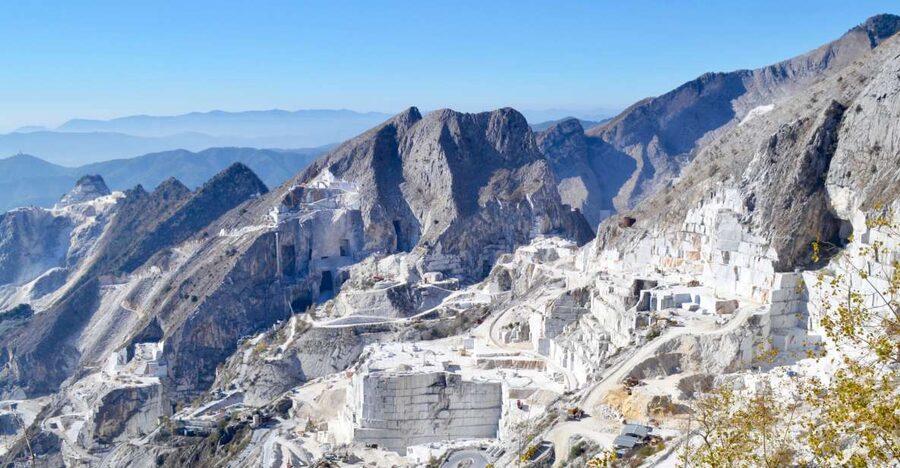
Carrara is known around the world for marble, but the finished stone can hide the scale of the work behind it. In the mountains above the city, the marble appears as vast pale cuts in the rock. These are not abandoned ruins. The quarries have supplied stone for more than 2,000 years and continue to operate today.
That long timeline gives the tour real substance. You are not simply looking at a white mountain and taking pictures. You learn how stone from these slopes reached Ancient Rome, including the Pantheon and Trajan’s Column, and how the same source became a favorite for Renaissance artists.
The guides also explain the old and modern methods of excavation. That comparison matters because the quarry is both an ancient trade and a modern industrial operation. You get a look at the people, machines, roads, and working spaces that keep the tradition going.
Guides including Luca, Lucca, and Marco have been praised for clear explanations, friendly conversation, careful driving, and patience with photography. The guiding is offered in English and Italian. On some departures, another language may be possible for a particular group, but English and Italian are the stated languages.
What else people book in Italy on the same trip:
- Vatican: Museums & Sistine Chapel Entrance Ticket
★ 4.5 · 144,003 reviews - Vatican Museums & Sistine Chapel Tour with Optional Basilica
★ 4.3 · 67,413 reviews - Colosseum, Roman Forum & Palatine Guided Tour
★ 4.7 · 63,148 reviews
Meeting at the marble obelisk in Carrara
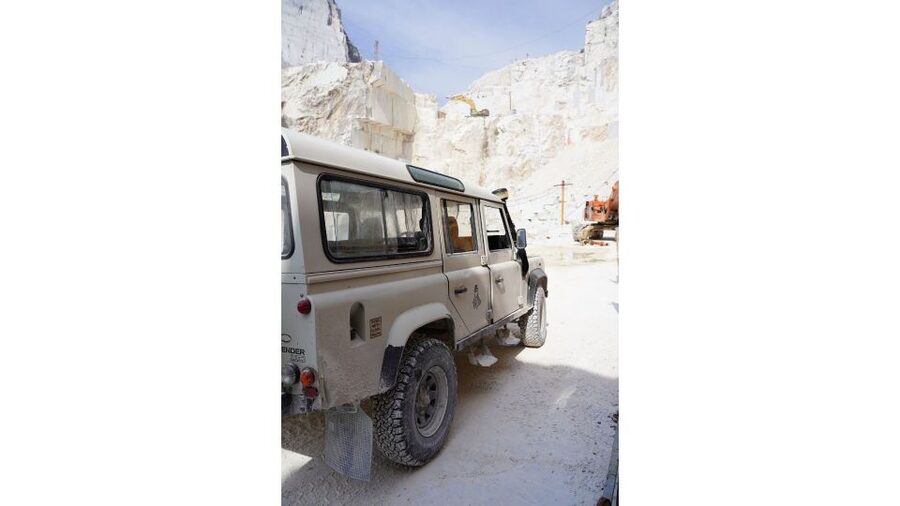
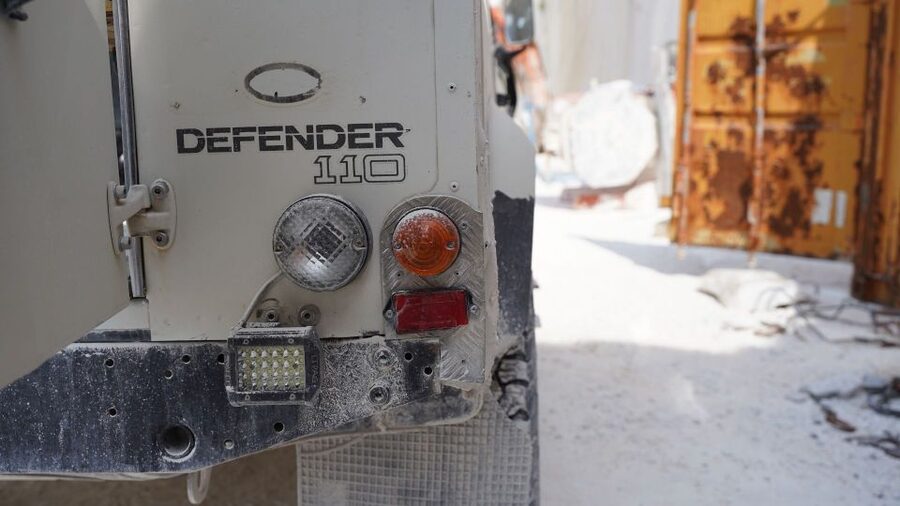
The starting point is Stadio dei Marmi, at 4 Olimpionici Azzurri. Look for the marble obelisk in front of the stadium and the nearby bus stop. The vehicle is a Defender with an orange sign, which should make it easier to identify.
From Carrara Avenza Train Station, the meeting point is about 10 minutes away. Bus routes L51, L52, L53, L54, and L70 run in the direction of Carrara Ospedale. If you drive, the guide can help you park.
Plan to arrive ready to go, since this is a small, active meeting area rather than a formal visitor center. One useful improvement would be a short introduction before departure, especially if you are not sure how the outing is organized. The tour begins with a ride into the mountains, so it helps to know the general plan before you climb aboard.
Bring water. It is not included, and there is no reason to depend on the food stop for drinks.
The Jeep ride into the Colonnata Valley
The first major part of the experience is the ride itself. The Jeep or SUV follows the winding roads of the Colonnata Valley and climbs toward quarries that can reach about 1,000 meters above sea level.
This is where the choice of vehicle makes sense. The route includes hairpin turns and steep inclines, and the 4×4 is not just a colorful way to sell the tour. It is the practical tool for reaching quarry areas on mountain roads.
You should expect a ride that feels adventurous rather than polished. Dust is part of the setting, and one practical note is that the vehicles may be dusty inside. Wear clothes and shoes you do not mind taking into a working quarry. The road movement may also be uncomfortable if you have back trouble.
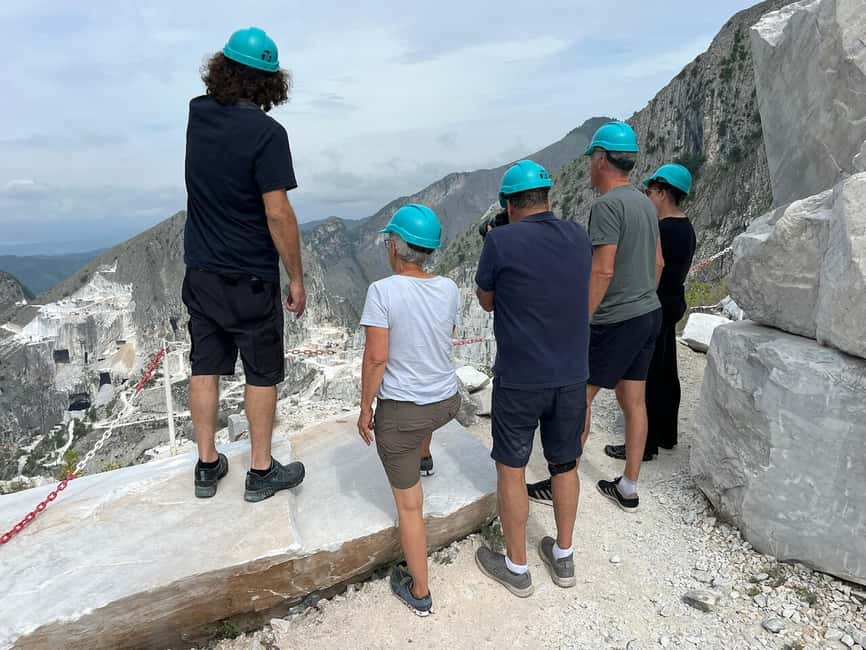
As you climb, the guide explains the mountain and points out the different kinds of quarry work. The guides are also willing to pause for photographs, which matters here. The scale of the cuts in the mountain is difficult to understand from one quick glance, and you will want time to frame the views.
Bad weather does not automatically cancel the tour. It can operate in poor conditions as long as the guide considers it safe. That means the outing remains possible on a gray day, but the views may be less clear and the roads may feel more demanding.
The Colonnata Valley and its marble history
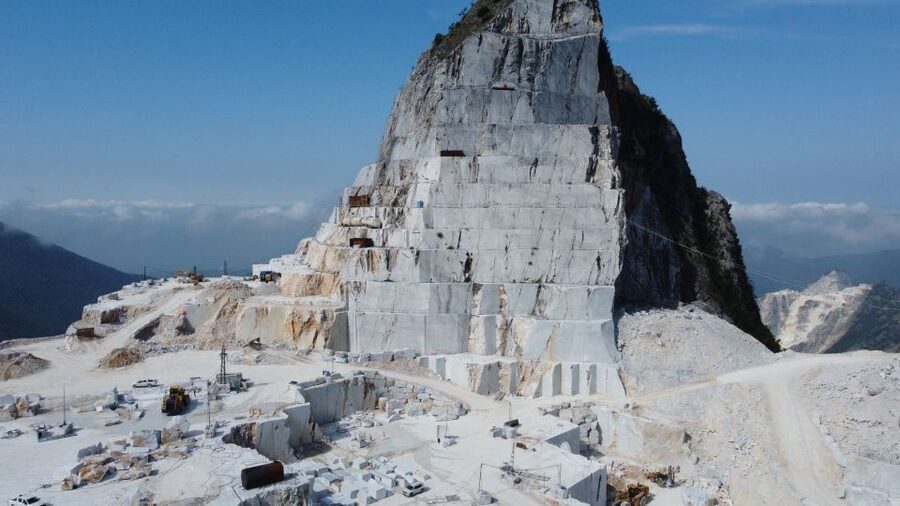
The guided visit in the Colonnata area lasts about 1.5 hours, making it the main part of the outing. You follow the mountain roads and stop at quarry viewpoints and work areas while the guide explains how marble is extracted.
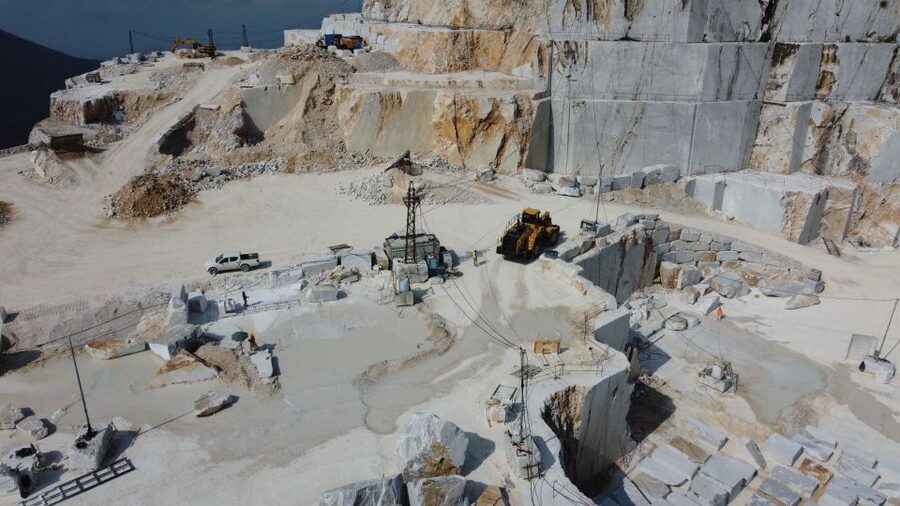
The open-air quarries show the dramatic result of excavation. Terraced cuts rise across the mountain, with pale stone exposed in broad steps. One of the photo stops is in the Miseglia Valley, where you can look across a terraced quarry and take panoramic pictures before continuing to the underground section.
The guide’s historical explanation helps put the scene in context. Carrara marble was used for major Roman buildings and columns long before modern machinery existed. Later, Renaissance sculptors selected stone from these mountains for statues and architectural work. The tour also includes a stop connected with marble chosen by Michelangelo, according to the guiding information provided during the experience.
I find that connection more useful than a list of famous names. It gives you a way to read the quarry. The bright stone is not only a raw material. It is part of the story of how Rome was built and how Renaissance artists searched for a block with the right quality and shape.
You also hear about current excavation. The contrast between older techniques and modern equipment makes the visit more than a history lesson. You see how a centuries-old trade has changed while remaining tied to the same mountain.
Same city, an entirely different afternoon:
- Milan: Cathedral and Duomo’s Terraces Entrance Ticket
★ 4.6 · 61,054 reviews - Venice: Doge’s Palace Reserved Entry Ticket
★ 4.6 · 42,716 reviews - Vatican Museums, Sistine Chapel & St Peter’s Basilica Guided Tour
★ 4.5 · 39,149 reviews - Rome: Colosseum, Palatine Hill and Roman Forum Guided Tour
★ 4.8 · 32,814 reviews
Entering an underground marble quarry
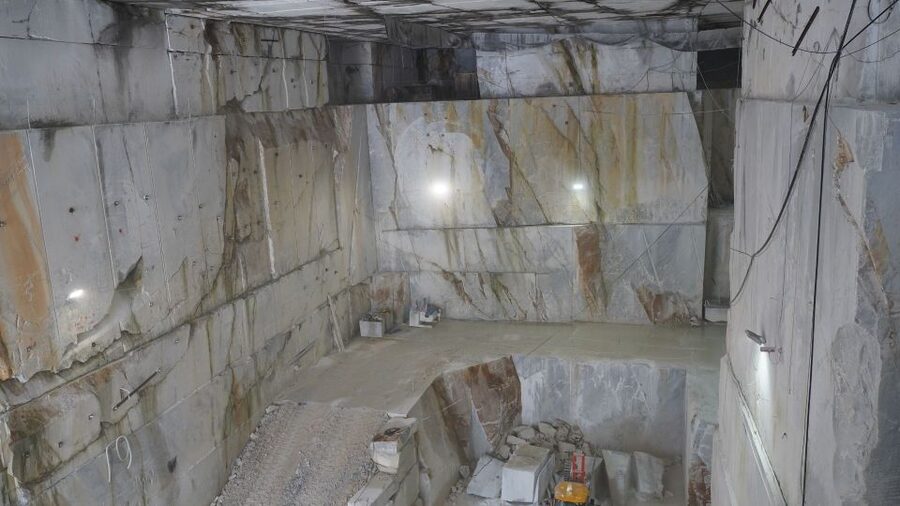
The underground quarry is the tour’s most unusual stop. Instead of looking across an open cut from a viewpoint, you go inside the mountain to see a marble cave and working areas.
A passage of more than one kilometer has been described as part of the underground experience. Inside, the scale changes. The open-air quarry gives you distance and broad views, while the tunnel brings you close to the stone, machinery, and places where extraction takes place.
This is also the point where the guide’s explanations become especially valuable. Machinery can look anonymous if you do not know what it does. The guide gives you the background needed to understand the excavation process and the practical problems of removing large pieces of marble from a mountain.
The underground stop is not a glossy museum attraction. It is tied to real quarry work, so you should expect an industrial setting rather than a finished tourist display. That is part of the appeal, but it also explains why sturdy footwear and sensible clothing are a good idea.
Photography is welcome, and the guides have been patient with people who want time for pictures. Still, keep your attention on the route and the explanations. The quarry is an active working environment, not simply a scenic cave.
Tasting Lardo di Colonnata IGP
On the way back, the Jeep stops in Colonnata for a short food tasting of about 10 minutes. You sample Lardo di Colonnata IGP, a traditional product made from pork fat and cured in marble bowls.
The tasting is brief, but it adds a local connection that a viewpoint alone cannot provide. Lardo is closely tied to the quarrying culture of Colonnata. Marble is not only cut from the mountain here. It is also used in the traditional curing process.
If you have never tried lardo, expect a soft, rich slice rather than ordinary cured meat. This is a small taste, not a full meal, so have water with you and do not plan on it replacing lunch.
I like the stop because it links the food to the place. You are tasting a product shaped by local methods and local marble, not receiving a generic snack at the end of a tour. It also gives the outing a welcome change of pace after the steep roads and quarry machinery.
What the 2.5-hour schedule feels like
The full experience lasts about 2.5 hours, with a longer guided visit in Colonnata and shorter vehicle transfers between stops. The order is straightforward:
- Meet at Stadio dei Marmi and find the Defender with the orange sign.
- Ride by Jeep or SUV into the quarry areas.
- Stop in the Colonnata Valley for a guided visit and photographs.
- Travel a short distance to the food tasting.
- Return by Jeep to the stadium meeting point.
The timing works well if you are fitting Carrara into a larger Tuscany route. It is long enough to reach both open-air and underground quarry areas, but short enough to pair with other plans in the region.
The schedule is also fairly concentrated. You spend much of the time either riding mountain roads or listening to the guide at quarry sites. If you prefer a slow walk through a museum with lots of written displays, this may feel too active. If you want to see several settings without spending a full day in the mountains, the length is useful.
The activity ends where it begins. That is convenient if you arrive by bus or train, and a guide may be able to drop you back at the station, depending on the arrangements that day. The confirmed end point is the original meeting place at Stadio dei Marmi.
Is $78.17 a fair price?
At $78.17 per person, this is not the cheapest way to spend a morning in Tuscany. The value comes from access and transport rather than from the food sample. You are paying for the 4×4 ride into difficult quarry areas, a local guide, the open-air and underground visits, and the Lardo di Colonnata tasting.
A self-guided visit would not offer the same combination. The quarry roads are steep and winding, and the guide provides the context that turns machinery and rock faces into a coherent story. The underground access is another important part of the price, since it is not something you can assume you will find on an ordinary drive through Carrara.
I would consider the cost reasonable if Carrara marble is a serious interest or if you want an activity with more substance than a quick photo stop. It is less compelling if you are only looking for a broad Tuscan view and do not care about mining, sculpture, or local food.
The 4.6 rating from 295 reviews also suggests a consistently strong experience, with the most praised points being the guides, the explanations, the driving on difficult roads, the views, and the chance to enter the mountain. One criticism concerns dusty vehicle interiors and the lack of a clear introduction at the start. Those are fair expectations to set before booking.
Who should book this quarry tour?
I would choose this for you if you like working places, unusual local industries, and tours that explain how something is made. It suits curious adults, photographers, history fans, and anyone who wants to see a side of Tuscany that is far removed from vineyards and medieval lanes.
It is also a strong choice if you are staying near Carrara or passing through by train. The meeting point is reachable from Carrara Avenza Station, and the return to the same place keeps the logistics simple.
This is not the right outing for everyone. The route is not suitable for pregnant women, people with back problems, or wheelchair users. The mountain roads may be uncomfortable even if you do not fall into those categories, so consider your tolerance for tight turns, steep climbs, and a dusty vehicle.
The tour can run in bad weather when conditions are safe. For the best photographs, a clear day will help, but the quarry remains interesting in less-than-perfect weather because the focus is also on excavation and history.
Practical details that make the day easier
Wear comfortable shoes and clothes suited to a working mountain site. The information only specifically requires water, but sensible clothing will make the ride and quarry stops more pleasant.
Bring a camera, but leave room in your schedule for explanations. The guides have been praised for giving people time to take photographs, and the panoramic stop in the Miseglia Valley deserves more than a hurried snapshot.
Check the departure time when you book, since starting times vary by availability. Free cancellation is available up to 24 hours before the activity for a full refund, and you can reserve now and pay later if you want to keep your plans flexible.
The guiding languages are English and Italian. If language matters to you, select a departure that fits your needs and confirm the details when booking.
Should you book the Carrara marble Jeep tour?
Book it if you want to understand Carrara marble at its source. The mix is unusually strong: steep 4×4 roads, open-air quarry terraces, an underground passage, Roman and Renaissance history, modern excavation, and a taste of local lardo.
I would especially recommend it to anyone who has already seen Italy’s marble churches or Renaissance sculpture and wants to learn where the material began. The tour makes those finished works feel more concrete because you see the difficult mountain behind them.
Skip it if you need a gentle, fully accessible activity, dislike winding roads, or want a long food-focused excursion. For everyone else, $78.17 buys a short but substantial look at one of Tuscany’s most distinctive working regions.
FAQ
Where does the Carrara marble quarry tour start?
It starts at Stadio dei Marmi, 4 Olimpionici Azzurri, near the marble obelisk in front of the stadium and the bus stop. Look for a Defender with an orange sign.
How long does the activity last?
The tour lasts about 2.5 hours. Check availability for the specific starting times.
What languages does the guide speak?
Live guiding is available in English and Italian.
Is transportation included?
Yes. The experience includes a Jeep or SUV ride through the quarry areas and returns to the starting point.
What will I see during the tour?
You will visit active marble quarries, follow the Colonnata Valley roads, stop at a terraced quarry in the Miseglia Valley for photographs, and enter an underground quarry.
Is food included?
A tasting of Lardo di Colonnata IGP is included. Water is not included, so bring your own.
Is the tour suitable for people with mobility or back concerns?
No. It is not suitable for pregnant women, people with back problems, or wheelchair users.
What happens if the weather is bad?
The tour can operate in bad weather as long as conditions are considered safe.
Can I cancel the booking?
You can cancel up to 24 hours in advance for a full refund. Reserve now and pay later is also available.
Fresh on the Italy list
- Venice Doge’s Palace and St Mark’s Basilica Guided Tour★ 4.5 · 189 reviews
- From Cala Gonone: Grotta del Bue Marino Boat Trip★ 4.4 · 189 reviews
- Paestum Small Group Tour with an Archaeologist★ 5.0 · 189 reviews
- Rome: Award-Winning Roman Food Tours★ 4.9 · 189 reviews
- Rome Private Custom Tour with a Local, Highlights & Hidden Gems★ 5.0 · 189 reviews
- Vatican Museums and Sistine Chapel Skip-the-Line Entry Ticket★ 4.5 · 189 reviews
- Cagliari: Old Town Guided E-Bike Tour★ 4.9 · 189 reviews
- VIP Colosseum & Roman Forum Small Group Guided Tour★ 5.0 · 189 reviews
Tours, compared.

Vatican Museums & Sistine Chapel Tour with Optional Basilica
Read our review →
Colosseum, Roman Forum & Palatine Guided Tour
Read our review →
Vatican Museums, Sistine Chapel & St Peter’s Basilica Guided Tour
Read our review →
Colosseum, Palatine Hill and Roman Forum Guided Tour
Read our review →
Guided Tour of Colosseum, Roman Forum & Palatine Hill
Read our review →
Colosseum, Roman Forum and Palatine Hill Guided Tour
Read our review →
Naples Underground Entry Ticket and Guided Tour
Read our review →